

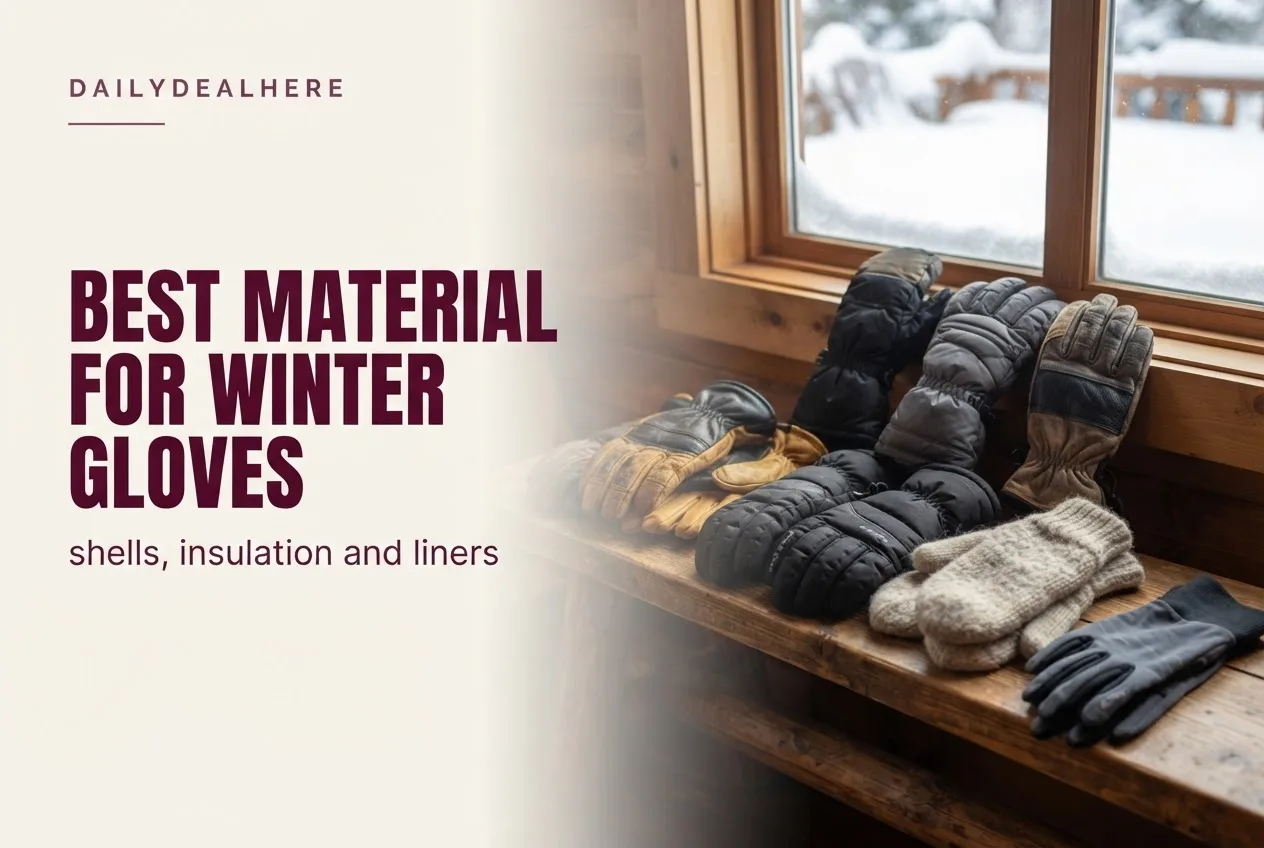
The best material for winter gloves is not one fabric but a combination: a wind and water resistant outer shell, such as leather or nylon with a waterproof breathable membrane, over an insulation that keeps working when damp, such as a synthetic like Thinsulate or PrimaLoft, or wool. Down is the warmest for its weight when dry but loses almost all of its insulating power when wet, and fleece and plain knit wool feel cozy but let wind straight through. For the coldest days, the construction matters as much as the fabric: mittens beat gloves for warmth because they expose less surface area, and a removable liner lets you dry the inside and adjust warmth.
This guide breaks down each glove layer, compares shell and insulation materials, explains when gloves beat mittens, and helps you match materials to how you actually use your hands in winter. Material facts come from Wikipedia’s articles on Thinsulate, down feathers and mittens, alongside related Wikipedia entries on wool, fleece, PrimaLoft and Gore-Tex, and a glove maker’s view from Sullivan Glove.
The short answer
- Warmest overall setup: a mitten with a waterproof breathable shell, synthetic or down insulation, and a removable liner.
- Best insulation for wet snow: synthetic insulation such as Thinsulate or PrimaLoft, which keep insulating when damp.
- Best insulation for dry cold: down, which is very warm for its weight but nearly useless once wet.
- Best natural option: wool, especially fine merino, as a liner or knit glove under a windproof shell.
- Best shell for wind and wear: leather, particularly for work and riding. Treated leather also resists moisture.
- Best everyday city glove: a leather or softshell glove with a thin synthetic or wool lining for dexterity.
- Avoid for serious cold: plain fleece or knit gloves alone, which let wind through and lose warmth when wet.
How a winter glove keeps your hands warm
A good winter glove has to solve four problems at once: trapping warm air, blocking wind, keeping out snow and rain, and letting sweat escape. No single material does all four well, which is why serious winter gloves are built in layers.
| Layer | Job | Common materials |
|---|---|---|
| Shell | Blocks wind, snow and abrasion | Leather, nylon, polyester, softshell |
| Membrane | Keeps liquid water out while letting vapor escape | Gore-Tex and similar waterproof breathable membranes |
| Insulation | Traps warm air | Synthetic fills such as Thinsulate and PrimaLoft, down, wool, fleece |
| Liner | Comfort against skin, extra warmth, sometimes removable | Merino wool, polyester, fleece, silk |
| Palm | Grip and durability | Leather, synthetic leather, textured coatings |
When people ask for the best material for winter gloves, the most useful answer is the best combination of these layers for their conditions. The sections below cover each one.
Gloves or mittens: which are warmer?
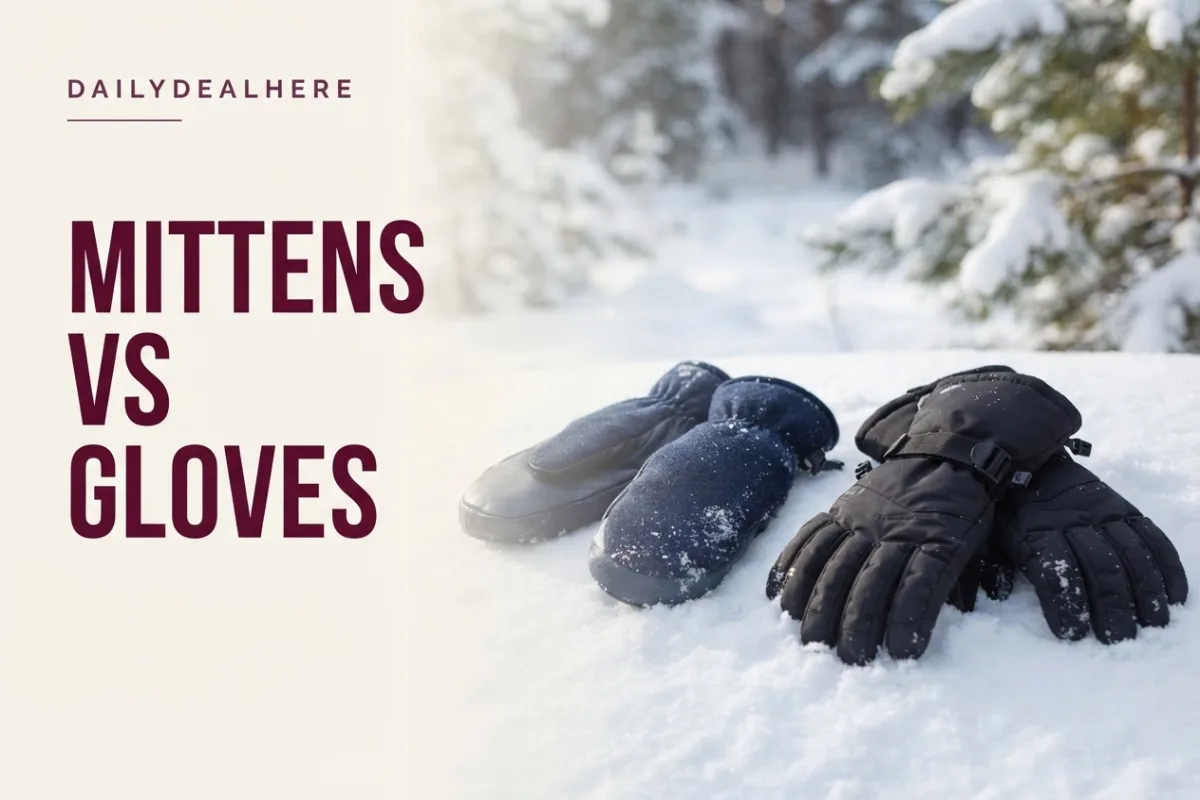
Mittens win on warmth. Wikipedia’s article on mittens explains that they provide greater thermal insulation than gloves because they have a smaller surface area exposed to the cold, with the trade off being dexterity. Fingers kept together share warmth, while separate finger sleeves each lose heat on their own.
The same article notes that mittens are common on ski slopes and are recommended as part of extreme cold weather clothing. Hybrid designs, sometimes called lobster or three finger mitts, and one finger ski mittens split the difference by freeing the index finger for grip. If your hands run cold or you face very low temperatures, start with mittens. Our guide to the best mittens for extreme cold compares options.
Synthetic insulation: Thinsulate and PrimaLoft
Synthetic insulation is the workhorse of modern winter gloves because it handles moisture well. Wikipedia describes Thinsulate as a brand of synthetic fiber thermal insulation made by 3M and first sold in 1979, and states that it retains its insulating properties when wet. It adds that Thinsulate’s thermal resistance depends on thickness, with R-values ranging from 1.6 for 80 gram fabric to 2.9 for 200 gram fabric.
That gram figure is worth looking for on glove labels. A higher gram weight generally means more insulation and a warmer, bulkier glove, while lower weights keep gloves thinner for dexterity.
PrimaLoft is the other widely used name. Wikipedia describes it as a patented synthetic microfiber insulation originally developed for the United States Army in the 1980s, and quotes an early description of it as a high loft synthetic alternative to down with similar performance when dry and superior performance when wet. It is used in gloves as well as jackets and sleeping bags.
Down insulation
Down is the warmest insulation for its weight, which is why it appears in expedition mittens. But its weakness is serious for hands, which sweat and handle snow. Wikipedia’s article on down feathers states that when down is wet its thermal properties are virtually eliminated, that it clumps when exposed to moisture, and that it will mildew if left damp.
- Great for: very cold, dry conditions, such as high altitude or arctic cold, inside a waterproof shell.
- Poor for: wet snow, slush, snowball fights, shoveling, or any activity that makes your hands sweat.
- Tip: if you choose down, look for a waterproof shell and a removable liner so you can dry the inside overnight.
Wool and merino
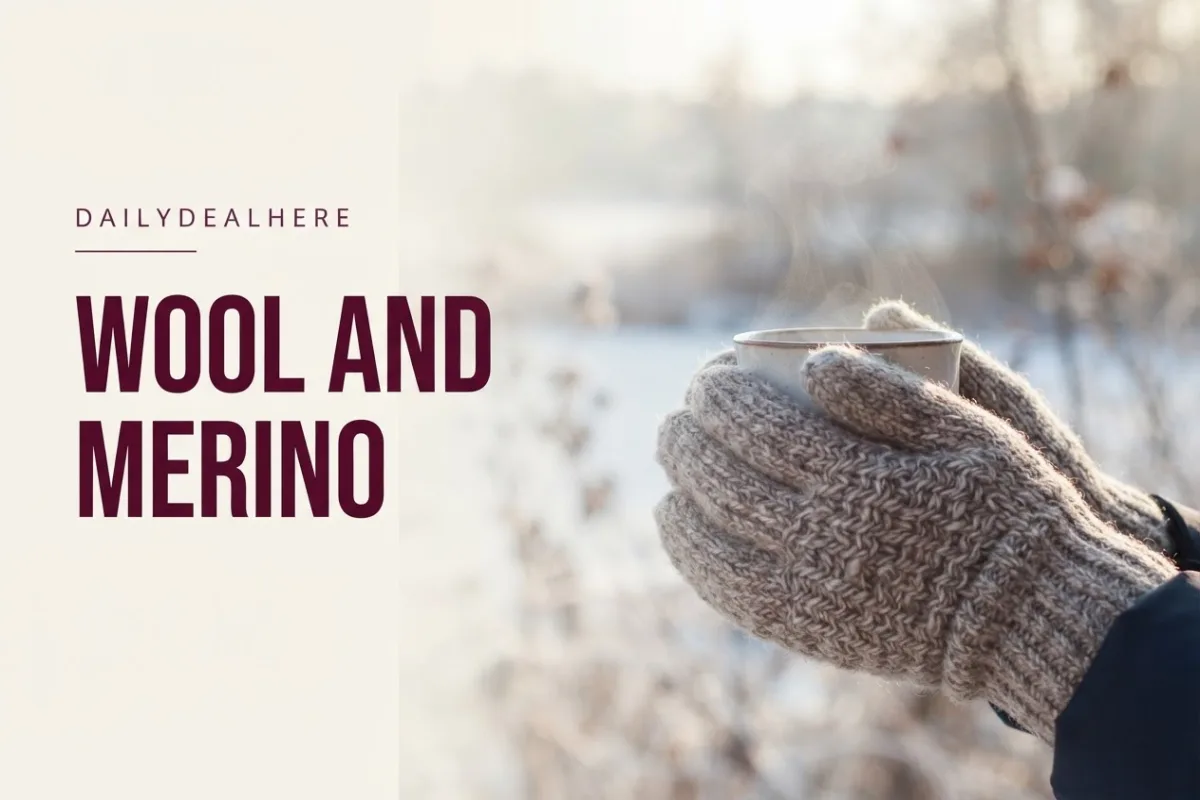
Wool is the classic natural insulator. Sullivan Glove, a US maker of leather gloves, writes that wool leads for heat retention in calm weather because its fibers trap body heat, and that it is breathable. Wikipedia notes that wool fibers readily absorb moisture and can take up almost one third of their own weight in water.
The limitations are wind and water. Sullivan points out that a cold breeze easily penetrates wool and that wool loses its insulating power when wet. That is why wool works best as a liner or inner layer under a windproof shell rather than on its own in harsh weather.
Merino is a fine wool from the merino breed of sheep. Wikipedia notes merino wool is generally less than 24 microns in diameter, with finer grades well below that, which is why it feels softer against skin than coarse wool. That makes merino a popular choice for glove liners. If you like merino for socks, our guide to merino wool socks shows the same fiber in another use.
Fleece
Fleece gloves are light, soft and inexpensive, which makes them popular for mild days and as liners. But Wikipedia’s polar fleece article is clear about the limits: regular polar fleece is not windproof, and fleece loses most of its insulating quality when wet, although it holds less than one percent of its weight in water and dries relatively quickly.
Wikipedia also explains that fleece comes in weights such as 100, 200 and 300 grams per square meter, with heavier fleece being warmer. For winter, fleece works best as a liner or in combination with a windproof shell.
Leather
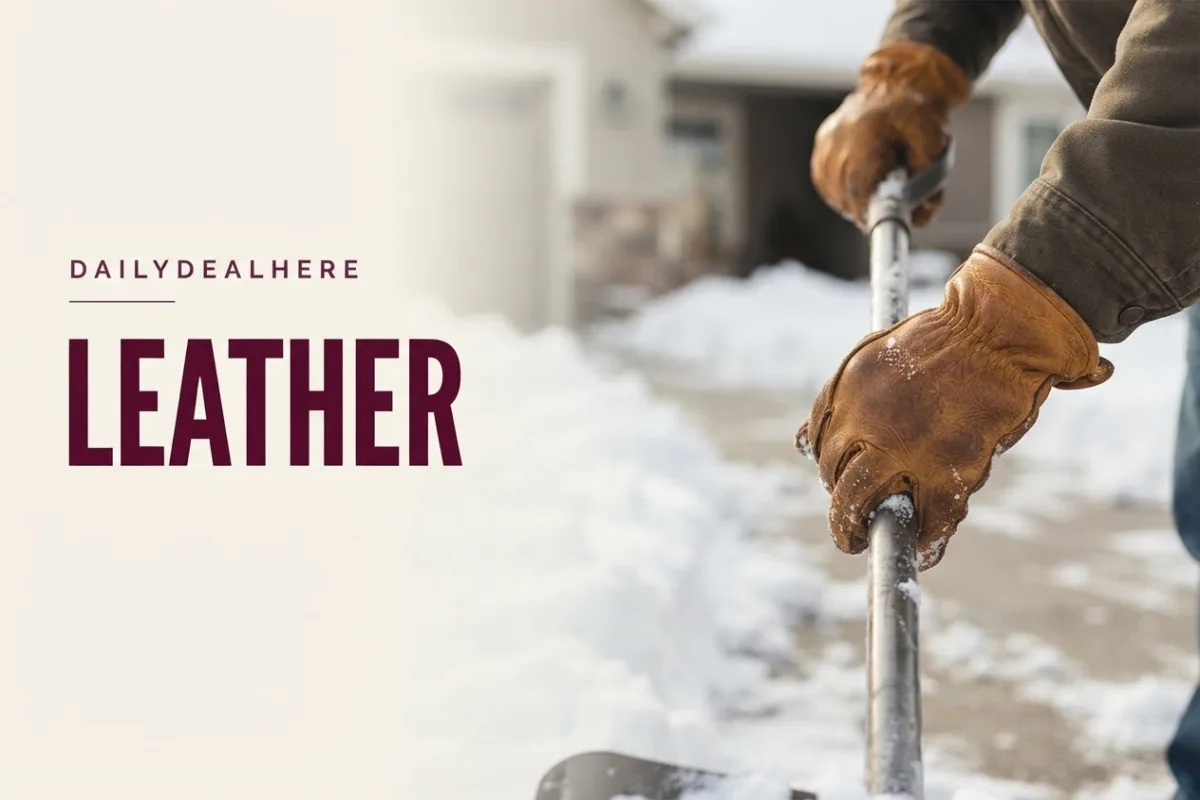
Leather is the most traditional glove shell, and its strength is wind. Sullivan Glove describes leather as a natural barrier against wind, says good leather gloves stay warm in wet work such as shoveling snow, and notes that treated leather can offer excellent protection against moisture. It also lists downsides: leather can stiffen in extreme cold and tends to cost more.
- Goatskin and cowhide: Sullivan describes these as tough and durable, suited to work and hard use.
- Sheepskin: Sullivan calls it the warmest leather option because the wool left on the hide adds insulation.
Most warm leather gloves are lined, often with wool, fleece or synthetic insulation. The leather handles wind and abrasion while the lining provides warmth. For hands that do heavy work in cold weather, our guide to concrete work gloves covers tough outdoor designs.
Nylon, polyester and softshell
Most ski and snow gloves use nylon or polyester shells. These fabrics are light, durable and can be coated or paired with a membrane to resist water. Softshell fabrics, which stretch and breathe, suit active use such as running or cross country skiing, where hands generate plenty of heat and sweat. They usually trade some weather protection for comfort and dexterity.
Look for reinforcement where gloves wear out: palms, fingertips and the thumb crotch. Leather or synthetic leather palms add grip on ski poles, shovels and steering wheels.
Waterproof breathable membranes
A membrane is what makes a glove truly waterproof without turning it into a sweaty plastic bag. Wikipedia describes Gore-Tex, the best known example, as a waterproof, breathable fabric membrane made from expanded PTFE that blocks liquid water while letting water vapor pass through. Other brands use their own membranes on the same principle.
A membrane matters most for snow sports, shoveling, and wet winter climates, where melting snow would otherwise soak the insulation. For dry cold, a windproof but not fully waterproof glove can breathe better and feel less clammy.
Insulation materials compared
| Material | Warmth when dry | Warmth when wet | Wind | Best use |
|---|---|---|---|---|
| Synthetic (Thinsulate, PrimaLoft) | Good to very good | Retains insulation (per Wikipedia) | Depends on shell | Snow sports, wet climates, all round winter use |
| Down | Excellent for weight | Virtually eliminated (per Wikipedia) | Depends on shell | Very cold, dry conditions inside a waterproof shell |
| Wool and merino | Good | Loses insulating power (per Sullivan) | Wind penetrates | Liners, dry calm cold, under a shell |
| Fleece | Moderate | Loses most insulation (per Wikipedia) | Not windproof | Mild days, liners |
| Sheepskin | Very good | Varies with treatment | Blocks wind | Cold commutes, dress and casual wear |
Why liners make such a difference
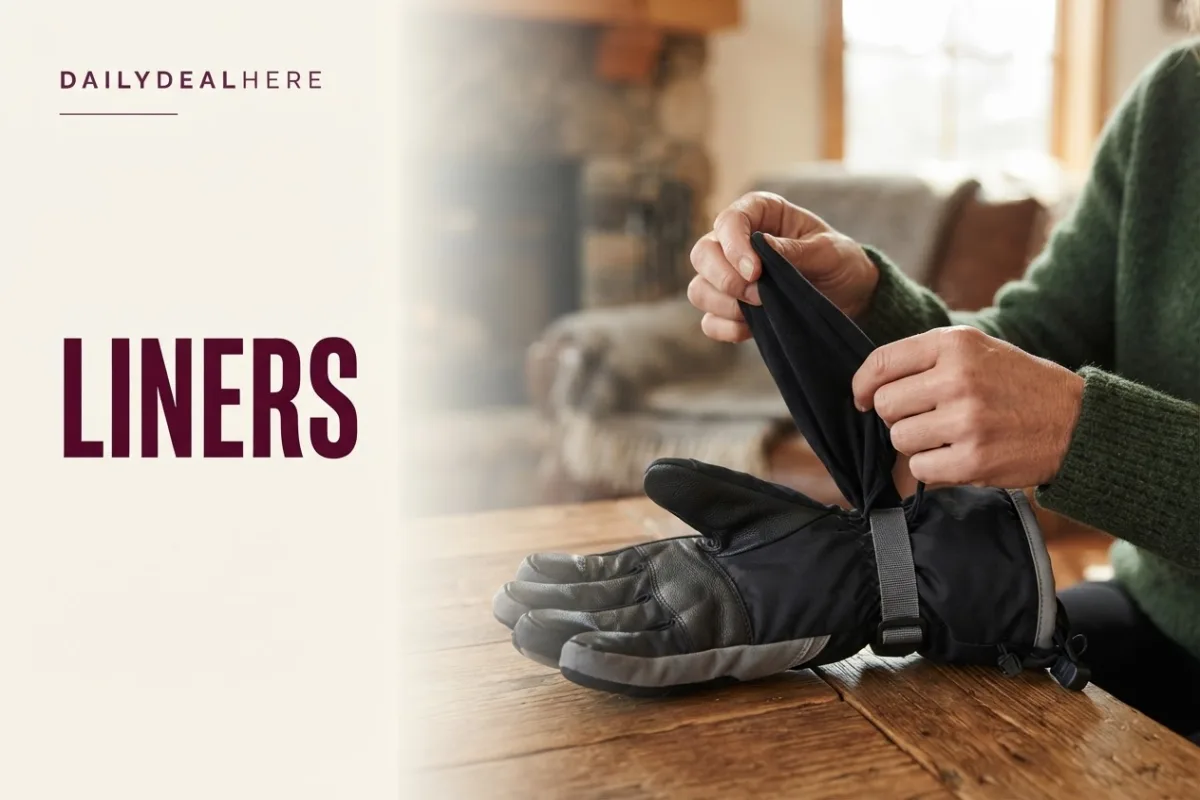
A liner is a thin glove worn inside a larger one. It adds warmth, wicks sweat away from skin, and, if it is removable, lets you dry the inside of your gloves between uses. That matters because damp insulation is the main reason gloves stop working, especially down, wool and fleece.
- Merino liners are soft and comfortable next to skin.
- Polyester liners dry quickly and are inexpensive.
- Touchscreen compatible liners let you use a phone without exposing bare skin.
- Spare liners let you swap in a dry pair midday on long outings.
Matching materials to your activity
| Activity | Recommended combination |
|---|---|
| Skiing and snowboarding | Waterproof breathable shell, synthetic insulation, leather palm. Mittens if you run cold |
| Shoveling snow | Waterproof shell or treated leather, synthetic lining |
| Commuting and city wear | Leather or softshell with a thin wool or synthetic lining |
| Running and active sports | Light softshell or fleece, breathable over waterproof |
| Extreme dry cold | Down or heavy synthetic mittens with a windproof shell and liner |
| Outdoor work | Durable leather shell, insulated lining, reinforced palm |
Snow sports also call for eye protection that works with your gloves. Our guides to the best anti fog snowboard goggles and magnetic ski goggles cover goggles you can adjust with gloves on.
How to read a winter glove label
Glove listings use a lot of marketing language. A few details on the label tell you far more about warmth than the product name does.
- Shell fabric: leather, nylon, polyester or softshell tells you how the glove handles wind and abrasion.
- Membrane: a named waterproof breathable membrane means the glove is designed to keep liquid water out. “Water resistant” usually means a coating that sheds light moisture but will eventually soak through.
- Insulation type and weight: a named synthetic with a gram figure, such as 100 gram or 150 gram, is a useful warmth indicator. Down is usually described by fill.
- Lining: fleece, wool, merino or synthetic, and whether it is removable.
- Palm material: leather or synthetic leather palms add grip and durability.
- Cuff style: gauntlet cuffs go over a jacket sleeve for snow sports, while short cuffs suit everyday wear.
If a listing does not say what the insulation is, assume it is modest. Makers of genuinely warm gloves usually name their insulation and membrane because those are selling points.
Heated gloves and touchscreen gloves
When insulation alone is not enough, battery heated gloves add warmth with built in heating elements. They suit people with poor circulation, long stints outdoors in the cold, or activities with little movement, such as spectating at winter sports or ice fishing. The tradeoffs are weight, bulk, charging and cost. Wikipedia’s frostbite article lists chemical or electric warming devices among the measures that help prevent frostbite.
Touchscreen gloves have conductive threads or pads in the fingertips so you can use a phone without exposing skin. They are handy for commuting and light use, but touchscreen fingertips are usually found on thinner gloves and liners. For real cold, a touchscreen liner under a warmer mitten or glove gives you both.
When cold hands become a safety issue
Gloves are not just about comfort. Wikipedia’s article on frostbite notes that it most often affects the hands and feet, and is often preceded by frostnip, a paling or reddening of the skin that tingles, feels very cold or simply feels numb. That can be followed by clumsiness and white or bluish, waxy looking skin in full frostbite.
The same article lists practical prevention measures that relate directly to glove choice: wearing proper, fully covering clothing, avoiding moisture including sweat, layering clothing, using chemical or electric warming devices, and recognizing early signs of frostnip and frostbite. It also names risk factors such as conditions and substances that impair circulation, including diabetes, Raynaud’s phenomenon, tobacco and alcohol. If numbness or color changes appear, get out of the cold and seek medical advice rather than relying on better gloves.
Common glove mistakes
- Buying for looks over conditions: a thin fashion glove will not handle a long wait at a bus stop in a windy city.
- Choosing down for wet activities: down loses its insulating power once wet.
- Wearing gloves too tight: compressed insulation traps less warm air.
- Sweating into the gloves: overheating on the way up a hill soaks the lining and leaves hands cold later. Vent or remove the outer layer when working hard.
- Putting gloves on a radiator: high heat can damage leather and membranes. Dry them gently.
- Relying on one pair all winter: a spare pair or spare liners means you always start the day dry.
A layering system for very cold days
On the coldest days, the most flexible approach is a system you can adjust rather than one very thick glove. Wikipedia’s frostbite article lists layering clothing among its prevention measures, and the same logic applies to hands.
- Start with a thin liner in merino or polyester, which stays on even when you need dexterity for a zipper, phone or buckle.
- Add an insulated shell glove or mitten with synthetic insulation for wet conditions or down for dry cold.
- Keep a spare liner in an inside pocket, where body heat keeps it warm and dry, and swap it in if the first one gets damp.
- Add a warming device such as a chemical hand warmer inside a mitten on the coldest days, as the frostbite prevention measures suggest.
- Vent before you sweat. Take the outer layer off during hard effort and put it back on when you stop.
This approach keeps hands warmer across a whole day than any single glove, because you can respond to changing effort and weather instead of either overheating or freezing.
Choosing winter gloves for children

Children play in snow, lose gloves and rarely tell you their hands are wet until they are already cold. Mittens are usually the better choice for younger kids because they are warmer, as Wikipedia notes, and easier to pull on than gloves with five separate fingers. Look for a waterproof shell, synthetic insulation that keeps working when damp, long cuffs that seal over coat sleeves, and a leash or clip so they do not get lost. Buying two pairs lets one dry while the other is in use.
Fit matters as much as material
Even the best insulation fails in a glove that fits badly. A glove that is too tight compresses the insulation, squeezing out the trapped air that keeps you warm, and can restrict circulation. A glove that is too loose leaves cold air pockets and makes gripping harder.
- Try gloves on with the liner you plan to use.
- Make a fist. There should be a little room at the fingertips without the glove feeling baggy.
- Check that the cuff seals against your jacket sleeve. Long gauntlet cuffs go over the sleeve, shorter cuffs tuck under.
- Grip something, such as a pole or a phone, to check dexterity.
Care tips that keep gloves warm
- Dry them properly after each use, liners out, away from direct high heat, which can damage leather and membranes.
- Follow the care label, especially for wool, which Sullivan notes can shrink when washed and is best hand washed and air dried.
- Condition leather occasionally so it stays supple, and re-treat it for water resistance if the maker recommends it.
- Keep down dry, since Wikipedia notes damp down clumps and can mildew.
For people whose extremities run cold, pairing good gloves with warm feet helps too. Our guide to battery heated socks covers options for the other end.
Frequently asked questions
What is the best material for winter gloves?
A combination: a wind and water resistant shell such as leather or nylon with a waterproof breathable membrane, over insulation that works when damp, such as Thinsulate, PrimaLoft or wool, ideally with a removable liner.
What are the warmest gloves for winter?
Mittens are warmer than gloves because they expose less surface area to the cold, according to Wikipedia. The warmest setups combine a mitten shape, a windproof and waterproof shell, synthetic or down insulation, and a liner.
Is wool or synthetic better for winter gloves?
Synthetic insulation such as Thinsulate retains its insulating properties when wet, per Wikipedia, which makes it better for snow and sweaty activities. Wool is warm and breathable in calm, dry cold but lets wind through and loses warmth when wet.
Are leather gloves warmer than wool?
It depends. Glove maker Sullivan Glove says wool retains heat better in calm weather, while leather blocks wind and holds up better in wet work. Many warm gloves combine a leather shell with a wool or synthetic lining.
Is down good for winter gloves?
Only in dry cold. Down is very warm for its weight, but Wikipedia notes that when it gets wet its thermal properties are virtually eliminated, and it clumps and can mildew if left damp.
Are fleece gloves warm enough for winter?
Not on their own in harsh weather. Wikipedia notes that regular polar fleece is not windproof and loses most of its insulating quality when wet. Fleece works well as a liner under a windproof shell.
What does Thinsulate gram weight mean?
It indicates how much insulation the glove contains. Wikipedia lists Thinsulate R-values from 1.6 for 80 gram fabric to 2.9 for 200 gram fabric, so higher gram weights are warmer but bulkier.
What fabric is best for glove liners?
Merino wool is soft and comfortable against skin, and polyester dries quickly. Touchscreen compatible liners let you use a phone without removing them.
Pick a shell that stops wind and water, an insulation that suits your conditions, and a liner you can dry, and choose mittens when warmth matters more than dexterity. The right combination beats any single miracle fabric.









Write Your Review
No reviews yet. Be the first to share your experience!