

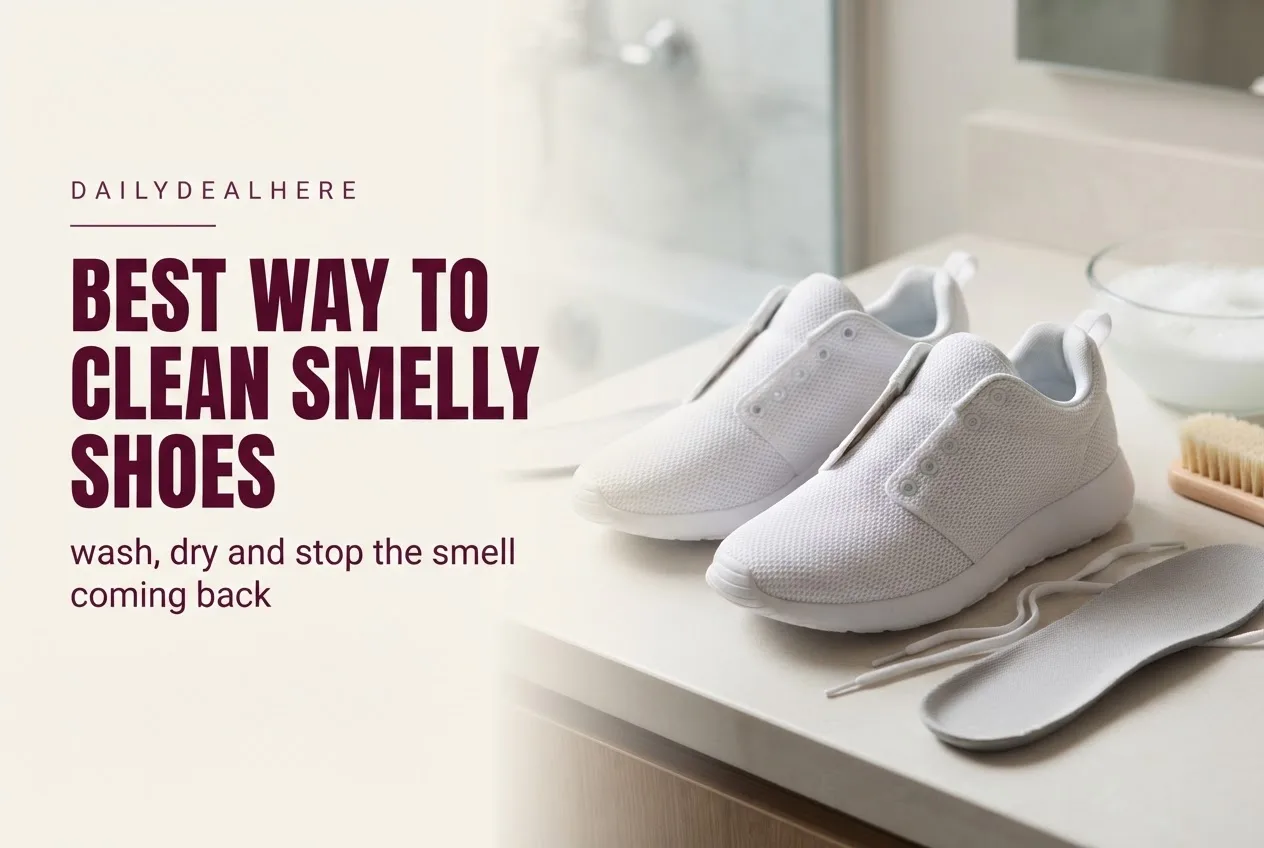
The best way to clean smelly shoes is to pull out the insoles, wash the shoes and insoles by hand with a mild soap solution, and then let everything air dry completely at room temperature before you wear them again. Odor comes from sweat and bacteria, so drying is as important as washing. After that, keep the smell from coming back by rotating shoes so each pair gets a full day to dry, changing socks daily, and treating your feet as well as your footwear. Shoes that still smell after a proper wash usually need new insoles, not more scrubbing.
This guide explains why shoes start to smell, how to clean them step by step without damaging them, when a washing machine is and is not a good idea, how to handle different materials, quick fixes for when you need the shoes today, and the foot care habits that stop the problem at its source. It draws on the NHS guide to smelly feet, Nike’s shoe cleaning guide and advice from a podiatrist at Cleveland Clinic.
The short answer
- Remove the insoles and laces and clean them separately.
- Hand wash the shoe with warm water and a small amount of mild detergent or dish soap, using a soft brush.
- Air dry completely at room temperature, which Nike says can take at least 8 hours. Never use a clothes dryer.
- Disinfect the insoles if the smell is strong. A Cleveland Clinic podiatrist suggests lightly spraying them with a kitchen disinfectant and letting them dry for 24 hours.
- Replace insoles that still smell after cleaning.
- Prevent it: rotate shoes, change socks daily and keep your feet clean and dry.
Comparing the main methods
Each method tackles a different part of the problem. Most smelly shoes need a combination rather than one magic step.
| Method | What it does | Time needed | Best for |
|---|---|---|---|
| Air drying and rotation | Removes the moisture bacteria need | A full day between wears | Every pair, every week |
| Hand washing | Removes sweat residue, dirt and skin from the shoe | About 30 minutes plus at least 8 hours drying | Washable sneakers and athletic shoes |
| Cleaning insoles | Targets the part that absorbs the most sweat | A few minutes plus full drying | Any shoe with removable insoles |
| Disinfectant spray | Reduces the bacteria living in the insole and lining | 24 hours drying | Strong, persistent odor |
| Replacing insoles | Removes the most saturated material entirely | Minutes | Odor that survives cleaning |
| Cornstarch, baking soda or charcoal | Helps keep shoes drier and fresher between washes | Overnight | Maintenance, not rescue |
Why shoes start to smell
The NHS explains that smelly feet, known medically as bromodosis, are common and usually caused by a build-up of sweat and bacteria, and sometimes by fungal infections such as athlete’s foot. Shoes absorb that sweat, stay warm and dark inside, and give bacteria a place to keep working long after you take them off.
Podiatrist Joy Rowland, speaking to Cleveland Clinic, adds that bacteria do not only feed on sweat but also on dead skin, and that unpleasant odor comes from moisture, which is why she stresses keeping feet, shoes and socks as dry as possible. The insole takes the brunt of all three, which is why it is usually the smelliest part of a shoe.
What makes it worse
The NHS lists several things that increase how much you sweat, and therefore how quickly shoes turn smelly.
- Hot weather and exercise.
- Standing all day.
- Being overweight.
- Hormonal changes during puberty, menopause and pregnancy.
- Some medicines, such as antidepressants.
- Hyperhidrosis, a condition that causes excessive sweating.
Habits matter too. The NHS advises against wearing the same socks or shoes two days in a row and against wearing tight shoes. A single pair worn every day never fully dries, so the bacteria never get a break.
Step one: dry them out properly
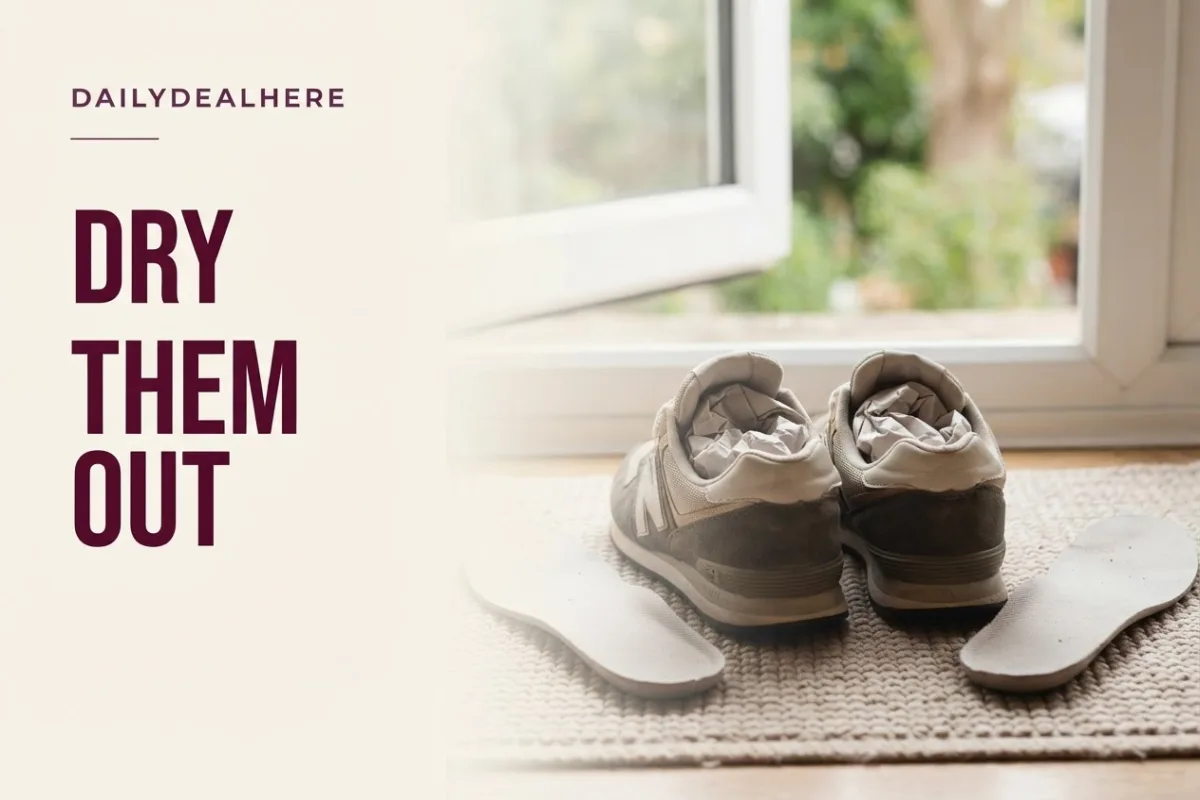
Before any cleaning product, the cheapest fix is simply drying. The NHS recommends letting shoes dry out before wearing them again. Cleveland Clinic’s podiatrist recommends avoiding wearing the same shoes every day so they have the time they need to dry out.
- Take the insoles out after wearing so both the insole and the inside of the shoe can air.
- Loosen the laces and open the tongue wide.
- Leave shoes somewhere with airflow, not in a closed closet or gym bag.
- Stuff damp shoes with crumpled newspaper to hold their shape, which Nike also suggests before cleaning.
- Avoid direct high heat, which Nike warns can damage and deform shoes.
For mildly smelly shoes, a few days of proper drying and rotation can make a noticeable difference on its own.
Clean or replace the insoles
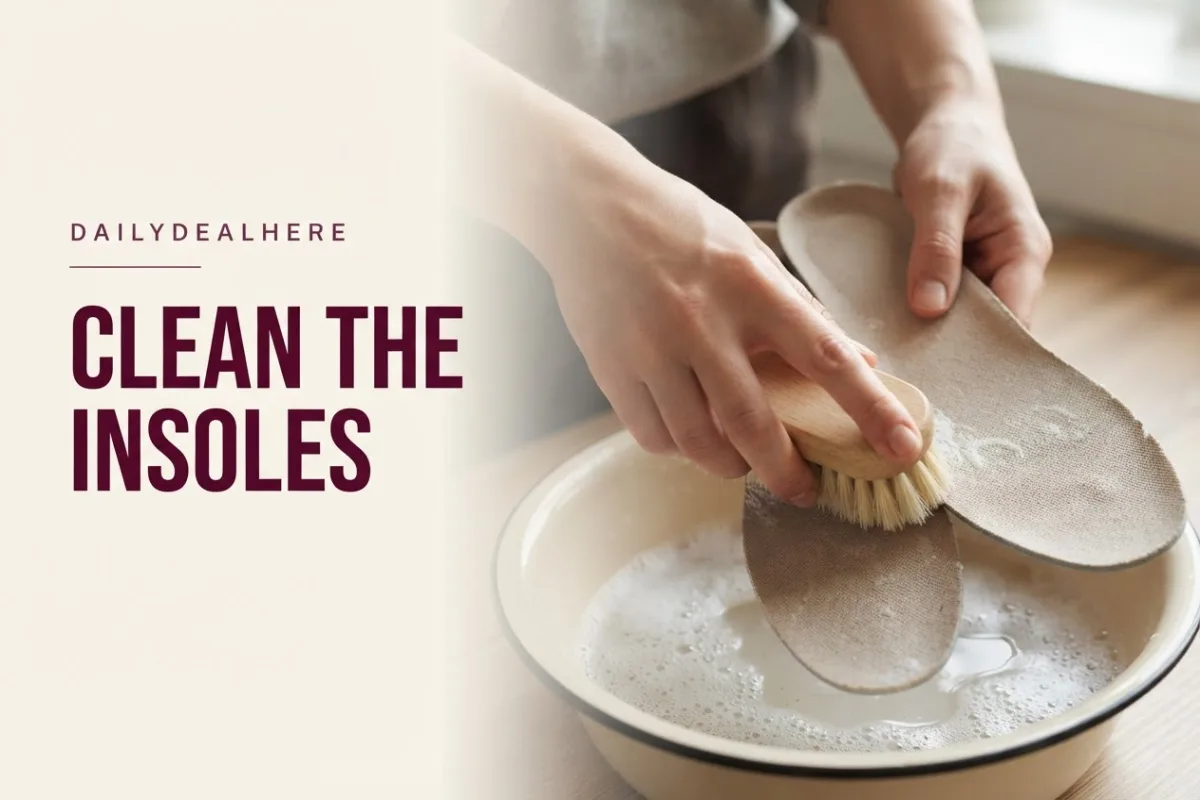
Because the insole absorbs the most sweat and skin, it deserves the most attention. Nike recommends removing insoles and cleaning them with the same mild solution used on the rest of the shoe, then letting them dry completely before putting them back. If odor persists after cleaning, Nike suggests replacing the insoles, which are sold at many sporting goods and shoe stores.
For a stronger approach, Dr. Rowland suggests a general purpose kitchen disinfectant spray containing ethanol and other sanitizing ingredients. Take the insole out, spray it lightly, and let it dry for 24 hours before putting it back. The NHS also notes a pharmacist can suggest medicated insoles for shoes.
How to hand wash smelly shoes
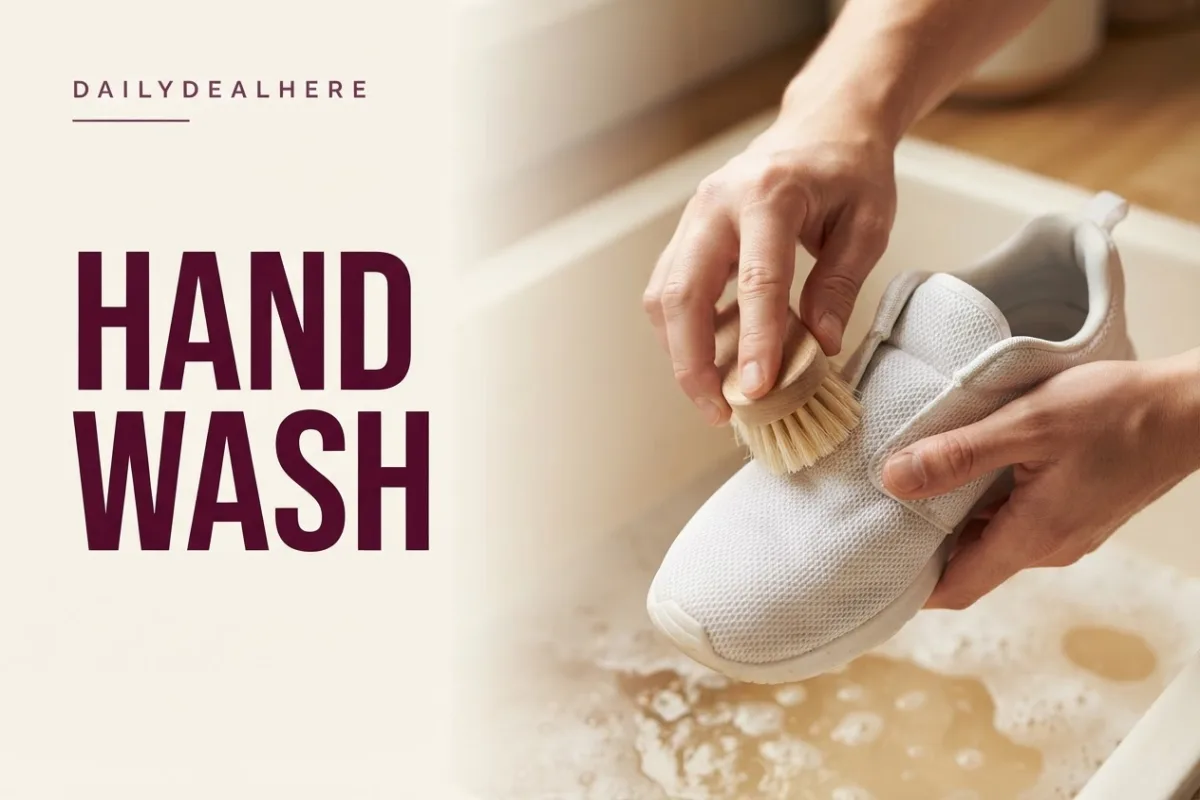
Nike’s step by step method works for most sneakers and athletic shoes, and it is gentle enough to use regularly.
- Prepare. Remove laces and insoles. Nike suggests using a shoe tree or crumpled newspaper inside to keep the shape during cleaning.
- Dry brush. Remove loose dirt from the outsole, midsole and uppers with a soft brush. A clean spare toothbrush works.
- Mix a mild solution. Warm water with a small amount of mild laundry detergent or dish soap. Nike warns to dilute dish soap well, because a high concentration can discolor some materials or strip natural oils.
- Wash the laces. Massage them in the solution, rinse and dab dry.
- Wash the soles. Scrub the outsole and midsole with the solution and a brush or cloth, then dry with a soft cloth.
- Wash and blot the uppers. Brush gently, then blot with a dry microfiber towel to lift soapy moisture and dirt. Nike advises against rubbing to dry, which can wear the fabric.
- Air dry. Let the shoes dry at room temperature and make sure they are completely dry before wearing. Nike says many shoes need at least 8 hours.
For odor specifically, give extra attention to the inside of the shoe. Wipe the lining with the mild solution, particularly around the toe box and heel where sweat collects, then leave the shoe open to dry thoroughly.
Should you put shoes in the washing machine?
Check the care label first, because the answer depends on the shoe. Nike does not recommend washing its shoes in a washing machine. It says hand washing is the best way to avoid accidental damage, that delicate materials can be damaged in the washer, that dryer heat can deform shoes, and that bulky items like sneakers can even damage the washing machine.
Some shoes are sold as machine washable, and their makers give their own instructions. If yours are, follow those directions exactly. For everything else, hand washing is safer, and laces can go in the machine separately. Nike suggests putting laces in a mesh bag on a gentle cycle and letting them air dry.
Cleaning by material
Different materials need different care. Here is how Nike’s guidance breaks down, with odor tips for each.
| Material | How to clean (Nike guidance) | Odor tip |
|---|---|---|
| Knit and mesh | Mild soapy water without harsh chemicals, brush in the direction of the knit, no bleach, air dry, no dryer | Mesh breathes well, so drying is usually fast once the insole is out |
| Leather | Dry brush and mild dish soap solution, a cleaning eraser or leather conditioner for stains, avoid hard scrubbing | Condition after cleaning, and focus odor treatment on the removable insole |
| Suede | Suede brush with the grain, suede rubber or pencil eraser for marks, white vinegar on a cloth for stubborn stains | Avoid soaking. Treat the insole and interior lining rather than the outside |
| White and light shoes | A paste of equal parts baking soda and water for cleaning | Wash inside and out, since light linings show sweat stains |
Disinfecting shoes that really reek
When washing alone does not fix the smell, the goal is to reduce the bacteria living in the shoe. Dr. Rowland’s advice to Cleveland Clinic is that you do not need to throw strongly smelling shoes away: a kitchen disinfectant spray containing ethanol can take care of the odor.
- Remove the insole and spray it lightly.
- Lightly mist the inside of the shoe, avoiding saturating it.
- Let everything dry for a full 24 hours before reassembling.
- Spot check a hidden area first on colored or delicate linings.
The NHS also notes that pharmacists can recommend foot deodorants and antibacterial products that help from the foot side of the problem.
Home deodorizers: baking soda, cornstarch and charcoal
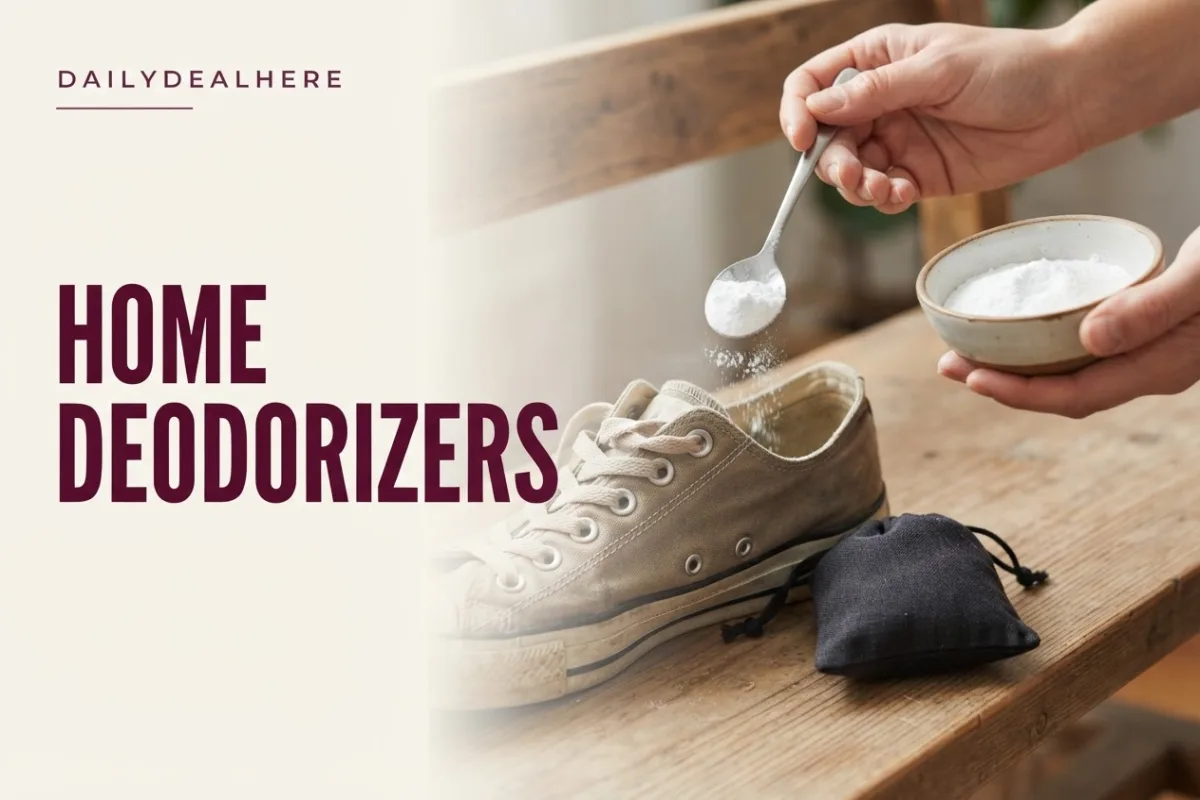
Several simple household options can help between washes.
- Cornstarch: Dr. Rowland suggests sprinkling a little cornstarch into your shoes to help keep your feet dry.
- Baking soda: a common home method is to sprinkle baking soda inside dry shoes overnight and shake it out thoroughly in the morning. Nike also uses baking soda as a cleaning paste for light colored shoes.
- Charcoal pouches: placing an odor absorbing pouch in shoes between wears is another low effort option. Our guide to the best charcoal odor absorbers covers options.
These help most when combined with drying and rotation. None of them will overcome a pair worn every day in the same sweaty socks.
Quick fixes when you need the shoes today
Sometimes there is no time for an 8 hour dry. A few fast steps can help in the moment.
- Pull out the insoles and swap in a clean or spare pair if you have them.
- Lightly spray the inside with a disinfectant, then open the shoes to a fan or a breeze. Room temperature airflow dries faster than you might expect, without the heat damage Nike warns about.
- Put on fresh, dry socks. Dr. Rowland suggests carrying a spare pair of moisture wicking socks to change into after a workout or at lunchtime.
- Apply antiperspirant or foot powder to clean, dry feet, as the NHS suggests.
This masks and reduces the problem for a day. Plan a proper wash and dry as soon as you can.
Why shoes still stink after washing
- The insoles were not cleaned or replaced. They hold most of the odor. Nike suggests replacing insoles if odor persists.
- The shoes were not fully dry. Nike stresses drying completely before wearing. Damp shoes restart the cycle immediately.
- The source is your feet. The NHS points to sweat, bacteria and sometimes fungal infections. If your feet are the problem, clean shoes will smell again within days.
- No rotation. Wearing the same pair daily keeps it damp.
- A fungal infection. The NHS lists athlete’s foot among the causes, and a GP can prescribe stronger antifungal treatment if needed.
Fix the feet, not only the shoes
Clean shoes will not stay fresh on feet that keep reseeding them. The NHS gives a simple routine.
- Wash your feet at least once a day, using antibacterial soap if you can.
- Dry them well, including between your toes.
- Remove hard skin with a foot file and keep toenails short and clean.
- Use foot powder or an antiperspirant.
Dr. Rowland adds a few more options: soaking feet in an Epsom salt solution for 10 to 20 minutes, or a vinegar soak of two parts water to one part vinegar for 15 to 20 minutes once a week, avoiding soaks if you have open cuts or sores or if they irritate your skin. She also recommends exfoliating with a scrub or pumice stone at least once a week, since bacteria feed on dead skin, and says a regular underarm antiperspirant can help control foot moisture.
Socks matter more than you think
Socks are the barrier between your sweat and your shoe. The NHS advises not wearing the same socks two days in a row, and changing socks at least twice a day if you have hyperhidrosis. It recommends breathable or natural materials on your feet, such as cotton or leather.
Dr. Rowland recommends moisture wicking socks and carrying a spare pair for midday changes, and pairing shoes with clean cotton socks. The best sock is a dry one: whichever fiber you choose, changing out of damp socks is what keeps the shoe from soaking up more sweat.
Rotate your shoes
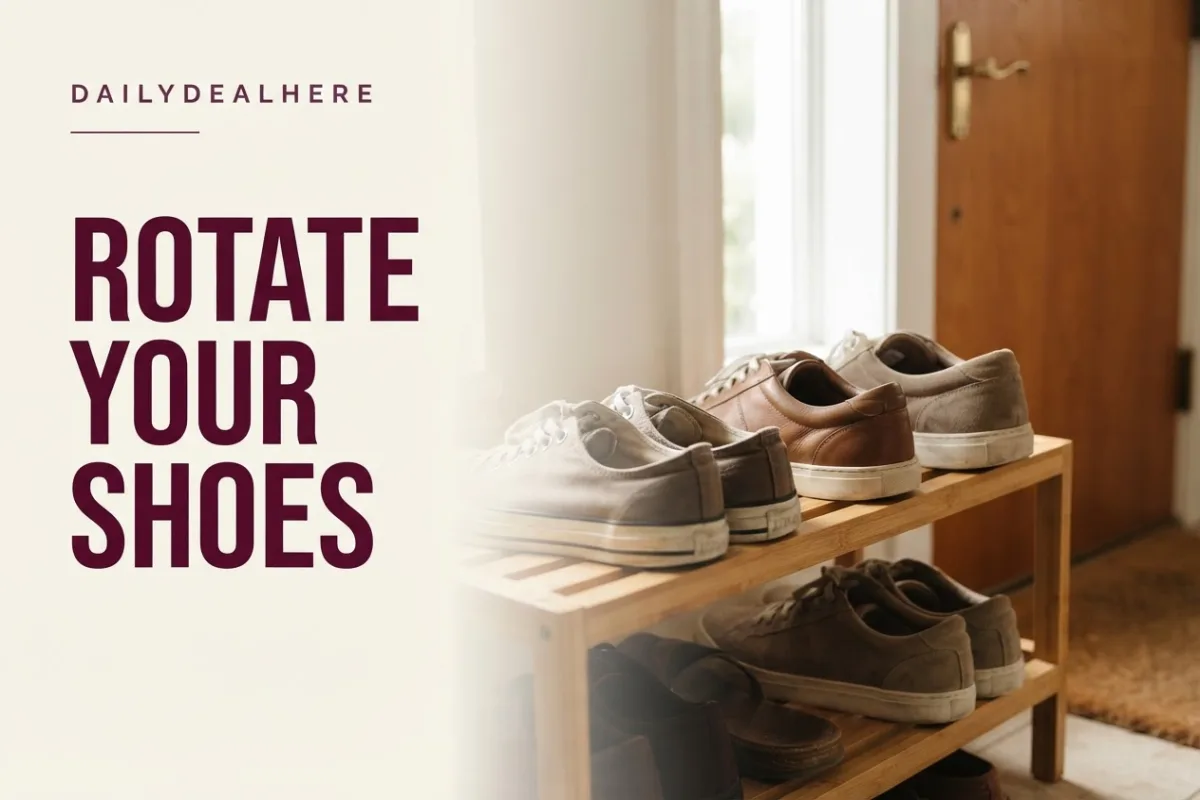
Rotation is the single most effective habit for preventing odor, and both the NHS and Cleveland Clinic recommend it. Having at least two pairs of everyday shoes means each gets a full day to dry out between wears. For people who stand all day or exercise daily, a third pair makes the rotation easier.
If you walk a lot, it may be worth keeping two pairs of the same model. Our guides to the best walking shoes and best running shoes cover comfortable options for everyday wear.
Storing shoes between wears
Where shoes spend the night matters almost as much as how they are cleaned, because the whole goal is to let moisture escape. A sealed gym bag, a car trunk or the back of a closed closet traps sweat inside the shoe, which is exactly the warm, damp environment the NHS and Cleveland Clinic describe as the root of the problem.
- Take workout shoes out of the gym bag as soon as you get home.
- Store shoes on an open rack rather than in a pile or a closed box.
- Keep a spare pair of insoles so one set can dry while the other is in use.
- If you change shoes at work, leave the work pair somewhere with airflow rather than in a locker all week.
Choosing shoes that smell less
Dr. Rowland’s footwear advice is to wear open, breathable shoes that are not too tight whenever possible, to choose natural materials such as leather or cotton, and to avoid wearing the same pair every day. The NHS also advises against tight shoes.
Tight shoes squeeze the foot, increase friction and leave no room for air. If a favorite pair pinches, a shoe stretcher can help, and our guide to the best shoe stretchers for width covers options. For shoes with fabric uppers that pick up stains along with smells, our guide to the best fabric stain removers may help.
When to give up on a pair
Some shoes are past saving. Nike notes that if shoes still look dirty after repeated cleaning, it may be time for a new pair, and that running shoes in particular should be replaced every 300 to 500 miles. The same logic applies to odor: if new insoles, a thorough wash, disinfecting and a proper rotation still leave a pair smelling, the foam and lining may simply be saturated.
When to see a doctor
The NHS recommends seeing a GP if smelly feet have not improved after treating them yourself or if they are affecting your daily life, and stresses there is nothing to be embarrassed about. A doctor can check for a condition such as a fungal infection or hyperhidrosis and may suggest stronger treatments. Cleveland Clinic adds that various medical conditions and some medications can change or intensify body odor, so persistent foot odor is worth mentioning to a provider.
A simple weekly routine
- Every day: wash and dry your feet, put on clean socks, and wear a different pair of shoes from yesterday.
- After wearing: take out the insoles and leave shoes open to air.
- Once a week: exfoliate your feet and wipe the inside of your most worn shoes.
- Every two weeks: clean your regular shoes, which Nike suggests as a good interval, or sooner if they look dirty.
- As needed: disinfect insoles and let them dry 24 hours, and replace insoles that keep smelling.
Frequently asked questions
What is the best way to clean smelly shoes?
Remove the insoles and laces, hand wash the shoes with warm water and a little mild detergent or dish soap using a soft brush, clean the insoles separately, then air dry everything completely at room temperature. Replace insoles that still smell after cleaning.
How do I remove odor from shoes immediately?
Swap in clean insoles, lightly spray the inside with a disinfectant and let air move through the shoes, then wear fresh dry socks on clean feet with a little foot powder or antiperspirant. This helps for a day, but a full wash and dry fixes the cause.
Why do my shoes stink even after washing?
Usually because the insoles were not cleaned or replaced, the shoes were not fully dry, or the odor is coming from your feet. The NHS notes sweat, bacteria and fungal infections like athlete’s foot cause foot odor, so clean feet and rotating shoes matter as much as washing.
Can I put smelly shoes in the washing machine?
Check the care label. Nike does not recommend machine washing its shoes, because delicate materials can be damaged and dryer heat can deform them. Some shoes are sold as machine washable, and those can follow the maker’s instructions.
Does baking soda get rid of shoe odor?
Many people sprinkle baking soda into dry shoes overnight and shake it out in the morning as a simple home deodorizer. It works best alongside drying, rotation and clean insoles rather than as a fix on its own.
How do I disinfect the inside of my shoes?
A Cleveland Clinic podiatrist suggests a kitchen disinfectant spray containing ethanol. Take out the insole, spray it lightly, let it dry for 24 hours and put it back. Mist the inside of the shoe lightly too, without soaking it.
How long do shoes take to dry after washing?
Nike says many shoes need at least 8 hours to dry fully at room temperature. Remove the insoles, open the shoe and use airflow rather than heat, since dryers and direct heat can damage and deform shoes.
How can I stop my shoes from smelling in the first place?
Rotate between at least two pairs so each dries for a day, change socks daily, wash and thoroughly dry your feet, use foot powder or antiperspirant, and choose breathable shoes that are not too tight.
Wash gently, dry completely, deal with the insoles, and fix the feet as well as the footwear. Shoes that get a day off between wears rarely need rescuing in the first place.









Write Your Review
No reviews yet. Be the first to share your experience!