

Wool in July sounds like a mistake, and it is one of the more useful pieces of received wisdom to unlearn. The property that makes merino work in cold weather, its ability to move moisture and keep functioning when damp, is exactly what makes a thin merino sock better than cotton on a hot day. The variable that decides whether you cook is fabric weight, not fibre. We compared 7 pairs from Darn Tough, DANISH ENDURANCE, Busy Socks and more on weight, merino percentage, cushioning and height.
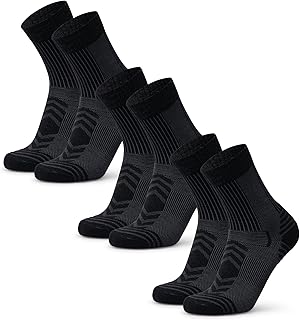
Our top pick is the DANISH ENDURANCE Merino Wool Hiking Socks in the lightweight version, because a light knit is what makes merino a summer sock rather than a compromise. For footwear to go with them, our guide to the best arch support sneakers covers fit.
Pros
- Light knit suits warm weather rather than fighting it
- Merino odour resistance allows multi day wear
- Moves moisture instead of holding it like cotton
- Shaped construction resists bunching
Cons
- Less cushioning than a midweight hiking sock
- Merino blends wear faster than pure synthetics
The reason this leads a summer list is the knit rather than the fibre. Most merino socks are built for winter, so shoppers meet thick cushioned options and conclude wool is the problem. A lightweight version of the same fibre behaves completely differently on a hot day.
What you keep is the part worth paying for. Merino moves moisture through the fibre rather than holding it against the skin the way cotton does, which is the mechanism behind most blisters, and it resists odour well enough that two pairs cover a week of travel.
What you give up is cushioning. This is not the sock for a long day under a heavy pack, where a midweight with targeted padding does more. It is the sock for warm weather walking, travel and everyday wear where thickness is the enemy.
Bottom line: the right weight for the season, and the easiest recommendation for anyone who has written off wool in summer.
- Fibre: merino wool blend with nylon and elastane
- Weight: lightweight knit
- Height: crew
- Cushioning: minimal
- Best use: summer hiking, travel, everyday
- Care: wash cool, air dry or tumble low
Keep them out of a hot dryer. High heat felts wool permanently, leaving the sock smaller and scratchy.
Skip fabric softener, which coats the fibres and undermines the moisture handling that makes merino worth buying.
Anyone walking in warm weather, travellers packing light, and people who find cotton socks leave their feet wet.
Less suited to long days under a heavy pack, where more cushioning helps.

Pros
- Exceptional durability for a wool blend
- Lifetime guarantee against wearing through
- Well shaped fit that stays in place
- Micro crew height suits boots and shoes
Cons
- Midweight is warm for high summer
- Higher price than most merino socks
Durability is where merino blends usually lose, and this is the sock that addresses it head on. Reinforcement where socks actually fail, at the heel and the ball of the foot, plus a guarantee that changes the arithmetic on an expensive pair.
The fit deserves mention separately. A defined heel pocket and arch compression keep it where it belongs through a long day, and a sock that does not move is a sock that does not rub.
For high summer, midweight is more sock than the season calls for, and that is worth being honest about on a list like this. It suits shoulder seasons, cooler mornings and anyone who prioritises the sock lasting years over feeling lightest in August.
Bottom line: the durability pick, slightly warm for the hottest weeks.
- Fibre: merino wool blend
- Weight: midweight
- Height: micro crew
- Cushioning: full underfoot
- Guarantee: covers wearing through
- Best use: hiking, shoulder seasons
Hikers who want socks that last years, and anyone who has worn through several cheaper pairs.
Less ideal as a pure hot weather sock.
Read what the guarantee covers before relying on it, since brands treat wear and manufacturing faults differently.
Rotate pairs rather than wearing one continuously, since fibres recover shape when rested.

Pros
- Three pairs allow proper rotation
- Cushioning under heel and forefoot
- Anti blister construction with shaped fit
- Good value per pair
Cons
- Cushioned knit is warmer than the lightweight version
- Crew height is more sock than low shoes need
Buying socks in threes is more useful than it looks. Fibres recover their shape when rested, so three pairs rotated outlast three pairs used one after another until each dies, and having spares means never wearing a damp pair.
The cushioning here sits under the heel and forefoot where impact concentrates, with the anti blister claim resting on shaping that keeps the fabric from moving against the skin.
For high summer this is warmer than the lightweight version of the same line, and the crew height is more than low shoes need. It is the better buy for hiking and cooler days, and the lightweight version is the better buy for heat.
Bottom line: the multipack for hiking and rotation, one step warm for the hottest weeks.
- Fibre: merino wool blend
- Weight: cushioned
- Height: crew
- Quantity: 3 pairs
- Construction: anti blister shaping
- Best use: hiking and cooler days
Hikers wanting several pairs at once, and anyone building a rotation rather than buying a single pair.
Less suited to the hottest part of summer in low shoes.
Wash cool, inside out, and avoid the hot dryer that permanently shrinks wool.
Rotate pairs so each rests between wears, which extends the life of all three.

Pros
- Substantial cushioning for long distances
- Merino blend keeps odour resistance
- Comfortable underfoot on hard surfaces
- Well rated by a large number of buyers
Cons
- Thermal cushioning is warm for high summer
- Bulk changes the fit of snug shoes
This is a cushioning first sock, and the value shows on hard surfaces over distance, where the extra material under the heel and forefoot takes impact that would otherwise reach the foot directly.
The merino content still does its job on odour and moisture, so this is not a synthetic hiking sock with wool in the name.
The word thermal is a fair warning. In high summer this is more insulation than the conditions call for, and the extra bulk also changes how a snug shoe fits, which matters if the shoes were bought while wearing thin socks. Treat it as a three season sock that happens to be merino.
Bottom line: strong cushioning for long walks, a season warmer than a summer knit.
- Fibre: merino wool blend
- Weight: cushioned, thermal
- Height: crew
- Cushioning: substantial underfoot
- Best use: long walks, cooler conditions
- Care: wash cool, avoid hot drying
Walkers covering distance on hard surfaces who want impact protection more than they want a thin sock.
Not the pick for the hottest weeks or for tight fitting shoes.
Try shoes with the socks you intend to wear, since cushioning changes fit noticeably.
For summer, pair these with roomier footwear or choose a lighter knit instead.

Pros
- Ankle height is the coolest option here
- Compression through the arch keeps the sock in place
- Light knit suits running in heat
- Merino odour resistance in a low cut sock
Cons
- Low cut leaves the ankle exposed to shoe collars
- Compression fit is not to everyone's taste
Ankle height plus a light knit is the coolest combination in this list, which makes this the natural choice for running or wearing low shoes through summer.
Arch compression is the useful detail. A sock that grips the midfoot does not migrate down under the heel during a run, and a sock that stays put is a sock that does not rub.
Two caveats. A low cut sock has to clear the shoe collar or it will slide and leave bare skin rubbing at the back of the heel, so check the height against your shoes. And compression is a preference; some people find it reassuring and others find it tight.
Bottom line: the summer running pick, provided the cuff sits above your shoe collar.
- Fibre: merino wool blend
- Weight: light
- Height: ankle
- Feature: arch compression
- Best use: running and low shoes in heat
- Care: wash cool, air dry
Runners and anyone wearing low shoes in warm weather who wants merino properties in a minimal sock.
Less suitable with boots or where the shoe collar sits high.
Check that the cuff clears your shoe collar, since a sock finishing exactly at the collar line will slip under the heel.
If between sizes, choose the smaller band so the compression works as intended.

Pros
- Thin enough for dress shoes
- Handles a warm office far better than cotton
- Odour resistance matters most in enclosed shoes
- Smart appearance rather than sports styling
Cons
- No cushioning, as expected in a dress sock
- Thin knit wears faster than hiking weights
Dress shoes in summer are the least ventilated footwear most people own, and cotton dress socks are the worst possible pairing with them: absorbent, slow to dry and prone to holding odour by mid afternoon.
A thin merino sock is the direct fix. It fits inside a dress shoe without changing the fit, moves moisture rather than storing it, and resists odour in exactly the conditions that generate it.
There is no cushioning, which is correct for the format, and a thin knit will wear faster than a hiking sock. For an office in August, both are reasonable trades for feet that stay comfortable through the day.
Bottom line: an easy upgrade for anyone wearing dress shoes in warm weather.
- Fibre: merino wool blend
- Weight: thin
- Style: dress sock
- Cushioning: none
- Best use: offices and dress shoes in summer
- Care: wash cool, avoid hot drying
Anyone wearing dress shoes through summer who currently uses cotton socks and finds their feet damp by afternoon.
Not intended for hiking or sport.
Wash inside out to remove more of the residue that causes odour.
Air dry rather than tumbling, which is quick with a thin knit and avoids heat damage entirely.

Pros
- Affordable entry into merino socks
- Ankle height and light knit suit summer
- Unisex sizing across a wide range
- Everyday usable rather than sport specific
Cons
- Lower merino content than premium options
- Less durable than reinforced hiking socks
Merino socks carry a price premium that puts people off trying them, and this is a reasonable way in without committing to a specialist outdoor brand.
Ankle height and a light knit make it a genuine summer sock, and the merino content still improves on cotton for moisture and odour even at a lower percentage.
The compromises follow from the price. A lower wool percentage means less of the odour resistance that makes merino worth having, and lighter construction without reinforced wear zones means a shorter life. For everyday wear rather than hard use, that is a fair trade.
Bottom line: the affordable way to find out whether merino suits you.
- Fibre: merino wool blend
- Weight: light
- Height: ankle
- Sizing: unisex range
- Best use: everyday warm weather
- Care: wash cool, air dry
Anyone trying merino for the first time, and everyday wearers who do not need reinforced hiking construction.
Less suitable for heavy use or long distance walking.
If these work for you, a higher wool percentage is the upgrade that changes odour resistance most.
Buy the smaller size band if between sizes, since a loose sock moves and rubs.
How to Choose Merino Wool Socks For Summer
Weight Decides Everything, Not the Fibre
Merino socks are sold in weights, usually described as ultralight, lightweight, midweight and heavyweight, and that scale matters far more in summer than any other specification. A midweight hiking sock in August is genuinely too warm. An ultralight or lightweight knit in the same fibre is not.
The confusion comes from most merino socks being marketed for winter, so a shopper searching for wool socks meets a wall of thick cushioned options and concludes the fibre is the problem. It is the knit. Same wool, different amount of it, entirely different experience on a warm day.
Where a listing does not state a weight, cushioning is a proxy. Full cushion means thick, targeted or light cushion means moderate, and no cushion means thin. Any sock described as ultralight or thin is likely to work in summer regardless of what the fibre is.
Cotton Is the Actual Problem
The default summer sock for most people is cotton, and it is the worst common choice for an active foot. Cotton absorbs moisture and holds it against the skin rather than moving it away, so the sock becomes wet, stays wet, and loses whatever loft it had.
Wet skin is soft skin, and soft skin under repeated friction is how blisters form. This is why hikers avoid cotton socks as a matter of routine, and the same logic applies to a long day walking a city in the heat even without a pack.
Merino moves moisture through the fibre and continues insulating and cushioning when damp. Synthetics move moisture faster still and dry more quickly, at the cost of holding odour. The choice worth making is between those two, not between wool and cotton.
Merino Percentage Is Almost Never 100

A sock advertised as merino is typically a blend, commonly somewhere between a third and three quarters wool, with nylon and a small amount of elastane making up the rest. That is not a shortcut, it is a necessity.
Pure merino has poor abrasion resistance and no recovery, so a sock made from it alone would wear through at the heel quickly and sag down the leg within a day. Nylon adds durability where the sock rubs; elastane provides the stretch that keeps it in place.
Higher wool percentage generally means better odour resistance and a softer feel, while higher nylon means longer life. Neither extreme is the goal, and blend ratios in the middle are where most well regarded socks sit for good reason.
Cushioning Zones and Where They Help
Cushioning is not distributed evenly on a well designed sock. Extra material goes under the heel and the ball of the foot where impact concentrates, while the top of the foot and the arch stay thin so the sock breathes and the shoe still fits.
In summer that zoning matters more, because every extra millimetre of fabric is warmth you did not ask for. A sock with targeted cushioning under the heel and a mesh panel across the instep gives protection where it is needed and airflow everywhere else.
Consider the shoe as well. A cushioned sock inside a snug running shoe changes the fit meaningfully, and a shoe that fits perfectly with thin socks can feel tight with thick ones. Buy socks and shoes with each other in mind.
Height: Ankle, Crew or Micro Crew
Height is partly style and partly a practical matter of where your footwear rubs. An ankle sock is coolest and is the obvious summer choice with low shoes, provided the cuff sits above the shoe collar rather than at it.
A sock that finishes exactly at the shoe line is the worst of both worlds. It slips down under the heel during the day and leaves the collar rubbing bare skin, which is a reliable way to develop a blister at the back of the heel.
Micro crew and crew heights exist for boots and taller shoes, protecting the ankle from the boot cuff. In summer with low shoes they are more sock than the job requires, though many people prefer them for the look.
Odour Resistance and Wearing Them Twice

The practical advantage that makes merino worth its price is that it resists odour far better than synthetic fibres. Smell comes from bacteria growing in the moisture a sock holds, and wool’s structure makes that a less hospitable environment.
For travel this is the whole argument. Two or three pairs of merino socks cover a trip that would need a pair a day in synthetics, which is a meaningful difference in a carry-on. Airing them overnight rather than washing them is normal practice rather than a compromise.
It is a comparison rather than an absolute. Merino resists odour better; it does not prevent it indefinitely, and a sock worn hard for three days in heat will smell regardless of what it is made of.
Fit, Sizing and Bunching

Socks are sized in ranges and the ranges are wide, so a foot at the bottom of a band gets a slightly loose sock. Loose fabric moves against skin, and movement plus moisture is the blister formula again.
Look for shaped construction: a defined heel pocket, arch compression through the midfoot, and a cuff that grips without leaving a mark. A tube sock with no heel shaping will bunch somewhere, and where it bunches is where it rubs.
If you are between sizes, most sock guidance favours the smaller band, since wool relaxes slightly with wear and a snug sock stays put. A sock that slides down is not fixable with a different lacing pattern.
Durability and What the Guarantees Mean
Socks wear out at the heel and the ball of the foot, and merino blends wear faster than pure synthetics. That is the cost of the fibre’s other properties, and it is why nylon reinforcement in those zones is worth looking for specifically.
Some brands in this category offer lifetime guarantees against wearing through, which changes the cost calculation considerably on an expensive pair. Read what the guarantee covers, since normal wear and manufacturing faults are treated differently by different companies.
Rotating pairs extends life for a simple reason: fibres recover their shape when rested, and a sock worn daily never gets that chance. Three pairs rotated last considerably longer than three pairs used in sequence until each dies.
Washing and Drying Without Shrinking Them
Most modern merino socks are machine washable, and most damage to them happens in the dryer rather than the wash. High heat felts wool fibres, which shrinks the sock and leaves the fabric dense and scratchy, and that change is permanent.
Wash warm or cool, skip the fabric softener, which coats fibres and undermines the moisture handling you paid for, and either air dry or tumble on low. Air drying is fast with a lightweight sock, which is part of why they suit travel.
Turning socks inside out before washing removes more of what causes odour, since the residue sits on the inner surface. It also puts the wear zones facing outward, which reduces abrasion during the cycle.
Merino or Synthetic: The Choice That Actually Matters
Once cotton is ruled out, the real decision is between merino and a technical synthetic, and each wins on a different axis.
Synthetics move moisture faster and dry faster, sometimes dramatically so. A polyester or nylon sock soaked through will be wearable again in a couple of hours where a merino sock is still damp, which matters on a multi day trip where you are washing socks in a sink each evening. They also cost less and last longer, since the fibres that resist abrasion are the ones the whole sock is made from.
What synthetics do badly is odour. The same smooth fibre surface that sheds water gives bacteria an easy surface to colonise, and a synthetic sock worn hard becomes unpleasant within a day in a way merino does not. Wool also handles a wider temperature range, staying comfortable on a cool morning and a hot afternoon rather than being optimal in one and wrong in the other.
The practical answer for many people is both, chosen by trip length. Synthetics for short, hard efforts where you will wash them straight afterwards, merino for travel and long days where a sock has to stay tolerable for more than one wearing. If you are only buying one type, merino is the more forgiving across situations, which is why it dominates this list.
| Sock | Weight | Height | Best For |
|---|---|---|---|
| DANISH ENDURANCE Lightweight Merino | Lightweight | Crew | Summer hiking and warm weather |
| Darn Tough Hiker Midweight Micro Crew | Midweight | Micro crew | Durability and guarantee cover |
| DANISH ENDURANCE Hiking, 3 Pack | Cushioned | Crew | Multiple pairs for rotation |
| Time May Tell Merino Cushion | Cushioned | Crew | Impact protection on long walks |
| Busy Socks Merino Compression Ankle | Light | Ankle | Running and low shoes in heat |
| DANISH ENDURANCE Merino Dress Socks | Thin | Dress | Office wear in summer |
| Anlisim Merino Ankle Socks | Light | Ankle | Everyday warm weather use |
For related clothing decisions, our clothing and footwear guides cover the rest of the wardrobe, and the full library sits at our article index.
Why You Should Trust Us
We sorted this list by fabric weight before anything else, because that is the variable that decides whether a wool sock works in summer and it is the one most listings bury. A midweight hiking sock and a lightweight one in the same fibre are different products for different seasons.
Real customer ratings informed the shortlist, with attention to repeated comments about sizing, slipping and how socks hold up after many washes rather than first impressions. Where a brand lists the same sock in several colours or pack sizes, we treated it as one product.
Final Thoughts
For most people the DANISH ENDURANCE Lightweight Merino Wool Hiking Socks are the easiest recommendation for warm weather. They keep the odour resistance and moisture handling that make merino worth buying while dropping the thickness that makes wool socks unpleasant in heat.
The Darn Tough Hiker Micro Crew is the pick where durability matters most, and the brand’s guarantee changes the long term cost of an expensive sock. For low shoes and running in summer, the Busy Socks merino ankle and the Anlisim ankle socks sit lower and cooler, while the DANISH ENDURANCE merino dress socks handle an office in August far better than cotton.
Whichever you choose, keep them out of a hot dryer, skip fabric softener, and rotate pairs rather than wearing one into the ground. Browse more of our category guides for the rest of the kit.
Frequently Asked Questions
What are the best merino wool socks for summer in 2026?
The DANISH ENDURANCE Lightweight Merino Wool Hiking Socks are our overall pick for 2026, because a light knit is what makes wool work in heat. For maximum durability, the Darn Tough Hiker Micro Crew is the stronger choice.
Are wool socks really better than cotton in summer?
For an active foot, yes. Cotton absorbs moisture and holds it against the skin, and wet skin under friction is how blisters form. Merino moves moisture through the fibre and keeps working when damp. Choose a lightweight knit rather than a cushioned hiking sock.
Why are merino socks not 100 percent wool?
Because pure merino wears through quickly and does not recover its shape. Nylon adds abrasion resistance at the heel and toe, and a small amount of elastane keeps the sock in place. Most well regarded socks sit between roughly a third and three quarters wool.
Can I wear merino socks more than once?
Usually, which is the main reason travellers choose them. Wool resists the bacteria that cause odour better than synthetics, so airing socks overnight instead of washing them is normal practice. It is a comparison rather than an absolute, and hard wear in heat still catches up.
How should I wash merino socks?
Machine wash warm or cool, turn them inside out, and skip fabric softener since it coats the fibres and reduces moisture handling. Air dry or tumble on low, because high heat felts wool permanently. Our clothing guides cover care for other fabrics.

Write Your Review
No reviews yet. Be the first to share your experience!