

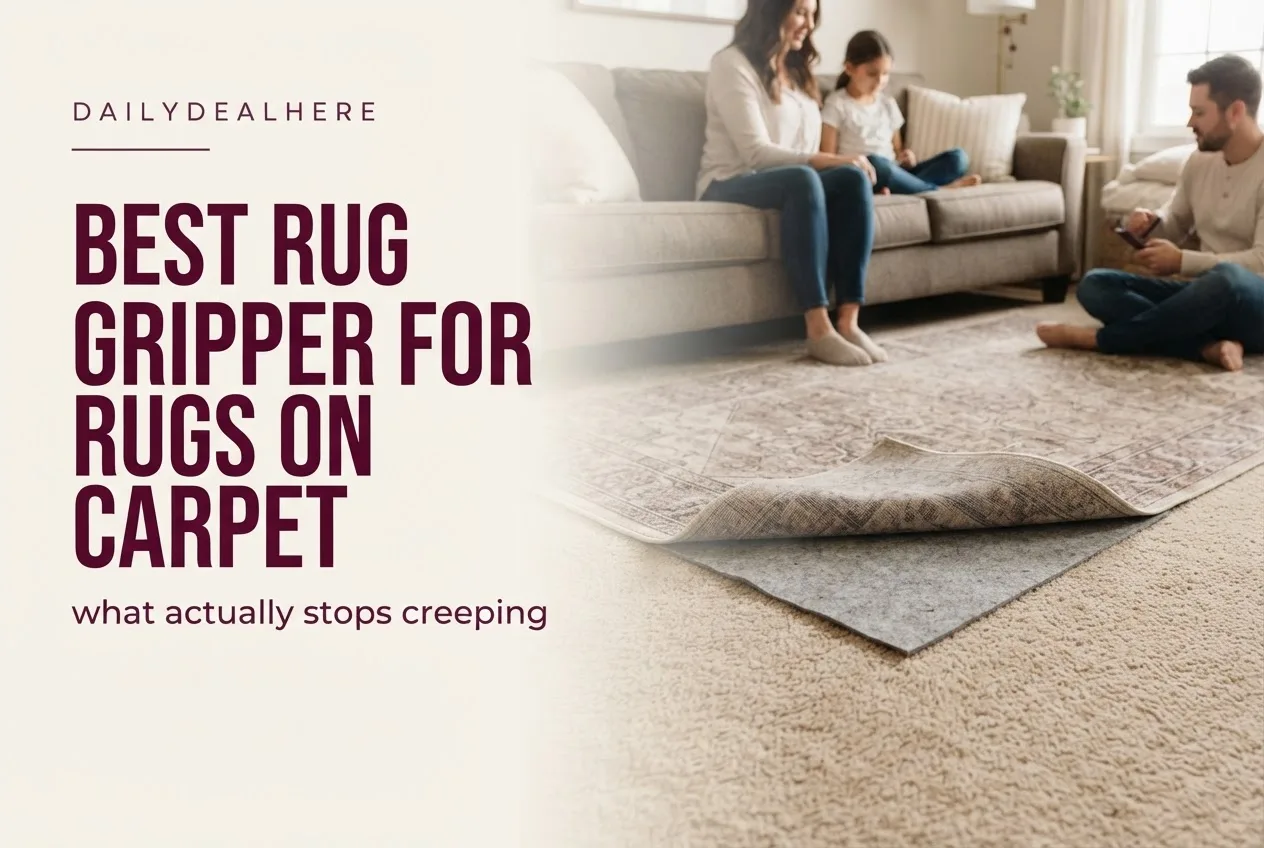
The best rug gripper for a rug on carpet is a pad designed specifically for carpet, not the rubber grippers sold for hardwood and tile. Hard floor grippers rely on friction against a smooth surface, and wall-to-wall carpet gives them nothing to hold. Carpet specific pads work differently: either a felt underside that grips the carpet fibers with rubber on top to hold the rug, or a thin pad with an adhesive top that bonds to the rug while its underside grips the carpet. For thin rugs on low or medium pile carpet, a thin carpet gripper usually works well. For heavier rugs, plush carpet or a rug that bunches and ripples, a thicker felt and rubber pad made for carpet is the stronger choice.
This guide explains why rugs walk across carpet, how the different carpet gripper designs work, which alternatives are risky, and how to install a pad so the rug stays flat. It draws on guidance from RugPadUSA’s articles on rugs over carpet, the product details for Gorilla Grip’s rug pad for carpet, and the National Institute on Aging’s room by room fall prevention advice. Both RugPadUSA and Gorilla Grip sell rug pads, so we have treated their product claims with that in mind.
The short answer
- Use a gripper made for carpet. Rubber pads designed for hard floors do not grip carpet fibers well, and some carpet pads, such as Gorilla Grip’s, are labeled not for use on hard floors.
- For thin rugs on low to medium pile carpet: a thin carpet gripper with an adhesive top that holds the rug.
- For heavier rugs, plush carpet or bunching: a denser felt and rubber pad with a felt underside that grabs the carpet.
- Avoid waffle cut pads between rug and carpet, which RugPadUSA says can trap dirt.
- Be cautious with tape, caulk and glue, which can damage carpet fibers or leave residue.
- Anchor with furniture where you can, as extra insurance.
Why rugs move on carpet
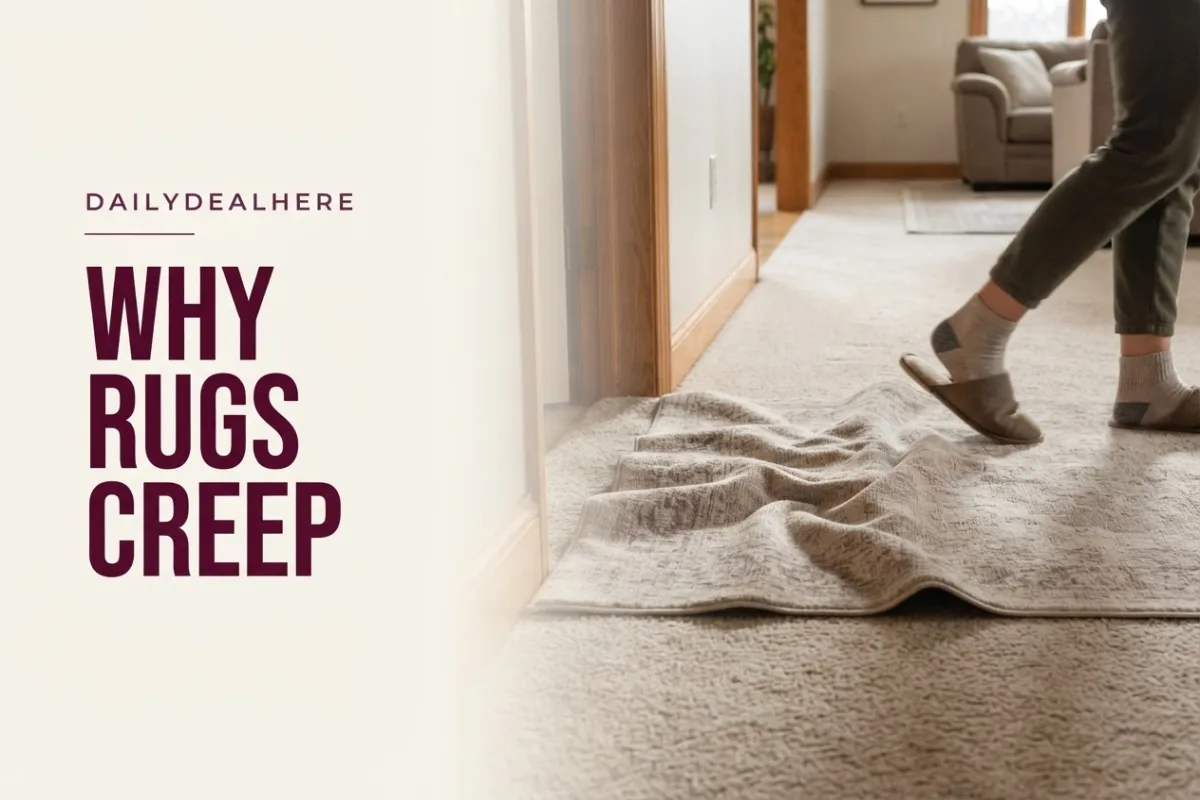
A rug on carpet does not usually slide the way a rug on hardwood does. Instead it creeps, bunches and ripples. RugPadUSA explains the cause: each footstep pushes the carpet pile, and that movement transfers to the rug. It adds that most carpets are installed with the pile facing the entryway, so a rug tends to walk in that direction over time. It also notes that the longer and plusher the carpet fibers, the more a rug tends to move, because long fibers give the rug less grip.
Rugs with rubber backings are not immune. RugPadUSA points out that even rubber backed rugs can bunch and ripple on carpet under foot traffic, which is why a rug that stayed put on a hard floor can misbehave when moved onto carpet.
Why this is a safety issue, not just a nuisance
A rippled or curled rug edge is a trip hazard. The National Institute on Aging’s fall prevention advice for older adults asks people to check that all carpets are fixed firmly to the floor so they will not slip, and goes further by advising against using throw rugs or small area rugs at all. For homes with older relatives, young children or anyone with mobility concerns, keeping a rug flat and fixed is worth taking seriously, and in some rooms removing small rugs may be the safer choice.
Why hard floor rug grippers fail on carpet
Most rug grippers and non slip pads are designed for hardwood, tile, laminate and vinyl, where rubber or PVC grabs a smooth surface. On carpet, that same rubber sits on top of loose fibers that move under each step, so the rug and pad travel together with the pile. That is why a gripper that works perfectly in the kitchen can seem useless in the living room.
RugPadUSA’s point here is useful: because a rug does not slip on carpet in the same way it slips on hard floors, you do not need a standard anti slip pad. You need one that grips both the carpet and the rug so the two move as one.
The two main types of carpet gripper
| Type | How it works | Best for | Example described by its maker |
|---|---|---|---|
| Felt and rubber carpet pad | Felt underside grips the carpet fibers, rubber top grips the rug back, with cushioning in between | Heavier rugs, plush carpet, rugs that bunch or ripple, extra cushioning and sound absorption | RugPadUSA Carpet Lock, described as a felt and natural rubber pad 7/16 inch thick |
| Thin adhesive top carpet gripper | Placed with its clear film side up. Remove the film and the adhesive top holds the rug while the underside grips the carpet | Thin rugs and runners on low and medium pile carpet, low profile under doors | Gorilla Grip rug pad for carpet, which its maker says works on low and medium pile and should not be used on hard floors |
Both approaches solve the same problem, locking rug and carpet together, but they suit different rugs. A thin gripper keeps a runner or small rug low and neat. A thicker felt and rubber pad adds cushion and weight that help a larger rug stay flat.
Felt and rubber pads for rugs on carpet
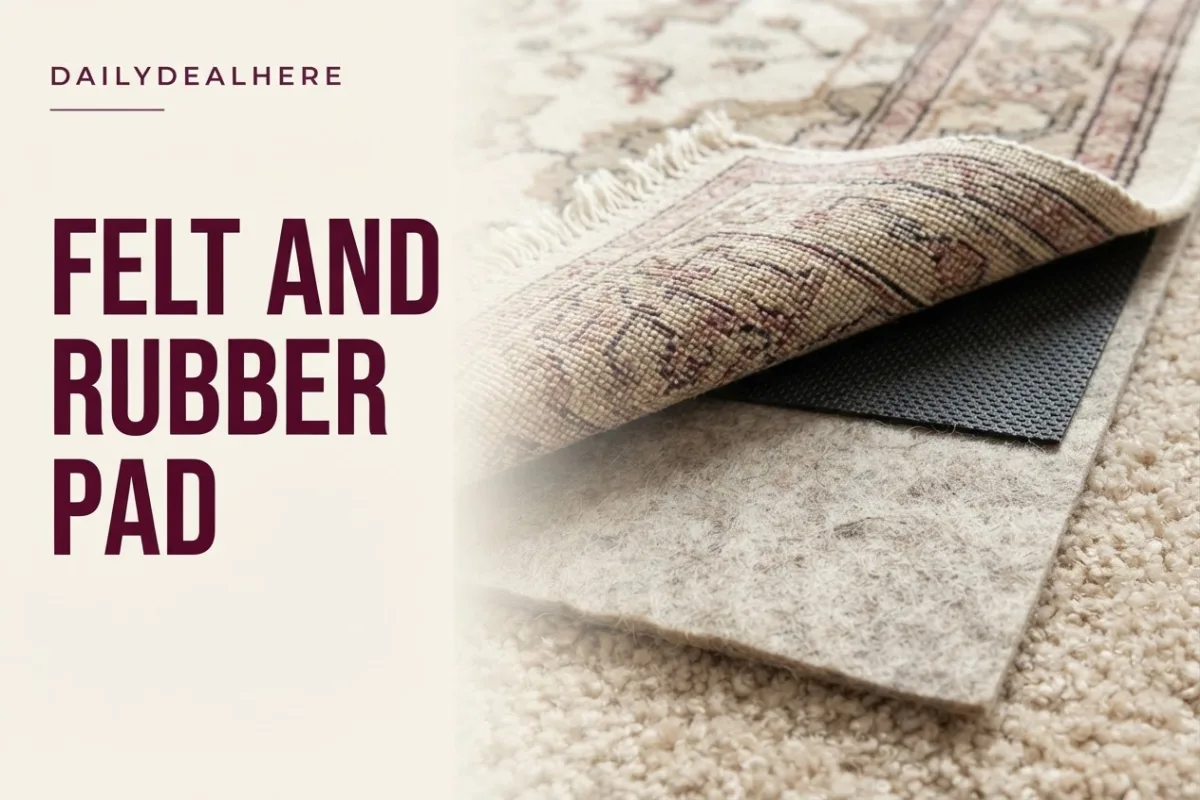
RugPadUSA describes its carpet pad as having a felt bottom that gently grips the fibers on top of the carpet and a rubber top that grips the back of the rug. It says felt and rubber pads help keep rugs even and prevent the bunching common with thinner, lower pile rugs, while adding cushioning and noise absorption.
- Pros: strong hold on rugs that ripple, extra cushion underfoot, sound dampening, and protection for the carpet beneath.
- Cons: thicker profile, which can be an issue near doors, and usually a higher cost than thin grippers.
- Look for: needle punched felt rather than waffle cut designs, which RugPadUSA says allow air through and avoid trapping dirt.
Thin carpet grippers for runners and small rugs
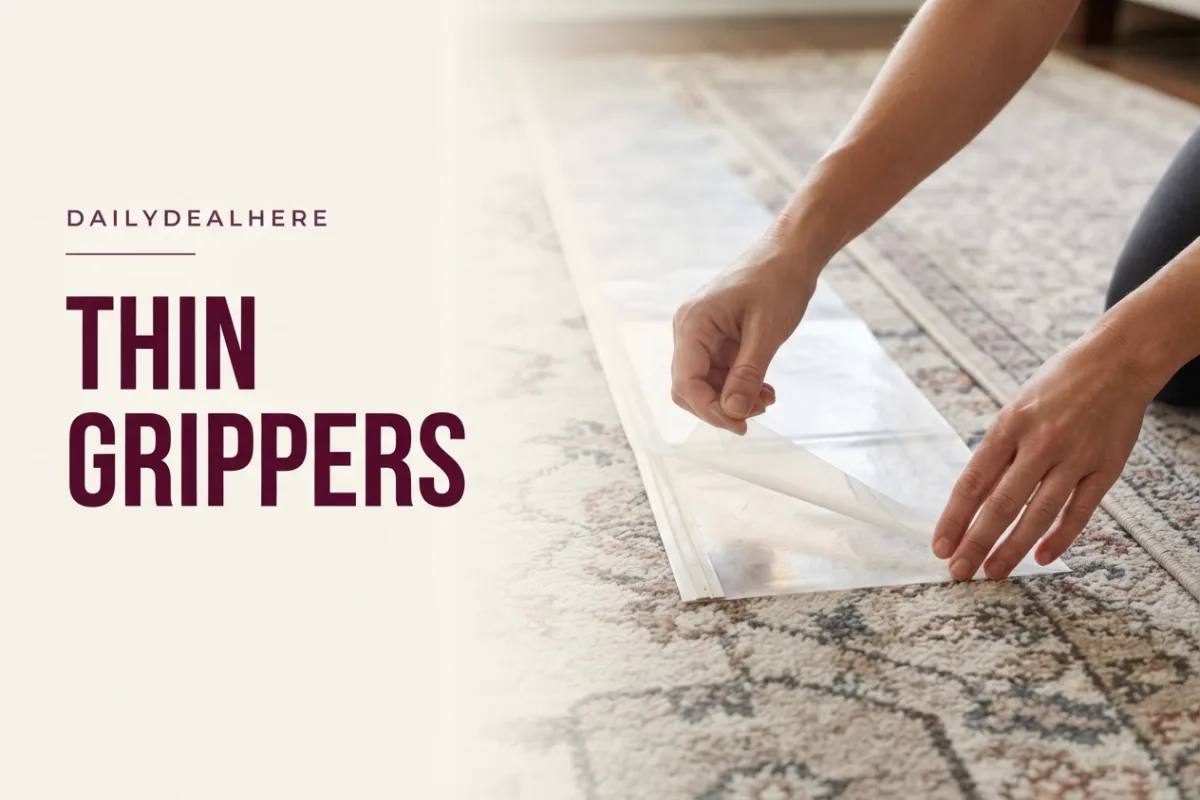
Thin carpet grippers are designed to stay hidden. Gorilla Grip’s instructions describe positioning the pad with its clear film side facing up, removing the film, placing the rug on top, and trimming any excess with scissors. Its listing describes the pad as working on low and medium pile carpets and warns against using it on hard floors.
- Pros: low profile, easy to cut to size, good for runners and entry rugs.
- Cons: less cushioning, and on high pile carpet the whole assembly can still travel with long fibers.
- Tip: RugPadUSA also notes that rug grippers generally work on low pile carpet but not well on plush, long pile carpet, where a full pad serves better.
Matching the gripper to your carpet and rug
| Your situation | Recommended approach |
|---|---|
| Thin runner on low pile or Berber carpet | Thin carpet gripper cut to size |
| Small entry rug on medium pile carpet | Thin carpet gripper, plus a door with enough clearance |
| Large area rug on plush carpet | Felt and rubber carpet pad, anchored with furniture |
| Rug that ripples and bunches | Denser felt and rubber carpet pad |
| Rug that creeps toward the door | Carpet specific pad plus furniture anchoring on the far edge |
| Rug in a home with older adults | Firmly fixed large rug, or no small rugs, per NIA advice |
What about double sided carpet tape?
Tape is tempting because it is cheap and quick. RugPadUSA rates it as effective in the short term but lists real downsides on carpet: the wrong tape can pull at carpet and rug fibers when removed, it tends to lose its grip once lifted, and its residue can be hard to remove from carpet. It describes tape as a one time solution. RugPadUSA sells pads rather than tape, so weigh that view accordingly, but the risk of damaging carpet fibers is worth taking seriously, especially in a rental.
Caulk, hot glue and other DIY fixes
A popular DIY approach is to run beads of silicone caulk or hot glue on the back of a rug, flatten them, let them dry, and use the rubbery strips as grippers. RugPadUSA describes the method and rates it as low cost and easy, but with a high risk of damage and a short lifespan. It suggests trying it only on inexpensive rugs, because the caulk could permanently damage the rug, and warns that it can pull at carpet fibers when the rug is removed, especially on high pile carpet.
If the rug is valuable or the carpet belongs to a landlord, a removable pad is the safer route.
Anchoring the rug with furniture
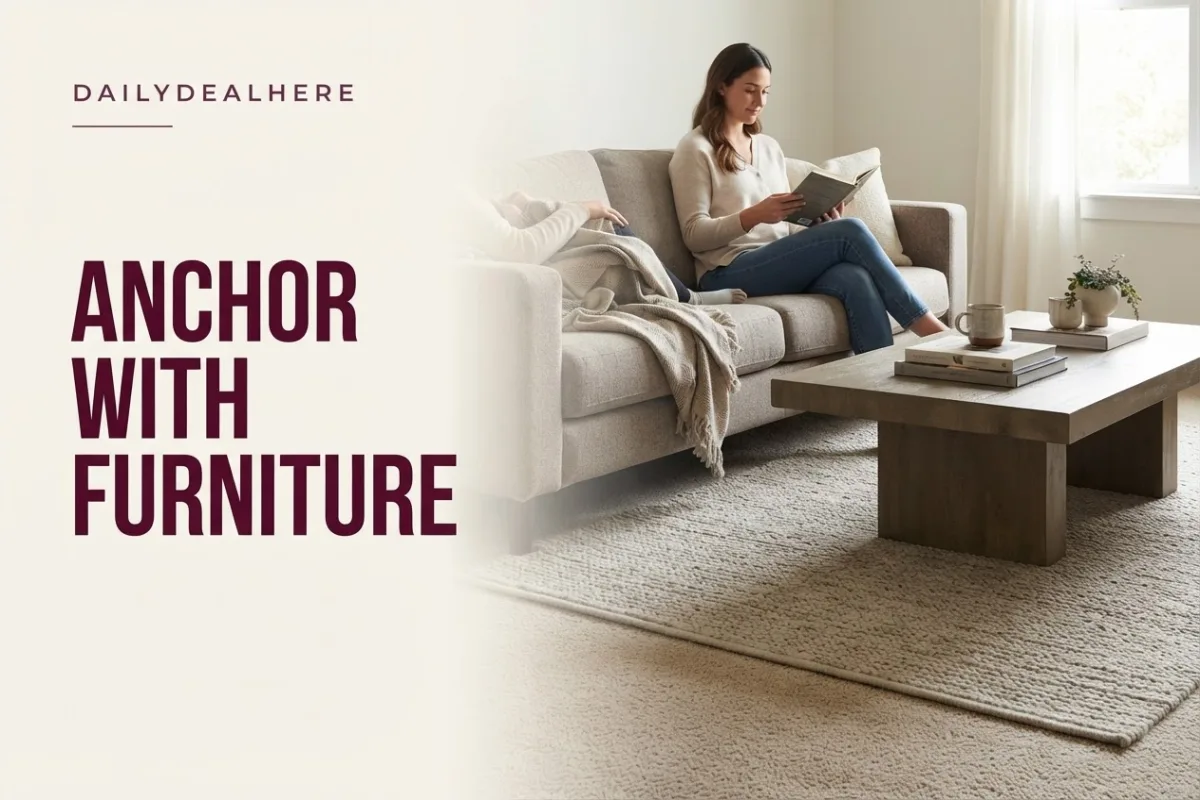
Furniture is a free and effective anchor. RugPadUSA suggests placing heavy sofas and upholstered chairs along the edges and corners of an area rug, or a heavy coffee table or ottoman in the middle. It notes the drawback: the edges that are not anchored can still move or curl.
Because rugs tend to creep toward the entry along the carpet pile, anchoring the edge farthest from the door with a sofa or bookcase often helps the most. Combine furniture with a carpet specific pad for the best result.
How to install a rug pad on carpet
- Vacuum the carpet and the back of the rug so dust does not reduce grip.
- Measure the rug. RugPadUSA recommends a pad about one inch smaller than the rug all around, so the rug drapes over the pad and the pad does not show or create a trip edge.
- Place the pad on the carpet the right way up. For thin adhesive top grippers, the film side faces up.
- Smooth it flat with no folds or bubbles.
- Lay the rug on top, starting from one end and rolling it out to avoid wrinkles.
- Trim any excess pad with scissors if it shows at the edges.
- Walk the rug and check for ripples, then adjust before the pad settles.
Protecting the carpet underneath
A pad does more than stop movement. RugPadUSA lists several benefits of using one between a rug and carpet: it prevents carpet fibers from fraying against a rough rug backing, cushions against furniture indentations, helps stop rug edges curling, and adds sound absorption. That makes a proper pad especially useful for renters who want to protect wall to wall carpet and their deposit.
Keep the area clean too. Vacuuming the rug and lifting it periodically to vacuum the carpet underneath stops grit from building up between the layers. If you use a robot vacuum, rug edges that lift can cause trouble, and our guide to robot vacuums getting stuck on rugs covers fixes.
Choosing a rug that behaves on carpet
- Heavier rugs tend to stay put better than very light, thin rugs.
- Flatweave and low pile rugs layer neatly over carpet without creating a tall, soft stack that shifts underfoot.
- Larger rugs can be anchored by more furniture than small ones.
- Washable rugs are practical in high traffic spots. Our guide to the best washable rugs covers options, though check whether their backing is meant for carpet or hard floors.
If you do use tape, choose it carefully
RugPadUSA’s advice on tape is not entirely one sided. In one article it warns about residue, stains and fiber damage from carpet tape. In its FAQ on rugs over carpet, it draws a distinction by adhesive type: it says tape with a silicone adhesive, or a silicone and rubber blend, will not damage carpet because it does not leave sticky residue or pull at fibers, while tape with only a rubber adhesive can peel or pull at carpet fibers on removal.
- Check the adhesive type on the packaging before buying.
- Try a small piece in a hidden area of the carpet first and remove it after a few days to see how it behaves.
- To remove tape, RugPadUSA suggests warming it with a hair dryer or heat gun to soften the adhesive before pulling it up.
- Treat tape as temporary, since it tends to lose grip once lifted.
Runners on carpeted hallways

Hallway runners over carpet are some of the worst offenders for creeping, because they are long, narrow and walked on constantly in one direction. RugPadUSA lists three options for keeping a runner in place on carpet: a carpet to carpet rug pad, double sided rug tape, or silicone caulk. A thin carpet gripper cut to the runner’s length is the lowest profile option. Anchoring is harder with runners because there is rarely furniture to hold them, so the pad does most of the work.
Shag and thick rugs on carpet
Thick, soft rugs stacked on soft carpet create a spongy layer that shifts easily. RugPadUSA recommends a natural rubber and felt pad for shag rugs to provide maximum grip with enough padding. With very thick rugs, also consider door clearance and trip edges, since a tall stack of carpet, pad and shag can catch toes and doors.
Keeping layered rugs clean
Dirt between the layers reduces grip and wears both surfaces. RugPadUSA suggests vacuuming area rugs about twice a week depending on traffic, and for rugs layered on carpet, lifting the rug and vacuuming the pad weekly to prevent dirt and pet hair building up. It adds that with a needle punched pad rather than a waffle weave, you can vacuum underneath the pad about twice a year. Always check the rug’s own care label. A light cordless vacuum makes lifting and cleaning quicker, and our guide to the best small cordless vacuums covers options.
Is it a good idea to put a rug over carpet?
Yes, as long as it is secured. RugPadUSA lists several reasons people layer rugs over wall to wall carpet: to bring in complementary colors, to cover stains and worn areas, to add comfort underfoot, and to absorb noise, which can matter in apartments. It is a common approach for renters who cannot replace carpet. The key is making sure the rug stays flat so it adds comfort without adding a trip hazard.
Room by room tips
- Living room: use a rug large enough for the front legs of the sofa and chairs to sit on it. The furniture anchors the rug, and a felt and rubber carpet pad handles the open middle.
- Bedroom: a large rug under the bed is anchored by the bed frame, so a thin gripper is often enough. Small bedside rugs are the ones most likely to creep and curl.
- Entryway: this is where rugs creep most, since the carpet pile often faces the door. Choose a carpet specific gripper and check the door clears the rug and pad.
- Kids’ playrooms: children run, slide and pull at rugs, so a secure pad and flat edges matter. RugPadUSA recommends natural material pads for areas where babies and toddlers play.
- Homes with older adults: follow the NIA’s advice to keep carpets firmly fixed and avoid small throw rugs in walking paths.
When to replace a rug pad
A pad that no longer holds is worse than useless because it gives a false sense of security. Replace it if the rug starts creeping or rippling again despite being clean, if the pad is crumbling, flaking or has lost its tackiness, or if it has flattened so much that it no longer grips the carpet. RugPadUSA says a quality pad can last many years with proper care, while it describes tape as a short term fix that needs replacing, so budget for the pad accordingly.
Common mistakes with rugs on carpet
- Using a hard floor gripper on carpet, which is not designed to hold carpet fibers.
- Using a carpet gripper on hard floors, which Gorilla Grip’s listing specifically warns against.
- Choosing a waffle cut pad, which RugPadUSA says can trap dirt between layers.
- Relying on tape in a rental, where residue or fiber damage can cost you.
- Leaving small throw rugs where older adults walk, which the NIA advises against.
- Never lifting the rug, so grit builds up and the grip weakens.
Frequently asked questions
What is the best rug gripper for a rug on carpet?
A pad made specifically for carpet. For thin rugs on low to medium pile carpet, a thin carpet gripper with an adhesive top works well. For heavier rugs, plush carpet or rugs that bunch, a felt and rubber carpet pad is stronger.
How do I stop my rug from slipping on carpet?
Use a carpet specific rug pad, anchor the rug with furniture, especially on the edge farthest from the door, and choose a heavier rug where possible. Standard hard floor grippers usually do not hold on carpet.
Why does my rug move on carpet?
RugPadUSA explains that each footstep pushes the carpet pile, and the movement transfers to the rug. Carpet is often installed with the pile facing the entryway, so rugs tend to creep in that direction, and plush, long pile carpet makes it worse.
What can I put under my rug to keep it from sliding on carpet?
A felt and rubber pad designed for carpet, or a thin carpet gripper with an adhesive top. Avoid waffle cut pads between rug and carpet, and be cautious with tape, caulk or glue, which can damage fibers.
Do rug grippers work on carpet?
Grippers made for carpet can work well, particularly on low and medium pile. RugPadUSA notes grippers struggle on plush, long pile carpet, where a full carpet pad works better. Grippers made for hard floors are not designed for carpet.
Is double sided tape safe on carpet?
It can hold a rug in the short term, but RugPadUSA warns it may pull at carpet and rug fibers on removal, lose grip once lifted, and leave residue. It is a poor choice for rentals or valuable rugs.
Can I use a carpet rug gripper on hardwood?
Not the carpet specific type described here. Gorilla Grip’s carpet pad listing states it should not be used on hard floors. Use a pad made for hard floors instead.
Are rugs on carpet a trip hazard?
They can be if edges curl or ripple. The National Institute on Aging advises checking that carpets are fixed firmly so they will not slip, and advises older adults against using throw rugs or small area rugs.
Skip the hard floor grippers, choose a pad built for carpet that matches your rug and pile height, anchor the far edge with furniture, and keep the layers clean. The rug will stay where you put it.










Write Your Review
No reviews yet. Be the first to share your experience!