

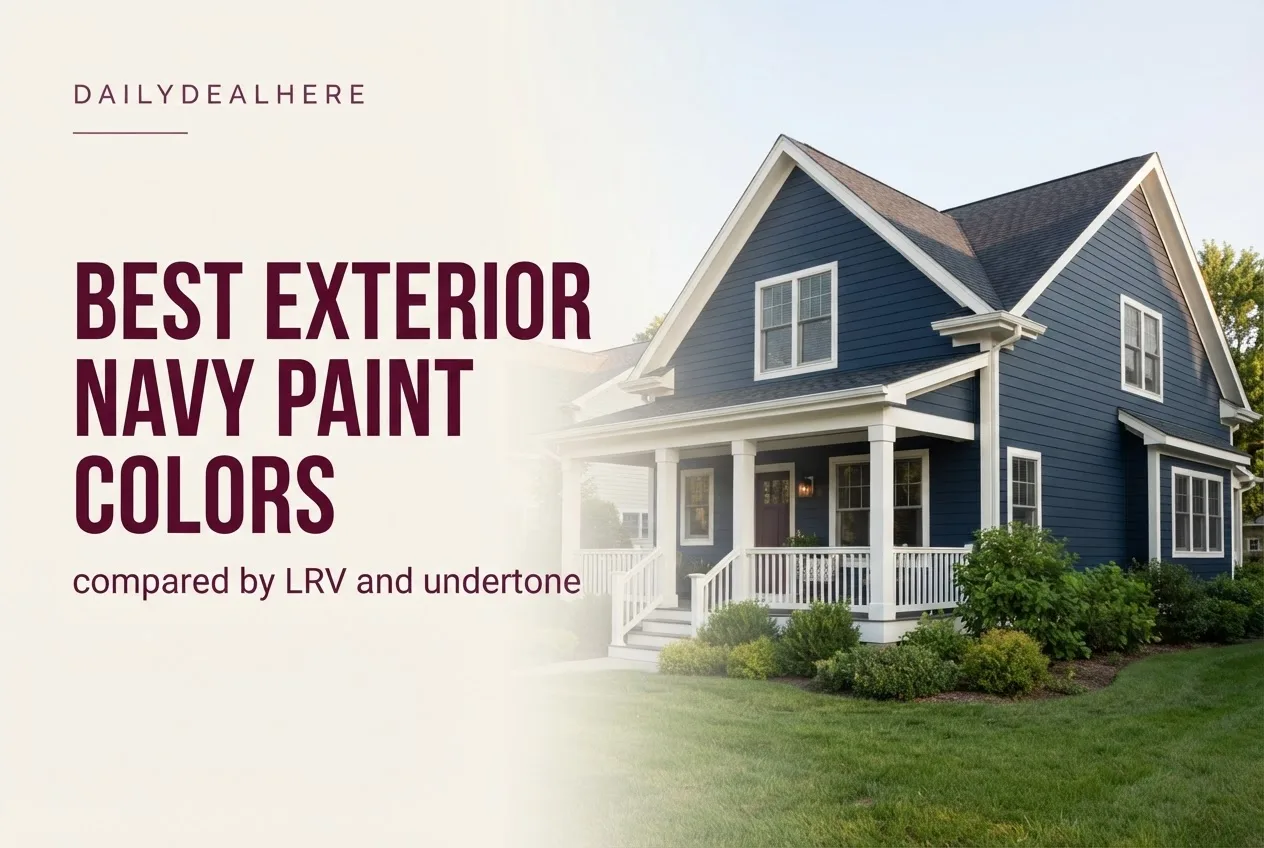
The best exterior navy paint color for most homes is a muted, slightly gray navy rather than a bright royal blue, because it reads as rich and classic in full sun instead of loud. Benjamin Moore’s Hale Navy HC-154 is the benchmark: Benjamin Moore describes it as a use-anywhere shade of navy with a classic maritime feel, lists it in its Blue Exterior and Navy color groups, and publishes a light reflectance value of 8.36. If you want something deeper and closer to black, Benjamin Moore’s Three-Piece Suit 2062-10 and Winding Waterway 2063-10 sit lower, while Newburyport Blue HC-155 and Van Deusen Blue HC-156 are a touch lighter. On the Sherwin-Williams side, Naval SW 6244, In the Navy SW 9178, Anchors Aweigh SW 9179 and Salty Dog SW 9177 cover a similar range.
This guide compares those navies using the numbers the paint makers publish, explains how to read light reflectance values and undertones, and covers pairing, placement and sampling so the color you choose looks right on your actual house. Color data comes from the official color pages of Benjamin Moore and Sherwin-Williams, checked in September 2026, and the explanation of LRV draws on Wikipedia’s article on light reflectance value.
The short answer
- Best all around exterior navy: Benjamin Moore Hale Navy HC-154, LRV 8.36.
- Best deep, almost black navy: Benjamin Moore Three-Piece Suit 2062-10, LRV 5.67, or Winding Waterway 2063-10, LRV 5.13.
- Best slightly lighter, softer navy: Benjamin Moore Newburyport Blue HC-155, LRV 10.31, or Van Deusen Blue HC-156, LRV 11.97.
- Best Sherwin-Williams options: Naval SW 6244, In the Navy SW 9178, Anchors Aweigh SW 9179 and Salty Dog SW 9177.
- Most important step: view large physical samples on your own siding in morning and afternoon light before committing. Both brands warn that screen colors differ from real paint.
Why navy works so well on a house exterior
Navy is a popular exterior choice because it behaves like a neutral while still reading as a color. It pairs with white trim, natural wood, stone and brick, and it suits styles from colonial to farmhouse to modern. Benjamin Moore’s own classification of Hale Navy hints at why: alongside its Navy and Blue Exterior groupings, the color page lists its primary color family as Neutral, with Gray and Neutral among its families. A navy that leans gray behaves like a sophisticated neutral, which is exactly what makes it easy to live with on a large surface.
Exterior color also has to hold up in a way interior color does not. It is seen from the street, in full sun and shade, against the sky and landscaping, and it has to look right for years. That tends to reward restrained navies over saturated ones.
How to read light reflectance value
Light reflectance value, or LRV, is the single most useful number for comparing dark colors. Wikipedia describes LRV as a measure of how much visible light a surface reflects, on a scale from no reflected light to complete reflection. Paint makers usually express it from 0 to 100, and Benjamin Moore publishes an LRV on each color page.
- Lower LRV means a darker color that reflects less light. The navies in this guide sit roughly between 5 and 12.
- Higher LRV means a lighter color. White trim colors sit far higher.
- Small differences matter at this end. A navy at LRV 5 reads close to black in shade, while one near 12 shows its blue more clearly.
Wikipedia also notes that outdoor LRV choices can influence surface temperatures on buildings, which is worth keeping in mind for very sunny walls, as the heat section below explains.
Benjamin Moore navies compared
| Color | Code | LRV | How Benjamin Moore describes it | Coordinating colors Benjamin Moore suggests |
|---|---|---|---|---|
| Hale Navy | HC-154 | 8.36 | A use-anywhere shade of navy with a classic maritime feel | Coventry Gray HC-169, White Dove OC-17, Lenox Tan HC-44, Glacier White OC-37 |
| Newburyport Blue | HC-155 | 10.31 | Pronounced tones with an overall understated quality, a dark blue for the home | Weston Flax HC-5, Cotton Balls OC-122, Rustic Taupe 999, Light Pewter 1464 |
| Van Deusen Blue | HC-156 | 11.97 | A foundational blue that fits traditional and modern spaces | Castleton Mist HC-1, Alpine White OC-124, Thunder AF-685, Cotton Balls OC-122 |
| Three-Piece Suit (formerly Deep Royal) | 2062-10 | 5.67 | An almost black shade of navy with tailored confidence | White Diamond 2121-60, Wrought Iron 2124-10, Paper Mache AF-25, Instinct AF-575 |
| Winding Waterway (formerly Old Navy) | 2063-10 | 5.13 | A dark blue balancing calm and dramatic | Marilyn’s Dress 2125-60, Deep Silver 2124-30, Black Bean Soup 2130-10, Luxe AF-580 |
Note the renamed colors. Benjamin Moore’s pages state that Old Navy 2063-10 has been renamed Winding Waterway and Deep Royal 2062-10 has been renamed Three-Piece Suit. The color numbers are unchanged, so if a painter, neighbor or older article mentions the old names, the codes are what to match.
Sherwin-Williams navies compared
Sherwin-Williams color pages publish RGB values rather than an LRV in the page data we could read, along with complementary color codes and a note that the color is available in exterior paint. RGB values are the red, green and blue amounts used to display the color on screen, from 0 to 255 each. Lower totals mean darker colors, and the balance between channels hints at undertone.
| Color | Code | Published RGB | What the numbers suggest |
|---|---|---|---|
| Naval | SW 6244 | 47, 61, 76 | A classic deep navy. Sherwin-Williams describes a cool gray-green undertone |
| In the Navy | SW 9178 | 40, 56, 73 | Slightly darker than Naval with a similar balance |
| Anchors Aweigh | SW 9179 | 43, 52, 65 | The most muted of the group, with channels close together, so it reads grayer and nearer black |
| Salty Dog | SW 9177 | 35, 64, 88 | Low red and relatively high green and blue, suggesting a slightly teal leaning navy |
| Dress Blues | SW 9176 | 43, 67, 96 | The highest blue value here, so it reads as a clearer, brighter blue |
| Indigo Batik | SW 7602 | 62, 80, 99 | The lightest of the group, a softer denim leaning blue |
Several of these colors list SW 7005 Pure White among their complementary colors on their Sherwin-Williams pages, a crisp white that is a natural trim partner for navy siding. Naval’s page lists SW 6238 Icicle, SW 6156 Ramie and SW 2842 Roycroft Suede as its complementary colors.
Why Hale Navy is so often recommended
Hale Navy appears again and again in exterior color discussions, and its published data explains why. At LRV 8.36 it is clearly dark, but not so dark that it reads as black in shade. Benjamin Moore’s hex value for it, 434B56, shows red, green and blue channels fairly close together, which is the signature of a muted, grayed navy rather than a vivid one. And the brand’s own classification lists its primary color family as Neutral.
That combination is what makes it forgiving on a house. It works with warm and cool trims, it does not fight with red brick or natural stone, and it keeps its navy character without shouting from the curb. Benjamin Moore’s suggested partners, including White Dove OC-17 and Coventry Gray HC-169, show how easily it pairs with soft whites and grays.
Choosing between dark and almost black navy
The deepest navies, such as Three-Piece Suit at LRV 5.67 and Winding Waterway at LRV 5.13, look dramatic and modern, especially with black windows or crisp white trim. The tradeoff is that in shade or at dusk they can read nearly black, so the blue only shows clearly in direct light.
- Choose a deeper navy for modern farmhouse or contemporary homes, or if you want a near black look with a hint of color.
- Choose a mid navy like Hale Navy or Naval if you want the color to read clearly as navy from the street.
- Choose a lighter navy like Van Deusen Blue or Indigo Batik for shaded lots, where darker colors can look flat.
Undertones: gray, green and purple
Navies differ mainly in their undertones, which become obvious outdoors next to landscaping and roofing.
- Gray leaning navies such as Hale Navy and Anchors Aweigh look sophisticated and pair easily with stone and gray roofs.
- Green leaning navies such as Naval, which Sherwin-Williams describes as having a cool gray-green undertone, and the teal leaning Salty Dog, sit comfortably among trees and lawns.
- Purer blue navies such as Dress Blues read brighter and more nautical.
Look at your roof color, brick or stone, and surrounding greenery. A navy whose undertone echoes something already on the house usually looks more intentional.
Where to use navy on the exterior
| Placement | Effect | Tips |
|---|---|---|
| Full siding | Bold, grounded, classic | Pair with bright white trim. Consider a slightly lighter navy on shaded sides |
| Front door | A focal point without committing the whole house | Works with white, gray, beige and brick exteriors |
| Shutters | Traditional contrast on white or light gray siding | Match the undertone to the siding color |
| Trim and accents | Frames a lighter house | Use a deeper navy for stronger contrast |
| Garage and outbuildings | Ties a property together | Match the main house or go one step darker |
A navy front door looks especially sharp with matching hardware and lighting. Our guides to the best outdoor wall lights and the best smart locks for front doors cover finishing touches.
What trim color goes with navy siding?
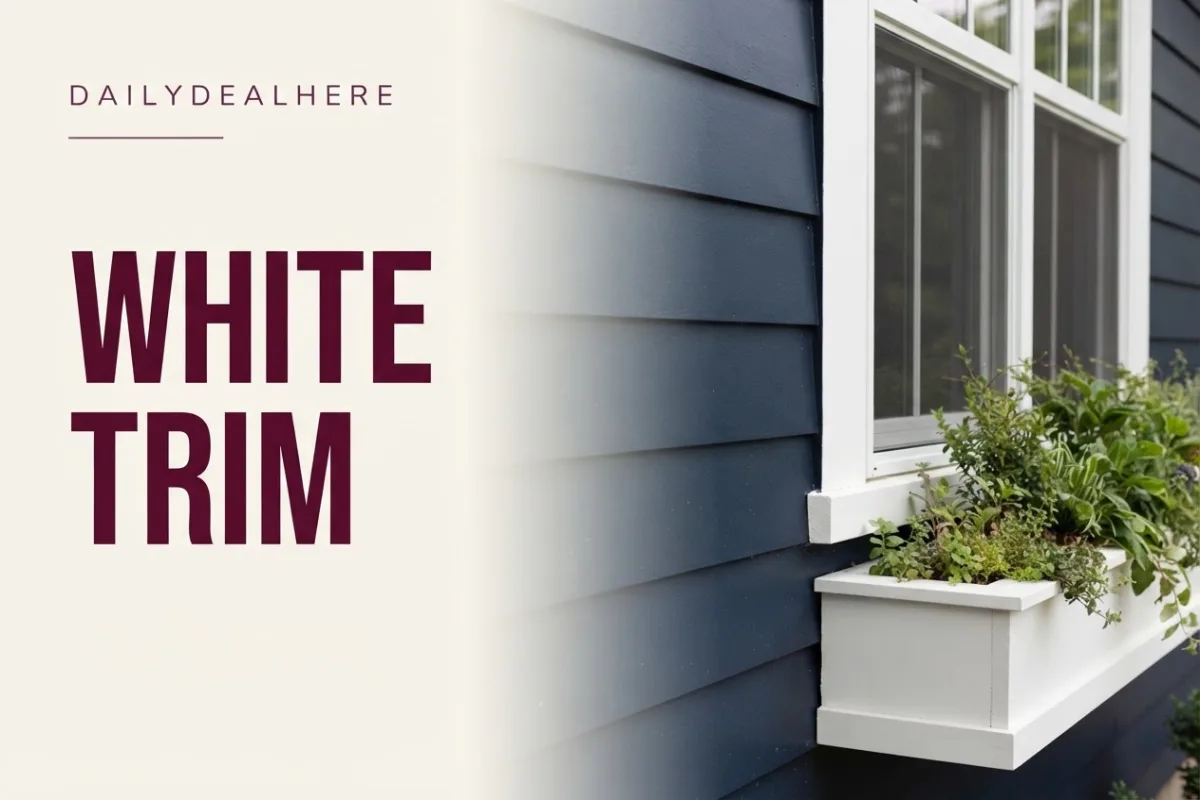
- Crisp white for the classic, high contrast look. Sherwin-Williams lists SW 7005 Pure White as a complement for several of its navies, and Benjamin Moore suggests whites such as White Dove OC-17 and Glacier White OC-37 with Hale Navy.
- Soft gray for a quieter scheme, such as Coventry Gray HC-169, which Benjamin Moore pairs with Hale Navy.
- Warm tan or flax for a softer traditional look, such as Lenox Tan HC-44 with Hale Navy or Weston Flax HC-5 with Newburyport Blue.
- Black for windows or accents with the deepest navies, for a modern look.
- Natural wood for doors, porches and ceilings, which warms navy up.
Dark exterior colors and heat
Dark colors reflect less light, which by definition is what a low LRV means, and surfaces that reflect less light absorb more of the sun’s energy. Wikipedia’s LRV article notes that outdoor LRV choices on buildings can help mitigate rising temperatures. In practice, a navy wall in full afternoon sun gets warmer than the same wall in white.
That does not rule navy out, but it is worth checking with your siding manufacturer, particularly for vinyl siding, which may have restrictions on how dark a color it can be painted. Ask your paint retailer about exterior products suited to dark colors on sunny exposures, and follow the product label.
How to sample navy paint correctly
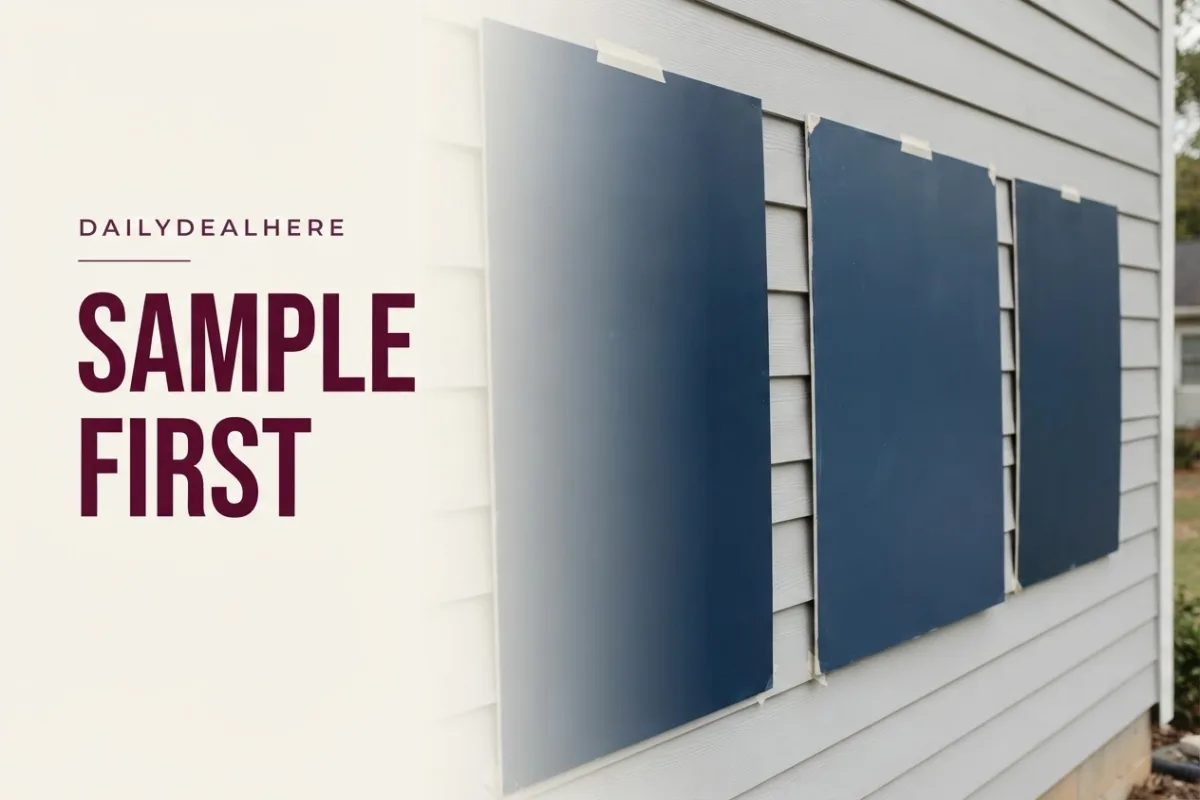
Both brands are clear that screens are not reliable. Benjamin Moore notes that screen colors may differ and offers free color chips in store, and Sherwin-Williams advises viewing a physical color sample to confirm your choice before buying. Navy is especially tricky, because it can look almost black in shade and surprisingly bright in sun.
- Narrow your shortlist to two or three navies using LRV and undertone.
- Get large samples, such as painted boards or peel and stick samples, rather than tiny chips.
- Place them on at least two sides of the house, including one in sun and one in shade.
- Look at them in morning light, midday sun, late afternoon and on an overcast day.
- View them from the street, since that is how most people will see the house.
- Hold your trim color, roof sample and any brick or stone next to them before deciding.
Prep and primer for dark exterior colors
A deep color shows every flaw in the surface underneath. Clean siding thoroughly before painting, allow it to dry, repair damaged areas, and use a primer suited to the surface and to the topcoat, especially when covering a light color with a dark one or painting bare wood. Our guides to the best pressure washers and the best exterior paint primers cover the prep stage.
Navy on a front door only
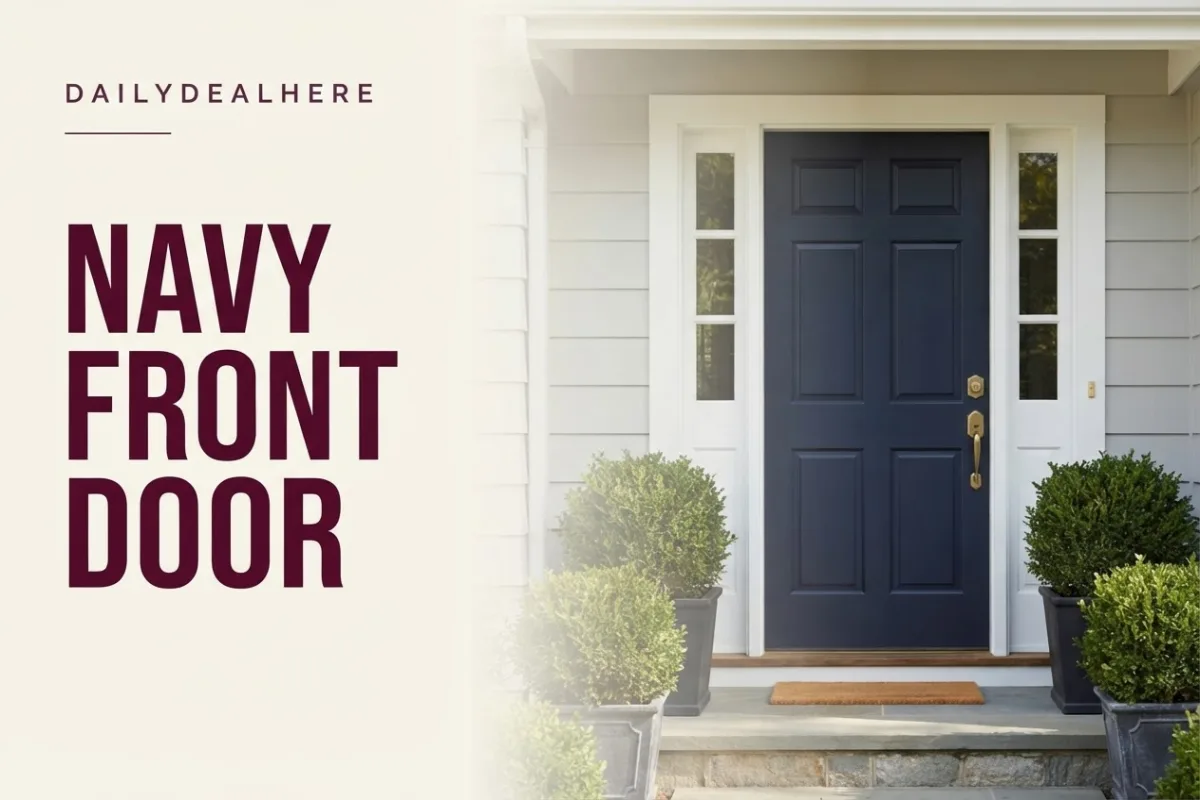
If painting the whole house feels like too big a commitment, a navy front door is the easiest way to try the color. It works with white, gray, beige and brick exteriors, and a single door lets you judge how the navy behaves in your light before considering shutters or siding. Deeper navies such as Three-Piece Suit give a polished, formal look on a door, while Hale Navy or Naval keep it classic. Add a coordinating mailbox or house numbers for a finished look, and our guide to the best residential mailboxes covers options.
Check the rules before you paint
Before committing to a bold exterior color, check whether your homeowners association, historic district or local design guidelines restrict exterior colors. Some approve specific palettes or require submitting samples. Historic color collections, such as Benjamin Moore’s Historical Colors, which include Hale Navy, Newburyport Blue and Van Deusen Blue, can be a good starting point in older neighborhoods.
Pairing navy with brick, stone and roofing
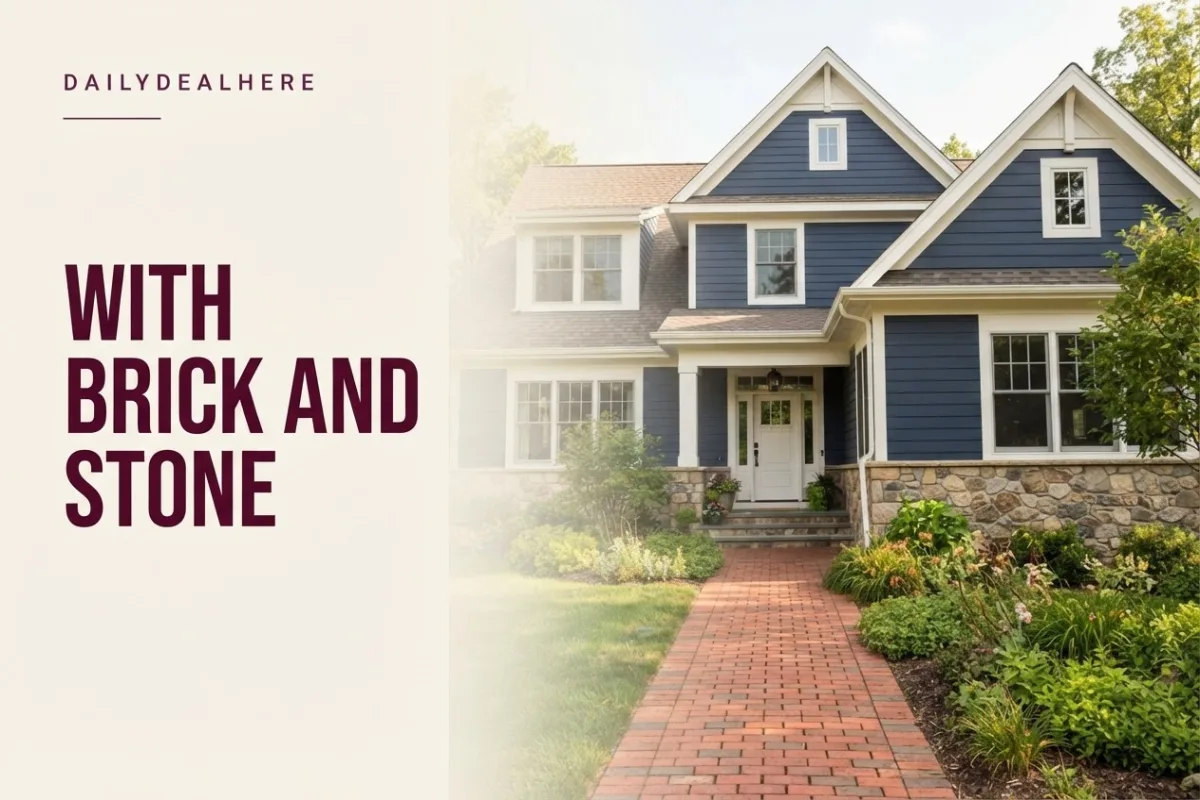
The fixed materials on your house, the roof, masonry and hardscaping, should drive the navy you choose, since they will not change when the paint does.
- Red or orange brick: a gray leaning navy such as Hale Navy or Anchors Aweigh sits calmly next to warm brick, while a bright blue can clash.
- Gray or blue stone: almost any navy works. Echo the stone’s coolness with Naval or In the Navy.
- Tan or warm stone: pair navy with a warm trim such as a flax or tan to bridge the two, as Benjamin Moore does with Weston Flax HC-5 alongside Newburyport Blue.
- Black or charcoal roofs: deep navies look intentional and modern next to dark roofing.
- Brown or weathered wood roofs: a softer navy with some green in it tends to feel more natural.
Hold your paint samples against the actual roof and masonry rather than photos of them. Small undertone clashes are easy to miss on a screen and hard to ignore on a finished house.
How navy changes with light and orientation
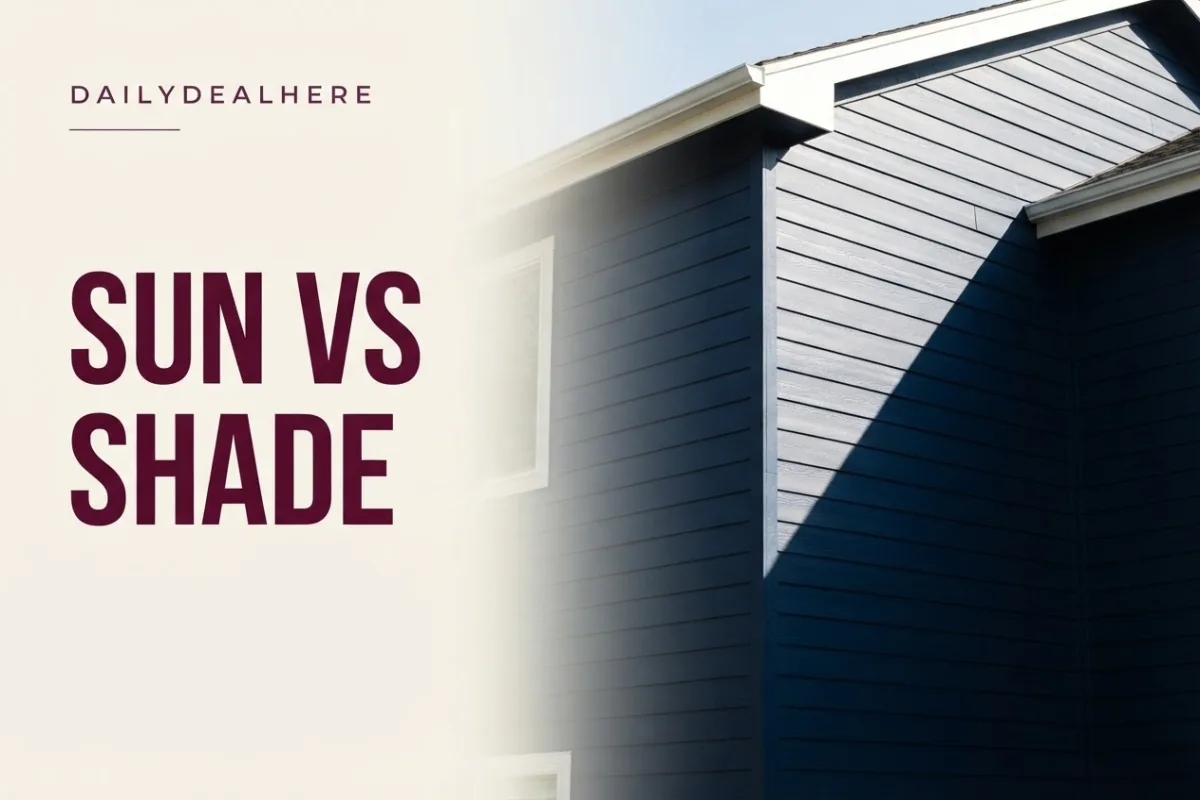
Navy is one of the colors most affected by where it sits. On a wall in strong direct sun, the blue shows clearly and can look brighter than the chip. On a shaded wall or a porch under a deep roof overhang, the same paint can look close to black. That is why the sampling steps above include both sunny and shaded sides.
If your house has one side in constant shade, some homeowners choose a navy with a slightly higher LRV for the whole house so the shaded side still reads as blue. Others accept the variation as part of the character of a dark color. Either way, looking at samples in both conditions means you will not be surprised once the job is done.
Keeping a navy exterior looking fresh
- Record the exact product and color code. Write the brand, product line, sheen and color number on the lid and keep a note elsewhere, since color names can change, as Benjamin Moore’s renamed navies show.
- Keep leftover paint for touch ups, stored where it will not freeze.
- Wash the siding periodically so dirt and pollen do not dull the color.
- Touch up chips and scrapes promptly, since light primer or siding showing through a dark color is very visible.
- Plan repaints by side, as the sunniest walls usually need attention first.
Common mistakes when choosing navy
- Choosing from a screen or a tiny chip. Both brands advise confirming with a physical sample.
- Ignoring undertone. A green leaning navy next to a purple leaning trim or stone can look off.
- Going too dark on a shaded house, where the color may read as black most of the day.
- Skipping primer when covering a very different color or bare material.
- Forgetting the neighbors and any HOA rules, which can delay or undo a project.
Matching navy to your home’s style
- Colonial and traditional: Hale Navy or Newburyport Blue with white trim and black shutters.
- Cape Cod and coastal: Naval or Salty Dog with crisp white trim for a nautical feel.
- Modern farmhouse: Three-Piece Suit or Anchors Aweigh with black windows and natural wood.
- Craftsman: Van Deusen Blue or Hale Navy with cream or tan trim and stained wood doors.
- Brick homes: navy on doors, shutters and trim, choosing a gray leaning navy to sit well with red brick.
Frequently asked questions
What is the best navy blue paint color for a house exterior?
Benjamin Moore Hale Navy HC-154 is the most versatile choice for most homes. Benjamin Moore describes it as a use-anywhere navy with a classic maritime feel, lists it for exterior use, and publishes an LRV of 8.36, dark but not black.
What is a good dark blue paint color for an exterior?
For a deep, almost black navy, Benjamin Moore Three-Piece Suit 2062-10 at LRV 5.67 and Winding Waterway 2063-10 at LRV 5.13. For a Sherwin-Williams option, In the Navy SW 9178 and Anchors Aweigh SW 9179 are among its darker navies.
Why is Hale Navy so popular?
It is dark enough to read as navy but not black, and muted enough to behave like a neutral. Benjamin Moore lists its primary color family as Neutral, and it pairs easily with whites, grays, tans, brick and stone.
What are good Sherwin-Williams navy colors for exteriors?
Naval SW 6244, In the Navy SW 9178, Anchors Aweigh SW 9179, Salty Dog SW 9177 and Dress Blues SW 9176 are all offered in exterior paint. Their published RGB values range from grayer, near black navies to brighter blues.
What happened to Benjamin Moore Old Navy?
Benjamin Moore’s color page states that Old Navy 2063-10 has been renamed Winding Waterway. Similarly, Deep Royal 2062-10 is now Three-Piece Suit. The color numbers stay the same.
What trim color goes with navy siding?
Crisp white is the classic choice. Benjamin Moore suggests White Dove OC-17 and Glacier White OC-37 with Hale Navy, and Sherwin-Williams lists SW 7005 Pure White as a complement for several navies. Soft gray, tan and black also work.
Does navy paint get hot in the sun?
Dark colors reflect less light, which is what a low LRV means, so they absorb more of the sun’s energy. Check with your siding maker, especially for vinyl, and choose products suited to dark colors on sunny walls.
How do I choose between navy paint colors?
Compare LRV for depth and undertone for character, then view large physical samples on sunny and shaded sides of the house at different times of day. Both Benjamin Moore and Sherwin-Williams note that screen colors differ from real paint.
Start with Hale Navy as your reference, go deeper or lighter based on your light and style, match the undertone to your roof and stone, and always judge the final choice from large samples on your own walls.










Write Your Review
No reviews yet. Be the first to share your experience!