

A toilet that stays clean between deep cleans is not magic, it is chemistry working quietly under the lid. A good in tank toilet cleaner releases a measured dose of cleaner into the bowl every time you flush, so mineral rings, hard water film and odor never get the chance to settle in. Our top pick is the Scrubbing Bubbles Continuous Clean Toilet Drop-Ins for its septic-safe formula that fights limescale for weeks without loading the tank with chlorine. For September 2026 we narrowed the field to 7 options from Lysol, Clorox, Kaboom and more, judged on formula type, how long a single dose keeps working, and whether the product is safe to leave sitting against rubber tank parts.
The category is more divided than it looks. Some products are classic drop-in tablets that dissolve in tank water. Some are sealed dispenser systems that keep the cleaner isolated and meter it into the bowl. One of our picks never touches the tank at all. That distinction matters more than scent or color, and it is the reason we spend so much time on it below. If you are working through a wider bathroom and plumbing refresh, our health and household guides cover the adjacent problems, from slow drains to septic maintenance.
Pros
- Bleach-free chemistry is much gentler on flappers and tank gaskets
- Targets hard water minerals and limescale, not only organic soil
- Rated septic safe, so it suits homes on a private system
- Blue water acts as a visual timer for when the dose is spent
- Carries the strongest customer rating of any drop-in here
Cons
- Works by prevention, so an existing ring needs one manual scrub first
- Three tablets per pack means restocking a few times a year
- Blue dye is a matter of taste and cannot be switched off
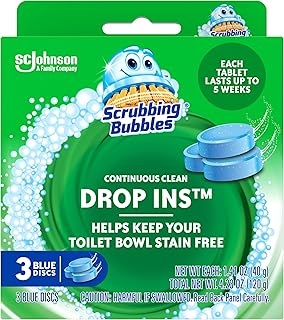
The Scrubbing Bubbles Continuous Clean Toilet Drop-Ins are the version of this product category that makes the most sense for the largest number of homes. It is a standard tank tablet, it needs no installation, and it does the thing everyone actually wants from an automatic cleaner: it stops a clean bowl from getting dirty again.
What separates it from the crowd is what is not in it. There is no chlorine bleach doing the work, so the tablet is far less aggressive toward the rubber flapper and the flush valve seal sitting a few inches away in the same water. Instead the formula leans on surfactants and mineral-fighting agents, which is why the listing calls out hard water minerals and limescale specifically. That matters if your ring is chalky and white rather than brown, because bleach does very little against calcium deposits. The septic-safe rating follows from the same chemistry, and it is a real advantage for anyone on a private system where sustained chlorine dosing is a genuine concern.
The limitation is the flip side of the same design. A gentle formula holds a line, it does not storm a fortress. If your bowl already has a year of buildup at the waterline, drop-ins will not erase it, and you will be disappointed if you expect them to. Scrub once with a manual cleaner, then let this take over. The three-tablet pack also runs out faster than the bulk options here, so plan on reordering rather than buying once and forgetting.
Bottom line: this is the pick we would put in our own tank. It cleans continuously, it will not shorten the life of tank hardware, it handles the mineral staining that trips up bleach products, and it is safe for septic homes. Buy it as maintenance, not as a rescue mission, and it is close to ideal.
- Format: drop-in tablet for the toilet tank
- Pack size: 3 tablets
- Formula: bleach-free, blue dye
- Septic safe: yes, per the manufacturer
- Targets: hard water minerals, limescale, stains and odor
- Manufacturer duration claim: up to five weeks per tablet
- Installation: none, the tablet drops into the tank
This is the default choice for a household that keeps its bathrooms reasonably clean and simply wants the interval between scrubs to stretch. It is the strongest recommendation on this list for anyone on a septic system, and for anyone living with hard water who has watched bleach tablets fail against a white mineral ring.
It is also the sensible pick for a newer toilet. You get continuous cleaning without the warranty exposure that comes with parking a chlorine tablet against rubber components for years on end. The people who should look elsewhere are those dealing with heavy organic staining in a high-traffic bathroom, where a bleach formula will simply work harder.
Lift the tank lid, unwrap the tablet and drop it into the tank away from the flapper and the fill valve, then replace the lid and flush once to start the dose. The water will take a few flushes to reach full color. Do not cut or break the tablet to make it last longer, since that changes the dissolution rate in ways the formula was not designed around.
Watch the color rather than the calendar. When the blue stops returning after a flush, the tablet is finished and it is time for the next one. If you are switching from a different product, let the old dose run out completely and flush a few times before adding this one so you are not mixing two formulas in the same tank.

Pros
- Chlorine bleach is the strongest option against organic staining
- Handles odor at the source instead of masking it with fragrance
- Rain Clean scent reads as neutral rather than heavily perfumed
- Clorox rates each tablet for up to four months of cleaning
- The most widely bought and reviewed tablet on this list
Cons
- Chlorine sitting in tank water can degrade the flapper and seals over time
- Major toilet makers exclude in-tank cleaner damage from warranty coverage
- Not the right choice for homes on a septic system
If you asked a hundred people to picture an automatic toilet cleaner, most would describe this product. The Clorox Ultra Clean Toilet Tablets are the category benchmark, and the reason is straightforward: chlorine bleach is genuinely effective against the organic staining and odor that build up in a bowl used many times a day.
In practice it does what it says. The water turns blue, the bowl stays visibly cleaner between scrubs, and the Rain Clean scent is restrained enough that it does not overpower a small powder room. Against the brown and gray film that collects at the waterline in a family bathroom, nothing else here works harder. Longevity is a real strength too, with Clorox rating each tablet for up to four months and the four pack for up to sixteen months, which is far beyond what a typical drop-in manages.
The drawback is the one the packaging will not lead with. A chlorine tablet dissolving in tank water is in constant contact with the flapper, the flush valve seal and every gasket in the tank, and chlorine degrades those parts. Kohler places warning stickers inside its tanks stating that in-tank cleaning products void the warranty, and American Standard excludes that damage from coverage too. Plumbers see the result as flappers that fail years early. For septic homes there is a second issue, since every flush sends more chlorine to a tank that depends on live bacteria.
Bottom line: buy this when cleaning power is the priority and the toilet is older, out of warranty and on municipal sewer. Look at a bleach-free tablet or a sealed dispenser if your toilet is new or your home is on septic. The performance is real, but so is the tradeoff.
- Format: drop-in tablet for the toilet tank
- Pack size: 4 tablets
- Tablet weight: 2.47 ounces each
- Formula: chlorine bleach with blue dye
- Scent: Rain Clean
- Manufacturer duration claim: up to 4 months per tablet, 16 months per 4 pack
- Septic safe: not recommended for septic systems
- Installation: none, the tablet drops into the tank
Treat this as a bleach product, because it is one. Keep the pack sealed and out of reach of children and pets, do not handle a wet tablet with bare hands, and never combine it with an acidic descaling product in the same tank or bowl. Mixing chlorine with acid is one of the few genuinely dangerous mistakes available in household cleaning.
On the hardware side, check your flapper once a year while the tank is open. Rubber that has gone chalky or stiff is already degrading, and a leaking flapper wastes far more water than the tablets ever save you. If you plan to keep using chlorine tablets long term, budget for a flapper replacement as routine maintenance rather than as a surprise repair.
This is the tablet for a busy family bathroom on municipal sewer where organic staining and odor are the daily reality and the toilet is well past its warranty period. It is also a reasonable choice for a rental or a second property where you want maximum effect from a product someone else may forget to replace on schedule.
Skip it if the home runs on a septic system, if the toilet is new enough that warranty coverage matters, or if your staining is chalky white mineral buildup rather than brown organic film. In that last case a descaling formula will outperform bleach by a wide margin.

Pros
- Twelve tablets cover a single bathroom for roughly six months
- Bleach-free formula keeps the risk to tank hardware low
- Lowest cost per week of any option on this list
- Blue dye makes the replacement point obvious
- One purchase covers several bathrooms in a larger house
Cons
- Cleaning power sits below a dedicated bleach tablet on set-in stains
- Scent is lighter than the name-brand alternatives
- A large box needs somewhere dry to live between refills
Vacplus has built a following by doing one simple thing well: selling the same blue drop-in tablet everyone else sells, in a box big enough that the cost per week stops mattering. The twelve pack is the version most people should buy, and it is our best value pick for exactly that reason.
The tablet itself is conventional and effective. It dissolves gradually in the tank, colors the water blue, releases cleaner and deodorizer into the bowl on each flush, and is rated by the brand for up to fifteen days of cleaning per tablet. Because the formula is bleach-free, it is a lot friendlier to the rubber components sitting next to it, which is the quiet advantage that separates it from cheap chlorine tablets in the same price bracket.
Expectations should be set correctly. This is a maintenance product, not a stain remover. Against a set-in ring it will lose to a dedicated bleach tablet, and the fragrance is noticeably lighter than the big brands, which some people prefer and others read as weak. There is also the practical matter of storage, since a twelve tablet box is a real object that needs a shelf in a cabinet.
Bottom line: if you have more than one toilet, or you simply hate reordering, this is the smart buy. You get competent bleach-free cleaning at a cost per week nothing else here matches, and the only thing you give up is peak stain-fighting muscle.
- Format: drop-in tablet for the toilet tank
- Pack size: 12 tablets
- Formula: bleach-free with blue dye
- Function: stain prevention and deodorizing
- Manufacturer duration claim: up to 15 days per tablet
- Coverage: roughly six months in one bathroom, or about two months across three
- Installation: none, the tablet drops into the tank
Bulk packs only save money if you actually use them, so match the box to the house. One bathroom with average traffic will get roughly six months out of twelve tablets. Three bathrooms will work through the same box in about two months, which is still cheaper than buying three retail packs and remembering three reorder dates.
Compare on cost per week rather than on the sticker, and factor in what the formula does to your hardware. A bleach-free bulk tablet that leaves the flapper alone is better value over five years than a cheaper chlorine tablet that quietly costs you a flush valve rebuild. That calculation is the whole argument for this pick.
Unwrap one tablet, drop it into a corner of the tank clear of the flapper and the fill valve, and flush once. Leave the rest sealed in the box until you need them, since an unwrapped tablet will absorb humidity in a bathroom cabinet and lose potency before it ever reaches water.
Replace when the blue no longer returns after flushing. In a multi-bathroom house it is worth writing the install date somewhere or simply doing all toilets on the same day, so replacement becomes one small chore a month rather than a running mental checklist.

Pros
- Two-cube design separates stain fighting from freshening
- Bleach-free, so tank components are not under constant chlorine attack
- Specifically aimed at ring and hard water stain prevention
- Freshness holds up well across the life of the cubes
- Four cubes per pack is a sensible middle ground on restocking
Cons
- Sapphire Waters tints the bowl blue, which not everyone wants
- Prevention focused, so heavy existing stains still need a brush
- Less brand recognition in this category than Clorox or Lysol
Soft Scrub is a name most people associate with the gritty cream in the kitchen cabinet, which makes the In-Tank Duo-Cubes an easy product to overlook. That would be a mistake, because the two-cube approach is a genuinely sensible bit of design in a category where most products try to do everything from one lump of compressed chemistry.
Splitting the dose lets each cube specialise. One side concentrates on stain and hard water work, the other on keeping the bowl smelling clean for the full life of the install. The practical result is that freshness does not fall off a cliff halfway through the way it can with single-tablet products, and the anti-ring performance holds steady rather than fading in the final week. The formula is bleach-free, so the usual chlorine concerns about flappers and gaskets do not apply with the same force.
Two things to know before buying. Sapphire Waters means blue water, and blue water is polarising, so if you want the bowl to look untouched this is the wrong variant. And like every bleach-free option here, it is built to hold a clean bowl rather than to rescue a neglected one, so the first job is still yours.
Bottom line: a well judged middle option. It is more thoughtfully designed than the generic blue tablet, gentler than a chlorine product, and the freshening half of the duo-cube earns its keep in a bathroom that gets used a lot but cleaned rarely.
- Format: two-cube drop-in for the toilet tank
- Pack size: 4 cubes
- Variant: Sapphire Waters, blue tinted water
- Formula: bleach-free
- Targets: waterline ring, hard water stains, odor
- Claim: long-lasting freshness with every flush
- Installation: none, the cubes drop into the tank
This suits the household where the bathroom gets heavy use but the deep clean happens on an irregular schedule, because the freshening cube keeps the room presentable in the gaps. It is also a good match for hard water areas where a ring reappears within days of scrubbing and the goal is to stop it forming rather than to bleach it away.
People who dislike colored water should choose a clear formula instead, and anyone chasing a heavily set-in stain should reach for a bleach tablet first and switch to this afterward to keep the result.
Keep the cubes in their sealed packaging until use, since ambient bathroom humidity will start the reaction early and waste the dose. Handle with dry hands, keep the pack away from children and pets, and never add a second product to the same tank while these are working.
Because the formula is bleach-free, the risk to tank hardware is low, but it is still worth a yearly look under the lid. Any tank product is easier on your plumbing than a product plus a leaking flapper, and thirty seconds with the lid off tells you everything you need to know about the state of the rubber inside.

Pros
- Bleach plus descaling action covers both organic and mineral staining
- Twelve tablets per box keeps the cost per week very low
- Strong performer against buildup that gentler tablets ignore
- Deodorizing effect is noticeable in a heavily used bathroom
- One purchase supplies several toilets at once
Cons
- Chlorine in the tank carries the usual risk to flappers and seals
- Not a good match for homes on a septic system
- Overkill for a lightly used bathroom that is already clean
This is the other half of the Vacplus lineup and it is a different animal from the bleach-free blue tablet elsewhere on this list. Here the pitch is chlorine plus descaling, sold in the same bulk format, aimed at the bathroom where a gentle product has already been tried and found wanting.
The combination is the interesting part. Straight bleach handles organic staining but is close to useless on calcium deposits, while a pure descaler leaves the brown film alone. Putting both jobs in one tablet covers the common real-world case where a bowl has a chalky waterline ring and a darker shadow underneath it. In a bathroom with hard water and heavy traffic, that is a more complete answer than either approach alone.
The costs are the ones that come with any chlorine tank product. The tablet sits in the same water as the flapper and the flush valve seal and will shorten their life, several toilet makers exclude that damage from warranty coverage, and a septic system will not thank you for the daily chlorine. Buying twelve of them commits you to that arrangement for a long time, so it is a decision worth making deliberately.
Bottom line: the right tool for a hard-working bathroom with combined mineral and organic staining, on municipal sewer, with a toilet you are not precious about. In any other situation one of the bleach-free picks here is the better call.
- Format: drop-in tablet for the toilet tank
- Pack size: 12 tablets
- Formula: chlorine bleach with descaling action
- Targets: tough stains, limescale and odor
- Septic safe: not recommended for septic systems
- Coverage: twelve tablets per box for long unattended stretches
- Installation: none, the tablet drops into the tank
Standard bleach precautions apply and they matter more here because you have twelve tablets in the house. Keep the box sealed, dry and out of reach of children and pets, handle tablets with dry hands, and never use an acidic bowl cleaner while one of these is dissolving in the tank. Chlorine and acid together produce a hazardous gas.
Plan for hardware wear as part of the deal. Inspect the flapper annually, replace it at the first sign of chalky or stiffened rubber, and keep an ear out for a toilet that refills on its own between uses, which is the classic symptom of a seal that chlorine has finished off.
Buy this only after you have identified what your stain actually is. Run a finger along the ring: chalky and gritty means minerals, smooth and dark means organic soil, and a mix of the two is the exact case this tablet is built for. If you only have one of the two problems, a specialist product will do a cleaner job with less collateral damage.
Also decide whether you want a long standing commitment to chlorine in your tank before you buy twelve tablets. If you are unsure, start with a small bleach pack, see whether it solves the problem, and buy in bulk only once you know the answer.

Pros
- Cleaner is routed to the overflow tube instead of sitting in tank water
- Bleach strength without parking a tablet against the flapper
- Each refill is rated for around three months of continuous use
- Two refills in the box means roughly half a year before restocking
- Refilling takes seconds and needs no tools
- Rated by the manufacturer as safe for septic tanks
Cons
- Costs more up front than a simple pack of tablets
- The dispenser has to be fitted inside the tank once
- Refills are proprietary, so you are tied to the brand
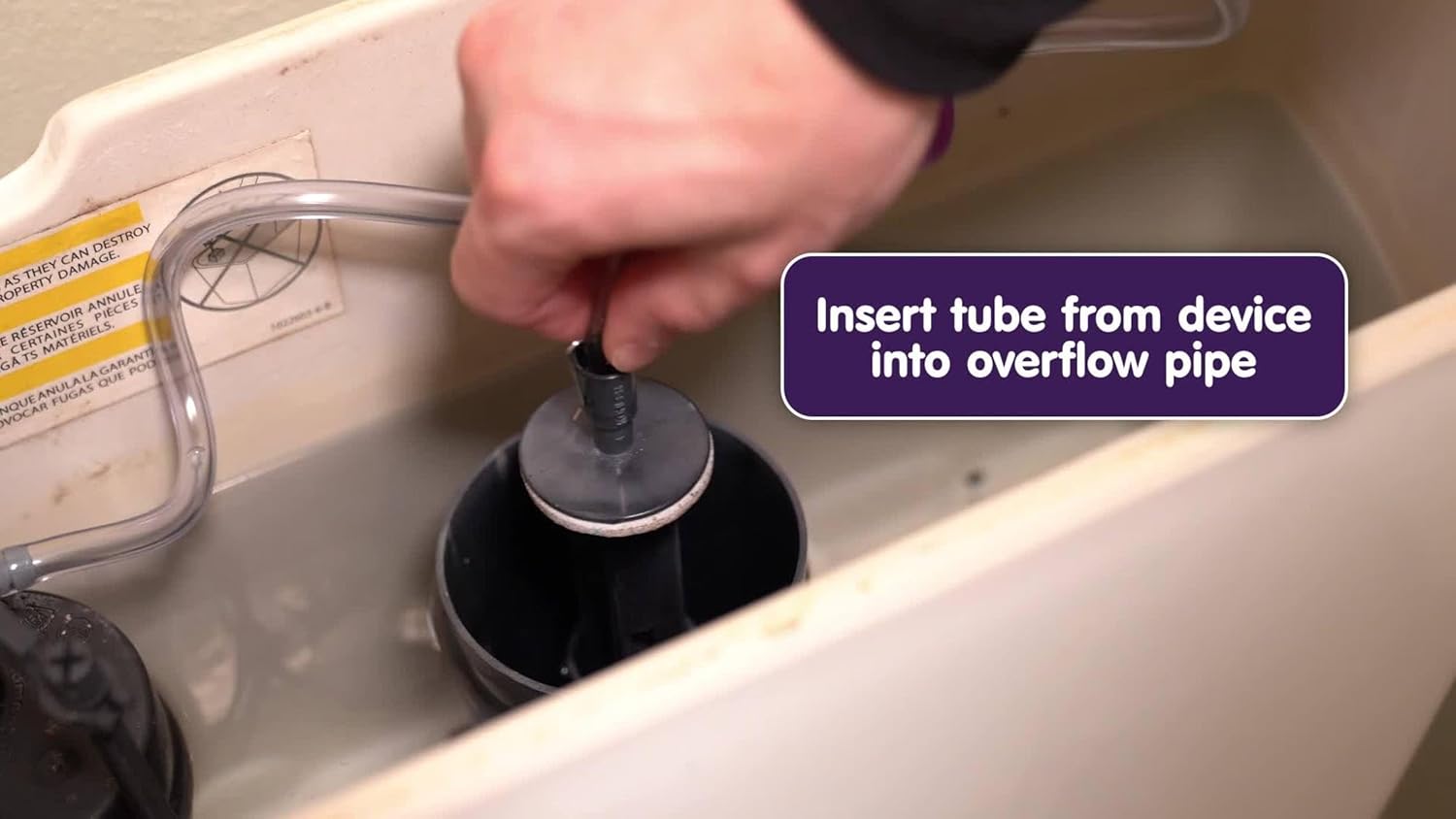
The Kaboom Scrub Free system is the most interesting product on this list because it solves the central problem of the category rather than working around it. Instead of dropping a tablet into tank water and hoping your flapper survives, it houses the cleaning tablets in a small sealed reservoir that clips inside the tank, then routes the dose through a line to the overflow tube on each flush.
The consequence is significant. You get a bleach-based formula with OxiClean stain fighters doing real work in the bowl, while the tank water itself stays essentially clean and the rubber components are not marinating in chlorine. For anyone who wants proper stain removal but has read the manufacturer warnings about in-tank cleaners, this is the way to have both. Duration is the other strong point, with each refill pouch rated for roughly three months and two pouches in the box, so a single purchase can run for about half a year.
The tradeoffs are practical rather than chemical. There is a one-time setup step, which is simple enough but does mean getting your hands into the tank and reading the instructions properly. The unit costs more than a pack of tablets, and the refills are proprietary, so you are committed to the brand once it is fitted. None of that is unreasonable, but it is a system purchase rather than an impulse buy.
Bottom line: the best answer here for a household that wants bleach-level cleaning on a long interval without the tank damage risk. If a guest bathroom or a rental property is the thing you keep forgetting about, this is the product that stops it being a problem.
- Format: sealed tank-mounted dispenser with refill tablets
- In the box: dispenser unit plus 2 refills
- Formula: bleach based with OxiClean stain fighters
- Delivery: metered into the overflow tube on each flush
- Refill life: around three months per pouch
- Total coverage: roughly six months from the starter kit
- Installation: clips inside the tank, no tools required
Fit the dispenser once by clipping it just inside the lip of the tank, connecting the supply line at the flush valve and routing the outlet into the overflow tube, exactly as the instructions describe. Take the extra minute to seat the lines properly, because a line that slips out is the one failure mode people report and it is entirely preventable.
Refilling is quick. Unscrew the cap on the unit, cut open a refill pouch, slide both tablets into the housing and screw the cap back on firmly. Set a reminder for about three months rather than waiting for performance to fall off, since the dispenser gives you no color cue the way a loose tablet does.
This is for the person who has read about flapper damage and refuses to drop a chlorine tablet in the tank, but still wants bleach-grade cleaning. It is also the strongest option for bathrooms nobody visits often: a guest bath, a basement toilet, a rental unit between tenants, anywhere a three month interval is genuinely useful.
It is less appealing if you own several toilets and would need several units, or if you simply want the cheapest maintenance possible. In both cases bulk tablets make more financial sense, provided you accept what they do to tank hardware.

Pros
- Nothing enters the tank, so flapper and seals are unaffected
- The only pick here with no warranty exposure at all
- Flexible hook adjusts to fit most bowl rim shapes
- Cleans and freshens on every flush with no maintenance
- Around four weeks of use from each tab
Cons
- The tab is visible inside the bowl, which some people dislike
- Does not tint the water, so replacement timing is less obvious
- Two tabs per pack means restocking roughly every two months
The Lysol Automatic In-The-Bowl cleaner is the outlier here, and it is on the list precisely because of that. It is not a tank product at all. The tab hangs from the bowl rim on a flexible hook and sits in the path of the flush, releasing cleaning agents and fragrance as water passes over it. Nothing ever goes into the tank.
That single design decision removes the biggest objection to this entire product category. There is no chlorine sitting against your flapper, no gasket slowly hardening, and nothing that a toilet manufacturer can point at when a warranty claim comes in. For a new toilet, or for anyone who has already replaced a flush valve once and does not intend to do it again, this is the format that carries no risk to the hardware.
What you give up is a matter of preference and expectation. The tab is visible in the bowl, which people either ignore completely or find genuinely annoying. There is no blue water, so you have to notice the tab shrinking rather than watching a color fade. And because the contact time with the water is short, it is a freshening and maintenance product rather than a serious stain remover. Positioning helps: hang it toward the back of the bowl and slightly off center so the refill stream does not blast straight through it.
Bottom line: buy this when protecting the toilet matters more than maximum cleaning power. It is the right answer for a new fixture under warranty, and a sensible one for anyone who simply does not want chemistry living in their tank.
- Format: hanging tab for the toilet bowl rim
- Pack size: 2 tabs
- Scent: Atlantic Fresh
- Placement: bowl rim, nothing enters the tank
- Typical duration: around four weeks per tab
- Water tinting: none
- Installation: flexible hook, adjusts to most rim shapes
This is the pick for a new toilet still inside its warranty period, and for anyone who has read what in-tank chemistry does to rubber and decided they want no part of it. It also suits homes on septic systems reasonably well, since the dose reaching the drain is small and the tank stays clean.
It is the wrong choice if you are fighting a heavy waterline ring, if you want blue water as a status indicator, or if a visible tab inside the bowl would bother you every time you lift the lid. Those are all fair objections and there are six other options here that answer them.
Hang the tab toward the rear of the bowl, slightly to one side of center, so the incoming refill water flows past it rather than straight through it. Placing it directly in the stream shortens its life and causes splashing. Keep spare tabs sealed and stored away from children and pets, and wash your hands after handling one.
Do not run this alongside a tank tablet. Two products in one toilet is money wasted at best, and mixing incompatible chemistries at worst. If you are moving away from tank tablets, let the old one dissolve completely and flush several times before hanging this one on the rim.
What to Look For in an In Tank Toilet Cleaner
Every product on this list promises a cleaner bowl with zero scrubbing. The differences show up in what they are made of, where they sit, and how long they keep working. Here is how we weigh each factor.
Bleach or Bleach-Free Formula

This is the first fork in the road. Chlorine bleach tablets are the strongest option for organic staining, the brown and gray shadow that builds up in a bowl that gets heavy daily use. Bleach also handles odor at the source rather than covering it, which is why products like the Clorox Ultra Clean Toilet Tablets Bleach and Blue remain the default choice in busy family bathrooms.
Bleach-free tablets take a different route. They rely on surfactants, chelating agents and mild acids to lift mineral deposits and keep the porcelain slick so nothing sticks. They are gentler on everything they touch, they are the safer bet for septic systems, and they will not bleach a bathmat if a tablet gets dropped. The tradeoff is that they work by prevention rather than rescue. A bleach-free drop-in will keep a clean bowl clean for a long time, but it will not erase a ring that has been building for a year.
Our advice is simple. If your bowl is already stained, scrub it once with a manual cleaner, then install a bleach-free tablet to hold the line. If you want the automatic product itself to do the heavy lifting, go with bleach and accept the tradeoffs in the next section.
Tank Safety and Your Toilet Warranty
Here is the part most product pages will not tell you. A tablet that dissolves in tank water sits in constant contact with the flapper, the flush valve seal, the fill valve and every rubber gasket in the tank. Chlorine attacks those parts. Kohler now places warning stickers inside its tanks stating that in-tank cleaning products void the warranty because they can destroy parts and cause leaks, and American Standard excludes in-tank cleaner damage from warranty coverage as well. Plumbers report the same pattern: a flapper that should last five to seven years starts weeping after one or two.
There are three ways around this. The first is to use a bleach-free formula, which is far less aggressive toward rubber and silicone. The second is to use a sealed dispenser system such as the Kaboom Scrub Free Toilet Bowl Cleaner System, where the cartridge lives in its own reservoir and the cleaner is routed straight to the overflow tube instead of soaking the tank. The third is to skip the tank entirely and hang a tab inside the bowl, which is exactly what the Lysol Automatic In-The-Bowl Toilet Cleaner does.
If your toilet is new, still under warranty, or has hardware you do not want to replace, take this seriously. Replacing a flapper is a cheap repair, but a leaking flush valve seal that runs unnoticed for a month is not, and a silently running toilet can waste a startling volume of water.
How Long a Single Dose Keeps Working
Duration is where the value calculation actually lives, and the claims in this category range much further than most shoppers expect. Budget tablets are commonly rated for around two weeks each. Mainstream drop-ins such as the Scrubbing Bubbles discs are rated for up to five weeks. At the far end, Clorox rates a single Ultra Clean tablet for up to four months. Read the pack carefully, because a multi-tablet box advertising a long total is quoting the sum across every tablet, not the life of one.
Real life usually lands below the label figure, since dissolution is driven by flush frequency rather than by the calendar. A busy family bathroom will burn through a tablet noticeably faster than a guest bath that sees a few flushes a week. Dispenser systems sidestep the problem, because the cartridge is protected and meters cleaner on demand: a single Kaboom refill is rated for roughly three months, so a starter kit with two refills covers about half a year. Bulk tablet packs like the Vacplus twelve pack attack it from the other direction, delivering months of coverage in one box at a very low cost per week.
Match the format to your habits. If you reliably notice when the blue fades and you enjoy a two minute chore, bulk tablets are the cheapest path. If a forgotten toilet in a guest bathroom is the real problem, a long-life dispenser is worth the higher entry cost.
Hard Water, Limescale and the Waterline Ring

If your ring is chalky white or rust orange rather than brown, you are fighting minerals, not organic soil, and bleach will do very little for you. Calcium and magnesium deposits need an acid or a chelating agent to break the bond with the porcelain. Look for language about limescale, hard water stains or descaling on the label, which is why we favor the Scrubbing Bubbles drop-ins and the Vacplus bleach tablets for readers on well water or municipal supply with high mineral content.
Also pay attention to where the product delivers its dose. Rim jets clog with scale long before the bowl looks bad, and a tablet that only colors the standing water does nothing for the underside of the rim. Products that release cleaner into the incoming flush water get better coverage across the whole bowl surface. Persistent buildup usually points to a plumbing-wide issue, and our guide to the best enzyme drain cleaners is a useful companion if slow drainage is part of the picture.
Septic Compatibility
A septic tank runs on live bacteria. Sustained chlorine dosing suppresses that population, and a toilet that flushes bleach several times a day is a sustained dose by definition. Manufacturers that call a product septic safe are signalling that the formula will not disrupt that balance at normal use levels, which is a meaningful claim rather than marketing filler.
Households on septic should default to bleach-free drop-ins and treat chlorine tablets as an occasional intervention rather than a permanent fixture. If you are already maintaining your system on a schedule, pair your cleaner choice with the right additive from our roundup of the best bacteria for septic tanks.
Scent, Dye and the Blue Water Question
Blue water is the most recognizable signature in this category, and it exists for a practical reason: it is a visual timer that tells you when the dose has run out. Some people find it reassuring, others find it distracting and would rather have clear water with the same cleaning action. Both exist, so buy the one you will actually be happy looking at.
Scent is more personal still. Heavy floral and citrus formulas fill a small powder room quickly, while cleaner-smelling profiles like the Clorox rain scent read as neutral to most people. One caution worth repeating: a strongly perfumed product can mask a developing sewer gas issue, so if the smell returns the moment a tablet runs out, investigate the trap and the vent rather than simply buying a stronger scent.
Switching Products Without Making Things Worse
Changing from one automatic cleaner to another sounds trivial, and mostly it is, but two mistakes come up often enough to flag. The first is running two products at once, usually a leftover tablet in the tank plus a new tab on the rim. Mixing an acidic descaling formula with a chlorine product in the same water is a genuinely bad idea, and even when nothing dramatic happens you are paying twice for one result. Let the old dose finish, flush a few times, then install the new one.
The second mistake is switching after long-term chlorine use and assuming the tank is fine. If bleach tablets have been sitting in there for a year or more, lift the lid and look at the flapper. Rubber that has gone chalky, stiff or slightly warped is already on borrowed time, and a leaking flapper will quietly undo any savings the tablets earned you. Replacing it costs very little and takes about ten minutes with the water shut off, and it is the right moment to do it since the tank is already open. Do that once, then move to a bleach-free product or a sealed dispenser and the problem does not come back.
| Product | Format | Where It Goes | Bleach | Best For |
|---|---|---|---|---|
| Scrubbing Bubbles Continuous Clean | Drop-in tablet | Tank | No | Septic homes and everyday prevention |
| Clorox Ultra Clean Bleach and Blue | Drop-in tablet | Tank | Yes | Heavy organic staining and odor |
| Vacplus Automatic Tablets | Drop-in tablet | Tank | No | Multiple bathrooms on a budget |
| Soft Scrub In-Tank Duo-Cubes | Two-cube tablet | Tank | No | Ring prevention with lasting freshness |
| Vacplus With Bleach | Drop-in tablet | Tank | Yes | Descaling plus stain removal in bulk |
| Kaboom Scrub Free System | Dispenser and refills | Tank, sealed unit | Yes | Long intervals without tank contact |
| Lysol Automatic In-The-Bowl | Hanging tab | Bowl rim | No | New toilets and warranty protection |
Why You Should Trust Us
We build these guides from the evidence a shopper can actually verify. We start with live listing data from Amazon, then filter hard on customer rating and on how many people have weighed in, because a strong score from a handful of buyers tells you far less than a solid score from tens of thousands of households across years of use. Every product here cleared both bars before we looked at it further.
From there we read the product literature, the manufacturer guidance and the plumbing industry position on in-tank chemistry, and we weight our picks toward products that will not create a repair bill later. We do not accept payment for placement and we do not claim hands-on trials we have not run. Where a product has a real drawback, such as the warranty exposure that comes with chlorine tablets, we say so on the product card instead of burying it. You can see how the same standard is applied across our full library on the articles page.
Final Thoughts
For most households the Scrubbing Bubbles Continuous Clean Toilet Drop-Ins are the right default and our best overall pick. The formula is septic safe, it targets hard water minerals and limescale rather than relying on chlorine alone, and it is the option least likely to shorten the life of your flapper. It keeps a clean bowl clean, which is the actual job of an automatic cleaner.
For best value, the Vacplus Automatic Toilet Bowl Cleaner Tablets in the twelve pack are hard to argue with. One box covers a year in a single bathroom or several months across a whole house, the blue dye gives you a clear replacement signal, and the bleach-free formula keeps the tank risk low. If your problem is stubborn organic staining instead, the Clorox Ultra Clean Toilet Tablets Bleach and Blue are the strongest conventional tablet here, and the Vacplus With Bleach tablets deliver similar chemistry in bulk with a descaling emphasis.
Two picks are for specific situations, and both are worth knowing about. The Kaboom Scrub Free Toilet Bowl Cleaner System is the best choice for long unattended intervals, since the sealed cartridge keeps cleaner out of the tank water while still dosing every flush. The Lysol Automatic In-The-Bowl Toilet Cleaner is the one to buy when nothing should go in the tank at all, which is the correct call for a new toilet still under warranty. Whichever you choose, treat it as maintenance rather than repair, and browse the rest of our shopping categories or our tools and home improvement picks when the next project comes around.
Frequently Asked Questions
Will an in tank toilet cleaner damage my toilet?
A chlorine bleach tablet dissolving in tank water can degrade the flapper, gaskets and flush valve seal over time, and major manufacturers including Kohler and American Standard exclude that damage from warranty coverage. Bleach-free tablets carry much lower risk. Sealed dispenser systems and bowl-hung tabs avoid the issue entirely because the cleaner never sits in tank water. If your toilet is new, choose one of those two formats.
How long does one tablet last in 2026?
It depends heavily on the product. Budget tablets are typically rated for around two weeks, mainstream drop-ins for four to five weeks, and the strongest bleach tablets for as long as four months from one tablet. Expect to land under the label figure, because the tablet dissolves through use rather than through time and a busy family bathroom works through one faster than a guest bath. Dispenser refills run longest, at roughly three months per cartridge. When the blue color stops coming back after a flush, the dose is finished.
Is an in tank toilet cleaner safe for a septic system?
Bleach-free products labeled septic safe are fine at normal use levels and will not knock down the bacterial population your tank depends on. Chlorine tablets are a different story, since every flush sends more bleach downstream. If you are on septic, use a bleach-free drop-in as your standing product and save chlorine for occasional deep cleaning. Our guide to the best bacteria for septic tanks covers the maintenance side.
Can I use an in tank toilet cleaner and still scrub occasionally?
Yes, and you should. These products are designed to stretch the interval between manual cleanings, not to eliminate them. A brush pass every few weeks reaches the underside of the rim and the trapway where flush water moves too fast for chemistry to work. The combination of an automatic cleaner plus an occasional quick scrub keeps a bowl looking new far longer than either approach alone.
Why is my bowl still staining with a tablet installed?
Usually one of three reasons. The tablet has run out and the color faded without you noticing. The stain is mineral rather than organic, so a bleach product is the wrong tool and you need a descaling formula. Or the rim jets are partially blocked by scale, so the cleaner never reaches the upper bowl. Clear the jets with a descaler, address the water hardness if you can, then let the automatic cleaner hold the line.

Write Your Review
No reviews yet. Be the first to share your experience!