

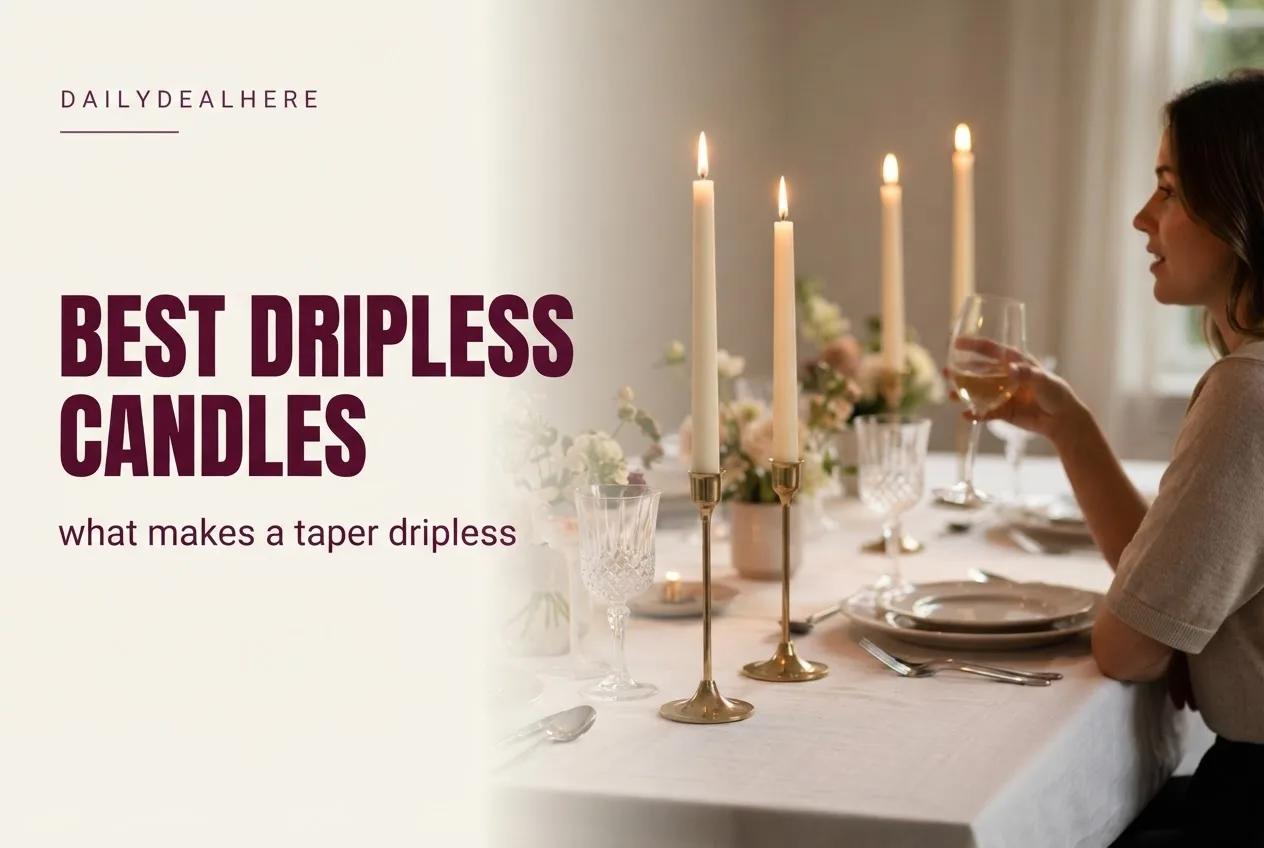
The best dripless candles are tapers made from a harder, higher melting point wax, usually paraffin hardened with stearic acid, paired with a well matched braided wick and burned upright in a draft free spot. That combination keeps the melt pool small enough that the flame consumes the wax before it can run down the side. No wax candle is completely dripless in every setting, though. Drafts, a tilted holder, an untrimmed wick or candles grouped too closely will make even a dripless taper run, so how you burn a candle matters almost as much as which one you buy.
This guide explains why candles drip, what makes a taper dripless, how different waxes and wicks behave, and the burning habits that keep wax off your tablecloth. It draws on the National Candle Association’s expert burning tips, its candle safety tips and guides to wax and wicks, and Colonial Candle’s explanation of dripless tapers.
The short answer
- Look for tapers labeled dripless or virtually dripless, which typically use a harder, higher melting point wax.
- Check the wax: paraffin hardened with stearic acid is the classic dripless formula, according to Colonial Candle. Beeswax tapers are a traditional alternative, but look for ones sold as dripless.
- Burn them right: trim the wick to about a quarter inch, keep them away from drafts, fans and vents, and make sure they stand straight in a snug holder.
- Space them out: the National Candle Association recommends keeping burning candles at least 3 inches apart.
- Expect near dripless, not perfect: even Colonial Candle, which sells dripless tapers, notes there is always a chance of slight dripping.
Why candles drip in the first place
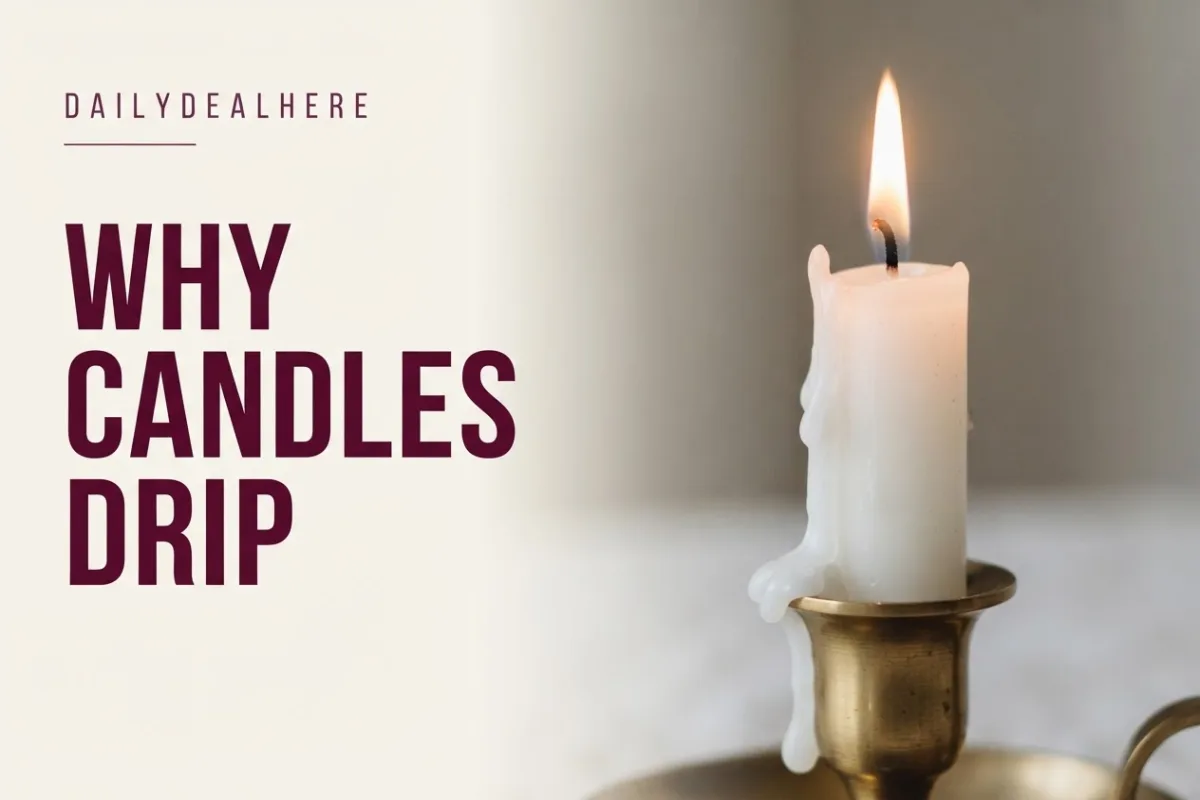
The National Candle Association explains how a candle burns: the flame melts the wax near the wick, the liquid wax is drawn up the wick by capillary action, and the flame vaporizes it and burns it. Colonial Candle puts the dripping problem simply: candles drip because wax melts, and when too much wax melts at once it spills over the side.
A taper is especially prone to this because it is narrow. There is very little room for a pool of melted wax to sit before it reaches the edge. If the flame melts wax faster than the wick can draw it up and burn it, the excess has nowhere to go but down the side of the candle.
What makes a taper dripless
Colonial Candle explains that dripless candles are made from a harder wax with a higher melting point, so the candle only melts right near the flame rather than softening along the body of the taper. It says this dripless wax is created by combining regular wax with stearic acid, which hardens it. Stearic acid occurs naturally in animal and vegetable fats.
The wick is the other half of the equation. The National Candle Association describes the wick as a fuel pump that draws liquefied wax into the flame, and notes that different wick sizes draw different amounts of fuel: too much and the flame flares and soots, too little and the flame sputters out. A dripless taper needs a wick sized so that it consumes the small melt pool at the rate the flame creates it.
Do dripless candles actually work?
Yes, with an honest caveat. Colonial Candle says that because dripless tapers are made from real wax, there is always a chance they can drip slightly, especially if they are not positioned in a sturdy manner, but that in general they perform very differently from regular tapers. Many brands use the phrase “virtually dripless” for exactly this reason.
In practice, a quality dripless taper burned correctly will leave little or no wax on the holder or table. The same candle burned under a ceiling fan or near an open window can still run down one side. Conditions matter.
Candle waxes compared
The National Candle Association’s guide to wax explains that paraffin is by far the most used candle wax worldwide, that beeswax is used globally in smaller quantities, that stearin wax is largely limited to Europe, and that soy and palm waxes were developed for commercial candle use in the late 1990s. It also stresses that all candle waxes are primarily hydrocarbons and burn in the same manner, and that no single wax is considered best.
| Wax | What the NCA says | What it means for dripping |
|---|---|---|
| Paraffin | The most frequently used candle wax worldwide | Most dripless tapers use paraffin hardened with stearic acid, per Colonial Candle |
| Stearin | Based on stearic acid from fatty acids, largely used in Europe | Stearic acid is the hardener that makes dripless blends |
| Beeswax | Used worldwide in smaller quantities | A traditional taper wax. The NCA notes square wicks are preferred for beeswax |
| Soy and palm | Vegetable waxes developed in the late 1990s | Performance depends on the formulation and wick |
| Blends | Widely used, with custom formulations | Performance depends on the formula and wick matching |
The practical takeaway is that the label matters less than the specific candle’s formulation. A candle sold as dripless has been designed around a harder wax and a matched wick. A soft wax taper not designed as dripless is much more likely to run.
Which candles drip the most?
- Soft wax tapers not designed as dripless, since the wax softens along the body.
- Tapers with oversized or twisted wicks. The NCA notes twisted wicks burn much faster because their loose construction lets more fuel reach the flame quickly.
- Candles in drafts, where the flame leans and melts one side faster.
- Candles that are not upright, so melted wax pools toward the low side.
- Candles placed too close together, which the NCA says can create their own draft and flare.
- Old or warped tapers, which can burn unevenly. The NCA recommends storing tapers flat to prevent warping.
The role of the wick
The National Candle Association describes several wick types. Flat wicks, usually made from three bundles of fiber, burn very consistently, curl in the flame for a self trimming effect, and are the most common type in taper and pillar candles. Square wicks also curl in the flame and are preferred for beeswax. Cored wicks use a stiffening core and are common in jars, pillars and votives. Twisted wicks burn faster and are generally of lower quality, though useful for birthday candles.
For dripless tapers, a braided or plaited wick that curls as it burns is a good sign, because a self trimming wick helps keep the flame at a steady size. You cannot change the wick in a store bought candle, but you can control its length.
Dripping problems and their fixes
| What you see | Likely cause | Fix |
|---|---|---|
| Wax runs down one side | A draft or a leaning candle | Move away from vents, fans and windows, and straighten the candle |
| Tall, flaring flame | Wick too long | Trim to a quarter inch before lighting, as the NCA advises |
| Several candles dripping together | Candles too close | Space at least 3 inches apart, per the NCA |
| Flickering and smoke | Disturbed flame shape from air currents | Burn in a well ventilated room away from strong air movement |
| Wobbling in the holder | Base does not fit | Use a snug holder or candle adhesive |
| Uneven burn on stored candles | Warping | Store tapers flat in a cool, dark place, as the NCA recommends |
How to burn tapers so they do not drip
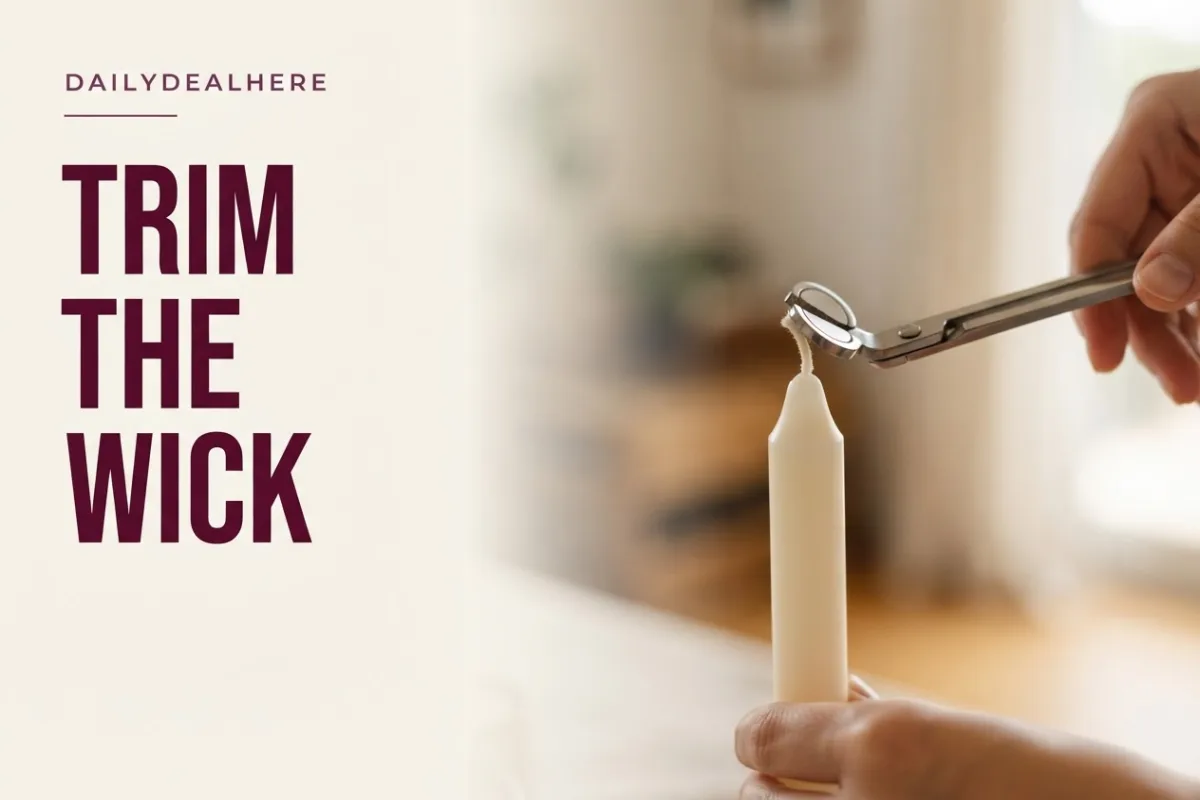
- Trim the wick to a quarter inch before every use. The NCA says a too long wick can make the flame grow too long and flare.
- Keep them out of drafts. The NCA advises burning candles away from drafts, vents and strong air currents, and not near open windows or fans.
- Stand them straight. Use a holder that grips the base firmly, and check from the side that the candle is vertical.
- Use sturdy holders that will not tip, as the NCA’s safety tips recommend.
- Space them at least 3 inches apart, which the NCA says prevents candles melting each other and creating their own draft.
- Keep the wax pool clean of wick trimmings and matches, which the NCA warns can catch fire.
- Let the flame settle. The NCA notes it takes a few minutes after lighting for the flame to stabilize, and a little flicker at first is normal.
Getting a taper to fit its holder
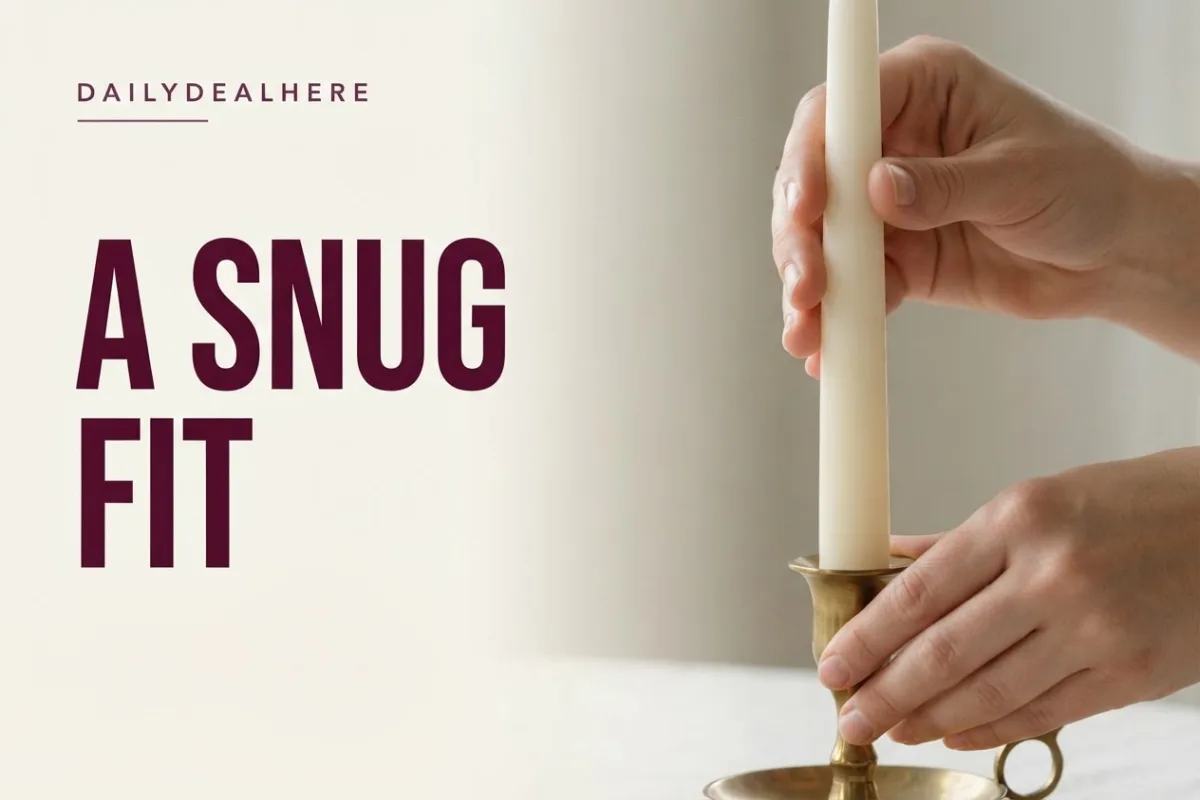
A wobbly taper is one of the most common causes of dripping, because a candle that leans melts unevenly. Tapers and holders are not always made to the same base size, so a snug fit is worth a little effort.
- If the base is slightly too wide, some people warm it briefly in hot water so it can be eased into the holder.
- If the base is too narrow, candle adhesive putty or a wax adhesive product can hold it upright.
- Check the candle is vertical from two directions before lighting.
- Choose holders with a deep cup, which grips the candle better than a shallow one.
Dripless candles for weddings and events

Event tables are where dripping causes the most trouble: linens, venue rules and long burn times. A few steps make a big difference.
- Buy tapers labeled dripless and burn one at home first to see how it behaves in normal conditions.
- Ask the venue about air conditioning vents and ceiling fans near the tables, which create drafts.
- Check the venue’s open flame rules. Some require enclosed or flameless candles.
- Use holders with bobeches or drip catchers as insurance.
- Plan for burn time. Colonial Candle lists burn times of up to around ten hours for its 12 inch tapers and up to four hours for its 5 inch tapers, so size your candles to the length of the event.
- Assign someone to watch the candles and extinguish them at the end. The NCA reminds you never to leave a burning candle unattended.
Dripless pillar candles
Pillars behave differently from tapers. Their wide body usually holds the melt pool inside a shell of unmelted wax, so they tend to drip less than tapers. The main risks are tunneling, where the wick burns straight down and leaves a thick wall, and blowouts, where the wall breaks and wax spills. The NCA’s advice to avoid short burns applies here: if you only burn a candle briefly, the wax cannot melt fully, which leads to uneven burning over time.
Avoiding smoke and soot
Dripping and smoking often share a cause. The National Candle Association explains that constant flickering and smoke happen when the teardrop shape of the flame is disturbed, letting small amounts of unburned carbon escape as a visible wisp. It adds that there is no such thing as a soot free wax, because all organic compounds release some carbon when burned, and that sooting is primarily a factor of wick length and flame disturbance.
So the same habits that prevent dripping, a trimmed wick and no drafts, also keep the flame clean and steady. A calm, steady teardrop flame is the sign, according to the NCA, that the candle’s burning process is in balance.
How to remove candle wax that did drip
If wax does end up where you do not want it, the National Candle Association offers some simple methods for holders.
- Hot water: wax drippings can be removed from most candleholders by running hot water over them.
- The freezer: some home care experts place the holder in the freezer for an hour or so, which shrinks the wax so it pops out.
- No sharp tools on glass: the NCA warns against using a knife or sharp object on glass votive holders, which can scratch or weaken the glass.
- Votives: adding a few drops of water to a votive holder before inserting the candle makes it easier to clean later, but only if you burn it right away.
Storing tapers so they burn well
Storage affects performance. The National Candle Association recommends storing candles in a cool, dark, dry place, and storing tapers or dinner candles flat to prevent warping. It also notes that candles may fade if left in bright light, such as direct sunlight or a spotlight, for an extended time. A warped taper is harder to stand straight and more likely to drip, so keep spares in their box, lying flat.
Why dripping has always been a candle problem
Dripping is not a modern complaint. The National Candle Association’s history of candle wax quotes an anonymous 18th century writer who warned that a tallow candle made from the wrong fat would gutter, give an ill smell and make thick black smoke. Tallow was the everyday candle wax in Europe and the Americas until the 18th century, according to the NCA, followed by spermaceti, then stearin and paraffin in the mid 1800s.
Stearin, based on stearic acid, is the same ingredient Colonial Candle identifies as the hardener in modern dripless wax. In a sense, today’s dripless taper is the result of a very long search for a candle that burns cleanly and stays put.
Colored and scented tapers
The National Candle Association estimates that 75 to 80 percent of candles sold in the United States are scented, and notes that candles come in a huge range of colors. Both fragrance and colorant are part of a candle’s formulation, and the NCA points out that wick choice depends on the wax, size, shape, color and fragrance materials. For dripless performance, that means a colored or scented taper should still be one sold as dripless, rather than assuming any taper will behave the same.
The NCA also notes that candles may fade if left in direct sunlight or under harsh lighting for a long time, which is worth remembering for colored tapers displayed on a sunny mantel.
Choosing candle holders that help
- Deep cups grip the base firmly and keep the taper vertical.
- Heavy bases resist tipping, in line with the NCA’s advice to use sturdy holders.
- Bobeches, the small collars that sit around the base of a taper, catch any stray drips.
- Hurricane glass shields the flame from drafts on patios or near doors.
- Holders meeting ASTM F2058, the candle holder safety standard the NCA points to, are designed with fire safety in mind.
Putting candles out cleanly
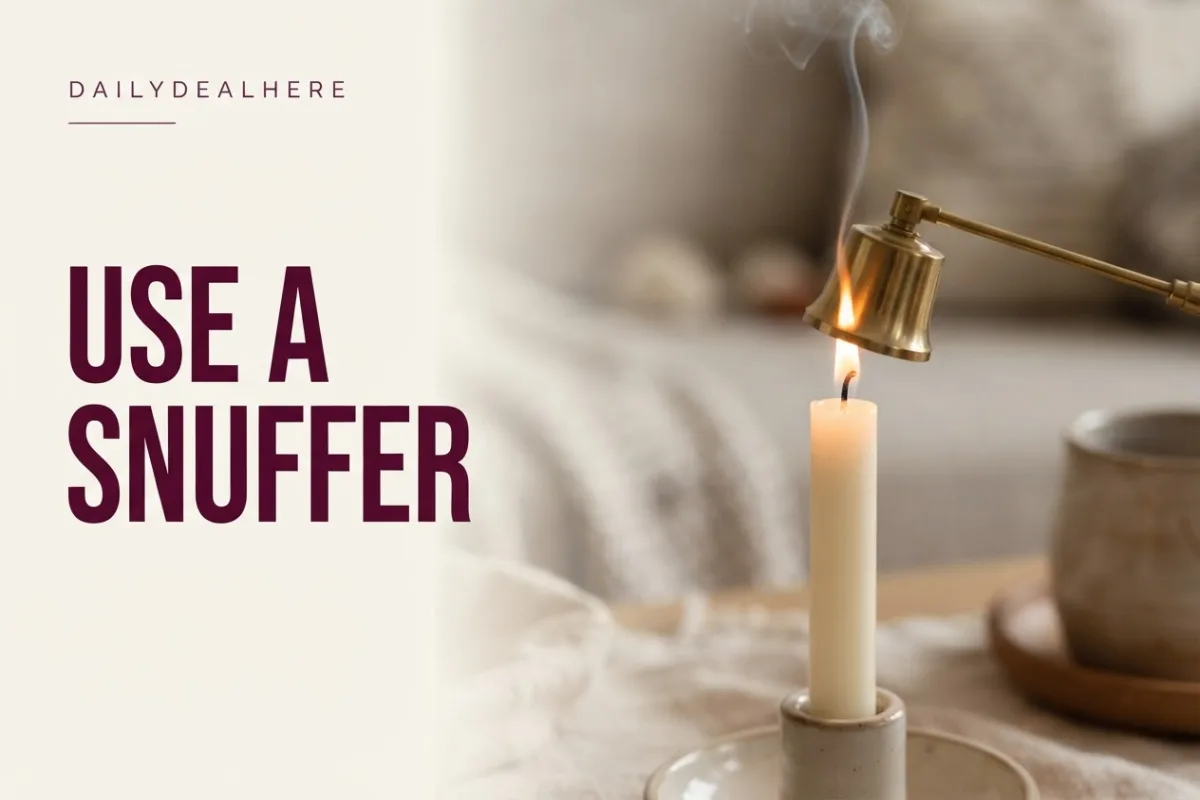
How you extinguish a taper can splash wax too. The NCA recommends a snuffer or gently blowing out the flame, never water, which can make hot wax splatter. Double check that the wick is fully out, and do not move the candle until the wax has completely cooled, since liquid wax can spill even from a dripless taper when it is carried.
Candle safety basics
The National Candle Association’s safety tips apply to every candle, dripless or not.
- Never leave a burning candle unattended.
- Keep candles at least 12 inches from curtains, bedding, books and other flammable items.
- Place candles on stable, heat resistant surfaces, out of reach of children and pets.
- Do not move a candle while the wax is liquid.
- Extinguish with a snuffer or by gently blowing, never with water, which can make hot wax splatter.
- Stop burning when about half an inch of wax remains.
- Look for candles and holders that reference ASTM F2417 for candles and ASTM F2058 for candle holders, the standards the NCA points to.
When a flameless candle is the better choice
If a venue bans open flames, if candles will be near children or pets, or if you want zero wax risk on an heirloom tablecloth, a flameless candle removes the problem entirely. Our guides to the best flickering flameless candles and battery operated candles compare realistic options.
For scented ambiance rather than tapers on a table, container candles avoid dripping by design. Our guide to essential oil candles covers that category.
How to choose dripless candles
- Look for “dripless” or “virtually dripless” on the label.
- Check the wax: stearic acid hardened paraffin or quality beeswax are the usual dripless formulas.
- Look for a braided or plaited wick.
- Match the base diameter to your holders.
- Choose a length that matches your burn time.
- Prefer unscented tapers for dining tables, where fragrance can compete with food.
- Burn one at home before an important event.
Frequently asked questions
What are the best dripless candles?
Tapers labeled dripless or virtually dripless, made from a harder, higher melting point wax such as paraffin hardened with stearic acid, with a braided or plaited wick. Burn them upright, away from drafts, with a wick trimmed to a quarter inch.
Do dripless candles actually work?
Largely, yes. Colonial Candle explains they use harder wax that only melts right near the flame, but notes there is always a chance of slight dripping, especially if a candle is not positioned sturdily. Drafts and tilted holders are the usual culprits.
What makes a candle dripless?
A harder wax with a higher melting point, often regular wax combined with stearic acid, according to Colonial Candle, plus a wick sized so the flame burns the small melt pool at the rate it forms.
Why do my dripless candles still drip?
Usually because of drafts, a candle that is not straight, a wick that is too long, or candles grouped too closely. The National Candle Association recommends trimming wicks to a quarter inch, avoiding drafts and keeping candles at least 3 inches apart.
Which candles drip the most?
Soft wax tapers not designed as dripless, candles with twisted wicks, which the NCA says burn faster, and any candle burned in a draft or at an angle.
Are beeswax candles dripless?
Not automatically. Beeswax is a traditional taper wax, and some beeswax tapers are sold as dripless, but how much any candle drips depends on its formulation, its wick and how it is burned. Drafts and tilted holders cause dripping with any wax.
How do I get candle wax off a candle holder?
The National Candle Association suggests running hot water over most holders, or freezing the holder for about an hour so the wax shrinks and pops out. Avoid knives or sharp objects on glass.
How should I store taper candles?
In a cool, dark, dry place, lying flat to prevent warping, according to the National Candle Association. Bright light can also fade candles over time.
Buy tapers built to be dripless, trim the wick, stand them straight, and keep them out of drafts. Do those four things and wax stays in the candle where it belongs.









Write Your Review
No reviews yet. Be the first to share your experience!