

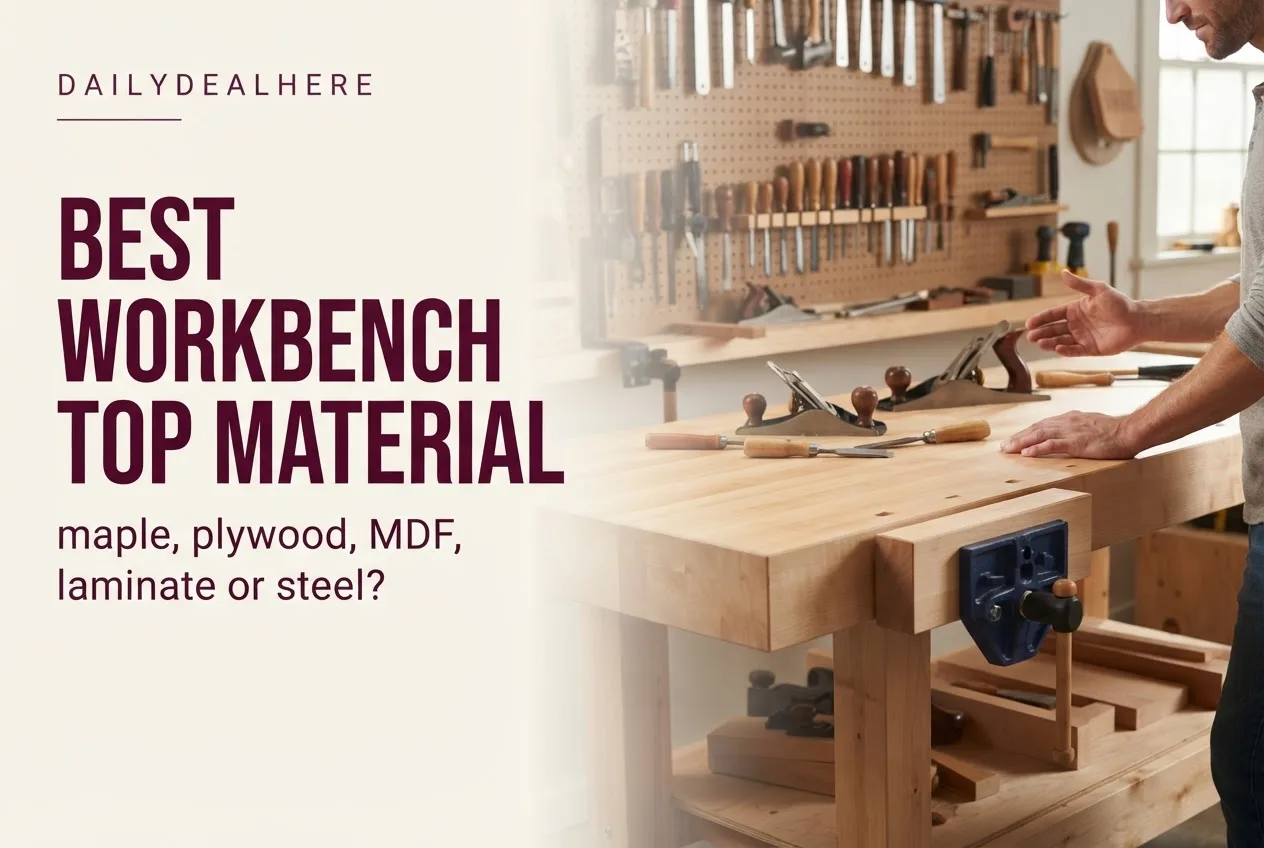
The best workbench top material depends on the work, but for most home shops the answer is solid hardwood, usually maple butcher block, or a thick, doubled sheet of plywood or MDF with a replaceable hardboard skin. Hardwood takes impacts, stays flat and can be sanded back to new. Plywood and MDF give a flat, affordable surface, with MDF the flatter and plywood the tougher of the two. If you work with oils, solvents or electronics, a laminate top is easier to keep clean, and for welding and heavy fabrication, steel is the only sensible choice.
This guide compares every common top material, explains what each does well and badly, answers the MDF versus plywood question, and matches materials to woodworking, mechanical, electronics and welding work. It draws on the LISTA workbench guide to top materials, The Wood Database profile of hard maple and Wikipedia’s entries on workbenches, medium density fiberboard, plywood and hardboard.
The short answer
- Best overall: maple butcher block or other solid hardwood.
- Best budget woodworking top: two layers of MDF or plywood glued together, topped with hardboard you can replace.
- Best for chemicals, oils and clean work: high pressure laminate.
- Best for electronics: an ESD laminate that dissipates static.
- Best for welding and heavy fabrication: steel.
- Best for labs, food and harsh chemicals: stainless steel.
What a workbench top has to do
Wikipedia describes a workbench as a sturdy table for manual work and notes that most share a few attributes: a comfortable working height, a way to fix the workpiece so you can use both hands, and provision for tools. It adds that benches are almost always rectangular, often using the surface, corners and edges as flat and square references.
LISTA, which makes industrial workbenches, lists four criteria for choosing a top.
- Durability and impact resistance: the top must handle dropped tools and forceful work without cracking, chipping or denting easily.
- Chemical, stain and heat resistance: a porous surface absorbs oils and solvents, and hot tools can damage some surfaces.
- Maintenance and cleanliness: a smooth, non-porous surface is quickest to wipe down.
- Cost versus long term value: a top that lasts can cost less over time than a cheap one you replace.
No single material wins on all four. That is why the right top depends on what you actually do at the bench.
Workbench top materials compared
| Material | Strengths | Weaknesses | Best for |
|---|---|---|---|
| Hardwood or butcher block | Absorbs impacts, strong, can be sanded and refinished (LISTA) | Porous, can stain or degrade with harsh chemicals and oils | Woodworking, mechanical repair, general workshops |
| Plywood | Cross grain layers resist splitting and improve dimensional stability (Wikipedia) | Voids in lower grades, surface veneer can chip | Budget benches, especially doubled up |
| MDF | Dense, consistent, stable, shapes well (Wikipedia) | Low grade MDF swells if saturated, edges split without pilot holes, dust release when cut | Flat woodworking and assembly tops kept dry |
| Hardboard | Denser and harder than MDF and particleboard (Wikipedia) | Thin, needs a substrate underneath | A replaceable skin over plywood or MDF |
| High pressure laminate | Resists scratches, stains, oils and many chemicals, easy to clean (LISTA) | Less forgiving of heavy impacts than wood | Assembly, labs, electronics |
| Steel | Handles heat and heavy impact, suited to welding (LISTA) | Heavy, can mar delicate parts | Welding and fabrication |
| Stainless steel | Non-porous, resists heat, corrosion and nearly all chemicals (LISTA) | Expensive | Clean rooms, food, labs, fluids |
Solid hardwood and butcher block
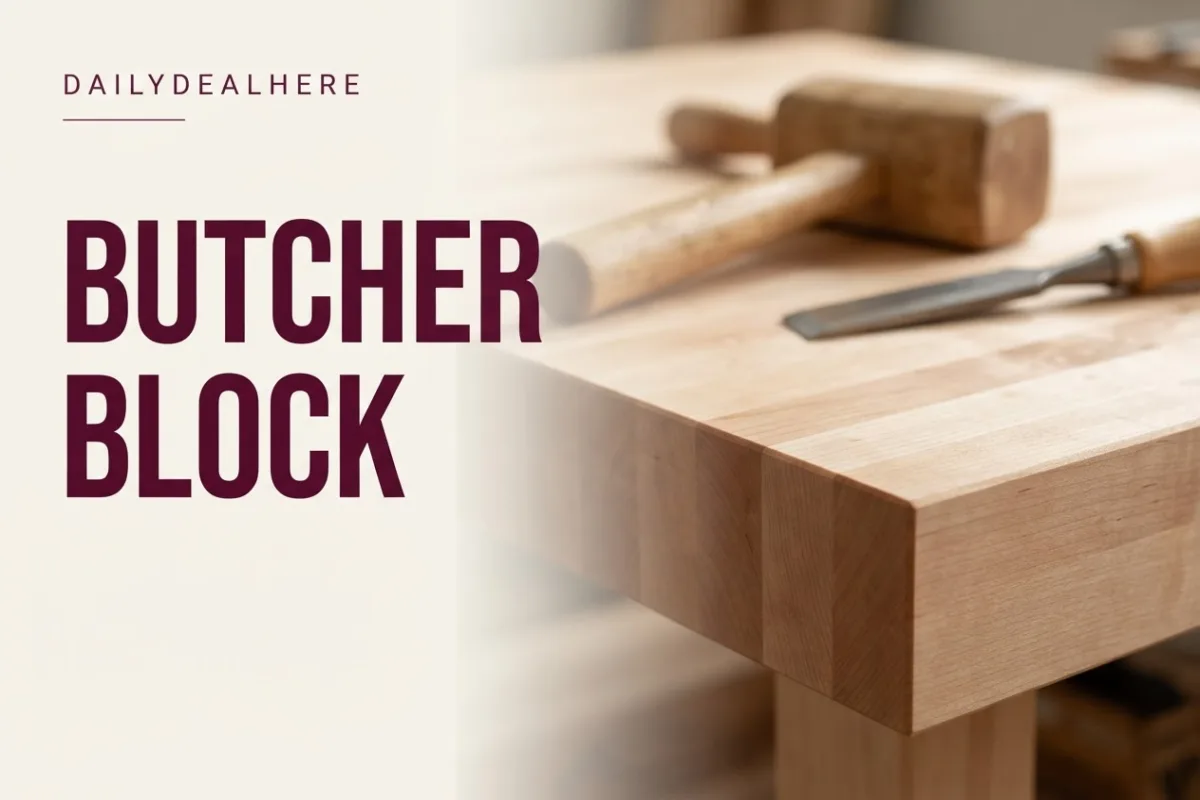
Wikipedia notes that wooden workbench surfaces are typically built of thick, solid maple. LISTA describes butcher block as strips of solid hardwood, like maple, fused together, and explains why it is a workshop favorite: it absorbs impacts from dropped tools and heavy parts, protecting both the bench and your equipment, and gives a firm, non-marring surface that is forgiving yet strong. It can also be sanded and refinished to extend its life.
LISTA is honest about the limit. Wood is porous, and even when treated it is not impervious to harsh chemicals, acids, solvents or oils, which can soak in and stain or degrade the fibers over time. If your bench sees a lot of fluids, plan for a protective mat in wet areas or choose a different surface.
Why maple is the classic choice
The Wood Database lists hard maple’s Janka hardness at 1,450 pounds of force. The Janka figure, as Wikipedia explains, measures the force needed to embed a steel ball of about 7/16 inch diameter halfway into the wood, a standard measure of resistance to denting and wear. The Wood Database also lists workbenches and butcher blocks among hard maple’s common uses, alongside flooring for basketball courts and bowling alleys.
The same profile notes a few practical points: hard maple is fairly easy to work but a little harder than soft maple because of its density, it can burn when cut with high speed router bits, and it glues and finishes well, though it can blotch if you stain it. For a bench top, a clear finish avoids the staining issue entirely. The Wood Database also rates hard maple as non-durable against rot, which matters little indoors but is a reason to keep a maple bench out of damp sheds.
Plywood
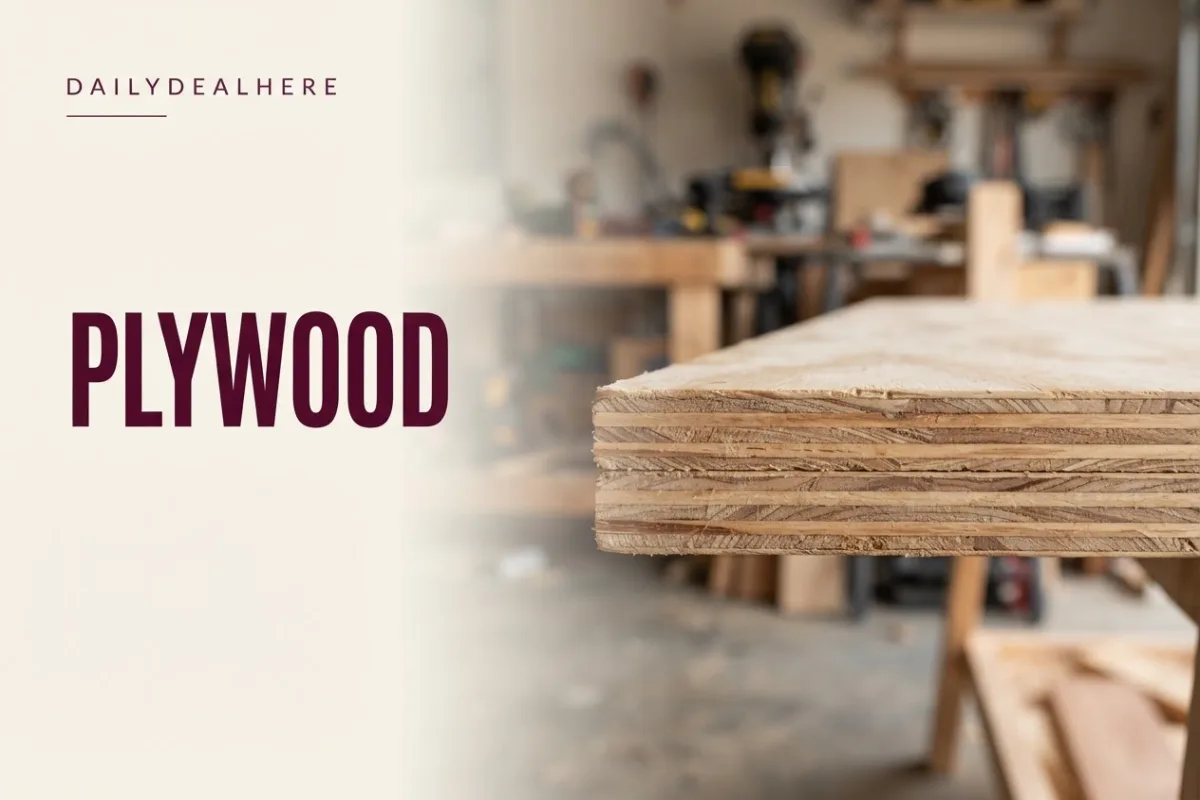
Plywood is built from thin wood veneers stacked with the grain of each layer at right angles to the next. Wikipedia explains that this cross graining reduces the tendency to split when nailed at the edges, reduces swelling and shrinkage for better dimensional stability, and makes the panel’s strength consistent in all directions. An odd number of plies balances the sheet and reduces warping.
Grade matters. Wikipedia describes Baltic birch plywood as very stable, with a void free core of cross banded birch plies and thicker face veneers than typical cabinet plywood, which makes it a popular upgrade for bench tops. Construction grades are cheaper but can have hidden voids that leave soft spots under a hammer blow.
MDF
Medium density fiberboard is made from fine wood fibers bonded with resin under heat and pressure. Wikipedia lists its advantages as being denser than plywood and chipboard, consistent in strength and size, stable, easy to shape and paint, and holding screws well in the face. That consistency is exactly what makes a flat, even work surface.
The same entry lists the drawbacks. Low grade MDF may swell and break when saturated with water, and may warp or expand in humid environments if not sealed. Screws hold poorly in the edge and can split it without pilot holes. And cutting MDF releases a large amount of fine dust, and the formaldehyde based resins commonly used can be released, so use dust collection and a suitable respirator when machining it. Seal an MDF top with a finish, and keep water off it.
MDF or plywood: which is better for a bench top?
It depends on what you value. Based on the properties Wikipedia describes, the trade-off looks like this.
- Choose MDF if flatness and a smooth, consistent surface matter most, for example for assembly, glue ups or a router table style surface, and your shop stays dry.
- Choose plywood if the top will take fasteners near the edges, see some moisture, or needs to span a wider frame with less support.
- Combine them by gluing an MDF layer onto plywood, or two layers of either, to get a thick, heavy, flat top at modest cost.
Whichever you choose, doubling the thickness makes a top noticeably stiffer and heavier, which helps it stay put when you plane, hammer or saw.
Hardboard as a replaceable skin
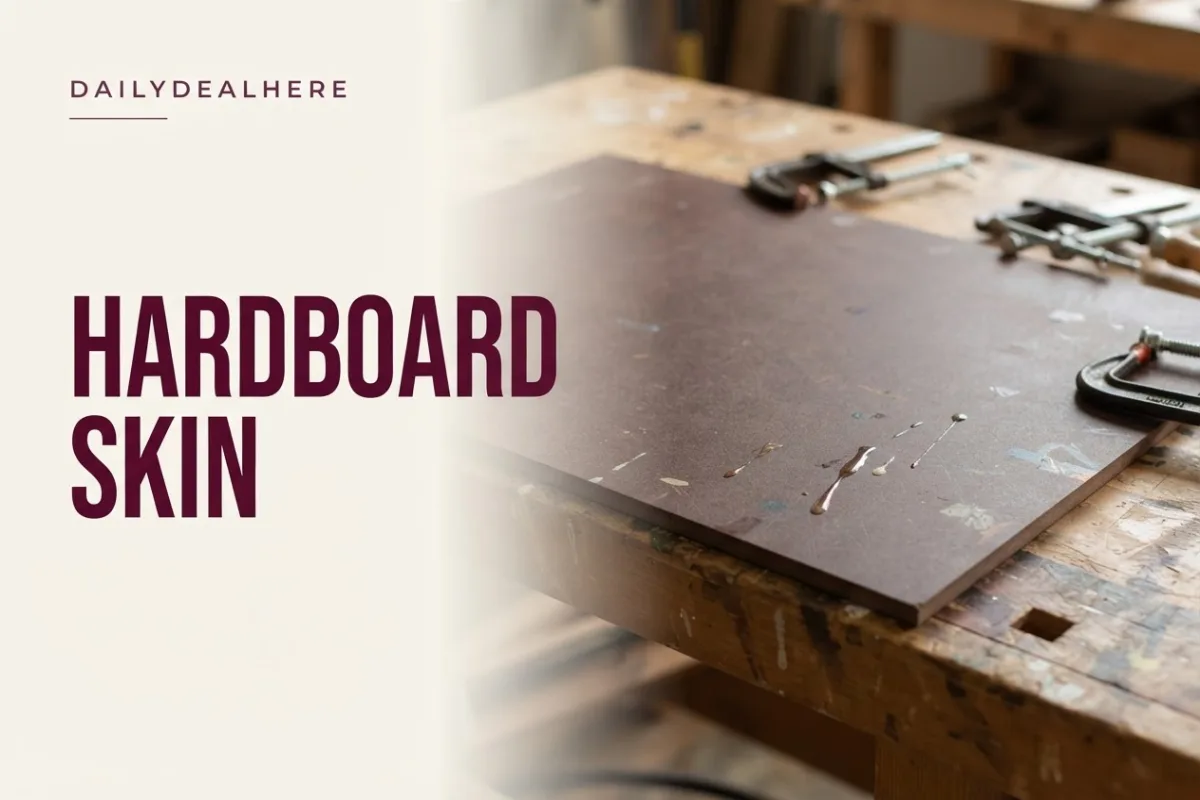
Hardboard, also called high density fiberboard, is denser, stronger and harder than particleboard and MDF, according to Wikipedia. Masonite is a wet process hardboard with one smooth side. Tempered hardboard, coated with a thin film of linseed oil and baked, has more water and impact resistance.
Those properties make hardboard a practical top layer over a plywood or MDF bench. It gives a smooth, hard working surface, and when glue, paint and cuts wear it out, you replace the thin sheet instead of the whole top. Fasten it so it can be removed, for example with countersunk screws away from where you usually work, or with a few brads.
Laminate tops
LISTA describes an industrial laminate top as a heavy gauge sheet of high pressure plastic laminate bonded to a solid, stable core. The result is highly resistant to scratches, stains, oils and many chemicals, non-porous and very easy to wipe clean. That makes laminate ideal for detailed assembly, laboratory work and any task that needs a clean, consistent surface.
For electronics, LISTA notes ESD versions that dissipate static to protect sensitive components. Wikipedia similarly describes electronics benches as equipped with electrically dissipative materials for static protection. Laminate is less suited to heavy hammering and chisel work, where its hard surface and the core beneath it can be damaged.
Steel and stainless steel
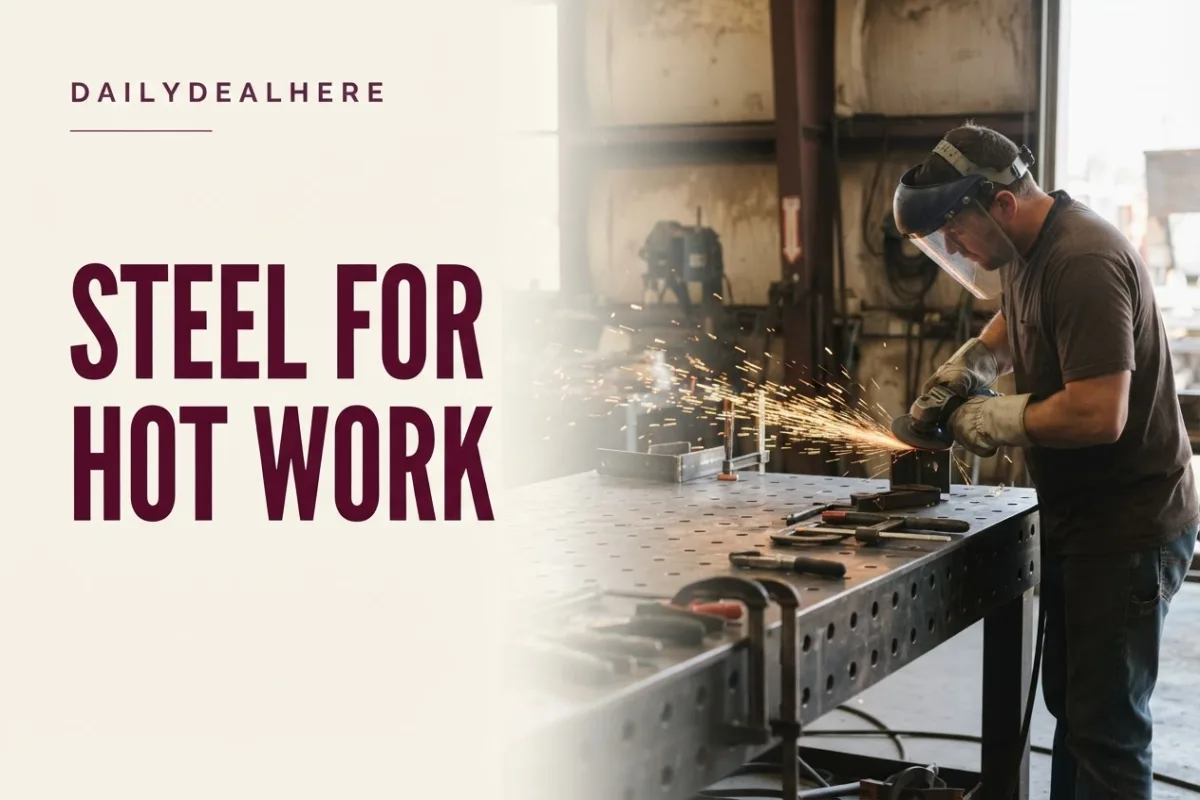
For the harshest work, LISTA says heavy duty mild steel tops are unmatched for welding, heavy fabrication and extreme impact, and that stainless steel is the standard for cleanrooms, medical labs and food processing because it is non-porous and resists heat, corrosion and nearly all chemicals. Wikipedia notes that metalworking benches are built to handle grinding, welding, light casting and forging, usually with a metalworker’s vise mounted on top.
A wood top is a fire risk under welding sparks and spatter, so steel is the only sensible surface for hot work. If you are setting up to weld, our guide to the best budget stick welders covers entry level machines.
Particleboard and melamine
Wikipedia lists particleboard as one of the four main workbench surface types: tiny wood particles glued and pressure bonded together, usually coated with melamine or laminate so the top is easy to wipe clean. Some ready made benches use it because it is inexpensive.
A coated particleboard top is fine for light duty tasks, sorting and storage. For pounding, heavy clamping or wet work, a thicker hardwood, plywood or steel top will hold up better. Treat any chipped coating promptly, since exposed particleboard, like low grade MDF, does not respond well to water.
The best top for your type of work
| Type of work | Recommended top | Why |
|---|---|---|
| Manufacturing and heavy fabrication | Heavy duty steel or thick butcher block | LISTA recommends these for heavy loads, welding and high impact assembly |
| Automotive garage | Butcher block or stainless steel | LISTA: wood absorbs impacts, stainless resists oils and brake fluid |
| Labs and electronics | Laminate, ESD laminate for electronics | LISTA: chemical resistance, non-porous, static protection |
| General workshop | Butcher block or standard laminate | LISTA calls these the best balance for all purpose use |
| Hand tool woodworking | Thick solid hardwood | Wikipedia: woodworking benches are usually solid wood with integral clamping |
| Gardening and potting | A moisture and dirt resistant surface | Wikipedia notes gardening benches must resist moisture and dirt |
Woodworking benches specifically
Woodworking asks more of a top than most work. Wikipedia notes woodworking benches are usually made from solid wood and have integral clamping mechanisms, and that many benches use their surface and edges as flat and square references. A top that flexes or has dips makes planing and assembly harder.
- Choose mass: a thick, heavy top resists moving when you plane or chop.
- Keep it flat: check with a straightedge and flatten high spots before they cause problems.
- Plan for workholding: a face vise and an end vise, or bench dogs and holdfasts, turn a table into a workbench. Our guide to the best woodworking vises covers options.
- Leave overhang where you will clamp, so clamps have room to grip. Our guide to the best trigger clamps covers quick one handed clamps.
Finishing a wood top
A bench top needs protection, but not a slick, thick film that makes work slide around. A thin penetrating finish, such as an oil or an oil and wax blend, resists glue and stains while leaving a surface with some grip. The Wood Database notes that hard maple finishes well, and LISTA points out that butcher block can be sanded and refinished to extend its life, which is one of its biggest advantages over composite tops.
For MDF, sealing all faces and edges matters more, given Wikipedia’s note that unsealed MDF may warp or expand in humid conditions. A few coats of a durable finish, with the edges sealed as carefully as the top, will extend its life considerably.
Protecting edges and fastening sheet goods
The edges of a sheet good top take the most abuse, from clamps, dropped tools and bumping hips. Gluing a strip of solid hardwood around the perimeter protects plywood veneer from chipping and MDF corners from crumbling, and gives clamps a stronger edge to bear on.
Fastening matters with MDF in particular. Wikipedia notes that MDF holds screws well in its face, but that smooth shank nails and fine pitch screws hold poorly, especially in the edge, and that edge screws can split the board without pilot holes. It lists coarse thread screws, sheet metal screws, T-nuts and machine screws as the fasteners that work. Drill pilot holes, keep screws back from the edges, and use T-nuts if you plan to bolt a vise through the top.
Height and how you work
The top material is only useful at the right height. Wikipedia lists a comfortable working height, for seated or standing work, as a basic workbench attribute, and gives examples of how the work sets it: electronics benches are usually set for a seated worker, while jewelers and watchmakers use benches that bring the work to about eye level when seated. Heavy planing and hammering, by contrast, are easier on a lower, heavier bench where you can put your weight into the work.
If one bench has to do everything, set it for your most frequent task and use a raised platform or a low stand for the rest.
Mats and covers for mixed use benches
Most home benches serve several jobs, and a cover can let one top handle work it is not ideal for. A removable hardboard sheet takes glue and paint. A rubber or silicone mat protects a wood top from oils and gives small parts grip. For electronics on a general bench, an ESD mat brings some of the static protection LISTA describes for ESD laminate tops. The idea is simple: choose the top for your main work, and cover it for the exceptions.
Common workbench top mistakes
- Unsealed MDF in a damp garage. Wikipedia warns unsealed MDF may warp or expand in humid conditions.
- Welding on wood. Sparks and spatter are a fire risk, so hot work belongs on steel.
- A great top on a weak frame. LISTA warns a flimsy base will wobble and flex.
- Screwing into MDF edges without pilot holes. Wikipedia notes the edge can split.
- Staining maple. The Wood Database notes maple can blotch when stained, so a clear finish is simpler.
- Letting fluids soak into wood. LISTA notes oils and solvents can stain and degrade wood fibers, so wipe spills promptly.
Do not forget the frame
LISTA makes a point that is easy to overlook: even the best top is only as good as the frame under it. A great top on a flimsy base will wobble and flex, which compromises both safety and precision. For heavy work, LISTA recommends pairing a quality top with a heavy duty frame that stays stable under load.
If you want storage built in, our guide to the best workbench with drawers covers ready made benches that combine a solid top with tool storage.
Three budget paths
- Tightest budget: two sheets of MDF or plywood glued and screwed together, sealed, with a replaceable hardboard skin on top.
- Middle ground: Baltic birch plywood doubled up, or plywood with an MDF top layer, edged with a strip of solid hardwood to protect the corners.
- Long term: a maple butcher block top on a heavy frame, sanded and refinished as it wears.
Frequently asked questions
What is the best material for a workbench top?
For most home shops, solid hardwood such as maple butcher block, which absorbs impacts and can be refinished. Plywood or MDF with a hardboard skin is a strong budget option, laminate suits clean and chemical work, and steel is best for welding.
What kind of wood is best for a workbench top?
Hard maple is the classic choice. The Wood Database lists its Janka hardness at 1,450 pounds of force and names workbenches and butcher blocks among its common uses. Wikipedia notes wooden bench tops are typically thick, solid maple.
Is MDF or plywood better for a workbench top?
MDF is flatter and more consistent, which suits assembly and glue ups, but it can swell if wet and holds screws poorly at the edges. Plywood’s cross grain layers resist splitting and improve stability. Many builders glue the two together.
What should I put on top of my workbench?
A replaceable hardboard sheet is a common protective layer over plywood or MDF. Wikipedia notes hardboard is denser and harder than MDF and particleboard, and tempered hardboard adds water and impact resistance. Replace it when it wears out.
Is butcher block good for a workbench?
Yes, for most shops. LISTA says it absorbs impacts, protects tools and parts, and can be sanded and refinished. Its weakness is that wood is porous, so harsh chemicals, solvents and oils can soak in and stain it.
When is a laminate workbench top better?
When you work with oils, chemicals or electronics. LISTA describes high pressure laminate as resistant to scratches, stains, oils and many chemicals and easy to clean, with ESD versions for static sensitive electronics.
What workbench top is best for welding?
Steel. LISTA says heavy duty mild steel tops are unmatched for welding and heavy fabrication. Wood tops are a fire risk under sparks and spatter.
How thick should a workbench top be?
Thicker is stiffer and heavier, which helps for pounding and planing. Doubling up two sheets of plywood or MDF is a common way to get a solid, heavy top at modest cost, and hardwood tops for hand tool work are typically thick and solid.
Match the top to the work: hardwood for most shops, a doubled sheet with a hardboard skin on a budget, laminate for clean or chemical work, and steel for anything hot. Then put it on a frame that does not wobble.










Write Your Review
No reviews yet. Be the first to share your experience!