

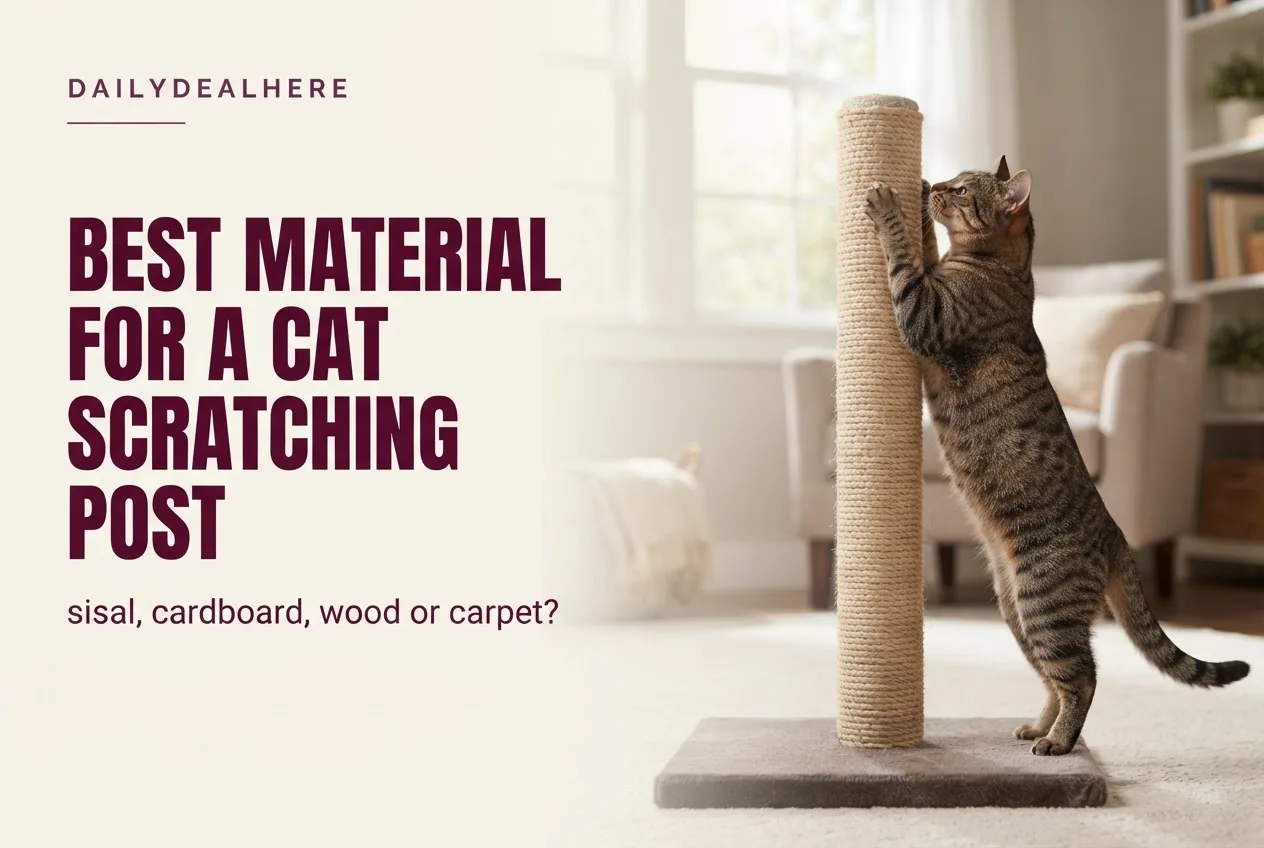
For most cats, the best material for a scratching post is sisal: a tough, rough natural fiber that cats can dig their claws into and that resists shredding far better than carpet. Humane World for Animals says most cats prefer a sisal post that is at least 32 inches tall and does not wobble, even over furniture. Corrugated cardboard and plain wood are strong alternatives, and some cats prefer them. Carpet, the most common covering on store bought posts, is often the weakest choice, because claws snag in the loops and it shreds into a mess. The right answer for your cat also depends on what it already likes to scratch and whether it scratches upward or along the floor.
This guide compares every common scratching material, explains how to match the material and shape to your cat’s habits, covers height, stability and placement, and walks through how to get a cat to use a new post instead of your sofa. It draws on guidance from the San Francisco SPCA, the Cornell Feline Health Center and Humane World for Animals.
The short answer
- Best overall: sisal rope or sisal fabric on a heavy, stable post.
- Best budget option: corrugated cardboard, which is cheap and often refillable but sheds bits.
- Most durable: solid wood or a log, which the SF SPCA says is even more durable than sisal.
- Usually avoid: looped carpet, which can catch claws and shreds over time.
- Size: at least as tall as your cat stretched out on its hind legs, and sturdy enough not to tip.
- Orientation: vertical for cats that reach up, horizontal for cats that scratch rugs and carpets.
Why cats scratch in the first place
Understanding the reasons explains why material matters. The Cornell Feline Health Center describes scratching as largely a marking behavior: it deposits scent from glands on the cat’s paws and removes the translucent outer sheath from the claws. Cornell adds that the visible scratch marks and shed sheaths may also be displays of confidence.
Humane World adds that cats also scratch to express emotions such as excitement or stress, and often simply to get a good stretch. Because scratching is instinctive, Cornell notes it is difficult to stop, but cats can be taught to scratch appropriate objects. The goal is not to stop scratching but to give your cat a surface it likes better than your furniture.
That is where material comes in. A good scratching surface lets the cat sink its claws in, pull against resistance, and leave visible marks. A surface that is too smooth, too soft or that traps the claws does none of those things well.
Scratching materials compared
| Material | Strengths | Weaknesses | Best for |
|---|---|---|---|
| Sisal rope | Very tough, resists shredding, long lasting (SF SPCA) | Hard to work catnip into (SF SPCA) | Cats that like rough surfaces, vertical posts |
| Sisal fabric or upholstery fabric | Flat woven surface, easy to shred into, the SF SPCA suggests upholstery fabric as more “shreddable” than carpet | Fabric coverings wear through faster than solid wood | Cats that like couches and nubby textures |
| Carpet | Cheap and easy to work with (SF SPCA) | Claws catch in loops, sheds nap, holds dirt (SF SPCA) | Cats that scratch carpets, if the loops are avoided |
| Corrugated cardboard | Cheapest, often refillable, holds catnip well (SF SPCA) | Shreds into bits, some cats chew it (SF SPCA) | Horizontal scratchers, budget setups |
| Wood or a log | Very durable, even more than sisal, no debris (SF SPCA) | Does not hold catnip (SF SPCA), heavy | Cats that scratch wooden furniture or door frames |
Wikipedia’s entry on scratching posts cites cat behaviorist Matt Wildman as saying sisal or corrugated cardboard surfaces are favored by most cats. It also notes that many owners experiment with different surfaces before finding one their cat uses reliably, which is a good reason to start with an inexpensive option before committing to a large cat tree.
Sisal rope: the default choice
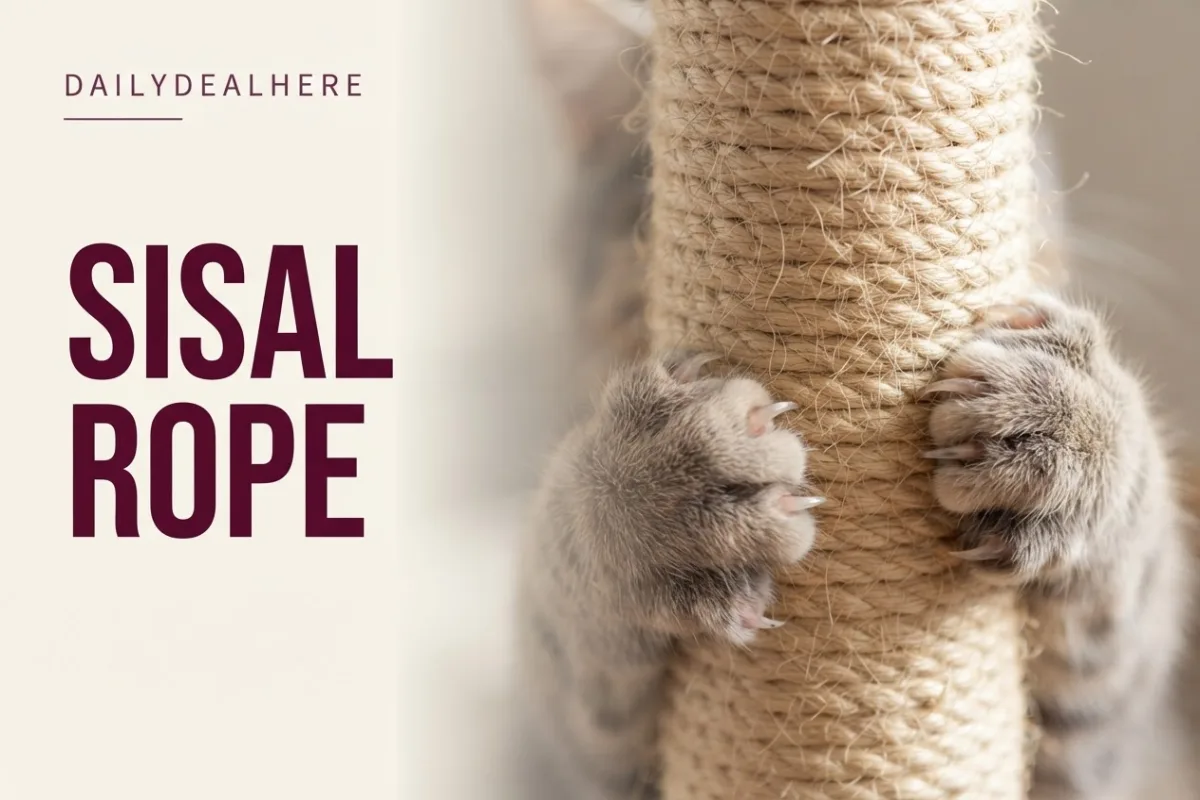
Sisal is a natural fiber twisted into rope and wrapped around a post. The SF SPCA describes sisal posts as long lasting scratching surfaces that are very tough and resist shredding very well, and calls them excellent choices for cats that prefer to claw rough surfaces. Humane World goes further, saying most cats prefer a sisal post, one at least 32 inches tall that does not wobble, even more than furniture.
The SF SPCA notes one downside: sisal is not easy to incorporate catnip into, which can make it harder to attract a hesitant cat. Rubbing catnip onto the surface or hanging a catnip toy from the top of the post helps, as covered in the section on introducing a new post.
When choosing a sisal post, look at how the rope is attached. Tightly wound rope that is secured at both ends lasts longer than loosely wrapped rope, which can slip down the post as the cat pulls on it.
Sisal fabric and upholstery fabric
Sisal is also woven into a flat fabric, and some posts use that instead of rope. It gives a continuous surface without the grooves of wound rope. Upholstery fabric is another option, and the SF SPCA specifically suggests upholstery fabric as a more “shreddable” alternative to carpet.
Cornell’s advice ties this to what your cat already scratches: if your cat prefers couches and other nubby surfaces, choose a post covered in sisal or another rope-like material. A cat that has been working on your sofa’s upholstery may take quickly to a fabric covered post with a similar feel.
Why carpet is often the worst choice
Carpet covers most mass produced posts because it is cheap and easy to attach. The SF SPCA explains the problems. Cats can get their claws stuck in the fabric loops and stop using the post as a result. Carpet is not nearly as durable as sisal, so it shreds and loses bits of nap over time, and it retains dirt and debris that need vacuuming.
There is a subtler issue too. A carpet covered post teaches a cat that carpet is for scratching, which is not ideal if you have carpeted floors or rugs you want left alone. The SF SPCA suggests attaching carpet upside down, using the rougher backing, if you do use it.
Cornell takes a practical view: for a cat that already scratches carpets, a carpet covered post can be a good match, because it offers the texture the cat already likes. If you go that route, choose a low, tight pile rather than loops that can catch claws.
Corrugated cardboard
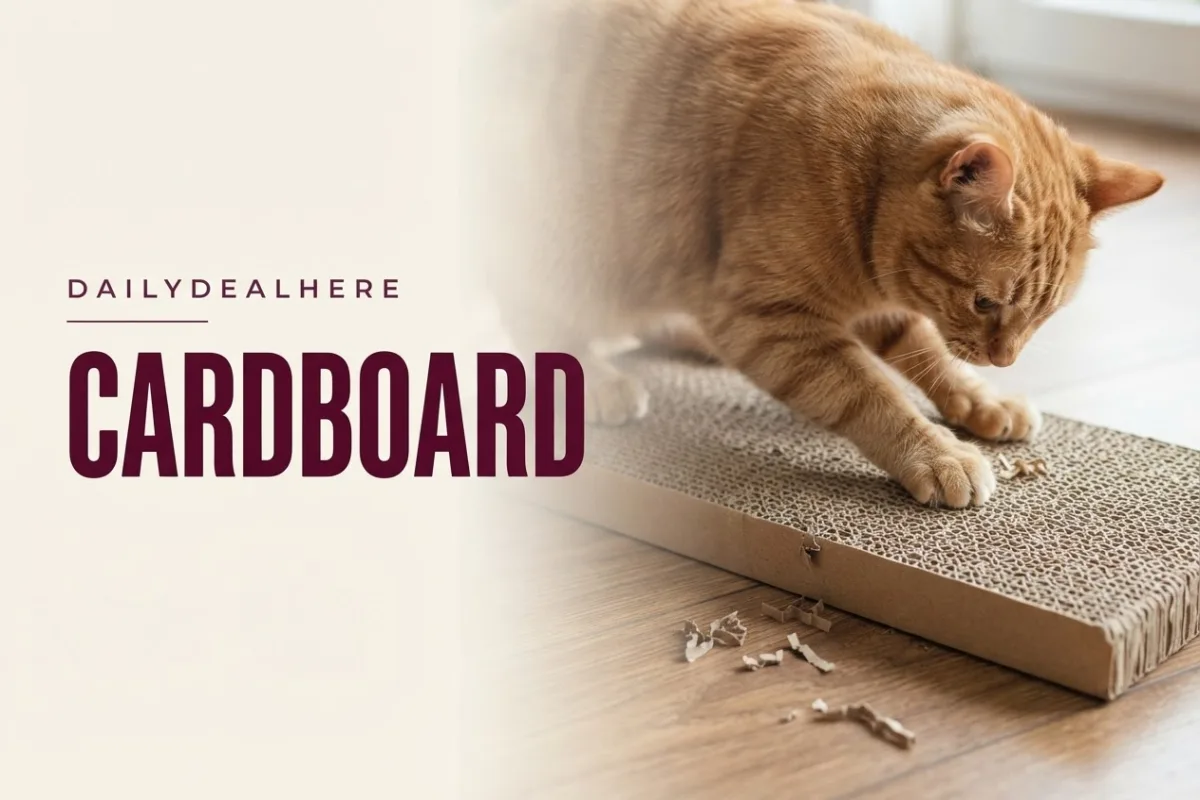
The SF SPCA describes cardboard scratchers as by far the cheapest option, usually refillable, and good at holding catnip because of all the holes in the corrugation. The downsides are that cardboard shreds easily, leaving bits around the house, and that some cats chew it, which the SF SPCA advises against because of the chemicals in cardboard.
Cardboard scratchers usually lie flat on the floor, which makes them ideal for cats that prefer horizontal scratching. They are also an easy way to find out what your cat likes before spending more. Humane World notes that some cats like scratching corrugated cardboard.
Wood and logs
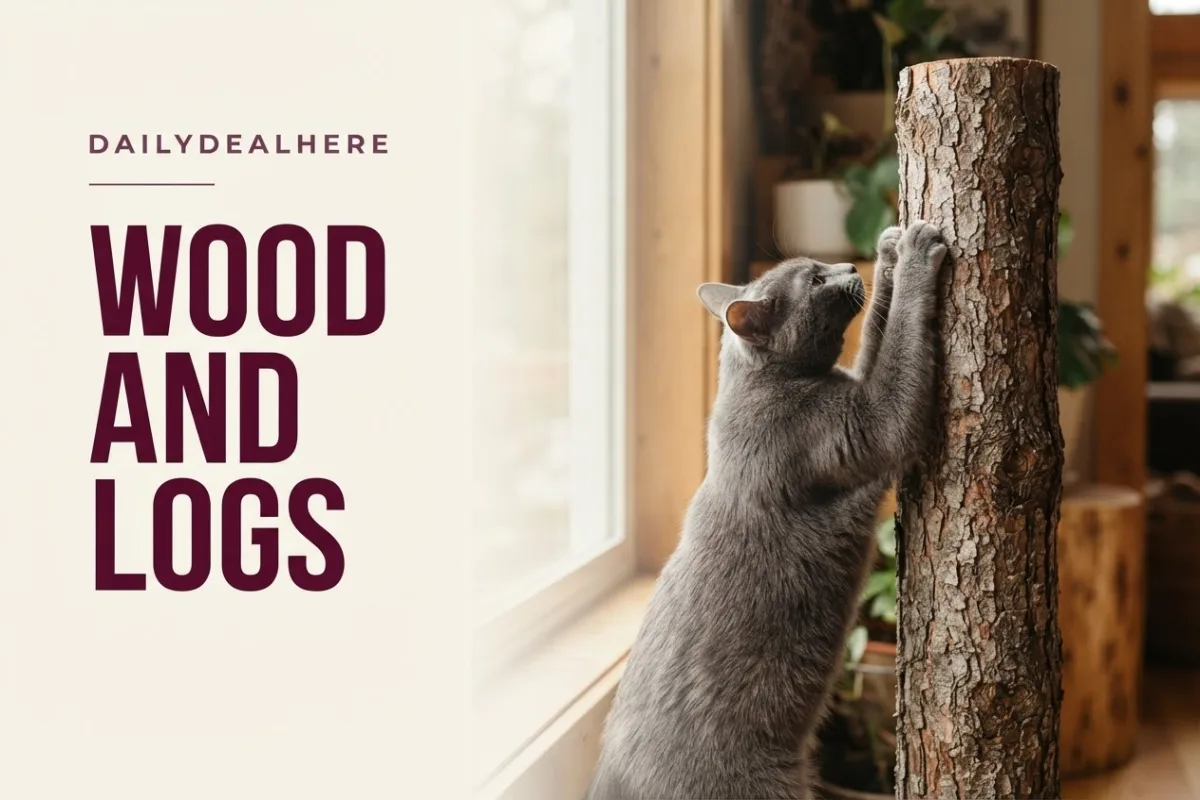
The SF SPCA says wood posts are not very common but are probably the closest thing to what a cat in the wild would use to stretch, mark and shed. A wood post is very durable, more so than sisal. It does not hold catnip, but it also does not retain dirt or leave bits of itself around.
Humane World calls wood another ideal scratching surface, and suggests that handy owners can build their own post or pad. Cornell mentions a log placed on its side as a good option for cats that prefer horizontal scratching. If your cat has been attacking wooden table legs or door frames, a solid wood or log scratcher is a natural substitute.
What about jute and other ropes?
Jute is another natural fiber rope used on some scratching products, and Wikipedia notes that the jute backing of a piece of carpet is sometimes used as a scratching surface. The expert sources we read focus on sisal, cardboard, wood and carpet, and do not compare jute with sisal directly, so we cannot say from that evidence that one is better. If you try a jute post, judge it the same way: does your cat use it, and does it hold up to heavy scratching?
Match the material to your cat’s current target
The most reliable way to pick a material is to look at what your cat already scratches. Cornell recommends observing your cat carefully to see whether it prefers carpets, drapes, wood or another surface, and whether it scratches vertically or horizontally, then choosing a post that matches.
| If your cat scratches | Try this material | Try this shape |
|---|---|---|
| The sofa or armchair sides | Sisal rope or sisal fabric | Tall vertical post next to the sofa |
| Rugs and carpet | Cardboard, or a tight low pile carpet | Flat horizontal scratcher |
| Drapes or curtains | Sisal | A very tall post, or one mounted on a wall or door (Cornell) |
| Wooden furniture or door frames | Wood or a log | Vertical post or a log on its side |
| The wall by the front door | Sisal | A post placed right by the door (Humane World) |
Vertical or horizontal?
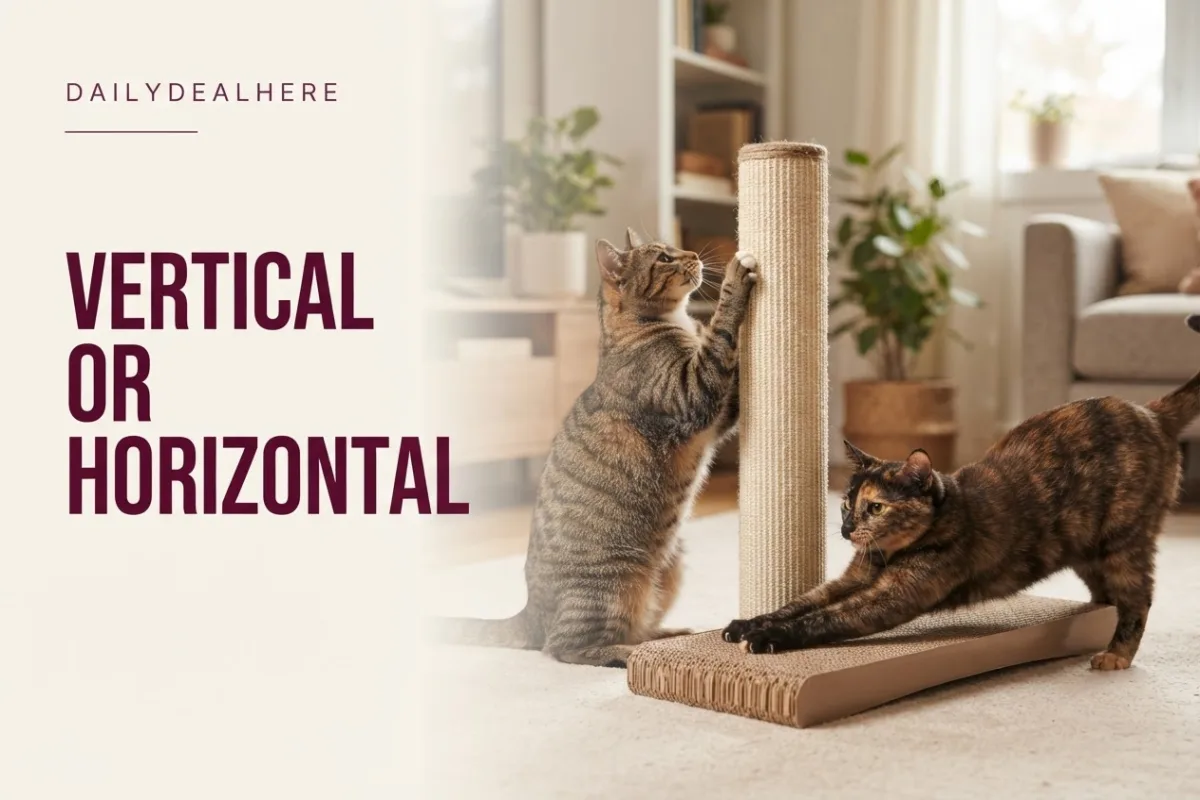
Material is only half of the choice. The SF SPCA explains that some cats like to rear up and pull down, while others like to stretch out along the floor and pull. Its advice is simple: watch your cat. If it rears up to claw, a vertical post is the best bet. If it favors carpets or rugs, a floor based horizontal scratcher is better.
Most large cat trees offer both surfaces, the SF SPCA notes, while a basic post is mainly vertical. Humane World suggests that for a horizontal scratcher you can simply lay a vertical post on its side, or choose a sturdy sisal covered horizontal scratcher. Many households end up with one of each.
Height and stability matter as much as material
Even the best material fails on a post that wobbles. Cornell says any post should be sturdy enough that it does not topple during use and at least as tall as your cat standing on its hind legs with front legs outstretched. Humane World recommends at least 32 inches and a post that will not wobble when scratched. Wikipedia describes the common design as a post about 24 to 35 inches tall mounted in a wide base so the cat can stretch upward without tipping it, and notes that a post that is unstable or too short may put a cat off.
- Choose a heavy, wide base, or a post that mounts to a wall or door.
- Push on the top of a post in the store. If it rocks, a cat pulling on it will feel that too.
- For large cats, go taller than the minimum.
- Tall cat trees may use a tension rod to the ceiling for extra stability, as Wikipedia notes.
Where to put the post
Location decides whether a good post gets used. The SF SPCA recommends placing posts in prominent areas and putting one near the cat’s sleeping area, because cats often scratch when they wake up. Humane World stresses that location matters: if your cat scratches the couch, put the post next to the couch, and if it scratches the wall by the front door when you come home, put the post by the front door.
Cornell suggests placing the post next to the area your cat likes to scratch and then gradually moving it to a location you prefer. If your cat scratches in several places, Cornell recommends a post near each one. Hiding a post in a back room is one of the most common reasons it goes unused.
How to introduce a new post
- Use catnip. The SF SPCA suggests sprinkling catnip on the base and into the fabric, or hanging catnip bags from the top. Humane World suggests rubbing catnip on the post for the first several days.
- Play near it. Humane World recommends playing with a fishing rod toy or laser light around the post so the cat interacts with it naturally.
- Reward use. The SF SPCA calls rewarding the cat every time it uses the post the most important step. Keep treats nearby. Our guide to the best kitten treats for training covers small rewards that work well.
- Do not force it. Humane World warns against carrying your cat to the post and rubbing its paws on the surface, which can stress some cats and make them avoid the post.
Make furniture less appealing for a while
While your cat learns that the new post is better, it helps to make old targets less rewarding.
- Humane World suggests covering furniture with a tight fitting sheet, which is far less satisfying to scratch than sisal.
- The SF SPCA suggests aluminum foil or double-sided sticky tape on favorite spots, or lightly spraying the area with a lemon scent.
- Cornell suggests blankets, plastic sheeting or double-sided tape, and notes that restricting access is the only guaranteed way to stop scratching in a given spot.
- Cornell also recommends an odor neutralizer on previously scratched areas, because cats are more likely to re-scratch places that already carry their scent. Check that any product is safe for your upholstery first, and our guide to the best fabric stain removers covers fabric safe cleaners.
If you use scents in your home to discourage scratching, choose carefully. Our article on whether diffusers are safe for cats explains why some fragrances need caution around cats. Once your cat uses the post consistently, Humane World says the coverings can come off.
What not to do
Cornell is clear that cats do not respond well to punishment, because they see no link between the punishment and the scratching. Yelling, squirting a water gun or startling a cat teaches it that your presence brings punishment, so it may simply scratch when you are not there. The SF SPCA agrees: do not spray or scold your cat, since this can make it fearful of you.
Cornell notes that effective deterrents are consistent and immediate and do not come from the owner, such as its example of a tower of plastic cups that topples when bumped.
Nail trims and nail caps
Cornell suggests regular nail trimming to reduce scratching damage, and plastic nail caps glued over the claws for cats that tolerate having their paws handled. Cats wearing caps can still go through the motions of scratching without causing damage. Cornell advises replacing the caps every six to twelve weeks.
These are complements to a good post, not replacements. Your cat still needs somewhere satisfying to scratch, stretch and mark.
A note on declawing
Cornell describes declawing as an elective and highly controversial surgery that is actually an amputation of the bones at the tips of the paws, not a simple nail removal, with risks including anesthetic complications, infection and bleeding. It notes declawing does not curb a cat’s desire to scratch. Humane World states that declawing is never the solution. A well chosen post, placed in the right spot, solves the problem for most cats.
When to replace a scratching post
Cornell offers advice that surprises many owners: do not throw out a post just because it looks ragged and worn, because that means it is well used and doing its job. A shredded post also carries your cat’s scent, which makes it more attractive to scratch.
Replace or repair a post when it becomes unstable, when the covering has worn through to a surface your cat will not use, or when loose rope creates a hazard. Rewrapping a solid post with new sisal rope is often cheaper than buying a new one, and it keeps the base your cat already knows.
Building your own post
A homemade post can be better than a flimsy store bought one. Cornell describes covering pieces of wood with carpet, fabric, sisal or other materials and nailing them together to create a cat tree with climbing perches. The SF SPCA notes that some cats prefer a simple log, and that corrugated cardboard mounted on a piece of wood works for others.
- Choose a solid post long enough for your cat to stretch fully, at least 32 inches for most adult cats.
- Mount it on a heavy, wide base so it cannot tip.
- Wrap it tightly in sisal rope, securing both ends, or cover it with sisal fabric.
- Place it next to the furniture your cat currently scratches.
- Add catnip and rewards to get it started.
Frequently asked questions
What is the best material for a cat scratching post?
Sisal suits most cats. The SF SPCA says sisal is very tough and resists shredding, and Humane World says most cats prefer a sisal post at least 32 inches tall that does not wobble. Cardboard and wood are good alternatives, and carpet is often the weakest choice.
Do cats prefer sisal rope or sisal fabric?
Individual cats vary, and the expert sources we read do not rank one over the other. Both give a rough surface cats can dig into. Cornell suggests sisal or rope-like coverings for cats that like couches and nubby textures, so try what matches your cat’s current habits.
Is carpet a good covering for a scratching post?
Often not. The SF SPCA notes claws can catch in carpet loops, which can make a cat stop using the post, and carpet shreds and holds dirt. Cornell says a carpet post can suit cats that already scratch carpet, ideally with a tight, low pile.
What type of wood is best for a cat scratching post?
Any solid, untreated wood or a natural log that is sturdy enough not to move. The SF SPCA says wood posts are very durable, even more than sisal, and closest to what cats use in the wild, and Cornell suggests a log on its side for cats that scratch horizontally.
How tall should a cat scratching post be?
At least as tall as your cat standing on its hind legs with front legs outstretched, according to Cornell. Humane World recommends at least 32 inches, and the post must be stable enough not to wobble or tip.
What is the most durable scratching surface?
Solid wood, which the SF SPCA says is even more durable than sisal. Among coverings, sisal rope resists shredding very well. Carpet and cardboard wear out fastest.
Why won’t my cat use its scratching post?
Common reasons are the wrong material, a post that wobbles or is too short, the wrong orientation, or a poor location. Place it next to where your cat scratches now, add catnip, reward use, and make the old target less appealing for a while.
Should I replace a worn out scratching post?
Not just because it looks shredded. Cornell notes a ragged post is a well used one. Replace or rewrap it when it becomes unstable or the covering wears through to a surface your cat avoids.
Start with a tall, heavy sisal post next to the furniture your cat already scratches, add a flat cardboard scratcher if it likes the floor, reward every use, and let the post get as ragged as your cat wants.










Write Your Review
No reviews yet. Be the first to share your experience!