
The best pillowcase material for hair is a smooth, low friction fabric, either real silk or a satin weave made from polyester or nylon. The American Academy of Dermatology notes that friction against a pillowcase can make hair frizzy and easier to break, and that satin or silk pillowcases or bonnets may reduce that friction. Between the two, silk is a natural fiber that costs more and needs gentler care, while polyester satin gives a similar slippery surface for less money. For skin, the evidence is thinner: silk pillowcases are widely promoted for acne and wrinkles, but a registered clinical trial comparing silk with cotton for acne has not posted results, so keeping pillowcases clean and hair oil off your face is the better established habit.
This guide explains the difference between silk and satin, what “momme” means, how cotton and other fabrics compare, what the evidence says for hair and for skin, and how to choose and care for a pillowcase. It draws on the American Academy of Dermatology’s curly hair tips, the AAD’s acne management tips, and Wikipedia’s explanation of the satin weave.
The short answer
- Best for hair overall: mulberry silk in a charmeuse weave, for a smooth, natural fiber surface.
- Best value for hair: polyester or nylon satin, which gives a similar smooth surface at a lower price and is easier to wash.
- Best for hot sleepers who want cotton: a tightly woven cotton sateen, smoother than regular cotton, though not as slippery as satin.
- For curly and textured hair: the AAD suggests satin or silk pillowcases or bonnets, plus a loose pineapple ponytail, braid or twists at night.
- For acne prone skin: no fabric is proven to clear acne. Shampoo regularly, keep oily hair off your face, and wash pillowcases often.
- What to check: fiber content, weave, momme weight for silk, and the care label.
Why your pillowcase matters for hair
You spend around a third of your life with your hair pressed against a pillow, moving as you turn. The American Academy of Dermatology’s curly hair advice explains the problem directly: friction against your pillowcase can make hair frizzy and easier to break. That matters most for curly, coily, textured, fine or chemically treated hair, which tends to be more fragile.
The AAD’s suggested fixes are simple. Pull hair into a loose ponytail on top of your head, sometimes called a pineapple, or a loose braid before sleeping, and use satin or silk bonnets or pillowcases, which it says may reduce friction and help preserve your hairstyle. A smoother surface lets hair slide rather than catch as you move.
Silk versus satin: they are not the same thing
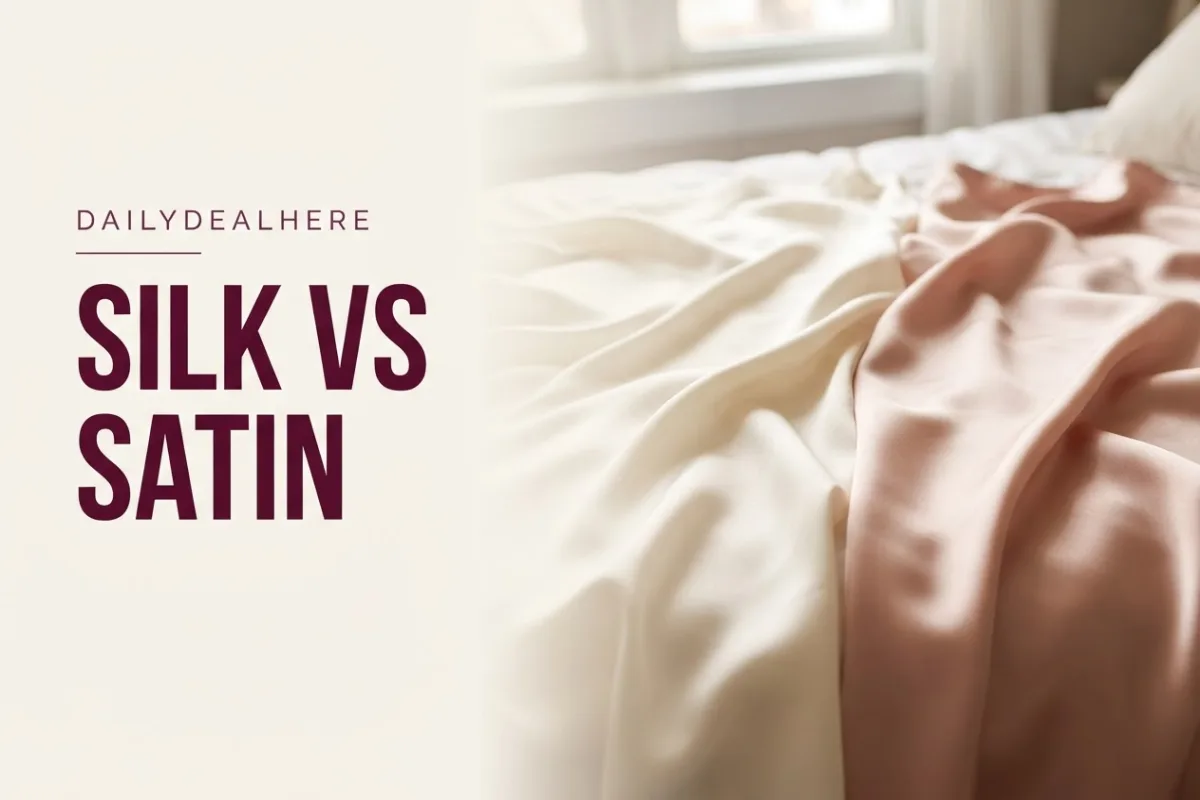
The words are often used interchangeably, but they describe different things. Silk is a fiber, produced by silkworms. Satin is a weave. Wikipedia explains that a satin weave floats yarns over several others to create a glossy, smooth surface with a dull back, and that when the weave uses filament fibers such as silk, polyester or nylon, the fabric is called satin, although some definitions reserve the word for silk only. When the same weave uses short staple fibers such as cotton, it is called sateen.
| Term | What it is | What it means for a pillowcase |
|---|---|---|
| Silk | A natural protein fiber | Smooth and soft, but pricier and more delicate to wash |
| Satin | A weave that creates a glossy face | Can be made from silk, polyester or nylon. Smooth surface for hair |
| Silk satin or charmeuse | Silk woven in a satin weave | The classic silk pillowcase fabric |
| Polyester satin | Synthetic filament in a satin weave | Similar slip at lower cost, easy care |
| Cotton sateen | Cotton in a satin type weave | Smoother than regular cotton, still breathable and absorbent |
So the fair comparison is not silk against satin, but silk satin against polyester satin. Both put a smooth, glossy face against your hair. The differences are in fiber, feel, temperature, care and cost.
Is satin or silk better for your hair?
For the core job of reducing friction, both work on the same principle, and the AAD mentions satin and silk together rather than ranking one above the other. The choice comes down to other factors.
- Choose silk if you want a natural fiber, prefer its feel, and are willing to hand wash or use a delicate cycle.
- Choose polyester satin if you want the smooth surface on a budget, need several pillowcases to rotate, or prefer machine washing.
- Either way, the smoothness of the face against your hair matters more than the name on the label. Run your hand over it. A rough or pilled surface defeats the purpose.
Many people keep one silk pillowcase for themselves and polyester satin for guests or travel. For product options, our guide to the best satin pillowcases compares models.
What momme weight means for silk
Silk pillowcases are often labeled with a momme number, written as mm. Wikipedia’s article on textile measurement explains that momme is a traditional unit for silk: the weight in pounds of a piece of fabric 45 inches wide and 100 yards long. It lists charmeuse, the satin weave silk used for most pillowcases, at roughly 12 to 30 momme, and notes that a higher momme weight means a more durable weave.
- Lower momme: lighter and thinner, usually less expensive, and typically less durable.
- Higher momme: heavier and denser, which Wikipedia describes as more durable.
- Momme does not apply to polyester satin, which is measured differently, so do not compare a momme figure with a synthetic fabric.
If you are choosing between silk pillowcases, a higher momme is a reasonable sign of a longer lasting fabric.
How cotton compares
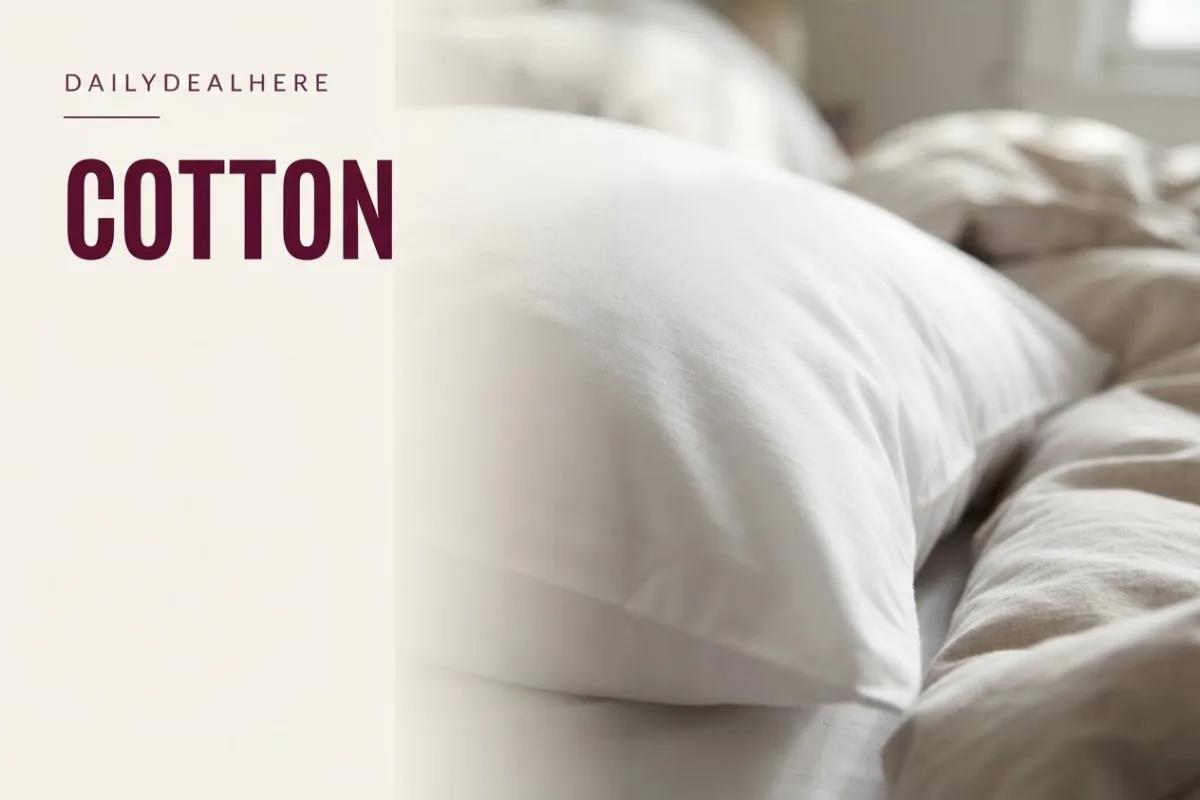
Cotton is the default pillowcase fabric, and it has real advantages: it is breathable, absorbent, durable and easy to wash hot. The tradeoff for hair is texture. Regular cotton weaves have a less slippery surface than satin, which is why the AAD’s friction advice points to satin and silk instead.
Cotton sateen is a middle ground. Because it uses a satin type weave, it has a smoother face than plain cotton percale while keeping cotton’s breathability. If you sleep hot and dislike the feel of satin but want something gentler on hair than basic cotton, sateen is worth trying.
Pillowcase materials compared
| Material | Surface for hair | Care | Best for |
|---|---|---|---|
| Mulberry silk charmeuse | Very smooth | Gentle wash, follow label | Fragile or textured hair, people who want natural fiber |
| Polyester satin | Very smooth | Usually machine washable | Budget, multiple sets, travel |
| Nylon satin | Smooth | Usually machine washable | Similar to polyester satin |
| Cotton sateen | Moderately smooth | Easy, can usually be washed warm | Hot sleepers, people who prefer cotton |
| Cotton percale or jersey | Less smooth | Very easy | Everyday use when hair friction is not a concern |
| Linen | Textured | Easy, softens with washing | Warm climates, people who like a crisp feel |
The best pillowcase for curly and textured hair
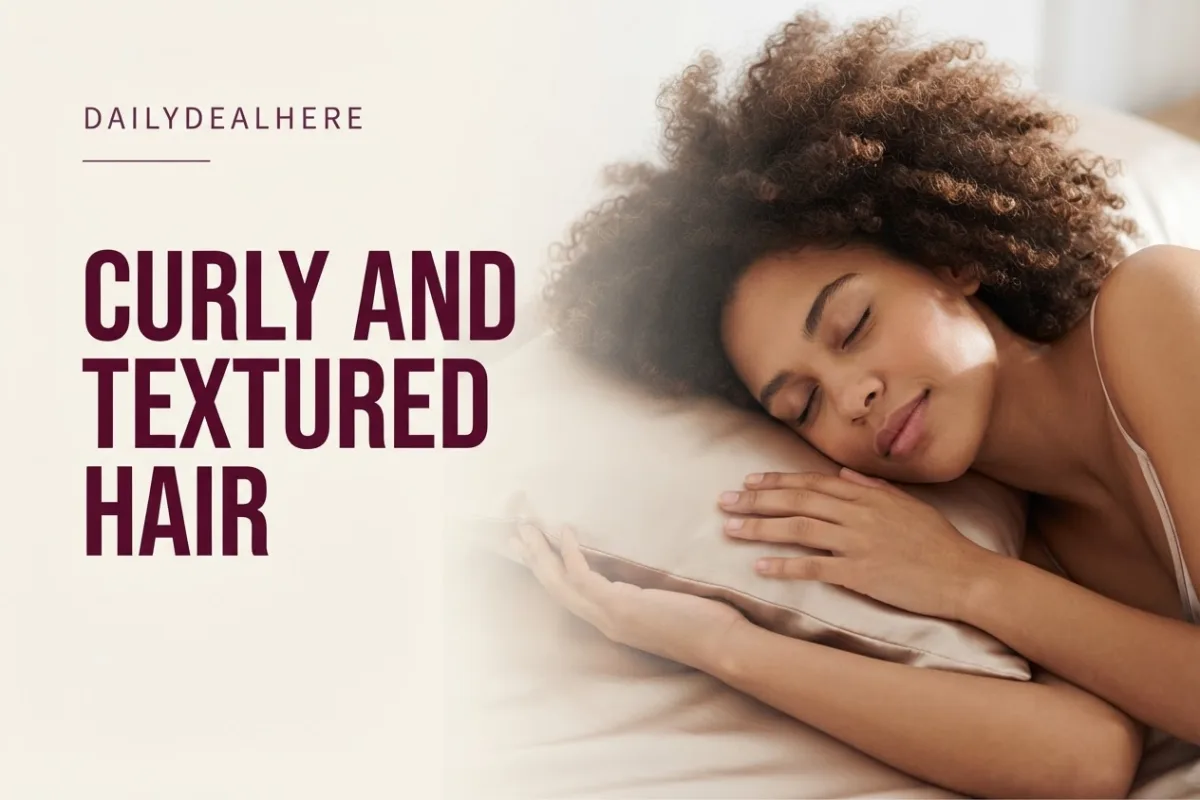
Curly, coily and textured hair benefits most from reducing friction, because it is more prone to frizz and breakage. The AAD’s curly hair tips pair a satin or silk pillowcase with other nighttime habits.
- A loose pineapple: gather curls into a loose ponytail on top of the head to keep them off the pillow.
- A loose braid or twists: styling in twists, the AAD notes, may also reduce friction and preserve the style.
- A bonnet or scarf: satin or silk bonnets work on the same principle as the pillowcase and stay in place if you move a lot.
Using a bonnet and a satin pillowcase together covers you if the bonnet slips off during the night.
The best pillowcase for fine or thin hair
Fine hair tangles and snaps easily, and flattened roots are a common morning complaint. A smooth satin or silk surface can help hair slide rather than tangle, following the same friction principle the AAD describes. A loose braid or a soft scrunchie, rather than a tight elastic, reduces the stress on fine strands overnight.
The pillow itself matters too. A flat, lumpy pillow can push your head around more during the night. Our guide to the best pillows that do not go flat covers supportive options.
A nighttime hair routine that works with your pillowcase
A smooth pillowcase works best as part of a routine. The AAD’s curly hair tips, from board certified dermatologist Temitayo Ogunleye, describe several habits that support what the pillowcase does overnight.
- Keep hair moisturized. The AAD notes curly hair is drier than other hair types and suggests conditioning all of the hair, not just the ends, then applying an oil or leave in conditioner after washing.
- Detangle gently. It recommends detangling wet hair with a leave in conditioner, using fingers or a wide toothed comb and working in sections, and avoiding brushing hair while it is dry.
- Protect the style between washes. A shower cap while bathing helps preserve hair between wash days, according to the same tips.
- Set up for sleep. A loose pineapple, loose braid or twists, plus a satin or silk bonnet or pillowcase, reduces friction overnight.
The AAD adds that finding the right routine often takes trial and error, and suggests seeing a board certified dermatologist if you have ongoing questions about caring for thick, curly hair.
Bonnet, scarf or pillowcase: which should you use?
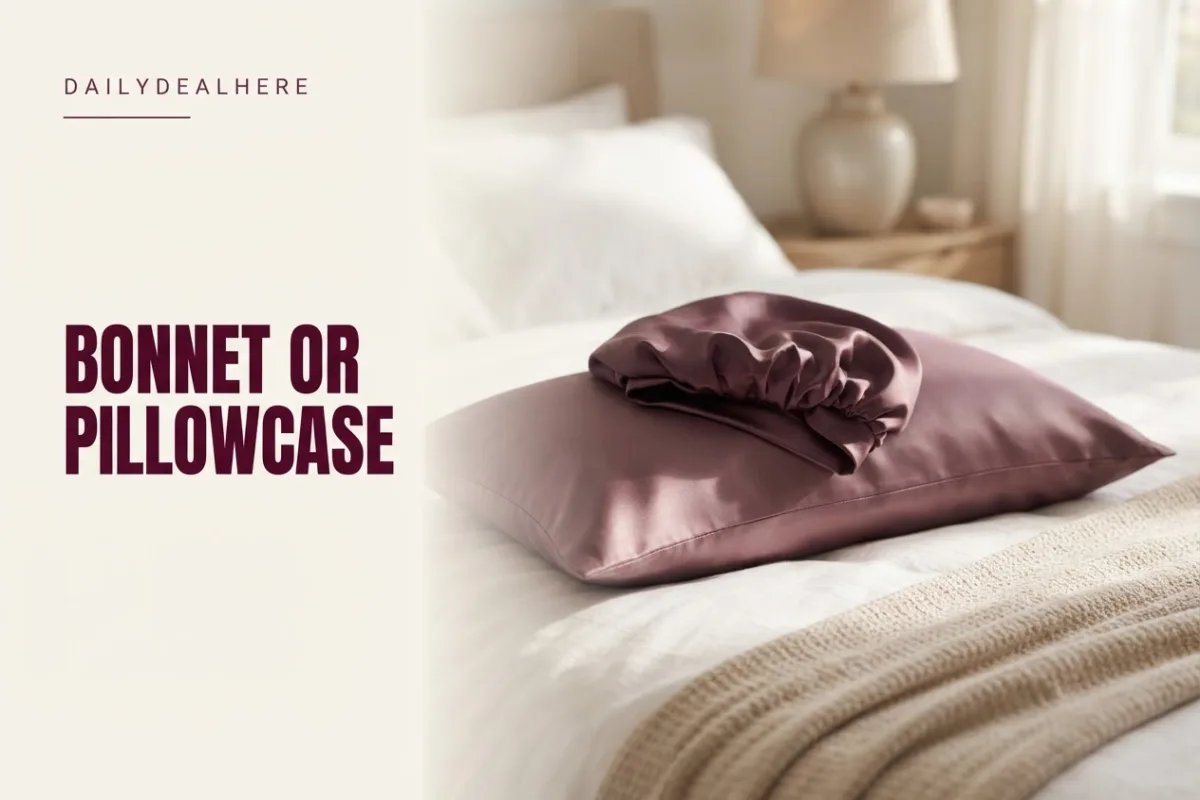
The AAD mentions satin or silk bonnets and pillowcases together, and each has strengths.
- Pillowcase: nothing to put on, nothing to slip off, and it protects hair wherever your head lands. The downside is that hair still moves against the fabric as you turn.
- Bonnet: keeps hair contained and away from the pillow entirely, which can help longer or voluminous styles. It can slip off during the night for restless sleepers.
- Scarf or wrap: a flatter option that suits shorter styles and some protective styles, though it can loosen overnight too.
- Both together: a bonnet or scarf with a satin pillowcase underneath covers you if the head covering comes off.
Hair oils, leave in products and your pillowcase
There is a real tension between hair care and skin care at night. The AAD’s curly hair tips suggest oils and leave in conditioners to keep hair moisturized, while its acne tips warn that oil from hair can cause acne on the forehead and advise keeping hair away from the face.
Both goals can coexist. Keep oiled or product treated hair gathered up and away from your face at night, use a bonnet if your hair tends to fall forward, and wash pillowcases more often when you use heavier products. If you are prone to forehead breakouts, that routine matters more than whether the pillowcase is silk, satin or cotton.
Does sleep position matter?
How you sleep changes how much your hair and face touch the pillow. Side and stomach sleepers press more of their hair and one side of the face into the fabric and tend to shift position more, so they have the most to gain from a smooth surface and a clean case. Back sleepers mainly rub the back of the head, which is where a loose top knot or pineapple keeps hair off the pillow.
Pillow height matters too, since a pillow that keeps your neck aligned tends to mean less tossing and turning. If neck comfort is part of the problem, our guide to cervical neck pillows covers supportive shapes.
What is the best pillowcase material for skin?
Silk pillowcases are heavily marketed for skin, with claims about acne, wrinkles and moisture. The evidence is limited. A randomized study registered on ClinicalTrials.gov, NCT06142487, was designed to compare 100 percent mulberry silk pillowcases with 100 percent cotton pillowcases in people with mild to moderate acne, measuring lesion counts, water loss through the skin and oil production. As of September 2026 the registry lists its status as unknown, with no results posted.
That does not mean silk is bad for skin. It means the claims are not yet backed by published results from that trial. If silk feels better against your face, that is a perfectly good reason to use it. Just do not expect it to replace an acne treatment.
What actually helps acne prone skin at night
The American Academy of Dermatology’s acne tips point to habits rather than fabrics. It says oil from your hair can cause acne on your forehead, and advises people with oily hair to shampoo more often and keep hair away from the face. It also warns that touching your face throughout the day can make acne flare.
- Keep hair off your face at night, especially if you use oils, leave in conditioners or styling products.
- Change or wash pillowcases often, since oil, product and skin care residue collect on the fabric.
- Use gentle, alcohol free skin care, which the AAD recommends for acne prone skin.
- Stick with your treatment plan rather than switching products often, which the AAD says can irritate skin.
What is the healthiest material for a pillowcase?
There is no single healthiest fabric. The healthiest pillowcase is a clean one that suits your needs. Cotton is easy to wash hot and absorbs sweat. Silk and satin are smoother for hair. Linen suits warm sleepers. If you have sensitive skin or allergies, choose a fabric you can wash frequently according to its care label, and avoid heavily fragranced detergents if they bother you.
A practical approach is to own enough pillowcases to change them often. Two or three satin or silk cases in rotation let you wash one while using another, which matters more for skin than the fiber itself.
What are the downsides of silk pillowcases?
- Cost: real silk usually costs considerably more than polyester satin or cotton.
- Care: silk generally needs gentle washing, and the care label should be followed closely.
- Snagging: Wikipedia notes that the satin weave is not especially durable because it tends to snag, which applies to silk and synthetic satin alike.
- Slipperiness: some people find the pillow slides around more.
- Variable quality: labels such as “silky” or “satin feel” do not mean real silk. Check the fiber content.
How to spot real silk versus marketing language
Because satin can be made from silk or synthetics, product names can be confusing. Look at the fiber content on the label rather than the product title.
- “100 percent mulberry silk” on the fiber content means real silk.
- “Satin” alone usually means polyester or another synthetic unless silk is listed.
- A momme number is a good sign the fabric is silk, since the unit is traditionally used for silk.
- “Silky” or “silk like” describes feel, not fiber.
Neither is wrong. Polyester satin is a perfectly valid choice for hair. The point is to know what you are paying for.
Caring for silk and satin pillowcases
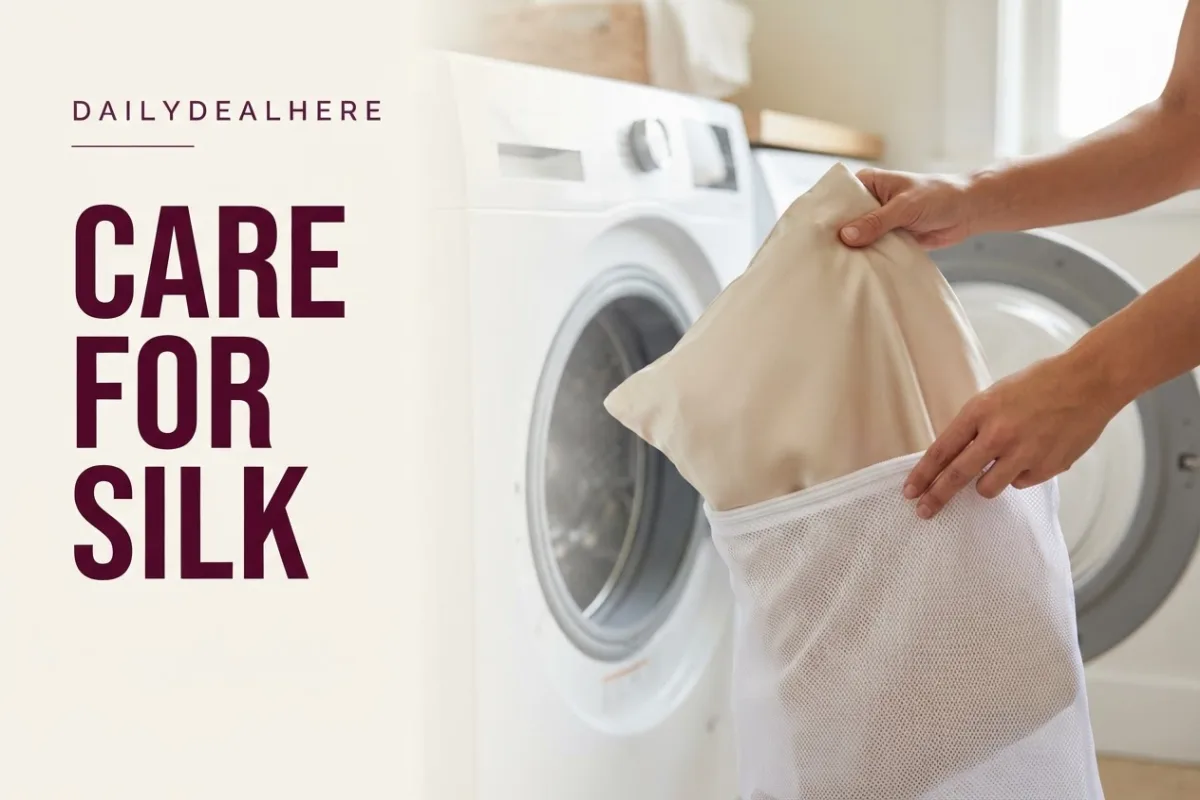
- Read the care label first, since silk and synthetic satins have different needs.
- Turn the pillowcase inside out and use a mesh laundry bag if machine washing is allowed.
- Use a gentle cycle and a mild detergent for silk.
- Avoid rough fabrics, zippers and hooks in the same load to reduce snagging.
- Air dry or use low heat as the label directs.
- Wash regularly, since product and skin oils build up on any pillowcase.
When to replace a pillowcase
A satin or silk pillowcase only helps hair while its surface stays smooth. Because the satin weave tends to snag, check the face of the fabric every so often by running your palm across it. Replace it when you notice any of the following:
- Pulled threads or snags that catch on your hair or fingers.
- Pilling or a fuzzy, dull patch where your head usually rests.
- Thinning fabric or small holes along seams.
- Stains or discoloration from hair products and skin care that no longer wash out.
- An elastic or envelope closure that no longer holds the pillow in place.
Rotating two or three pillowcases spreads the wear, so each one lasts longer and you always have a clean, smooth case ready.
How to choose the right pillowcase
- Decide your main goal: less frizz and breakage, skin comfort, cooling, or easy care.
- For hair, choose a smooth satin face, in silk or polyester.
- If choosing silk, look for 100 percent mulberry silk and compare momme weights.
- Match the closure to your pillow. Envelope closures avoid zippers against the face.
- Check the size against your pillow so the case fits without bunching. Our guide to king pillows for shams covers sizing for larger beds.
- Buy enough to rotate so you can wash them often.
Frequently asked questions
What is the best pillowcase material for hair?
A smooth satin or silk surface. The American Academy of Dermatology says friction against a pillowcase can make hair frizzy and easier to break, and that satin or silk pillowcases or bonnets may reduce friction.
Is satin or silk better for your hair?
Both reduce friction in the same way, and the AAD mentions them together. Silk is a natural fiber that costs more and needs gentler care, while polyester satin offers a similar smooth surface at a lower price with easier washing.
What is the difference between silk and satin?
Silk is a fiber. Satin is a weave that creates a glossy face. Satin can be made from silk, polyester or nylon, and a satin type weave made from cotton is called sateen.
What is the best pillowcase material for skin?
No fabric is proven to clear acne. A randomized trial comparing silk with cotton pillowcases for acne is registered, but no results have been posted. Clean pillowcases and keeping oily hair off your face are better established habits.
What is the healthiest material for a pillowcase?
There is no single healthiest fabric. The healthiest pillowcase is a clean one that suits your needs, washed often according to its care label. Cotton suits frequent hot washing, while silk and satin are smoother for hair.
What does momme mean on a silk pillowcase?
Momme is a traditional unit for silk, based on the weight in pounds of a piece 45 inches wide and 100 yards long. Higher momme means a heavier, more durable weave. Charmeuse is typically about 12 to 30 momme.
What are the downsides of silk pillowcases?
Higher cost, more delicate care, a tendency for satin weaves to snag, and some slipperiness. Also check the fiber content, since labels such as silky or satin feel do not mean real silk.
What else helps protect hair at night?
The AAD suggests a loose pineapple ponytail or loose braid, styling in twists, and satin or silk bonnets, which help reduce friction and preserve your hairstyle.
Choose a smooth satin face for your hair, silk if you want natural fiber and polyester if you want value, keep a few in rotation, and wash them often. The fabric helps your hair most, and clean habits help your skin most.










Write Your Review
No reviews yet. Be the first to share your experience!