
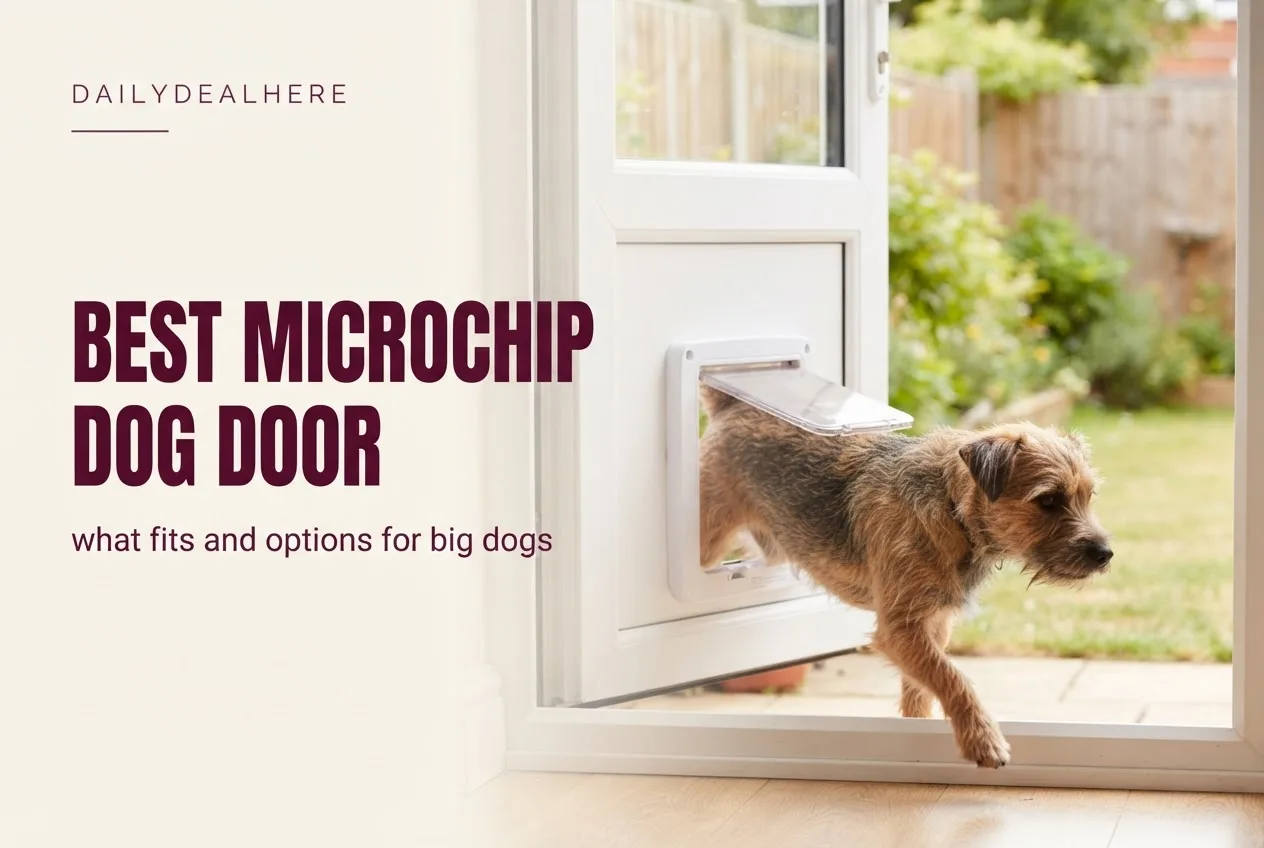
The best microchip dog door is one that reads your dog’s existing implanted chip, fits your dog through its opening, and locks everything else out. The catch is size. Microchip doors are made mainly for cats and small dogs: SureFlap’s Microchip Pet Door, for example, is designed for large cats and small dogs, with a flap opening of 7.5 by about 6.7 inches, and pet door retailer PetDoors.com states there are currently no microchip doors for a dog the size of a Labrador. For bigger dogs, the practical answer is an electronic door that opens for a key on the dog’s collar instead.
This guide explains how microchip and electronic pet doors work, whether a door will read your pet’s chip, the size limits, the difference between microchip, RFID collar key, magnetic and infrared doors, one way versus two way control, curfew and app features, power, installation and the real downsides. It draws on Sure Petcare’s SureFlap Microchip Pet Door specifications, the electronic pet door guide from PetDoors.com and Wikipedia’s entries on pet doors and the ISO animal microchip standards.
The short answer
- For cats and small dogs: a microchip door such as the SureFlap Microchip Pet Door, which reads your pet’s implanted chip and needs nothing on the collar.
- For large dogs: an electronic collar key door, since microchip models are not made in large dog sizes.
- For app control: a connected model, such as the SureFlap Microchip Pet Door Connect, which adds remote locking and notifications through a hub.
- For raccoon country: a door that controls access in both directions.
- For cats only: a microchip cat door, which has a smaller opening and often uses smaller batteries.
How a microchip pet door works
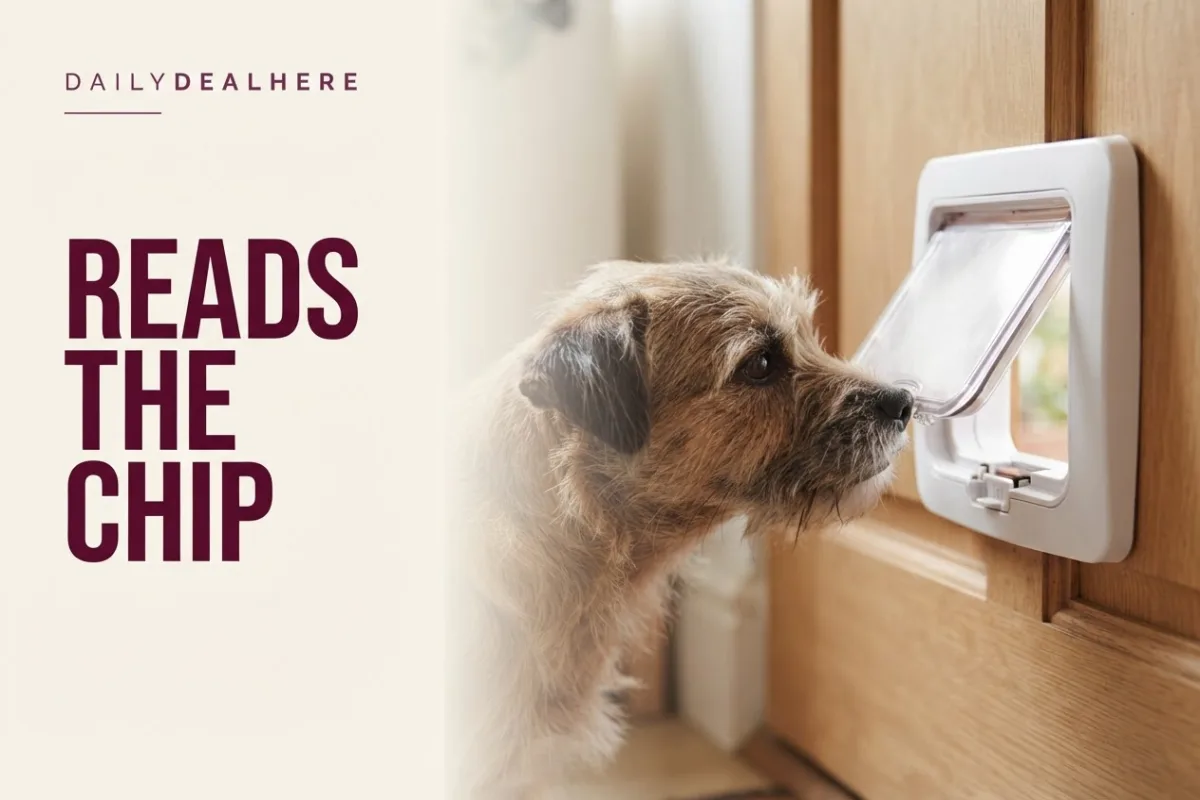
Wikipedia explains that the newest selective pet doors use radio frequency identification to read a pet’s implanted microchip, which removes the need for the pet to wear a collar that could be lost. The door stays locked until it reads a chip it recognizes, then unlocks so the registered pet can push through.
Sure Petcare describes how its version works: you program your pet’s microchip at the touch of a button, the door stores it permanently, and intruder animals cannot get in because the door stays locked for them. It calls this selective entry: the microchip reader is located on the exterior only, so any animal can exit, but only registered pets can come in. The door stores up to 32 pet identities and remembers them even when the batteries are removed.
Types of selective pet doors compared
Microchip doors are one of several ways to let your pet in while keeping others out. Wikipedia and PetDoors.com describe the main types.
| Type | How it opens | Pros | Cons |
|---|---|---|---|
| Microchip | Reads the pet’s implanted chip (Wikipedia) | Nothing on the collar to lose | Mostly cat and small dog sizes |
| RFID collar key | An RFID key on the collar, the door only opens for assigned keys (Wikipedia) | Available in larger dog sizes, small tags with no battery (PetDoors.com) | Keys can be lost |
| Battery collar key | A powered tag on the collar | Used by some electronic door systems | Bulkier tags because of the battery (PetDoors.com) |
| Magnetic collar | A magnet on the collar unlatches the flap (Wikipedia) | No power needed for some models (PetDoors.com) | Several pets can share one magnet type, less selective |
| Infrared collar | A collar device transmits a code to the latch (Wikipedia) | Different flaps for different pets | Requires the collar device |
Wikipedia notes that any of these selective doors improve weather resistance and home security against strays and other unwanted animals compared with a simple flap, and can let one pet out while keeping another in, for example an animal that needs to stay indoors while ill.
Will the door read my dog’s microchip?
Almost certainly, but it is worth checking. Wikipedia’s entry on the ISO 11784 and 11785 animal identification standards explains that the ISO carrier frequency for animal identification is 134.2 kHz, and that an older protocol, FDX-A, which uses 125 kHz and a 10 bit code, is not ISO compliant. So not every pet microchip in circulation follows the same standard.
Sure Petcare says its Microchip Pet Door works with all identification microchips worldwide, and offers a compatibility checker on its site where you enter your pet’s chip number. If your pet is not microchipped, or the chip will not read, the pet door comes with one RFID collar tag that can be used instead, with more sold separately.
- Find your pet’s chip number on adoption or veterinary paperwork, or ask your vet to scan it.
- Enter it in the manufacturer’s compatibility checker before you buy.
- Keep the included collar tag as a backup in case of reading problems.
The size limit: why big dogs are a problem
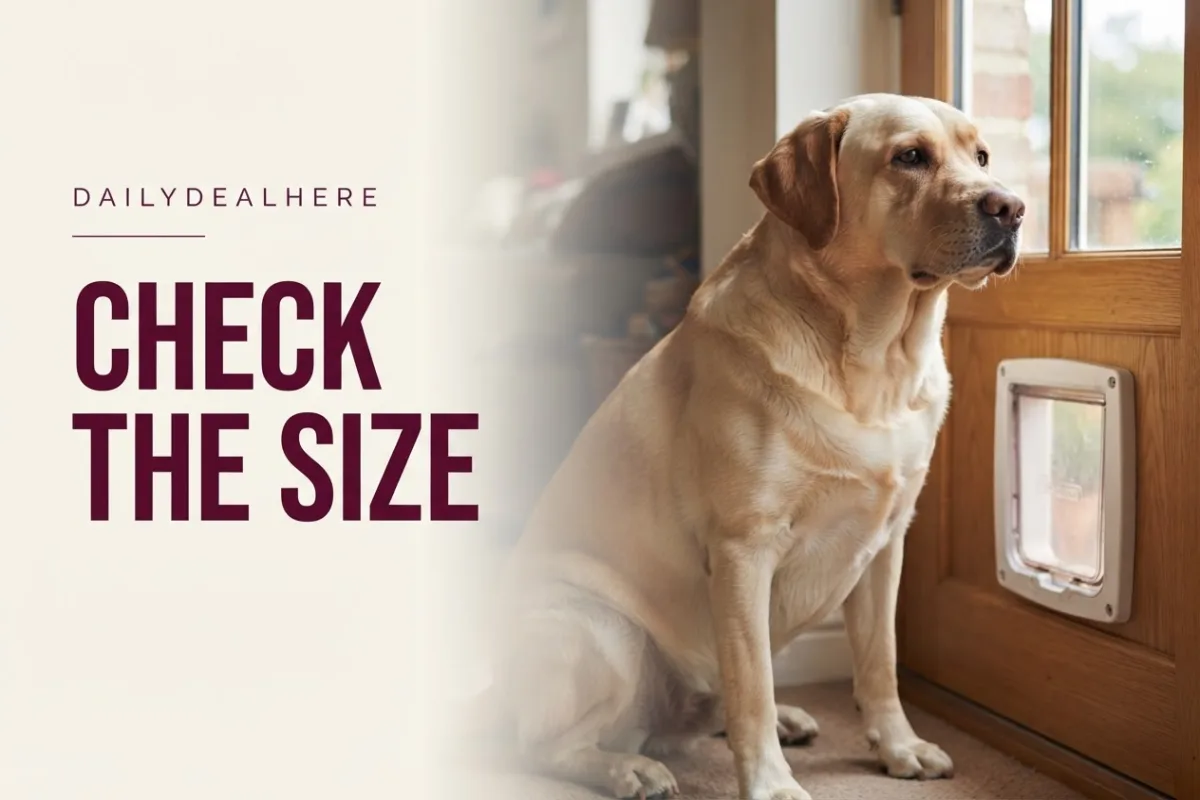
This is the most important thing to know before shopping. Sure Petcare describes its Microchip Pet Door as larger than its cat flaps and designed for large cats and small dogs. Its flap opening, the smallest area your pet must pass through, measures 7.5 inches wide by 6 11/16 inches high. The SureFlap Microchip Cat Door is smaller still, at 5 5/8 by 4 3/4 inches.
PetDoors.com, a pet door retailer, answers the large dog question directly: there are currently no dog doors or large cat doors that use microchip technology for a bigger animal like a Lab. There are microchip doors for smaller dogs and cats, it says, but an automatic door for large dogs will need a collar key.
| Door | Flap opening (width by height) | Designed for |
|---|---|---|
| SureFlap Microchip Cat Door | 5 5/8 in by 4 3/4 in | Cats |
| SureFlap Microchip Pet Door | 7 1/2 in by 6 11/16 in | Large cats and small dogs |
| SureFlap Microchip Pet Door Connect | 7 1/2 in by 6 11/16 in | Large cats and small dogs, with app control |
Measure your dog’s shoulder width and the height from the top of its shoulders to its chest before you buy. If your dog would have to squeeze through, choose a larger collar key door instead.
Options for large dogs
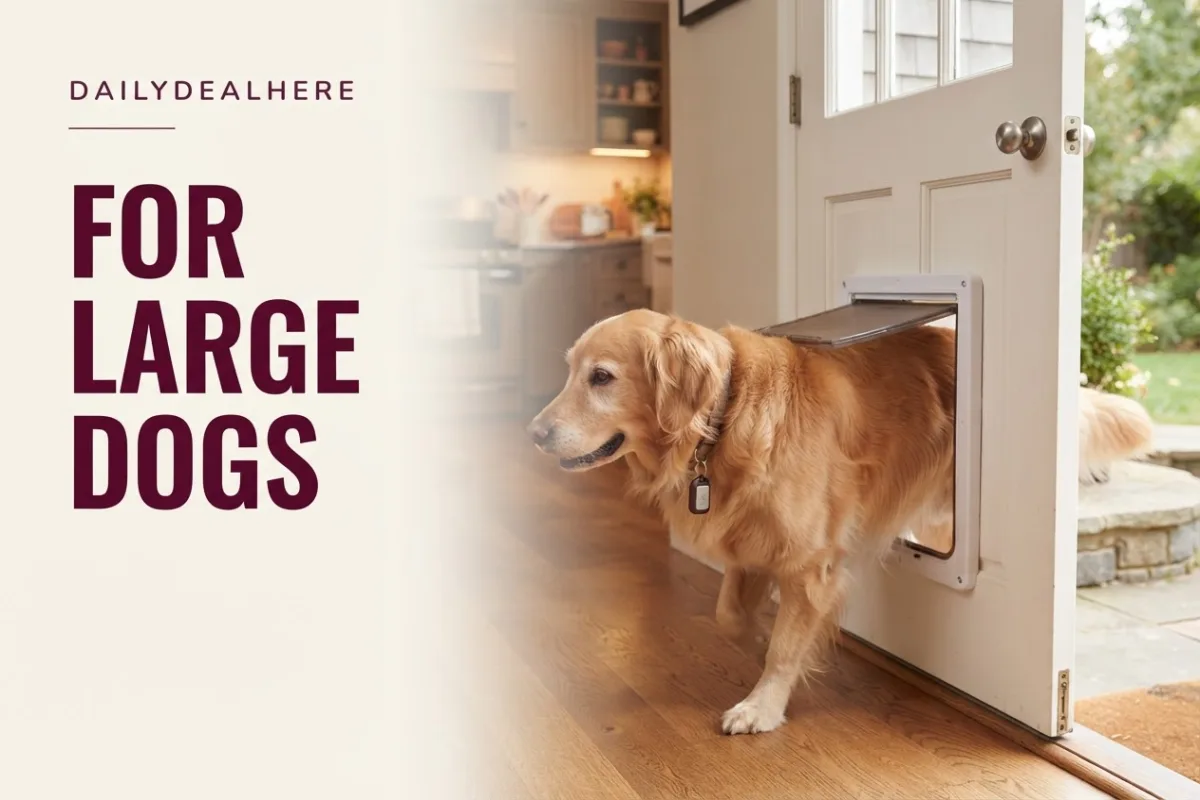
For bigger dogs, electronic collar key doors are the answer. PetDoors.com names the PetSafe Smart Door and the High Tech door as the biggest electronic pet doors it carries. It notes that the High Tech Power Pet Door can be connected to a timer to allow access only at certain times of day, and that the PetSafe Electronic Smart Door runs on D cell batteries and has no low battery indicator, so it suggests keeping a spare collar key handy to check the door.
On collar keys, PetDoors.com explains that RFID tags tend to be smaller because they need no battery, while battery powered tags are bulkier. A light RFID tag is easier on a small dog’s collar, while large dogs rarely notice either.
One way versus two way control, and raccoons
Some electronic doors only control entry from outside. Others control both directions. PetDoors.com says outside only control works fine in most cases, but describes two situations where two way control helps: when you want to keep a pet or even a child inside, and when raccoons are a concern. It reports that at least some raccoons have learned to defeat one way doors by hooking the flap with a claw and pulling it outward.
As raccoon resistant options, PetDoors.com lists the PetSafe SmartDoor Connected Pet Door, Cat Mate Elite 305/306, PetSafe Microchip Smart Door and High Tech Power Pet Door. SureFlap’s standard Microchip Pet Door reads chips on the outside only, so if raccoons are a real problem where you live, check whether the model you are considering controls both directions.
Curfew, in-only and manual lock modes
Microchip doors do more than recognize your pet. Sure Petcare lists several modes on its Microchip Pet Door.
- Curfew mode: the door locks and unlocks at set times, and can lock at the same time each day, useful for keeping pets in at night.
- In-only: your pet can come indoors but cannot go out again, handy when you want everyone home.
- Manual lock: stops your pet leaving or entering entirely.
These modes matter for dogs as much as cats. A curfew keeps a dog from wandering into the yard at night, and in-only mode lets you call everyone inside before you leave the house.
Connected doors and apps
Sure Petcare’s Microchip Pet Door Connect adds app control through a hub, sold separately, that plugs into a spare port on your home router. Through the Sure Petcare app, it says you can remotely lock or unlock the door, receive notifications when your pet enters and leaves, monitor long term activity, set curfews and share access with others.
There is a trade-off in battery life. Sure Petcare lists up to 12 months on the standard Microchip Pet Door but up to 6 months on the Connect version, both on four C cell batteries. If you want visual confirmation of who is using the door, pairing it with an outdoor camera helps. Our guide to the best wireless outdoor security cameras covers options.
Motorized doors versus push flaps
PetDoors.com explains that some electronic doors are motorized and open automatically, while others unlock and let the pet push the flap. Motorized doors always control both directions and can be easier for a timid, arthritic or injured pet, which does not need to learn to push anything. On the other hand, PetDoors.com suspects motorized doors may be slightly less able to stop a second animal following the first, since the opening stays clear briefly, whereas a push flap swings back toward a follower.
It also notes manual flap systems can still be used in a non-electronic mode if something fails, while motorized doors cannot.
Power and batteries
- SureFlap Microchip Pet Door: four C cell batteries, up to 12 months, with a flashing low battery indicator.
- SureFlap Microchip Cat Door: four AA batteries, up to 12 months, with a red low battery light.
- Other electronic doors: PetDoors.com lists battery only, AC power, AC with battery backup, and hardwired options, and notes some magnetic doors need no power at all.
Whatever the door, put battery changes on a calendar. A door that fails locked leaves your pet outside.
The honest downsides
PetDoors.com is candid about the drawbacks of electronic pet doors and says that if a manual door works for you and your pet, it would recommend the manual door.
- Reliability: more things can go wrong, such as a dead battery, which can stop your pet entering or leaving unexpectedly.
- Cost: electronic doors, particularly motorized ones, tend to cost more, and lost collar keys add up.
- Rigid flaps: all electronic doors use rigid flaps, though motorized doors avoid the pinching risk of a rigid swinging flap.
- Energy efficiency: most direct approach electronic doors lack magnets or weather stripping on the flap, so they tend to leak more air than the best manual doors.
Installation
Sure Petcare says its Microchip Pet Door can be installed in doors, glass and walls, with accessories available for window and wall installations. The exterior frame can be used as a template to cut the hole. For glass, it requires a circular hole, with an optimum size of 11 13/16 inches, though it can fit holes up to 12 5/8 inches across. Cutting a hole in glass is a job for a glazier, and in many homes replacing the glass panel with a pre-cut one is simpler.
PetDoors.com notes that at the time of writing there are no patio door panels with a microchip cat door built in, and suggests installing a microchip door into a glass pane with an adapter if you need microchip function in a glass door.
Microchip cat doors
If you are shopping for a cat, a dedicated microchip cat door is the better fit. Sure Petcare’s Microchip Cat Door stores up to 32 pets, works with common microchips and SureFlap RFID collar tags, runs up to 12 months on four AA batteries, and offers manual lock and in-only modes, with a 5 5/8 by 4 3/4 inch opening. The SureFlap range also includes a DualScan cat door and a Connect version with app control. PetDoors.com lists a PetSafe Microchip Cat Door as well.
For households with both cats and a small dog, the larger Microchip Pet Door can serve everyone, while PetDoors.com notes collar key doors can be set up to let a dog through but not a cat.
Where to put the door
Wikipedia notes that pet doors in suburban North America mostly lead to fenced-in yards, and that they are also common between a house and an attached garage, so that litter boxes and food can be kept in the garage with pets having free access. Both are good places for a microchip door: the fenced yard keeps your dog contained outside, and the garage door lets you keep a litter area out of the living space while blocking any neighborhood cat that slips into the garage.
Choose a spot your pet can reach easily from both sides, away from heavy furniture or steps that make the approach awkward, and where the reader on the outside will not be blocked by plants or snow.
Helping your pet learn the door
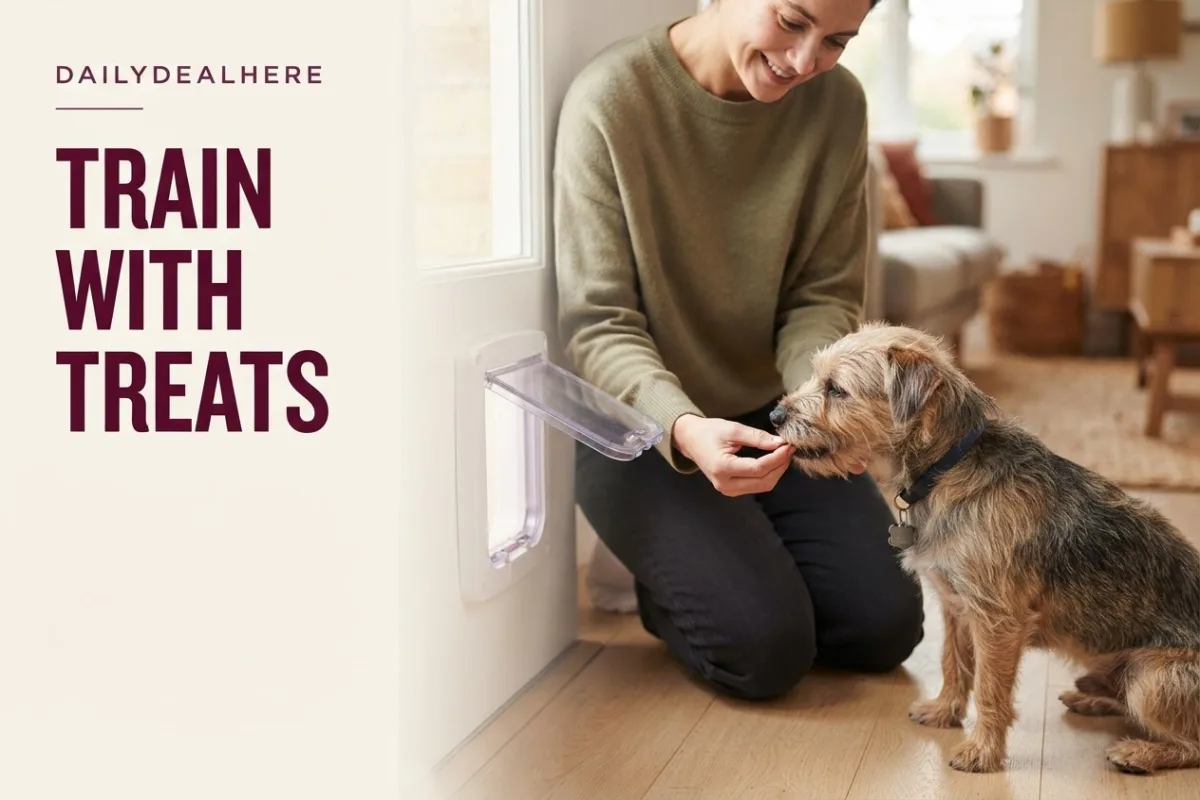
A flap that unlocks with a click and then must be pushed is new to most pets. A few patient sessions usually help: prop the flap open at first so your pet can walk through freely, reward each trip with a treat, then lower the flap partway and finally all the way. Stay on the far side and encourage your pet through rather than pushing it. For timid, older or injured animals, PetDoors.com notes a motorized door can be easier, since the pet does not need to learn to push anything.
When the door will not open
- Check the batteries first. SureFlap doors flash a low battery light, but some collar key doors, as PetDoors.com notes of the PetSafe Electronic Smart Door, have no low battery indicator at all.
- Confirm the mode. A door left in manual lock, in-only or curfew mode will not let your pet through at the expected time.
- Re-register the pet. If the chip was never stored correctly, follow the maker’s steps to program it again.
- Try the collar tag. If the chip still will not read, the included RFID tag gives the door something it can read.
- Keep a spare key. PetDoors.com suggests keeping a spare collar key nearby to check whether the door itself is working.
Multi-pet households
Selective doors shine when not every animal should have the same access. Wikipedia notes they can let one pet out while keeping another in. With a microchip door, you simply register the pets allowed to come in, up to 32 on SureFlap models. With collar key doors, only pets wearing a matching key get access. Inside the house, a sturdy gate can control which rooms each pet can reach. Our guide to the best dog gates for big dogs covers options.
What about home security?
Any opening in a door is a potential weak point, and the bigger the opening, the more it matters. Selective doors help against stray animals and wildlife, as Wikipedia notes, but a pet door is not a substitute for proper locks. Keep the door on manual lock when you are away for long periods, choose the smallest opening your pet can comfortably use, and secure the main door itself. Our guide to the best smart lock for a front door covers stronger options for the door your pet door sits in.
A buying checklist
- Measure your pet and compare with the flap opening, not the outer frame.
- Check your pet’s microchip number with the maker’s compatibility checker, or plan to use a collar tag.
- If your dog is too big for microchip models, choose a collar key electronic door.
- Decide whether you need two way control, especially if raccoons visit.
- Choose the modes you need: curfew, in-only, app control.
- Plan the installation: door, wall or glass, and whether you need an adapter.
- Budget for batteries and spare keys or tags.
Frequently asked questions
Do microchip pet doors work?
Yes. They read the pet’s implanted microchip and unlock only for registered pets, keeping strays and wildlife out. Sure Petcare says its doors store up to 32 pets and remember them even when the batteries are removed. Check chip compatibility before buying.
Is there a microchip dog door for large dogs?
Not currently, according to pet door retailer PetDoors.com, which says there are no microchip doors for a dog the size of a Lab. For large dogs, use an electronic door that opens for a key on the collar, such as the larger PetSafe or High Tech models.
How big is the SureFlap Microchip Pet Door opening?
Sure Petcare lists the flap opening at 7.5 inches wide by 6 11/16 inches high, and says the door is designed for large cats and small dogs. Measure your pet against the opening, not the outer frame.
Will a microchip door read my pet’s chip?
Most likely. Sure Petcare says its doors work with all common identification microchips and offers an online compatibility checker. Some older chips use a non-ISO 125 kHz protocol, so checking first is sensible, and a collar tag is included as a backup.
What is the best security doggy door?
A selective electronic door that controls access in both directions, sized as small as your dog can comfortably use. PetDoors.com lists raccoon resistant options that control both ways. Lock it when you are away, and secure the main door with a good lock.
Can a microchip door keep one pet in and let another out?
Yes. Selective doors can let one pet out while keeping another in, as Wikipedia notes. On SureFlap doors, only registered pets can enter from outside, and modes like in-only and curfew control when pets can leave.
How long do microchip pet door batteries last?
Sure Petcare lists up to 12 months for its standard Microchip Pet Door on four C cells and its Microchip Cat Door on four AA cells, and up to 6 months for the app connected Pet Door Connect.
What is the best electronic cat door?
For most cats, a microchip cat door that reads the implanted chip, such as the SureFlap Microchip Cat Door, which stores up to 32 pets and has manual lock and in-only modes. If raccoons are a problem, choose a model that controls both directions.
Measure first, confirm the chip, and match the door to your dog’s size. For cats and small dogs, a microchip door is the most convenient option there is. For big dogs, a collar key door does the same job at the size they need.









Write Your Review
No reviews yet. Be the first to share your experience!