

A magnetic Rubik’s cube is a different tool from the classic toy version: magnets pull each layer back into alignment mid-turn, so corners land square even at speed and the puzzle stops popping apart during aggressive twists. For September 2026 we mapped the shift from casual puzzle to speedcubing gear across 7 picks from GAN, MoYu, MonsterGo and more, focused on magnet strength, corner cutting, and how each cube feels once you start turning fast instead of slow. Our top pick is the GAN 11 M Pro for its Core Magnet System, which lets you dial in magnet strength per layer instead of living with whatever fixed setup the factory shipped. If you want the full picture on classic, non-magnetic Rubik’s cubes too, our Rubik’s cube buying guide covers the standard puzzle side by side with novelty and gift options.

Pros
- Core Magnet System lets you swap magnet strength per layer without full disassembly
- Fast, stable turning with minimal wobble even at high speed
- Widely used by competitive speedcubers at organized events
- Precise corner alignment thanks to adjustable magnet positioning
- Multiple surface and color options available
Cons
- Priced well above budget and mid-range picks
- Magnet tuning has a learning curve for first-time adjusters
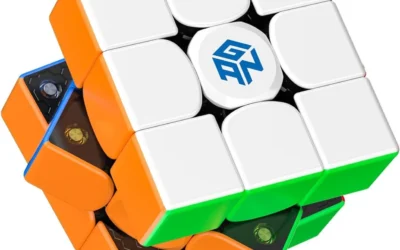
The GAN 11 M Pro is a flagship 3x3 magnetic speed cube built around GAN's Core Magnet System, which lets a solver open the core and swap in stronger or weaker magnets rather than being locked into one factory setting. It is aimed at solvers who already know they want to solve fast and are ready to invest in gear that keeps up with improving technique.
Out of the box the cube turns fast and stable, with corners that snap into alignment cleanly even on rushed, imprecise turns. The magnet system holds up well over months of heavy practice, and the overall build feels noticeably more refined than mid-range and budget alternatives in this list.
The main drawback is price: this is the most expensive pick here, and casual solvers who just want a smoother version of their old cube may not need everything this cube offers. Swapping magnets also takes a bit of practice the first time, since the core has to be opened carefully.
Bottom line: for solvers serious about speedcubing, or anyone who wants one cube that can be re-tuned instead of replaced as skills improve, the GAN 11 M Pro is worth the higher price.
- Size: 56mm three-layer cube
- Type: 3x3 magnetic speed cube
- Magnet system: GAN Core Magnet System (adjustable)
- Material: ABS plastic
- Surface: Glossy stickerless
- Best for: Competitive and advanced solvers
The Core Magnet System is accessed by removing the center caps on each face, which exposes magnet slots that accept swappable magnet sets of different strengths. Stronger magnets add stability and control; weaker magnets let the cube turn looser and faster.
Most solvers start with the factory setting, log a few practice sessions, and only swap magnets once they notice a specific preference, such as wanting more control on tricky algorithms or less resistance for speed-focused solving.
This cube fits solvers who already have consistent solving speed and want gear that can grow with them, including club members and anyone preparing for timed or competitive solving. It is not the first cube we would hand to someone who has never solved a 3x3 before.
Pros
- Strong magnets for the price, with corners that snap into place cleanly
- Stickerless build resists fading and peeling over time
- Smooth out of the box with light lubrication
- Ships with a display stand and travel pouch
- Budget-friendly enough to buy as a gift without hesitation
Cons
- Fixed magnet strength with no tuning options
- Some units need a short break-in period before turning feels fully smooth
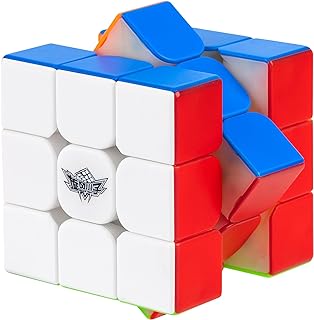
The D-FantiX Magnetic Speed Cube is a stickerless 3x3 built to bring magnet-assisted turning to solvers who are not ready to spend flagship money. It is one of the more consistently well-reviewed budget magnetic cubes available, and it is a common recommendation for a first magnetic upgrade.
The magnets are genuinely strong for the price, snapping each layer into alignment clearly enough that beginners notice the difference immediately compared to a non-magnetic cube. It ships with a small display stand and a soft travel pouch, which makes it an easy gift.
The tradeoff for the price is that magnet strength is fixed, so there is no way to adjust the feel later the way flagship cubes allow. A handful of units also feel a little stiff on arrival and benefit from a short break-in period with a drop of cube lubricant.
Bottom line: for shoppers who want a real jump in stability and corner cutting without flagship spending, the D-FantiX Magnetic Speed Cube is our best value pick.
- Size: 56mm three-layer cube
- Type: 3x3 magnetic speed cube
- Magnets: Fixed, strong strength
- Material: ABS plastic
- Surface: Stickerless matte
- Includes: Display stand, travel pouch
- Best for: New magnetic cubers
This is a strong fit for beginners who have already learned to solve a 3x3 and want to feel what magnets add, as well as gift buyers who want something better than a toy-aisle cube without spending flagship money.
A drop of silicone-based cube lubricant on the core, followed by a few dozen solves, loosens up any initial stiffness. Wipe the cube with a dry cloth periodically to keep dust from building up along the edges, and avoid submerging it in water since that can affect the magnets over time.

Pros
- One of the most recommended budget magnetic cubes in the speedcubing community
- Stable, controllable feel without the mushy corner cutting of older budget cubes
- Consistent factory tuning across units
- Great for practicing algorithms at real speed without overspending
- Compact, lightweight build
Cons
- Magnet strength is not adjustable
- Plastic feels slightly less premium than flagship lines
The MoYu RS3M 2020 is a budget-tier 3x3 magnetic speed cube from MoYu's Mofang Jiaoshi (MFJS) line, and it has built a strong reputation in the speedcubing community as one of the better cubes to buy before spending flagship money.
Where many budget cubes feel mushy or unpredictable on fast turns, the RS3M holds a stable, controllable feel that lets solvers practice at real speed instead of babying the cube. Quality control across units is consistent, which is not always true at this price point.
The magnets are fixed, so there is no way to adjust the feel as preferences change, and the plastic, while solid, does not feel quite as refined as GAN's flagship line. Neither issue affects how well the cube performs for practice.
Bottom line: for solvers who want serious practice performance without flagship pricing, the RS3M 2020 remains one of the safest budget picks available.
- Size: 56mm three-layer cube
- Type: 3x3 magnetic speed cube
- Series: MoYu Mofang Jiaoshi (MFJS) RS3M
- Magnets: Fixed
- Material: ABS plastic
- Surface: Stickerless
- Best for: Budget-conscious practice
Shoppers comparing this to the more expensive picks on this list should weigh how far along their solving is. If turning speed and comfort matter more than fine-tuning, the RS3M delivers most of what a flagship cube offers at a fraction of the price.
A strong fit for solvers past the absolute beginner stage who are practicing regularly and want a dependable cube for daily use without spending at the flagship level.

Pros
- Frosted matte surface gives a grippier feel than glossy plastic
- Stable magnetic positioning reduces cube popping during fast turns
- Balanced, all-around performance for casual and competitive solving
- Lightweight build reduces hand fatigue during long practice sessions
- Backed by GAN's speedcubing reputation
Cons
- Frosted surface shows fingerprint smudges more than glossy versions
- Fewer color options than the flagship GAN 11 line
The GAN 356 M Frosted is a mid-range 3x3 magnetic speed cube that swaps GAN's usual glossy finish for a frosted, matte surface. It sits between the budget picks and the flagship GAN 11 M Pro, offering solid magnetic performance without flagship pricing or tuning complexity.
The frosted surface gives noticeably more grip than glossy plastic, which matters during longer practice sessions when hands start to sweat. The magnets keep layers stable enough to prevent popping on fast, aggressive turns, and the cube stays lightweight so extended practice does not tire out the hand.
The tradeoff for the matte finish is that it picks up fingerprint smudges more visibly than a glossy cube, and the color selection is narrower than GAN's flagship line. Neither affects performance.
Bottom line: a well-rounded mid-range pick for solvers who want a grippier feel and stable magnets without paying flagship prices.
- Size: 56mm three-layer cube
- Type: 3x3 magnetic speed cube
- Magnets: Fixed
- Material: ABS plastic
- Surface: Frosted matte, stickerless
- Best for: Grip-focused, all-around solving
A good fit for solvers who found glossy cubes too slippery during longer sessions, and anyone who wants a dependable all-around cube for both casual and semi-competitive solving.
Frosted surfaces show smudges more easily than glossy ones, so a quick wipe with a dry cloth after practice keeps the cube looking clean. Use a small amount of cube lubricant rather than household oils, since some lubricants can degrade the plastic over time.

Pros
- 48 magnets deliver noticeably more corner alignment than fewer-magnet entry cubes
- Affordable stepping stone from non-magnetic to magnetic solving
- Stickerless colors stay vivid with regular use
- Solid choice for classroom or club practice sets
- Simple, no-fuss design for beginners
Cons
- Turning feels stiffer out of the box until broken in
- Not designed for elite-level competition tuning
The MonsterGo Magnetic 3x3, part of the brand's MG EDU line, is built around 48 magnets positioned to give more corner alignment than typical entry-level magnetic cubes. It targets solvers who are ready to move past a non-magnetic cube but are not looking to spend on a flagship model yet.
The extra magnet count is noticeable in how cleanly corners align during fast solving, and the stickerless color build holds up well with regular use. It is a common pick for classrooms, clubs, and group practice sets where multiple cubes need to hold up to shared use.
The turning feels stiffer than mid-range and flagship picks right out of the box, and it needs a short break-in period before it loosens up. It is also not built for the fine-tuning that competitive solvers eventually want.
Bottom line: a dependable, affordable way to introduce magnetic solving to beginners, classrooms, or clubs without the cost of a flagship cube.
- Size: 56mm three-layer cube
- Type: 3x3 magnetic speed cube
- Magnets: 48, fixed
- Material: ABS plastic
- Surface: Stickerless
- Best for: Beginners, classroom and club practice
A strong fit for beginners taking their first step into magnetic cubing, as well as teachers or club organizers outfitting several solvers at once without a flagship budget.
If corner stability matters more than fine-tuning, the higher magnet count here offers a noticeable step up from typical entry cubes without asking for mid-range or flagship pricing.

Pros
- Purpose-built magnetic 2x2 for corner-only algorithm practice
- Frosted surface and one-piece core keep the cube stable at high speed
- Compact size is easy to carry for on-the-go practice
- Complements a 3x3 magnetic cube for full event training
- Fast, consistent turning for quick solve times
Cons
- Only useful if practicing 2x2 specifically
- Smaller size takes adjustment for solvers with larger hands
The GAN 251 M Air is a magnetic 2x2 speed cube built as a companion to a 3x3 rather than a replacement for one. It uses the same corner-cutting and magnet-assisted turning principles as GAN's larger cubes, scaled down to a smaller, one-piece core.
The frosted surface and stable core keep the cube controlled even at very fast solve speeds, and its compact size makes it easy to carry in a bag or pocket for quick practice sessions. Solve times on a 2x2 are naturally much shorter than a 3x3, which makes it a satisfying cube to pick up for short bursts of practice.
It is not a general-purpose cube. Solvers who only own a 3x3 and are not training 2x2 specifically will not get much use out of it, and the smaller size takes some adjustment for solvers with larger hands.
Bottom line: a worthwhile add-on for anyone training 2x2 events or who wants a fast, portable cube alongside their main 3x3.
- Size: approximately 50mm two-layer cube
- Type: 2x2 magnetic speed cube
- Magnets: Fixed
- Material: ABS plastic
- Surface: Frosted matte, stickerless
- Best for: 2x2 event training
Because 2x2 solving relies on corner-turning fundamentals shared with 3x3, practicing on this cube builds hand speed and corner recognition that carries over directly. It is a common addition for solvers training multiple official events.
Best suited to solvers who already know how to solve a 3x3 and want to add 2x2 practice, whether for competition or simply as a faster, more portable puzzle to carry around.

Pros
- One of the most affordable true magnetic cubes on the market
- Simple stickerless design that is easy to clean and maintain
- Light and easy to carry
- Good option for a backup or loaner cube
- Approachable for solvers trying magnetic cubing for the first time
Cons
- Magnets are noticeably weaker than mid-range and flagship cubes
- Corner cutting is less forgiving on fast, sloppy turns
The MoYu Meilong 3x3 M is the most budget-focused magnetic cube on this list, part of MoYu's entry-level Meilong line. It exists to answer a simple question: does a beginner need to spend much to try a real magnetic cube? For a first magnetic cube, the answer here is no.
The stickerless build is simple and easy to maintain, the cube is light enough to carry anywhere, and it is a sensible backup or loaner cube for a household with more than one solver. It gives a genuine sense of what magnet-assisted turning feels like compared to a non-magnetic cube.
The magnets here are noticeably weaker than the mid-range and flagship picks on this list, and corner cutting is less forgiving on fast, sloppy turns. Solvers who progress past beginner speed will likely want to upgrade.
Bottom line: a sensible, low-cost way to try magnetic solving for the first time, with an upgrade path once a solver outgrows it.
- Size: 56mm three-layer cube
- Type: 3x3 magnetic speed cube
- Series: MoYu Meilong
- Magnets: Fixed, lighter strength
- Material: ABS plastic
- Surface: Stickerless
- Best for: First magnetic cube, backup or loaner use
This is best treated as a starting point rather than a long-term cube for anyone planning to practice seriously. It is an easy way to confirm magnetic solving is worth the upgrade before spending on a mid-range or flagship pick.
Basic care applies: a drop of cube lubricant every so often keeps turning smooth, and wiping down the cube regularly prevents dust buildup in a design that is otherwise low-maintenance.
Magnetic Rubik’s Cube Buying Guide
Not every magnetic cube on the market is built for the same solver. A kid learning their first algorithm and a club cuber chasing personal records both want magnets, but they want different amounts of magnet, different tension setups, and different price tags. The criteria below are the ones that actually separate a magnetic cube worth owning from one that just has the word “magnetic” in the title.
Magnet Strength and Positioning
Magnet count gets marketed heavily, but placement and strength matter more than the raw number. A well-tuned 3×3 uses magnets at the edge and corner pieces so each face snaps toward center as you release a turn, which is what lets fast cubers stop looking at the cube mid-solve and trust their fingers instead. Flagship cubes like the GAN 11 M Pro use a swappable magnet system, so you can run weaker magnets for loose, fast turning or stronger magnets for more control, without buying a second cube.
Budget and mid-range magnetic cubes generally ship with one fixed magnet strength chosen to suit an average solver. That is fine for most people, and it is why cubes such as the MoYu RS3M or the D-FantiX Magnetic Speed Cube feel noticeably more stable than a non-magnetic cube straight out of the box, even without any tuning options.
Corner Cutting and Turning Feel
Corner cutting describes how far you can turn one layer before the adjacent layer has to be square before the turn will register. Generous corner cutting forgives sloppy, fast turning, which matters enormously once you start solving with any real speed. A stiff, low corner-cutting cube punishes rushed moves with a lockup, which is frustrating for beginners and disqualifying for anyone doing timed solves.
Magnets improve corner cutting indirectly: they guide a slightly misaligned layer back into place instead of letting it jam, which is why magnetic cubes across every price tier in this list turn more forgivingly than non-magnetic budget cubes twice their price.
Reviewers who track speedcubing gear generally describe good corner cutting as being able to turn a face 30 to 45 degrees past square on an adjacent layer before it catches. None of the picks on this list will feel restrictive at that range, though the flagship and mid-range cubes edge out the entry-level pick once a solver’s turning speed climbs past a casual pace.
Tension Adjustability and Break-In Time

Tension is the amount of pressure holding the internal core together, separate from magnet strength. Looser tension makes a cube spin faster and more freely; tighter tension gives more control and reduces the chance of pieces catching. Flagship and mid-range cubes usually ship with a tensioning system built into the core, so the feel can be adjusted by hand over time as a solver’s preference changes.
Cheaper magnetic cubes tend to arrive stiffer than they will eventually feel. A short break-in period, generally a few dozen solves with a drop of cube lubricant on the core, loosens the plastic and settles the magnets into a smoother, more consistent turn. Do not judge a budget cube purely on how it feels the first day out of the box.
Basic maintenance carries over from non-magnetic cubes: a drop of silicone-based cube lube on the core every few weeks of regular use keeps turning consistent, and a quick wipe with a dry cloth clears out dust that collects along the edges. None of the cubes on this list need disassembly for routine care, and only the flagship pick is designed to be opened up for magnet swaps.
Cube Size: 3×3, 2×2, and Other Event Cubes
Most shoppers searching for a magnetic Rubik’s cube want the standard 3×3, and that is where most of the picks below live. But solvers practicing for competition events, or anyone who wants a faster, more casual puzzle to carry around, often add a magnetic 2×2 to the rotation. A 2×2 uses the same corner-turning mechanics as a 3×3 without the edge pieces, so the skills transfer directly while the solve time drops to a fraction of a 3×3 attempt.
Stickerless Build and Surface Finish

Every cube on this list is stickerless, meaning the color comes from dyed plastic rather than applied vinyl squares, so color stays consistent even after heavy use and edges will not peel. Surface finish is the remaining variable: glossy plastic looks sharp and shows fingerprints, while frosted or matte finishes like the GAN 356 M Frosted give a grippier, less slippery feel that many fast solvers prefer once they start sweating through longer practice sessions.
Price Tiers: Matching a Cube to Your Goals

Magnetic cubes roughly split into three tiers. Entry-level picks, like the MoYu Meilong 3×3 M, exist to prove that magnetic solving feels better than non-magnetic solving without asking for much money up front; they get the job done but do not offer any tuning. Mid-range picks, like the MoYu RS3M 2020, the GAN 356 M Frosted, and the MonsterGo Magnetic 3×3, hit a sweet spot where the build quality, magnet consistency, and corner cutting are good enough for serious daily practice, even if the magnets themselves are not adjustable.
Flagship picks, like the GAN 11 M Pro, exist for solvers who already know their preferences and want a cube that can be re-tuned as those preferences change, rather than replaced. If you are buying a first cube, there is little reason to start at the flagship tier; a mid-range or entry pick will teach you what you like before you spend on something adjustable. If you already know you turn fast and loose, or slow and controlled, the flagship tier pays off immediately.
| Cube | Size | Magnet Type | Surface | Best For |
|---|---|---|---|---|
| GAN 11 M Pro | 3×3 | Adjustable, swappable | Glossy | Competitive solvers |
| D-FantiX Magnetic Speed Cube | 3×3 | Fixed, strong | Stickerless matte | New magnetic cubers |
| MoYu RS3M 2020 | 3×3 | Fixed | Stickerless | Budget performance |
| GAN 356 M Frosted | 3×3 | Fixed | Frosted matte | Grip-focused solvers |
| MonsterGo Magnetic (48 Magnets) | 3×3 | Fixed, 48-count | Stickerless | Beginners going magnetic |
| GAN 251 M Air | 2×2 | Fixed | Frosted matte | Event training |
| MoYu Meilong 3×3 M | 3×3 | Fixed, light | Stickerless | Entry-level budget |
If you are shopping for a classic, non-magnetic cube instead, or want novelty and gift-focused options like light-up or recycled-plastic versions, our full Rubik’s cube roundup covers that ground, and our broader toys and games picks cover puzzles, brain teasers, and other gift ideas beyond cubes.
Why You Should Trust Us
Our picks come from cross-referencing verified customer ratings and review volume for each listing against known speedcubing brands and their published specs, then checking every model against the magnet-count, corner-cutting, and tensioning criteria above rather than ranking by price or star rating alone. We favor cubes with a real track record inside the speedcubing community over generic listings that borrow speedcubing keywords without the hardware to back them up.
We also cross-checked each product’s brand attribution by hand, since marketplace listings frequently misattribute cube brands or drop them entirely. Where a listing did not clearly identify its manufacturer, we verified it against known product lines before including it here, and we left pricing and review counts out of the prose itself since those change constantly.
Finally, we excluded any cube already featured as a pick in our separate classic Rubik’s cube guide, so the two lists complement each other instead of repeating the same products under a different headline. Everything here earns its place specifically because of magnet hardware and speedcubing-relevant performance, not general puzzle popularity.
Final Thoughts
The GAN 11 M Pro is our best overall pick because the Core Magnet System removes the biggest limitation of a fixed-magnet cube: you are no longer stuck with whatever tuning the factory chose. It is the cube most competitive solvers reach for when they want one setup that can grow from practice sessions to actual competition without an upgrade, and it holds up well to daily use over months of solving rather than needing to be swapped out once a solver’s technique improves.
For shoppers who do not want to spend flagship money, the D-FantiX Magnetic Speed Cube is the best value pick: the magnets are genuinely strong for the price, and it turns well enough out of the box that a beginner will not feel like they are fighting the cube while learning. Anyone specifically training 2×2 events should pair a 3×3 pick with the GAN 251 M Air, and shoppers who only want to spend a little to try magnetic solving for the first time should look at the MoYu Meilong 3×3 M. For gift shoppers who want the classic, licensed Rubik’s look instead of a speedcubing brand, our best Rubik’s cube picks are the better starting point, and our full articles library has more buying guides across toys, games, and beyond.
FAQs
Are magnetic Rubik’s cubes better than non-magnetic ones in 2026?
For most solvers, yes. Magnets pull each layer back into alignment mid-turn, which improves corner cutting and stability at speed, and the difference is noticeable even for casual solvers who just want a cube that does not pop apart. The main tradeoff is price: magnetic cubes generally cost more than an entry-level non-magnetic cube, and a small number of purists still prefer the unassisted feel of a non-magnetic puzzle for casual, unhurried solving.
Can a beginner start directly on a magnetic speed cube?
Yes, and it is often easier than starting on a stiff, non-magnetic budget cube. The magnets guide layers into place, which forgives the imprecise turning most beginners start with. A budget magnetic pick like the D-FantiX Magnetic Speed Cube or MonsterGo Magnetic 3×3 is a reasonable place to start.
How many magnets does a good speed cube need?
There is no single number that guarantees a good feel; placement, strength, and tensioning matter as much as the count. A cube with 48 well-positioned magnets, like the MonsterGo Magnetic 3×3, can feel just as stable as a cube with a higher count, while a cube with adjustable magnets, like the GAN 11 M Pro, lets a solver tune strength rather than being locked into one fixed setup. Chasing a higher magnet count on its own, without checking reviews on how the cube actually turns, is a common mistake for first-time buyers comparing spec sheets.
Do I need a 2×2 cube in addition to a 3×3?
Only if you plan on practicing 2×2 specifically, whether for a competition event or just for a faster, more portable puzzle. The turning mechanics carry over from a 3×3, so a cube like the GAN 251 M Air is easy to pick up once you already know how to solve a 3×3, and most solvers reach single-digit solve times on 2×2 far sooner than on the larger puzzle.
What is the best magnetic Rubik’s cube for tight budgets in 2026?
The MoYu Meilong 3×3 M is the most affordable true magnetic cube in this roundup, and the MoYu RS3M 2020 is a step up in tuning for a modest price increase. Either is a reasonable way to try magnetic solving without flagship spending. For non-magnetic budget options and gift-focused picks, see our toys and games category.






Write Your Review
No reviews yet. Be the first to share your experience!