

A Japanese Pokemon box is not the English box in another language. The sets are structured differently, the packs hold fewer cards, the boxes hold fewer packs, and the release schedule follows its own calendar rather than translating one. Buyers who order expecting a familiar product in unfamiliar text are usually surprised twice, once when the box arrives smaller than expected and again when they look for the set in an English checklist and cannot find it. We compared 8 Japanese Pokemon card sets on structure, pull rates and who each one suits.
Our top pick is the Scarlet and Violet High Class Shiny Treasure ex box, because High Class sets concentrate the desirable cards rather than spreading them across a long checklist. For other family game purchases, our guide to the best board games for middle schoolers covers the table rather than the binder.

Pros
- Short checklist dense with sought after cards
- Compilation format suits opening for hits
- Well known set with strong collector interest
- Japanese print consistency favoured by graders
Cons
- Not suitable for completing a specific English expansion
- Japanese cards are commonly not tournament legal in English speaking regions
High Class packs exist for one reason: to take the cards people actually chased across a cycle of sets and put them into one shorter checklist. That is why opening one feels different from opening a standard expansion, where most of the checklist is filler you will never look at twice.
Shiny Treasure ex is among the best known examples, and collector interest in it has stayed strong for that reason. For someone who opens product for the experience of chasing hits, a dense checklist is the whole point.
Two things it is not. It is not the route to completing a specific English set, since Japanese and English releases do not map onto each other. And it is not a competitive purchase, because organised play rules in English speaking regions commonly exclude Japanese cards.
Bottom line: the most consistently rewarding box here to open, provided collecting rather than competing is the goal.
- Type: High Class compilation set
- Series: Scarlet and Violet
- Language: Japanese
- Format: sealed box
- Checklist: shorter and denser than an expansion
- Play: check regional organised play rules
Check the stated pack count before comparing prices with an English box, since the formats hold different quantities.
Verify the set code on the packaging rather than relying on the English wording of a listing, which varies between sellers.
Sleeve cards as they come out of the pack if condition matters, and use a rigid holder for anything genuinely valuable.
Store sealed boxes upright rather than stacked under weight, since crushed corners reduce value regardless of contents.

Pros
- Compilation covering a whole era
- Dense checklist of premium cards
- Strong ongoing collector demand
- Sealed Japanese box format
Cons
- Older cycle, so cards are not current for play formats
- Not equivalent to any single English set
VSTAR Universe does for the Sword and Shield era what Shiny Treasure ex does for Scarlet and Violet: it closes out a cycle by gathering the cards that mattered into one set.
That makes it a natural choice for a collector focused on that era rather than the current one, and demand for it has held up well since release.
Being an older cycle has consequences. The cards are not part of current standard play rotations, and as with any Japanese product, regional organised play rules apply regardless. For collecting and opening, neither point matters much; for a player, both do.
Bottom line: the era defining compilation, ideal if Sword and Shield is the period you care about.
- Type: High Class compilation set
- Series: Sword and Shield
- Language: Japanese
- Format: sealed box
- Checklist: compilation of the era
- Play: not a current format set
Collectors focused on the Sword and Shield era and anyone who missed the cards the first time round.
Not the pick for someone following the current release cycle.
Buy sealed from a reputable seller, since resealing is a real concern in this category.
Keep boxes away from direct sun and damp, both of which damage packaging and cards over time.

Pros
- Full expansion checklist rather than a compilation
- Thirty packs gives a substantial opening session
- Current release rather than an older cycle
- Suits set building
Cons
- Standard expansions have a lower density of premium cards
- Thirty packs is fewer than an English box, so compare per pack
This is a standard expansion rather than a compilation, which makes it the right product for a different goal: working through a complete checklist rather than chasing a concentrated set of hits.
Thirty packs is a substantial box and a long opening session. It is also fewer packs than an English booster box holds, which is exactly the comparison people get wrong when judging price between the two markets.
Expect a lower density of premium cards than a High Class set delivers. That is not a flaw, it is what a full checklist means, and it is why the two product types sell at different prices.
Bottom line: the set builder's box, and the wrong choice if you are opening purely for hits.
- Type: standard expansion booster box
- Packs: 30
- Language: Japanese
- Format: sealed box
- Checklist: full expansion
- Play: check regional organised play rules
Compare cards per box rather than price per box when weighing this against an English product.
Confirm the set code on the packaging, since English listings phrase Japanese set names inconsistently.
Collectors building a complete expansion and anyone who prefers a long opening session over a concentrated one.
Less suitable for a buyer chasing specific premium cards.

Pros
- Recent release with current artwork
- Full expansion checklist
- Thirty packs per sealed box
- Well rated by buyers
Cons
- Lower premium density than compilation sets
- Pack count differs from English boxes
Mega Brave sits alongside the other current expansion here, and the choice between them is mostly about which checklist and artwork appeals rather than any structural difference.
As a standard expansion it rewards patience rather than luck. Working through thirty packs gets you a long way into a checklist, and the pleasure is in the completing rather than in a single hit.
The usual comparisons apply. Fewer packs than an English box means judging value per card rather than per box, and premium card density is lower than in a High Class set by design.
Bottom line: a solid current expansion for set builders, interchangeable with the other Mega box on structure.
- Type: standard expansion booster box
- Packs: 30
- Language: Japanese
- Format: sealed box
- Release: recent
- Checklist: full expansion
Collectors following current Japanese releases and building complete sets.
Not the choice for someone opening purely to chase premium cards.
Sleeve anything you intend to keep as it leaves the pack, before it touches a table surface.
Store the box upright and out of direct sun if you are keeping it sealed.
Pros
- Current compilation rather than an older cycle
- High density of premium cards
- Short checklist suits chasing hits
- Strong early collector interest
Cons
- Compilation sets do not build a specific expansion
- Newer sets have less established resale history
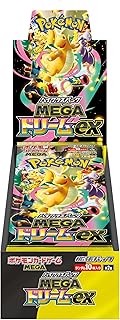
This is the current entry in the High Class line, which means it does the same job as Shiny Treasure ex and VSTAR Universe for the most recent cycle: a short checklist packed with the cards that were worth chasing.
For someone who wants to open compilation product but would rather have the latest artwork than an older era, this is the version to choose.
Being new cuts both ways. Collector interest is high early, and there is less established history around how a recent set holds up over time than an older compilation has accumulated. That uncertainty is worth naming rather than glossing over.
Bottom line: the current High Class pick, with the usual caveat that newer sets have shorter track records.
- Type: High Class compilation set
- Language: Japanese
- Format: sealed box
- Release: current cycle
- Checklist: short and premium dense
- Play: check regional organised play rules
Collectors who want compilation product from the current cycle rather than an earlier era.
Less suitable for someone completing a specific expansion checklist.
Confirm the set code rather than relying on listing wording, since High Class and expansion names from the same era can sound similar.
Buy sealed from a reputable seller and check the pack count before comparing prices.

Pros
- A specific expansion with its own full checklist
- Part of the widely collected Scarlet and Violet era
- Sealed box format
- Suits targeted set building
Cons
- Lower premium density than High Class sets
- Not the current release cycle
Where compilations gather the highlights, an expansion is the set itself, and that is the reason to buy this rather than a High Class box.
Scarlet and Violet is a widely collected era, so a specific expansion from it has a clear place in a collection and a checklist that people actively work through.
The tradeoffs are structural rather than about quality. Premium card density is lower than in a compilation, and it is not the current cycle, so anyone following the newest releases will look elsewhere. For a collector filling a gap in that era, neither point matters.
Bottom line: the pick when you want this particular set rather than a selection of highlights.
- Type: standard expansion
- Series: Scarlet and Violet
- Language: Japanese
- Format: sealed box
- Checklist: full expansion
- Play: check regional organised play rules
Collectors filling a specific gap in the Scarlet and Violet era.
Not the pick for chasing premium pulls or for following current releases.
Use side loading binder pages so cards cannot slide out when turning a page.
Keep binders upright and away from damp walls and attics.

Pros
- Compilation format with concentrated premium cards
- Distinct festival artwork treatment
- Sealed Japanese box
- Part of a strongly collected era
Cons
- Compilation rather than a route to a specific expansion
- Artwork style is a matter of taste
TeraStar Festival is another High Class entry from the Scarlet and Violet era, distinguished mainly by its artwork treatment rather than by structure.
For collectors, artwork is often the deciding factor between compilations of the same era, and this one has a visual identity that appeals to people who collect for the cards as objects rather than for play.
Structurally it behaves like other High Class sets: a shorter checklist with a higher concentration of premium cards, better suited to opening for hits than to completing an expansion. Whether you prefer it to Shiny Treasure ex comes down to which cards you want on your shelf.
Bottom line: an artwork led choice among the era's compilations, with the same structural advantages.
- Type: High Class compilation set
- Series: Scarlet and Violet
- Language: Japanese
- Format: sealed box
- Checklist: short and premium dense
- Theme: festival artwork treatment
Collectors choosing between compilations on artwork rather than structure.
Less relevant for set builders working through a full expansion checklist.
Compare the artwork of the era's compilations before choosing, since they are structurally similar.
Check the set code on the packaging to avoid buying the same product twice under different listing names.
Pros
- Low cost way to try Japanese product
- Good as a gift or an introduction
- Most of the opening experience for a fraction of a box
- No commitment to a specific set
Cons
- You do not choose the sets you receive
- No box level factory seal, so seller reputation matters more
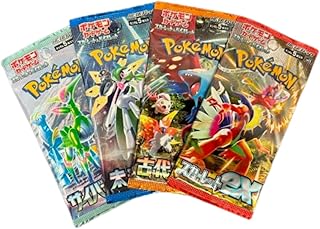
Not every purchase in this category needs to be a sealed box. If the point is the experience of opening a few packs, or introducing someone to Japanese cards, four packs delivers most of that for a small fraction of the cost.
As a gift it works particularly well, since it carries no expectation of completing anything and no requirement that the recipient already collects.
Two limitations to be clear about. You do not choose the sets, which rules this out for anyone targeting specific cards, and there is no box level factory seal to verify, so buying from a seller with a solid reputation matters more here than with sealed product.
Bottom line: the right buy for casual opening and gifts, and the wrong one for targeted collecting.
- Type: loose booster packs
- Quantity: 4 packs
- Language: Japanese
- Sets: random, not selectable
- Packaging: no box level seal
- Use: gifts and casual opening
Gift buyers and anyone curious about Japanese product without committing to a full box.
Not suitable for collectors targeting particular sets or cards.
Buy from sellers with strong feedback, since loose packs cannot be verified by a box seal.
Sleeve anything worth keeping straight out of the pack if condition matters at all.
How to Choose Japanese Pokemon Card Sets
Japanese Sets Are Not Translated English Sets
The two markets run on separate schedules with separate set structures. Japanese sets release first and are generally smaller, and English releases later combine material from several Japanese sets into one larger product. That is why a Japanese set name often has no English equivalent to look up.
The consequence for a buyer is that you cannot map one to the other. A card that appears in a particular Japanese set may show up months later in an English set with a different name, a different set symbol and a different card number, which matters if you are trying to complete a specific checklist.
For collectors chasing particular artwork this is often the appeal rather than a problem, since Japanese exclusives and alternate art appear there first and sometimes only there. For someone trying to build a specific English collection, it is a complication worth understanding before ordering.
Pack Size and Box Count Are Different
This is the difference that catches out most first time buyers. Japanese booster packs typically contain fewer cards than English packs, and a Japanese booster box typically contains a different number of packs than the English box a buyer is picturing.
Comparing box prices without accounting for that is comparing two different quantities of cardboard. The right comparison is cards per box, or better still the odds of the specific cards you want per box, rather than the headline price of the sealed product.
Listings state the pack count, so it is checkable before ordering. A box described as thirty packs is telling you exactly what to expect, and the number is worth reading rather than assuming it matches the format you already know.
High Class Packs Versus Regular Expansions

Japanese releases fall broadly into two kinds and the distinction drives most of the price difference. Regular expansion sets are the standard releases that follow the play format, with a full checklist across common, uncommon and rare cards.
High Class packs are compilation sets, typically released at the end of a cycle, gathering the most desirable cards from the preceding sets into a shorter checklist with a higher concentration of premium cards. Shiny Treasure ex and VSTAR Universe are examples, and their appeal is that the checklist is dense with cards people actually want.
Choosing between them depends on the goal. Someone opening for the experience of chasing hits will find a High Class set more consistently rewarding. Someone building a complete set of a specific expansion needs that expansion, and a compilation will not substitute for it.
Tournament Legality Depends on Your Region
Organised play rules specify which card languages are acceptable at sanctioned events, and those rules vary by region. Japanese cards are commonly not permitted at events in English speaking regions, or are permitted only with an official translation available, which is a meaningful constraint if the cards are intended for competitive play rather than a binder.
Check the current rules for the region where you would actually play, since these documents are updated and local organisers can have their own requirements on top. Casual play at home is unaffected, and plenty of players enjoy Japanese cards purely for the artwork.
If tournament use is the purpose, the safe answer is buying the English release of the equivalent cards. If collecting is the purpose, this constraint does not apply at all.
Print Quality and Grading
Japanese printing has a strong reputation among collectors for consistency, particularly around centring and edge quality. For anyone intending to submit cards for professional grading, that consistency is the practical reason many collectors prefer Japanese product.
It is a tendency rather than a guarantee. Any individual card can arrive off centre or with a print line, and factory sealed does not mean flawless. Buying sealed product is buying a distribution of outcomes, not a promise about a specific card.
Handling matters as much as printing if grading is the aim. Sleeving a card as soon as it comes out of the pack, and keeping it away from light and humidity, protects the condition you paid for.
Sealed Box or Loose Packs
A sealed box from a reputable seller gives the strongest assurance that packs have not been examined and resealed, which is a real concern in this category. It also usually offers a better rate per pack than buying individually.
Loose packs and small lots suit a different purpose. If the goal is the experience of opening a few packs rather than chasing a full checklist, a lot of four packs costs a fraction of a box and delivers most of the fun. For a gift or an introduction to the hobby, that is often the better purchase.
With loose packs, seller reputation carries more weight, since there is no factory seal at box level to verify. Buying a random lot means accepting you do not choose the set, which is fine for casual opening and unsuitable for anyone targeting specific cards.
Reading Set Names Before Ordering
Japanese set names arrive in English listings in inconsistent forms, sometimes translated, sometimes transliterated, sometimes both. The same product can appear under two or three different phrasings, which makes comparison harder than it should be.
The reliable identifiers are the series and the set code that appears on the packaging, along with the pack count. Two listings with different English wording and the same set code are the same product, and that check prevents buying the same set twice under different names.
It also guards against the opposite error. A High Class pack and a regular expansion from the same era can carry similar sounding names while being entirely different products with different contents.
Storage, Condition and Keeping Value
Cards degrade in predictable ways and all of them are preventable. Light fades ink over months, humidity warps card stock, and loose cards in a box scuff each other every time it moves.
The basic kit is inexpensive: penny sleeves for everything worth keeping, a rigid holder for anything genuinely valuable, and a binder with side loading pages so cards cannot slide out when a page is turned. Store it upright, out of direct sun and away from a damp wall or an attic.
Sealed product has its own storage rules. Boxes kept flat under weight will crush at the corners, and a crushed box is worth less than an intact one regardless of what is inside. Treat sealed product as a physical object to protect rather than something to stack.
Buying for a Child Rather Than a Collection
A large share of these purchases are gifts, and the calculation changes completely when the recipient is eight rather than an adult collector.
Children generally want to open packs, not own sealed product. A box kept intact holds its value and gives no enjoyment at all to someone who wanted the moment of tearing foil, so buying a thirty pack box as a gift often satisfies neither goal: too much to open at once, and worth less afterwards. Several smaller purchases spread over a year usually land better than one large one.
Language is the other consideration and it cuts both ways. A child who cannot read the card text will not be able to play with Japanese cards in the usual sense, which matters if their friends play at school. On the other hand, the artwork is identical in appeal and the cards are often prized precisely for being different from what everyone else has. If playing is the point, English is the safer gift; if collecting and trading is the point, Japanese cards carry their own status in a playground.
One practical note for parents. Cards arrive loose in packs and get damaged within days without somewhere to put them, so a cheap binder and a stack of sleeves alongside the packs is the part that turns a pile of cards into something kept rather than something scattered under a bed.
| Set | Type | Format | Best For |
|---|---|---|---|
| Shiny Treasure ex | High Class pack | Sealed box | Dense checklist of desirable cards |
| VSTAR Universe | High Class pack | Sealed box | End of cycle compilation |
| Mega Symphonia | Booster box | 30 packs | Opening a full modern set |
| Mega Brave | Booster box | 30 packs | Recent release with a full checklist |
| MEGA Dream ex | High Class pack | Sealed box | Concentrated premium pulls |
| Violet ex Box | Expansion pack | Sealed box | Building a specific expansion |
| TeraStar Festival | High Class pack | Sealed box | Compilation with festival artwork |
| Random Japanese Packs, Lot of 4 | Loose packs | 4 packs | Gifts and casual opening |
For other collecting and gift ideas, our toys and games guides cover the wider category, and the full library sits at our article index.
Why You Should Trust Us
We separated High Class compilations from regular expansions before ranking anything, because those two product types answer completely different goals and comparing them on price alone is meaningless. We also excluded the English language bundles and mixed card lots that appear in searches for Japanese sets, since they are a different product entirely.
Real customer ratings informed the shortlist, with attention to repeated reports about packaging condition and seller reliability rather than to individual pull luck, which tells you nothing about a product. Where the same set appears under several English phrasings, we treated it as one product.
Final Thoughts
For most buyers the Scarlet and Violet High Class Shiny Treasure ex box is the easiest recommendation. High Class sets exist precisely to gather the cards people want into a shorter checklist, which makes opening one more consistently rewarding than working through a long standard expansion.
VSTAR Universe covers the same idea for an earlier cycle, and the MEGA Dream ex box is the current equivalent for buyers who want the newest compilation. If you are building a specific expansion rather than chasing hits, the Violet ex box and the Mega Symphonia and Mega Brave booster boxes are the sets with full checklists to work through.
For a gift or a first taste of Japanese product, a lot of four random packs delivers most of the experience at a fraction of the cost. Whatever you buy, check the pack count before comparing prices, and check your region’s organised play rules before assuming the cards can be used at an event. Browse more of our category guides for other gift ideas.
Frequently Asked Questions
What are the best Japanese Pokemon card sets in 2026?
The Scarlet and Violet High Class Shiny Treasure ex box is our overall pick for 2026, because High Class compilations concentrate desirable cards into a shorter checklist. For building a specific expansion instead, the Violet ex box and the Mega series booster boxes are the sets with full checklists.
Are Japanese Pokemon cards tournament legal?
It depends on your region’s organised play rules, and Japanese cards are commonly not permitted at sanctioned events in English speaking regions or are allowed only with an official translation. Check the current rules for where you would play, and buy English releases if competitive use is the purpose.
Why is a Japanese booster box smaller than an English one?
Because the formats differ. Japanese packs typically hold fewer cards and boxes typically hold a different number of packs than the English equivalent, so comparing box prices directly compares two different quantities. Read the stated pack count before comparing.
What is a High Class pack?
A compilation set, usually released at the end of a cycle, that gathers the most desirable cards from preceding sets into a shorter checklist with a higher concentration of premium cards. Shiny Treasure ex and VSTAR Universe are examples, and they suit chasing hits rather than completing a specific expansion.
How should I store cards to keep them in condition?
Sleeve anything worth keeping straight out of the pack, use a rigid holder for genuinely valuable cards, and choose a binder with side loading pages so cards cannot slide out. Store upright, away from direct sun and damp, and keep sealed boxes from being stacked under weight. Our toys and games guides cover related collecting supplies.


Write Your Review
No reviews yet. Be the first to share your experience!