

Searching for a Star Wars strategy game returns three hobbies wearing the same licence. Some of these are family board games with a Star Wars skin, playable in an hour by people who have never read a rulebook. Some are mid weight strategy games that ask for an evening and some patience. And some are miniature wargames that arrive as unassembled plastic and expect you to build and paint an army before the first game. Buying across that line by accident is the most common disappointment here. We compared 8 titles on weight, playing time, player count and what is actually in the box.
Our top pick is Star Wars Outer Rim, because it delivers a genuine strategy experience without demanding assembly, painting or a four hour commitment. For other family game nights, our guide to the best board games for middle schoolers covers lighter options.

Pros
- Original design rather than a reskinned classic
- Plays in an evening rather than an afternoon
- Nothing to assemble or paint before playing
- Theme drives the decisions rather than decorating them
Cons
- Rules take a first read before teaching
- Table space requirement is substantial
Outer Rim sits in the sweet spot of this category: a game built around the setting rather than a familiar game wearing it, without the commitment a miniature wargame demands.
You play a character travelling the galaxy taking jobs, dodging trouble and building a reputation, and the decisions feel like the fiction rather than like moving tokens on a themed board. That is the difference between an original design and a reskin, and it is what a fan of the setting will notice.
The costs are modest and worth naming. Someone has to read the rulebook first, and the game wants real table space. Neither is unusual for a mid weight strategy game, and both are far smaller asks than assembling an army.
Bottom line: the best balance here between genuine strategy and actually getting played.
- Type: mid weight strategy, original design
- Assembly: none required
- Session length: evening
- Players: multiple
- Theme: bounty hunting and smuggling
- Expansions: optional
Groups who want a real strategy game with Star Wars at its core and can spare an evening rather than an afternoon.
Less suited to households where nobody will read a rulebook first.
Bag the components after the first setup, which cuts the time to get the game on the table considerably.
Allow extra time for the first session while everyone learns the rules.

Pros
- Asymmetry captures the fiction better than any other title here
- Deep strategic decisions across a long arc
- Highly regarded by strategy game players
- Strong component quality
Cons
- Strictly two players, no more
- Three to four hours per game, longer while learning
Rebellion is the heaviest genuinely board game entry here and the one that captures the source material most completely. One player commands an empire with overwhelming force that cannot find its enemy; the other hides, survives and picks moments to strike.
That asymmetry is the design, and it produces a tension no symmetric strategy game reaches. Players who enjoy long games consistently rate it among the best licensed board games of any kind.
Two constraints decide whether it belongs in your house. It is exactly two players, which rules it out for family evenings, and it takes three to four hours, more while learning. A great game that never fits your available time is a shelf ornament.
Bottom line: outstanding for two players with an afternoon, wrong for almost every other situation.
- Type: heavy asymmetric strategy
- Players: 2 only
- Session length: 3 to 4 hours
- Assembly: none, miniatures included
- Rules weight: high
- Table space: large
Two players who enjoy long strategy games and can commit an afternoon or a full evening.
Not for groups, and not for anyone wanting a game that fits into an hour.
Check the player count before buying as a family gift. This one does not scale beyond two.
Expect the first game to run well past the stated time while both players learn the systems.
Pros
- Each player has a distinct goal and play style
- Moderate rules weight suits mixed groups
- No assembly required
- Works with younger players alongside adults
Cons
- Asymmetric goals mean a learning curve per character
- Player interaction is lighter than in heavier strategy games
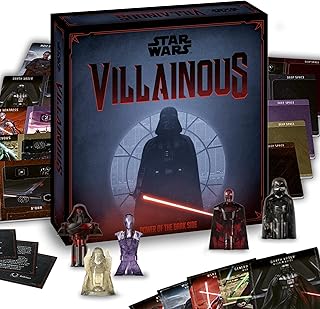
Villainous gives every player a different villain with a different win condition, so the game becomes a race between people solving different problems at the same table.
That structure is why it works across ages. A younger player learns one character rather than an entire system, and an adult playing a more complex villain does not have to hold back for the game to stay competitive.
The trade is that learning happens per character rather than once, so switching villains means reading again, and direct interaction between players is lighter than in a game like Rebellion where you are actively hunting each other.
Bottom line: the best pick here for a mixed age table that still wants real decisions.
- Type: mid weight asymmetric strategy
- Assembly: none
- Players: multiple
- Rules weight: moderate
- Standalone: yes
- Best use: mixed age game nights
Families with older children and groups who want strategy without a heavy rulebook.
Less satisfying for players who want direct confrontation between opponents.
Start everyone on the simpler villains for a first game, then let people pick freely once the shared systems are understood.
Keep the character reference sheets visible, since each player is effectively playing a slightly different game.

Pros
- Rules are already familiar to most people
- Shorter sessions than dedicated strategy games
- No assembly and simple setup
- Easy to bring out for a casual evening
Cons
- Mechanics are a reskin rather than an original design
- Less depth than purpose built strategy games
There is a real place for a licensed reskin, and it is the household where nobody wants to spend an evening learning rules. Everyone at the table already knows roughly how Risk works, and the Star Wars presentation supplies the rest.
Sessions are shorter than dedicated strategy games, setup is trivial, and the game can be suggested casually rather than scheduled.
What it is not is an original design. The decisions are Risk decisions with different art, and a player who wanted the theme to shape the gameplay will find it decorative rather than structural. That is the honest trade and it suits plenty of families.
Bottom line: the reliable crowd pleaser, chosen for convenience rather than depth.
- Type: reskinned classic
- Assembly: none
- Players: group
- Rules weight: light, already familiar
- Session length: around an hour
- Setup: simple
Families and casual groups who want a Star Wars evening without a rulebook.
Not for players seeking an original strategic design.
Choose a reskin when nobody in the group will take on the job of learning and teaching a heavier game.
Check which version of the format you are buying, since licensed editions vary in how much they alter the base rules.

Pros
- Deep tactical wargame with strong community support
- Models can be built and painted as a hobby in itself
- Measured movement and terrain give real tactical depth
- Long term system with ongoing releases
Cons
- Models generally require assembly and are unpainted
- Core set is a starting point with ongoing purchases expected
Legion is an excellent game and the one most likely to be bought by mistake. It is a miniature wargame, which means measured movement, terrain, line of sight and army building rather than a board and a set of tokens.
The models generally need assembling and come unpainted. For people in the hobby that is a feature, an evening at a desk with clippers and glue and then months of painting. For someone expecting to open a box and play, it is a wall.
The system is also designed to grow. A core set starts you off and additional units, characters and terrain follow, which is normal for the format and a genuine ongoing cost worth knowing about in advance.
Bottom line: a great hobby purchase for the right person, and the wrong gift for anyone who wanted to play that evening.
- Type: miniature wargame
- Assembly: generally required
- Painting: unpainted models supplied
- Players: two
- System: expandable with additional units
- Rules weight: high
Assembly involves small parts, clippers and glue, which is worth noting where young children are present.
Store built models in a case with foam or trays, since unprotected miniatures break at the thin points.
People who enjoy building and painting models as much as playing, and who want a long term tactical system.
Not for anyone who wanted a board game to open and play immediately.

Pros
- Figures arrive pre assembled, unlike a wargame core set
- Campaign play gives a long term structure
- Supports both campaign and skirmish modes
- Substantial content in the core box
Cons
- Figures are unpainted
- Campaign mode is a serious time commitment
Imperial Assault is the middle path between a board game and a wargame. The miniatures arrive pre assembled, so a group can play the evening the box arrives, which is the single biggest practical difference from Legion.
The campaign mode is where it shines, linking missions into a story where outcomes carry forward. That structure rewards a group that will meet repeatedly rather than play once.
Two things to weigh. The figures are unpainted, which bothers some people and not others, and a campaign is a real commitment across many sessions. Played as one off skirmishes it works, but you are leaving most of the design unused.
Bottom line: miniatures without the building, best for a group that will run a campaign.
- Type: miniature board game
- Assembly: none, pre assembled figures
- Painting: unpainted
- Modes: campaign and skirmish
- Players: group
- System: expandable
Groups who will meet regularly enough to run a campaign, and anyone who wants miniatures without assembly.
Less suited to a household that plays once and moves on.
Confirm whether your group will commit to a campaign before buying, since that is where most of the value sits.
Bag components after the first setup, as campaign play means repeated setups.
Pros
- Very short learning curve
- Short sessions suit younger children
- Simple setup and pack away
- Deduction gameplay works across ages
Cons
- Light on strategy compared with dedicated titles
- Theme is applied rather than integral
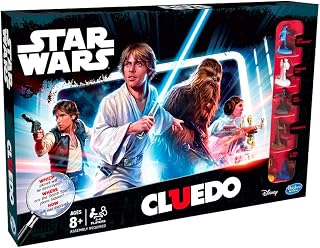
Deduction is a format that works well with children, because progress comes from noting what other players do rather than from managing a complex system.
In Star Wars livery it becomes an easy suggestion for a family evening: short, familiar and quick to set up and clear away.
It is light on strategy by the standards of this list, and the theme sits on top of the mechanics rather than driving them. For an audience that wanted a proper strategy game this will feel thin, and for a family with young children it is often the title that actually gets played.
Bottom line: the youngest friendly option here, chosen for accessibility rather than depth.
- Type: reskinned deduction classic
- Assembly: none
- Players: group
- Rules weight: light
- Session length: short
- Age suitability: younger players included
Families with younger children who want a short game everyone can follow.
Not for players looking for strategic depth.
Play in teams with very young children so an adult can help track deductions without taking over.
Keep sessions short and end on a win rather than pushing for another round.

Pros
- Cooperative, so nobody is eliminated or left behind
- Works well with mixed ages and abilities
- Short, contained sessions
- No rules teaching burden on one person
Cons
- Puzzle content is largely single use once solved
- Less replay value than a strategy game
Cooperative games solve a specific family problem: someone always loses in a competitive game, and with mixed ages that someone is usually the same person.
An escape room format puts everyone on the same side against the puzzles and the clock, which changes the atmosphere at the table entirely and means a younger player contributes rather than being outplayed.
The honest limitation is replay. Once a scenario is solved the puzzles are known, so this is closer to an experience than to a game you return to for years. Judged as an evening rather than as a permanent addition to the shelf, it delivers well.
Bottom line: an excellent one off evening for a mixed group, with limited replay value.
- Type: cooperative escape room game
- Assembly: none
- Players: group, all cooperative
- Session length: short
- Replay: limited once solved
- Rules weight: light
Mixed groups and families who want everyone on the same side, and anyone who dislikes player elimination.
Not the pick if you want a game to return to repeatedly.
Treat it as an evening rather than a lasting purchase, and consider passing it on to friends once solved.
Keep everyone looking at the materials together, since the format depends on shared observation.
How to Choose a Star Wars Strategy Game
Three Different Hobbies Under One Search

The first thing to establish is which category you are shopping in, because the gap between them is enormous. A reskinned family classic takes a familiar game, Risk or Clue, and dresses it in the licence. Rules are known or learnable in five minutes, sessions are short, and anyone at the table can join in.
Mid weight strategy games are designed from scratch around their theme. Outer Rim and Villainous fall here: real decisions, an hour or two of play, and a rulebook that takes a first read but does not require study.
Miniature wargames are a different pastime that happens to come in a box. Legion and Imperial Assault involve model soldiers, measured movement, terrain and a long term collecting habit. People love them, and nobody should receive one as a casual gift without knowing what it involves.
Playing Time Is the Filter Most People Skip
Stated playing time is the single most predictive number on a box and the one buyers most often ignore. A game listed at sixty minutes fits an ordinary evening. A game listed at three to four hours does not fit anything except a deliberately cleared afternoon, and Rebellion sits firmly in that group.
Treat the printed figure as optimistic for a first session too. Learning rules while playing typically adds a substantial fraction to the first two or three games, so a ninety minute game realistically consumes an evening the first time it hits the table.
A long game is not a better game, it is a different commitment. The most common reason an expensive box sits unplayed is not that it is bad but that it never fits the time the household actually has.
Player Count and the Two Player Trap
Check the player count before anything else if the game is for a group. Star Wars Rebellion is a two player game, full stop, and it is superb at what it does while being useless for a family of four on a Sunday.
Beyond the printed range, games have a count where they work best. Many titles that support two to four players are noticeably better at three or four, because the interaction that makes them interesting needs bodies at the table.
Solo modes are increasingly common and worth checking for if you often want to play without gathering people. Some of these titles support solo play properly rather than as an afterthought, which changes how often a box gets used.
Miniatures: What Is Actually in the Box

This deserves stating plainly because it surprises people every year. Star Wars Legion is a miniature wargame, and the models generally require assembly before use. They are supplied unpainted, and while painting is optional, the hobby around the game assumes it.
Imperial Assault takes a friendlier position, supplying pre assembled unpainted figures that can be played straight away, which puts it much closer to a board game with miniatures than to a wargame.
If a gift recipient enjoys building and painting models, a Legion box is a wonderful present. If they wanted to open a box and play a game that evening, it is the wrong purchase regardless of how good the game is.
Rules Weight and Who Will Teach It
Every group needs someone who has read the rules, and heavier games place a real burden on that person. Learning a complex game well enough to teach it takes a couple of hours before anyone else has played at all.
Be honest about whether that person exists in your household. Where they do not, a reskinned classic like Risk or Clue removes the problem entirely, because everyone already knows roughly how it works and the licence supplies the enjoyment.
Reference sheets and well organised rulebooks help enormously and vary in quality between publishers. A game with a good quick reference gets played more often than one that requires flipping through a booklet mid turn.
Expansions and the Ongoing Cost
Some of these games are complete products and some are entry points to a system. That distinction affects the real cost far more than the price of the first box.
A core set for a miniature game is a starting point by design. Additional units, characters and terrain follow, and the community around the game generally assumes ongoing purchases. That is part of the appeal for people in the hobby and a genuine surprise for people who are not.
Standalone strategy games and family titles are finished when you buy them. Expansions may exist and are optional rather than expected, which makes them the safer purchase when you want one box to be the end of the transaction.
Original Design or Reskinned Classic
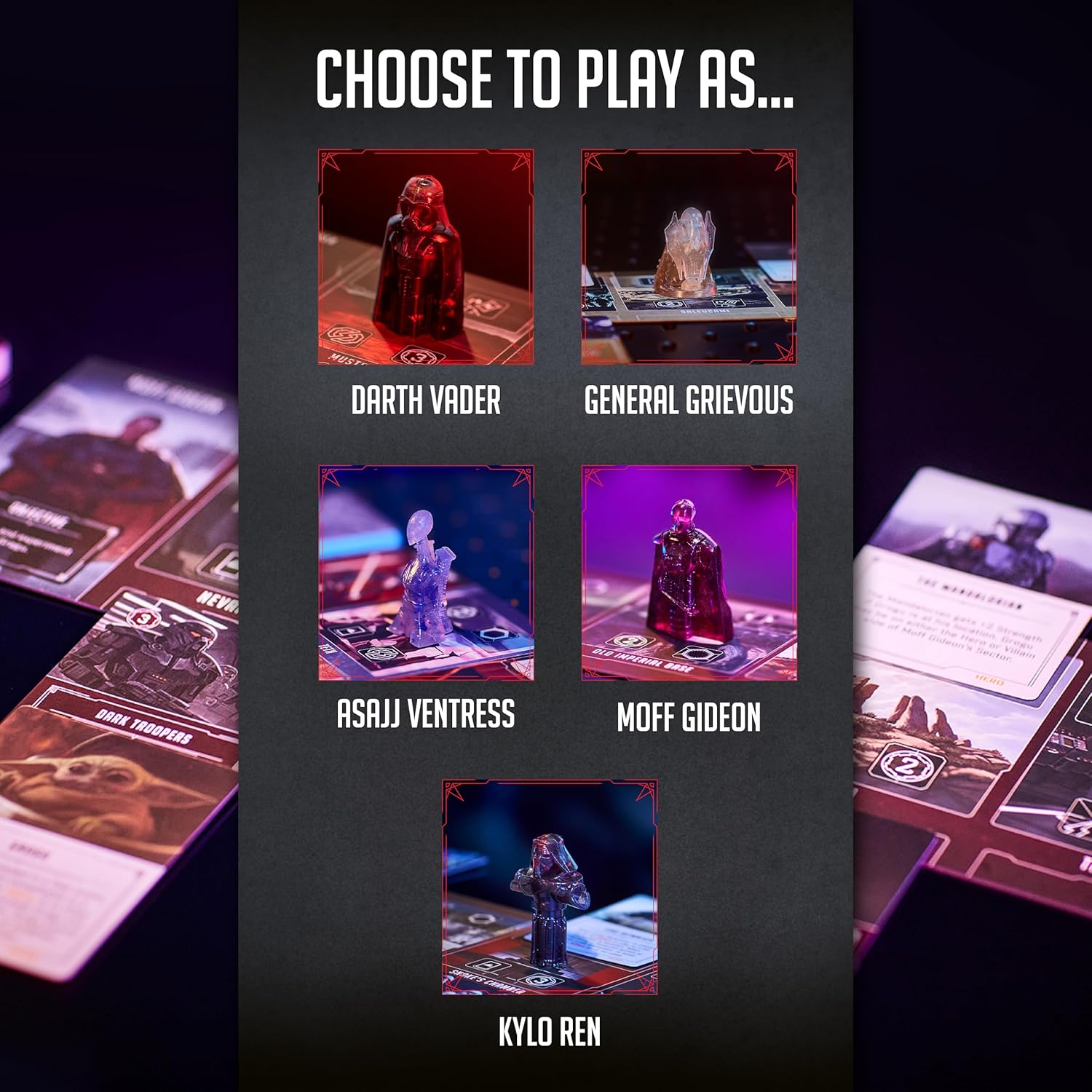
Licensed versions of Risk, Clue and Monopoly apply a theme to a known game. The board art, pieces and cards reference the films, and the underlying mechanics are the ones you already know. For a family that wants a Star Wars evening rather than a new game to learn, that is exactly right.
Original designs build the mechanics around the setting instead. Outer Rim makes you a bounty hunter or smuggler travelling the galaxy taking jobs, and Rebellion recreates the asymmetry of a small rebel force hiding from an empire that has to find them. The theme drives the decisions rather than decorating them.
Neither approach is better. A reskin is the reliable crowd pleaser; an original design is what a fan of the setting will remember. Knowing which one you are buying prevents the disappointment of an expensive box that turns out to be Risk.
Table Space and Setup Time
Larger strategy games need real estate. A wargame with terrain wants more than a standard dining table offers, and a sprawling galactic board plus player areas and card decks fills a table quickly.
Setup and teardown time is the hidden tax. A game that takes twenty minutes to lay out and twenty to pack away turns a ninety minute game into a two hour commitment, and that friction is the main reason big boxes stay on shelves.
Component organisation makes a measurable difference here. Inserts and bagged components cut setup substantially, and it is worth the first evening spent sorting a new game into bags rather than tipping everything into the box.
Age Ratings and Playing With Children
Printed age ratings reflect rules complexity and attention span rather than content, which is worth knowing when the whole family wants to play together. A rating of fourteen on a strategy game is a comment on the rulebook, not on anything in the box.
A child who is already comfortable with modern board games will often handle a game rated above their age, particularly playing in a team with an adult. A child who mostly plays lighter games will be lost in a three hour asymmetric strategy game regardless of enthusiasm for the setting.
Where ages vary widely, a reskinned classic or a cooperative title keeps everyone at the table. Villainous and the escape room style games both give younger players something to do rather than watching an adult calculate moves.
Canon Era, and Whether It Matters to the Recipient
Star Wars now spans several eras, and games are set in specific ones. For a casual player this is invisible. For a fan buying a gift, it is often the first thing they check.
The original trilogy period is the most heavily represented, which is where Rebellion and Imperial Assault sit, with the familiar characters and the imperial versus rebel conflict most people picture. Legion ranges more widely across eras through its unit releases. Outer Rim occupies the edges of the galaxy rather than the main war, which is part of why it feels different to play.
This matters practically when buying for someone whose interest is specific. A person who came to Star Wars through recent television and cares about those characters may be lukewarm about a game built entirely around the original films, and the reverse is just as true. The licence alone does not guarantee the right fit.
If you are unsure, the reskinned classics sidestep the question by drawing on iconography broadly rather than committing to one period, and the cooperative escape format works on puzzles rather than on deep familiarity with any particular era.
| Game | Type | Players | Best For |
|---|---|---|---|
| Star Wars Outer Rim | Mid weight strategy | Group | Real strategy without assembly |
| Star Wars Rebellion | Heavy strategy | Two only | A long asymmetric duel |
| Star Wars Villainous | Mid weight strategy | Group | Mixed ages at the table |
| Risk: Star Wars Edition | Reskinned classic | Group | Familiar rules, shorter evening |
| Star Wars Legion Base Game | Miniature wargame | Two | Model building and painting |
| Imperial Assault Core Set | Miniature board game | Group | Miniatures without assembly |
| Clue: Star Wars Edition | Reskinned classic | Group | Younger players and short sessions |
| Star Wars UNLOCK! Escape Game | Cooperative puzzle | Group | Everyone on the same side |
For other gift ideas, our toys and games guides cover the wider category, and the full library sits at our article index.
Why You Should Trust Us
We removed the titles that appear in these searches without being Star Wars games at all, including several general strategy classics that rank for the word strategy. What remains is sorted by weight and format rather than by rating, because a three hour two player wargame and a family reskin cannot be usefully ranked against each other.
Real customer ratings informed the shortlist, with attention to repeated comments about assembly requirements, playing time and rules difficulty, since those are the mismatches that turn a good game into an unplayed box. Near identical listings of the same game were counted once.
Final Thoughts
For most people Star Wars Outer Rim is the easiest recommendation. It is an original design that uses the setting properly, it plays in an evening rather than an afternoon, and nothing needs building before the first game.
Two players who want something substantial should look at Star Wars Rebellion, remembering that it is strictly two player and genuinely long. For mixed ages, Star Wars Villainous and the UNLOCK! escape game keep everyone involved, and Risk and Clue in Star Wars livery are the reliable choices when nobody wants to learn a rulebook.
If the recipient enjoys building and painting models, Star Wars Legion is a rewarding long term hobby. If they wanted to play a game the evening they opened it, buy something else. Browse more of our category guides for other gift ideas.
Frequently Asked Questions
What is the best Star Wars strategy game in 2026?
Star Wars Outer Rim is our overall pick for 2026 because it offers genuine strategy in an evening length game with no assembly required. Two players wanting something heavier should consider Star Wars Rebellion, which is excellent and considerably longer.
Do Star Wars Legion miniatures need assembly?
Generally yes. Legion is a miniature wargame and its models typically require building, and they are supplied unpainted. Imperial Assault takes a different approach with pre assembled unpainted figures, which makes it much closer to a board game with miniatures.
Which Star Wars game works for a family with children?
Reskinned classics like Clue and Risk in Star Wars editions are the safe options, since the rules are familiar and sessions are short. Villainous and the UNLOCK! escape game also work well across ages, the latter because everyone plays on the same side. Our games guides cover more family titles.
How long do these games take to play?
It ranges from around an hour for the reskinned classics to three or four hours for Rebellion. Add a substantial margin for the first couple of sessions while people learn the rules, and factor in setup and packing away, which can add another forty minutes on the larger boxes.
Are expansions necessary?
For standalone strategy games and family titles, no. For miniature game core sets they are effectively expected, since the system is designed around collecting additional units and terrain over time. That ongoing cost is worth understanding before buying the first box.


Write Your Review
No reviews yet. Be the first to share your experience!