

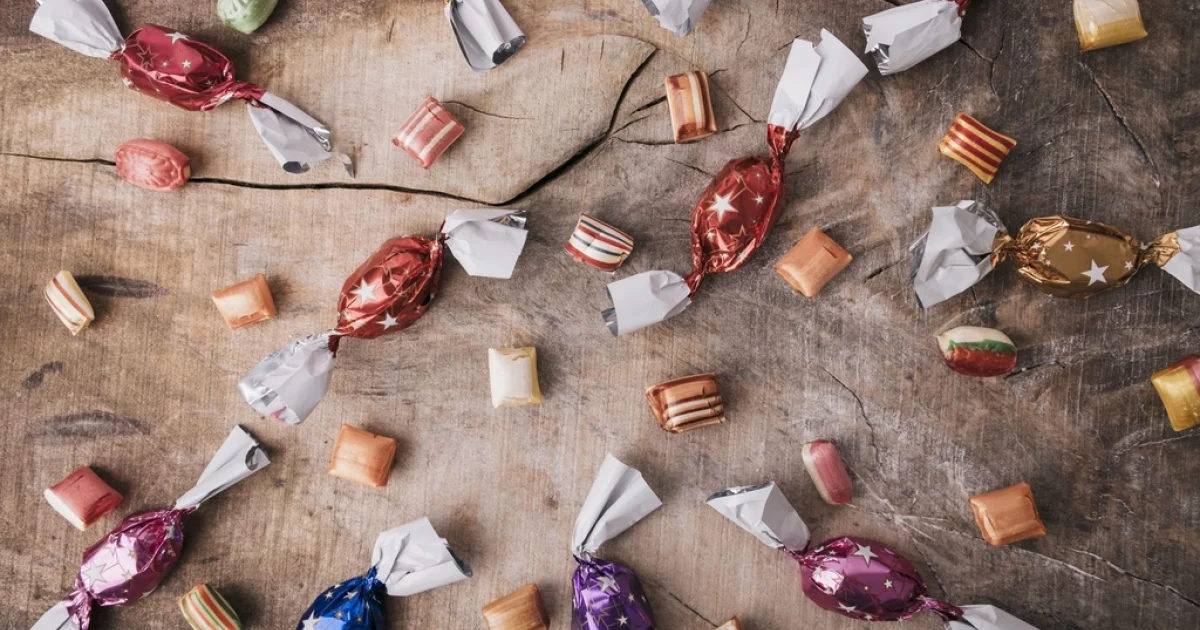
Plan on two to three pieces of fun size candy per trick or treater, which is what two thirds of American households actually hand out according to the National Confectioners Association, and multiply by the number of kids you expect. A typical suburban house on a walkable street sees 50 to 150 trick or treaters; a rural house may see 10; a dense neighborhood with a reputation can pass 300. At three pieces each, 100 kids need about 300 pieces, which is roughly 8 to 10 pounds of mixed fun size candy or two of the large variety bags. Buy 10 to 15 percent more than the math says, because the count is always higher than you remember and the leftovers are the best part.
Halloween 2026 falls on a Saturday, which matters: Saturday Halloweens bring out more trick or treaters and later ones than a weeknight, and the last few years of data suggest crowds run 20 to 30 percent above a Tuesday. This guide gives the calculator, the piece counts per pound for common candy, when to buy for the best price, and what to hand out if you would rather skip the sugar.
The trick or treat calculator
Three numbers: how many kids, how many pieces each, and how many pieces are in a pound of what you are buying.
| Trick or treaters | At 2 pieces each | At 3 pieces each | Approximate weight (fun size mix) | Large variety bags (about 150 pieces) |
|---|---|---|---|---|
| 25 | 50 | 75 | 2 to 3 lb | 1 |
| 50 | 100 | 150 | 4 to 5 lb | 1 |
| 100 | 200 | 300 | 8 to 10 lb | 2 |
| 150 | 300 | 450 | 12 to 15 lb | 3 |
| 200 | 400 | 600 | 16 to 20 lb | 4 |
| 300 | 600 | 900 | 24 to 30 lb | 6 |
Fun size chocolate bars weigh roughly 15 to 20 grams each, so a pound holds about 25 to 30 pieces. Wrapped hard candy and small gummies run lighter, 60 to 90 pieces a pound. Full size bars, the neighborhood legend move, weigh 40 to 50 grams, so a pound is only 9 or 10 bars and 100 kids need about 10 pounds at one bar each.
How many trick or treaters to expect
Nobody has a national number, because it depends entirely on the street. The reliable method is to ask a neighbor who has lived there a few years and to count this year for next. Failing that, use these rough bands:
- Rural or long driveways: 0 to 25. Many rural households get none and drive their own kids to town.
- Typical suburban street: 50 to 150. Sidewalks, porch lights and a cluster of young families push it to the top of the range.
- Known Halloween street or dense townhouse block: 150 to 400. If your street decorates heavily, cars park at the end of it and parents bring kids from other neighborhoods.
- Apartment or condo building: depends on whether the building organizes it; often 20 to 60 if it does, near zero if it does not.
Adjust for the calendar. A Saturday Halloween, like 2026, means more kids and a longer evening, typically 5:30 to 9 p.m. rather than 6 to 8. Cold or rain cuts the count sharply. A town that schedules trick or treating on a different day (some do, for weekend Halloweens) changes everything, so check the town website.
What the numbers say about what to buy
The National Confectioners Association reports that about 97 percent of households that welcome trick or treaters hand out chocolate and candy, Americans buy in the region of 600 million pounds of Halloween candy a year, and spending has passed 7 billion dollars annually. Chocolate remains the favorite, with peanut butter cups, plain chocolate bars and candy coated chocolate at the top of most surveys, but gummy and sour candy have gained ground fast among kids, and a bowl that is all chocolate disappoints the sour candy crowd. A practical mix is two thirds chocolate and one third non chocolate.
Buying in bulk by the pound rather than in branded variety bags is usually cheaper once you pass about 5 pounds, and it lets you choose the mix. Candy Warehouse has sold bulk candy online since 1999 with more than 6,000 options sorted by type and color, and Candy In Bulk carries the familiar names (Hershey’s, M&M’s, Twizzlers, Jolly Rancher, Sour Patch Kids, Nerds, Tootsie Roll) by the pound. Both ship in time for Halloween if you order by mid October; both serve schools and events, so their sizes go well past what a single house needs, which matters if you are buying for a block party or a trunk or treat.
When to buy for the best price
- Early September: full price, full selection. Buy only if you want a specific candy that sells out.
- First two weeks of October: the first real sales at big box and grocery stores, usually on the largest variety bags. The sweet spot for most households.
- Last week of October: deeper discounts but thin shelves; the good bags are gone and what remains is candy corn and off brands.
- November 1: 50 to 75 percent off. Fine for the office bowl and next year’s baking, useless for this year’s trick or treaters.
Online bulk sellers run their Halloween promotions from late September, and the coupon pages linked above list the current offers. Shipping is the cost to watch; candy is heavy, so an order that clears the free shipping threshold beats two smaller ones.
Allergy friendly and non candy options
The teal pumpkin, placed on a porch, signals that a house offers non food or allergy safe treats. About one in 13 American children has a food allergy, and peanut, tree nut, milk, egg, wheat and soy cover most Halloween candy. If you want a second bowl:
- Sugar free and allergen conscious candy: Zolli Candy makes lollipops and candies that are sugar free, dye free and largely vegan, gluten free and allergy friendly, designed to be kinder to teeth. Individually wrapped, so they work in a bowl.
- Lower sugar gummies: JOYRIDE gummies use real ingredients, no artificial additives and added fiber, with less sugar than the big brands.
- Something different: individually wrapped Swedish candy from Swedish Candy Land is the bowl older kids talk about, though much of it is sold loose and needs bagging.
- Non food: glow sticks, stickers, temporary tattoos, spider rings, mini bubbles. Cheaper per piece than candy in bulk and the only option for the youngest kids.
Keep the allergy bowl separate and let the child or parent choose; do not mix.
Handing it out without running dry
- Hand it out yourself rather than leaving a bowl. An unattended bowl lasts about four kids.
- Hold back a reserve bag for the last hour. The late crowd is older kids, and the bowl that ran out at 8 p.m. is the one they remember.
- Two pieces per kid as the default, three for a good costume, and a full handful for the last group of the night so you are not stuck with 3 pounds of leftovers.
- If you do run out, turn off the porch light. It is the universal signal and nobody minds.
What to do with the leftovers
Chocolate keeps for months in a cool cupboard and freezes well; chop it for holiday baking. Hard candy keeps for a year. Gummies dry out in a few weeks once opened. Dental offices and some charities run candy buy back programs in the first week of November, and military care package organizations accept sealed candy. The best plan is still to buy 10 percent over rather than 50 percent over, which is why the calculator above matters.
Halloween candy is the first purchase of the holiday season, and the bulk sellers above also cover Thanksgiving and Christmas. All of them are on our grocery and gourmet food coupon page.
The bottom line
Estimate your trick or treaters from your street, not from a national average; multiply by two or three pieces; divide by about 27 pieces per pound for fun size chocolate; add 10 to 15 percent, and more for a Saturday Halloween like 2026. Buy the big bags in the first half of October or bulk by the pound if you need more than 5 pounds, keep a second bowl for allergies, hold back a reserve for the last hour, and turn the light off when it is gone.
Frequently asked questions
How many pieces of candy should I give each trick or treater?
Two or three fun size pieces. The National Confectioners Association reports that two thirds of households that welcome trick or treaters hand out two or three pieces each. One piece feels stingy; a full size bar is the generous option and needs about 10 pounds per 100 kids.
How much candy do I need for 100 trick or treaters?
About 200 to 300 pieces, which is 8 to 10 pounds of fun size chocolate or two large variety bags of roughly 150 pieces each. Add 10 to 15 percent for a margin, and more if Halloween falls on a weekend, as it does in 2026.
How many fun size candy bars are in a pound?
About 25 to 30. Fun size chocolate bars weigh 15 to 20 grams each. Wrapped hard candy and small gummies are lighter, around 60 to 90 pieces per pound, and full size bars are 9 or 10 to the pound.
How many trick or treaters should I expect?
It depends on the street. Rural homes often get 0 to 25, a typical suburban street 50 to 150, and a known Halloween street or dense block 150 to 400. Ask a neighbor and count this year for next. A Saturday Halloween brings more kids over a longer evening.
When is the best time to buy Halloween candy?
The first two weeks of October, when the large variety bags first go on sale and the selection is still full. The last week is cheaper but picked over. November 1 clearance is 50 to 75 percent off but only useful for baking and the office.
What is the teal pumpkin?
A teal pumpkin on the porch signals that the house offers non food or allergy safe treats for children with food allergies. Keep those treats in a separate bowl from the regular candy and let the child or parent choose.







Write Your Review
No reviews yet. Be the first to share your experience!