

A zipper changes everything about how a mattress cover works. A fitted protector only guards the sleeping surface, so anything that runs off the side reaches the foam underneath. A zippered model closes around all six faces of the mattress and turns the whole slab into a sealed unit, which is why it is the format people reach for after one spill, one leak, or one move into a new apartment. This guide covers the 9 best zippered mattress protector options for September 2026, drawn from Bed Bug Blocker, SafeRest Zippered, Guardmax and more, with every pick judged on the things that actually decide whether the cover survives: seam construction, zipper hardware, waterproof backing, noise, airflow, and how it behaves after repeated trips through the wash.
Our top pick is the SafeRest Zippered Mattress Protector for its quiet cotton terry surface and a zipper flap that keeps the closure sealed shut through years of washing. Below it sit encasements built for very deep beds, thin low profile covers for bunks and guest rooms, and stretch knit designs that pull tight over pillow tops. Every product here is a real listing with real customer ratings, sorted by how well the construction matches the job. If you are still choosing the bed itself, start with our roundup of the best mattresses and come back for the cover once you know the exact depth you need to fit.

Pros
- Cotton terry surface stays quiet under a fitted sheet
- Membrane covers all six panels, not just the top
- Zipper finishes with a flap that holds the slider closed
- Terry face absorbs surface moisture instead of pooling it
Cons
- Terry adds a little loft you can feel through thin sheets
- Only fits the 9 to 12 inch range, so measure first
The SafeRest zippered protector is the version of this product category most people should buy. It is a true encasement, meaning the cover closes around the top, the bottom and all four sides, so a spill that runs off the edge of the bed cannot reach the side wall of the mattress the way it would under a fitted protector.
What sets it apart from cheaper encasements is the face fabric. Instead of a smooth laminate the top panel is cotton terry, and that towel like loop does two useful things: it muffles the sound of the membrane underneath so you do not hear a crinkle when you turn over, and it holds surface moisture in the pile instead of letting a small spill run to the floor. The membrane behind it is what does the actual blocking.
The zipper is the other reason it ranks first. The pull finishes under a small flap so it cannot creep back down the track when the mattress shifts, which is the single most common failure on budget encasements. The trade off is depth: this size is cut for 9 to 12 inches and nothing else, so a tall hybrid with a pillow top needs a different pick. The terry face also adds slight loft, noticeable if you use very thin percale sheets.
Bottom line: the quietest, most reliably built option here for a standard depth mattress, and the safest single recommendation if you only want to read one entry on this list.
- Type: full six sided zippered encasement
- Face fabric: cotton terry
- Barrier: bonded waterproof membrane
- Depth range: 9 to 12 inches
- Closure: zipper with secured end flap
- Care: machine wash warm, tumble dry low
Anyone with a standard profile mattress who wants total enclosure without the plastic sound. It suits light sleepers, couples who feel every movement, and households protecting a mattress that is still under warranty against staining.
It is not the pick for a tall pillow top hybrid, which needs a deeper cut shell.
Wash warm, never hot, and dry on low or no heat. High dryer heat is what delaminates the membrane and turns a waterproof cover into a plain one.
Skip bleach and fabric softener. Bleach attacks the film and softener leaves a residue that dulls the terry and blocks airflow.

Pros
- One of the most heavily reviewed encasements available
- Six sided enclosure at an entry level price point
- Absorbent face rather than a bare laminate
- Available across the full range of bed sizes
Cons
- Shell feels thinner than premium encasements
- Zipper hardware is basic and needs a gentle hand
Utopia Bedding's zippered encasement is the volume seller of this category, and the reason is simple: it delivers the format's core benefit, six sided enclosure, at the price most people expect to pay for a top only protector. If you are covering more than one bed, this is the one that makes the math work.
The face is an absorbent knit rather than a bare plastic laminate, so it is far quieter than the crinkly non woven covers sold at the same level, and it feels like fabric rather than a bag. Behind it sits a standard waterproof backing that handles the spills and sweat this kind of cover is bought for.
The compromises are where you would expect them. The shell is thinner than a premium encasement, so it drapes rather than holds a shape, and the zipper is basic hardware without an elaborate sealed pocket at the end of the run. Zip it slowly around the corners and it holds up fine; force it and you will find the limit. Depth tolerance is built for standard profile mattresses, not for tall hybrids.
Bottom line: the best value pick by a clear margin, and the right answer for guest rooms, bunks and kids beds where you want real enclosure without a premium shell.
- Type: six sided zippered encasement
- Face fabric: absorbent knit
- Barrier: waterproof backing
- Sizes: twin through king
- Closure: standard coil zipper
- Care: machine washable
Buy this when quantity matters more than shell luxury: a second bedroom, a bunk set, a rental turnover, a dorm move in.
Order by measured depth rather than by the mattress model name, and expect a standard profile fit rather than a deep pocket cut.
Slide the cover on from the foot of the bed like an oversized pillowcase, square the corners before you start the zipper, then run the pull slowly around each corner.
Leave it on permanently under the fitted sheet and open it only for washing.

Pros
- Stretch knit forgives an inch of measurement error
- Sits flat over pillow tops instead of bunching
- Full six sided closure with a waterproof face
- Holds its shape through repeated washing
Cons
- Stretch shell shows every lump in an uneven mattress
- Standard 12 inch depth ceiling limits very tall beds
The Hospitology Sleep Defense System solves the problem that trips up most encasement buyers: a measurement that lands awkwardly between two depth ranges. The shell is a stretch knit, so instead of hanging loose or refusing to zip, it pulls itself tight over the mattress and takes up the slack.
That stretch pays off most on a pillow top, where a rigid shell creates a ridge along the seam that you feel through the sheet. This one follows the contour and lies flat. The zipper runs the full three sided path and the cover closes into a genuine sealed unit, with the waterproof layer where it counts on the sleeping surface.
Two caveats. A tight stretch shell telegraphs whatever is underneath, so an older mattress with a sag or a lumpy quilt line will look worse once it is on. And the standard version is rated to roughly 12 inches, which covers most beds but not the tall hybrids that need a specialist cut. The knit also takes a little longer to dry than a thin poly shell.
Bottom line: the most forgiving fit on this list and the right call for pillow tops or any mattress whose depth sits near the edge of a range.
- Type: zippered six sided encasement
- Shell: stretchable knit
- Barrier: waterproof sleeping surface
- Depth: standard, up to about 12 inches
- Closure: full length zipper
- Care: machine wash, low heat dry
Owners of pillow top mattresses and anyone whose depth measurement falls between two published ranges. The stretch shell absorbs an inch of error in either direction.
Also a sensible pick for beds that get stripped often, since the knit goes back on easily.
Wash warm and dry low. Knit shells hold more water than thin poly, so give it a full low heat cycle rather than a hot short one.
Do not iron or steam the cover, and keep it away from bleach, which breaks down the barrier layer.

Pros
- Fits 17 to 20 inch mattresses that most covers cannot
- Smooth knit face is quiet under bedding
- Seams and zipper end are reinforced
- Backed by a long manufacturer warranty
Cons
- Far too large for a standard profile mattress
- Deep cut shell is heavy and awkward to install alone
Most encasements top out around 12 to 15 inches, which leaves owners of tall hybrids and stacked pillow top beds with nothing that will zip. SureGuard's deep cut version exists for exactly that gap, sized for mattresses in the 17 to 20 inch range.
Beyond the size, the build is what you want in a cover that has to stretch around a large slab: a smooth knit face that stays quiet, a waterproof layer across the shell, and reinforced construction at the seams and at the end of the zipper run where the tension concentrates. The maker backs it with a long warranty, which is a reasonable signal of how the seams are put together.
The obvious warning is fit in the other direction. On a standard 10 inch mattress this cover is a tent, and the excess fabric folds into ridges under the sheet. Measure before ordering. Installation on a king at this depth is genuinely a two person job, since the cover is large and the mattress has to be lifted clear at each corner.
Bottom line: the specialist pick for very tall beds, and the only entry here that solves the deep mattress problem outright.
- Type: deep pocket zippered encasement
- Depth range: 17 to 20 inches
- Shell: smooth knit with waterproof layer
- Coverage: all six sides
- Construction: reinforced seams, secured zipper end
- Care: machine wash warm, dry low
Measure from the frame surface to the top of the quilting while the mattress is in place. Only order this cut if the number lands above roughly 16 inches.
Standard profile beds should choose a 9 to 12 inch cover instead, or the excess shell will bunch.
Work with a second person. Stand the mattress on edge, pull the cover down over the top half, lay the mattress flat and work the remaining half on from the foot.
Square all four corners before starting the zipper so the panels are not under tension.

Pros
- Very thin shell adds almost no bulk
- Full 360 degree zippered enclosure
- Easy to fit single handed on smaller sizes
- Dries quickly after a wash
Cons
- Thin smooth shell is more audible than terry
- Little cushioning, so it hides nothing about the mattress
Linenspa's 360 encasement is the minimalist entry on this list. The shell is thin and smooth, the cover zips around all six faces, and that is the whole proposition. There is no terry pile, no quilted layer, nothing that changes the feel of the mattress underneath.
For a guest room or a low profile bed that is exactly right. A thin shell installs easily, takes up no room in the linen closet, and dries fast after a wash cycle, which matters if you only own one cover per bed. It is also the least likely to bunch, because there is so little material to gather at the corners.
The compromise is acoustic. Without a soft face fabric to muffle it, you hear more of the waterproof layer when you shift position, especially in the first few weeks before the shell relaxes. It also does nothing to smooth over an old mattress; every contour comes straight through. Neither issue matters much on a bed used a few nights a month.
Bottom line: the thin, no fuss option for spare rooms, bunks and low profile mattresses where simplicity beats plushness.
- Type: 360 degree zippered encasement
- Shell: thin smooth polyester
- Barrier: waterproof layer
- Profile: low, standard depth beds
- Closure: full perimeter zipper
- Care: machine washable, quick drying
Guest rooms, bunk beds, dorm mattresses and any bed used occasionally where full enclosure matters more than a plush hand.
Light sleepers on a nightly bed should step up to a terry or brushed knit face instead.
Thin shells dry fast, so a low heat cycle is enough. Avoid high heat, which is what ruins the waterproof layer.
Wash before first use to relax the fabric, which reduces the initial stiffness and noise.

Pros
- Soft face fabric feels closer to bedding than plastic
- Full six sided zippered enclosure
- Breathable shell keeps heat buildup modest
- Strong owner ratings across sizes
Cons
- Softer shell picks up lint and pilling over time
- Standard depth cut only
Guardmax sits between the budget encasements and the premium terry covers. The shell is a soft brushed knit that feels like bedding rather than a barrier, and it closes fully around the mattress with a zipper, so you get the real six sided seal rather than a fitted skirt.
The face is where the money went. It is soft enough that you would not identify it as a waterproof cover by touch, and breathable enough that heat buildup stays modest, which is the usual complaint about sealed covers on foam beds. Behind it the barrier does the standard job against spills and sweat.
Two things to keep in mind. A brushed surface attracts lint and will pill in the spots that see the most friction, particularly under a restless sleeper. And this is a standard depth cut, so a tall hybrid needs a deeper cover. Zip gently around the corners, as with any cover in this price band, because the hardware is competent rather than heavy duty.
Bottom line: the pick for people who want a soft, fabric like feel and still insist on total enclosure.
- Type: six sided zippered encasement
- Shell: soft brushed knit
- Barrier: waterproof layer
- Depth: standard profile
- Closure: perimeter zipper
- Care: machine wash warm, tumble dry low
Choose this if the deciding factor is feel. It is the softest shell here short of the terry faced option, and it costs less than the premium covers.
Confirm your mattress sits in the standard depth range before ordering.
Fit from the foot of the bed, square the corners, then zip. Put the fitted sheet over it and leave the cover in place between changes.
Wash it two to four times a year rather than monthly to limit pilling on the brushed face.

Pros
- Handles deep mattresses up to 16 inches
- Six sided zippered enclosure
- Wide size range across bed formats
- Straightforward waterproof laminate
Cons
- Laminated shell is more audible than knit or terry
- Runs generous on shallow mattresses
This Deluxe Hotel encasement covers the middle ground that trips up a lot of shoppers: mattresses too tall for a 12 inch cover but not tall enough to need a 17 to 20 inch specialist cut. It is rated up to 16 inches, which takes in most pillow tops and mid height hybrids.
Construction is straightforward. A laminated waterproof shell wraps all six faces and closes with a zipper along the end. There is no terry pile or brushed nap here, so the cover is light, easy to handle when wet, and simple to fit on your own on smaller sizes.
The honest downside is sound. A laminated shell without a soft face transmits more of the barrier layer than a knit or terry cover, so you notice it more when you turn over, particularly for the first few weeks. It also runs generous: on a 9 or 10 inch mattress there is enough spare fabric to gather at the corners. The fix is to measure and order to your actual depth rather than rounding up.
Bottom line: the practical answer for a deep mattress on a modest budget, provided you can live with a slightly more audible shell.
- Type: six sided zippered encasement
- Depth capacity: up to 16 inches
- Shell: laminated waterproof fabric
- Closure: end mounted zipper
- Sizes: full range of standard beds
- Care: machine wash warm, dry low
Owners of mid height pillow tops and hybrids between 13 and 16 inches who do not want to pay for a deep pocket specialist cover.
Not the best pick for very light sleepers, who will prefer a terry or knit face.
Wash warm, dry low, and let the shell relax after the first cycle. Laminates stiffen in storage and soften once washed.
Avoid hot water and high dryer heat, which delaminate the film and end the waterproofing.

Pros
- Full zippered enclosure on all six faces
- Plain white shell suits any bedding
- Light enough to fit and wash easily
- Simple construction with little to fail
Cons
- Thin shell offers no cushioning
- Basic zipper hardware needs a careful hand
Four Seasons Essentials makes the plainest cover on this list, and that is the appeal. A white shell, a waterproof barrier, a zipper that closes around all six sides, and nothing else to go wrong. For a rental unit or a spare bed that has to be protected but not pampered, that is the whole requirement.
Because the shell is thin it is light in the hands, easy to fit without help on a twin or full, and quick through a wash cycle. There is no quilted layer, no brushed nap, and nothing that changes the surface feel of the mattress underneath, for better or worse.
The limits follow from the same simplicity. There is no cushioning, so an old or lumpy mattress feels exactly as it did before. The zipper is basic hardware, and like every budget encasement it wants to be run slowly around the corners rather than yanked. Depth tolerance is standard profile, so measure before you order.
Bottom line: a no frills six sided encasement that does the essential job, best suited to rentals, spare rooms and beds you are protecting rather than upgrading.
- Type: six sided zippered encasement
- Shell: lightweight poly knit, white
- Barrier: waterproof layer
- Finish: hypoallergenic surface
- Depth: standard profile
- Care: machine washable
Pick this when you need several covers for beds that are protected rather than enjoyed: rentals, spare rooms, a house being prepared for guests.
Confirm the size and depth on the listing, since the cut is standard profile.
Slide it on from the foot of the bed, square the corners, and zip slowly, easing the pull around each corner rather than forcing it.
Wash before first use so the shell relaxes and sits flatter.

Pros
- Triple sealed seams along the closure path
- Complete zippered enclosure of the mattress
- Very light and easy to install alone
- Inexpensive way to cover a bed during a move
Cons
- Non woven shell is the loudest fabric on this list
- Water resistant rather than fully waterproof
This is the most basic construction in the roundup and it is included for a specific job rather than as a nightly sleeping surface. The shell is a non woven fabric, the seams are triple sealed along the closure path, and the cover zips fully closed around the mattress.
Where it earns its place is short term protection. Covering a mattress for a move, for storage in a garage, or for a bed that is between occupants is exactly what a light, inexpensive, fully enclosing cover is for. It weighs almost nothing, one person can fit it in a couple of minutes, and it seals the mattress off completely while it sits.
Two limits matter. Non woven fabric is the source of the crinkle that people complain about, and it is far more audible than any knit or terry cover here, so it is a poor choice for a bed you sleep in every night. And the listing describes water and stain resistance rather than a fully bonded waterproof membrane, which means it handles a small spill but is not the barrier you want under a bedwetting child.
Bottom line: a cheap, fully enclosing cover for moving and storage, not the one to buy for nightly comfort.
- Type: zippered encasement
- Shell: non woven fabric
- Seams: triple seal construction
- Protection: water and stain resistant
- Depth: standard profile
- Care: follow the listing, gentle cycle
People moving house, storing a mattress, or covering a bed between occupants. It seals the mattress cheaply for a short stretch.
Nightly sleepers should choose a knit or terry faced cover instead.
Treat the non woven shell gently. A cool gentle cycle and air drying preserve the seal, while heat and agitation weaken it.
Do not rely on it as a full waterproof barrier for medical or bedwetting use.
How to Choose the Best Zippered Mattress Protector
Almost every zippered cover on the market makes the same three claims: waterproof, breathable, and quiet. The listings look interchangeable. The differences show up in the details of how the cover is built, and those details are what separate a cover that lasts five years from one that splits at a corner seam in month four. Here are the six things worth checking before you commit to a size.
Six-Sided Coverage Versus a Fitted Top

The single biggest reason to buy a zippered model is total enclosure. A fitted protector has an elastic skirt that hugs the sides but leaves the bottom panel open, so liquid that runs past the edge soaks into the side wall of the mattress where you cannot reach it. A true encasement wraps the top, the bottom, and all four sides in one continuous shell, then closes with a zipper along three edges of one end.
That distinction matters most for anything you cannot wash: memory foam, latex, hybrid coil units, and any mattress still under a manufacturer warranty that gets voided by staining. Once a foam core absorbs liquid it holds odor indefinitely, and no surface cleaning brings it back. The encasement is the only format that puts a physical barrier between the accident and the core.
The trade off is installation. You have to lift the mattress off the frame, slide the cover on like a pillowcase, and work the corners square before zipping. On a king that is a two person job. Once it is on, though, it stays on, and you only open it if you decide to launder the cover itself.
Zipper Quality and the End Cap That Holds It Shut

The zipper is the weakest point of the whole design and the first thing to fail. Look for a fine tooth coil zipper rather than a chunky molded one, since coil teeth flex around the corner radius instead of fighting it. Corners are where a stiff zipper pops open or where the tape tears away from the fabric, and a cover that fails at a corner is finished.
Just as important is what happens at the end of the zipper run. Better encasements finish with a small velcro flap or a fabric cap that folds over the pull and secures it, so the slider cannot creep open when the mattress shifts. Some go further and add a sealed pocket that hides the pull entirely. Without that detail, the zipper head sits exposed, catches on the fitted sheet, and slowly works its way back down the track over months of use.
Feel the zipper before you decide it is fine. If it drags on a dry run, it will drag worse once the fabric is under tension on a full mattress, and forcing it is exactly how the tape tears. A cover with a smooth glide and a flap over the pull is worth more than an extra layer of quilting anywhere else.
Waterproof Backing Without the Crinkle
Nearly all waterproof covers use a thin polyurethane film bonded to the back of the face fabric. The film is what stops liquid. The face fabric is what decides how the cover sounds and feels. Cotton terry gives a soft, towel like hand that muffles the membrane, so you hear almost nothing when you roll over. A smooth polyester knit is thinner and cooler but transmits more of the film’s sound. A non woven or laminated vinyl shell is the cheapest option and the loudest, and it is the source of most of the complaints about sleeping on a bag of chips.
Note the difference between waterproof and water resistant. Waterproof means a bonded membrane across the full panel. Water resistant usually means a treated fabric that beats a small spill but gives up under a soaked sheet. Encasements that state a fully laminated top and sides are the ones to trust for a bedwetting child or a recovery bed.
One more thing to check: whether the waterproofing covers the bottom panel too, or only five sides. Some makers leave the base as plain unlaminated fabric to help the mattress breathe. That is a reasonable design choice for airflow, but if the bed sits on a slatted frame in a damp room, a fully sealed base is the safer pick.
Breathability and Heat Buildup
Any membrane blocks some airflow, so a sealed encasement will always run a little warmer than a bare mattress. How much warmer depends on the film thickness and the face fabric. Thin, air permeable films paired with an open terry loop move body heat and moisture vapor better than a heavy laminate on a tight weave, which is why hot sleepers should read the fabric description more carefully than the waterproof claim.
Encasing a memory foam mattress compounds the issue, because foam already sleeps warm and the cover now blocks the side vents. If that is your setup, favor a thinner knit shell and pair it with breathable sheets rather than a plush quilted encasement. Our home and kitchen deals section carries cooling bedding that pairs well with a sealed cover.
Sound and heat usually move together. The same thick laminate that crinkles is the one that traps warmth, so a cover that reviewers call quiet is generally the cooler one as well. When two options look identical on paper, the quieter fabric is the better bet.
Fit: Mattress Depth, Corners, and Stretch
Depth is the number people get wrong most often. Zippered encasements are cut for a stated depth range, usually something like 6 to 9 inches, 9 to 12 inches, 12 to 15 inches, or 17 to 20 inches for a tall hybrid with a pillow top. Measure the mattress from the frame surface to the highest point of the quilting before you order, and measure it while it is on the bed, since a heavy mattress compresses.
Order too small and the zipper will not close, or it closes under so much tension that the seam gives out. Order too large and the excess fabric bunches into ridges you can feel through the sheet. A stretch knit shell forgives an inch or two in either direction, which is why knit encasements are the safer choice if your measurement lands near the edge of a range.
Check the corner construction as well. Boxed corners with a sewn gusset hold a square shape and keep the panels flat. Flat sewn corners pull into a dog ear that lifts the cover away from the mattress edge and creates a gap under the fitted sheet.
Durability Through Repeated Washing
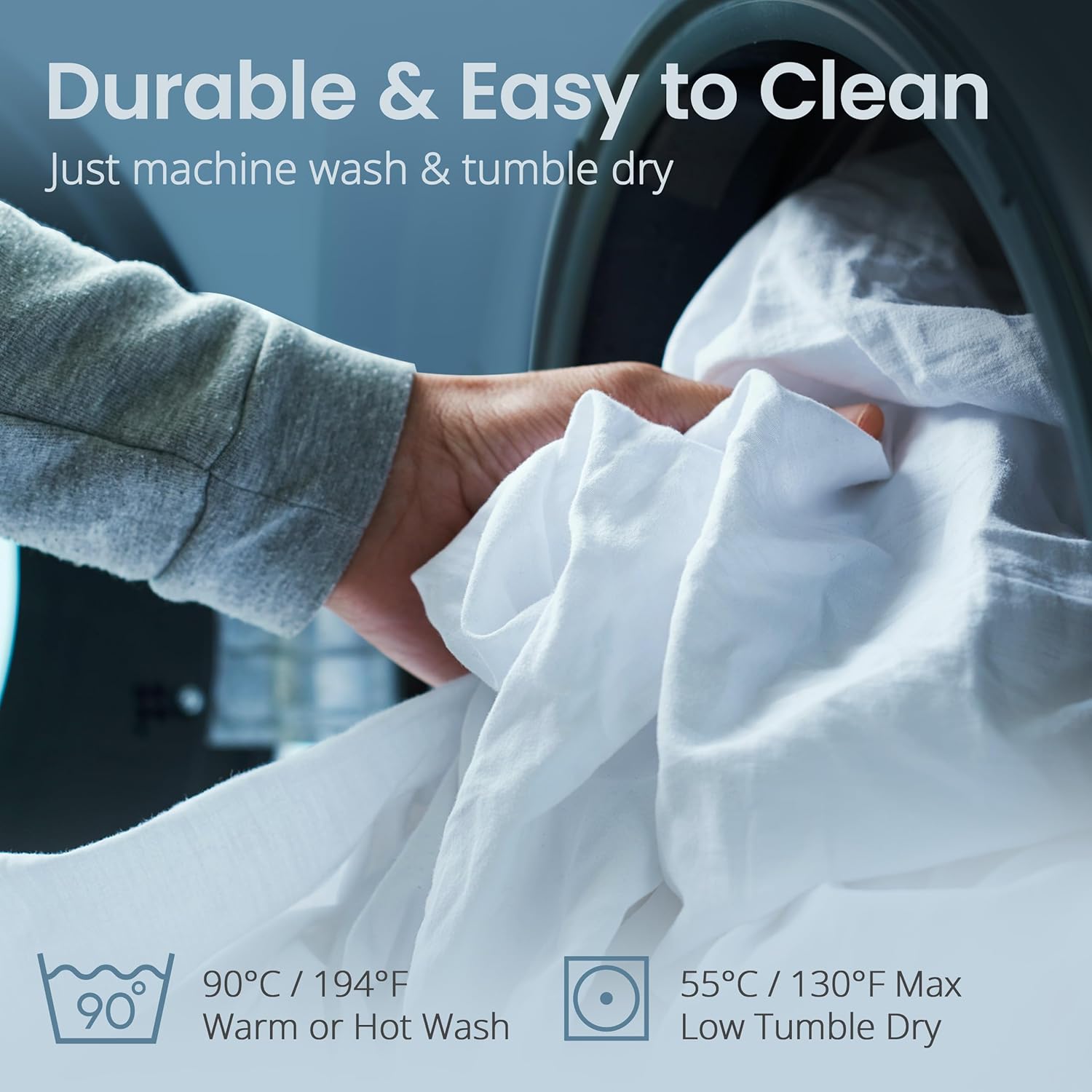
A protector earns its keep over years, and the wash cycle is what ages it. Heat is the enemy of a polyurethane membrane: hot water and a high heat dryer delaminate the film, which is what people are describing when they say a cover started sticking to itself or lost its waterproofing after a few months. Warm wash and low or no heat drying is the rule for every product on this list.
Seams and zippers take the other half of the abuse. A full size encasement is heavy when wet, and the weight tugs on the zipper tape as the drum turns. Covers with reinforced stitching at the zipper ends and bound seams survive that cycle far longer than covers with a single row of straight stitch.
Warranty length is a decent proxy for how confident the maker is in the build. Multi year coverage on an encasement signals reinforced construction, since the company expects the cover to be washed dozens of times. Compare the headline differences below before you pick a size.
| Pick | Shell fabric | Depth range | Best suited to |
|---|---|---|---|
| SafeRest Zippered Protector | Cotton terry over membrane | 9 to 12 inches | Quiet everyday use on a standard bed |
| Utopia Bedding Zippered Encasement | Absorbent knit, six sided | Standard profile | Covering several beds at once |
| Hospitology Sleep Defense System | Stretch knit | Up to 12 inches | Pillow tops and uncertain measurements |
| SureGuard Encasement | Smooth knit, sealed seams | 17 to 20 inches | Very tall hybrid mattresses |
| Linenspa 360 Encasement | Thin smooth polyester | Standard profile | Guest rooms and low profile beds |
| Guardmax Zippered Cover | Soft brushed knit | Standard profile | Soft feel with full enclosure |
| Deluxe Hotel Ultimate Encasement | Laminated poly shell | Up to 16 inches | Deep mattresses on a budget |
| Four Seasons Essentials Encasement | Poly knit shell | Standard profile | Rentals and spare beds |
| Bed Bug Blocker All-in-One | Non woven with triple seal | Standard profile | Short term protection during a move |
Why You Should Trust Us
We build these rankings from the evidence a shopper can verify. For every candidate we read the full product listing, the stated fabric and membrane construction, the published depth ranges, the care instructions, and the warranty terms, then we weigh those specifications against the pattern of real customer feedback across thousands of verified ratings. Where owners consistently report the same failure, a zipper that creeps open, a shell that crinkles, a corner that will not sit square, we treat that pattern as more reliable than any marketing line.
We do not claim hands on trials we did not run, and we do not rank by rating alone, since a high average on a handful of reviews tells you very little. Our scoring blends rating strength, feedback volume, and how well the construction fits the job the product is sold for, which is why a well built encasement for deep mattresses can outrank a more popular cover that only fits a standard profile. You can browse the rest of our research in the articles archive.
Final Thoughts
The best overall choice is the SafeRest Zippered Mattress Protector. It hits the balance most people need: a cotton terry face that stays quiet under a fitted sheet, a bonded membrane that handles a real spill, and a zipper closure with a flap that keeps the slider from working its way open. For a mattress in the 9 to 12 inch range it is the safest single recommendation on this list.
The best value is the Utopia Bedding Zippered Mattress Encasement. It is the cover to buy when you are protecting a guest bed, a bunk, or a child’s room and want the same six sided enclosure without paying for a premium shell. If your mattress is unusually tall, the SureGuard Encasement is the specialist pick, cut for beds in the 17 to 20 inch range where most covers simply will not zip. For a pillow top or a measurement that sits awkwardly between two ranges, the stretch knit Hospitology Sleep Defense System gives you the most forgiving fit, and the Linenspa 360 Encasement is the thin, low profile option for a spare room.
Whichever you choose, measure the mattress first, wash warm, dry low, and leave the cover on permanently rather than removing it between washes. That single habit does more for the life of a mattress than any upgrade in fabric. Browse more household picks in our health and household section or explore every category we cover on the categories page.
Frequently Asked Questions
What makes a zippered mattress protector different from a regular fitted protector?
A fitted protector covers only the top surface and grips the sides with an elastic skirt, leaving the bottom panel and part of the side walls exposed. A zippered model is a full encasement: it wraps all six faces of the mattress and closes with a zipper, so nothing reaches the core from any direction. That total enclosure is the whole reason to choose the zippered format, and it is also why installation takes two people on larger sizes.
Will a zippered encasement make my bed hot or noisy?
It depends entirely on the shell fabric. A terry or brushed knit face over a thin membrane is close to silent and adds very little warmth. A stiff laminated or non woven shell is the one that crinkles when you turn over and traps the most heat. If quiet operation matters, read the fabric description rather than the waterproof claim, because every listing in 2026 says waterproof but only some say terry or knit.
How do I measure my mattress for the right depth?
Measure with the mattress in place on the frame, from the surface it rests on to the highest point of the top quilting, and use that number against the depth range printed on the listing. If your measurement lands within an inch of the edge of a range, choose the larger range or a stretch knit shell. A cover that is slightly generous bunches a little; a cover that is too small strains the zipper and will eventually split at a seam.
How often should I wash a zippered mattress protector and at what temperature?
Two to four times a year is enough for normal use, and immediately after any spill. Wash warm rather than hot and tumble dry on low or no heat, because high heat is what delaminates the polyurethane membrane and ruins the waterproof layer. Skip bleach and fabric softener entirely: bleach attacks the film and softener leaves a coating that blocks the fabric’s ability to breathe.
Can I use a zippered encasement on a memory foam or hybrid mattress?
Yes, and foam is arguably the material that needs one most, since a soaked foam core cannot be cleaned or dried out properly. The one caution is heat: foam already sleeps warm and a sealed cover adds to that, so pick a thin knit shell rather than a thick quilted one and use breathable sheets on top. Hybrids with a tall pillow top mainly need attention to the depth range, since many run past what a standard encasement will zip around.
Do these covers help with dust mites and allergens?
A sealed shell with a fine zipper does form a physical barrier, which is a side benefit of the construction rather than its main purpose. If allergen control is your primary goal, the pore rating of the fabric and the zipper seal design matter more than waterproofing, and it is worth comparing products chosen specifically for that job. For general spill, sweat, and stain protection, any well built encasement on this list does the work.


Write Your Review
No reviews yet. Be the first to share your experience!