

Few sounds cause as much immediate sinking dread for a driver as the grinding squeal or guttural whine of an unlubricated steering pump. When your vehicle starts demanding heavy arm muscle to navigate tight parking spots or groans loudly whenever you turn the steering wheel on a freezing winter morning, your hydraulic circuit is pleading for fresh lubrication. Neglecting your reservoir allows thermal breakdown, particulate sludge, and atmospheric moisture to degrade the fluid medium over time. This neglect accelerates friction wear across delicate pump turbines, hardens vital rubber seals, and can lead to costly rack and pinion failure. Choosing the proper hydraulic formulation is vital mechanical insurance that preserves crisp steering control, stops minor seepage before it spreads, and maintains quiet pump operation in every driving condition. Exploring regular vehicle maintenance across our automotive deals and reviews section helps drivers resolve these fluid demands before minor friction becomes an expensive workshop bill.
We compared 9 power steering fluids options from BarsProducts, LucasOil, Prestone and more for September 2026 to identify the most dependable choices on the market for modern trucks, passenger sedans, European imports, and marine equipment.
Our top pick is the Pentosin 1405116 CHF 11S Long-Life Synthetic for its exceptional synthetic high-performance hydraulic formulation and broad European vehicle compatibility.

Pros
- Factory OEM formulation
- Higher viscosity reduces operational noise
- Protects internal seals and pump components
- Convenient multi-bottle pack size
Cons
- Formulated specifically for Honda vehicles, not suitable for other makes
- Smaller 12-ounce bottles require opening multiple containers for full flush
Honda Genuine Power Steering Fluid is the official factory formulation engineered specifically for hydraulic systems in Honda and Acura vehicles. It is designed for vehicle owners who want to maintain proper hydraulic pressure, avoid seal degradation, and preserve smooth steering response without guessing at aftermarket compatibility.
This fluid features a higher viscosity profile compared to standard multi-vehicle fluids, which helps cushion pump hardware and significantly reduces operational whine. By matching the specific tolerances and metallurgy of Honda steering components, it actively protects internal seals against premature hardening and fluid leaks.
Because Honda systems rely on proprietary chemical blends, this fluid should not be used in vehicles from other manufacturers that call for standard automatic transmission fluid or generic steering oils. Owners looking for a universal fluid to service a mixed-brand garage should skip this dedicated OEM product.
Bottom line: This genuine OEM three-pack provides the exact viscosity and additive package needed to keep Honda steering systems quiet, responsive, and leak-free for miles to come.
- Brand: Honda
- Part Number: 08206-9002PE
- Product Type: Genuine OEM Power Steering Fluid
- Volume per Bottle: 12 fl oz (355 ml)
- Package Quantity: Pack of 3
- Total Volume: 36 fl oz
- Compatibility: All Honda and Acura power steering systems
This fluid is engineered exclusively for Honda and Acura hydraulic power steering systems. It is chemically compatible with the unique elastomer seals, internal hoses, and pump components installed across all model years of Honda vehicles.
Using generic power steering fluid or automatic transmission fluid in Honda systems can degrade internal rubber components and lead to pump failure. For best results, avoid mixing this OEM formula with non-Honda fluids, and perform a complete system bleed if cross-contamination occurs.
- 3 x Honda 08206-9002PE Power Steering Fluid bottles (12 fl oz each)
- Factory-sealed bottle caps to prevent leaks and moisture contamination
- 36 total fluid ounces of OEM steering hydraulic fluid
- Original factory packaging designed for easy garage shelf storage

Pros
- Exact OEM specification for Honda vehicles
- High viscosity tailored for Honda pumps
- Helps prevent seal swelling and leaks
- Safe for all hydraulic Honda steering systems
Cons
- Not suitable for non-Honda vehicle systems
- Small 12-ounce bottle requires multiples for full flushes
- Bottle lacks a built-in dispensing spout
Genuine Honda Power Steering Fluid is an authentic OEM hydraulic fluid engineered specifically for Honda vehicles. Designed to meet the precise operational tolerances of Honda power steering systems, it is the primary choice for drivers looking to maintain factory reliability.
Unlike generic multi-vehicle steering fluids, this formula features a noticeably higher viscosity designed to cushion the Honda steering pump and maintain proper line pressure. Using this exact formulation prevents pump whine, stiff steering response, and premature seal deterioration that standard fluids often cause.
Owners of non-Honda vehicles should avoid this fluid, as its specific viscosity profile is tailored exclusively to Honda engineering standards. Additionally, the compact 12-ounce bottle size means completing a total fluid replacement will require buying multiple bottles at once.
Bottom line: If you drive a Honda, using this genuine fluid is essential for maintaining steering responsiveness and preventing costly mechanical repairs over the life of the vehicle.
- Brand: Honda
- Part Number: 08206-9002
- Volume: 12 fluid ounces
- Fluid Type: Power steering fluid
- Vehicle Compatibility: Fits all Honda models
- Viscosity: High-viscosity formula
- Product Origin: Genuine OEM
This fluid is formulated for use in all Honda automobiles equipped with hydraulic power steering systems. Because Honda steering pumps operate at distinct pressures and utilize unique seal compounds, they require a specific fluid chemistry.
Universal power steering fluids and standard automatic transmission fluids should never be substituted in a Honda system. Using non-Honda fluid can result in stiff steering, seal shrinkage, fluid leaks, and eventual pump failure.
Keep the bottle sealed tightly when not in use, and store it in a dry, well-ventilated area away from direct heat sources. Always wipe the reservoir cap and neck clean before opening to prevent dust or debris from contaminating the hydraulic lines.
Refer to your vehicle owner manual for exact inspection schedules, top-off procedures, and fluid capacity requirements. Dispose of used power steering fluid responsibly at an approved automotive recycling facility.

Pros
- Authentic original equipment hydraulic formulation
- Wide temperature tolerance from -40F to +266F
- Versatile use across steering and suspension systems
- Long-life full synthetic base stock
Cons
- Incompatible with standard mineral-based steering fluids
- Not for vehicles requiring generic automatic transmission fluid
- Container lacks an integrated pour spout
Pentosin CHF 11S is a specialized synthetic hydraulic fluid formulated for modern European and select domestic automotive systems. It serves as genuine original equipment fluid under manufacturer branding for vehicles from Audi, BMW, Porsche, Mercedes-Benz, Volvo, and Chrysler.
The standout strength of this fluid is its broad operating temperature range, performing reliably from minus 40 degrees up to 266 degrees Fahrenheit. This extreme thermal stability ensures smooth steering feel in freezing winters and avoids breakdown under high-stress driving conditions. It also supports complex vehicle systems like convertible top mechanisms and active hydraulic suspensions.
Drivers should be mindful that CHF 11S cannot be mixed with standard automatic transmission fluids or conventional universal power steering fluids. Adding it to an incompatible system or blending it with older mineral fluids can cause seal degradation and hydraulic pump failure.
Bottom line: Pentosin CHF 11S is the benchmark choice for maintaining European and OE-specified hydraulic systems, offering factory-approved reliability and dependable all-weather steering performance.
- Brand: Pentosin
- Part Number: 1405116
- Fluid Type: Synthetic Hydraulic Fluid
- Volume: 1 Liter (33.8 fl oz)
- Operating Temperature Range: -40C (-40F) to +130C (+266F)
- Applications: Power steering, suspension, convertible tops, stability control
- Vehicle Compatibility: Audi, Bentley, BMW, Chrysler, Dodge, Jeep, Mercedes-Benz, Mini, Porsche, Saab, Volkswagen, Volvo
- Container Type: Canister, sold individually
Pentosin CHF 11S is engineered specifically for vehicles requiring specialized OE synthetic hydraulic fluid. It is standard equipment or approved for use in models from Audi, Bentley, BMW, Chrysler, Dodge, Jeep, Mercedes-Benz, Mini, Porsche, Saab, Volkswagen, and Volvo.
Beyond power steering units, this formulation works in hydro-pneumatic suspension setups, shock absorbers, central locking mechanisms, stability control systems, and electro-hydraulic convertible roofs. Always check the fluid reservoir cap or owner manual to verify that CHF 11S or a matching OEM specification is indicated before topping off.
Never mix Pentosin CHF 11S with conventional mineral power steering fluids, generic ATF, or other non-approved formulas. Combining incompatible fluids can cause chemical breakdown, foaming, and seal deterioration inside sensitive steering racks.
Store the container upright in a cool, dry area and keep the cap tightly sealed to prevent moisture contamination. Hydraulic fluid absorbs ambient moisture over time, which can lower its boiling point and compromise steering pump protection under heavy thermal loads.
Pros
- Universal compatibility with all steering fluids and ATF
- Dual-cavity design targets leaks and pump noise simultaneously
- Simple pour-in application with no draining required
- Suitable for both domestic and import vehicles
Cons
- Cannot repair split hydraulic hoses or severely broken components
- Bottle shape can be awkward to pour in tight engine compartments
- May require several driving cycles to achieve full seal revitalization
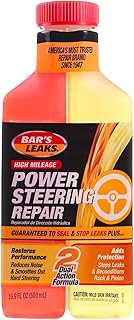
Bar's Leaks High Mileage Power Steering Repair-It is a dedicated hydraulic additive engineered to address the most frequent steering issues in older cars, trucks, and SUVs. It provides a targeted solution for drivers experiencing pump groaning, morning stiffness, or gradual fluid loss.
The standout feature is its dual-cavity bottle, which houses two separate chemical treatments that mix during pouring. One side delivers seal conditioners that soften and expand dried rubber O-rings, while the other side introduces friction modifiers that quiet pump whine and restore smooth steering assist across synthetic and mineral oil systems.
While this treatment works reliably on normal seal wear and minor seepage, it will not fix severe structural problems. Vehicles with cracked metal housings, severed power steering hoses, or completely blown internal seals will still require physical mechanical repairs and component replacement.
Bottom line: Bar's Leaks Power Steering Repair-It serves as an effective, highly compatible first line of defense to silence noisy pumps and halt minor fluid leaks before turning to expensive garage repairs.
- Brand: Bar's Leaks (BarsProducts)
- Product Line: High Mileage Power Steering Repair-It
- Volume: 16.9 fl oz (500 mL)
- Container Type: Dual-cavity bottle
- Fluid Compatibility: All power steering fluids and ATF
- Formulation Compatibility: Petroleum, mineral oil, and synthetic oils
- Vehicle Fitment: Domestic and import vehicles
- Application Type: Top-off or fluid replacement additive
Turn off the engine and locate the power steering fluid reservoir under the hood. Check the dipstick or reservoir level indicator to ensure there is sufficient space to add the treatment.
Shake the bottle gently and pour the contents directly into the reservoir until the fluid reaches the marked fill line. The dual-cavity bottle automatically dispenses both active formulas in the correct proportion. If the reservoir is already completely full, siphon out a corresponding amount of old fluid first.
Start the vehicle and drive normally to circulate the treatment throughout the rack, pinion, and pump. Most seal conditioning and noise reduction benefits occur within several days of routine driving.
This additive is best suited for drivers of aging or high-mileage vehicles that are beginning to show symptoms of power steering wear, including whining noises during turns, fluid puddles under the front bumper, or stiff steering response.
It is also a practical choice for vehicle owners looking for a low-effort DIY solution to prolong the life of their steering rack and pump before committing to hundreds of dollars in mechanical repairs.

Pros
- Universal compatibility with all power steering fluids
- Solvent-free blend prevents seal damage
- Revitalizes hardened or shrunken seals
- Safe for preventative maintenance in new systems
Cons
- Cannot repair cracked hoses or catastrophic mechanical damage
- Thick viscosity can make cold-weather pouring slow
- May require multiple applications for persistent seepage
Lucas Oil Power Steering Stop Leak is a specialized petroleum-based additive designed for vehicle owners dealing with stubborn fluid leaks, stiff steering, or whining hydraulic pumps. It serves both as a targeted repair fluid for aging vehicles and a protective safeguard for newly installed steering racks.
The standout advantage of this formula is its solvent-free composition. Many stop-leak additives rely on harsh solvents that temporarily swell rubber seals before causing them to dry out and crack, whereas this blend uses premium petroleum extracts to gently condition, soften, and renew pliable components without causing long-term damage.
Keep in mind that while it works effectively on worn or dried-out gaskets and O-rings, it cannot mend cracked metal lines or completely ruptured rubber components. Drivers facing catastrophic hydraulic failures or major mechanical defects will still need complete component replacements rather than a chemical additive.
Bottom line: This proven, solvent-free additive provides an effective and low-risk way to seal minor power steering leaks, smooth out hard spots, and prolong the lifespan of your hydraulic steering system.
- Brand: Lucas Oil
- Part Number: 10008
- Fluid Volume: 12 oz.
- Formula: Solvent-free petroleum extract blend
- Compatibility: Compatible with all power steering fluids
- Function: Seal conditioner and leak preventative
- Package Quantity: 1 each
Lucas Oil Power Steering Stop Leak is engineered for universal application across automotive steering systems. It mixes safely with conventional fluids, synthetic power steering formulations, and automatic transmission fluids frequently specified in domestic and import vehicles.
The formula can be added directly to existing fluid without draining the reservoir, making top-offs straightforward. It is suitable for domestic cars, light trucks, and import models, working without adverse chemical reactions across various fluid chemistries.
For newer steering racks and pumps, introducing a small measure acts as a preventative treatment. It keeps factory seals supple against high operating temperatures and sustained hydraulic pressure.
- Check your power steering reservoir level using the dipstick or indicator markings when the engine is turned off and cool.
- Extract a portion of the old fluid with a syringe or bulb pump if the reservoir is already filled to the maximum line.
- Pour in the Lucas Oil Stop Leak until the reservoir reaches the proper fill mark, typically using several ounces depending on system capacity.
- Start the engine and slowly turn the steering wheel from lock to lock several times to circulate the fluid through the rack and pump.
- Drive normally and inspect fluid levels periodically over the following days to confirm that leaking has subsided.

Pros
- Solvent-free petroleum formulation
- Universally compatible with all power steering fluids
- Reconditions and softens hardened rubber seals
- Generous 1 quart bottle capacity
Cons
- Cannot repair physically torn seals or cracked metal lines
- Thick fluid consistency pours slowly in cold weather
Lucas Oil Power Steering Stop Leak is a specialized fluid additive engineered to rejuvenate failing internal seals and control persistent leaks. Formulated for cars, trucks, and SUVs showing signs of hydraulic fluid loss, it works both as an immediate repair treatment and as continuous preventative maintenance.
The standout quality of this formula is its solvent-free petroleum blend. Unlike harsh chemical seal-swellers that can degrade internal components over time, this formula gently conditions and revitalizes rubber without breaking down the base fluid, making it compatible with any standard power steering fluid.
While it excels at stopping seepage around O-rings and rack seals, it is not a cure for structural mechanical failures, split hoses, or broken pump impellers. Drivers facing severe structural cracks in their hydraulic system will need mechanical part replacements rather than an additive.
Bottom line: Lucas Oil Power Steering Stop Leak offers a dependable, low-effort fix for nagging fluid loss and stiff steering, restoring smooth control without damaging sensitive pump components.
- Brand: Lucas Oil
- Part Number: 10011
- Volume: 1 Quart (32 fl. oz.)
- Formulation: Petroleum-extracted additives and special oils
- Solvent Content: 100% solvent-free
- Fluid Compatibility: Compatible with all power steering fluids
- Function: Seal renewal and preventative maintenance
Lucas Oil Power Steering Stop Leak is engineered to blend seamlessly with any factory or aftermarket power steering fluid. It mixes freely with both conventional mineral-based fluids and synthetic formulations.
The formula is suitable for domestic and import vehicles equipped with standard hydraulic power steering systems. It works across passenger cars, light trucks, and sport utility vehicles.
You can add it directly to an existing reservoir without having to flush the old fluid first, or use it to completely refill a system during a fresh service.
Check your power steering reservoir level with the engine turned off and the components cool to the touch.
If the fluid level is low, add Lucas Oil Power Steering Stop Leak directly into the reservoir until it reaches the marked operating line. For stubborn leaks, extract some old fluid first to allow up to a full bottle of treatment to enter the system.
Drive the vehicle normally to let the fluid circulate through the pump, lines, and rack. Seal conditioning typically takes effect within a few days of regular driving.

Pros
- Universal compatibility across most domestic and import makes
- Smooth operation in extreme cold temperatures
- Cleans and frees sticky hydraulic components
- Safe for electric-hydraulic steering systems
Cons
- Not recommended as a primary replacement for Honda and Acura vehicles
- Single 32-ounce bottle may require buying multiples for complete flushes
Lubegard Complete Synthetic Power Steering Fluid is engineered to service a wide array of domestic and import vehicles. Utilizing a robust synthetic base, it is formulated to safeguard power steering pumps, hoses, and seals from excessive thermal breakdown and friction.
A major strength of this formulation is its ability to handle temperature extremes, effectively preventing the morning stiffness common in cold weather. It also works proactively to free sticky turbines and quiet pump groans, making it a reliable choice for electric-hydraulic configurations.
While it covers most European, Asian, and North American applications, Lubegard explicitly advises using dedicated Honda-specific fluid for Honda and Acura models. Drivers performing a full system drain on larger trucks or SUVs may also find that a single 32-ounce container falls short of total capacity.
Bottom line: This synthetic fluid is a top-tier maintenance solution for drivers wanting smoother steering response, reduced pump noise, and reliable cold-weather performance across diverse vehicle makes.
- Brand: Lubegard
- Product Type: Power Steering Fluid
- Part Number: 23232
- Volume: 32 fl. oz.
- Base Formulation: Full Synthetic
- Vehicle Compatibility: North American, European, and Asian vehicles
- System Compatibility: Conventional hydraulic and electric-hydraulic steering
Lubegard Complete Synthetic Power Steering Fluid offers broad vehicle coverage, making it suitable for regular fluid top-offs or complete system flushes in North American, European, and Asian automobiles. It is engineered to meet or exceed fluid requirements for traditional hydraulic steering racks as well as newer electro-hydraulic power steering mechanisms.
The notable exception is Honda and Acura platforms, where vehicle manufacturer-specific steering fluid is strictly recommended. Before servicing your power steering reservoir, verify vehicle manual guidelines for exact capacity requirements and drain procedures.
Can this fluid be mixed with existing power steering fluid?
Yes, this synthetic fluid is formulated to be miscible with conventional and synthetic power steering fluids during standard top-offs.
What causes morning sickness stiffness in power steering?
Morning stiffness occurs when conventional fluid thickens in freezing temperatures or when internal seals lose pressure until warm. This synthetic formula maintains low-temperature fluidity to prevent morning stiffness.
Is it suitable for electric power steering?
It works in electric-hydraulic power steering systems that require hydraulic fluid, but not fully electric power steering systems that rely purely on an electric motor without hydraulic fluid.

Pros
- Mixes cleanly with all existing marine hydraulic fluids
- Resists foaming and oxidation under high pressure
- Protects internal hydraulic seals and hoses from aging
- OEM-grade formulation for Mercury Marine equipment
Cons
- Incompatible with electric power steering requiring synthetics
- Not suitable for non-power manual hydraulic helm systems
- Bottle does not include an integrated dispensing nozzle
Quicksilver Power Trim and Steering Fluid is an OEM-grade hydraulic oil engineered for marine power trim, tilt, and steering setups. Designed for boat owners and marine mechanics, this 32-ounce formula maintains smooth hydraulic operation in sterndrive and outboard applications.
Its standout feature is universal miscibility, allowing it to blend cleanly with existing hydraulic fluids without destabilizing the system. High-performance additives help condition internal seals and hoses while aggressively suppressing foaming, oxidation, and corrosion during demanding marine use.
Vessel owners with electric power steering systems that specify synthetic fluid should pass on this formula. It is also unsuitable for manual, non-power hydraulic helm systems that require dedicated helm oil, making an owner's manual check essential before pouring.
Bottom line: This is a dependable, high-protection hydraulic fluid that delivers factory-spec performance for Mercury and other major outboard and sterndrive trim systems.
- Brand: Quicksilver
- Part Number: 858075Q01
- Fluid Type: Universal marine hydraulic fluid
- Container Size: 32 fl oz (1 Quart)
- Application: Power trim, tilt, and steering systems
- System Compatibility: Marine outboards and sterndrives
- Exclusions: Electric power steering (EPS), manual hydraulic helm systems
- Key Protections: Anti-foaming, anti-oxidation, seal conditioning, corrosion resistance
Quicksilver engineered this fluid to function smoothly across a broad spectrum of marine hardware, serving as a direct replacement fluid for Mercury Marine systems and compatible aftermarket setups.
- Compatible with all conventional sterndrive power trim and steering systems.
- Compatible with hydraulic outboard power trim and tilt assemblies.
- Mixes directly with existing hydraulic fluids without requiring a complete system drain.
- Incompatible with electric power steering (EPS) systems requiring dedicated synthetic lubricants.
- Incompatible with non-power hydraulic helm steering systems requiring specialized helm fluid.
Proper fluid maintenance ensures consistent steering responsiveness and prevents premature wear on marine hydraulic pumps, rams, and lines.
- Inspect system fluid levels before launching and check for milky discoloration that indicates water intrusion.
- Wipe the reservoir cap and surrounding area thoroughly before opening to prevent dirt from entering hydraulic valves.
- Store tightly capped in a cool, dry area away from direct sunlight and extreme heat.
- Dispose of used hydraulic fluid and contaminated rags responsibly according to local environmental regulations.

Pros
- Conditions and restores hardened rubber seals
- Suppresses pump squeal and internal friction
- Universal compatibility across diverse vehicle makes
- Extended 50,000-mile service interval
Cons
- Conventional base shortens change intervals when mixed into synthetic systems
- Cannot fix severe mechanical damage or torn hydraulic lines
Prestone Power Steering Fluid with Stop Leak is an all-in-one maintenance fluid formulated to protect hydraulic steering systems while addressing minor fluid loss. It is engineered for a wide range of passenger vehicles, crossovers, SUVs, and light-duty trucks that require reliable hydraulic pressure.
Its primary strength lies in specialized seal-conditioning additives that revitalize brittle, shrunken gaskets and O-rings. By softening and expanding these rubber components, the fluid arrests slow seepage before it escalates. The anti-wear package simultaneously coats pump internals to quiet operating squeals and prevent clogging.
However, this is a conventional fluid rather than a full synthetic formulation. While it safely mixes with synthetic products, doing so can reduce the extended service intervals favored by many post-2006 vehicles. It is also not a substitute for mechanical repairs if a steering rack has suffered severe structural damage or split hoses.
Bottom line: Prestone Power Steering Fluid with Stop Leak is a dependable choice for rejuvenating aging seals and reducing pump noise across high-mileage daily drivers.
- Brand: Prestone
- Product Type: Power steering fluid with stop leak
- Base Type: Conventional
- Container Size: 12 oz.
- Service Life: Up to 50,000 miles
- Vehicle Compatibility: Cars, SUVs, crossovers, light and medium-duty trucks
- System Protection: Anti-wear, anti-squeal, anti-clog, and corrosion defense
This formula is engineered for broad compatibility across domestic and import cars, SUVs, crossovers, and light-to-medium duty trucks requiring standard power steering fluid.
The fluid safely mixes with both conventional and synthetic power steering fluids already present in your reservoir. However, blending conventional fluid into a vehicle running factory synthetic fluid will lower the overall service interval to conventional levels.
Drivers of vehicles model year 2006 and newer should consult their owner manual to confirm whether a dedicated, vehicle-specific synthetic fluid is mandated by the manufacturer.
Always shut off the engine and allow the power steering reservoir to cool completely before inspecting fluid levels or topping off the reservoir.
Wipe the cap and reservoir neck thoroughly before opening to prevent external dirt and road debris from falling into the hydraulic loop.
Store the bottle securely sealed in a cool, ventilated space away from open flame, and keep it out of reach of children and pets.
How to Choose the Best Power Steering Fluids: Buying Guide
OEM Specifications and Vehicle Compatibility

The single most critical step in choosing among power steering fluids is identifying your vehicle manufacturer exact hydraulic specification. Unlike engine oil, where viscosity grades often allow some seasonal leeway, steering systems feature internal operating pressures, pump turbine tolerances, and rubber seal compounds designed around specific fluid chemistries. Pouring a random universal fluid into a specialized steering system can result in severe seal degradation, loud pump cavitation, or erratic steering assist.
This strict compatibility requirement is especially obvious in Japanese platforms. Both the single bottle Genuine Honda Fluid 08206-9002 Power Steering and the convenient Honda 08206-9002PE Power Steering Fluid Pack of 3 are manufactured specifically for all Honda and Acura power steering systems. Honda engineers formulate these fluids with a distinctly higher viscosity than common generic alternatives to counteract internal friction. The manufacturer explicitly warns that using another brand fluid can cause internal damage, excessive friction, and premature component breakdown.
Conversely, European luxury and performance vehicles present an entirely different set of hydraulic engineering demands. The Pentosin 1405116 CHF 11S Long-Life Synthetic serves as the factory original equipment fluid for Audi, Bentley, BMW, Chrysler, Dodge, Jeep, Mercedes-Benz, Mini, Porsche, Saab, Volkswagen, and Volvo. In the multi-vehicle category, Lubegard 23232 Complete Synthetic Power Steering delivers a comprehensive service solution for European, North American, and Asian models, while responsibly noting that factory Honda fluid remains recommended for Honda and Acura platforms. Always check your reservoir cap marking and owner handbook before purchasing.
Synthetic vs Conventional Base Stocks and Viscosity Stability

Understanding the base oil formulation is vital when evaluating fluid longevity and thermal stability. Conventional petroleum-based products, such as Prestone AS262 Power Steering Fluid with Stop, offer dependable lubrication and corrosion resistance for standard domestic commuter cars and older vehicle architectures. These mineral-based fluids maintain steady hydraulic pressure during routine driving cycles and offer reliable service life for everyday street transportation without requiring premium synthetic prices.
Modern synthetic formulations provide superior resistance to thermal breakdown, shearing, and chemical oxidation under demanding driving conditions. Fluids like Lubegard 23232 Complete Synthetic Power Steering and Pentosin 1405116 CHF 11S Long-Life Synthetic maintain their protective lubricating film even when steering fluid temperatures soar during heavy city maneuvering or aggressive mountain driving. Synthetics prevent the formation of varnish and carbon sludge that can restrict narrow orifice channels inside the rack spool valve.
Viscosity stability also plays an indispensable role in maintaining consistent steering wheel effort. The specialized higher viscosity found in Genuine Honda Fluid 08206-9002 Power Steering and the Honda 08206-9002PE Power Steering Fluid Pack of 3 provides the precise hydraulic resistance needed to cushion Honda pump vanes. Choosing the correct base stock ensures the steering wheel feels neither unnervingly sluggish on freezing mornings nor unpredictably loose and feather-light under intense summer driving heat.
| Product | Container Size | Formula Characteristics | System Compatibility |
|---|---|---|---|
| Genuine Honda Fluid 08206-9002 Power Steering | 12 oz. | Higher viscosity | All Honda vehicle power steering systems |
| Pentosin 1405116 CHF 11S Long-Life Synthetic | 1 Liter Container | Synthetic High-Performance Hydraulic Fluid | Audi, Bentley, BMW, Chrysler, Dodge, Jeep, Mercedes-Benz, Mini, Porsche, Saab, Volkswagen, Volvo, and More |
| Bar’s Leaks High Mileage Power Steering Repair-It | 16.9 oz | Dual cavity bottle | Works on all vehicles, domestic and import |
| Lubegard 23232 Complete Synthetic Power Steering | 32 fl. oz. | Synthetic Power Steering Fluid | ALL European, North American, and Asian vehicles |
| Prestone AS262 Power Steering Fluid with Stop | 12 oz. | Conventional formula | For use in all manufacturers |
Stop-Leak Additives and Seal Conditioning Compounds

Over years of continuous operation, the internal rubber O-rings, pump shaft seals, and rack end seals endure thousands of thermal expansion cycles. Gradually, these elastomer components lose their original plasticizers, causing them to shrink, harden, and develop micro-fissures. Once seals fail, fluid begins seeping onto chassis components, dropping the reservoir fluid level and drawing harmful atmospheric air into the pressurized circuit.
To combat this gradual degradation, specialized stop-leak treatments incorporate gentle seal reconditioning agents. The Lucas Oil 12 Oz. Power Steering Leak-Stopper Fluid and the larger volume Lucas Oil LUC10011 container use a dedicated solvent-free formula blended from special oils and petroleum-extracted additives. Because these products contain zero aggressive petroleum solvents, they safely condition and expand hardened rubber seals without causing the softening, blistering, or structural disintegration that cheap solvent additives provoke.
For more severe fluid loss or persistent rack chatter, Bar’s Leaks High Mileage Power Steering Repair-It utilizes a unique dual cavity bottle to package complementary restorative additives. This formulation stops fluid loss, reconditions worn rack and pinion assemblies, and smooths out hard steering across domestic and import models. Likewise, Prestone AS262 Power Steering Fluid with Stop incorporates active stop-leak chemistry that renews hardened seals while delivering a 50,000 mile fluid life, making it a dependable preventative option before minor weeping turns into an expensive rack replacement.
Extreme Temperature Tolerance and Operating Cold Performance
Ambient climate plays a major role in how hydraulic steering systems perform. In sub-zero winter temperatures, conventional mineral fluids can thicken into a viscous gel, making initial steering maneuvers exceedingly difficult. Technicians often refer to this cold-weather phenomenon as morning sickness, characterized by severe steering stiffness, jerky wheel return, and loud pump whining during the first several miles of driving.
Advanced synthetic formulations resolve this seasonal headache by maintaining fluid flow at extremely low temperatures. The Pentosin 1405116 CHF 11S Long-Life Synthetic is engineered for full operational performance across an impressive thermal window ranging from as low as -40C (-40F) up to +130C (+266F). This remarkable temperature resilience prevents pump cavitation during arctic cold starts while resisting boiling and oxidation during grueling summer trail driving.
Similarly, Lubegard 23232 Complete Synthetic Power Steering features cold-flow synthetic technology designed specifically to eliminate morning sickness stiffness and maintain effortless steering response. Drivers preparing their vehicles for severe winter weather should monitor all vital automotive fluids and carry emergency supplies, including dependable auxiliary fuel stored in the best jerry cans, ensuring total confidence across challenging seasonal road trips.
Anti-Wear Protection, Foam Prevention, and Pump Longevity
Hydraulic steering pumps rely on tightly toleranced internal vanes or rotating turbines that spin at engine speeds under pressures exceeding one thousand pounds per square inch. Without a durable lubricating film, metal-on-metal friction rapidly scores pump housings, rounds off vane edges, and releases microscopic metallic debris throughout the rack valve body. This mechanical wear generates the annoying pump whine heard during low-speed steering.
Quality power steering fluids incorporate advanced anti-wear chemistry and detergent packages to preserve internal hardware. Lubegard 23232 Complete Synthetic Power Steering contains specialized friction-reducing additives that actively clean and free sticky turbines and pumps, extending the functional life of hoses and seals. In everyday passenger applications, Prestone AS262 Power Steering Fluid with Stop provides robust anti-wear protection designed to guard against pump failure, squeals, and clogs, while offering corrosion protection for internal metals, rubber, and gasket materials.
Aeration control is equally critical for smooth steering response. When air enters the fluid, it forms microscopic foam bubbles that compress under pressure, causing spongy steering wheel feedback and loud whining. Products such as Quicksilver 858075Q01 Power Trim and Steering are formulated with specialized anti-foaming and anti-oxidation chemistry to prevent air entrapment, ensuring immediate hydraulic response and protecting delicate internal components from cavitation damage.
Specialty Applications and Hydraulic System Versatility
While most vehicle owners focus purely on standard automotive steering racks, several modern fluids are formulated to manage complex hydraulic circuits that go far beyond basic steering assist. Many modern European vehicles, off-road trucks, and marine vessels share hydraulic reservoirs across multiple control systems, demanding fluids with exceptional technical versatility.
For example, Pentosin 1405116 CHF 11S Long-Life Synthetic is formulated for a vast range of automotive hydraulic mechanisms, including level control, active shock absorbers, hydro-pneumatic suspension systems, stability and traction control modules, convertible top hydraulics, and central lock systems. In modern vehicles equipped with electro-hydraulic racks, Lubegard 23232 Complete Synthetic Power Steering delivers excellent compatibility for electric hydraulic systems, making it an outstanding workshop fluid.
Marine environments require their own dedicated hydraulic considerations. The Quicksilver 858075Q01 Power Trim and Steering fluid is a universal hydraulic fluid designed to mix with all hydraulic fluids in marine power trim and steering systems, serving outboard and sterndrive applications while excluding electric power steering systems and non-power helm units. When conducting underhood fluid maintenance, vehicle owners frequently protect their vehicle cabin with practical accessories like the best waterproof car seat covers to prevent accidental fluid stains on upholstery during garage work.
Why You Should Trust Us
At Daily Deal Here, our automotive editorial team approaches fluid maintenance with an emphasis on rigorous research, technical accuracy, and practical utility. We know that choosing an improper steering fluid can lead to catastrophic pump binding, blown rack seals, or expensive steering gear replacements. We never rely on vague marketing claims or generic brand promises. Instead, our methodology centers on analyzing verified owner reviews, professional mechanic discussions, and real-world feedback across Amazon listings to uncover long-term reliability trends, leak-stopping success rates, and cold-weather performance profiles.
We systematically cross-examine original equipment manufacturer specifications, technical chemical compatibility data, and additive profiles across every product we feature. By comparing conventional base stocks against advanced synthetic formulations, we evaluate how each fluid performs under high operating pressures, severe temperature swings, and prolonged service intervals. Our guides are curated through independent editorial research, prioritizing verified compatibility, packaging value, and proven component protection so you can service your vehicle with total peace of mind.
Final Thoughts
Performing regular reservoir inspections and refreshing contaminated fluid is one of the easiest, most affordable ways to protect your vehicle from expensive steering gear failures. Steering pumps and rack assemblies operate under intense continuous pressure, meaning that clean fluid with the correct viscosity and additive balance is essential for smooth maneuverability and quiet operation. For owners of modern European luxury cars, performance sedans, or heavy-duty domestic trucks requiring high-specification hydraulic fluid, our top overall recommendation is Pentosin 1405116 CHF 11S Long-Life Synthetic. Its factory original equipment pedigree, lifetime synthetic composition, and unmatched operational temperature range from -40C to +130C guarantee consistent steering control and multi-system hydraulic protection across all driving conditions.
If you are looking for an affordable, dependable fluid to keep in your home garage for routine fluid top-offs and preventative leak care, Prestone AS262 Power Steering Fluid with Stop represents outstanding everyday value. Engineered for broad compatibility across all manufacturers, it pairs anti-wear additives with seal-conditioning chemistry that stops minor seepage, backed by a generous 50,000 mile fluid life. Meanwhile, drivers dealing with an older steering system that exhibits persistent fluid weeping or annoying steering stiffness will appreciate Bar’s Leaks High Mileage Power Steering Repair-It. Its dual-cavity bottle formulation reconditions worn rack and pinion seals, quiets pump whine, and restores smooth steering assist without requiring an expensive mechanical rebuild.
Before adding any bottle to your reservoir, always consult your owner manual and reservoir cap to verify whether your vehicle requires a dedicated original equipment formulation like Genuine Honda Fluid 08206-9002 Power Steering or a multi-vehicle synthetic blend. Routine fluid maintenance prevents pump squeal, preserves rubber seals, and keeps your vehicle tracking true. For more vehicle maintenance advice and automotive gear evaluations, browse our comprehensive collection of all buying guides and reviews or visit our browse all categories hub to discover the best tools for your garage.
Frequently Asked Questions About Power Steering Fluids
How often should I change power steering fluids in my vehicle?
Most vehicle manufacturers recommend inspecting your power steering fluid level at every scheduled oil change and performing a complete fluid flush every 50,000 to 75,000 miles. Over years of normal driving, intense heat and mechanical pressure oxidize the base oil, deplete anti-wear additives, and introduce dark particulate debris from pump wear. If your fluid appears dark brown or black, emits a burnt aroma, or causes steering pump groaning during parking maneuvers in 2026, flushing the reservoir with fresh fluid immediately restores hydraulic responsiveness and protects internal steering rack seals.
Can I mix different brands or types of power steering fluids together?
You should avoid mixing different types of power steering fluid unless the product packaging explicitly confirms universal compatibility. While versatile formulations like Lubegard 23232 Complete Synthetic Power Steering mix safely with standard factory fluids, combining incompatible synthetic and mineral chemistries can cause excessive foaming, seal shrinkage, or additive precipitation. Most importantly, Honda and Acura steering systems require unique higher-viscosity formulations such as Genuine Honda Fluid 08206-9002 Power Steering, and mixing generic fluids into those systems can trigger rapid pump damage. Always verify specification requirements before topping off.
Can automatic transmission fluid (ATF) be used instead of dedicated power steering fluids?
You should only use automatic transmission fluid if your vehicle manufacturer explicitly lists ATF (such as Dexron or Mercon) on the reservoir cap or in the owner manual. Although certain older domestic and import vehicles were designed to use transmission fluid in their steering circuits, modern dedicated steering fluids feature specific friction modifiers, anti-foaming agents, and viscosity characteristics calibrated for steering racks. Pouring transmission fluid into a system engineered strictly for dedicated power steering fluid can swell internal rubber O-rings, induce pump cavitation, and void equipment warranties.
Do stop-leak power steering fluids really fix steering rack and pump leaks?
Stop-leak formulations, such as Lucas Oil 12 Oz. Power Steering Leak-Stopper Fluid and Bar’s Leaks High Mileage Power Steering Repair-It, are remarkably successful at stopping minor weeping caused by aged, hardened, or shrunken rubber seals and O-rings. These products utilize petroleum-extracted conditioners that gently restore seal elasticity without damaging internal metallic pump vanes. However, chemical additives cannot fix physical fractures, cracked pump housings, or ruptured high-pressure hoses. When tackling broader chassis and suspension repairs in your workshop, our guide to the best battery impact drivers can help you manage demanding mechanical tear-downs.
What are the common symptoms of low or degraded power steering fluids in 2026?
The most recognizable symptom of low or oxidized steering fluid is a high-pitched whining or groaning sound whenever you rotate the steering wheel, particularly at idle or during low-speed parking maneuvers. Drivers may also notice stiff or jerky steering assist, intermittent hesitation, or a vibrating shudder transmitted directly through the steering column. Visually, low fluid levels in the translucent reservoir, aerated foaming fluid, or fluid that has turned dark black instead of amber or clear indicates severe breakdown, demanding an immediate top-off or full system fluid exchange.







Write Your Review
No reviews yet. Be the first to share your experience!