

The thing that sends a bluetooth motorcycle intercom back is almost never the sound quality on a driveway test. It is the moment at 70 miles an hour when the other rider drops out of the chain, or the realisation that the buttons are impossible to find through winter gloves, or wind noise turning every sentence into a guess. This is a category where the specification sheet and the experience on the road part company quickly. We compared 8 headsets from Fodsports, Cardo Systems, LEXIN and more, sorted by connection type, how many riders they hold together and how they handle wind, current for September 2026.
Our top pick is the Cardo Systems Spirit for pairing genuinely reliable two way intercom with slim speakers that fit helmets other units struggle with, which is the combination most riders need before anything else. Below we rank the field from proven two way units through to large group systems, so you can match one to the way you actually ride. For the rest of the garage, our automotive section covers adjacent kit.

Pros
- Reliable two way intercom, which is what most riders actually use
- Slim 32 millimetre speakers fit shallow helmet ear pockets
- Waterproof rather than merely water resistant
- Universal connectivity to headsets from other makers
- Established brand with spare mounts and support available
Cons
- Two way intercom only, so it is not the unit for a large group
- Smaller speakers trade some music fullness for fit
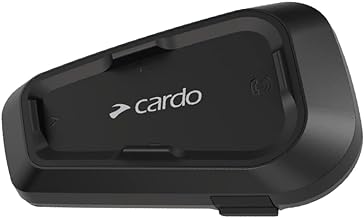
The Spirit is Cardo's entry into its own range and it is aimed squarely at the most common use case in motorcycling: two people talking, either rider and pillion or two bikes travelling together. It does that job consistently, which sounds like faint praise until you have used a cheap unit that drops the link on every bend.
The 32 millimetre speakers are the specification that decides whether this fits your helmet. Many shells have shallow ear pockets or none at all, and a thicker driver in those helmets presses on your ear until it hurts. Slim speakers solve that, at the cost of some fullness if you listen to a lot of music.
Waterproofing and universal connectivity are the two features that make it a safe purchase. Rain is not optional, and being able to link to a friend on a different brand over the standard Bluetooth intercom profile means your kit is not stranded if your riding partner buys elsewhere.
The honest limit is group size. This is a two way unit, so a regular group of four wants a mesh system instead. Within its intended use it is the most complete package here.
Bottom line: the reliable two way choice that fits the widest range of helmets, and the default recommendation unless you ride in a large group.
- Intercom: two way Bluetooth
- Speakers: 32 millimetre slim drivers
- Waterproof: yes
- Connectivity: universal pairing with other brands
- Pack: single unit for one helmet
- Microphone: boom and wired options for full face or open face
- Mounting: clamp and adhesive plate
This is the pick for a rider and pillion, or two bikes riding together, and especially for anyone whose helmet has shallow or absent speaker pockets. Look at a mesh unit instead if you regularly ride in a group of four or more, and at the HD version if music quality is a priority over speaker slimness.
Fit the clamp before the lining goes back in, and position the speakers over your ear canal rather than centred in the pocket, which is the single biggest improvement most people can make to sound. Use the wired microphone in a full face helmet and the boom in an open face or modular. Pair the phone first, then the intercom partner, and confirm the units reconnect automatically after a break before your first long ride.
Pros
- 40 millimetre drivers give noticeably fuller music and navigation audio
- Same reliable two way intercom as the standard Spirit
- Waterproof construction for year round riding
- Universal connectivity to other brands
Cons
- Thicker speakers do not fit helmets with shallow ear pockets
- Still a two way system, so no self healing group network
The Spirit HD is the same headset as the standard Spirit with one deliberate change: bigger speakers. At 40 millimetres the drivers move more air, and the difference is obvious on music and on navigation prompts at speed, where thin sound gets lost under wind noise.
That change comes with a fit condition. A 40 millimetre driver needs a helmet with proper moulded ear pockets, and in a shell without them it sits against your ear and becomes uncomfortable on a long ride. Check your helmet before choosing this over the slimmer version.
Everything else carries over. The intercom is the same dependable two way link, waterproofing is the same, and universal connectivity means you can still talk to a rider on another brand over the standard Bluetooth profile.
Judged as a purchase decision, this is a straight fork rather than an upgrade: better audio if your helmet has the depth, worse comfort if it does not. Neither version is the better unit in the abstract.
Bottom line: the Spirit to buy when music matters and your helmet has real speaker pockets to put these drivers in.
- Intercom: two way Bluetooth
- Speakers: 40 millimetre HD drivers
- Waterproof: yes
- Connectivity: universal pairing with other brands
- Pack: single unit
- Microphone: boom and wired options
- Mounting: clamp and adhesive plate
Choose this if you listen to music or rely on navigation audio at speed and your helmet has moulded ear pockets deep enough for a 40 millimetre driver. Choose the standard Spirit instead if your helmet has shallow pockets, and choose a mesh system if you ride in a large group rather than in pairs.
The only real comparison to make is against the slimmer Spirit, and it is settled by your helmet rather than by the specification. Take the lining out and measure the depth of the ear pocket before ordering. If there is no pocket at all, buy the slim version regardless of how much you care about music, because comfort decides whether you keep using the headset.

Pros
- High paired rider count for riders who travel in groups
- Music sharing between two connected riders
- Long quoted range for a classic Bluetooth unit
- Universal pairing with headsets from other makers
Cons
- Classic Bluetooth chain, so the link breaks when a middle rider drops out
- Quoted rider count is devices paired rather than riders talking at once
The M1S Pro is Fodsports aiming at group riding on a classic Bluetooth platform. The headline is ten riders and 2,000 metres, and both numbers need reading carefully rather than dismissing.
Ten riders is the number of headsets it can hold in memory, not the number that can hold a conversation at once. On a chain system, a working group is two to four, and the chain breaks if the rider in the middle stops or falls out of range. That is a property of the connection type rather than a fault in this unit.
The 2,000 metre figure is a line of sight measurement on an open road, and it will fall a long way on a twisty route with traffic between the bikes. Compared like for like against shorter quoted figures, it does suggest a stronger link, and in practice this holds on better than the cheaper units here.
Music sharing is a genuinely nice feature for two riders on a long motorway stretch, and universal pairing means a friend on another brand is not excluded. If you want a network that heals itself, though, that is a mesh feature and this is not a mesh unit.
Bottom line: a capable group oriented headset on classic Bluetooth, provided you read the rider count as pairing capacity rather than as a promise.
- Intercom: classic Bluetooth, up to ten riders paired
- Range: 2,000 metres quoted, line of sight
- Music sharing: yes, between paired riders
- Compatibility: universal pairing with other brands
- Microphone: noise reduction
- Waterproof: yes
- Pack: single headset
This suits club riders and touring groups who want group intercom without paying mesh prices, and who accept rebuilding the chain occasionally when someone stops. It is more headset than a rider and pillion needs, and it is the wrong choice if your group of four or more wants conversation that never drops.
Pair the group in riding order and put the most reliable rider in the middle, because that is the unit holding the chain together. Set the phone as the first paired device so navigation and calls interrupt the intercom cleanly. Fit the wired microphone in a full face helmet, position the speakers over your ear canals, and confirm the group rebuilds properly after a fuel stop before relying on it.

Pros
- Voice control removes the need to find a button with gloves on
- Four way intercom suits a small riding group
- Automatic call answering for hands free operation
- Straightforward feature set with no learning curve
Cons
- Voice recognition struggles at higher speeds when wind noise rises
- Four way chain intercom still breaks if a middle rider drops out
The FX4 Pro is the voice control option in this list, and that feature deserves to be taken seriously rather than dismissed as a gimmick. Every control on a helmet is operated blind with thick gloves, and being able to answer a call or open the intercom with a spoken command genuinely removes a fumble at exactly the wrong moment.
The honest caveat is speed. The same wind that ruins conversation also confuses voice recognition, so commands land reliably around town and less reliably at motorway pace. Treat voice as a useful addition on top of good buttons rather than as a replacement for them.
Four way intercom is a sensible amount for the way most people actually ride, covering a couple of bikes plus pillions. As with every classic Bluetooth system here, the chain rebuilds by hand if the rider in the middle drops out.
Automatic call answering and hands free music round out a practical package. There is nothing exotic here beyond the voice layer, and for a lot of riders that is exactly the right amount of headset.
Bottom line: a solid four way unit whose voice control genuinely helps at lower speeds, and which does the basics competently everywhere else.
- Intercom: four way Bluetooth
- Control: voice command plus physical buttons
- Calls: hands free with automatic answering
- Audio: music playback and navigation prompts
- Microphone: noise reduction
- Helmet types: full face and modular
- Pack: single headset
Buy this if you ride in a group of up to four and like the idea of speaking commands rather than hunting for buttons in winter gloves. Look elsewhere if most of your riding is fast motorway work, where voice control is least reliable, or if your group is large enough to need a mesh network.
Set up and learn the voice commands at a standstill, not on the move, and keep a physical button routine as the fallback for high speed. Mount the microphone close to your mouth and out of the direct airflow, and check the charging port cover seals fully before riding in rain. Never take a hand off the bars to operate the unit; if a command fails, leave it until the next stop.

Pros
- True mesh networking, so the group heals itself when a rider drops out
- Eight rider capacity suits real club riding
- ENC noise cancellation for clearer speech at speed
- Supplied as a two pack, which covers a rider and pillion in one purchase
- Bluetooth 5.4 dual chip for a stable phone and intercom link
Cons
- Mesh generally only meshes with the same brand, falling back to standard Bluetooth for others
- More system than a rider and pillion actually needs
The ASMAX S1 is the mesh unit in this list, and mesh is the feature that separates a pleasant group ride from a frustrating one. Instead of a chain where each rider links to the next, every unit talks to every other unit it can reach, and the network reroutes automatically when someone stops for fuel or falls behind.
For a group of four or more that is transformative. Nobody has to remember who links to whom, nobody rebuilds a chain at the next junction, and riders can join and leave the group without anyone touching a button.
The supporting specification is current rather than token. ENC noise cancellation handles the wind on the outgoing signal, and dual chip Bluetooth 5.4 keeps the phone connection stable alongside the intercom, which is where cheaper single chip units start dropping navigation prompts mid conversation.
The limitation to understand is compatibility. Mesh systems mesh with their own brand, and a rider on a different maker joins as a standard Bluetooth two way link instead. Buying mesh only pays off if the group buys the same system, which is why the two pack makes sense as a starting point.
Bottom line: the group riding choice here, and the right purchase if four or more of you ride together regularly.
- Intercom: mesh network, up to eight riders
- Self healing: yes, reroutes when a rider drops out
- Bluetooth: 5.4, dual chip
- Noise handling: ENC noise cancellation
- Control: smart voice control plus buttons
- Pack: two headsets
- Cross brand: standard Bluetooth link to other makers
This is for a regular riding group of four or more, or a pair who expect the group to grow, and for anyone tired of rebuilding a Bluetooth chain at every stop. It is unnecessary for a rider and pillion who never ride with others, and it delivers less of its advantage if your riding friends all own different brands.
Judge mesh purely on group size. Two riders gain almost nothing from it, four or more gain a great deal, and the value rises with how often people join, leave or stop along the route. If your group is committed to riding together regularly, buying the same mesh system between you is worth more than any individual specification on the box.

Pros
- Two headsets in the pack, which covers two riders in one purchase
- 40 millimetre speakers for fuller music and navigation audio
- Dual microphone supply covers full face and open face helmets
- High quoted rider count and range for the class
Cons
- Classic Bluetooth chain, so realistic group conversation is smaller than the quoted count
- Thicker speakers need helmets with proper ear pockets
The JESIMAIK set is the two pack option for riders kitting out two helmets at once, and that framing explains most of its appeal. Buying a pair rather than two singles is the cheapest way to get a rider and pillion talking.
The specification reads well for the class: ten way pairing, a 2 kilometre quoted range, 40 millimetre speakers and both microphone types in the box. Read the rider count the way you should read it on any classic Bluetooth unit, as pairing capacity rather than as a promise of ten people in one conversation.
The 40 millimetre drivers are a genuine benefit if your helmet has the depth for them, giving fuller music and clearer navigation prompts under wind. In a shell with no moulded pockets they press on your ear, which is the usual complaint with thicker speakers.
Multitasking audio, meaning music and navigation prompts coexisting with intercom, is the feature that matters more than the headline numbers on a long ride, and it works well enough here to keep the unit useful day to day.
Bottom line: the sensible two pack for kitting out two helmets, with speakers to match if your helmets have the ear pocket depth.
- Intercom: classic Bluetooth, ten way pairing
- Range: 2 kilometres quoted, line of sight
- Speakers: 40 millimetre drivers
- Microphones: boom and wired supplied
- Audio: multitasking with music and navigation
- Pack: two headsets
- Mounting: clamp and adhesive
This suits a rider and pillion, or two friends buying together, who want group capability without paying for mesh. Look at the slim speaker units if your helmets have shallow ear pockets, and at a mesh system if you routinely ride in a group of four or more.
Set both units up at home and pair them to each other before pairing phones, which avoids the common confusion of two devices competing for the same connection. Use the wired microphone in a full face helmet and the boom in an open face. Position the speakers directly over the ear canal, and charge both units fully before the first ride so the pair reports the same battery behaviour.

Pros
- IP67 rating, the most explicit waterproofing claim in this list
- Bluetooth 5.4 for a stable connection with modern phones
- CVC noise cancellation on the outgoing signal
- Compact unit that suits a rider and pillion setup
Cons
- Two way intercom only, with no group capability
- Newer model with a shorter track record than the established brands
The FX-S is the compact, current specification option here, and its standout figure is the IP67 rating. That is an explicit standard rather than the word waterproof used loosely, and it means the unit survives immersion, which covers any rain you will ride through and the wash that follows.
Bluetooth 5.4 is the other current specification, and it matters mainly for stability with modern phones, where older versions can drop navigation prompts when the intercom is active. CVC noise cancellation handles the wind on the outgoing signal so the person you are talking to hears speech rather than roar.
The intercom is two way, which is honest positioning. This is a rider and pillion unit, or a two bike unit, and it does not pretend to be a group system. For a large proportion of riders that is precisely the right scope.
The trade against the established brands is track record and accessory supply. A newer model from a smaller maker has less history behind it and fewer spare mount kits floating around, which matters if you own two helmets.
Bottom line: the best waterproofing claim here in a compact two way unit, and a sensible pick for a rider and pillion who ride in all weather.
- Intercom: two way
- Bluetooth: version 5.4
- Waterproofing: IP67 rated
- Noise handling: CVC noise cancellation
- Calls: hands free
- Helmet types: full face and modular
- Pack: single headset
Buy this for a rider and pillion setup, or two bikes riding together, and especially if you commute year round in the wet where an explicit IP rating is worth more than an extra rider slot. Look elsewhere if you ride in a group, or if you want the accessory and support ecosystem of a long established brand.
An IP67 rating only holds when the charging port cover is fully closed, so check it before every wet ride. Rinse salt off the unit after winter riding rather than leaving it to dry on, avoid pointing a pressure washer directly at the mount, and remove the unit from the helmet before storing the helmet for the season so the battery is not left flat for months.

Pros
- Six interchangeable shells so it suits more helmet shapes out of the box
- FM radio built in, which none of the pricier units here offer
- Private talk mode for a one to one conversation within a group
- Universal pairing with headsets from other makers
Cons
- Classic Bluetooth group intercom, so the chain breaks when a rider drops out
- Feature set is broad rather than deep compared with the premium units
The G2P is the value pick here and it earns that on breadth rather than on any single specification. Group intercom, universal pairing, private talk and an FM radio is a lot of function for an entry level headset.
The six shells are a more practical feature than they look on the listing. Helmet shapes vary enormously and a fixed housing that fits one shell awkwardly is a daily irritation, so a kit that adapts to different helmets out of the box saves buying accessories later.
FM radio is a genuine differentiator. None of the premium units in this list include it, and for riders in areas with patchy mobile coverage, a radio that works without a phone connection is more useful than another streaming feature.
Private talk within a group is the feature people notice once they use it, letting two riders drop out of the group conversation without leaving the network. The underlying connection is still classic Bluetooth, so the usual chain caveat applies when someone stops.
Bottom line: the most function for the money here, and the right entry point for a rider who wants intercom without paying for mesh.
- Intercom: group Bluetooth communication system
- Radio: FM receiver built in
- Modes: private talk within a group
- Shells: six interchangeable housings supplied
- Pairing: universal with other brands
- Microphone: noise cancelling
- Pack: single headset
This is for the rider buying a first intercom, for someone who owns an unusually shaped helmet, and for anyone who wants a radio that works when the phone signal does not. Look at the premium units if audio quality is the priority, and at a mesh system if your group is large enough for the chain to become a nuisance.
Compare this against the premium two way units on what you actually use. If you ride mostly with one other person and value clarity and support, the established brands are worth the difference. If you want group capability, a radio and a housing that fits an awkward helmet, this covers more ground for less, and the compromise is depth rather than any missing feature.
How to Choose a Bluetooth Motorcycle Intercom
Six things decide whether a headset becomes part of the ride or lives in a drawer. Read the first two before you compare anything else, because connection type and range claims are where the marketing is thickest.
Bluetooth Chain or Mesh Network

Classic Bluetooth intercom links riders in a chain: each unit talks to the one in front and the one behind. It works, it is what most units in this list use, and it is entirely adequate for two people. The weakness shows in a group, because if the rider in the middle stops for fuel or drops out of range, the chain breaks and everyone behind them falls silent until it is rebuilt by hand.
Mesh systems build a self healing network instead. Every unit talks to every other unit it can reach, and if one rider leaves, the network reroutes around them without anyone touching a button. For a group of four or more that changes the experience completely, which is why mesh is the premium feature in this category and why it commands a premium.
Be careful reading the listings, because the language is loose. A unit advertising ten rider capacity over classic Bluetooth is describing how many devices it can be paired with, not how many can hold a stable conversation at motorway speed. Two to four riders is the realistic working number for a chain system, and a true mesh unit will say mesh explicitly rather than only quoting a rider count.
Range Claims and Line of Sight
Every listing quotes a range figure and every one of those figures assumes line of sight, which on a motorcycle means an open straight road with nothing between the two helmets. Under those conditions the claims are broadly honest. Under any other conditions they are optimistic by a wide margin.
A bend, a hill crest, a line of traffic or a vehicle between riders cuts the working distance sharply, and a quoted 2,000 metres often behaves like a few hundred on a twisty back road. That is not a defect, it is how the radio behaves at these power levels, and it applies to every brand equally. The useful way to read the number is comparatively rather than literally: a unit quoting a longer figure will usually hold on longer in the real world than one quoting a shorter figure.
What matters more for most riding is how the unit behaves when the link drops. A system that reconnects automatically as soon as the riders close up again is far more pleasant than one that needs a button press at the next set of lights, and that behaviour is worth checking in the manual before you buy.
Wind Noise, Microphones, and Speakers

Wind is the dominant enemy at road speed, and it is where a good unit separates from a cheap one. Noise cancellation processing, listed as CVC or ENC on these listings, filters the roar out of the outgoing signal so the person you are talking to hears you rather than the airflow. Without it, conversation above about 50 miles an hour becomes shouting.
Microphone type is dictated by your helmet. A boom microphone on a stalk is the better performer and it suits open face and modular helmets, where it sits close to your mouth. A full face helmet needs a slim wired microphone taped inside the chin bar instead, and the good news is that a full face shell blocks so much wind that the wired option performs well in it. Most kits supply both, but confirm that before ordering if you ride a full face.
Speaker size and depth decide whether the kit fits at all. A 40 millimetre speaker gives fuller sound and is the better choice for music, while a slim 32 millimetre speaker fits helmets with shallow ear pockets that a thicker driver simply presses against your ear. If your helmet has no moulded speaker pockets, thickness matters more than sound quality, because a speaker pressing on your ear becomes painful within an hour.
Mounting: Clamp, Adhesive, and Helmet Type
Most kits ship with two mounting options. A clamp slides between the shell and the lining and grips the edge of the helmet, which is secure and removable but needs a gap to slide into. An adhesive plate sticks to the outside of the shell, which suits helmets with no usable gap or an unusual shape, at the cost of leaving a mark if you move it later.
Check your helmet before you order rather than after. Some shells have a very tight lining with no clearance for a clamp, and some modular helmets put the hinge exactly where the clamp wants to sit. Both are solvable with the adhesive plate, but only if the kit includes one.
Think about the second helmet too. Riders who own a summer open face and a winter full face need either a second mounting kit or the patience to move one unit back and forth. Spare mount kits are cheap and widely available for the established brands, and much harder to find for the smaller ones, which is a quiet argument for the bigger names.
Waterproofing and Battery Life
Rain is not optional on a motorcycle, so waterproofing is not a luxury feature. Look for an explicit IP rating rather than the word waterproof on its own: IP67 means the unit survives immersion, which covers any rain you will ride through and the pressure washer moment that follows. A unit quoting no rating at all is telling you something.
Battery figures are usually quoted as talk time, which is the hardest use case, and standby time, which is much longer. A day of riding with intermittent conversation, music and navigation prompts sits somewhere between the two. Around ten hours of talk time covers a long day comfortably, and anything under about eight will have you charging at lunch on a touring weekend.
Charging while riding is the practical escape hatch, and most current units support it from a bike mounted USB outlet. Check whether the charging port is sealed by a cover that you can actually close with the cable in place, because an open port in the rain undoes the waterproof rating you paid for.
Controls With Gloves On, and Cross Brand Pairing

Every control on a helmet unit is operated blind, with thick gloves, at speed. That makes physical layout more important than feature count. Large, well separated buttons with distinct shapes can be found by feel, a jog dial is the easiest of all to use with gloves, and a flat panel of identical small buttons is the design that gets learned badly and pressed wrongly.
Voice control genuinely helps here, and several units in this list offer it. Being able to answer a call or start the intercom with a spoken command removes the need to find a button at all. It works less well at high speed, when the same wind that spoils calls also confuses the microphone, so treat it as a useful addition rather than a replacement for good buttons.
Universal pairing is the feature to look for if your riding partner already owns a different brand. Most units can connect to another maker’s headset over the standard Bluetooth intercom profile, usually as a simple two way link without the group features either system offers internally. It works, it is worth confirming in the specification, and it is the reason a rider with friends on mixed kit should avoid anything that only talks to its own family.
| Setup | What to prioritise | What to ignore |
|---|---|---|
| Rider and pillion | Speaker fit, wind noise handling, simple controls | Large rider counts and long range claims |
| Two bikes touring | Range, auto reconnect, battery and charging while riding | Mesh, unless the group grows |
| Group of four or more | Mesh networking, self healing connection | Chain systems quoting high device counts |
| Mixed brand riding group | Universal pairing over standard Bluetooth | Brand specific group features |
Matching the connection type to your group size settles most of this, and helmet fit settles the rest. The electronics section covers the cameras, chargers and phone mounts riders pair with these.
Why You Should Trust Us
We build these lists from published specification and from the pattern of what long term owners report rather than from marketing copy. For each headset here we checked whether the connection is classic Bluetooth or a true mesh network, read the rider count against what the connection type can realistically sustain, recorded speaker diameter and microphone options against helmet types, noted the stated waterproof rating rather than the word waterproof, and compared quoted talk time with what riders describe after a full day.
We also set aside near identical listings that differ only in pack size or colour, so each entry is a genuinely different unit rather than the same headset counted twice. Where a maker sells several models under one family name, we treat the specific model as the product, because speaker size, waterproofing and connection type all change between them.
Final Thoughts
Best overall is the Cardo Systems Spirit. It does the thing this category most often gets wrong, which is holding a reliable two way link and sounding clean while doing it, and its 32 millimetre speakers fit shallow helmet pockets that thicker drivers press into your ears. Add proper waterproofing and universal connectivity to riders on other brands, and it is the unit that suits the largest number of riders here.
Best value is the LEXIN G2P Motorcycle Helmet Bluetooth Headset. It covers the essentials that matter on a normal ride, group intercom, universal pairing and FM radio, and it ships with several shells so it fits more helmets out of the box than anything else at its level. For a rider who wants intercom without paying for mesh, it is the sensible entry point.
For specific needs, the Cardo Systems Spirit HD is the choice if music quality matters, since its 40 millimetre speakers are the better drivers of the two Cardo units. The ASMAX S1 is the one to buy for a regular group of four or more, because it is the mesh system in this list and mesh is the feature that stops the chain breaking every time someone stops for fuel. The Fodsports M1S Pro and the JESIMAIK headset are the picks for large riding groups on a classic Bluetooth budget, the Fodsports FX4 Pro is worth a look for its voice control, and the Fodsports FX-S is the compact IP67 option for a rider and pillion. More picks are indexed across the article archive and the category index.
Bluetooth Motorcycle Intercom FAQs
How far does a bluetooth motorcycle intercom really reach?
Quoted ranges assume line of sight on an open road, and under those conditions they are broadly accurate. Introduce a bend, a hill, traffic between the bikes or a vehicle in the way and the working distance falls sharply, often to a fraction of the headline figure. Read the number comparatively rather than literally: a unit quoting a longer range will usually hold on longer than one quoting a shorter range, but neither will deliver its full figure on a twisty back road. What matters more day to day is whether the unit reconnects on its own once you close up again.
Can I pair two different brands together?
Usually yes, through the standard Bluetooth intercom profile that most makers support, which is often listed as universal pairing or universal connectivity. The connection is typically a simple two way link, so you lose the brand specific group features on both sides and gain compatibility instead. Check the specification before buying if your riding partner already owns a headset, because a unit that only talks to its own family is a poor choice for a mixed group. Mesh systems generally only mesh with their own brand, and fall back to standard Bluetooth for everyone else.
Is mesh worth paying for over classic Bluetooth?
It depends entirely on group size. For a rider and pillion, or two bikes travelling together, classic Bluetooth does the job and mesh adds cost for a benefit you will rarely see. From about four riders upward, mesh changes the experience: the network heals itself when someone drops out or stops, whereas a chain leaves everyone behind the gap in silence until it is rebuilt by hand. If your riding is mostly solo with an occasional pillion, save the money and spend it on speaker fit instead.
Will these fit my full face helmet?
Almost always, with two things to check first. The mounting clamp needs a gap between shell and lining to slide into, and if your helmet has none, you need the adhesive plate that most kits include. The other check is speaker depth: helmets without moulded ear pockets leave little clearance, and a thick 40 millimetre driver that presses against your ear becomes painful within an hour, which is where slimmer speakers earn their place. Full face riders should also use the wired microphone rather than the boom, since the chin bar blocks most of the wind anyway. Our automotive archive covers the rest of the riding kit.
How long does the battery last on a full day of riding?
Quoted talk time is the worst case figure and standby is the best case, with a real day of riding sitting between them because conversation is intermittent and music and navigation prompts draw less than a constant call. Around ten hours of stated talk time covers a long day without anxiety, and under about eight means planning a charge at lunch on a touring weekend. Most current units charge while riding from a bike mounted USB outlet, which removes the problem entirely, provided the charging port cover still seals around the cable in the rain.

Write Your Review
No reviews yet. Be the first to share your experience!