

Most guides to pest control for roaches point you at a single can of spray or one syringe of gel and call it done. In practice, a roach problem rarely responds to one product used once. Roaches keep laying eggs long after the visible activity slows down, and a formula that never reaches the wall void behind a cabinet or the hinge of a cupboard door will not touch the roaches hiding there. This guide is built around a different question than most: not which single product kills the most roaches, but which 7 products, used together in the right order, actually interrupt an infestation from egg to adult. Our top pick is the Hot Shot Ultra Clear Roach & Ant Gel Bait for how easily its clear, precision-tip formula fits into the crack and crevice step that starts most indoor treatment plans. If gel bait alone is what you are shopping for, our gel bait roundup goes deeper on that single category.
The picks below span Hot Shot, Zoecon, Catchmaster and more, chosen from products with strong verified customer ratings rather than marketing claims alone. Each one plays a specific role in the plan: bait that gets carried back to the nest, a growth regulator that keeps new roaches from reaching breeding age, a dust that reaches voids no spray nozzle can, a residual barrier for the perimeter, and a monitor that tells you whether the plan is working at all. Put together in September 2026, they cover stages that a single product, no matter how strong, cannot.

Pros
- Water-based gel dries clear so placements in cabinets and along baseboards are not visually obvious
- Applicator syringe reaches deep into cracks, hinges, and other tight gaps where roaches travel
- Labeled to keep working for up to three months after each application
- Works on both roaches and ants, so one tube covers two common indoor pests
Cons
- Labeled for indoor use only, so it cannot serve as the outdoor perimeter layer of a plan
- A single 2.5 oz syringe covers a limited number of placement points in a heavily infested home
- Roaches need to feed on the gel to be affected, so it does nothing for roaches that never encounter it
A clear, water-based gel bait syringe meant for spot-treating cabinet hinges, baseboards, and other tight gaps indoors, aimed at homeowners starting the interior baiting step of a roach treatment plan.
The clear formula means placements are not visually obvious, the precision tip reaches gaps a spray nozzle cannot, and the label lists up to three months of residual activity along with a claim against both roaches and ants.
It is labeled for indoor use only, a single syringe covers a limited number of placement points in a heavily infested home, and a roach has to physically feed on the gel for it to have any effect.
Bottom line: a solid starting point for the baiting step of a layered plan, but it works best paired with a bait station, a growth regulator, and dust rather than used as the only product in the house.
- Active ingredient: Dinotefuran, 0.05 percent
- Format: water-based gel bait syringe
- Size: 2.5 oz
- Labeled duration: up to 3 months
- Targets: roaches and ants
- Use: indoor crack and crevice application only
Apply small dots of gel into cracks, cabinet hinges, along baseboards, and behind appliances rather than one large placement, since roaches are more likely to encounter several small dots during normal movement. Reapply along the label's schedule rather than waiting until activity picks back up.
Keep placements away from food contact surfaces and out of reach of children and pets, following the directions printed on the product label. Wash hands after application as directed.

Pros
- Enclosed station design keeps the bait itself out of direct contact once placed
- Adhesive strips hold the station on vertical surfaces like the underside of a cabinet or behind an appliance
- Clear top lets you check remaining bait level without opening the station
- Protein-based bait targets German roaches, the species most common in kitchens
Cons
- Six stations cover only a handful of placement points in a heavily infested home
- Roaches must find and enter the station on their own, so placement location matters more than with an open gel
- Not labeled for outdoor perimeter use
An enclosed bait station for households that want roach bait covered rather than open, aimed at kitchens, under-sink cabinets, and the space behind appliances.
Adhesive strips allow vertical mounting, a see-through top makes checking bait level simple, and the abamectin-based protein bait is formulated to appeal to German roaches specifically.
Six stations is a modest count for a large infestation, and because the bait is enclosed, roaches have to find and enter the station on their own, so placement along known travel paths matters more than with an open gel.
Bottom line: a clean complement to open gel bait for households that prefer the bait fully enclosed, though it still needs to be paired with the other layers in a plan to reach roaches hiding outside the kitchen.
- Active ingredient: Abamectin B1, 0.05 percent
- Format: enclosed multi-surface bait station
- Count: 6 stations per package
- Placement: kitchens, under sinks, behind appliances, vertical surfaces
- Use: indoor only
- Target: German roaches and other cockroach species
Mount stations along known roach travel paths, such as the underside of a cabinet near the sink, behind the refrigerator, or inside a pantry, rather than in the open middle of a room. Avoid areas that get wet, since moisture can affect the bait.
Follow the label for placement around food contact surfaces, children, and pets. Check the clear window periodically and replace stations once bait is gone or per the label's timeframe.

Pros
- Targets the roach life cycle directly by preventing nymphs from molting into breeding adults
- Point-source disc format needs no spraying or mixing, just squeeze and place
- One box covers 20 placement points, enough to spread through several rooms
- Zoecon's own label lists it for use in sensitive sites such as kitchens and other food-handling areas
Cons
- Does not kill adult roaches on contact, so it needs to run alongside bait or spray for visible results
- Slower acting than a contact spray since it works over the roach life cycle rather than immediately
- Higher cost per placement point than a bottle of spray or a tube of gel
A growth regulator station for households that keep seeing new roaches even after baiting and spraying, aimed at the step most DIY treatment plans skip entirely.
The hydroprene IGR breaks the molt cycle so surviving nymphs cannot reach breeding age, the point-source disc format is mess-free and needs no spraying, one box spreads across 20 locations, and Zoecon's own label lists it for sensitive sites including kitchens.
It is not a knockdown product, it works over weeks rather than hours, and it costs more per placement than a spray or a gel.
Bottom line: this is the layer most single-product roach plans are missing, since bait and spray only remove roaches you can see or reach, while a growth regulator is aimed at the ones still developing behind the wall.
- Active ingredient: (S)-Hydroprene, 90.6 percent
- Format: point-source disc, squeeze-activated
- Coverage: up to 75 square feet per disc
- Count: 20 discs per box
- Labeled duration: up to 90 days
- Labeled sites: kitchens and other food-handling areas per manufacturer label
Hydroprene mimics a juvenile hormone that prevents a roach nymph from molting into a reproductive adult. Because it works on the life cycle rather than killing on contact, results build over several weeks as fewer nymphs reach breeding age.
Place discs behind appliances, inside cabinets, and near harborage areas identified through monitoring, spacing them so coverage overlaps across the treated rooms.

Pros
- Mechanical mode of action means roaches cannot build resistance to it the way they can to some chemical actives
- Reaches wall voids, baseboard gaps, and cracks that a spray nozzle or bait station cannot
- OMRI-listed organic formula sourced from food-grade freshwater diatomite
- 4 lb bag covers a large number of cracks and voids for the price of one container
Cons
- Only works when kept dry, so it is not suited to damp areas like under a sink drain
- Takes up to 48 hours to affect roaches that cross it, slower than a contact spray
- Needs a light, even layer; over-application can make roaches avoid it rather than cross it
A fine mechanical dust for the voids and cracks that sprays and gels cannot reach, aimed at the part of a treatment plan that explains why roaches keep coming from behind the wall.
It works by dehydrating a roach's exoskeleton rather than through a chemical active, so there is no known resistance mechanism, it carries OMRI-listed organic certification, and one bag stretches across many cracks and voids.
Humidity ruins it, it needs a light dusting rather than a heavy pile in one spot, and it acts over roughly 48 hours rather than instantly like a contact spray.
Bottom line: the dust step is easy to skip because it is less visible than a spray, but it is what actually reaches the wall voids and outlet gaps that other formats cannot get into.
- Active ingredient: amorphous silica (diatomaceous earth)
- Certification: OMRI listed organic
- Format: fine dust
- Size: 4 lb bag
- Crystalline silica content: under 0.1 percent per manufacturer data
- Use: dry indoor and outdoor cracks, voids, and baseboards
Use a duster or puffer to apply a light, barely visible layer into cracks, behind outlet covers, and under appliances. A thick pile is less effective than a light dusting, since roaches will walk around a heavy pile rather than through it.
Keep the dust dry and reapply after it gets wet or disturbed. Avoid inhaling the dust while applying, following the directions printed on the product label.

Pros
- Combines a fast-acting contact ingredient with Nylar, a growth regulator, in the same can
- Labeled to prevent reinfestation for up to 6 months per Bengal's own claim
- Dry, odorless formula is designed not to stain baseboards or cabinets
- Two cans in the pack cover the full interior perimeter of an average home
Cons
- A contact and residual spray still will not reach roaches hiding deep in wall voids the way dust does
- Odorless does not mean fume-free; the room needs ventilation during and after application per the label
- Best suited to baseboards and entry points, not a stand-in for baiting inside cabinets
A residual barrier spray for baseboards, door thresholds, and other entry points, aimed at the perimeter step of a layered plan rather than the crack and crevice step.
It pairs a knockdown active with Nylar, an insect growth regulator, in one product, the label claims up to 6 months of reinfestation prevention, and the dry formula leaves no visible residue on baseboards.
It is still a surface spray, so it cannot reach voids the way dust can, and the treated area needs to air out after application per the label.
Bottom line: works best as the barrier around the edges of a room while gel bait, a growth regulator station, and dust handle the interior gaps a spray cannot reach.
- Active ingredients: Permethrin 2.00 percent, Pyriproxyfen (Nylar) 0.05 percent
- Format: aerosol spray, dry and odorless
- Labeled duration: up to 6 months reinfestation prevention
- Pack size: two 11 oz cans
- Placement: baseboards, thresholds, entry points
- Use: indoor and around entry points per label
Apply along baseboards, door and window thresholds, and around pipe entry points rather than on food prep surfaces or inside cabinets where bait is placed.
Ventilate the room during and after application and keep people and pets out of the treated area until it dries, following Bengal's label directions.

Pros
- Plant-based active ingredients instead of a synthetic pyrethroid, an option for households avoiding those actives indoors
- Wondercide markets this formula as pet- and family-safe when used as directed
- Peppermint scent instead of the chemical smell typical of aerosol roach sprays
- Labeled for more than roaches, also covering ants, spiders, and fleas
Cons
- Plant-based actives generally break down faster than synthetic ones, so it needs more frequent reapplication than a product like Bengal Gold's 6-month claim
- Not a substitute for the growth regulator or dust steps in a full treatment plan
- Essential oil scent may not suit every household even at a lighter concentration
A plant-based spray for households that want to avoid synthetic pyrethroid sprays indoors, especially around food prep areas or rooms where pets spend time.
It is built around cedarwood and peppermint oil actives rather than permethrin, Wondercide's own label markets it as pet- and family-safe when used as directed, and it doubles as a repellent for ants and spiders.
Plant-based actives typically need more frequent reapplication than a synthetic residual spray, and it is not a replacement for the growth regulator or dust layers of a plan.
Bottom line: a reasonable substitute for a synthetic barrier spray in kitchens or around pets, but it should still be paired with a growth regulator and dust for the parts of a plan a spray alone cannot cover.
- Active ingredients: cedarwood oil 4.2 percent, peppermint oil 1.5 percent, sodium lauryl sulfate 2.2 percent, sesame oil 0.1 percent
- Format: ready-to-use spray
- Size: 16 oz
- Scent: peppermint
- Labeled targets: ants, roaches, spiders, flies, fleas
- Marketing claim: pet- and family-safe when used as directed, per Wondercide
Households avoiding synthetic pyrethroids indoors, kitchens, homes with pets that spend time on the floor, and anyone sensitive to the chemical scent of a typical aerosol roach spray.
Wondercide markets this spray as pet- and family-safe when used as directed. Still follow the label for ventilation and reapplication frequency rather than assuming a plant-based formula needs no precautions at all.

Pros
- No pesticide involved, so it works purely as a monitor rather than a treatment
- Thin, flat sheets fit flush against baseboards, behind appliances, and inside cabinets
- 30-count pack, foldable into multiple tunnel traps, is enough to place monitors in every treated room
- Catches whatever crosses it, showing which room still has activity after the other layers are placed
Cons
- Catches roaches rather than reducing an infestation, so it does nothing without the bait, IGR, dust, and spray steps around it
- Dust and debris on the floor reduce the adhesive's stickiness over time
- Needs to be checked and replaced regularly to stay useful as a monitor
A non-toxic glue trap built for monitoring rather than treatment, aimed at the step most DIY plans skip: confirming which rooms still have roach activity after everything else is placed.
There is no pesticide involved, so it can go anywhere without interacting with the other products, the thin flat sheets fit tight spaces, and the 30-count pack covers several rooms.
It will not reduce an infestation on its own, and its stickiness drops if the floor is dusty or if the trap sits too long without being checked.
Bottom line: the cheapest way to find out whether a treatment plan is actually working, since a rising or falling catch count over a couple of weeks says more than guessing from visible activity alone.
- Format: flat adhesive glue sheet, foldable into a tunnel trap
- Count: 30 traps (10 sheets)
- Active ingredient: none, non-toxic adhesive only
- Placement: baseboards, behind appliances, inside cabinets, near suspected harborage
- Use: indoor monitoring
Place traps near suspected harborage and along travel paths identified during the bait and spray steps, check weekly, and note whether the count trends up or down over a couple of weeks. Replace traps once dusty or full.
The adhesive is non-toxic with no pesticide, but keep it away from areas where bare feet or pet fur could contact it, and replace traps regularly so they stay effective.
How to Choose Pest Control For Roaches for a Treatment Plan That Works in Layers
Professional pest control companies rarely treat a roach infestation with one product, and the reason comes down to how roaches live. A single can of spray only reaches what it directly touches, a bait only works on roaches that find and eat it, and neither one does anything about eggs already laid inside a wall void. The five criteria below explain why a layered approach outperforms any single product, and how to decide which layers your home actually needs.
Start With Bait, Not Just Spray
The first step in most professional treatment plans is baiting, not spraying. A contact spray kills the roaches it touches at the moment you spray, but it does nothing for the roaches still inside the nest. A gel bait or an enclosed bait station works differently: a roach feeds on it, carries the active ingredient back to the harborage, and other roaches feed on the contaminated waste and carcass, spreading the effect through the colony. That indirect transfer is why bait, placed in cracks, hinges, and under cabinets, does more long-term damage to a nest than a can of spray used on its own.
Gel bait and enclosed bait stations are not interchangeable, though. A gel lets you place small amounts directly into a hinge or a gap behind a stove, which is useful in a kitchen with limited flat surfaces. An enclosed station is better suited to a vertical wall or the underside of a cabinet, where an open gel would be harder to keep in place. Most homes end up using both. For a wider comparison of gel bait options specifically, see our roundup of standalone roach killers.
Add a Growth Regulator to Stop the Next Generation
An insect growth regulator, or IGR, is the layer most DIY treatment plans skip entirely, and it is usually the reason an infestation that seemed handled comes back a few weeks later. Bait and spray kill roaches you can see or reach. An IGR works on the ones you cannot: it disrupts the hormone process a roach nymph needs to molt into a breeding adult, so nymphs that survive baiting and spraying still cannot reproduce. Because it targets the life cycle rather than the individual insect, an IGR takes longer to show results than a spray, but it is what keeps a colony from rebuilding itself after the visible roaches are gone.
IGR products come in several formats, including point-source discs, aerosols, and combination sprays that pair a knockdown active with a growth regulator in the same can. A point-source disc is usually the easiest to place without any spraying, while a combination spray lets you treat the perimeter and disrupt the life cycle in a single pass.
Use Dust in the Voids Sprays Cannot Reach
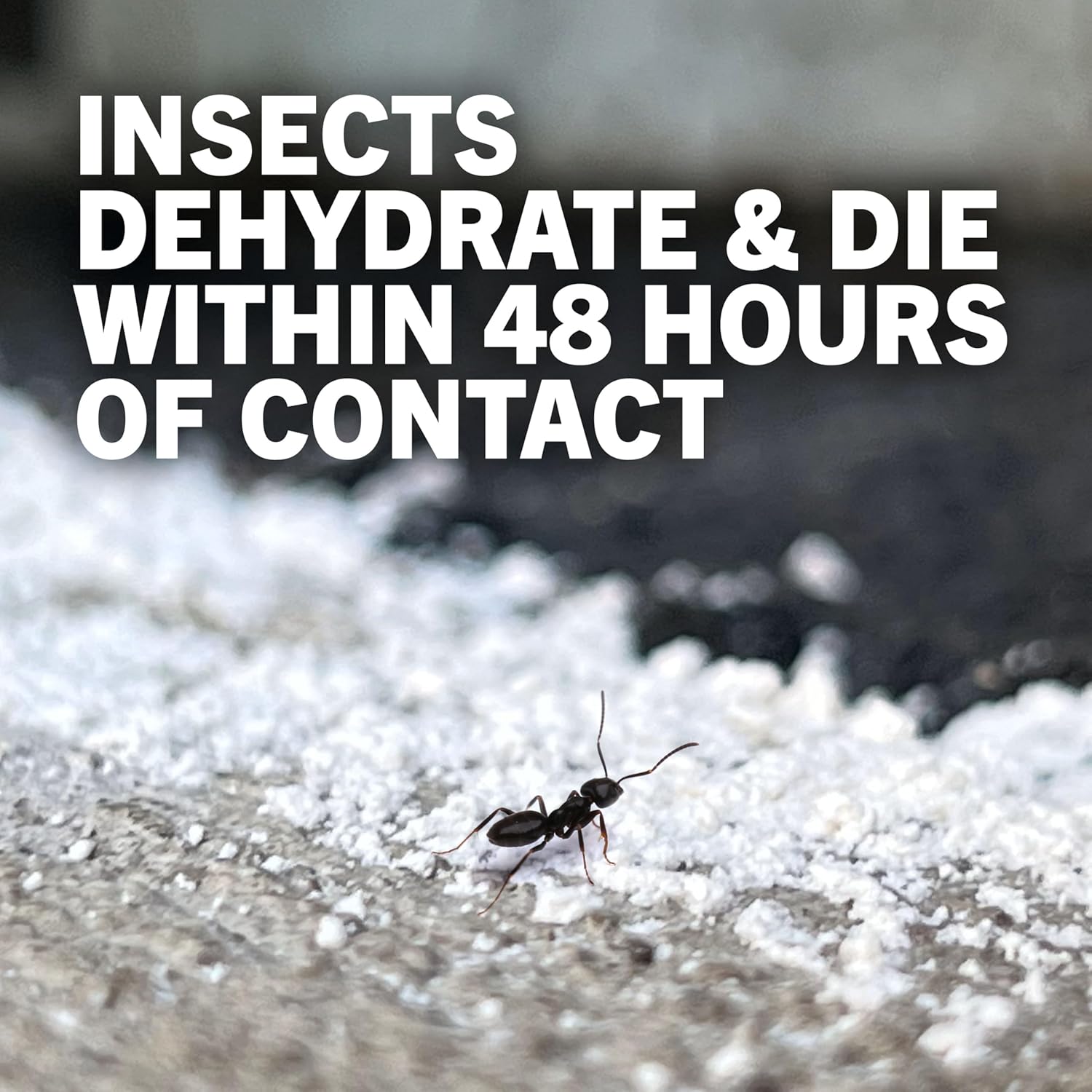
A wall void behind an outlet, the gap under a baseboard, or the space inside a hollow door frame is where roaches often retreat during the day, and none of those spots are reachable with a spray nozzle or a bait placement. A fine dust, whether diatomaceous earth or boric acid, can be puffed into those gaps and stays effective as long as it remains dry, since roaches that cross it pick it up on their bodies and it affects them mechanically or through ingestion during grooming. Because dust does not evaporate or wash away the way a liquid spray does, it is often the longest-lasting layer of a treatment plan, provided it never gets wet.
Diatomaceous earth and boric acid work differently from each other, and it is worth knowing which one you are using. Diatomaceous earth is a mechanical dust made from fossilized diatoms; it damages a roach’s exoskeleton and causes dehydration, and there is no known way for roaches to develop resistance to a mechanical action. Boric acid is a stomach poison that a roach ingests while grooming dust off its legs and antennae. Either can fill the same role in a layered plan. For a full breakdown of boric acid specifically, including how it compares to dust, see our boric acid guide.
Put a Residual Barrier at Entry Points

Bait, an IGR, and dust handle the interior of a home, but roaches also come in from outside through gaps around pipes, door thresholds, and foundation cracks. A residual barrier spray applied along baseboards and entry points is meant to intercept roaches at that boundary before they get further into the house. Look for a spray labeled for weeks or months of residual activity rather than one meant only for immediate knockdown, since the barrier needs to still be active the next time a roach tries to cross it.
Not every household wants a synthetic residual spray indoors, particularly in a kitchen or a home with pets that spend time on the floor. A plant-based spray built around essential oils is a reasonable substitute for the barrier layer in those rooms, even though it typically needs more frequent reapplication than a synthetic residual. For more options in either direction, our pest control spray comparison covers both synthetic and plant-based formulas side by side.
Place Monitors Before You Decide You Are Done

The easiest way to know whether a treatment plan is actually working is to place non-toxic glue traps in a few key spots and check them on a regular schedule, rather than judging progress by whether you happen to see a roach walking across the kitchen at night. A rising catch count means the plan needs adjusting or more time; a falling one is the clearest confirmation that bait, the IGR, dust, and the barrier spray are doing their job together. Monitors are inexpensive, do not interact with any of the other products, and they are the one layer people skip most often simply because it is easy to forget a plan needs checking, not just starting.
| Product | Role in the Plan | Format | Best Placement |
|---|---|---|---|
| Hot Shot Ultra Clear Gel Bait | Interior baiting | Gel syringe | Cabinet hinges, baseboards, cracks |
| TERRO Multi-Surface Bait Stations | Interior baiting, enclosed | Bait station | Under cabinets, behind appliances |
| Zoecon Gentrol Point Source IGR | Growth regulator | Point-source disc | Cabinets, behind appliances, under sinks |
| Safer Brand Diatomaceous Earth | Void and crack treatment | Dust | Wall voids, outlet gaps, baseboard cracks |
| Bengal Gold Roach Spray | Residual perimeter barrier | Aerosol spray | Baseboards, thresholds, entry points |
| Wondercide Indoor Pest Control Spray | Plant-based perimeter barrier | Ready-to-use spray | Kitchens, pet-occupied rooms |
| Catchmaster Spider & Insect Glue Traps | Monitoring | Adhesive sheet | Baseboards, near suspected harborage |
Why You Should Trust Us
We built this list by comparing verified customer ratings and review volume for each product, then cross-checking Amazon listings against manufacturer label information for active ingredients, application method, and the sites each product is labeled for. We did not physically try every product ourselves; instead, we focused on aggregating what buyers with real infestations report over time, along with the label claims manufacturers are required to substantiate, so that every product on this list plays a specific and verifiable role in a layered plan rather than being included for its brand name alone.
Because a roach treatment plan depends on using different formats together, we also prioritized covering every layer, bait, growth regulator, dust, barrier spray, and monitor, over stacking the list with several versions of the same format. That is also why this list intentionally overlaps only where a product is doing a genuinely different job than the ones already covered in our other roach guides linked throughout this article.
Final Thoughts
If you are only going to buy one product today, the Hot Shot Ultra Clear Roach & Ant Gel Bait is the easiest place to start, since it fits directly into the baiting step nearly every treatment plan begins with and its clear formula is simple to place in visible spots like cabinet hinges without leaving a residue behind. It will not finish the job on its own, but it addresses the roaches you can currently see faster than any of the other layers on this list.
For covering the most ground per dollar, the Safer Brand Diatomaceous Earth is the best value on this list. A single 4 lb bag stretches across every crack, void, and baseboard gap in a home, it works through a mechanical action rather than a chemical one, and it does double duty on ants and other crawling insects if roaches are not the only problem. Between a bait, an IGR disc, dust in the voids, and a barrier spray at the entry points, a household can build a complete plan without any single product needing to do more than its own job. Our broader Patio, Lawn & Garden picks cover other pest and yard-care categories if roaches are not the only issue on your list.
FAQs
How long does pest control for roaches take to work in 2026?
A contact spray affects roaches within minutes, gel bait typically shows results within a day or two as the bait spreads through a nest, and a growth regulator can take several weeks to show its full effect since it works on the life cycle rather than on individual roaches immediately. A full layered plan is usually judged over several weeks, not days, using a monitor to track whether activity is trending down.
Can I use gel bait and a spray in the same room?
Yes, but keep them apart from each other physically. A residual or repellent spray applied directly on or near a bait placement can make roaches avoid the bait entirely, which defeats the point of baiting. Spray baseboards and entry points as a perimeter barrier, and place bait in cracks, hinges, and under cabinets away from where the spray lands.
Are growth regulators safe to use in a kitchen?
Check the product label for the specific sites it is approved for use in. Zoecon’s own label for its Gentrol Point Source disc lists kitchens and other food-handling areas among the sites it is intended for, but the safest approach is always to follow the placement and application directions printed on the label of whichever product you buy rather than assuming every IGR is approved for the same locations.
How often should bait stations and glue traps be replaced?
Check bait stations periodically for remaining bait level through the clear window most stations include, and replace them once the bait is gone or per the timeframe on the label. Glue traps lose stickiness as dust settles on them or once they fill up, so check them weekly during active treatment and swap them out as soon as they stop catching anything new.
What is the fastest way to reduce a heavy roach infestation?
Start with bait in every room showing activity, since that addresses the roaches you can see the fastest, then add dust in voids and a barrier spray at entry points within the same day to stop new roaches from entering while the bait works. If a single spray is genuinely all you have time for right now, our roach spray for home guide covers which sprays perform best on their own, though a heavy infestation will still respond faster to a layered plan than to spray alone.



Write Your Review
No reviews yet. Be the first to share your experience!