

Peanut butter shows up in more pantries than almost any other spread, but not every jar or pouch is built the same way once you flip it over and read the nutrition panel. For shoppers who are watching added sugar, total carbohydrates, or a shorter ingredient list, the gap between a plain roasted-peanut powder and a honey-sweetened spread can be real. Our top pick is the Naked Nutrition Powdered Peanut Butter for its single-ingredient label with no added sugar or added salt.
This guide compares 6 peanut butter for diabetics for October 2026, using only what is printed on each product’s own nutrition facts panel and ingredient list rather than front-of-package marketing claims. Instead of ranking by taste or price alone, the focus here is on what actually shows up on the label: added sugars, total carbohydrates, fiber, protein, and whether the ingredient list is short or padded with oils and sweeteners. If you are also comparing other lower-sugar pantry staples, our sugar-free protein bar picks cover a lot of the same label-reading ground.

Pros
- Single-ingredient label: just roasted peanuts, nothing else to scan for
- 0g added sugar and no added salt on the nutrition panel
- Only about 50 calories and 3g carbs per 12g scoop
- Mixes easily into oatmeal, smoothies, or yogurt for portion control
Cons
- Powder form will not spread on toast without mixing in water first
- Not a one-to-one swap for jarred peanut butter in recipes that rely on its fat content
Naked Nutrition Powdered Peanut Butter is made by pressing most of the oil out of roasted peanuts, leaving a dry powder that mixes with water into a spreadable consistency. The ingredient list stops at one item, roasted peanuts, which makes it one of the simplest labels in this comparison to read at a glance.
The main strength here is exactly that simplicity: no added sugar, no added salt, and a short ingredient list that does not require any label-reading detective work. At roughly 50 calories and 3g of carbohydrate per 12g scoop, it also runs noticeably lower in calories and fat than a traditional jarred spread.
The real tradeoff is texture and versatility. Because the oil has been pressed out, the powder needs water stirred in before it behaves anything like traditional peanut butter, and it will not perform the same way in recipes built around peanut butter's fat content, such as thick sandwich spreads or certain baked goods.
Bottom line: for anyone who wants the shortest possible peanut butter ingredient list and plans to use it in smoothies, oatmeal, or baking rather than straight on toast, this is the easiest option here to feel confident about.
- Format: powder, mixed with water before use
- Serving size: 12g scoop
- Calories per serving: about 50
- Protein per serving: 7g
- Carbohydrates per serving: 3g
- Ingredient list: roasted peanuts (1 ingredient)
- Dietary notes: vegan, gluten-free, no added sugar or salt
A common starting ratio is one part powder to one part water, stirred until smooth, which recreates a spreadable texture close to traditional peanut butter. Many buyers skip the water step entirely and stir the dry powder straight into oatmeal, yogurt, or a smoothie, where the extra liquid already in the recipe does the mixing for them.
This fits buyers who want the shortest possible peanut butter ingredient list, use peanut butter mostly in shakes or oatmeal rather than on toast, or are managing portions with a measured scoop rather than a butter knife.

Pros
- Lower cost per ounce than boutique clean-label brands
- Smooth, familiar texture for everyday sandwiches
- Large 80oz jar suits bigger households
- Long shelf life unopened
- Widely available at most grocery stores
Cons
- Ingredient list includes added sugar, about 3g per serving
- Contains a hydrogenated vegetable oil blend to prevent separation
SKIPPY Creamy Peanut Butter is a mainstream jarred spread built for everyday sandwiches and baking, and the 80 ounce size here is aimed at households that go through peanut butter quickly. The texture is smooth and consistent from the first scoop to the last.
Its main strength is practicality: it is inexpensive per ounce, holds up well on a shelf, and behaves predictably in recipes because it does not separate the way natural, oil-on-top peanut butters can. The ingredient list is straightforward to find, listing roasted peanuts, sugar, hydrogenated vegetable oil, and salt.
The tradeoff is that same ingredient list. It includes added sugar and a hydrogenated oil blend, both of which are absent from the shorter-ingredient options later in this guide. Neither ingredient is unusual for a mainstream peanut butter, but they are worth knowing about if you are specifically comparing labels.
Bottom line: a practical, budget-friendly jar for everyday use, as long as you go in aware that its label includes added sugar and hydrogenated oil rather than a bare peanuts-only ingredient list.
- Format: jarred spread
- Serving size: 2 tbsp (32g)
- Calories per serving: about 190
- Protein per serving: 7g
- Added sugars per serving: about 3g
- Ingredient list: roasted peanuts, sugar, hydrogenated vegetable oil, salt
The hydrogenated vegetable oil in this ingredient list is a fully hydrogenated blend, which is why the nutrition panel can still show 0g trans fat even though the word "hydrogenated" appears on the ingredient list. It is added purely to keep the peanut butter smooth and prevent oil separation, not for flavor.
This suits larger households or anyone making sandwiches daily who wants a no-stir, budget-friendly jar and is not specifically trying to avoid added sugar or hydrogenated oil on the label.

Pros
- Single ingredient: organic dry roasted peanuts only
- No added sugar or added salt
- Traditional jarred texture, spreads directly on toast
- Certified organic
- More affordable than many boutique clean-label jars
Cons
- Natural oil separation means it needs stirring before use
- Milder, blander flavor since there is no added salt or sugar to adjust to
365 by Whole Foods Market Organic Creamy Peanut Butter is a traditional jarred spread made from a single ingredient, organic dry roasted peanuts, with no added sugar, salt, or oil. It sits between the powdered options and the more heavily processed jars in this guide.
Its clearest strength is the ingredient list itself: peanuts and nothing else, which makes it one of the simplest labels in this comparison alongside Naked Nutrition. Unlike the powder, it keeps the full oil content, so it spreads directly out of the jar like traditional peanut butter.
Because there is no added oil to keep it stable, the natural oil will separate and rise to the top over time, so it needs a stir before each use, and the flavor is noticeably plainer than a peanut butter with added salt or sugar since there is nothing masking the plain peanut taste.
Bottom line: a solid choice for anyone who wants a traditional jarred texture with the same short ingredient list as a powdered option, as long as stirring before use is not a dealbreaker.
- Format: jarred spread, natural style (oil separates)
- Serving size: 2 tbsp
- Calories per serving: about 190
- Protein per serving: 7g
- Ingredient list: organic dry roasted peanuts (1 ingredient)
- Certification: USDA Organic
Stir thoroughly before the first use since the oil naturally separates and rises to the top of the jar. Refrigerating after opening slows down future separation, though a light stir before each use is still typically needed.
Best suited to shoppers who want a certified organic, single-ingredient jarred peanut butter and are comfortable stirring before use in exchange for skipping added sugar, salt, and oil entirely.

Pros
- 0g added sugars per the nutrition panel
- No-stir, smooth texture thanks to a palm oil blend
- Short two-ingredient list
- Responsibly sourced peanuts
- Convenient wide-mouth jar
Cons
- Contains palm oil, a sourcing consideration for some shoppers
- Higher price per ounce than mainstream jars
Justin's Classic Creamy Peanut Butter Spread uses just two ingredients, dry roasted peanuts and palm oil, to get a smooth, no-stir texture without needing added sugar or salt to round out the flavor. It is positioned between the bare single-ingredient jars and mainstream stabilized spreads in this guide.
The main strength is that it delivers the convenience of a no-stir jar, similar to SKIPPY in that respect, while keeping 0g added sugars on the label. The palm oil is doing the job that sugar and hydrogenated oil do in other jars, keeping the texture consistent without separating.
The tradeoff is palm oil itself, which is a sourcing and personal-preference consideration for some shoppers regardless of the nutrition numbers, and it typically costs more per ounce than a mainstream jar like SKIPPY.
Bottom line: a good middle option for anyone who wants a no-stir jarred texture without added sugar, and is comfortable with palm oil as the ingredient doing that work.
- Format: jarred spread, no-stir
- Serving size: 2 tbsp
- Calories per serving: about 210
- Protein per serving: 7g
- Added sugars per serving: 0g
- Ingredient list: dry roasted peanuts, palm oil (2 ingredients)
Compared to a natural, stir-yourself peanut butter, a no-stir jar like this one trades a slightly longer ingredient list, adding one oil, for the convenience of not needing to mix anything before use. Whether that tradeoff is worth it depends on how much stirring genuinely bothers you.
Palm oil in the ingredient list is what keeps this jar from separating the way a bare peanuts-only spread does, so it is ready to spread straight from the jar with no waiting or mixing required.
Pros
- 8g of protein per serving at only 60 calories
- 87% less fat than traditional peanut butter
- Mixes easily into shakes, oatmeal, and baking
- Gluten-free formula
- Large 30-ounce size lasts through many servings
Cons
- Powder needs water to reconstitute, not spreadable straight from the jar
- Milder flavor than traditional whole peanut butter
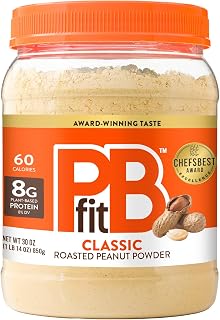
PBfit Classic Peanut Butter Powder is made by pressing most of the natural oil out of real roasted peanuts, then grinding what remains into a fine powder. The result is a product that delivers 8 grams of protein at just 60 calories per two-tablespoon serving, compared to roughly 190 calories in the same serving of traditional whole peanut butter.
The powder mixes cleanly into water to form a spread, or straight into shakes, oatmeal, and yogurt without needing to stir past any oil separation, which is a common frustration with natural whole peanut butters. It is gluten-free and made without added sugar.
Flavor-wise, it tastes recognizably like peanut butter but is milder and less rich than a whole-nut spread, since most of the fat that carries flavor has been removed. Reviewers frequently note it works best blended into other foods rather than eaten plain by the spoonful.
Bottom line: for anyone tracking calories and protein, this is the most well-reviewed powdered peanut butter option on the market, and the 30-ounce size means it lasts through months of regular use.
- Format: Powder, mixes with water
- Serving size: 2 Tbsp (12g powder)
- Protein: 8g per serving
- Calories: 60 per serving
- Fat: 87% less than traditional peanut butter
- Size: 30 oz
- Diet labels: Gluten-free
Whisk 2 tablespoons of powder with about 1 to 1.5 tablespoons of water to form a spreadable consistency, adjusting water for a thicker or thinner texture. It can also be added dry directly to smoothies, overnight oats, pancake batter, or homemade energy bites without needing to reconstitute it first.
Best suited for people who regularly build protein shakes, oatmeal bowls, or baked goods and want a lower-calorie peanut butter flavor without the added fat of a whole-nut spread. It is less suited for anyone who specifically wants a thick, oily, spreadable peanut butter straight out of the jar.

Pros
- Familiar sweet flavor from real honey
- 80% peanuts per the label
- No preservatives
- Gluten-free
Cons
- Ingredient list includes both sugar and honey, both added sugars
- Higher added sugars per serving than the unsweetened options in this guide
Jif Natural Creamy Peanut Butter Spread and Honey blends a peanut butter base with real honey, aimed at buyers who want a sweeter, dessert-like spread rather than a plain peanut flavor. It is the clearest example in this guide of a peanut butter built around added sweetness rather than around avoiding it.
Its strength is flavor and familiarity, delivering a smooth, sweet spread with 80% peanuts and no preservatives. For anyone who simply likes the honey flavor and is not specifically trying to minimize added sugar, it performs exactly as intended.
The tradeoff is squarely on the label: the ingredient list includes both sugar in the peanut butter base and added honey, which together push its added sugars per serving higher than any of the unsweetened or single-ingredient options covered elsewhere in this guide.
Bottom line: this is the option to reach for if honey flavor is what you are after, and the one to skip if the goal is minimizing added sugars, since its label is the most transparent illustration of what added sugar looks like on a peanut butter ingredient list.
- Format: jarred spread
- Serving size: 2 tbsp
- Calories per serving: about 190
- Protein per serving: 7g
- Total sugars per serving: about 6g, including added sugars
- Ingredient list: peanut butter spread (peanuts, sugar, palm oil, salt, molasses), honey
This ingredient list shows two separate added sweeteners, sugar within the peanut butter base itself and honey blended in afterward, which is why its Total Sugars and Added Sugars figures both run higher than the unsweetened jars in this guide. It is a useful side-by-side reference for what a sweetened label looks like compared to a plain one.
Best suited to buyers who enjoy a sweeter, honey-flavored spread and are already tracking added sugar elsewhere in their diet, rather than those specifically looking to minimize it in their peanut butter.
Peanut Butter For Diabetics Buying Guide
A peanut butter label carries more useful information than most shoppers ever stop to read. The five checks below are the ones that make the biggest difference if you are trying to understand exactly what is in the jar, and they take about as long to run through as reading the ingredient list itself.
Check the Added Sugars Line, Not Just Total Sugars

Since 2020, U.S. nutrition labels have been required to break out “Added Sugars” as its own line underneath “Total Sugars.” Total Sugars includes any sugar that occurs naturally in the peanuts themselves, which is usually a gram or two and cannot be removed. Added Sugars only counts sweeteners the manufacturer mixed in, whether that is cane sugar, coconut sugar, molasses, or honey.
In this lineup, the Naked Nutrition Powdered Peanut Butter, the 365 by Whole Foods Market Organic Creamy Peanut Butter, and Justin’s Classic Creamy Peanut Butter Spread all list 0g Added Sugars, because their ingredient lists stop at peanuts, with palm oil the only addition on Justin’s. Jif Natural Creamy Peanut Butter Spread and Honey is the clearest example of the opposite end: its ingredient list includes both sugar and honey, and its label reflects that with a meaningfully higher added sugars count than the plain options.
Read the Full Ingredient List, Not Just the Front Label

Words like “natural,” “no stir,” or “protein powder” on the front of a package describe texture and convenience, not sugar content. The only way to know what is actually inside is to read the ingredient list on the back, where items are listed in order from most to least by weight.
PBfit Classic Peanut Butter Powder is a good example of why this matters: it is marketed around being lower in fat and calories than traditional peanut butter, and that part is accurate, but its ingredient list includes coconut sugar alongside roasted peanuts and salt. A powder format does not automatically mean a sugar-free format, so it is worth checking that line specifically rather than assuming. SKIPPY Creamy Peanut Butter is another case worth reading closely, since its ingredient list includes both sugar and hydrogenated vegetable oil, added to keep the texture smooth and prevent the oil from separating in the jar.
Compare Total Carbohydrates and Fiber per Serving
Total carbohydrates and dietary fiber are two more lines worth lining up side by side, and serving size matters here because it is not standardized across formats. A powdered peanut butter serving is typically a 12 to 16 gram scoop, while a traditional jarred spread is measured as two tablespoons, usually around 32 grams. That size difference is part of why powders show fewer grams of carbohydrate per serving even before ingredients are considered.
Across the options here, a two-tablespoon serving of a traditional jarred peanut butter generally lands around 6 to 10 grams of total carbohydrate with 2 grams of fiber, while a single scoop of powder runs lower, closer to 3 grams of carbohydrate, simply because a scoop weighs less than two tablespoons of full-fat spread. Neither number tells the whole story on its own, which is exactly why reading both the serving size and the gram counts together matters more than glancing at one figure in isolation.
Decide Between Traditional Jarred Peanut Butter and Powdered Peanut Butter

Powdered peanut butter, like the Naked Nutrition and PBfit options here, has most of the oil pressed out before packaging, which is why it comes as a dry powder that needs water stirred in to become spreadable. That process is what gives it fewer calories and less fat per serving than a jarred spread, but it also means it will not act like a one-to-one substitute for peanut butter in recipes that depend on its fat content, like baking or a thick sandwich spread.
Traditional jarred peanut butter, whether that is a mainstream jar like SKIPPY or a shorter-ingredient option like 365 by Whole Foods Market or Justin’s, keeps the full oil content and spreads directly out of the jar. If you are deciding between formats, think about how you actually use peanut butter day to day. Anyone comparing lower-calorie pantry swaps more broadly may also want to look at our low-calorie protein bar roundup, which walks through a similar powder-versus-whole-food tradeoff.
Watch for Hydrogenated Oils and How They Are Labeled
“Hydrogenated vegetable oil” on an ingredient list sounds like it should mean trans fat, but that is not always the case. When an oil is fully hydrogenated, U.S. labeling rules allow the nutrition panel to show 0g trans fat, even though the word “hydrogenated” still appears in the ingredient list itself. SKIPPY Creamy Peanut Butter is one of the products here that uses this kind of oil blend to keep the peanut butter from separating on the shelf.
Whether this matters to you personally is a judgment call, not a rule, since the label is accurate either way. If you would rather avoid the ingredient entirely regardless of the trans fat number, the single-ingredient and two-ingredient options in this list, such as Naked Nutrition, 365 by Whole Foods Market, and Justin’s, sidestep the question completely because they do not use it in the first place.
Compare the Listed Serving Size to How You Actually Use It
Every number on a nutrition label, from added sugars to protein, is calculated against a specific serving size chosen by the manufacturer, not against however much you personally scoop onto a spoon or spread on toast. A jarred peanut butter’s two-tablespoon serving and a powder’s 12 to 16 gram scoop are both accurate for that exact amount, but if a real serving in your kitchen runs closer to three or four tablespoons, every figure on the label effectively doubles or more.
This is less about any single product and more about how to read any label honestly. Before comparing added sugars or carbohydrates across two peanut butters, it helps to check whether their listed serving sizes actually match each other, since a powder scoop and a jarred spread tablespoon are not the same weight, and a side-by-side number only means something once the portions are equivalent.
| Product | Format | Serving Size | Added Sugars | Protein per Serving |
|---|---|---|---|---|
| Naked Nutrition Powdered Peanut Butter | Powder | 12g scoop | 0g | 7g |
| SKIPPY Creamy Peanut Butter | Jarred spread | 2 tbsp (32g) | About 3g | 7g |
| 365 by Whole Foods Market Organic Creamy Peanut Butter | Jarred spread | 2 tbsp | 0g | 7g |
| Justin’s Classic Creamy Peanut Butter Spread | Jarred spread | 2 tbsp | 0g | 7g |
| PBfit Classic Peanut Butter Powder | Powder | 16g scoop | Included in 2g total sugars (coconut sugar) | 8g |
| Jif Natural Creamy Peanut Butter Spread and Honey | Jarred spread | 2 tbsp | Included in 6g total sugars | 7g |
Why You Should Trust Us
We built this comparison directly from each product’s own nutrition facts panel and ingredient list, sourced from the manufacturer’s official product pages and cross-checked against public nutrition databases rather than relying on front-of-package claims alone. Where a brand’s marketing language and its ingredient list told two slightly different stories, such as a powder still containing an added sweetener, we noted the ingredient list as the source of record, since that is what is legally required to be accurate.
None of this replaces personalized guidance. Reading a nutrition label carefully is a genuinely useful habit, but if you are managing blood sugar as part of a broader eating plan, a conversation with your doctor or a registered dietitian about where peanut butter fits alongside everything else you eat is worth having before making any single product a daily habit.
Final Thoughts
If you want the shortest possible ingredient list and the clearest 0g added sugar line, the Naked Nutrition Powdered Peanut Butter is the easiest option to feel confident about, since roasted peanuts are the only thing in the bag. It is not a direct swap for jarred peanut butter in every recipe, but for mixing into oatmeal, smoothies, or yogurt it is hard to beat on label simplicity.
For a traditional jarred spread at a lower cost per ounce, SKIPPY Creamy Peanut Butter remains the practical everyday pick, as long as you go in knowing its label includes both added sugar and a hydrogenated oil blend. Shoppers who want a jarred spread without either of those two ingredients should look to 365 by Whole Foods Market Organic Creamy Peanut Butter or Justin’s Classic Creamy Peanut Butter Spread instead, both of which keep their ingredient lists to peanuts alone or peanuts plus one oil. For more label-driven comparisons in the same aisle, our peanut butter for weight loss guide and the wider grocery and gourmet food picks are worth a look.
FAQs
What should I check on a peanut butter for diabetics label in 2026?
Start with the Added Sugars line under Total Sugars, then read the full ingredient list rather than the front of the package. A short ingredient list, such as just roasted peanuts, or peanuts with salt, is the easiest way to confirm there is nothing beyond the peanuts themselves.
Is powdered peanut butter nutritionally different from jarred peanut butter?
Yes. Powdered peanut butter has most of the oil pressed out before packaging, which lowers its calories and fat per serving compared to a traditional jarred spread. The tradeoff is texture: it needs water mixed in to become spreadable and will not behave like full-fat peanut butter in recipes that rely on that fat content.
Does “natural” peanut butter always mean no added sugar?
Not automatically. “Natural” typically refers to the absence of artificial preservatives or flavors, not sugar content. The only reliable way to confirm whether a product has added sugar is to check the Added Sugars line on the nutrition panel and the ingredient list itself, since some products marketed as natural still include cane sugar, coconut sugar, or honey.
Why does a peanut butter label list hydrogenated oil if it shows 0g trans fat?
U.S. labeling rules allow a product made with fully hydrogenated oil to display 0g trans fat on the nutrition panel, even though the ingredient itself still appears by name in the ingredient list. Manufacturers use it to keep peanut butter from separating on the shelf. If you would rather avoid the ingredient regardless of the trans fat number, single-ingredient or two-ingredient peanut butters skip it entirely.
Should I talk to a doctor before changing which peanut butter I buy?
If you are adjusting your diet to manage blood sugar, it is worth discussing any regular pantry staple, including peanut butter, with your doctor or a registered dietitian who can look at it alongside your full diet and any medications. Our sugar-free protein bar guide covers a related category if you are building out a broader label-conscious pantry.
How much fiber is typically in a serving of peanut butter for diabetics?
Most of the peanut butters in this comparison list around 2 grams of dietary fiber per two-tablespoon serving, whether they are a traditional jarred spread or a powdered version scaled to a smaller scoop. Fiber comes from the peanuts themselves rather than any added ingredient, so it tends to hold fairly steady across brands regardless of whether sugar or oil has been added elsewhere on the label.
Write Your Review
No reviews yet. Be the first to share your experience!