

Remote living, off-grid cabins, and rural road travel bring peaceful independence, but staying connected to family, work, and essential services remains a persistent challenge. When terrestrial broadband and fiber lines do not reach your property, finding a dependable hotspot for rural areas becomes your primary gateway to the modern digital world. In remote territory, weak cellular reception, limited tower density, and carrier dead zones quickly turn simple tasks like checking email or streaming video into frustrating exercises. To help you cut through the marketing noise and navigate cellular dead zones, we evaluated 6 hotspot for rural areas options from NETGEAR, TheGlobalLeaderinMobileHotspotSolution, GLiNet and more for September 2026. Our research focuses directly on signal stability, carrier flexibility, antenna capabilities, and practical field reliability across the country.
Whether you reside permanently on an acreage, manage an off-grid homestead, or travel the interstate system in an RV, choosing the right mobile device ensures your household maintains consistent internet without relying on expensive satellite installations. You can expand your home workstation setup with dedicated peripherals, but without a steady data pipeline, productivity comes to an immediate halt. Our top pick is the GL.iNet GL-X3000 (Spitz AX) for its enterprise-grade 5G reception, detachable external antenna flexibility, and dual-SIM automatic failover. For more advice on outfitting a remote workstation, explore our comprehensive Computers deals and reviews hub.
Pros
- Multi-carrier automatic network optimization
- Connects up to 10 devices simultaneously
- Contract-free virtual SIM operation
- Broad international coverage across 160 plus countries
Cons
- Dependent on nearby cellular tower coverage in deep rural dead zones
- Lacks external antenna ports to amplify weak signals
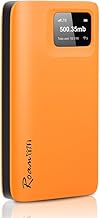
The RoamFi RoamWiFi is a portable wireless hotspot engineered for users who need flexible internet access without committing to a single carrier contract. It is an appealing solution for road trippers, remote professionals, and rural travelers moving through areas where cellular reception varies from one mile to the next.
Its primary strength lies in its intelligent network selection, which scans for and connects to the best available cellular partner automatically. Because the unit utilizes virtual SIM architecture, there are no physical SIM cards to swap, and it can simultaneously supply internet access to up to ten connected gadgets.
Potential buyers should note that performance still relies on existing cell tower infrastructure, so reception will be limited in complete cellular dead zones. Those who require a high-throughput home broadband replacement with high-gain external antenna ports should consider a dedicated stationary rural cellular router instead.
Bottom line: The RoamFi RoamWiFi delivers reliable carrier versatility and portable convenience, making it a dependable travel companion for off-the-beaten-path road trips and mobile internet needs.
- Connectivity: Cloud-based virtual SIM technology (no physical SIM required)
- Device Capacity: Connects up to 10 devices simultaneously
- Coverage: Operational across 160 plus countries and regions
- Network Selection: Automatic multi-carrier signal detection
- Form Factor: Compact pocket-sized mobile router
- Power: Integrated rechargeable battery
- Contract Terms: Pay-as-you-go without contracts
- Introductory Data: 1GB regional coverage for the United States, Canada, and Mexico
Setting up the RoamFi RoamWiFi is straightforward and requires zero technical background. Thanks to cloud-based virtual SIM technology, you do not need to install a physical SIM card or manually input APN network credentials. Turning the unit on prompts it to search for nearby carrier signals and start broadcasting a secure Wi-Fi network.
The hotspot works with virtually all standard Wi-Fi-enabled electronics, allowing up to ten gadgets to browse simultaneously. It is fully compatible with laptops, smartphones, tablets, streaming sticks, and portable gaming systems running on iOS, Android, Windows, or macOS.
This mobile hotspot is tailored for RV travelers, campers, and rural motorists who regularly cross between different service territories. The automatic carrier-switching capability helps maintain internet access as regional network dominance shifts between providers.
It is also a sensible emergency backup for rural residents dealing with unstable DSL or satellite home internet. However, users needing a permanent whole-home connection to support high-bandwidth video streaming across an entire household will be better served by a fixed rural gateway equipped with external antenna jacks.

Pros
- High-speed dual-band Wi-Fi 6 performance with MU-MIMO support
- Versatile multi-WAN failover across cellular, Ethernet, and tethering
- Pre-configured WireGuard and OpenVPN for whole-network protection
- Detachable antennas simplify roof and exterior antenna mounting
- Deep network customization via OpenWrt administration interface
Cons
- Dual SIM operates in single standby rather than concurrent active modes
- Advanced OpenWrt interface carries a learning curve for casual users
- Physical eSIM card requires a separate purchase to activate
The GL.iNet Spitz AX (GL-X3000) is a high-performance 5G cellular router designed specifically for rural households, RV campers, and mobile professionals seeking steady broadband outside traditional cable footprints. By combining 5G cellular connectivity with dual-band Wi-Fi 6, it delivers fast, stable local networking across numerous smart devices simultaneously.
Its primary strength is connection redundancy, featuring robust multi-WAN functionality that smoothly manages handoffs between cellular, wired Ethernet, repeater, and tethered devices. The inclusion of six detachable external antennas allows users to connect high-gain directional or dome antennas to pull in faint signals, while built-in WireGuard and OpenVPN clients protect entire networks without significant speed loss.
On the downside, the dual-SIM slots run in single standby, which means carrier switching is handled through failover rather than simultaneous data aggregation. Users seeking a basic plug-and-play hotspot with zero setup may also find the extensive OpenWrt dashboard overwhelming compared to standard consumer mobile hotspots.
Bottom line: The GL.iNet Spitz AX is one of the most capable routers for remote living, giving off-grid homeowners and road travelers elite network control, antenna flexibility, and dependable carrier backup.
- Wi-Fi Standard: Wi-Fi 6 (802.11ax) dual-band with MU-MIMO
- Wireless Speeds: Up to 574 Mbps (2.4GHz) and 2402 Mbps (5GHz)
- Cellular Networks: 5G (NSA/SA), 4G LTE, and 3G fallback
- SIM Slots: Dual nano-SIM with single standby
- Antenna Setup: 6 detachable external antennas
- Carrier Certification: AT&T and T-Mobile IoT certified
- VPN Speeds: WireGuard up to 300 Mbps, OpenVPN up to 150 Mbps
- Firmware: Proprietary system based on OpenWrt v21.02
- Security: DNS over TLS, DNS over HTTPS, and VPN cascading
The Spitz AX is certified for AT&T and T-Mobile IoT data plans, allowing simple activation by inserting a compatible cellular data card directly into either slot. It also features broad fallback compatibility with legacy 4G LTE and 3G networks when venturing outside 5G coverage areas.
Physical installation is tailored for diverse environments, including home utility desks, cabins, and vehicle cabins. Users can keep the stock omnidirectional antennas or detach them to connect dedicated exterior rooftop or dome antennas via the standard SMA ports to boost fringe signal reception.
The multi-WAN routing interface allows you to configure wired Ethernet as the main connection and cellular as an instantaneous failover. Traffic can also be distributed using proportion-based load balancing across multiple active inputs to optimize household bandwidth.
Rural homeowners dealing with spotty satellite connections, sluggish DSL lines, or nonexistent fixed-line broadband will gain immediate utility from this gateway. Its high-gain antenna compatibility and multi-WAN failover ensure smooth primary home internet over cellular networks.
RV owners and road-trip enthusiasts will appreciate the dual-SIM layout, which enables seamless switching between major carriers depending on which cellular tower offers better service at any campsite or remote park.
Power users and remote workers who demand advanced privacy will appreciate the deep OpenWrt integration, enabling whole-home encrypted VPN tunnels, custom DNS profiles, and fine-tuned firewall control directly at the network gateway.

Pros
- Automatic multi-network carrier switching via CloudSIM
- Physical unlocked SIM card slot included
- Dual-band Wi-Fi with support for 16 devices
- Built-in power bank functionality
- Easy navigation via 2.4-inch color touchscreen
Cons
- 5G speeds depend heavily on local carrier tower availability
- Larger and heavier than basic 4G pocket hotspots
- Touchscreen interface can be sensitive to accidental taps
The GlocalMe Numen Air 5G is a versatile mobile hotspot designed for rural homeowners, remote professionals, and frequent travelers who require steady internet outside major metro areas. Combining multi-carrier CloudSIM technology with standard physical SIM support, it provides flexible data access wherever cell towers are reachable.
Its primary strength for rural environments is intelligent carrier switching. Instead of locking you to a single provider, the CloudSIM architecture automatically connects to the strongest compatible cellular tower in the area. The device also features dual-band Wi-Fi supporting up to 16 simultaneous connections, an intuitive 2.4-inch touchscreen for monitoring data, and a built-in power bank to keep other electronics charged.
While capable of reaching up to 2.5 Gbps, real-world speeds remain tethered to the quality of local tower coverage. Those living in deep valleys or locations with zero cellular infrastructure will still struggle to receive a signal. Additionally, users who require terabytes of continuous home streaming may find dedicated fixed-wireless home internet plans more practical than mobile data bundles.
Bottom line: For rural residents needing a reliable backup connection and travelers moving between patchy reception zones, the GlocalMe Numen Air offers exceptional network flexibility and solid multi-device connectivity.
- Network Speeds: Up to 2.5 Gbps on 5G networks
- Cellular Technology: 5G and 4G LTE compatibility
- SIM Configuration: CloudSIM virtual technology plus unlocked physical SIM slot
- Device Capacity: Connects up to 16 devices simultaneously
- Wi-Fi Frequency: Dual-band 2.4 GHz and 5 GHz
- Display: 2.4-inch LCD touchscreen
- Battery Feature: Reverse charging power bank functionality
- Coverage Support: Over 200 countries and 390 network operators
Setting up the Numen Air is straightforward thanks to its 2.4-inch color touchscreen interface. Users can power on the device, select a pre-purchased CloudSIM data package directly through the interface or companion app, and connect laptops, phones, smart TVs, and tablets to the broadcasted Wi-Fi network within minutes.
For those who prefer their own cellular carrier, the unlocked physical SIM slot accepts standard nano-SIM cards from major providers. The hotspot supports dual-band 2.4 GHz and 5 GHz frequencies, ensuring compatibility with legacy smart home hardware as well as high-bandwidth modern streaming devices.
How does this hotspot help in rural areas?
In rural locations where one cellular provider might have weak service while another is strong, CloudSIM technology automatically scans and connects to whichever supported partner network provides the best signal at your specific location.
Do I have to buy a physical SIM card?
No. The unit operates out of the box using digital CloudSIM data packages purchased on a daily, monthly, or gigabyte basis. However, an unlocked physical SIM card slot is available if you prefer using your own carrier data plan.
Can the device charge my phone?
Yes. The Numen Air features reverse charging capabilities, allowing it to serve as an emergency portable power bank to charge smartphones and other USB-powered gadgets while on the road.

Pros
- Multi-network cellular connectivity
- Virtual eSIM convenience with no physical cards
- Month-to-month flexible prepaid data options
- Compact and travel-ready pocket design
Cons
- Requires existing cellular tower signal to operate
- Does not offer 5G data speeds
The TravlFi JourneyGo is an ultra-portable 4G LTE Wi-Fi hotspot designed to keep campers, RV owners, and road-trippers connected when away from home. By tapping into multiple nationwide cellular towers, this device offers reliable wireless internet access for rural locations without locking users into permanent residential contracts.
A standout feature is the integrated eSIM architecture, which allows the JourneyGo to connect to major networks automatically without swapping physical cards. Users can select data plans ranging from light 2 GB allotments up to unlimited monthly access, activating service only during active travel months to avoid ongoing monthly expenses.
Because performance relies strictly on cellular signals, connectivity will degrade or disappear completely in deep remote valleys and total dead zones. High-demand users who require lightning-fast 5G speeds or low-latency satellite links for competitive gaming might find this 4G-focused unit limiting.
Bottom line: For road-trippers and remote workers looking for a straightforward, contract-free connection that hops between major networks, the TravlFi JourneyGo delivers great versatility in a pocket-sized package.
- Device Type: Portable Wi-Fi Mobile Hotspot
- Cellular Technology: 4G LTE
- SIM Format: Virtual SIM (eSIM, no physical SIM card needed)
- Network Coverage: Nationwide multi-carrier coverage across the United States
- Plan Types: Prepaid pay-as-you-go, 2 GB to unlimited tiers
- Contract Requirements: None (month-to-month service)
- Security: Private password-protected personal Wi-Fi network
This portable hotspot is built for RV enthusiasts, seasonal campers, and road travelers who need steady internet access across varying rural and suburban locations across the country.
It also suits remote professionals who travel occasionally and want a dedicated, secure internet connection without having to pay for a fixed cellular contract year-round.
Anyone residing in areas with zero cellular reception should consider satellite options instead, as the JourneyGo requires at least some baseline tower signal to operate.
Getting started with the TravlFi JourneyGo is straightforward thanks to its virtual SIM system. Because no physical carrier SIM cards need to be inserted, activation takes place digitally through the TravlFi portal.
Once powered on, the hotspot creates a private, password-secured local Wi-Fi network that connects to standard Wi-Fi enabled devices, including laptops, tablets, smartphones, and smart TVs.
Data plans can be paused, upgraded, or renewed on a month-to-month basis, making it easy to align active service periods with seasonal vacation schedules.

Pros
- Unlocked GSM cellular compatibility
- Reliable 4G LTE performance in rural areas
- Pre-registered SIM card included in the box
- Compact and portable travel-friendly build
- Connects multiple wireless devices at once
Cons
- Does not support newer 5G network speeds
- Data speeds depend heavily on local tower reception
- Requires an active cellular data subscription
The NETGEAR Nighthawk MR1100 mobile hotspot router offers a dedicated wireless connection for homes and work setups outside standard broadband coverage. Engineered for flexibility, this unlocked GSM device is built for rural dwellers, mobile workers, and travelers who require stable internet without traditional cable or fiber access.
A primary strength of this router is its dependable 4G LTE signal reception and straightforward carrier setup. The included pre-registered SIM card streamlines the process of getting online, while its capability to link multiple devices simultaneously makes it practical for shared households or multi-gadget users.
Because this model operates strictly on 4G LTE frequencies, users looking for high-bandwidth 5G connections will need to look elsewhere. In addition, actual download speeds depend heavily on local tower proximity, so users in deep cellular dead zones may experience slower data rates.
Bottom line: The NETGEAR Nighthawk MR1100 is a dependable, portable internet solution for rural properties and road trips, offering flexible GSM connectivity and simple setup.
- Brand: NETGEAR
- Model: Nighthawk MR1100
- Network Technology: 4G LTE
- Carrier Compatibility: AT&T and GSM Unlocked
- Color: Steel Gray
- SIM Card: Pre-registered SIM card included
- Product Category: Mobile Hotspot Router
The Nighthawk MR1100 comes unlocked for GSM networks, allowing you to use it with compatible carriers. The included pre-registered SIM card enables quick activation on an eligible cellular data plan without tedious configuration steps.
To get started, insert the SIM card, power the device on, and connect your Wi-Fi enabled computers, phones, or tablets using the default network credentials. In rural environments, placing the hotspot near a window or an exterior-facing wall usually produces the best signal strength.
This mobile router is ideal for homeowners in rural or semi-rural regions where wired internet providers do not offer cable or fiber lines. It acts as an effective primary internet gateway or as a dependable backup connection when fixed lines experience outages.
It also suits digital nomads, RV owners, and road travelers who require a secure, multi-device Wi-Fi network wherever compatible GSM cellular coverage is accessible.

Pros
- WiFi 6 connectivity supports up to 8 devices
- Long 15-hour battery life on a single charge
- Built-in screen for monitoring data usage
- Ultra-lightweight pocket design at 3.5 ounces
- No physical SIM card or carrier contracts needed
Cons
- Operates on 4G LTE networks rather than 5G
- Requires contacting support to initiate monthly data rollover
- Device cap of 8 connections is lower than full-sized routers
The STATELINKER S2 is a pocket-sized 4G LTE mobile hotspot tailored for users across North America who need internet access off the beaten path. Operating without a physical SIM card, it is designed for rural travelers, remote job sites, and long-haul drivers looking to avoid cellular carrier contracts.
Its standout advantages include WiFi 6 support for up to eight simultaneous devices and an integrated display that monitors data consumption in real time. The lightweight 3.5-ounce casing also houses a generous battery capable of running for up to 15 hours continuously, ensuring steady connectivity during long road days.
However, users looking for ultra-fast 5G speeds or high-capacity home replacements supporting dozens of smart devices will find this 4G unit limiting. Additionally, while it includes ongoing monthly rollover data, activating that recurring balance requires reaching out to customer support.
Bottom line: The STATELINKER S2 delivers dependable, contract-free 4G internet with excellent battery life, making it a sensible travel companion for rural road trips and outdoor work.
- Brand: STATELINKER
- Model: S2
- Network Technology: 4G LTE
- Wireless Standard: WiFi 6
- Maximum Device Connections: Up to 8 devices
- Battery Life: Up to 15 hours of continuous use
- Weight: 100 grams (3.5 ounces)
- Display: Built-in real-time data monitor screen
- Data Included: 10GB starter data plus 2GB recurring monthly rollover
Setting up the STATELINKER S2 is simple thanks to its SIM-free architecture, which removes the need to insert or register a physical carrier card. The device connects directly across supported 4G LTE networks in North America straight out of the package.
To activate the recurring 2GB monthly rollover data for the first time, users must reach out to customer support directly. Once enabled, subsequent monthly data allowances reload automatically without further outreach.
With WiFi 6 connectivity, the device provides reliable local wireless coverage for up to eight devices simultaneously, including laptops, tablets, smartphones, and handheld streaming accessories.
This portable hotspot is designed for mobile professionals, truckers, and RV travelers traversing rural routes where public Wi-Fi is nonexistent. Its lightweight form factor easily fits into a glove compartment, pocket, or backpack.
Remote workers and campers will appreciate the 15-hour battery runtime, allowing for all-day field work or navigation updates without constant recharging stops.
It is best suited for light to moderate data consumers who want contract-free internet access without committing to ongoing cellular carrier service agreements.
How to Choose the Best Hotspots for Rural Areas: Buying Guide
Antenna Design and Signal Amplification for Fringe Reception

In rural environments, the distance between your living space and the nearest cellular broadcast tower is usually substantial. Hills, dense tree canopies, metal roofs, and seasonal weather systems can degrade incoming radio frequencies before they ever reach your living room. A standard pocket hotspot relying strictly on internal, omnidirectional antennas might manage adequate service near a window, but it often struggles when tucked away inside a timber frame cabin or a metal-sided camper. Choosing hardware with external antenna support can be the single factor that determines whether you maintain high-speed broadband or suffer through dropped video conferences.
Hardware like the GL.iNet GL-X3000 (Spitz AX) excels precisely in this category because it incorporates six detachable antennas. Users living in fringe coverage zones can easily remove the stock antennas and attach high-gain directional antennas or a wired exterior dome antenna mounted directly to an RV roof or an outdoor mast. That external routing bypasses interior wall interference and pulls in weak cellular signals that compact units cannot detect. In contrast, portable pocket devices like the GlocalMe Numen Air 5G Mobile Hotspot and the RoamWiFi Mobile Hotspot Pocket WiFi rely on integrated internal antennas designed primarily for personal portability.
While internal antennas offer exceptional convenience when tossing a device into a backpack, they naturally limit your range in deeply isolated hollows and valleys. If you decide on a compact unit such as the TravlFi JourneyGo LTE RV WiFi Hotspot, you will need to position the hardware strategically on an elevated windowsill facing the direction of the closest cellular mast. For permanent rural installations where your home or workshop sits miles from town, prioritizing devices with detachable antennas and dedicated antenna ports provides the vital physical link needed to convert faint radio bands into usable data streams.
Multi-Carrier Switching, CloudSIM, and Physical Dual-SIM Redundancy

Cellular coverage in rural America is fragmented. One valley might enjoy blazing speeds on AT&T while remaining a complete dead zone for Verizon, only for the situation to reverse five miles down the county road. Relying on a single carrier plan in remote areas leaves you vulnerable to sudden outages and localized terrain blockages. Modern mobile broadband solutions address this hurdle through two distinct engineering methods: virtual SIM technologies that switch between major carrier networks dynamically, and physical dual-SIM router slots that provide manual or automatic hardware failover.
Cloud-based virtual SIM hardware, such as the RoamWiFi Mobile Hotspot Pocket WiFi and the GlocalMe Numen Air 5G Mobile Hotspot, uses intelligent network selection technology to scan the surrounding airspace for available cellular signals. These devices connect to the optimal local tower across multiple major carriers without forcing you to insert or swap a tiny physical card. Similarly, the TravlFi JourneyGo LTE RV WiFi Hotspot utilizes built-in e-SIM technology to route across nationwide networks, eliminating the stress of committing to a single regional provider. This flexibility proves invaluable for cross-country travelers who frequently cross county borders and enter unfamiliar cellular footprints.
For fixed rural dwellings and serious road trips, physical dual-SIM flexibility represents an equally potent strategy. The GL.iNet GL-X3000 (Spitz AX) features dual-SIM slots with single standby, backed by AT&T and T-Mobile certifications. This configuration allows you to insert active SIM cards from two separate carriers and configure automatic failover priorities. If your primary ISP connection drops during a severe storm or experiences network congestion, the router automatically shifts traffic to the backup carrier line. On the other hand, traditional single-carrier unlocked options like the Netgear Nighthawk MR1100 4G LTE Mobile Hotspot give you freedom on AT&T compatible networks, though they lack the instantaneous multi-carrier switching built into CloudSIM devices.
Cellular Generations and Local Wi-Fi Standards (5G, LTE, and Wi-Fi 6)

The underlying cellular generation and the internal Wi-Fi broadcast standard directly dictate both download speeds and household network efficiency. In rural territories, cellular carriers continue to rely heavily on long-range 4G LTE frequency bands because low-frequency LTE signals travel further across open countryside and penetrate dense vegetation more effectively than high-frequency millimeter-wave signals. However, low-band and mid-band 5G networks are expanding rapidly across agricultural corridors and rural communities, providing substantially higher bandwidth and reduced latency for demanding remote workers.
When evaluating high-throughput hardware, 5G-capable devices such as the GlocalMe Numen Air 5G Mobile Hotspot deliver maximum speeds up to 2.5 Gbps, making them exceptional choices if you live near upgraded rural towers. Pairing high-speed cellular modems with modern local Wi-Fi transmission is equally critical to prevent local network bottlenecks. Devices like the S2 Portable WiFi Hotspot,10GB Free USA Data 4g LTE and the GL.iNet GL-X3000 (Spitz AX) integrate advanced Wi-Fi 6 technology. This standard ensures improved spectral efficiency, reduced local wireless congestion, and smooth data distribution even when several family members stream videos or browse simultaneously.
If you only need dependable internet for remote bookkeeping, email correspondence, and basic browsing, dedicated 4G LTE hardware remains remarkably effective and stable. The Netgear Nighthawk MR1100 4G LTE Mobile Hotspot offers a proven LTE architecture that provides reliable daily performance on rural cellular grids. Similarly, the TravlFi JourneyGo LTE RV WiFi Hotspot concentrates strictly on nationwide LTE connectivity. While LTE does not match the peak gigabit rates of 5G networks, it often delivers far more consistent coverage in distant unincorporated regions where modern 5G infrastructure has not yet arrived.
Battery Autonomy, Power Architecture, and Stationary Deployment
How a cellular device receives and manages electrical power determines whether it functions best as a nomadic travel companion or an uninterrupted whole-home hub. Portable pocket units depend entirely on internal rechargeable batteries, providing wonderful freedom when working outdoors, inspecting property lines, or driving between job sites. However, operating a battery-powered hotspot around the clock inside a stationary home can introduce long-term battery degradation and heat buildup if the device remains permanently tethered to a wall charger without smart thermal management.
Pocket-sized units like the S2 Portable WiFi Hotspot,10GB Free USA Data 4g LTE feature optimized power systems that deliver up to 15 hours of continuous runtime on a single charge, despite weighing only 100 grams. This battery endurance makes it an exceptional companion for outdoor enthusiasts and long-haul drivers who spend full days away from electrical outlets. Taking power flexibility a step further, the GlocalMe Numen Air 5G Mobile Hotspot doubles as a functional power bank, allowing you to top off a smartphone or peripheral while remaining online. Compact units like the RoamWiFi Mobile Hotspot Pocket WiFi also emphasize long battery life, ensuring you do not need to constantly hunt for an open wall receptacle during your travels.
For a fixed rural homestead or a stationary RV setup, relying on an internal battery is often unnecessary and potentially limiting. The GL.iNet GL-X3000 (Spitz AX) is designed as a rugged cellular gateway intended for direct power integration, making it ideal for continuous 24/7 home or camper operation. It can run continuously without thermal throttling or battery swelling concerns. If you are building out a dedicated workspace in a remote cabin, you might also be organizing desk wiring and pairing your workstation with useful tools like the best USB C hubs for multiple monitors to streamline your daily workflow. Choosing a stationary gateway provides uninterrupted connectivity for all your connected home and office gear.
Device Capacity, Local Network Routing, and Data Management
In a remote household or traveling group, a hotspot does not merely serve a single laptop; it must manage smartphones, streaming sticks, tablets, security cameras, and smart home sensors. Local device limits and traffic handling dictate whether your network stays responsive or crawls to an absolute standstill. Pocket units typically establish direct connection ceilings to conserve their battery life and processor resources, while stationary gateways incorporate sophisticated wireless management to service dozens of endpoints simultaneously without packet collisions.
Client capacity varies widely among modern portable hardware. The S2 Portable WiFi Hotspot,10GB Free USA Data 4g LTE supports simultaneous connections for up to 8 devices, making it suitable for solo travelers or couples. Stepping up in capacity, the RoamWiFi Mobile Hotspot Pocket WiFi accommodates up to 10 devices, while the GlocalMe Numen Air 5G Mobile Hotspot expands connectivity up to 16 devices and includes a 2.4-inch LCD touch screen for tracking active connections and monitoring data usage in real time. Onboarding and tracking your devices through an interactive screen prevents unexpected data overages before your billing cycle concludes.
If your rural networking requirements involve complex office routing, advanced security protocols, or extensive peripheral management, pocket units will quickly show their limitations. The GL.iNet GL-X3000 (Spitz AX) utilizes customizable OpenWrt firmware with access to more than 5,000 ready-made plug-ins, pre-installed WireGuard and OpenVPN tunneling, and multi-WAN load balancing. It even supports DNS over TLS and DNS over HTTPS for encrypted internet browsing. For remote workers who spend long hours at their desks using specialized accessories like the best ergonomic split keyboards, having an enterprise-grade router that manages high-bandwidth data transfers, VPN cascading, and secure multi-device distribution brings complete peace of mind to off-grid living.
| Product | SIM Setup | Cellular Network | Key Hardware Feature |
|---|---|---|---|
| GL.iNet GL-X3000 (Spitz AX) | Dual-SIM with Single Standby | 5G Network, 4G LTE and 3G | 6 detachable antennas |
| GlocalMe Numen Air 5G Mobile Hotspot | CloudSIM Technology and physical SIM slot | 5G speeds up to 2.5 Gbps | 2.4 inch LCD touch screen |
| RoamWiFi Mobile Hotspot Pocket WiFi | No SIM card required | Intelligent network selection technology | Up to 10 connected devices |
| S2 Portable WiFi Hotspot,10GB Free USA Data 4g LTE | No physical SIM card needed | North America 4G LTE | Up to 15 hours of continuous use |
| TravlFi JourneyGo LTE RV WiFi Hotspot | No SIM needed (e-SIM technology) | Nationwide cellular networks | Private network in your pocket |
Why You Should Trust Us
At Daily Deal Here, our mission is to deliver dependable, transparent buying advice tailored to the real-world demands of modern technology users. When researching the best hotspot for rural areas options, we eliminate promotional bias by anchoring our analysis in verified consumer experiences, manufacturer technical specifications, and broad industry patterns. Our editorial staff conducts extensive research across thousands of verified customer reviews and owner feedback themes to identify how these mobile devices perform when operating miles away from metropolitan cellular towers. We examine how hardware handles weak carrier frequencies, shifts between regional bands, and maintains thermal stability during long hours of continuous operation in remote cabins, motorhomes, and job sites.
We combine this customer sentiment evaluation with detailed spec sheet comparisons, tracking cellular modem capabilities, antenna configurations, SIM management versatility, and encryption protocols. By pairing rigorous data analysis with careful editorial curation, we ensure our recommendations reflect genuine consumer value, durability, and practical everyday utility. We never accept free promotional hardware or manufacturer incentives, allowing our editorial perspective to remain fully independent and focused solely on helping American shoppers build reliable connections in isolated locations.
Final Thoughts
Securing dependable internet connectivity in isolated geography requires careful alignment between your physical location, local cellular tower strength, and everyday data habits. Rather than gambling on inconsistent mobile phone tethering that drains your handset battery and throttles your speeds, investing in a dedicated hotspot for rural areas gives you the stability and signal reception necessary to stay productive and entertained. From off-grid homesteads in the high desert to cross-country travel through rural national parks, the modern cellular market offers diverse hardware architectures tailored to varying demands.
For shoppers seeking the absolute strongest reception and whole-home networking power, our top recommendation is the GL.iNet GL-X3000 (Spitz AX). With its six detachable antennas, dual-SIM failover functionality, high-speed Wi-Fi 6, and enterprise-grade OpenWrt software, it stands as the premier stationary and RV powerhouse on the market. If you are operating on a tighter budget and want a compact, straightforward pocket unit with flexible pay-as-you-go data packages, the RoamWiFi Mobile Hotspot Pocket WiFi delivers exceptional value without requiring contracts or physical SIM card installations. It connects up to 10 devices easily and automatically detects the optimal local signal across diverse carrier towers.
Meanwhile, frequent cross-country travelers who need blistering download rates and emergency battery replenishment should consider the GlocalMe Numen Air 5G Mobile Hotspot. Its CloudSIM support across 200 plus countries, multi-gigabit cellular speeds, and dual capability as a portable power bank make it the ultimate companion for mobile professionals navigating unpredictable territory. For RV enthusiasts seeking simple pay-as-you-go nationwide LTE, the TravlFi JourneyGo LTE RV WiFi Hotspot remains another compelling choice. Take the time to evaluate your property’s cellular landscape, consider whether external antennas are necessary, and review our full catalog of buying guides and reviews to outfit the rest of your rural technology setup with confidence.
Frequently Asked Questions About Hotspots for Rural Areas
Can a hotspot for rural areas replace home satellite internet in 2026?
Yes, a dedicated cellular hotspot can serve as a faster, lower-latency alternative to traditional geostationary satellite internet if you have reasonable cellular reception. While traditional satellite connections frequently suffer from severe latency delays and strict weather degradation, cellular models deliver responsive speeds suitable for video conferencing, web browsing, and streaming. However, rural homeowners must verify that local towers provide adequate data allocations. Cellular connections excel for daily productivity, but households consuming thousands of gigabytes of data each month may still require hybrid satellite configurations.
How do external antennas improve a hotspot for rural areas?
External antennas substantially improve cellular reception by capturing signals outside your home and bypassing structural barriers like metal siding, thick insulation, and low-emissivity glass. In remote territory, broadcast towers can stand many miles away, causing weak indoor radio signals. Connecting external directional or omnidirectional antennas directly to router ports allows your gateway to isolate distant cellular frequencies that internal antennas fail to register. This physical amplification stabilizes your connection, significantly reduces packet loss, and delivers faster, more consistent download and upload speeds throughout rural dwellings.
What is the difference between CloudSIM and traditional SIM hotspots?
A traditional mobile hotspot requires a physical SIM card linked directly to a specific carrier like AT&T or T-Mobile, binding your connection to that carrier’s towers. In contrast, CloudSIM technology operates digitally without requiring a physical card, dynamically scanning available cellular frequencies and automatically registering on whichever partner network offers the strongest local signal. This dynamic switching proves extraordinarily advantageous in rural regions where carrier coverage changes rapidly from one county to the next, saving you from purchasing multiple cellular subscriptions.
Will a hotspot for rural areas work during power outages?
Portable pocket hotspots operate seamlessly during power grid failures because they rely on internal rechargeable batteries, providing anywhere from several hours up to 15 hours of continuous wireless connectivity. As long as nearby cellular transmission towers maintain auxiliary generator power, your personal network remains fully operational. For stationary cellular gateways that connect directly to standard alternating current wall outlets, pairing the hardware with an uninterruptible power supply ensures uninterrupted connectivity. You can explore additional hardware options across our browse all categories directory to protect your home office equipment.
How much cellular data do I need for a hotspot for rural areas each month?
Data consumption depends directly on your daily online activities. Routine email checking, digital banking, and basic web browsing require roughly 10 to 30 gigabytes per month. However, high-definition video streaming, large software downloads, and frequent remote video conferences consume substantial data, often exceeding 150 to 200 gigabytes monthly. Rural users should calculate their household usage carefully before choosing between flexible prepaid megabyte bundles, rollover allowances, or unlimited data subscriptions to prevent bandwidth throttling or unexpected overage expenses.




Write Your Review
No reviews yet. Be the first to share your experience!