

Finding the right pair of hiking boots can decide whether you finish a long trail feeling strong or limp back to the car with blisters, soaked socks, and aching ankles. For September 2026, we reviewed the most trusted models from brands like KEEN, NORTIV 8, Merrell and more to build this shortlist of 6 pairs that balance waterproof protection, grip, ankle support, and all-day comfort. Our top pick is the Merrell Moab 3 Mid Waterproof for its out-of-the-box comfort, dependable Vibram traction, and a waterproof membrane that shrugs off wet trails.
Whether you are walking groomed day-hike loops, scrambling over rocky ridgelines, or slogging through muddy shoulder-season paths, the boots below span a wide range of budgets and foot shapes. Some hikers want a proven premium all-rounder, others want a reliable pair that costs very little, and plenty simply want a roomy fit that will not pinch on the descent. If you like to keep browsing gear after you settle on a pair, our sports and outdoors category gathers more of our buying guides in one place.

Pros
- Comfortable almost immediately with minimal break-in
- Grippy Vibram TC5+ outsole on wet rock and dirt
- Reliable M Select DRY waterproof membrane
- Supportive yet flexible mid-cut fit
Cons
- Breathability drops in hot, dry heat
- Suede panels need occasional cleaning and reproofing
The Merrell Moab 3 Mid Waterproof is the boot most hikers can lace up and simply go. It targets day hikers and light backpackers who want dependable traction and dry feet without a long, painful break-in period, and it delivers on that promise for a wide range of foot shapes.
Its strengths are comfort and grip. The Vibram TC5+ outsole holds well on wet rock, loose dirt, and roots, while the air cushioned heel and contoured insole keep your feet fresh deep into a hike. The M Select DRY membrane seals out stream splashes and wet grass, and the mid collar adds ankle stability when you carry a pack.
The honest drawback is breathability. Like most waterproof boots, it runs warmer than a ventilated hiker on hot, dry days, and the suede panels benefit from an occasional brush and reproofing to keep looking their best.
Bottom line: if you want one versatile boot that feels good from the first mile and handles the widest range of trails, the Moab 3 Mid is the safest recommendation on this list and our best overall pick.
- Upper: suede leather and breathable mesh
- Waterproofing: M Select DRY membrane
- Outsole: Vibram TC5+ rubber with multi-directional lugs
- Cushioning: air cushion heel and Kinetic Fit ADVANCED insole
- Cut: mid-height with padded collar
- Protection: rubber toe cap
- Closure: traditional lace-up
The Moab 3 Mid is happiest on mixed day-hike terrain: packed dirt, gravel, roots, and moderate rock. The Vibram lugs clear mud reasonably well and grip wet surfaces with confidence, making it a strong choice for shoulder-season trails.
It also handles light backpacking loads, though hikers tackling technical alpine routes with very heavy packs may want an even stiffer mountaineering boot. For the trails most people actually walk, this is an ideal all-rounder.
The Moab 3 fits true to size for most people and suits medium-width feet, with a wide version available for roomier forefeet. The heel locks in well to limit lift on climbs.
Leave a thumb's width ahead of your toes and try it on with hiking socks. Break-in is minimal, so the boot you feel in the store is close to the boot you will hike in.

Pros
- Very affordable entry into waterproof hiking
- Lightweight for an ankle-high boot
- Deep lugs grip loose dirt and mud
- Ready to wear with little break-in
Cons
- Not as durable as premium leather boots
- Waterproof liner is less breathable in heat
The NORTIV 8 Armadillo has become one of the most popular budget hiking boots online, and it is easy to see why. It gives first-time and occasional hikers a waterproof, ankle-supporting boot at a price that leaves room in the budget for the rest of a kit.
Its lightweight build and cushioned midsole make it comfortable for day hikes right out of the box, and the deep rubber lugs bite into dirt and mud better than many casual shoes. The sealed membrane keeps out puddles and wet grass in typical trail conditions.
As a budget boot, it will not match the long-haul durability of premium leather models, and the outsole may soften faster on abrasive rock. Breathability is also limited by the waterproof liner, which is a fair trade at this price.
Bottom line: for hikers who want dry, supported feet without spending much, the Armadillo is our best value pick and a smart starting point for anyone new to the trail.
- Upper: synthetic leather and mesh
- Waterproofing: sealed waterproof membrane
- Outsole: rubber with deep multi-directional lugs
- Midsole: cushioned MD foam
- Cut: ankle-high with padded collar
- Weight: lightweight for the category
- Closure: lace-up with metal eyelets
The Armadillo is aimed at beginners, casual hikers, and anyone who wants a low-risk way to try waterproof boots. It is also a practical pick for travelers and weekend walkers who do not log enough miles to justify a premium pair.
If you hike frequently on rugged, rocky terrain or carry heavy loads for days at a time, a more durable boot will serve you longer. For everything up to moderate day hikes, this delivers strong value.
The Armadillo tends to fit true to size, though some hikers with wide feet size up a half step for extra toe room. The ankle collar is padded and flexible, so it needs almost no break-in.
As always, try the boots on with hiking socks and leave room ahead of your toes for downhill sections. The lightweight upper conforms to your foot quickly.

Pros
- Roomy toe box suits wide feet
- Durable leather and supportive build
- KEEN.DRY waterproof membrane
- Protective toe bumper for rocky trails
Cons
- Heavier than lightweight synthetic boots
- Wider fit can feel loose on narrow feet
The KEEN Targhee II Mid is the boot to reach for when a roomy fit and rugged durability matter most. KEEN built its reputation on a generous toe box, and this mid boot gives wide-footed hikers space to splay their toes without cramping on long descents.
The leather upper and supportive ESS shank make it feel planted under a pack, while the KEEN.DRY membrane seals out water and the protective toe bumper guards against rocks and roots. It is a boot that prioritizes protection and longevity over minimal weight.
The flip side of that build is heft. It weighs more than the synthetic boots on this list, and its wider last can feel loose on genuinely narrow feet, so a snug lacing setup helps.
Bottom line: for hikers with wide feet or anyone who wants a durable, protective boot that lasts season after season, the Targhee II is our top choice.
- Upper: leather with supportive overlays
- Waterproofing: KEEN.DRY membrane
- Outsole: all-terrain rubber with multi-directional lugs
- Support: ESS internal shank
- Cut: mid-height with padded collar
- Protection: rubber toe bumper
- Fit: roomy toe box, available in wide sizes
KEEN's signature roomy toe box is the headline here, making the Targhee II a natural fit for wide or high-volume feet. Many hikers with narrow feet find it fits best when laced snugly or ordered a half size down.
The leather upper needs a short break-in to soften, so wear it on a few easy walks before a long outing. Once molded to your foot, it stays comfortable for the long haul.
The Targhee II thrives on rugged, rocky, and root-strewn trails where its toe bumper and stiff shank protect your feet. The durable outsole grips dirt and stone well and stands up to abrasive ground that wears softer boots down.
It is equally at home carrying a heavier pack on multi-day routes. If your hikes are short and smooth, you may prefer a lighter boot, but for demanding terrain this is a dependable workhorse.

Pros
- Affordable price from a major outdoor brand
- Omni-Tech waterproofing keeps feet dry
- Grippy Omni-Grip outsole
- Lightweight and comfortable for day hikes
Cons
- Less rugged for heavy technical use
- Cushioning may compress over heavy mileage
The Columbia Newton Ridge Plus II is a popular gateway into hiking boots from a trusted outdoor brand. It pairs Omni-Tech waterproofing with a cushioned Techlite midsole to give beginners a dry, comfortable ride on light to moderate trails without a steep price.
The Omni-Grip outsole handles typical dirt paths and gravel well, and the mid cut adds a welcome dose of ankle support for hikers stepping up from trail runners. The leather and mesh upper looks the part on and off the trail.
It is not built for the most punishing technical terrain, and the cushioning can compress over very high mileage, but for the money it covers day hikes and casual trekking comfortably.
Bottom line: for beginners and light-trail hikers who want a recognizable brand and dependable waterproofing at a friendly price, the Newton Ridge Plus II is an easy recommendation.
- Upper: leather, suede, and mesh
- Waterproofing: Omni-Tech seam-sealed membrane
- Outsole: Omni-Grip non-marking rubber
- Midsole: Techlite lightweight cushioning
- Cut: mid-height with padded collar
- Protection: toe overlay
- Closure: lace-up with eyelets and hooks
This boot suits beginners, casual weekend hikers, and anyone who wants a familiar brand name without a premium price. It is a comfortable choice for groomed trails, park loops, and light day hikes.
Hikers who tackle rocky scrambles, carry heavy packs, or log big mileage every week may eventually want a more rugged boot, but for getting started this offers reassuring value.
The Omni-Tech membrane is seam-sealed to keep water out, and it performs best when the upper is kept clean. Brush off caked mud after wet hikes and let the boots air-dry away from direct heat to protect the materials.
Refreshing a water-repellent treatment on the leather and mesh once the boots stop shedding water helps maintain dryness over time. A little routine care keeps the waterproofing working season after season.

Pros
- Supportive mid-cut build for rough trails
- Aggressive lugs for loose and steep ground
- Waterproof membrane at a low price
- Sturdier feel than many budget boots
Cons
- Heavier and stiffer than lightweight hikers
- Break-in period longer than softer models
The NORTIV 8 Paladin takes the brand's budget-friendly formula in a more rugged direction. With a supportive mid-cut collar and an aggressive lugged outsole, it targets hikers who want a sturdier, mountaineering-style boot without a premium price tag.
Its deeper lugs and reinforced toe make it capable on loose, steep, and rocky ground where softer boots feel vague, and the waterproof membrane keeps feet dry through mud and stream splashes. It feels more planted under a pack than the lighter Armadillo.
That sturdiness comes with extra weight and a slightly longer break-in than the brand's softer models, so a few short walks first are wise. It is still a strong value for the protection it offers.
Bottom line: if you want a budget boot that leans rugged and supportive for rougher trails, the Paladin is a capable and affordable option.
- Upper: synthetic leather and mesh
- Waterproofing: sealed waterproof membrane
- Outsole: rubber with aggressive deep lugs
- Cut: mid-height supportive collar
- Protection: reinforced toe cap
- Midsole: cushioned foam footbed
- Closure: lace-up with eyelets and hooks
The Paladin is built for rougher going: rocky trails, loose descents, and steeper grades where extra grip and support pay off. The aggressive lugs dig into soft ground and clear mud better than shallow-tread boots.
It is a solid budget option for hikers venturing onto more demanding routes. On smooth, flat paths its stiffness is more than you need, so match it to genuinely rugged terrain.
Keep the sealed membrane working by rinsing off trail grime and drying the boots at room temperature rather than near a heater. Grit trapped in the lugs and seams can wear the materials over time, so a quick clean after muddy hikes helps.
If water starts soaking into the upper instead of beading off, a spray-on repellent restores some resistance. Simple maintenance extends the life of a budget boot considerably.

Pros
- Women's-specific fit and last
- Lightweight and comfortable out of the box
- Waterproof membrane for wet trails
- Affordable price for regular hikers
Cons
- Budget materials trade some long-term durability
- Limited breathability in hot weather
The NORTIV 8 Seeker brings the brand's value formula to a women's-specific boot. Rather than a men's boot in smaller sizes, it uses a last shaped for women's feet, which improves comfort and security on the trail for many hikers.
It is lightweight, cushioned, and ready to wear with little break-in, and the waterproof membrane keeps feet dry through mud, dew, and stream crossings. The lugged outsole provides confident grip on dirt and gravel for day hikes and camp walks.
As a budget boot, it uses synthetic materials that will not last as long as premium leather, and the waterproof liner limits airflow on hot days. Those are reasonable trade-offs for the price.
Bottom line: for women who want an affordable, comfortable, waterproof boot for regular day hiking, the Seeker is our recommended value pick.
- Upper: synthetic leather and mesh
- Waterproofing: sealed waterproof membrane
- Outsole: rubber with multi-directional lugs
- Cut: mid-height with padded collar
- Fit: women's-specific last
- Midsole: cushioned foam
- Closure: lace-up with eyelets
Built on a women's last, the Seeker fits true to size for most hikers, with a secure heel and a comfortable forefoot. Trying it on with hiking socks helps you confirm the right size.
Break-in is minimal thanks to the soft synthetic upper, so it is close to trail-ready out of the box. Leave a little room ahead of your toes for downhill comfort.
The Seeker is ideal for women who are beginners or casual hikers and want dependable, waterproof footwear without overspending. It suits day hikes, camping trips, and travel where a light, comfortable boot is welcome.
Hikers logging heavy mileage on rugged terrain may eventually prefer a more durable leather boot, but for everyday trails this is a comfortable, value-focused choice.
How to Choose the Best Hiking Boots
A good pair of hiking boots is a system, not a single feature. The upper, membrane, midsole, and outsole all have to work together for your body weight, your pack, and the ground you actually walk on. Before you commit to a pair, it helps to weigh the criteria below against the kind of hiking you do most often rather than the most extreme trip you might take once a year.
Start by being honest about your typical outing. A person who walks flat, well-maintained park trails on dry afternoons has very different needs from someone who scrambles up rocky ridgelines in the rain with a loaded pack. The first hiker is best served by a light, comfortable boot that needs little break-in, while the second benefits from a stiffer, more protective boot with aggressive traction. Buying for the hiking you actually do, rather than an aspirational adventure, is the single best way to avoid an expensive pair that sits unused in the closet.
Waterproofing and Breathability

Most hikers reach for waterproof boots first, and for good reason. A sealed membrane keeps stream crossings, dew-soaked grass, and surprise showers from turning your socks into sponges. Established systems such as Merrell’s M Select DRY, KEEN.DRY, and Columbia’s Omni-Tech have years of real-world use behind them, while budget brands like NORTIV 8 use their own sealed liners that handle everyday trail moisture well.
The trade-off is breathability. A waterproof membrane slows how fast heat and sweat escape, so in hot, dry climates some hikers prefer a more ventilated boot and simply accept damp feet on the rare wet day. If you hike mostly in summer heat, look for boots that pair the membrane with mesh panels to help air move. If you face rain, snow, and mud, prioritize full waterproof coverage and a gusseted tongue that blocks water from sneaking in at the laces.
Outsole Grip and Traction
Traction is where a boot earns its keep on steep or slick ground. Deep, multi-directional lugs bite into loose dirt and mud, while a sticky rubber compound holds on wet rock and roots. Vibram outsoles, found on the Merrell Moab 3, are a long-standing benchmark for grip and durability, but many boots use proprietary rubber that performs well for the money.
Pay attention to the heel brake, the flat zone at the back of the outsole. A pronounced heel brake helps you check your speed on loose descents, which is exactly where slips and rolled ankles tend to happen. If your local trails are rocky and technical, favor a firmer outsole with a defined lug pattern over a soft, flat sole built for pavement.
Ankle Support and Cut Height
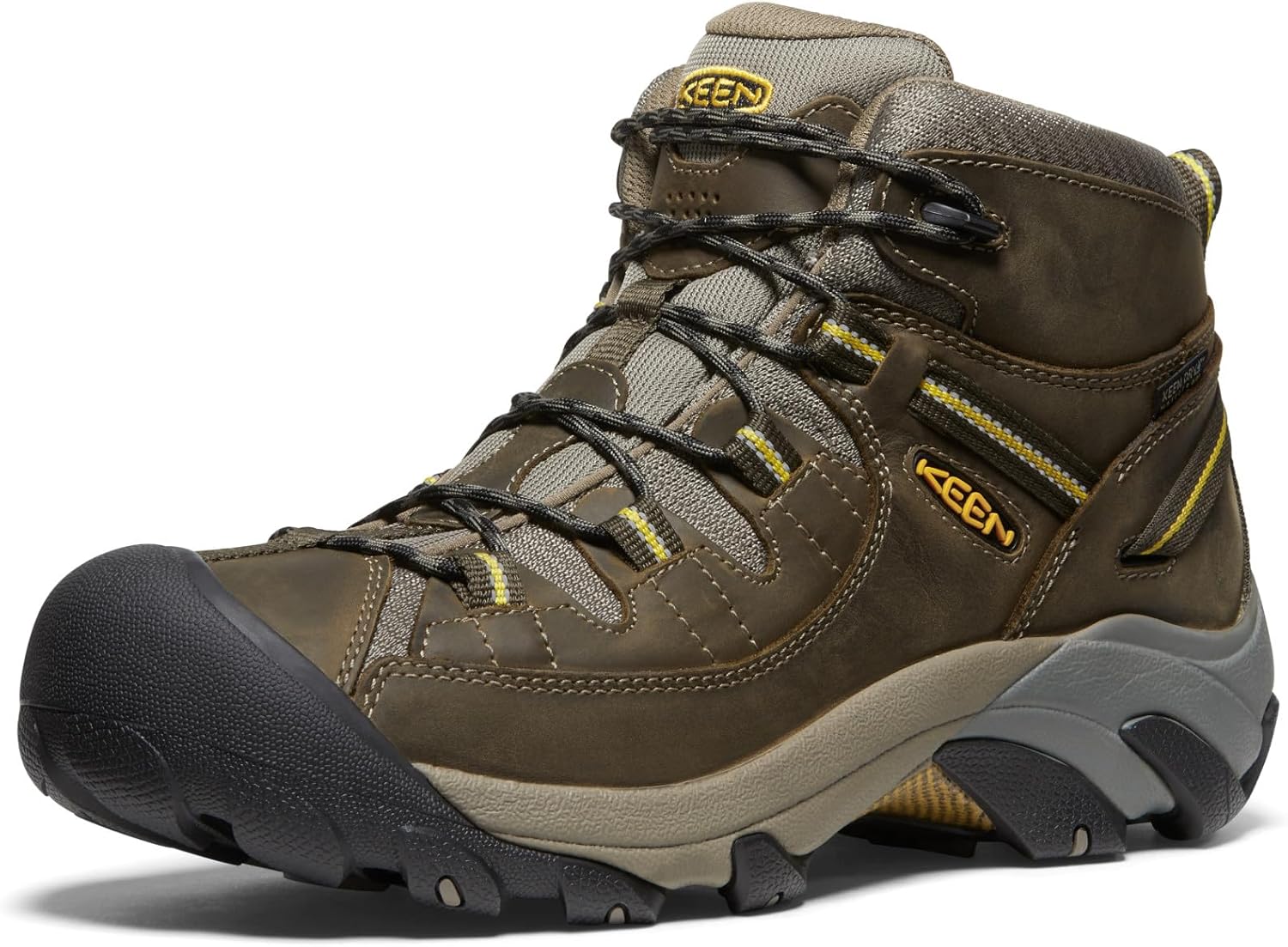
Cut height is a personal call. A mid or ankle-high boot wraps the joint and adds stability when you carry a loaded pack or move across uneven ground, which many hikers value on longer or rougher routes. The models here, from the mid-cut Merrell Moab 3 and KEEN Targhee II to the ankle-high NORTIV 8 Armadillo, all offer that extra collar of support.
Support does not have to mean stiffness. Look for a padded collar and tongue that cushion the ankle without limiting your natural stride, plus an internal shank or supportive midsole that keeps the boot from twisting under load. If you have a history of rolled ankles or plan to carry heavy weight, lean toward the more structured options rather than a soft, flexible low hiker.
Cushioning and All-Day Comfort
Comfort over many miles comes from the midsole and footbed working with your gait. A cushioned EVA or air-based midsole absorbs impact on hard-packed trails, while a contoured insole supports the arch so your feet are not fatigued by the final descent. Boots like the Merrell Moab 3 are known for feeling broken in almost immediately, which is a real advantage if you do not have weeks to condition a stiff pair.
Comfort also extends to what you carry. On multi-day treks where you rely on your own electronics for navigation and safety, pairing supportive boots with a portable power station or a solar generator keeps devices charged so you are not rationing battery in the backcountry. Happy feet and a charged phone go a long way toward a stress-free trip.
Fit, Sizing, and Break-In

Even the best-reviewed boot is the wrong boot if it does not match your foot. Toe box width matters as much as length: KEEN is famous for a roomy forefoot, which suits wide feet, while some other brands run narrower. Leave a thumb’s width of space ahead of your longest toe so your feet do not jam forward on downhill sections, and always try boots on with the hiking socks you actually wear.
Break-in varies by material. Soft synthetic and mesh uppers, common on NORTIV 8 and Columbia models, feel ready to hike almost right away. Full-grain leather boots reward patience with long-term durability but ask for a few shorter walks first. Whatever you choose, wear the boots around the house before a big outing so you can return them if the fit is off.
Weight, Materials, and Durability
Weight and materials are a balancing act. Synthetic and mesh boots like the NORTIV 8 models and the Columbia Newton Ridge Plus II are lighter on your feet and dry quickly, which many hikers appreciate on fast day trips and warm-weather trails. Lighter boots reduce fatigue over long distances, since every ounce on your foot is felt many times more than the same weight in your pack.
Leather boots such as the KEEN Targhee II sit at the other end of the scale. They weigh more and take longer to break in, but they reward you with abrasion resistance and a structure that holds up to rocky, punishing terrain season after season. If you hike occasionally on gentle trails, prioritize low weight and quick comfort. If you log serious mileage on rough ground or carry a heavy pack, the extra durability of a sturdier boot usually pays for itself over time.
| Boot | Best For | Cut | Waterproofing | Standout Feature |
|---|---|---|---|---|
| Merrell Moab 3 Mid Waterproof | All-round day hiking | Mid | M Select DRY | Comfort straight out of the box |
| NORTIV 8 Armadillo | Budget-conscious hikers | Ankle-high | Sealed membrane | Trusted low-cost all-rounder |
| KEEN Targhee II Mid | Wide feet and durability | Mid | KEEN.DRY | Roomy toe box |
| Columbia Newton Ridge Plus II | Beginners and light trails | Mid | Omni-Tech | Grippy Omni-Grip outsole |
| NORTIV 8 Paladin | Rugged budget trekking | Mid | Sealed membrane | Supportive mountaineering-style build |
| NORTIV 8 Seeker (Women) | Women seeking value | Mid | Sealed membrane | Women’s-specific fit |
Why You Should Trust Us
We build our outdoor footwear guides by comparing verified product specifications, real customer ratings from thousands of hikers, brand track records, and the durability that owners report after seasons on the trail. Rather than chasing whichever boot launched most recently, we favor models with proven waterproof systems, dependable outsoles, and consistent sizing, because those are the traits that decide how a boot performs on your tenth hike, not just your first.
Our rankings are editorial and independent. We do not accept payment to place a product higher on a list, and when a boot has a genuine weakness, such as a narrow fit or reduced breathability, we say so plainly. If we cannot recommend a pair honestly, it does not make the cut, which is why this shortlist stays deliberately focused rather than padded out to a round number.
We also weigh how a boot fits into a real hiking budget. A pair that costs a little but wears out in a season is not the bargain it appears to be, while a durable boot that lasts for years can be the smarter long-term buy. Throughout these guides, we try to match each recommendation to the hiker most likely to benefit from it, from first-timers on gentle loops to seasoned walkers heading into rough country, so the pick you choose actually fits your feet, your trails, and your wallet.
Final Thoughts
If you want one pair that does almost everything well, the Merrell Moab 3 Mid Waterproof is our best overall choice thanks to its immediate comfort, grippy Vibram outsole, and reliable waterproofing. Hikers who want maximum trail protection for the least money should look at the NORTIV 8 Armadillo, our best value pick and a genuine crowd favorite among budget-minded walkers.
Beyond those two, the KEEN Targhee II Mid is the boot to beat if you have wide feet or want extra long-term durability, the Columbia Newton Ridge Plus II is an easy recommendation for beginners on light trails, and the NORTIV 8 Seeker gives women a value-focused, trail-ready fit of their own. Match the boot to your terrain, your foot shape, and your budget, and you will spend far more time enjoying the view than thinking about your feet. For more gear roundups to round out your kit, browse our full library of buying guides and articles.
Frequently Asked Questions
Are waterproof hiking boots worth it in 2026?
For most hikers, yes. Waterproof boots keep your feet dry through stream crossings, dewy mornings, mud, and light rain, which reduces blisters and keeps you comfortable on long days. The main trade-off is slightly reduced breathability in hot weather, so if you hike almost exclusively in dry heat you might prefer a more ventilated model. For mixed conditions and shoulder-season trails, a waterproof membrane is well worth it.
How should hiking boots fit?
Aim for a snug heel that does not lift, a midfoot that feels secure without pinching, and about a thumb’s width of room ahead of your longest toe. Always try boots on with the socks you plan to hike in, ideally later in the day when your feet are slightly swollen. If your toes hit the front on a downhill, size up or choose a brand with a roomier toe box.
How do I break in a new pair of hiking boots?
Start by wearing them around the house, then move to short, flat walks before committing to a full day on rough terrain. Synthetic and mesh boots usually need little break-in, while leather models benefit from a few gradual outings to soften. Breaking boots in early also gives you time to confirm the fit and return them if something feels wrong before you are miles from the trailhead.
How long do hiking boots typically last?
Lifespan depends on mileage, terrain, and care, but a quality pair generally lasts several seasons of regular use before the outsole lugs wear down or the midsole loses its cushioning. Rocky, abrasive trails wear boots faster than groomed paths. Rotating between pairs, cleaning off grit, and drying boots properly after wet hikes all help you get the most miles out of them.
Can I wear hiking boots for everyday use?
You can, and many people do, especially with rugged leather models that double as winter or work footwear. Just keep in mind that hiking boots are heavier and stiffer than everyday shoes, and walking mostly on pavement will wear the outsole lugs down faster than trail use. If you want one pair for both, a comfortable mid boot like the Merrell Moab 3 crosses over well between the trail and daily errands.
What helps sore legs after a long hike?
Good boots prevent a lot of foot fatigue, but recovery matters too. Gentle stretching, staying hydrated, elevating your feet, and light movement the next day all ease sore muscles. Some hikers also use heat therapy to relax after a big effort, and a sauna blanket is one at-home option for that kind of post-trail wind-down.


Write Your Review
No reviews yet. Be the first to share your experience!