

A tent that keeps you dry from the outside and stays dry on the inside are two different engineering problems, and the second one is where cheap shelters fall apart. That is the reason serious campers keep coming back to double wall tents: a breathable inner body, usually mesh or light fabric, paired with a separate waterproof rainfly that clips or buckles over the top. The gap between those two layers is where warm, humid air escapes and where condensation collects on the fly instead of dripping onto your sleeping bag. Our top pick is the Clostnature Lightweight Backpacking Tent for the way its full mesh inner body and vented rainfly move moist air out all night while the aluminum poles keep pack weight sane.
For September 2026 we pulled together a shortlist of 8 models from Clostnature, CORE, KTT and more, covering both ends of the category: roomy family cabins you drive to the campground and lightweight two person shelters you carry on your back. Every pick below ships with a rainfly that comes off as its own piece, which is the whole point of the design. If you are still assembling the rest of your kit, our guide to the best internal frame hiking backpacks pairs naturally with the backpacking models on this list.

Pros
- All mesh inner body pitches on its own for stargazing nights
- Rainfly carries peak vents plus zippered door side vents
- Aircraft grade aluminum poles instead of fiberglass
- Freestanding, so it can be lifted and repositioned assembled
- Sold in capacities from one to six people
Cons
- Peak height is sitting level, not standing
- Larger capacities lose the ultralight advantage
- Stakes supplied are light duty for hard ground
The Clostnature is the clearest expression of what this category is supposed to do. The inner body is essentially a mesh box with a bathtub floor, and the waterproof fly is a completely separate panel that clips over the pole structure and stakes out at the corners. Pitch it without the fly on a dry night and you get airflow on all four sides. Add the fly and you get a sealed shelter with a covered porch at each door.
Where it pulls ahead of budget shelters is the pole set. Aircraft grade aluminum flexes under wind loading and springs back, while the fiberglass poles common at this size take a permanent bend or splinter. The freestanding geometry means you can pick the whole tent up after it is built, shake the grit out, and move it three feet left when you find a root under the floor.
The compromises are the usual ones for a lightweight design. Peak height is sitting height, so changing clothes is an exercise in coordination, and the supplied stakes are thin enough that rocky campsites will bend a few. The larger capacity versions also climb in weight to the point where they are really two person carries rather than solo loads.
Bottom line: this is the pick if you want two layer condensation control in something you can actually carry, and the aluminum poles plus vented fly make it the most complete package on the list.
- Construction: two layer, mesh inner with separate rainfly
- Capacity options: 1, 1.5, 2, 3, 4 and 6 person
- Pole material: aircraft grade aluminum
- Fabric rating: PU5000 with factory sealed seams
- Doors: two D shaped mesh doors on the two person layout
- Pitch type: freestanding with composite clips
- Season rating: three season
Weight and packed size are the two numbers that decide whether a tent gets carried or left in the garage, and this one lands on the right side of both for multi day hikes. The freestanding pitch is a real advantage on wooden platforms and rocky ground where stakes will not bite.
Split the load between two hikers by putting the poles and stakes in one pack and the fabric in the other. That drops the individual carry to a level most people stop noticing after the first mile.
Never pack a wet fly for more than a day. Coated fabrics hydrolyse and the coating starts to flake, which is what turns a waterproof tent into a leaky one after three seasons. Hang both layers separately until fully dry before storage.
Store loosely in a mesh sack rather than compressed in the stuff sack, and use a footprint or a cut ground sheet so the floor coating never contacts grit directly.

Pros
- Full coverage rainfly with a vestibule style awning
- Divided curtain creates two separate sleeping areas
- Five large mesh windows for cross ventilation
- Straight wall design adds usable floor area
- Two people can pitch it without instructions
Cons
- Fiberglass poles are heavier and less forgiving than aluminum
- Too bulky for anything beyond car camping
- Eight person rating is optimistic once gear is inside
This is the family cabin most people should look at first. The build is genuinely two layer: a fabric and mesh inner body with a waterproof fly that goes over the top and stakes out to form a small awning over the door. That awning is more useful than it looks, since it gives boots and a cooler somewhere dry to sit.
Ventilation is handled by five large mesh windows plus mesh panels up high, which keeps the inside breathable on warm nights. The divided curtain is the feature that earns its keep on family trips, letting adults stay up while children sleep on the other side of the fabric.
The limitations are structural. Fiberglass poles are standard at this size and price, and they will take a set over years of use. Nothing about this tent is portable in the backpacking sense, and the eight person capacity assumes bodies only, not duffel bags. Treat it as a comfortable five person shelter.
Bottom line: the most balanced family choice here, with a real separate fly, honest ventilation, and a room divider included in the box.
- Construction: double layer with full coverage rainfly
- Capacity: 8 person rating
- Centre height: 72 inches
- Fabric: 1000mm rated with taped seams
- Windows: five large mesh panels
- Interior: divided curtain for two rooms
- Setup: two people, roughly five minutes
Families of four to six who camp at drive in sites two or three weekends a season. The combination of standing height, a room divider, and a covered doorway covers almost every campground scenario without pushing into the price and bulk of a twelve person cabin.
It also suits groups that share a tent, since the curtain gives two parties a bit of separation without a second pitch.
Stake the four floor corners before raising the poles, and keep the floor slightly taut so it does not pool water in a downpour. Tension the fly guylines last, and check them again after the fabric relaxes an hour later.
If wind is forecast, orient the smallest wall into the prevailing direction and add extra stakes at the fly corners.

Pros
- Straight walls add far more usable space than a dome
- Rainfly removes from outside for stargazing
- Room divider creates two sleeping areas
- Two doors keep traffic from crossing sleepers
- Available in 10, 11 and 12 person layouts
Cons
- Very heavy and bulky once packed
- Fiberglass pole set needs two people to raise
- Tall walls catch wind on exposed pitches
CORE builds this around the straight wall idea, which is the single biggest livability upgrade available in a family tent. Dome walls curve in exactly where your shoulders are when you sit up, and cabin walls do not. The result is a tent where a whole family can stand, dress, and move around a cot without ducking.
The rainfly is a separate panel that comes off from the outside, so on a clear night you can strip it back and use the roof mesh for airflow and a view. Put it back on and the coverage extends past the doors to create sheltered space for gear.
What you pay for that volume is bulk and weight. This is a two person job to pitch, the packed bundle takes real trunk space, and the tall walls give wind something to push against, so guyline discipline matters more here than on a low dome. Colour coded poles keep the assembly from becoming a puzzle.
Bottom line: buy this when interior space and standing height are the priority and you are pitching within a few steps of the car.
- Construction: cabin body with removable full rainfly
- Capacity options: 10, 11 and 12 person
- Wall style: straight, near vertical
- Poles: colour coded fiberglass
- Doors: two, plus interior room divider
- Extras: storage pockets and electrical port
- Fly: fully taped with attached guylines
Large families and groups who want cots, chairs, and a changing area under one roof. It is also a sensible choice for base camp style trips where the tent stays pitched for several nights and interior comfort matters more than pack size.
Skip it if you camp solo or as a couple, since the volume is wasted and the pitch is awkward alone.
Tall cabin walls need every guyline attached and tensioned, not just the corners. Angle the stakes away from the tent at roughly forty five degrees so they hold under load.
In sustained wind, drop the fly over the whole structure rather than leaving mesh exposed, and keep the door zippers closed so the tent does not balloon from the inside.

Pros
- Highest customer rating of any pick on this list
- Aluminum poles at an entry level position
- Full rainfly rather than a partial roof cover
- Mesh upper body vents well on warm nights
- Packs down small enough for a day pack lash point
Cons
- Two person rating is tight with gear inside
- Floor fabric is thin enough to want a ground sheet
- Vestibule space is modest
The Night Cat is the shelter to pick when you want to try lightweight camping without buying into a specialist brand. It follows the same recipe as far more expensive tents: mesh dominant inner body, waterproof fly over the top, aluminum poles rather than fiberglass, and a bathtub floor.
Ratings from buyers are the strongest of anything on this page, which usually points to a design that does the basics right rather than one with a headline feature. Airflow through the mesh upper body is the part people mention most, since it keeps the inner surfaces dry on humid nights.
Where it shows its position is in materials thickness. The floor benefits from a ground sheet, the vestibule is small enough that a full pack sits half in the doorway, and two adults plus gear is a genuine squeeze. Treat it as a generous solo tent or a tight two person shelter for people who pack light.
Bottom line: the best value here by a clear margin, with the right construction and the right pole material for the weight.
- Construction: two layer, mesh inner with full rainfly
- Capacity: 2 person
- Poles: aluminum
- Floor: bathtub style with sealed seams
- Use case: hiking, mountain and general outdoor camping
- Pitch: two pole freestanding geometry
- Carry: compact stuff sack
Ideal for overnight and weekend hikes where every ounce counts but the budget does not stretch to a premium ultralight shelter. It also works well as a spare tent for guests who join a trip occasionally.
Carry a few stronger stakes than the ones supplied if your usual ground is stony, and add a footprint to protect the floor.
Dry both layers fully before packing them away, and store the tent loose rather than compressed. Rinse salt or sand off the fabric after coastal trips, since abrasive grit is what wears coatings through.
Reproof the fly with a spray on treatment after a couple of heavy seasons rather than waiting for it to wet out.

Pros
- Frame is pre attached, so the shell stands in about two minutes
- Extended rainfly adds vestibule coverage
- Heavy roof mesh ventilates well with the fly off
- Room divider included for two spaces
- Storage pockets keep small gear off the floor
Cons
- Instant frames pack much bulkier than pole and sleeve designs
- Heavier than a conventional cabin of the same capacity
- Pre attached poles cannot be swapped out easily if damaged
Instant tents get dismissed as a gimmick until you arrive at a campsite in the dark with children in the back seat. Unfold, extend the legs, lock them, and the shell is standing. The rainfly then goes on as a separate second step, which is precisely why this model belongs in a two layer roundup rather than being written off as a single skin pop up.
With the fly off, the roof is largely mesh and the tent breathes very well in hot weather. With the fly on, the extended panels reach past the door to make a vestibule that keeps rain out of the entrance. Adjustable panels let you trade shade against airflow depending on the day.
The trade is packed size and weight. Poles that never detach mean the bundle is long and heavy, and a damaged pole section is a harder fix than on a conventional tent. If you have a small trunk, measure before you buy.
Bottom line: the fastest pitch on this list by a wide margin, with a real rainfly rather than a token roof cover.
- Construction: instant cabin body with separate extended rainfly
- Setup: pre attached poles, roughly two minutes for the shell
- Roof: heavy mesh panelling
- Fly: fully taped with attached guylines and adjustable panels
- Interior: room divider and storage pockets
- Frame: hub style with extending legs
- Use: car camping and festival pitches
Campers who value time and simplicity over packed size: late arrivals, weekend festival goers, and parents who would rather get the kids settled than thread poles by headlamp.
Less suitable for anyone with limited vehicle space or who needs to carry the tent more than a short distance.
Extend all four legs partway first, then work around the tent locking them fully. Trying to lock one corner at a time puts a twist through the frame and makes the last leg fight you.
Stake the base before adding the fly, and tension the fly guylines outward so the two layers keep an air gap between them.

Pros
- Two genuine rooms rather than a single open floor
- Three doors reduce traffic across sleeping areas
- Straight walls maximise usable floor space
- Capacity options up to fourteen people
- Mesh on every window for cross flow
Cons
- Enormous packed size and weight
- Needs a large, flat pitch that not every site offers
- Rating sits at the lower end of this shortlist
This is the tent for the trip where two families share one pitch. The two room layout is not a token curtain across a dome, it is a divided cabin with doors serving each side, so people can come and go without walking through someone else sleeping.
Straight walls again do the heavy lifting on livability. At this footprint you can fit cots along both sides of each room and still have a walkway, and the three mesh windows keep air moving through a volume that would otherwise get stuffy fast.
Realism is required about logistics. The packed bundle is large enough to dominate a car boot, the pitch needs a big flat area, and the customer rating sits slightly below the others here, which usually reflects the difficulty of making a tent this size feel taut. Pitch it carefully and stake everything.
Bottom line: the right answer when group size is the constraint, provided you have the vehicle space and the pitch to match.
- Construction: double layer with waterproof outer
- Capacity options: 8, 10, 12 and 14 person
- Layout: two rooms with divider
- Doors: three
- Windows: three with mesh
- Wall style: straight wall cabin
- Included: carry bag and stakes
Extended families, scout groups, and anyone who currently pitches two tents and would rather manage one. It also suits long stay base camps where you want a covered common area as well as sleeping space.
Not a fit for compact cars, small pitches, or campers who move sites every night.
Large flat walls act like sails, so every guyline must be used and re tensioned after the fabric settles. Choose a pitch with some natural windbreak if the forecast is unsettled.
Keep the outer layer clear of the inner at the corners, since a big tent is the easiest place for the two layers to touch and wick moisture through.

Pros
- Blackout fabric blocks the great majority of daylight
- Sixty second frame setup with poles pre attached
- Vestibule gives sheltered space at the door
- Overhead mesh windows offset the heavy fabric
- Double zipper doors and multiple window modes
Cons
- Blackout fabric adds weight to an already bulky package
- Darker interior means you reach for a lantern earlier
- Six person rating is snug with cots
Blackout fabric solves a problem that surprises new campers: the sun hits the tent at five in the morning and the temperature inside climbs before anyone is ready to be awake. This model blocks the large majority of that light, and it pairs the dark inner with a separate fly and a vestibule so the two layer benefits still apply.
Setup follows the instant pattern, with the frame already attached to the inner body, so the shell is up in about a minute and the fly is a second step. Ventilation is deliberately overbuilt to compensate for the heavier fabric, with overhead mesh windows and side panels that switch between rain, privacy, and clear modes.
The costs are predictable. Light blocking fabric is denser, so the packed bundle is heavier than a plain six person cabin, and the interior stays dim enough that you will want a lantern for evening card games. Capacity is realistic for four people with gear rather than six.
Bottom line: choose this if morning light and heat are what ruin your sleep, and accept a heavier pack for the privilege.
- Construction: double layer with rainfly and vestibule
- Capacity: 6 person rating
- Footprint: roughly 9.75 by 9 feet
- Centre height: 77 inches
- Setup: instant frame, around sixty seconds for the shell
- Fabric: blackout, water resistant
- Ventilation: overhead mesh plus large side windows
Light sleepers, shift workers, and families with young children who nap during the day. It is also a good summer choice in open campgrounds with no tree cover, where an ordinary tent becomes an oven by mid morning.
Less compelling for cool weather trips, where you may actually want the morning sun to warm the tent.
Extend all legs partway before locking any of them, the same as any hub frame. Then stake the base square before the fly goes on, otherwise the vestibule will not sit straight.
Open the overhead mesh from the first night. Blackout fabric traps warmth as well as light, and the roof vents are what stop the interior feeling close.
Pros
- Multi room layout for a large group
- Blackout construction for sleeping past sunrise
- Rainfly and carry bag included
- Two doors on a large footprint
- Water resistant shell with a tall centre height
Cons
- Newest listing here, so the review base is still small
- Heavy to move once packed
- Blackout interior needs lighting even in daytime
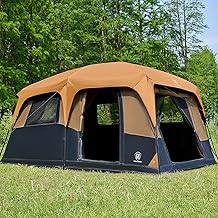
This is the large format version of the blackout idea, stretched to a fourteen by ten foot floor with room dividers and two doors. The centre height of seven feet means nobody stoops, and the multi room arrangement gives a big group somewhere to put children early without the adults sitting in the dark.
Construction follows the same two layer approach as its smaller sibling, with a rainfly that goes on over the body rather than being stitched into it. That matters more at this size, since a big single skin tent would collect condensation across a very large ceiling area.
Two caveats worth knowing. This is the newest listing on the page, so its review base is still shallow compared to the established cabins here, and a tent this large in blackout fabric is genuinely heavy to shift once bagged. Plan to carry it with two people.
Bottom line: the pick for a big group that wants darkness and separate rooms, with the usual caution that applies to any recently launched product.
- Construction: blackout body with separate rainfly
- Capacity: 10 person rating
- Footprint: 14 by 10 feet
- Centre height: 84 inches
- Doors: two
- Layout: multi room with dividers
- Included: rainfly and carry bag
Large families and multi family trips that need separate sleeping areas under one roof, especially in open summer campgrounds where heat and early light are the main complaints.
Overkill for couples or groups of three, who will find the smaller blackout model easier to handle.
Stake the full perimeter first so the large floor stays square, then raise the frame and add the fly. Tension the fly outward at every attachment point to keep an air gap over the whole roof.
On exposed pitches, add extra guylines at the long walls. A fourteen foot side panel catches a lot of wind.
How to Choose the Right Double Wall Tents
Shopping this category gets confusing fast because manufacturers use the phrase loosely. Some listings say “double layer” when they mean a doubled floor. Others say “wall tent” when they are describing the shape of the walls, not the number of them. The checklist below is what actually separates a true two layer shelter from a single skin tent with marketing copy, and it also helps you decide which of the two very different groups on this list belongs in your trunk.
Confirm the Rainfly Is a Separate Piece
Start here, because everything else follows from it. A genuine two layer tent has an inner body you can pitch on its own and a rainfly that attaches over it with clips, hooks, or buckles. If the waterproof outer skin is sewn permanently to the canopy, you have a single wall tent, and no amount of vents will fix the condensation that forms directly on the fabric above your face.
Product photos give this away quickly. Look for one image showing the tent pitched without its fly, usually described as stargazing mode or mesh mode. Look at the packing list too. Phrasing like “tent body, rainfly with attached guylines, poles, stakes” is a strong signal that the fly ships loose. The CAMPROS eight person model and both CORE cabins are explicit about this, and the Clostnature and Night Cat backpacking shelters both pitch as a bare mesh inner when the weather is clear.
The practical payoff is flexibility. On a hot, dry night you leave the fly in the bag and sleep under mesh with real airflow. When clouds roll in at two in the morning you throw the fly on from outside without waking anyone or unpacking the tent. Single wall shelters offer no such switch.
Decide Between a Family Cabin and a Backpacking Shelter

This list deliberately holds two groups, because the same construction principle shows up at wildly different scales. Family cabins from CAMPROS, CORE, KTT, and EVER ADVANCED are built around near vertical walls and standing height, and they weigh far too much to carry any distance. They are for car camping, where the walk from the parking spot to the pitch is measured in steps.
The backpacking group, represented by Clostnature and Night Cat, throws away every ounce it can. Aluminum poles replace fiberglass, the footprint shrinks to fit two sleeping pads, and the peak height drops to sitting level. You give up living space and gain the ability to walk twenty miles with the whole shelter strapped to a pack.
Buying across the line is the most common mistake we see. A twelve person cabin is miserable to carry a hundred yards from an overflow lot, and a two person backpacking tent turns a rainy family weekend into a stack of damp gear with nowhere to sit. Pick your group first, then compare inside it. Our roundup of the best water purification for backpacking is aimed squarely at the lightweight crowd if that is where you land.
Ventilation and Condensation Control
Two sleeping adults release a surprising volume of water vapor overnight. In a two layer shelter that vapor passes through the mesh inner, hits the cooler underside of the fly, condenses there, and runs down to the ground outside your sleeping area. That only works if air is actually moving through the gap.
Look for fly vents at the peak, mesh panels high on the inner body, and a fly that stops short of the ground so air can enter at the base. The Clostnature fly carries top vents plus zippered vents beside the doors, and the Night Cat shelter uses a full mesh upper body under its fly. On the family side, the CORE cabins put a lot of mesh on the roof, and the EVER ADVANCED blackout models add overhead mesh windows to offset their light blocking fabric.
Pitch discipline matters as much as design. A fly staked out taut, with the guylines actually tensioned, holds the two layers apart. A slack fly sags against the mesh, bridges the gap, and wicks moisture straight through. It is the single most common reason a well designed tent feels wet inside.
Weather Protection: Fabric, Seams, and Floor

Waterproof ratings are published inconsistently across this category, and several listings here do not state a number at all, so treat the figures you do see as one input rather than a ranking. What matters more is whether the seams are sealed or taped, whether the floor rises into a bathtub shape at the edges, and whether the fly covers the doors rather than stopping at the roofline.
Full coverage flies buy you two things: dry doorways and a vestibule. That covered patch outside the door is where muddy boots, a pack, and a wet jacket live so they are not inside with you. The CORE straight wall cabin and the EVER ADVANCED six person model both create usable vestibule space, and every backpacking pick here puts at least a small porch over each door.
Poles are part of the weather story too. Fiberglass is normal on large family cabins and it is fine for fair weather campgrounds, but it takes a set and can splinter under heavy wind loading. Aluminum flexes and springs back, which is why both backpacking shelters here use it. If you camp in exposed places, weight the pole material heavily.
Setup Style: Instant Hubs Versus Clip and Pole
Instant cabins arrive with the poles already attached to the canopy. You unfold the frame, extend the legs until they lock, and the shell stands up in a minute or two. Then the rainfly goes on as a second step, which is exactly what keeps them in this category. The CORE instant cabin and both EVER ADVANCED models work this way.
Traditional pitches thread or clip poles through sleeves, which takes longer and usually wants two people on a big tent. In exchange the packed bundle is smaller and lighter, and a broken pole section can be swapped or splinted in the field. Freestanding backpacking designs like the Clostnature sit in this camp and can be lifted and repositioned fully assembled, which is useful when you discover a rock under the floor.
Be honest about who is pitching camp and when. If you routinely arrive after dark with tired kids in the car, the extra bulk of an instant frame pays for itself on the first trip.
Livability: Height, Rooms, and Storage

Capacity ratings across this whole category assume adults lying shoulder to shoulder with no gear. The working rule is to subtract about a third. An eight person cabin comfortably holds a family of five plus duffels, and a two person backpacking tent is genuinely pleasant for one person with a pack inside.
Room dividers turn a large cabin into two spaces, which matters more than it sounds when adults and kids keep different bedtimes. The CAMPROS model uses a divided curtain, the KTT cabin splits into two rooms with three doors, and the larger EVER ADVANCED tent is arranged as a multi room layout. Blackout fabric belongs in this section too rather than the weather one, since its real job is letting people sleep past sunrise.
Finally, count doors and pockets. Two doors means nobody climbs over a sleeping body at three in the morning. Interior pockets and a gear loft keep headlamps and phones off the floor, which is where they get stepped on.
| Pick | Group | Sleeps | Setup Style | Standout Feature |
|---|---|---|---|---|
| Clostnature Lightweight Backpacking Tent | Backpacking | 1 to 6 options | Freestanding clip and pole | Aluminum poles, vented fly |
| CAMPROS CP 8 Person | Family cabin | 8 | Pole and sleeve | Divided curtain, five mesh windows |
| CORE Straight Wall Cabin | Family cabin | 10 to 12 | Pole and sleeve | Straight walls, removable fly |
| Night Cat 2 Person | Backpacking | 2 | Freestanding clip and pole | Lightest pitch here |
| CORE Instant Cabin | Family cabin | 9 to 10 | Instant hub frame | Pre attached poles |
| KTT Extra Large Cabin | Family cabin | 8 to 14 | Pole and sleeve | Two rooms, three doors |
| EVER ADVANCED Blackout 6 Person | Family cabin | 6 | Instant hub frame | Blackout fabric plus vestibule |
| EVER ADVANCED 10 Person | Family cabin | 10 | Instant hub frame | Multi room blackout layout |
One more accessory note before the picks. A ground sheet cut slightly smaller than the floor extends the life of any tent by keeping grit and sharp stems away from the coated fabric, and a spare waterproof tarp doubles as a rain shelter over the picnic table when the weather turns.
Why You Should Trust Us
We build these shortlists from real marketplace data rather than press releases. Every model here was pulled from live Amazon listings, then filtered on verified customer ratings and a meaningful volume of reviews so that a handful of enthusiastic comments cannot carry a weak product onto the page. Anything that fell below our rating floor was dropped regardless of how well it was marketed.
Because this category is defined by construction rather than by a keyword, we read each listing individually and confirmed that the rainfly ships as a separate component. Products with a permanently attached outer skin, and canopy shelters that are not camping tents at all, were removed even when their ratings were strong. Where a manufacturer does not publish a hydrostatic head figure, we say so instead of inventing one. Specifications, capacity claims, and available sizes come straight from the manufacturer, and we revisit these roundups as listings change. You can browse the rest of our outdoor coverage in the sports and outdoors section.
Final Thoughts
Best overall goes to the Clostnature Lightweight Backpacking Tent. It nails the fundamentals of the design: a full mesh inner body, a rainfly with vents at the peak and beside the doors, aircraft grade aluminum poles, and a freestanding pitch you can lift and move. It is offered in a range of capacities, so the same architecture works for a solo trip or a family that hikes in, and it carries the strongest combination of rating and review depth on this list.
Best value is the Night Cat 2 Person Backpacking Tent. It holds the highest customer rating of anything here, uses aluminum poles rather than fiberglass, and ships with a proper full rainfly, which is unusual at its weight. If you want to try lightweight camping without committing to a specialist brand, this is the sensible entry point.
For families, the CAMPROS CP 8 Person is the balanced choice with its divided curtain and generous mesh, while the CORE Straight Wall Cabin is the one to buy when you want standing room and a fly that reaches the doors. Choose the CORE Instant Cabin or either EVER ADVANCED blackout model if fast setup and sleeping past dawn matter more than packed size, and step up to the KTT Extra Large Cabin when you need two real rooms for a big group. Whichever way you go, pair it with proper footwear from our hiking boots guide and you are set for the season.
Frequently Asked Questions
What makes a tent a double wall tent
It has two distinct fabric layers: an inner body, often largely mesh, and a waterproof rainfly that attaches over the top as a separate piece. Warm humid air passes through the inner layer and condenses on the underside of the fly, then runs off outside your sleeping space. A single wall tent combines both jobs in one coated fabric, so that moisture forms directly above you.
Are double wall tents heavier than single wall tents
Generally yes, since you are carrying two fabric layers instead of one. The penalty is smaller than most people expect on modern designs, and for the vast majority of campers the condensation control is worth it. Single wall shelters mainly make sense for alpinists counting every ounce in cold, dry conditions where condensation is less of an issue.
Can I pitch one without the rainfly
On the backpacking models here, yes, and it is one of the main advantages. A mesh only pitch gives you maximum airflow and a view of the sky on clear nights. Keep the fly within reach so you can throw it over from outside if the weather changes. On large family cabins, check the listing first, because some models rely on the fly to cover roof mesh panels that would otherwise let rain in.
How do I stop condensation inside my tent in 2026
Stake the fly out tight so it never touches the inner body, open every vent even when it rains, and avoid pitching in a low hollow where cold damp air settles. Keep wet gear in the vestibule rather than inside, and crack a door zipper an inch or two if the night is still. Cooking inside a tent adds a large amount of water vapor and should be avoided for safety reasons anyway.
What capacity should I buy
Subtract roughly a third from the advertised number if you want room for gear and elbows. Two adults are comfortable in a four person family tent, and a two person backpacking shelter suits one person plus a pack or two people who pack light. Sizing up one step is almost always the choice people are happy with a season later. You can compare more gear across our full articles archive.
Write Your Review
No reviews yet. Be the first to share your experience!