

Most anglers do not want a second reel that only throws feathers. They want one baitcaster that handles a 3/8 oz spinnerbait on Saturday and a 1/8 oz hair jig on Sunday without a bird’s nest either day. That is a different shopping problem from buying a dedicated finesse machine, and in October 2026 it comes down to three numbers on the spec sheet: spool mass, brake type, and the lowest lure weight the reel will actually load. Our top pick is the Shimano SLX DC for its microcomputer brake that reads spool speed and reins in light baits even when you are casting straight into a headwind.
Below are 8 versatile low-profile reels from Daiwa, Shimano, KastKing and more, chosen because each one drops its practical casting floor well below the 1/4 oz wall where ordinary baitcasters give up, while still holding enough line and drag for a full day of mixed fishing. If you are filling out the rest of your kit, our sports and outdoors section covers rods, storage, and bank-day gear too.

Pros
- Digital I-DC4 brake keeps light baits under control with minimal thumb input
- Four selectable modes for monofilament, fluorocarbon, braid, and light lures
- Holds its line even when casting into a headwind
- HAGANE metal body keeps gear alignment under load
- Available in several gear ratios for different techniques
Cons
- Costs noticeably more than a conventional magnetic reel
- Audible whine on the cast is divisive
- Slightly heavier than the non-DC version of the same reel
The SLX DC is Shimano's most affordable route into digital braking, and digital braking is the single biggest quality of life upgrade available to anyone throwing light baits on a conventional spool. Instead of a fixed magnet or a set of centrifugal shoes, a small microcomputer inside the sideplate watches how fast the spool is turning and applies electromagnetic resistance only when the spool is outrunning the bait.
In practice that means the reel absorbs the mistakes that normally produce a backlash. A gust of wind that stalls a 1/8 oz jig mid-flight, a slightly hard snap of the rod, a skip cast that goes flat, all of these are events the brake reacts to faster than a thumb can. The four modes let you match the system to your line, and the light lure setting keeps enough freedom in the spool that distance does not suffer.
The compromises are real but narrow. It sits in a higher price bracket than the rest of this list, it carries a little extra weight over the standard SLX, and the electronic brake produces a distinct whine on every cast. None of those affect performance, but the whine in particular is the reason some anglers stay with magnetic reels.
Bottom line: if you throw light baits often and would rather fish than fine-tune, the SLX DC is the reel that removes the most friction from the job, and it is our best overall pick for this category.
- Brake system: I-DC4 digital control with four modes
- Body: HAGANE metal frame
- Gear ratio options: approximately 6.3:1, 7.2:1, and 8.2:1
- Maximum drag: approximately 12 lb
- Weight: approximately 7.4 oz
- Bearings: 4 shielded stainless plus roller clutch
- Available in left and right hand retrieve
Anglers who fish a wide range of bait weights on one setup and want the reel to handle brake management for them. It suits open, windy water, and it is a strong choice for anyone stepping up from a spinning reel who does not want to spend a season educating a thumb.
It is less compelling if you fish one bait weight in sheltered water, where a well set magnetic reel does the same job for less money.
Start in the light lure mode with the spool tension knob set so the bait drops slowly when you thumb the release with the rod level. Cast smoothly rather than snapping, and let the brake handle the end of the flight.
Switch modes when you change line class rather than when you change bait. The system is calibrated around line behavior, so the mode that suits fluorocarbon will feel over-braked with thin braid.
Pros
- Magforce-Z inductor brake adjusts itself as spool speed changes
- Compact type aluminum frame is stiff and palms easily
- Small spool diameter lowers the casting floor
- Wide choice of gear ratios including a very fast option
- Strong reputation for long service life
Cons
- External brake dial has fewer distinct steps than some rivals
- Aluminum frame adds weight over carbon composite reels
- Stock handle knobs are plain compared with the rest of the reel
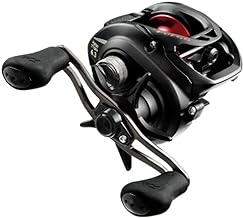
The Fuego CT is the reel that convinced a lot of anglers they did not need a second finesse setup. The CT designation refers to a compact body built around a smaller diameter spool, and because rotational inertia scales with the square of radius, that reduction does more for light bait casting than shaving a fraction of an ounce off the frame would.
Magforce-Z is Daiwa's long-running inductor brake. A magnetic ring moves in response to spool speed, applying more braking early in the cast when the spool is turning quickest and backing off as the bait slows. The result feels similar to a good centrifugal system but adjusts from an external dial, which is the combination most anglers want when the wind changes.
Where it gives ground is refinement of the small parts. The brake dial has broader steps than the Shimano systems, and the stock knobs are functional rather than luxurious. The aluminum frame also carries a weight penalty against carbon bodied budget reels, though it buys stiffness that those reels do not have.
Bottom line: the Fuego CT is the value-to-performance sweet spot in this list for anglers who want an aluminum framed reel that genuinely handles 1/8 oz baits.
- Brake system: Magforce-Z magnetic inductor
- Frame: aluminum CT compact body
- Gear ratio options: approximately 6.3:1, 7.3:1, and 8.6:1
- Maximum drag: approximately 13 lb
- Weight: approximately 7.1 oz
- Bearings: 6 ball bearings plus roller clutch
- Air Rotation system for reduced rotational resistance
Choose the 6.3:1 version if most of your light baits are crankbaits or anything that needs a steady, deliberate retrieve. Choose 7.3:1 as the all-round option, and reserve the 8.6:1 for slack line techniques where line pickup speed matters more than torque.
Pair it with a medium light casting rod in the 6 foot 8 inch to 7 foot range. A blank rated for 1/8 oz at the low end is what unlocks the reel's casting floor.
Rinse the exterior with fresh water after any exposure to spray and dry it before storage. Back the drag off fully between sessions so the washers do not take a set.
Service the spool bearings once a season with a light oil rather than grease. Heavy grease in a spool bearing is the most common cause of a reel that suddenly refuses to throw light baits.

Pros
- SVS Infinity centrifugal brake bites hardest when overrun risk is highest
- HAGANE metal frame keeps gears aligned under load
- External dial allows fine adjustment without opening the sideplate
- Several gear ratios available
- Strong parts and service support
Cons
- Changing brake shoes means opening the reel
- Casting floor sits a step above the digital and compact rivals
- Fewer bearings than similarly priced budget reels
The standard SLX is the reel to buy if you prefer centrifugal braking, and centrifugal braking has a specific advantage with light baits: the shoes fly outward in proportion to spool speed, so resistance peaks in the first moments of the cast when a light bait is most likely to let the spool run away, then fades as the spool slows and distance is preserved.
Shimano's SVS Infinity implementation gives you two layers of control. Inside the sideplate, individual brake shoes switch on or off to set the broad character of the reel. Outside, a dial fine-tunes within that range. Set the shoes for the bait class you fish most and the external dial handles day to day variation.
The limitation is exactly that split. Real changes require opening the reel, which is awkward on the bank and unwise in the rain. The casting floor also sits a little higher than the SLX DC or the compact Daiwa, closer to 3/16 oz in normal use, because the spool is a conventional diameter.
Bottom line: a durable, mechanically simple reel for anglers who set brakes once per season and value the feel of a centrifugal system over the convenience of a dial.
- Brake system: SVS Infinity centrifugal with external dial
- Body: HAGANE metal frame
- Gear ratio options: approximately 6.3:1, 7.2:1, and 8.2:1
- Maximum drag: approximately 12 lb
- Weight: approximately 6.9 oz
- Bearings: 3 shielded stainless plus roller clutch
- Cross carbon drag washers
Anglers who fish a consistent set of bait weights and want a reel that behaves the same way every time they pick it up. It is also a sensible pick for anyone who prefers a metal framed reel at a moderate price and expects to keep it for many seasons.
Look elsewhere if you change bait weights constantly through a session or fish in conditions where opening a sideplate is impractical.
Begin with about half the brake shoes engaged and the external dial near the middle. Cast a bait at the light end of your normal range and reduce shoes only when the reel feels over-braked at the start of the flight.
Set the spool tension knob so side play disappears and no further. Using tension to control overrun instead of brakes is the fastest way to lose distance with a light bait.

Pros
- Eight magnet external brake adjusts instantly with wet hands
- CNC aluminum spool spins up more easily than cast alternatives
- Roughly 17.6 lb of drag is far more than light line needs
- Choice of a slow and a fast gear ratio
- Stainless steel main shaft resists bending
Cons
- Graphite frame flexes under heavy load compared with metal bodies
- Casting floor stops around 3/16 oz
- Handle knobs feel basic in the hand
The Royale Legend II is the reel most anglers meet first, and it earns its place here on the strength of one component: a machined aluminum spool light enough to start turning for a 3/16 oz bait, paired with an eight magnet brake you can adjust without taking your eyes off the water.
That combination covers the majority of light bait fishing. A 3/16 oz shaky head, a small squarebill, a compact swim jig, all of them cast cleanly once the dial is set. The drag is generous well beyond what light line can load, which means the useful part is smoothness at low settings rather than the headline number, and here it performs better than the price suggests.
Its limits show at the extremes. The graphite frame flexes when a big fish loads the gears, and the casting floor stalls around 3/16 oz because the spool is a conventional diameter and the reel has no way to reduce rotating mass further. Push below that and the brake dial cannot save you.
Bottom line: the best value on this list by a clear margin, and the right first low-profile reel for anyone whose lightest bait sits at or above 3/16 oz.
- Brake system: Cross-Fire 8 magnet with external dial
- Frame: reinforced graphite
- Gear ratio: 5.4:1 or 7.2:1
- Maximum drag: approximately 17.64 lb
- Weight: 7.2 oz
- Bearings: 5 plus 1 anti-reverse
- Stainless steel main shaft and CNC aluminum spool
Take the 7.2:1 version unless you fish crankbaits almost exclusively, in which case the 5.4:1 gives a more useful retrieve speed and more cranking torque.
Spool it with 10 lb fluorocarbon rather than heavier line. The reduction in line mass at the outer edge of the spool is the cheapest way to improve how this reel handles light baits.
Keep the brake dial dry and free of grit, since sand in the magnet housing is the usual cause of uneven braking on budget reels. A rinse and a soft cloth after each trip is enough.
Loosen the drag star fully for storage and check the spool bearings once a season. Both take minutes and add years.
Pros
- Light body at around 6.75 oz reduces fatigue over long sessions
- Roughly 20 lb of drag leads this price group
- Magnetic brake adjusts externally in seconds
- Fast 8.1:1 option suits slack line techniques
- Smooth retrieve for a reel in this bracket
Cons
- Brake range is narrower than premium systems
- Casting floor sits near 3/16 oz
- Spare parts availability trails the major brands
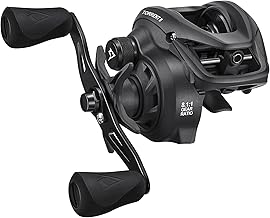
The Torrent II is the lightest of the mainstream budget reels here, and a lower finished weight matters more than it sounds when light bait fishing means several hundred casts in a session. Less mass in the hand keeps the wrist relaxed, and a relaxed wrist produces the smooth rod load that light baits need.
The drag is the headline specification, and while roughly 20 lb is more than 10 lb line will ever ask for, the smoothness at the settings you actually fish is what protects small wire hooks. The magnetic brake covers the working range well, though the increments feel broader than the Shimano and Daiwa systems when you are trying to fine-tune for wind.
The reel casts comfortably from about 3/16 oz upward. It will not reach the 1/8 oz mark reliably, since the spool is a conventional diameter and there is no mechanism to reduce rotating mass. Parts and service support also lag the larger brands, which matters more for a reel you plan to keep for a decade than for a season.
Bottom line: a strong lightweight choice for anglers who value comfort and drag strength over reaching the very bottom of the bait weight range.
- Brake system: external magnetic
- Frame: aluminum
- Gear ratio: 6.6:1 or 8.1:1
- Maximum drag: approximately 20 lb
- Weight: approximately 6.75 oz
- Bearings: 6 plus 1
- Available in left and right hand retrieve
The combination of low weight and a forgiving magnetic brake makes this a practical reel for building casting technique with lighter baits. Start with the brake near maximum, work through a session, then reduce it one increment at a time as your thumb learns the reel.
Practice with a 1/4 oz casting plug in an open field before adding hooks. The muscle memory transfers directly to the water.
Rinse and dry after each trip, and store the reel with the drag backed off. The aluminum frame handles moisture well but the drag washers do not appreciate being compressed for months.
Check the handle nut periodically. Fast retrieve reels loosen theirs more often than slower models.

Pros
- Very light body suits all day casting
- Fast 8.0:1 ratio picks up slack quickly
- MaxiDur double shielded bearings resist grit
- Around 17.6 lb of drag for the class
- Compact palming profile
Cons
- Only one gear ratio offered
- Graphite frame flexes under heavy pressure
- Magnetic brake has a modest adjustment range
The Spartacus II Plus takes an already light budget reel and adds the two things owners of the original asked for: a faster gear ratio and better sealed bearings. For light bait work the faster ratio is the more useful change, because small baits are usually fished with slack in the line and a high speed retrieve lets you catch up to the bait before setting a hook.
Its physical size is the quiet advantage. A narrow body palms comfortably, which encourages the relaxed, low trajectory cast that keeps a light bait under the wind. At roughly 6 oz it is among the lightest reels in this group, and that shows late in a long session.
The compromises follow the price. The graphite frame flexes when a heavy fish loads the gears, the magnetic brake range is narrower than the premium systems, and there is no slower ratio for anglers who prefer a deliberate crankbait retrieve. None of these matter much for finesse presentations, which is where this reel belongs.
Bottom line: a lightweight, fast specialist for slack line techniques with small baits, at a price that leaves budget for line and rods.
- Brake system: external magnetic
- Frame: graphite
- Gear ratio: 8.0:1
- Maximum drag: approximately 17.6 lb
- Weight: approximately 6 oz
- Bearings: 7 plus 1 MaxiDur double shielded
- Available in left and right hand retrieve
Anglers who work small jigs, drop shots on casting gear, and weightless soft plastics, where slack line is constant and retrieve speed is the priority. Also a good match for anyone who fishes from a kayak and wants minimal weight in the hand.
Skip it if crankbaits and slow rolled spinnerbaits make up most of your fishing, since the single fast ratio works against you there.
Set the brake around two thirds and the tension knob barely snug, then reduce brake gradually as you get comfortable. The light spool responds quickly, so small adjustments make a noticeable difference.
With a fast ratio, resist the urge to reel hard on the hookset. Sweep the rod and let the reel collect the slack afterward.

Pros
- Balanced 7.3:1 ratio suits a wide range of techniques
- Light frame at around 7 oz
- Magnetic brake adjusts from the outside
- Around 15.4 lb of drag is ample for light line
- Comfortable low profile shape
Cons
- Casting floor stays close to 1/4 oz
- Bearing count is modest
- Newer model with a shorter owner history
The Lethal Blaze is a straightforward reel that does the ordinary things well. The 7.3:1 ratio sits in the useful middle, quick enough for slack line work and slow enough to keep a small crankbait in the strike zone, which makes it a sensible single reel for someone who fishes a bit of everything.
Weight is kept near 7 oz through a composite frame, and the magnetic brake adjusts externally, so wind changes are handled without opening anything. Drag around 15.4 lb is far beyond what light line demands, and it applies smoothly at the low settings that matter for small hooks.
Its honest limitation is the casting floor. With a conventional spool and a modest bearing count, this reel is happiest at 1/4 oz and starts asking for careful thumb work below that. It is a good all-round reel that will throw the lighter end of your box occasionally rather than a reel built around light baits.
Bottom line: a capable general purpose baitcaster and a fair step up from an entry model, best suited to anglers whose light baits start at 1/4 oz.
- Brake system: external magnetic
- Frame: lightweight composite
- Gear ratio: 7.3:1
- Maximum drag: approximately 15.4 lb
- Weight: approximately 7 oz
- Bearings: 5 plus 1
- Low profile palming design
Buy this reel if you want one baitcaster for mixed fishing and your lightest bait is a 1/4 oz jig or small crankbait. If you regularly go lighter, the extra spent on a compact spool reel returns real casting distance.
Match it with a medium power rod and 12 lb line for the widest usable range.
Composite frames tolerate rain well but dislike prolonged heat, so avoid leaving the reel on a dashboard in summer. Rinse, dry, and store with the drag released.
Add a drop of light oil to the spool bearings each season to keep the casting floor from creeping upward as the reel ages.

Pros
- Ten position brake dial makes small adjustments easy
- Roughly 17.6 lb of drag for a low price
- Aluminum handle adds stiffness where it counts
- Simple, forgiving reel for a first baitcaster
- Widely available with a long owner history
Cons
- Heaviest reel in this group at 7.7 oz
- Casting floor stays around 1/4 oz
- Graphite frame flexes under sustained load
The Brutus is the most forgiving reel here, and forgiveness is worth a lot when you are learning to cast light baits on a revolving spool. The ten position brake dial gives fine control over how aggressive the braking is, so a beginner can start near the top of the range and work down without ever meeting a serious backlash.
Specifications are generous for the price. Drag near 17.6 lb, an aluminum handle, and a 7.2:1 ratio that covers most techniques mean the reel is not outgrown quickly. The graphite frame keeps cost down at the expense of stiffness, which shows only when a heavy fish loads the gears hard.
At 7.7 oz it is the heaviest reel in this group, and combined with a standard spool the casting floor sits around 1/4 oz. This is a general purpose reel that will handle the lighter end of a normal tackle box, not one that reaches into finesse territory.
Bottom line: the sensible starting point for a first low-profile reel, with enough brake adjustment to build confidence before moving to a lighter, more specialized machine.
- Brake system: 10-button magnetic
- Frame: lightweight graphite
- Gear ratio: 7.2:1
- Maximum drag: approximately 17.6 lb
- Weight: 7.7 oz
- Bearings: 5 plus 1
- Aluminum handle with dual knobs
Set the brake dial near its highest position and the spool tension so a 1/4 oz bait falls slowly, then make short, smooth casts until the reel stops overrunning. Drop the brake one position per session rather than several at once.
Learning on a slightly heavier bait than your target weight builds the thumb control that lighter baits will demand later.
New baitcaster owners and anglers who want an inexpensive spare reel for a second rod. It handles 1/4 oz and heavier baits confidently and asks very little in the way of setup knowledge.
Anglers who already cast well and want to reach lighter baits will be happier with one of the compact spool reels higher on this list.
How to Choose a Baitcaster for Light Baits Without Going Full BFS
A dedicated bait finesse reel wins on paper at the featherweight end, but it gives up line capacity, drag, and everyday usefulness to get there. A well chosen general-purpose baitcaster sits in a more practical place: light enough to throw a small jig, stout enough to pull a good fish out of cover. The trick is knowing which specifications move the casting floor down and which ones are marketing noise. Here is how our picks compare, followed by the criteria that decide the outcome.
| Reel | Brake Type | Approx. Weight | Gear Ratio Options | Practical Light-Bait Floor |
|---|---|---|---|---|
| Shimano SLX DC | I-DC4 digital | Approx. 7.4 oz | 6.3:1 to 8.2:1 | About 1/8 oz (3.5 g) |
| Daiwa Fuego CT | Magforce-Z magnetic | Approx. 7.1 oz | 6.3:1 to 8.6:1 | About 1/8 oz (3.5 g) |
| Shimano SLX | SVS Infinity centrifugal | Approx. 6.9 oz | 6.3:1 to 8.2:1 | About 3/16 oz (5 g) |
| KastKing Royale Legend II | Cross-Fire 8 magnet | 7.2 oz | 5.4:1 or 7.2:1 | About 3/16 oz (5 g) |
| Piscifun Torrent II | Magnetic | 6.75 oz | 6.6:1 or 8.1:1 | About 3/16 oz (5 g) |
| KastKing Spartacus II Plus | Magnetic | Approx. 6 oz | 8.0:1 | About 3/16 oz (5 g) |
| KastKing Lethal Blaze | Magnetic | 7 oz | 7.3:1 | About 1/4 oz (7 g) |
| KastKing Brutus | 10-button magnetic | 7.7 oz | 7.2:1 | About 1/4 oz (7 g) |
Know the Real Casting Floor Before You Buy
Every baitcaster has a weight below which the lure can no longer overcome the inertia of the spool. Manufacturers rarely print that number, so it helps to work in grams instead of fractions. A 1/4 oz bait is roughly 7 grams, 3/16 oz is about 5 grams, 1/8 oz is about 3.5 grams, and 1/16 oz is under 2 grams. Each step down roughly halves the energy available to spin the spool up, which is why the difference between 1/4 oz and 1/8 oz feels enormous on the water while the numbers look small on paper.
A stock low-profile reel with a standard aluminum spool starts complaining somewhere around 1/4 oz. Reels built on lighter spools and better brakes, like the Shimano SLX DC and the Daiwa Fuego CT, comfortably reach down to about 1/8 oz with a rod that loads properly. Below that you are into genuine bait finesse territory, where shallow drilled spools are the only answer. Our companion guide to baitcasters built for light lures covers those specialist reels in detail, and it is the better read if 1/16 oz baits are your main diet.
Be honest about your own floor before you spend. If your smallest regular bait is a 3/16 oz shaky head, almost every reel on this list will serve you well and you can shop on gear ratio and comfort instead. If you routinely go lighter than that, narrow the field to the top two or three picks and pair them with a rod rated for those weights.
Magnetic, Centrifugal, and Digital Brakes Compared

Three brake philosophies dominate the market, and they behave differently with a light bait. Magnetic brakes use magnets near the spool to create drag through induction. Their resistance builds with spool speed, they adjust from an external dial without opening the reel, and they stay smooth across the whole cast. That combination of easy adjustment and predictable feel is why most reels aimed at light baits, from the Piscifun Torrent II to the KastKing Spartacus II Plus, use them.
Centrifugal brakes work through small shoes that fly outward as the spool spins, pressing against a brake race. They bite hardest at the start of the cast, exactly when a light bait is most likely to cause an overrun, then fade as the spool slows so distance is preserved. The Shimano SLX uses the SVS Infinity version of this idea, with brake shoes you switch on or off inside the sideplate plus an external dial for fine adjustment. The tradeoff is that a real change of setting means opening the reel, which is not something you want to do in the rain.
Digital braking is the newest approach and the most forgiving. The I-DC4 system in the Shimano SLX DC samples spool speed thousands of times per second and applies electromagnetic braking only when the spool is running faster than the lure warrants. It has four selectable modes covering different line types and light presentations, and it is the closest thing to an autopilot for a light bait. You pay for that convenience with a bit of extra weight and a higher price bracket, and the reel makes an audible whine on the cast that some anglers love and others do not.
Spool Mass Is the Number That Actually Moves the Floor

Brakes control the back half of the cast. Spool mass controls whether the cast starts at all. A spool has rotational inertia proportional to its mass and to the square of its radius, which means shaving diameter helps more than shaving weight. This is why a 30 mm spool on a compact frame beats a 34 mm spool of identical weight for small baits, and why the Daiwa Fuego CT with its compact type frame punches above its class.
Two things you can control yourself change effective spool mass immediately. First, line: a full spool of 15 lb monofilament can add a meaningful fraction of the spool’s own weight, all of it at the outer radius where it hurts most. Dropping to 10 lb fluorocarbon or a thin braid instantly lowers your casting floor. Second, fill level: many anglers fill to the rim out of habit, but running the spool about three quarters full removes mass exactly where inertia is highest, and the distance you lose at the far end is smaller than the distance you gain at the light end.
Bearing quality plays a supporting role. Shielded stainless bearings that spin freely under light load matter more here than a high bearing count, and a spool that has been sitting in old grease will feel dead with a small bait no matter what the brake dial says. A clean spool bearing and a drop of light oil is the cheapest upgrade in fishing.
Gear Ratio for Baits That Move Slowly
Light baits are usually worked slowly, which makes the gear ratio question less obvious than it looks. A high ratio such as the 8.0:1 on the KastKing Spartacus II Plus or the 8.1:1 option on the Piscifun Torrent II picks up slack fast, which matters when you are hopping a small jig back toward the boat or skipping under a dock and need to catch up to the bait quickly.
A moderate ratio near 6.3:1 or 7.2:1 gives you more torque per handle turn and, more importantly, more feel. When a small bait is crawling across gravel, a slower retrieve keeps it in contact with the bottom and telegraphs bites better. The Shimano SLX and SLX DC both come in several ratios for this reason, and if you fish one technique most of the time it is worth choosing deliberately rather than defaulting to the quickest option on the shelf.
Handle length is the overlooked half of this equation. A shorter handle with small knobs suits light line and delicate presentations, while a long handle adds cranking leverage you rarely need with a 1/8 oz bait but appreciate when a good fish eats it near cover.
Tuning the Brakes for a Headwind
Wind is where light-bait casting falls apart, because the bait decelerates while the spool keeps spinning. The fix is not simply cranking the brakes to maximum, which kills distance and makes the reel feel dead. Start by setting the spool tension knob so the bait falls slowly when you thumb the release with the rod held level, then add brake force in small increments until the spool stops overrunning at the end of the cast.
Reels differ enormously in how easily you can make that adjustment mid-session. An external magnetic dial like the one on the KastKing Royale Legend II or the Brutus takes two seconds with wet hands, which is exactly what you want when the wind shifts. The SLX DC handles most of it automatically once you have picked a mode, while the centrifugal shoes in the standard SLX are best set before you leave the truck. If you fish exposed water often, put a premium on external adjustment.
Casting technique carries the rest. A lower, flatter cast keeps a light bait under the worst of the wind, and a smooth load of the rod does more for distance than a hard snap, which only spikes spool speed and invites a backlash. Swapping small trebles is easier with a proper tool, and a set from our split ring pliers roundup saves fingernails when you are rigging tiny hardware in cold wind.
Drag, Line, and Where a Versatile Reel Runs Out

The advantage of using a general-purpose reel for light baits is that you keep the drag and capacity you gave up on a finesse machine. The KastKing Royale Legend II and Brutus carry roughly 17.6 lb of maximum drag, and the Piscifun Torrent II offers around 20 lb. Those numbers are far beyond what 8 lb line can load, but the useful part is smoothness at the low settings you actually fish, where a stuttering drag pulls light wire hooks free.
Line capacity is the other half. A finesse spool might hold barely enough line for a long cast plus a run, while these reels hold a comfortable reserve of 10 to 14 lb line. That margin matters when a fish takes a small bait and heads for structure, and it is the main practical reason to choose this class over a specialist reel.
There is a limit, though. If your fishing is mostly micro jigs under 1/16 oz on 4 lb line in clear water, no amount of brake tuning turns a standard spool into a finesse spool, and you should buy the specialist tool. Everyone else is better served by one reel that covers the whole range from a small jig to a full-size crankbait.
Why You Should Trust Us
We start each roundup with the full field of low-profile reels sold in the category, remove anything with a weak owner satisfaction record, then compare what remains on published manufacturer specifications, verified buyer feedback gathered over months of use, and the brand’s record for spare parts and support. For this guide we weighted brake sophistication, spool diameter, and finished weight most heavily, since those three decide whether a small bait leaves the rod tip or lands at your feet.
We accept no payment for placement and no brand reviewed this list before publication. When a newer reel lowers the casting floor at the same price, the lineup changes to reflect it.
Final Thoughts
The Shimano SLX DC is the best overall baitcaster for light baits, because its digital brake removes most of the thumb skill that light presentations normally demand and it keeps working when the wind turns. The KastKing Royale Legend II is the best value, pairing an eight magnet external brake and a CNC aluminum spool with the kind of drag and capacity that make it a genuine everyday reel rather than a niche one.
Between those two, pick by habit. The Daiwa Fuego CT is the choice for anglers who want an aluminum frame and a self-adjusting magnetic brake in a compact body. The standard Shimano SLX rewards anyone who prefers centrifugal feel and sets the reel up once for a season. The Piscifun Torrent II and KastKing Spartacus II Plus lead the high-speed group for slack-line techniques, while the Lethal Blaze and Brutus are the sensible entry points if this is your first low-profile reel and 1/4 oz baits are as light as you go.
Whatever you pick, drop your line diameter, leave the spool a little under full, and give your thumb a few sessions to learn the reel. If you would rather shop by brand, our guide to the strongest Lew’s baitcasters covers another family of low-profile reels, and every current buying guide lives on the articles hub.
Frequently Asked Questions
What is the best baitcaster for light baits in 2026?
The Shimano SLX DC is our best overall pick for 2026, thanks to the I-DC4 digital brake that adjusts itself thousands of times per cast and holds a light bait under control in wind. The KastKing Royale Legend II is the value alternative for anglers who want an external magnetic dial and a full-size drag without the premium price.
How light a bait can a standard baitcaster throw?
Most stock low-profile reels are comfortable down to about 1/4 oz, or roughly 7 grams. Reels with smaller diameter spools and refined brakes reach around 1/8 oz, about 3.5 grams, with a matched rod and light line. Anything under 1/16 oz needs a dedicated bait finesse spool rather than brake adjustment.
Are magnetic or centrifugal brakes better on a baitcaster for light baits?
Magnetic brakes are easier to adjust mid-session because the dial sits on the outside of the reel, which suits changing wind and changing bait weights. Centrifugal brakes bite hardest at the start of the cast and fade afterward, which many anglers prefer for distance once the setting is dialed in. Digital braking combines the strengths of both and asks the least of your thumb.
What line should I use for light baits on a baitcaster?
Run 8 to 12 lb fluorocarbon or monofilament, or a thin braid with a fluorocarbon leader when you need extra casting distance. Thinner line lowers the effective mass at the outer edge of the spool, which directly lowers your casting floor. Keep the spool around three quarters full instead of filled to the rim. More gear guides are sorted across all our categories.
Do I need a separate finesse reel in 2026?
Only if your smallest baits live under 1/16 oz. A versatile reel from this list covers the 1/8 oz to 3/4 oz range that most anglers fish all season, and it keeps the drag and line capacity a finesse spool gives up. Buy the specialist reel as a second setup rather than a first one.






Write Your Review
No reviews yet. Be the first to share your experience!