


Back to school sales do not end when school starts. The advertised promotions wind down through the first half of September, but the genuinely cheap window opens right after that, when retailers mark down what did not sell. Notebooks, folders, pens, backpacks and lunch gear all reach their annual low in the two to four weeks after the school year begins, and the discounts at that point are far deeper than anything advertised in August.
This guide covers the actual timeline, what to buy at each stage, which items are worth stockpiling and which are not, how the clearance cycle works at different retailers, and how to shop the tail of the season without ending up with a cupboard of things nobody uses.
The real back to school calendar
| Stage | Roughly when | What it is good for |
|---|---|---|
| Early promotions | Mid July to early August | Best selection, promotional not clearance pricing |
| Peak season | August | Loss leaders on basics, everything in stock |
| Tax free weekends | Varies by state, mostly August | Larger purchases where the saving is meaningful |
| Winding down | First two weeks of September | Early markdowns, selection thinning |
| Clearance | Mid September to early October | Deepest prices of the year on what remains |
| Gone | Late October onward | Shelf space reallocated to holiday stock |
The important insight is that the two best moments are at opposite ends. August has loss leaders, meaning basics priced below cost to get families into the store, which is genuinely the cheapest moment for pencils, glue and filler paper. Mid to late September has clearance, which is the cheapest moment for everything else, particularly backpacks, lunch bags and anything with a character or a color.
The stretch in between, the first weeks of September, is the weakest moment to shop. Promotions have ended, clearance has not started, and stock is picked over. If you are buying right now, either buy only what you urgently need or wait two weeks.
What to buy in the clearance window
Not everything is worth buying late. The rule is simple: items that do not expire, do not go out of style and get used continuously are worth stockpiling, while anything tied to a specific child, size or year is not.
Worth stockpiling
Paper, notebooks, folders, binders, index cards, pens, pencils, highlighters, erasers, glue sticks, scissors, rulers, calculators, tape and staples. None of these expire in any practical sense, all get used through the year, and every household with children runs out of them in February at full price.
Backpacks and lunch bags belong here too with one caveat: buy them a size or a style ahead only if the child is old enough to be past the phase where a favorite character changes annually. A plain durable backpack bought at clearance keeps for years; a licensed one may be refused next August.
Not worth stockpiling
Anything a school specifies by brand or model, since requirements change and a teacher may ask for something different next year. Clothing and shoes in a specific size, because children grow unpredictably. Perishables like hand sanitizer and wipes past a certain quantity, which do degrade. And technology, which loses value and gains new models rather than sitting inert on a shelf.
How the clearance cycle actually works
Seasonal merchandise moves through predictable markdown stages, and knowing them tells you when to push. Retailers start with a modest cut to move volume, then take deeper cuts at intervals, then apply a final markdown to clear whatever remains before the space is needed for the next season.
For back to school, that final stage is driven by a hard deadline: Halloween and then holiday merchandise need the floor. That is why the last markdowns land in late September and early October rather than drifting through autumn.
The practical consequence is a trade between price and selection at every stage. Early in clearance, most sizes and colors remain. At the final markdown, what is left is whatever nobody chose, which is irrelevant for filler paper and decisive for a backpack. Buy commodity items last and specific items early.
Store staff generally know their markdown schedule and will often say when the next cut lands if asked directly. It is one of the few genuinely useful pieces of information available for the asking.
Where the clearance actually appears
Physical stores dominate this window, which is unusual in modern shopping and worth knowing. Deep seasonal clearance is largely a floor space problem, so the discounts appear where the space is: big box retailers, supermarkets with a seasonal aisle, pharmacy chains and office supply stores.
Online, the same items clear more gradually and less dramatically, because warehouse space is a softer constraint than a shelf a manager needs for Halloween candy. Online clearance does happen, particularly on backpacks and lunch gear, but the eye-catching markdowns are usually in person.
Two practical notes. Clearance stock is often moved to an endcap or a back-of-store section rather than staying in the school aisle, so look for the relocated display rather than assuming it is gone. And pricing on clearance frequently differs between stores of the same chain, because each location clears its own inventory on its own schedule.
Tax free weekends, and whether they matter now
Many states run a sales tax holiday tied to school shopping, usually in late July or August, with defined categories and item caps. If your state has one and you are reading this in September, it has passed for the year.
Worth knowing for planning, though: the saving equals your state sales tax rate, which is meaningful on a laptop or a wardrobe and negligible on a pack of pencils. That makes tax free weekends the right moment for larger purchases and clearance the right moment for supplies, which is a useful split rather than a competition.
The other thing to know is that item caps apply per item rather than per basket in most states, and clothing and computers usually have different limits. States publish the exact rules each year, and they change, so check rather than relying on last year’s memory when the next one comes around.
What schools ask for after the year starts
A quietly useful reason to shop the clearance window rather than August: the supply list often changes once school actually begins. Teachers ask for specific items in the first weeks, class supplies run out by mid autumn, and projects require materials nobody anticipated.
Buying the core list in August and topping up in the clearance window handles both realities. It also avoids the common experience of buying an entire list in August and discovering half of it was not needed while three unlisted items were.
Keep the receipts from August purchases until the school year is properly underway, since unopened supplies can usually be returned if the list turns out different from expected.
The mid-year restock nobody plans for
Every household with school-age children hits the same wall somewhere between January and March: pencils have vanished, folders are torn, the glue sticks have dried out and the backpack zip has failed. At that point supplies are at full price and selection is at its worst, because the seasonal aisle no longer exists.
Buying a modest surplus at September clearance solves that at a fraction of the cost. The volume worth buying is roughly what you expect to replace over one school year rather than a warehouse quantity, since supplies bought in bulk beyond that tend to be lost, damaged in storage or simply forgotten.
Store the surplus somewhere accessible and visible, because supplies bought in September and hidden in a garage do not get used in February. A labeled box in a hall cupboard works far better than a well-organized bin nobody remembers.
Beyond supplies: what else clears in September
The school aisle is not the only thing clearing this month, and the same shopping trip can cover several seasonal cycles at once.
Summer merchandise reaches its final markdowns now: outdoor furniture, grills, garden equipment, coolers, pool supplies and warm weather clothing. Dorm and small-space goods clear alongside school supplies, which is useful even if nobody in the house is a student, since storage bins, desk lamps, small organizers and compact appliances are generic.
Our guide to what goes on sale on Labor Day covers the summer clearance side in more detail, and the two windows overlap almost exactly, which makes early September an unusually efficient month to shop if you know what you are looking for.
Shopping the tail without overbuying
Clearance is the environment where overbuying is easiest, because a low price feels like a reason on its own. Three habits keep it sensible.
Write the list before going, based on what your household actually consumed last year rather than on what looks cheap. Set a quantity per item rather than an open basket, since the failure mode here is twelve of something you use three of. And apply a single filter to anything not on the list: would you buy this at the normal price in March? If not, the discount is doing the deciding.
One more, specific to this category: check that clearance items are complete and undamaged. Seasonal clearance shelves accumulate opened packages, single items separated from sets and returned goods, and a discounted pack missing half its contents is not a bargain.
A short plan for the next few weeks
This week: buy only what is genuinely needed now, since pricing sits at its weakest point of the season. Take stock of what August purchases went unused and keep receipts for anything returnable.
Mid September: the first real clearance cuts appear. This is the moment to buy backpacks, lunch gear and anything where you want a choice of style or color, because selection still exists.
Late September into early October: final markdowns. Buy commodity supplies in the quantity you expect to use over the year, and check the relocated clearance display rather than the empty school aisle.
After that: the category is gone until next summer, and the shelf belongs to Halloween. Anything you still need will be at ordinary pricing, so the window genuinely closes rather than tapering.
Buying a backpack that lasts more than one year
The backpack is the single item in this category where quality genuinely changes the outcome, because it is carried every day, loaded well beyond what its designers assumed, and dropped rather than set down. Most fail at one of three points, and all three are visible in the shop.
Zips fail first and most often. Look for a chunky coil zip with a solid pull rather than a thin one, and check that the pull is attached through a proper loop instead of moulded plastic. Run the zip fully open and closed; if it catches on the fabric anywhere on the shop floor, it will catch every day.
Seams and stress points fail second, particularly where the shoulder straps meet the body. Reinforced stitching, usually a bar tack or a box-and-cross pattern, marks a bag built to carry weight. A single line of stitching there is a bag that will separate.
Fabric fails third and slowest, which is why it matters least. Heavier denier nylon or polyester resists abrasion better, but almost any modern school bag fabric outlasts its own zip. Do not pay a premium for fabric on a bag with weak hardware.
One comfort feature genuinely matters for children: a padded, contoured shoulder strap that is wide enough to spread the load, plus a chest strap on larger bags. Pediatric guidance generally suggests keeping a loaded pack under a modest fraction of a child’s body weight, and a properly fitted bag makes that limit easier to respect.
Lunch gear worth paying for, and what is not
Lunch bags and containers clear alongside backpacks and follow the same logic: the parts that move are the parts that fail.
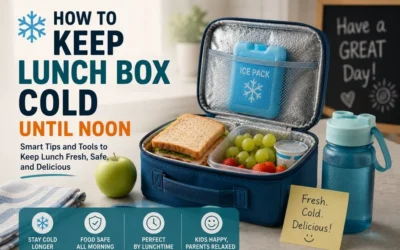
For an insulated lunch bag, the liner is what determines its life. A welded or heat-sealed liner cleans easily and does not wick spills into the insulation; a stitched liner traps whatever leaks and eventually smells. Check the inside seams rather than the outside pattern.
For containers, the lid is the whole product. Silicone gaskets seal better than moulded plastic lips, and containers with a removable gasket can be cleaned properly rather than growing a hidden ring of residue. The trade is that a removable gasket can be lost, so buy the type that stores flat and check that replacements exist.
Bento-style compartment boxes suit younger children well, because separate wells stop a sandwich absorbing fruit juice and make portions visible. They are also the type most likely to be bought on a character basis, which is precisely the purchase to avoid stockpiling a year ahead.
Insulated bottles are the one item where buying at clearance and buying quality both apply, since a vacuum bottle that keeps its seal lasts for years and gets used long after school. Check that the lid disassembles for cleaning and that the manufacturer sells spare lids.
Making August spending count for less next year
The single most effective habit for this category is a short inventory taken now, at the end of the buying season, rather than next July when nobody remembers.
Walk through what came home unused, what ran out in the first month, what broke and what the school actually asked for that was not on any list. Ten minutes with a note produces a shopping list next summer that is both shorter and more accurate, which saves more than any discount does.
Keep that note where you will find it, which in practice means a phone note or a photo rather than a piece of paper. The failure mode is not forgetting to write it; it is writing it and never seeing it again.
Two entries are worth adding deliberately. First, which items your household ran short of mid-year, since those are the ones to buy in surplus at clearance. Second, which brands or models genuinely lasted, because in a category where most products are indistinguishable, a name that survived a year is real information.
Dorm and small-space goods, for everybody else
The dorm section clears at the same time as school supplies and is worth a look even for households with no student in them, because almost everything in it is generic small-space equipment sold under a seasonal label.
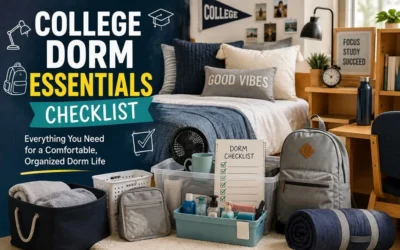
Storage bins, drawer organizers, over-door hooks, desk lamps, power strips, laundry hampers, compact drying racks, small mirrors and shoe racks are all ordinary household goods that happen to be merchandised for August. In late September they clear at seasonal prices rather than homeware prices.
Two categories in that aisle deserve more care. Compact appliances, meaning small refrigerators, kettles and microwaves, are worth checking for a safety certification mark and a sensible warranty, since the cheapest tier of these is genuinely poor. And anything with a lithium battery, including power banks, should come from a recognizable brand with proper certification rather than an unbranded clearance bin.
Bedding sized for a dorm is the one thing to be careful about, because dorm beds are usually twin extra long. Sheets bought at clearance in that size do not fit a standard twin at home, which is the most common way this aisle disappoints a non-student shopper.
The one thing worth carrying over from the dorm aisle into an ordinary house is the vertical storage: over-door organizers, stackable bins and slim rolling carts are designed for rooms with no floor space, which describes most closets, laundry corners and small bathrooms just as well as it describes a dorm room. They are also, at clearance pricing in late September, cheaper than the identical items sold year-round in the homeware aisle, which is the whole reason to walk past this section on the way out.
Frequently asked questions
When do back to school sales end?
Advertised promotions wind down through the first half of September, but the deepest prices arrive afterwards, during clearance from mid September into early October. The category disappears entirely by late October when the shelf space goes to holiday stock.
Is it cheaper to buy school supplies after school starts?
For most items, yes. August has loss leaders on basics like pencils and paper, while clearance in mid to late September brings the deepest cuts on backpacks, lunch gear and anything with a color or character. The weakest moment is the first week or two of September, between the two.
What school supplies are worth stockpiling?
Anything that does not expire and gets used continuously: paper, notebooks, folders, pens, pencils, highlighters, glue sticks, tape and index cards. Avoid stockpiling items a school specifies by brand, clothing in a fixed size, or technology.
Where do the best back to school clearance deals appear?
Mostly in physical stores, because deep seasonal clearance is driven by the need for shelf space. Look for a relocated endcap or back-of-store display rather than the emptied school aisle, and note that prices often differ between branches of the same chain.
Did I miss the tax free weekend?
If your state runs one, it almost certainly fell in late July or August. The saving equals your state sales tax rate, which matters on a laptop or a wardrobe and very little on supplies, so tax holidays suit large purchases while clearance suits everything else.
How much should I buy at clearance?
Roughly what your household expects to replace over one school year. Buying beyond that leads to supplies being lost, damaged in storage or forgotten, and the surplus should be stored somewhere visible so it actually gets used in February.
Should I buy next year’s backpack at clearance?
Yes if the child is past the stage where a favorite character changes annually, and if you choose something durable and plain. A licensed backpack bought a year ahead is frequently refused the following August.
What else clears at the same time?
Summer merchandise reaches its final markdowns in the same weeks: outdoor furniture, grills, garden equipment, coolers and warm weather clothing. Dorm and small-space goods clear alongside school supplies and are useful to any household, not only students.







Write Your Review
No reviews yet. Be the first to share your experience!