

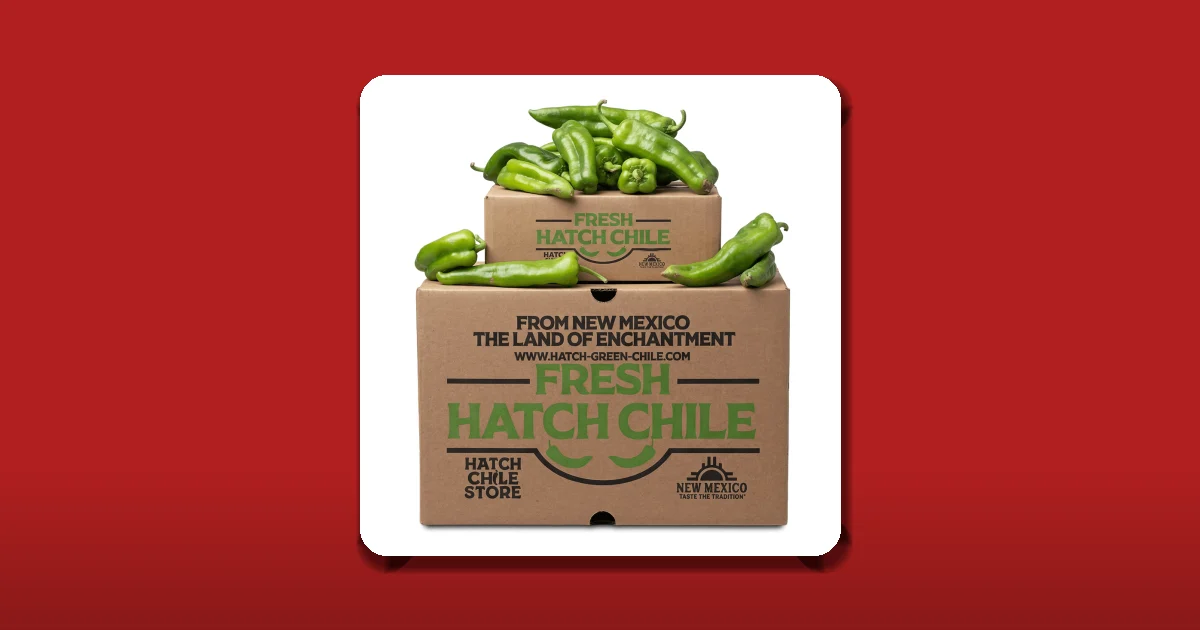
Hatch chile season 2026 runs from early August through late September, with the green chile peak landing right around Labor Day weekend (September 5 and 6, which is also when the Hatch Chile Festival takes place in Hatch, New Mexico). Red chile follows in September and the tail of the harvest stretches into early October. If you want fresh pods shipped to your door, the ordering window is August through the last week of September; after that, the realistic options are roasted and frozen chile, dried red pods and jarred sauces, which is exactly how most New Mexicans eat Hatch chile the other ten months of the year.
This guide covers the season calendar, how to pick a heat level, how to roast a batch at home with three different methods, how to peel and freeze it so it lasts until next August, and what to do when the fresh window closes. Everything here is general cooking information drawn from the growers themselves and from the New Mexico chile trade, not a substitute for the instructions printed on a specific product.
Hatch chile season 2026 at a glance
| Window | What is available | What to do |
|---|---|---|
| Late July to early August | First green pods, small volume, mostly mild | Pre-orders open at most Hatch Valley farms; lock in a box if you want a specific heat level |
| Mid August to early September | Green chile peak, every heat level, festival roasting | The best time to buy fresh by the case and roast a year’s supply |
| September | Green thins out, red chile ripens on the plant | Buy red for ristras, drying and red sauce; last call for fresh green shipments |
| Late September to early October | Tail of harvest, frozen and roasted stock rebuilt | Switch to frozen roasted chile, dried pods and sauces |
| November to July | No fresh Hatch chile anywhere | Frozen, dried, canned and jarred only; anything sold as fresh Hatch in March is not from this harvest |
Two numbers matter for planning. The harvest lasts roughly 10 to 12 weeks in total, and fresh chile ships for about 8 of them. Farms in the valley such as the fifth generation family behind Hatch Chile Store typically list fresh green and red chile only in season and keep roasted frozen chile, dried red pods, sauces and salsas on the shelf year round, so the same shop covers both halves of the calendar.
What makes a Hatch chile a Hatch chile
Hatch is a place, not a variety. The name refers to chile grown in the Hatch Valley along the Rio Grande in southern New Mexico, where hot days, cool nights and the valley soil produce a pod with thicker walls and a deeper, earthier flavor than the same seed grown elsewhere. The plants themselves are New Mexico type chiles, mostly cultivars developed at New Mexico State University, and the same seed grown in another state produces a pepper that is legally an Anaheim, not a Hatch.
That geographic definition is why the season is so short and so seasonal. There is one valley, one harvest, and no greenhouse workaround. It is also why the “Hatch” label on a supermarket bag in the off season deserves a second look: the state of New Mexico requires chile labeled as New Mexico grown to actually be grown there, and the growers’ association has spent years chasing mislabeled product from Mexico and other states.
Green versus red: same plant, different month
Every red Hatch chile started life as a green one. Green chile is picked before the pod ripens, when it is grassy, bright and a little vegetal. Left on the plant another three to four weeks, the same pod turns red, the sugars develop, and the flavor shifts toward sweet, smoky and raisin-like. Because ripening happens late in the season, red chile is mostly a September story, and it is usually dried rather than roasted.
- Green: roast, peel, chop. Goes into green chile stew, chile rellenos, enchilada sauce, cheeseburgers, breakfast burritos and just about anything with cheese.
- Red: dry into pods or ristras, then rehydrate into red chile sauce for enchiladas, posole, carne adovada and tamales. Ground red is also sold as powder.
- “Christmas”: the New Mexican answer when a server asks red or green. You get both.
How to choose a heat level
Hatch chile is sold by heat level, not by cultivar name, and the heat is set by the seed the farm planted, not by how long the pod stayed on the vine. The scale below is the one most Hatch Valley growers use. Scoville ranges are approximate because pods on the same plant vary, and a hot summer pushes every level a little higher.
| Heat level | Approximate Scoville | Compare to | Best for |
|---|---|---|---|
| Mild | 500 to 1,000 | A poblano, less than a jalapeno | Kids, big batches of stew, anyone who wants flavor without burn |
| Medium | 1,000 to 2,500 | Low end of jalapeno | The all-purpose choice; most restaurants roast medium |
| Hot | 2,500 to 5,000 | A solid jalapeno | Green chile stew with body, rellenos, salsa |
| Extra hot (often “XX Hot” or “Lumbre”) | 5,000 to 8,000 and up | Serrano territory | People who already know they want it; use sparingly |
If you are ordering a case for the first time, medium is the safe call, and a mixed case of mild and hot lets you blend to taste after roasting. Remember that most of the heat lives in the seeds and the pale ribs inside the pod, so a hot chile that is seeded and deveined after roasting lands closer to medium in the pot.
How much to buy
Fresh Hatch chile is sold by the pound, the half sack and the sack. A full sack is about 25 pounds of fresh pods, which roasts down to roughly 12 to 14 pounds of peeled chile, or somewhere around 20 to 24 cups chopped. Roasting drives off water and peeling removes skin, stems and seeds, so expect to lose about half the raw weight.
- 5 pounds fresh: about 2 to 2.5 pounds roasted and peeled. Enough for a few pots of stew and some burritos. A good first order if you have never roasted before.
- 10 pounds fresh: about 5 pounds peeled. Covers a small household for several months if frozen in one cup portions.
- 25 pound sack: a year’s supply for a family that cooks with chile weekly. Plan a full afternoon for roasting and peeling, and clear freezer space first.
Shipping fresh chile is a race against the clock. Pods are picked and shipped within a day or two, and they should be roasted within three or four days of arrival. Do not order a sack the week before a vacation.
How to roast Hatch chiles at home
Roasting does two jobs: it loosens the tough outer skin so it slips off, and it develops the smoky, charred flavor that raw chile does not have. Every method below works toward the same goal, which is blistered and blackened skin over most of the pod without cooking the flesh to mush. Wash and dry the pods first, and leave the stems on until after peeling; they make a useful handle.
Method 1: gas grill or charcoal (best flavor, best for volume)
- Heat the grill as hot as it will go. For charcoal, wait until the coals are covered in gray ash.
- Lay pods in a single layer directly on the grates. Do not crowd them.
- Turn with tongs every two to three minutes as the skin blisters and blackens. A pod is done when 80 to 90 percent of the skin is charred, usually 8 to 12 minutes total.
- Move finished pods straight into a large bowl and cover tightly with plastic wrap or a lid, or drop them into a paper grocery bag and fold it closed. Let them steam 15 to 20 minutes.
The grill is the closest you will get at home to the propane drum roasters that spin outside every New Mexico grocery store in August, and it is the only practical way to work through a 25 pound sack in one session.
Method 2: oven broiler (easiest, no special gear)
- Move an oven rack to the highest position and turn the broiler to high. Let it preheat for five minutes.
- Arrange pods in a single layer on a foil lined sheet pan.
- Broil 4 to 6 minutes per side, turning once, until the skin is blistered and blackened in patches. Keep the oven door cracked and watch closely; broilers vary a lot.
- Steam in a covered bowl or paper bag for 15 to 20 minutes.
The broiler does one sheet pan at a time, about two pounds, so it suits a five or ten pound order rather than a sack. Run the range hood; the fumes from charring chile can sting.
Method 3: open flame on a gas stove (small batches, best char)
- Set a burner to high and lay two or three pods directly across the grate, or hold them over the flame with long tongs.
- Turn every minute or so until the skin is blackened all over, about 5 to 8 minutes per batch.
- Steam as above.
Direct flame gives the deepest char but handles only a handful of pods at a time. It is the method for a dozen chiles for tonight’s rellenos, not for stocking the freezer. An air fryer at its highest setting also works for small batches, roughly 8 to 10 minutes with a shake halfway, though the char is lighter than flame.
Peeling, seeding and portioning
After steaming, the skin should slide off under your fingers. Work over a sheet pan and resist the urge to rinse the pods under the tap, which washes away the smoky oils you just spent an hour building. A damp paper towel handles the stubborn bits. Pull the stem, and the seed core usually comes with it; split the pod and scrape out any seeds that remain, more thoroughly if you want less heat.
Wear gloves. Capsaicin soaks into skin and does not wash off with soap, and a hot chile handled bare will remind you every time you touch your face for the rest of the day. This is not optional with hot and extra hot pods.
Whether to peel before freezing is a real debate in New Mexico. Peeling first means grab and go portions later. Freezing with the skin on protects the flesh from freezer burn and the skin still slips off after thawing. Either works; peeling first is more convenient, skin on keeps a little longer.
How to store Hatch chile so it lasts until next season
| State | Where | How long | Notes |
|---|---|---|---|
| Fresh, unroasted | Refrigerator, loose in a paper bag or open container | 3 to 7 days | Do not seal in plastic; trapped moisture rots the pods. Roast within a few days of delivery. |
| Roasted and peeled | Refrigerator, sealed container | 3 to 5 days | Fine for the week’s cooking; freeze anything beyond that. |
| Roasted, frozen | Freezer, in freezer bags with air pressed out | Up to 12 months; best flavor within 6 | Portion in 1 cup or half pound amounts, flat, and label with heat level and date. |
| Dried red pods or ristra | Cool, dark, dry cupboard | 12 months or longer | Ristras hung outdoors are decorative; a kitchen ristra away from steam stays usable. |
| Red chile powder | Airtight jar away from light | 6 to 12 months | Loses brightness over time rather than going bad. |
The trick that makes a year of chile painless is portioning before freezing. Lay chopped chile in a freezer bag, press it flat to about a half inch, squeeze the air out and freeze it flat on a sheet pan. Flat bags stack, thaw in minutes under cool water, and let you snap off a corner for a single burrito. Freezing a whole gallon bag as one brick means thawing the whole brick every time.
A vacuum sealer stretches the 6 month best flavor window closer to the full year, and it is worth it if you buy a sack. Whole roasted pods with skin on, frozen in a single layer and then bagged, are the most freezer burn resistant option of all.
What to cook with it
- Green chile stew: pork shoulder, potatoes, onion, garlic and a generous amount of chopped roasted green chile, simmered until the pork falls apart. The dish the whole season is built around.
- Chile rellenos: whole roasted pods, peeled with the stem left on, stuffed with cheese, battered and fried. Choose the biggest, straightest mild or medium pods for this and freeze them whole.
- Green chile cheeseburgers: a New Mexico institution. A spoon of chopped chile on the patty under the cheese.
- Breakfast burritos and eggs: a tablespoon in scrambled eggs, or chile and potato inside a tortilla.
- Red chile sauce: dried pods, stemmed and seeded, simmered in water or stock until soft, blended smooth with garlic and a pinch of oregano, strained. The base of enchiladas, posole and carne adovada.
- Salsa and sauces: if you would rather skip the roasting, a jar of Hatch green chile sauce or salsa from a valley farm delivers most of the flavor for a fraction of the effort, and it is on the shelf all year.
For dry seasoning rather than pods, a small-batch spice shop such as Old Town Spice Shop carries Hatch chile powder and chile blends that keep the flavor in the pantry without a freezer.
Buying Hatch chile after the season ends
From October through July there is no fresh Hatch chile to be had, and any listing that says otherwise is either mislabeled or describing a different pepper. The good news is that the roasted, frozen product sold by Hatch Valley farms is the same chile, roasted at the peak of the harvest and flash frozen, and it is how most New Mexican households cook through the winter. It arrives in insulated packaging on dry ice, goes straight into the freezer, and skips the afternoon of peeling entirely.
Dried red pods are the other year round staple. A pound of dried pods makes a lot of red sauce, keeps for a year in the cupboard and ships without refrigeration. Between frozen green and dried red, there is no month where a Hatch chile kitchen has to go without.
If you are stocking the pantry for the holidays, Hatch chile pairs naturally with the gourmet food gifts and hot sauces on our grocery and gourmet food coupons page, and the Hatch Chile Store coupon page lists the current offer on their roasted chile, sauces and gift boxes.
The bottom line
Order fresh green Hatch chile between early August and the last week of September, with Labor Day as the sweet spot. Pick medium if unsure, buy about twice the peeled weight you think you need, roast on a grill or under the broiler until the skin is mostly black, steam, peel without rinsing, and freeze flat in one cup portions. Done right, a single September afternoon covers your green chile stew through next summer, and frozen roasted chile from a valley farm covers you if you miss the window.
Frequently asked questions
When is Hatch chile season in 2026?
Early August through late September, with the green chile peak around Labor Day weekend, September 5 and 6, 2026. Red chile ripens in September and the harvest tails off in early October. Fresh pods ship from August to the last week of September; after that, only roasted frozen, dried and jarred chile is available.
What is the difference between Hatch chile and Anaheim?
They come from the same family of New Mexico type peppers, but Hatch chile is grown in the Hatch Valley of New Mexico and Anaheim is the same type grown in California or elsewhere. Hatch Valley conditions produce thicker walls, more heat and an earthier flavor. The name Hatch refers to the place, not a specific variety.
How hot are Hatch chiles?
It depends on the heat level you buy. Mild runs about 500 to 1,000 Scoville, medium 1,000 to 2,500, hot 2,500 to 5,000 and extra hot 5,000 to 8,000 or more. Medium is roughly a mild jalapeno. Most of the heat is in the seeds and ribs, so seeding after roasting brings a hot pod down a level.
Do you have to roast Hatch chiles?
For most dishes, yes. Roasting loosens the tough skin, which does not soften in cooking, and creates the smoky flavor Hatch chile is known for. Raw green chile can be diced into salsa or a stir fry, but stews, rellenos, sauces and burritos all call for roasted and peeled chile.
How long does roasted Hatch chile last in the freezer?
Up to 12 months, with the best flavor in the first 6. Freeze it flat in bags with the air pressed out, or vacuum seal it, and label each bag with the heat level and date. Roasted chile keeps 3 to 5 days in the refrigerator before it needs to be frozen.
Should I peel Hatch chiles before freezing?
Either way works. Peeling first gives you ready to use portions. Freezing with the skin on protects the flesh from freezer burn and the skin still slips off after thawing. Many New Mexico households freeze whole pods with the skin on for rellenos and peel chopped chile before freezing for stew.
How many pounds of Hatch chile do I need?
Fresh pods lose about half their weight to roasting and peeling. A 25 pound sack yields roughly 12 to 14 pounds of peeled chile, or 20 to 24 cups chopped, which is a year’s supply for a household that cooks with chile weekly. Five pounds fresh gives about 2 to 2.5 pounds peeled, enough to try a few recipes.
Can I buy Hatch chile year round?
Not fresh. Fresh Hatch chile exists only during the August to September harvest. Year round, Hatch Valley farms sell roasted chile that was frozen at harvest, dried red pods, ristras, powder, sauces and salsas, which is how most New Mexicans cook with it through the winter.







Write Your Review
No reviews yet. Be the first to share your experience!