

Almost nobody arrives in this aisle with a preference. They arrive with a coffee habit, a recipe, or a shopping list written by somebody else, and then they discover that the small boxes on the shelf are not interchangeable at all. One is a leaf extract cut with dextrose, the next is a fermented sugar alcohol that measures spoon for spoon like sugar, and the third is hundreds of times sweeter than sugar and therefore useless on its own. We looked at 9 options from Sweet’N Low, NOW Foods, Equal and more, sorted by what the sweetness actually comes from, how it behaves in heat, and what it leaves behind on the tongue.
Our top pick is the Lakanto Classic Monk Fruit Sweetener with Erythritol for measuring cup for cup like white sugar while keeping the clean finish that monk fruit is bought for. Below we sort the field by base ingredient first, because that single decision explains the sweetness, the aftertaste and the baking behavior all at once. For the rest of the pantry, our home and kitchen section covers adjacent staples.

Pros
- Measures cup for cup like white sugar, so recipes need no conversion
- Monk fruit is the plant extract least likely to leave a bitter tail
- Granulated format suits baking as well as table use
- Erythritol carrier supplies the bulk that recipes need
Cons
- Erythritol brings a cooling sensation that is most noticeable in hot drinks
- Does not brown in the oven the way sugar does
- Sugar alcohols do not suit every palate
Lakanto Classic is the product most people mean when they say monk fruit sweetener, and the reason is the format rather than the fruit. It is granulated, it pours like sugar, and the maker states it measures cup for cup, which means an existing recipe can be used unchanged.
The sweetness itself comes from monk fruit extract, which is many times sweeter than sugar and could never be measured by the spoon on its own. The erythritol is the carrier that gives the product volume, and it is doing most of the physical work in a mixing bowl.
That carrier is also the source of the one complaint that comes up repeatedly. Erythritol absorbs heat as it dissolves and produces a cooling sensation on the tongue, close to mint without the flavor. In chilled desserts it reads as refreshing. In a hot mug it can read as odd, and it is often blamed on the monk fruit rather than on the erythritol.
In baking it behaves well for structure and poorly for color. Cakes and cookies hold together, but nothing browns the way it does with sugar, so expect pale results and judge by time rather than by looking for a golden top.
Bottom line: the one product here that walks straight into an existing recipe, and the best first purchase in the category.
- Base: monk fruit extract with erythritol
- Format: granulated, white sugar style
- Conversion: maker states cup for cup with sugar
- Uses: coffee, tea, baking, cooking
- Label claims: zero calorie per serving, keto friendly
- Texture: fine granules, pours and scoops
Swap it into a recipe at the same volume the recipe calls for, then judge doneness by time and texture rather than by browning, since this will not color the way sugar does. In hot drinks, stir until fully dissolved before tasting, because undissolved granules exaggerate the cooling sensation. For chilled desserts it is at its best, since the cooling effect works with the dish rather than against it.
Choose this if you bake or cook and want one product that covers the whole kitchen. Choose a dextrose based packet instead if the cooling sensation of erythritol has put you off monk fruit blends before, and choose a liquid syrup if your main use is iced drinks where granules dissolve slowly. Anything about how a sweetener fits your own diet belongs with a doctor or dietitian rather than a label.

Pros
- Portion controlled packets remove the guesswork at the table
- Stevia holds up to heat, so it works in hot drinks
- Widely stocked, so refills are easy to find
- Packet format travels well
Cons
- Erythritol carrier brings a cooling sensation in hot drinks
- Stevia leaves a tail that some palates dislike
- Packets are the wrong format for baking by volume
Truvia is the stevia packet most people meet first, and the packet format is the whole point. Each sachet is portioned to a standard coffee serving, so there is no measuring, no conversion, and no risk of over sweetening a mug.
The sweetness comes from stevia leaf extract, which is heat stable and therefore fine in hot drinks and in cooking. The carrier is erythritol, which is what gives the packet enough volume to pour and stir.
The carrier is also what divides opinion. Erythritol cools as it dissolves, and in a hot drink that sensation is at its most obvious. People who have tried a stevia packet built on dextrose instead often report a noticeably different experience from the same base sweetener.
The other well documented characteristic is stevia's own aftertaste, sometimes described as bitter and sometimes as faintly like licorice. Sensitivity varies enormously between individuals, and there is no way to know which camp you fall into without trying it.
Bottom line: the default stevia packet for the table, provided the erythritol cooling does not bother you.
- Base: stevia leaf extract with erythritol
- Format: single serve packets in a carton
- Conversion: about two teaspoons of sugar per packet
- Uses: coffee, tea, cereal, table sweetening
- Label claims: calorie free per serving
- Heat: stevia is stable at cooking temperatures
Buy this if you sweeten drinks rather than bake, want portion control without measuring, and have no strong reaction to stevia. Skip it if the cooling sensation of erythritol has bothered you in the past, in which case a dextrose carried stevia packet is the direct alternative, and skip it if what you actually need is a granulated product for recipes measured in cups.
Store the carton somewhere dry, since packets are paper and humidity clumps the contents. Keep the conversion in mind when sweetening by eye, because packets are far more concentrated than a spoon of sugar and doubling up is easy. Anything beyond what the label states about diet or health belongs with a doctor or a dietitian rather than a product description.

Pros
- Sucralose is the most neutral tasting of the manufactured sweeteners
- Heat stable, so it works in hot drinks and in cooking
- Largest carton here, so refills come around less often
- Portion controlled packets need no conversion
Cons
- Packet carriers are dextrose and maltodextrin, which are carbohydrates
- Not a volume for volume swap in baking
- A large carton takes real cupboard space
Splenda is the sucralose entry, and sucralose is the manufactured sweetener that tastes closest to neutral. There is no licorice tail and no metallic edge, which is why it converts people who have bounced off the plant extracts.
It is also heat stable, so unlike aspartame based products it survives cooking and hot drinks without losing sweetness. That makes it a genuinely general purpose table sweetener rather than a cold drink specialist.
The packets carry the sucralose on dextrose and maltodextrin. Both are carbohydrates, and both are declared on the nutrition panel even though the serving rounds to zero calories under labeling rules. If the carbohydrate figure matters to you, read the panel and the serving size together.
The large carton is the reason this earns the value slot. A household that sweetens several drinks a day gets through packets quickly, and the big box means the cupboard is restocked far less often.
Bottom line: the neutral tasting workhorse, and the sensible choice for a household that uses a lot.
- Base: sucralose with dextrose and maltodextrin carriers
- Format: single serve packets, large carton
- Conversion: about two teaspoons of sugar per packet
- Uses: coffee, tea, cereal, cooking
- Label claims: zero calorie per serving
- Heat: stable at cooking temperatures
Pick this if taste neutrality is your priority and you have found plant extracts distracting. Pick a granulated cup for cup product instead if most of your use is baking, since packets contribute no bulk. Pick an erythritol free formulation if sugar alcohols are what you are avoiding, and check the ingredient panel rather than the front of the box to confirm which carrier you are getting.
Use one packet where you would use two teaspoons of sugar, then adjust rather than starting from a spoon count. In cooking, add it late where possible so you can taste as you go, since concentrated sweeteners are difficult to walk back. Keep the carton closed and dry, because paper packets clump in a humid cupboard.

Pros
- No erythritol, so no cooling sensation in hot drinks
- Stevia base is heat stable for coffee, tea and cooking
- Large packet count per box
- Simple ingredient panel with one carrier
Cons
- Dextrose carrier is a carbohydrate, declared on the panel
- Stevia aftertaste is still present for palates sensitive to it
- Packet format contributes no bulk for baking
This is the stevia packet for people whose objection was never stevia. A large share of complaints about plant extract sweeteners are actually complaints about erythritol, and this formulation removes it, carrying the stevia on dextrose instead.
The practical difference shows up in a hot drink. Without erythritol there is no cooling sensation, so what you taste is the stevia and nothing else, which is a fairer test of whether the base sweetener suits you.
The trade off is on the nutrition panel. Dextrose is a carbohydrate, and although the serving size rounds to zero calories under labeling rules, it is declared. Anyone counting carbohydrates closely should read the panel and the serving size together rather than the front of the box.
Stevia's own character remains. The tail that some describe as bitter and others as faintly like licorice is a property of the extract, not of the carrier, so this product does not remove it.
Bottom line: the right stevia packet if erythritol is what put you off, and the wrong one if stevia itself was the problem.
- Base: stevia extract with dextrose carrier
- Erythritol: none in the formulation
- Format: single serve packets in a box
- Conversion: about two teaspoons of sugar per packet
- Label claims: zero calorie per serving, no artificial flavors
- Heat: stable in hot drinks and cooking
Buy this if you like the idea of stevia but found a previous blend strangely cool in coffee, since that effect comes from the erythritol this product leaves out. Skip it if you are avoiding all carbohydrate carriers, since dextrose is exactly that, and skip it if your objection to a previous stevia product was a bitter finish rather than a cool one.
Start with one packet in a mug and taste before adding a second, because concentrated sweeteners are hard to correct once they are in. In cooking, dissolve the packet into a liquid component rather than sprinkling it over a dry mix, which gives a much more even result. Keep the box dry so the paper packets do not clump.

Pros
- Monk fruit profile without the erythritol cooling effect
- Portion controlled packets for coffee and tea
- Non-GMO Project Verified and keto certified marks on the pack
- Heat stable for hot drinks
Cons
- Dextrose carrier is a carbohydrate, declared on the panel
- Smaller count per box than the big sucralose cartons
- Packets are the wrong format for recipes measured in cups
Monk fruit is usually sold as a granulated baking product, so a packet version fills a real gap. This is the monk fruit profile in the format most people actually use at a table, which is a single serve sachet next to a mug.
Like the stevia packet from the same family, the carrier here is dextrose rather than erythritol. That removes the cooling sensation entirely, which suits hot drinks and makes the monk fruit character itself easier to judge.
Monk fruit is generally described as the cleanest of the plant extracts, with less of the tail that stevia is known for. That is a large part of why it has taken so much shelf space in recent years despite being the more expensive base to produce.
The carbohydrate note applies here as it does to every dextrose carried packet. The serving rounds to zero under labeling rules and the ingredient is still declared, so read the panel if that figure matters to you.
Bottom line: the easiest way to try monk fruit in a mug before committing to a baking sized bag.
- Base: monk fruit extract with dextrose carrier
- Format: single serve packets
- Conversion: about two teaspoons of sugar per packet
- Certifications: Non-GMO Project Verified, keto certified
- Label claims: zero calories, zero net carbs per serving
- Erythritol: none in the formulation
Choose this to sample the monk fruit profile without buying a granulated bag, or as a table companion to a baking product you already own. Choose a granulated cup for cup blend instead if you mostly bake, and choose sucralose if what you want is the most neutral taste rather than a specific plant extract.
Store the box somewhere dry, since paper packets take on moisture and clump. Certification marks such as Non-GMO Project Verified and keto certified describe published program criteria rather than nutrition outcomes, so read them as sourcing information. Questions about how any sweetener fits a particular diet belong with a doctor or a dietitian.

Pros
- Roughly a one for one match with sugar by volume
- Single ingredient with no carrier to read around
- Bulk bag suits baking and cooking
- Behaves close to sugar for moisture and texture
Cons
- Label warns that xylitol is dangerous to dogs
- Sugar alcohols do not agree with every digestive system
- Not a zero calorie product, the label states low calorie
Xylitol is the odd one out in this list, and the difference is useful. It is a sugar alcohol of roughly the same sweetness as sugar rather than a concentrate hundreds of times stronger, so it measures close to one for one and needs no carrier at all.
That matters most in the oven. Bulk, moisture and texture are jobs sugar does beyond sweetness, and xylitol is the substitute here that comes closest to doing all of them, which is why bakers reach for it when the crumb is the priority.
The taste is clean, without the tail that stevia can leave or the metallic edge some people find in saccharin. It is also less cooling on the tongue than erythritol, though it is a sugar alcohol and shares some of that family character.
Two things belong on the label rather than in the marketing. It is described as low calorie rather than zero calorie, and the packaging carries a clear warning that xylitol is dangerous to dogs. In a house with a pet that warning decides where the bag lives.
Bottom line: the closest thing here to a straight swap for sugar in a recipe, with a warning that has to be respected.
- Base: pure xylitol, single ingredient
- Format: granulated, bulk bag
- Sweetness: close to one for one with sugar by volume
- Uses: baking, cooking, drinks
- Label claims: low calorie, low glycemic impact, keto friendly
- Warning: label states xylitol is dangerous to dogs
Keep this bag well out of reach of dogs and store it closed, because the label warning about xylitol and dogs is the most important line on the package. Sugar alcohols do not suit every digestive system, so introduce it gradually rather than swapping a full recipe on the first attempt. Store somewhere dry, since granulated xylitol clumps when it takes on moisture.
Swap it into a recipe at roughly the same volume as the sugar it replaces and expect a texture much closer to the original than any concentrate will give you. It dissolves readily in warm liquid and more slowly in cold, so stir well in iced drinks. For a first bake, replace part of the sugar rather than all of it and judge the result before going further.

Pros
- Long established taste profile that regular users know well
- Erythritol free, so no cooling sensation
- Large carton count for a household that gets through packets
- Portion controlled sachets need no measuring
Cons
- Aspartame loses sweetness with sustained heat, so it is poor for baking
- Label carries the required phenylketonurics statement
- Blend of two sweeteners will not suit every palate
Equal is one of the two packets everyone recognises from a diner table, and its formulation explains where it fits. Aspartame is paired with acesulfame potassium, and the pairing exists because two sweeteners together mask each other's rough edges better than either does alone.
It is also an erythritol free product, which is worth noting in a list where several entries carry that sugar alcohol. There is no cooling sensation here, so a hot drink tastes of the drink.
The heat limitation is the real constraint. Aspartame loses sweetness under sustained heat, which is why products built on it are aimed at the table and at cold drinks rather than at the oven. A cake sweetened with it can come out of the oven noticeably less sweet than the batter tasted.
The label carries the phenylketonurics statement about phenylalanine, which is a mandatory notice on aspartame products rather than a general caution. It is worth recognising on sight if it applies to your household.
Bottom line: a familiar table packet with a specific weakness in the oven.
- Base: aspartame with acesulfame potassium
- Erythritol: none in the formulation
- Format: single serve packets, large carton
- Conversion: about two teaspoons of sugar per packet
- Label claims: zero calorie per serving
- Required statement: phenylketonurics notice on the pack
Buy this if you already know you like the taste of the classic blue packet and want a large carton of it, or if you want a sweetener with no sugar alcohol in the ingredient list. Skip it if you bake, since aspartame is the wrong base for sustained heat, and skip it if the phenylketonurics statement on the label applies in your household.
Read the phenylketonurics statement on the carton, which is a required label notice on aspartame products and is there for a reason. Keep the box dry so the packets do not clump. Use it in drinks and at the table rather than in the oven, since sustained heat reduces the sweetness rather than harming anything.

Pros
- Heat stable, so it works in hot drinks and cooking
- Very concentrated, so a packet goes a long way
- Kosher and gluten free per the label
- Long shelf life in a dry cupboard
Cons
- Saccharin leaves a metallic edge for some palates
- Packets contribute no bulk for baking
- Taste profile is dated compared with newer bases
Sweet'N Low is the oldest formulation on this list and the pink packet is instantly recognisable. Saccharin is extremely concentrated, several hundred times the sweetness of sugar, which is why a single small sachet does the work of a spoonful.
It is heat stable, so unlike aspartame it holds its sweetness in a hot drink or a saucepan. For anyone who sweetens tea all day, that stability is the practical advantage.
The characteristic that keeps it divisive is the metallic edge some people taste at the finish. Sensitivity varies, and it tends to show most in plain water or a weak tea where nothing else covers it. In coffee with milk it is far less noticeable.
As with every packet, the carrier provides the volume and the sweetener provides the sweetness, so there is nothing here to help a cake hold together. This is a table and drinks product.
Bottom line: buy it if you already like the pink packet, since taste is the entire decision with saccharin.
- Base: saccharin in single serve packets
- Format: paper sachets in a box
- Conversion: about two teaspoons of sugar per packet
- Label claims: zero calorie, low glycemic index, kosher, gluten free
- Heat: stable in hot drinks and cooking
- Uses: coffee, tea, table sweetening
Choose this if the pink packet is what you grew up with and the taste suits you, since that familiarity is the main reason to pick saccharin today. Choose sucralose instead if you want the most neutral profile among the manufactured sweeteners, and choose a granulated blend if any part of your use involves recipes measured in cups.
Add half a packet first in plain water or weak tea, where the finish is most exposed, and go from there. In coffee with milk the profile is far more forgiving, so a whole packet is a reasonable starting point. Keep the box in a dry cupboard, since paper packets clump with humidity.
Pros
- Already in solution, so it disperses instantly in cold drinks
- Pour or pump dosing is faster than counting packets
- Bottle format suits high volume drink making
- No granules to settle at the bottom of a glass
Cons
- Provides no bulk, so it is useless for baking
- A large bottle takes fridge or counter space once opened
- Dosing by pour is less precise than a packet
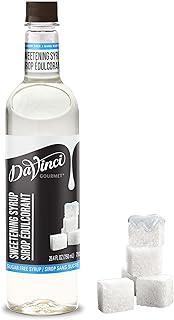
Granulated sweeteners have one clear weakness, which is cold liquid. Erythritol blends in particular dissolve slowly and can recrystallise at the bottom of a glass of iced tea, leaving a gritty layer and an under sweetened drink.
A syrup solves that by arriving already in solution. It disperses on contact with a cold drink, which is why cafe counters and home bars use liquid sweeteners rather than sachets when iced drinks are the main output.
Speed is the second advantage. Pouring or pumping is faster than opening several packets, and for anyone making more than one drink at a time that difference adds up quickly.
What a syrup cannot do is contribute any bulk, so it has no place in a mixing bowl. It is also less precise than a portioned packet, since dosing by pour is a matter of judgment rather than measurement.
Bottom line: the right tool for iced drinks and the wrong tool for everything that goes in an oven.
- Format: liquid syrup in a bottle
- Base: sugar free sweetener syrup per the label
- Best use: iced coffee, cold drinks, bar mixing
- Dispersion: dissolves instantly in cold liquid
- Baking: provides no bulk, not a recipe substitute
- Dosing: by pour or with a pump fitting
Add the syrup to the drink before the ice rather than after, so it mixes through the liquid instead of chasing the cubes. Start with a small pour and taste, since it is easier to add than to correct. Fit a pump if you make several drinks at a time, which makes the dose repeatable instead of a guess.
Follow the storage instruction on the bottle once it is opened, since a large bottle of liquid keeps differently from a box of dry packets. Wipe the neck and the pump after use so the thread does not become sticky and seize. Keep it out of direct sun on a counter, which is hard on any bottled product.
How to Choose a Sugar Free Sweetener
Six things separate one box from the next, and the first of them decides most of the others. Read that section even if you skip the rest. Everything below describes what the products are and what their labels state, not what any of them will do for you personally, which is a question for a doctor or a dietitian rather than a shopping guide.
Start With the Base Ingredient
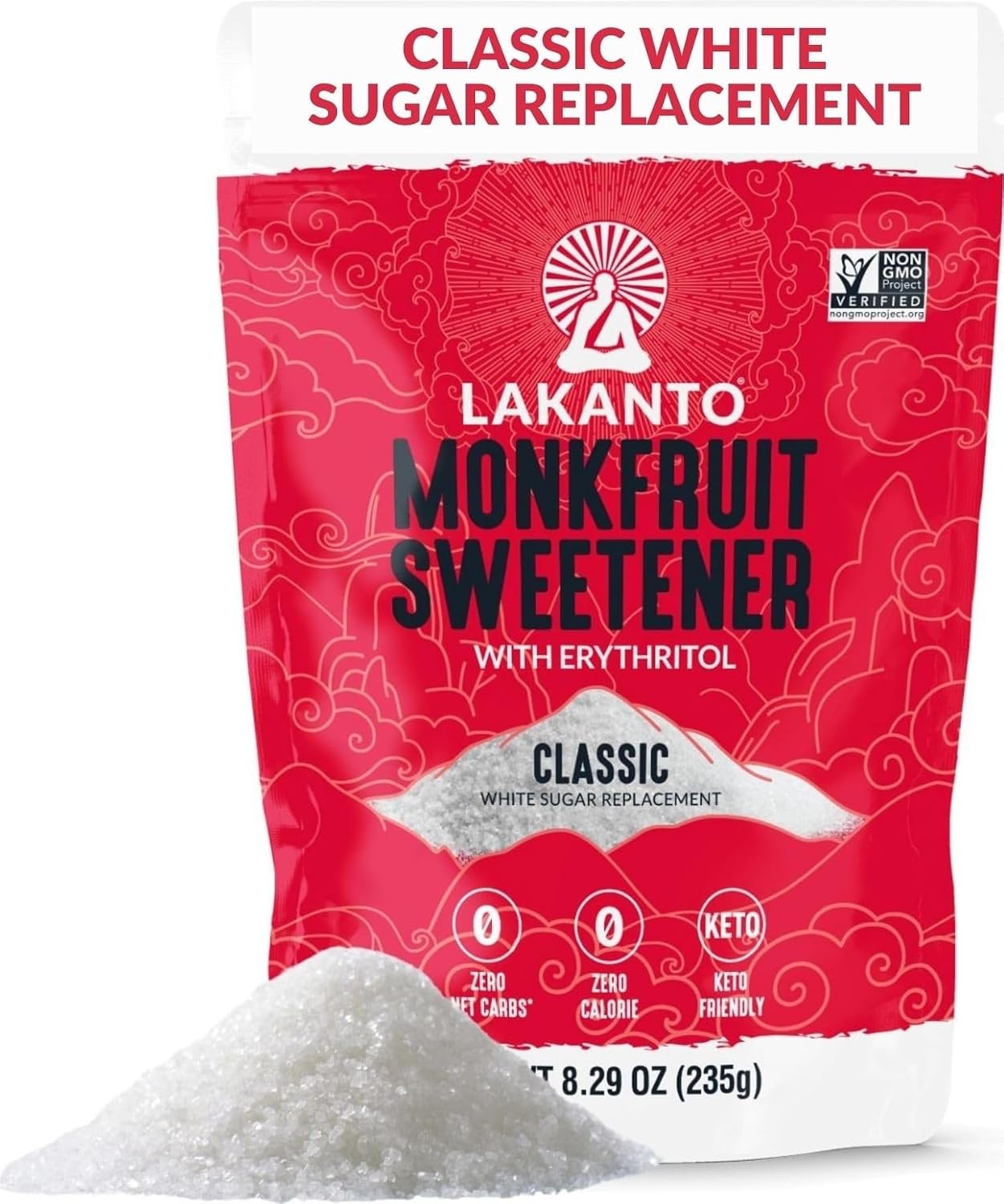
Everything on this shelf falls into three families. Plant extracts cover stevia, where the sweet compounds are steviol glycosides pulled from the leaf, and monk fruit, where they are mogrosides from the dried fruit. Sugar alcohols cover erythritol and xylitol, which are bulk ingredients you can hold in a spoon. Manufactured high intensity sweeteners cover sucralose, aspartame, acesulfame potassium and saccharin.
The family tells you the shape of the product before you read anything else. Plant extracts and manufactured sweeteners are so concentrated that a usable quantity would be a speck, so they are almost always sold blended with a bulking agent or as a liquid. Sugar alcohols are the opposite: they are less sweet than sugar by weight, so they arrive as a bag of granules you scoop.
Blends are the norm rather than the exception, and reading the ingredient panel is the only way to know what you are buying. A monk fruit box is usually monk fruit extract carried in erythritol. A stevia packet is usually stevia extract carried in dextrose. That carrier is doing most of the physical work in the cup or the mixing bowl, so it deserves as much attention as the headline ingredient on the front of the box.
Sweetness Intensity and the Conversion Problem

The numbers here are wide enough to be worth memorising roughly. Stevia extracts land somewhere around two to three hundred times the sweetness of sugar, monk fruit extracts a little below that, aspartame and acesulfame potassium around two hundred, saccharin higher still, and sucralose is the most concentrated of the group. Erythritol runs at roughly seventy percent of sugar and xylitol is close to a one for one match.
That spread explains why the packaging talks in two different languages. A bag that claims it measures cup for cup like sugar is a bulked product designed for baking, and you use the same quantity a recipe already calls for. A packet, by contrast, is portioned to match roughly two teaspoons of sugar, which is the standard coffee serving, and that ratio is the only conversion most packet users ever need.
Trouble starts when the two get mixed up. Substituting a concentrated liquid or a packet blend into a cake recipe by volume produces something inedible, and doing the reverse leaves a coffee that tastes of nothing. Check the front of the box for the phrase about measuring like sugar before you decide which product belongs in which part of the kitchen.
Whether It Actually Bakes
Sugar in a recipe is not only sweetness. It provides bulk, it holds moisture, it browns in the oven, and in a cookie it is part of the reason the dough spreads. A high intensity sweetener replaces the first of those jobs and none of the rest, which is why a cake made with a stevia packet comes out pale, dry and oddly short.
Erythritol based blends are the ones that bake best in this group, because the erythritol supplies the missing bulk. They still do not brown the way sugar does, and baked goods made with them tend to firm up more when cold, but the structure survives. Xylitol behaves closer to sugar again in terms of bulk and moisture, so it is the sugar alcohol bakers reach for when texture is the priority.
Heat stability is the other half of the question. Aspartame loses sweetness with sustained heat, which is why products built on it are aimed at cold drinks and table use rather than the oven. Sucralose, saccharin and the plant extracts hold up to baking temperatures well. More kitchen guides sit in our article archive if you want to work through a whole pantry swap.
Aftertaste, Cooling, and Why Blends Exist
Every sweetener on this shelf tastes different from sugar in a specific and predictable way. Stevia carries a bitter, faintly licorice tail that some people never notice and others cannot get past. Saccharin brings a metallic edge. Sucralose is the closest to neutral of the manufactured group. Monk fruit is generally described as the cleanest of the plant extracts, which is a large part of why it commands the shelf space it does.
Erythritol adds a different effect entirely. It absorbs heat as it dissolves, so it produces a cooling sensation on the tongue similar to mint without the flavor. In a chocolate recipe that reads as refreshing. In a cup of hot coffee it reads as strange, and it is the single most common complaint about monk fruit blends from people who assumed the fruit was at fault.
Blending is the industry’s answer to all of this. Combining two sweeteners lets each one cover the other’s weak spot, which is why so many packets list two sweet ingredients rather than one. If a single sweetener has failed you before, the practical move is to try a blend built on a different base rather than to give up on the category.
Format: Packets, Bags, and Liquids

Packets are portion control in physical form. Each one is dosed to a standard coffee serving, they travel in a bag or a glove box, and they remove the guesswork completely. The cost is that you are also buying the carrier, usually dextrose or maltodextrin, and a lot of small paper sachets.
Bags and jars of granulated sweetener are what you want for cooking, for anything measured in cups, and for a household that gets through a lot. Granulated erythritol blends dissolve more slowly than sugar in cold liquid and can recrystallise at the bottom of an iced drink, so they suit hot applications and baking better than a glass of iced tea.
Liquid syrups solve exactly that problem. A sweetener already in solution disperses instantly in a cold drink, which is why café style iced coffee and cocktails lean on them, and a pump bottle is faster than counting sachets. What a syrup cannot do is provide any bulk, so it stays out of the mixing bowl.
Reading the Label Rather Than the Front of the Box
Zero calorie is a labeling term with a defined serving size behind it, not a statement that the box contains nothing. Bulking agents such as dextrose and maltodextrin are carbohydrates, and they are declared on the panel even when the serving rounds down to zero. If the carbohydrate figure matters to you, read the nutrition panel and the serving size together rather than the claim on the front.
Some claims on these boxes are simply descriptions of what is absent. Erythritol free tells you the maker has used a different carrier, usually because of the cooling effect or because some people find sugar alcohols hard going. Non-GMO Project Verified and keto certified are third party program marks with published criteria, so they mean something specific rather than nothing, but neither is a nutrition claim.
Two required statements are worth knowing on sight. Products containing aspartame carry a phenylketonurics notice about phenylalanine, which is a mandatory label statement rather than a general warning. Xylitol packaging carries a caution that it is dangerous to dogs, and that one is worth taking seriously in any house with a pet. Anything beyond what the label states belongs with a doctor or a dietitian, and our health and household section is a starting point for the rest of the shopping list.
| Base ingredient | Best at | Watch for |
|---|---|---|
| Monk fruit with erythritol | Baking and cup for cup swaps, clean finish | Cooling sensation in hot drinks |
| Stevia extract | Coffee, tea, table use, heat stable | Bitter or licorice tail for some palates |
| Sucralose | Neutral taste, holds up to baking | Packet carriers add carbohydrate |
| Aspartame with acesulfame K | Cold drinks and table use | Loses sweetness with sustained heat |
| Saccharin | Long shelf life, very concentrated | Metallic edge for some palates |
| Xylitol | Closest to sugar for bulk and texture | Label warns it is dangerous to dogs |
Why You Should Trust Us
We build these lists from published specification and from the pattern of what long term buyers report, rather than from marketing copy. For every product here we read the ingredient panel rather than the front of the box, noted which sweet compound is doing the work and which carrier it rides on, checked whether the maker states that it measures like sugar, and recorded the certifications and required statements printed on the packaging.
We set aside near identical listings that differ only in count or packaging size, so each entry below is a genuinely different formulation rather than another box of the one above it. We describe taste and behavior in the kitchen, and we deliberately make no claims about health, diet or medical suitability, because those are questions for a qualified professional and not for a product page.
Final Thoughts
Best overall is the Lakanto Classic Monk Fruit Sweetener with Erythritol. It measures cup for cup like white sugar, which makes it the one product here you can carry straight into an existing recipe, and monk fruit is the plant extract least likely to leave a tail that people object to. The erythritol carrier brings the cooling effect with it, so it is at its best in baking and at its most divisive in a hot mug.
Best value is Splenda Zero Calorie Sweetener in the large packet box. Sucralose is the most neutral tasting of the manufactured sweeteners, it survives the oven, and buying the biggest carton means a household that sweetens several drinks a day is not opening a new box every fortnight.
For specific needs, Truvia Calorie-Free Sweetener is the stevia packet to reach for at the table, Stevia In The Raw is the one to choose if you want stevia without any erythritol in the carrier, and NOW Foods Xylitol is the pick when a recipe needs bulk and texture as much as sweetness. Equal and Sweet’N Low are the familiar diner packets for anyone who already knows they like that taste, Monk Fruit In The Raw is the packet format of the monk fruit idea, and DaVinci Gourmet Sugar-Free Sweetener Syrup is the answer for iced coffee where granules refuse to dissolve. Browse the wider pantry through our category index.
Sugar Free Sweetener FAQs
What is the difference between stevia and monk fruit?
They are different plants producing different sweet compounds. Stevia sweetness comes from steviol glycosides in the leaf, monk fruit sweetness from mogrosides in the dried fruit. Both are far sweeter than sugar and both are sold blended with a carrier, so in practice you are comparing two finished products rather than two raw ingredients. The usual reason people switch from one to the other is taste: stevia can leave a bitter or licorice tail, and monk fruit is generally described as cleaner. Check the carrier as well, since a monk fruit blend built on erythritol will bring a cooling sensation that a dextrose based stevia packet will not.
Can I bake with a sugar free sweetener?
Only with the ones designed for it. Look for a product that states it measures cup for cup like sugar, which means the sweet compound has been bulked out with erythritol or a similar carrier so it can fill the same volume. Packets and liquid concentrates replace sweetness alone and leave a recipe without the bulk, moisture and browning that sugar contributes, which is how you end up with a pale, dry cake. Aspartame based products are a poor choice for the oven for a separate reason, since they lose sweetness under sustained heat. Sucralose, saccharin, stevia and monk fruit all hold up to baking temperatures.
Why does my sweetener taste cool or slightly bitter?
Those are two separate effects with two separate causes. The cooling sensation comes from erythritol, which absorbs heat as it dissolves and produces something close to a mint effect without any mint flavor. It is most noticeable in hot drinks and in anything eaten by the spoonful. The bitter or licorice tail is a stevia characteristic, and sensitivity to it varies widely between people. If either bothers you, switch to a product with a different base and a different carrier rather than a different brand of the same formulation, since the brand is rarely the variable that matters.
How many packets replace a cup of sugar?
As a working rule, one packet is portioned to match roughly two teaspoons of sugar, so a cup of sugar sits around the twenty four packet mark. That arithmetic is fine for sweetening a bowl of oatmeal and a bad idea for baking, because twenty four packets contribute almost no volume compared with a cup of sugar. If a recipe is measured in cups, buy a granulated product that states it measures like sugar instead. Check the conversion printed on your own box before relying on the rule of thumb, since carriers differ between brands. Store guides and current offers are gathered in our store directory.
Is xylitol different from the rest in 2026?
Yes, in two ways worth knowing. First, it is a sugar alcohol of roughly the same sweetness as sugar rather than a concentrate, so it measures close to one for one and behaves more like sugar for bulk, moisture and texture than anything else on this list. Second, xylitol packaging carries a clear warning that it is dangerous to dogs, and that risk is real enough that a bag of it deserves a high shelf in any house with a pet. Treat the warning on the label as the instruction it is rather than as boilerplate.
Write Your Review
No reviews yet. Be the first to share your experience!