

Trail mix was invented as dense fuel for people walking a long way, and most of what carries the name today is closer to confectionery with nuts in it. That is not automatically a problem, but it does mean the bag you grab for a hike and the bag you keep at a desk should probably be different bags, and the front of the packet rarely tells you which one you are holding. We compared 7 trail mix options from Nut Harvest, Power Up, Kar’s Nuts and more on what the sweetness comes from, how the nuts are roasted, and how each one behaves in a warm pack.
Our top pick is the Power Up Mega Omega Trail Mix for its balance of nuts and seeds over candy pieces, which is the ratio that decides whether a mix is fuel or a treat. For other pantry staples, our grocery and gourmet food guides cover the rest of the shelf.

Pros
- Leads with nuts and seeds rather than candy pieces
- Dense enough to work as genuine fuel on a long day
- No soft coatings to melt in a warm pack
- Non-GMO and gluten free labelling
Cons
- Less immediately moreish than chocolate heavy mixes
- Bulk bag needs decanting to stay fresh
This mix earns the top spot by being what the category was originally for. Nuts and seeds make up the bulk of it, which means a small handful carries real energy and keeps working rather than producing a sugar spike and a gap twenty minutes later.
The absence of soft coatings matters more than it sounds. Nothing here melts and welds itself into a lump in a hot car or a summer pack, which is the most common way a bag of trail mix becomes unpleasant rather than inedible.
It is less immediately moreish than a chocolate heavy blend, and that is the trade you are making. As with any bulk bag, decant it into something airtight after opening, because nut oils oxidise once air reaches them and a bag opened daily for a month will not taste like the first handful.
Bottom line: the mix to buy if you want fuel rather than a treat.
- Type: nut and seed forward trail mix
- Format: bulk bag
- Coatings: none that melt readily
- Labelling: non-GMO, gluten free
- Best use: hiking and long days
- Storage: decant airtight after opening
Portion into a small container before a walk rather than carrying the whole bag, which keeps the rest sealed and stops absent grazing.
Pair with water on a long day, since nuts and salt both add to thirst well before you notice it.
Contains nuts, and like every mix in this category it is produced where multiple nut varieties are handled together. Check the allergen statement before sharing or packing for a group.
Store away from heat and light, and keep a bulk reserve sealed or frozen rather than opening the whole quantity at once.

Pros
- Large jar suits a household or an office
- Chocolate makes it genuinely enjoyable to eat
- Resealable container keeps air out between servings
- Familiar, widely available blend
Cons
- Chocolate melts, so it is a poor travel choice in warm weather
- Sweeter than a nut forward mix, and easy to over eat
This is the honest snacking end of the category and it does not pretend otherwise. Chocolate is a headline ingredient, the mix is sweet, and it is pleasant to eat by the handful.
The jar is the practical advantage. A rigid resealable container keeps air out far better than a bag clipped shut, which matters because nuts stale quickly, and it also survives being passed around an office without splitting.
Two limits worth naming. It is not a travel mix, because chocolate softens well below body temperature and re-sets into a lump. And calorie density plus sweetness makes it easy to eat far more than intended while doing something else, which is a property of the food rather than a failing of the eater.
Bottom line: a good jar for a kitchen or a desk, and the wrong bag for a summer hike.
- Type: nut and chocolate mix
- Format: 39 ounce jar
- Container: rigid, resealable
- Melt risk: high, contains chocolate
- Best use: home and office
- Sweetness: higher than nut forward mixes
Households and offices wanting a shared snack that people actually reach for, kept somewhere temperature stable.
Not the choice for hiking, car storage or anywhere warm.
Pour a portion into a bowl and close the jar rather than eating from it directly, which is the simplest control on a dense food.
Keep it out of direct sun and away from the stove, both for melting and for how quickly nut oils turn.

Pros
- Each portion sealed, so the last tastes like the first
- Natural stopping point on a food that is easy to over eat
- Travels without being crushed or spilled
- Convenient for lunchboxes and desks
Cons
- Higher cost per ounce than a bulk bag
- More packaging waste per serving
Portion packs answer the two problems that bulk bags create. Sealed servings keep air away from the nuts until the moment of eating, and a wrapper is a natural stopping point on a food that is otherwise consumed absently.
They also travel properly. A resealable pouch in a bag gets crushed, opened repeatedly and eventually forgotten at the bottom, while a sealed portion survives a day in a rucksack intact.
What you pay is money per ounce and a good deal of packaging, which makes this a poor fit for a household eating trail mix every day at home. As a lunchbox or car solution it is hard to beat.
Bottom line: the format to choose when the mix leaves the house, and the wrong one for a kitchen cupboard.
- Type: trail mix in individual portions
- Count: 24 packs
- Portion: single serving each
- Freshness: sealed until opened
- Best use: lunchboxes, bags, travel
- Cost: higher per ounce than bulk
Families packing lunches, commuters and anyone who wants a fixed serving rather than a bag they will graze from.
Less economical for daily home snacking.
Contains nuts. Many schools restrict nut products entirely, so check before packing for a child.
Sealed portions still soften in heat if the mix contains coatings, so avoid leaving them in a hot car.

Pros
- Built around energy density for long activity
- Gluten free labelling
- No soft coatings to melt
- Straightforward ingredient list
Cons
- Dense enough that portioning matters at a desk
- Bulk bag needs decanting after opening
This is the same idea as the top pick with the emphasis on energy per ounce, which is the property that makes trail mix worth carrying rather than a sandwich.
For walking, cycling or a long day outdoors that density is the entire point. A modest handful does the work of a much larger volume of most other foods, and nothing in it needs refrigeration or careful packing.
Sitting still it becomes a liability rather than a feature, because dense food eaten absently adds up without registering. Portion it out rather than eating from the bag, and decant the remainder into something airtight so the oils do not turn while the bag sits open on a shelf.
Bottom line: a strong choice for actual activity, needing more discipline than most snacks at a desk.
- Type: high energy trail mix
- Size: 14 ounces
- Labelling: gluten free
- Coatings: none that melt readily
- Best use: hiking, cycling, long days
- Storage: airtight after opening
Split into portions before a trip rather than carrying an open bag, which keeps the rest sealed and controls intake.
Carry water alongside it, since nuts and salt raise thirst before you notice.
Walkers, cyclists and anyone spending a long day away from a kitchen.
Less suited as a casual desk snack unless portioned deliberately.

Pros
- States no added sugar explicitly
- Protein focused blend
- No soft coatings to melt
- Suits anyone managing sweetness
Cons
- Less sweet, which some people will miss
- Bulk bag needs airtight storage
Most sweetness in trail mix arrives quietly, through sweetened dried cranberries and cherries rather than through obvious candy, so a mix that states no added sugar is saying something more meaningful than it first appears.
For anyone who has read a few labels and been surprised, this is the straightforward answer. The protein emphasis also suits it to being eaten after activity rather than only during.
The obvious consequence is that it tastes less sweet than the mixes people are used to. That is the point, and it is worth knowing rather than discovering. Everything else applies as usual: dense food, so portion it, and airtight storage once the bag is open.
Bottom line: the pick when the sugar in ordinary trail mix is what is bothering you.
- Type: protein focused trail mix
- Size: 14 ounces
- Added sugar: none stated
- Coatings: none that melt readily
- Best use: activity and everyday snacking
- Storage: airtight after opening
Anyone managing added sugar who has found ordinary trail mix sweeter than expected once they read the label.
Less appealing if the sweetness is what you enjoy about the category.
Check whether dried fruit is listed as sweetened when comparing this with other mixes, since that is where most hidden sugar sits.
Expect a plainer flavour and judge it after a few servings rather than the first handful.

Pros
- Large bag suits sharing and gatherings
- Sweet and salty profile is broadly liked
- Honey roasting gives a distinctive flavour
- Good value in bulk
Cons
- Sweet and salty mixes are the thirstiest on a trail
- Honey roasted coating adds sugar beyond the dried fruit
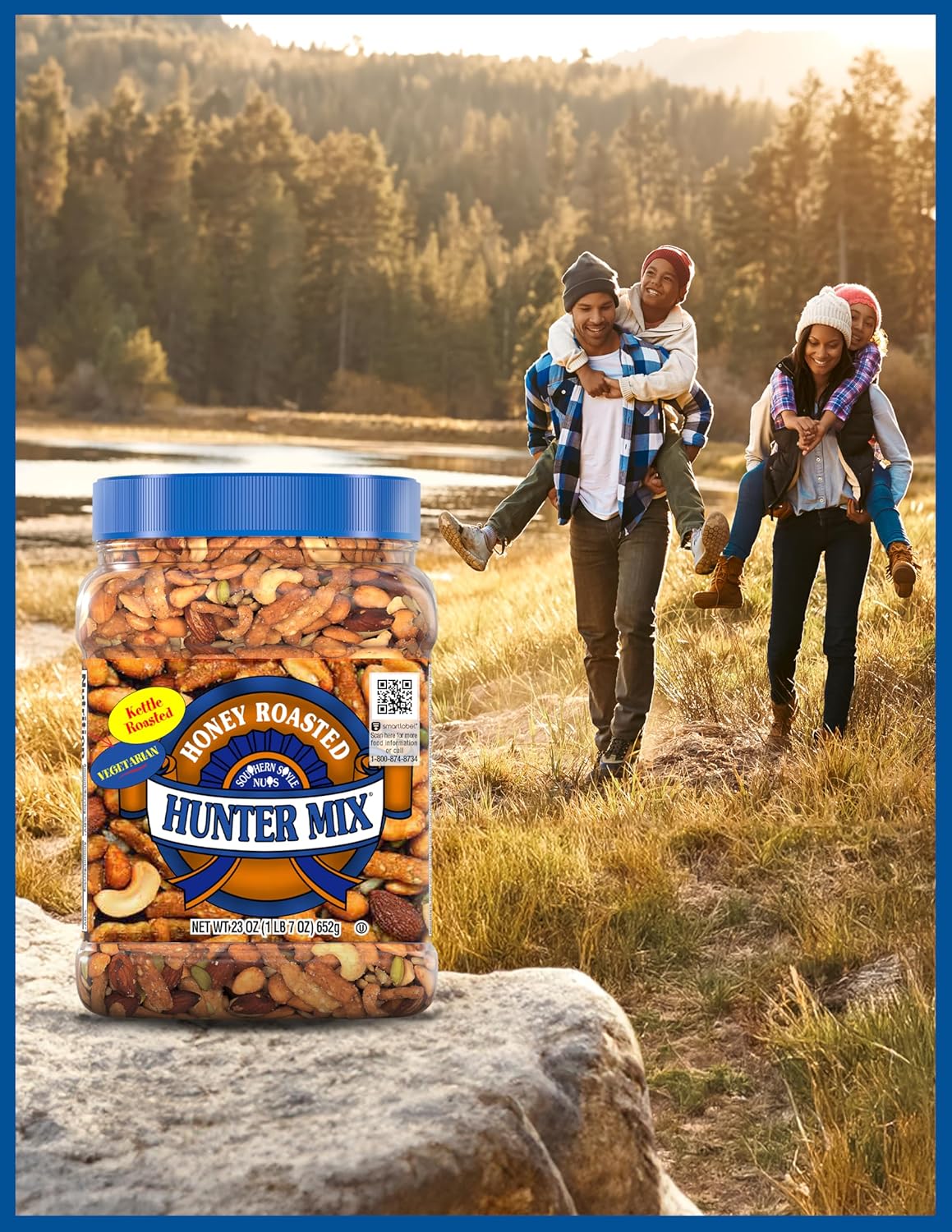
Sweet and salty is the combination most people reach for, and honey roasting delivers it directly rather than relying on chocolate pieces to carry the sweetness.
A 23 ounce bag is a sharing size, which is where this belongs: a gathering, a road trip with several people, a bowl on a table. Bought for one person it is a large commitment to a single flavour.
Two practical notes. Honey roasting is added sugar in a form that does not appear as candy, so this is a sweet mix even though it contains no chocolate. And sweet salty combinations are the thirstiest of all on a long walk, which matters when water is finite.
Bottom line: a good sharing bag, and not the one to carry two hours from the next water source.
- Type: honey roasted sweet and salty mix
- Size: 23 ounce bulk bag
- Sweetness: honey roasted coating
- Best use: sharing, gatherings, road trips
- Melt risk: low, no chocolate coating
- Storage: airtight after opening
Groups, gatherings and households that will finish a large bag while it is still fresh.
Less suitable for one person or for anyone limiting added sugar.
Contains nuts and is produced alongside multiple varieties, so check the allergen statement before serving to a group.
Once opened, transfer to an airtight container rather than relying on the bag, since a large bag stays open a long time.
Pros
- Widely recognised blend most people already like
- Resealable pouch for repeated use
- Large size for households
- Reliable and easy to restock
Cons
- Contains chocolate pieces, so it melts in heat
- Sweetness is on the higher side
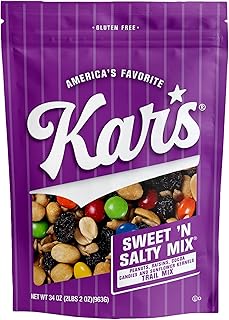
This is the blend most people picture when they hear trail mix, and there is something to be said for a product that no one in a household objects to.
The resealable pouch is a real convenience for repeated use, though it is still a bag rather than a rigid container, so decanting into a jar is worthwhile if the mix will last more than a week or two.
Chocolate pieces mean the usual heat caveat applies: it is an indoor mix, and a hot car will turn it into a single mass. The sweetness is also on the higher side, which is exactly why it is popular and exactly why it is easy to eat more of than intended.
Bottom line: the safe household choice, kept somewhere cool and portioned rather than grazed.
- Type: sweet and salty trail mix
- Size: 34 ounce pouch
- Container: resealable bag
- Melt risk: contains chocolate pieces
- Best use: home snacking
- Storage: decant airtight for longer keeping
Households wanting one large bag that everyone will eat, kept indoors at stable temperature.
Not a travel or hot weather mix.
Decant into a jar if the pouch will be open for weeks, since a bag clip does not keep air out the way a rigid lid does.
Portion into a bowl rather than eating from the pouch, which is the simplest control on a dense sweet food.
How to Choose Trail Mix
Trail Food or Candy With Nuts
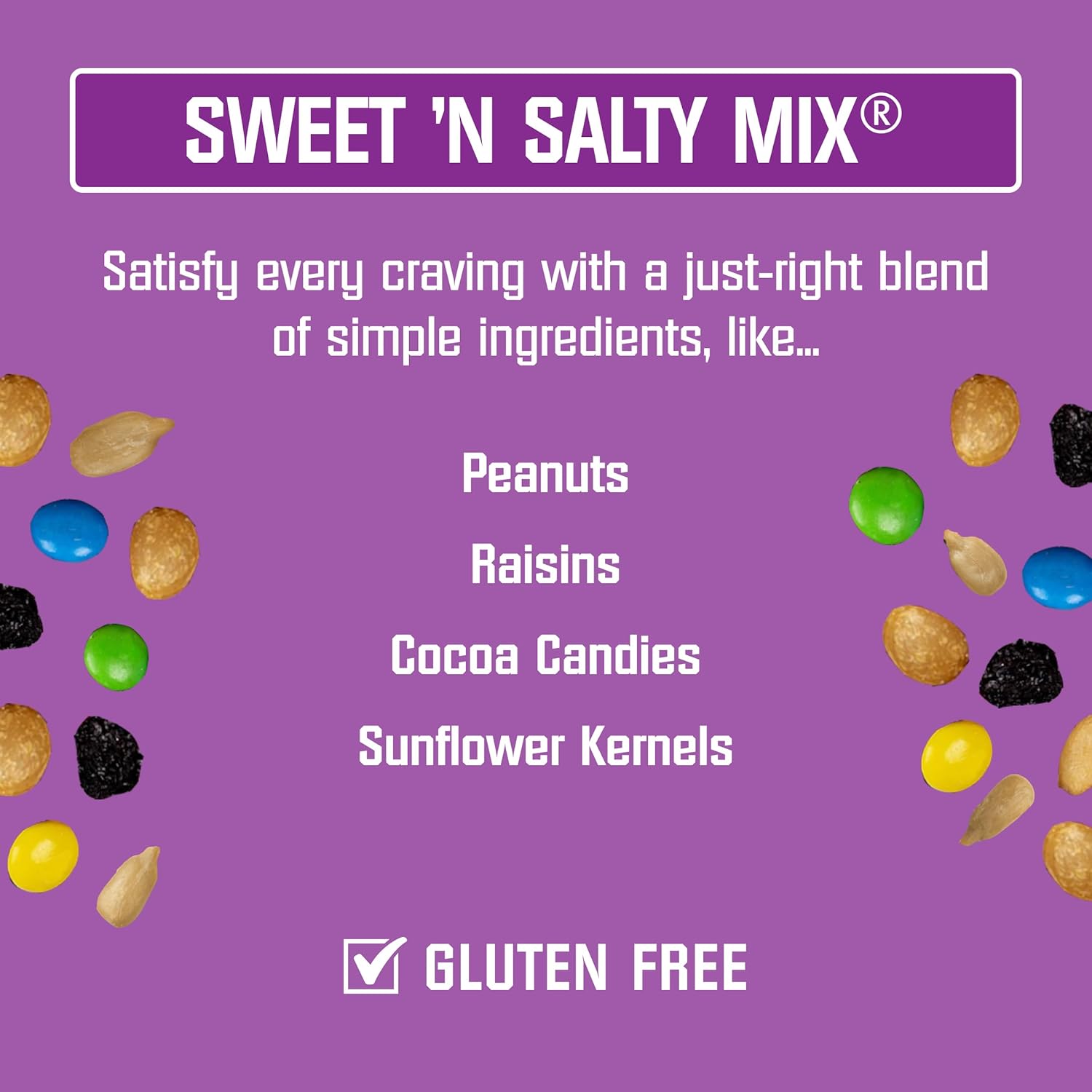
The useful first question is what the bag is mostly made of by weight. A mix built on almonds, cashews, peanuts and seeds behaves like the original idea: slow burning, filling, and dense enough that a small handful does real work. A mix built on chocolate pieces, yogurt coated raisins and candied fruit behaves like a snack, and it will be eaten like one.
Ingredient order tells you this before the nutrition panel does. Ingredients are listed by weight, so a mix that opens with peanuts and almonds is a different product from one that opens with chocolate chips and sugar even when both say trail mix in large letters on the front. Photographs on the packaging are not a guide, since a handful of chocolate pieces photographs far better than a bag of plain nuts.
Neither type is wrong. The mistake is buying one while expecting the other, which is how people end up disappointed that their hiking snack tasted like dessert or that their desk snack was boring. Decide which job the bag is for and read the first three ingredients accordingly.
Added Sugar Hides in the Dried Fruit
Dried fruit reads as the healthy component and it is frequently the sweetest thing in the bag. Fruit loses water during drying, so sugars concentrate by weight, and on top of that many dried cranberries and cherries have sugar or juice concentrate added during processing because the unsweetened versions are extremely tart.
The practical effect is that a mix marketed as having no candy in it can still be substantially sweet. Raisins, dried cranberries, banana chips and dried pineapple all contribute, and banana chips in particular are usually fried and sweetened rather than simply dried, which puts them closer to a crisp than a fruit.
If sweetness is what you are managing, look for mixes that name no added sugar explicitly and check whether the dried fruit is listed as sweetened. Some of the mixes here make that a selling point precisely because it is unusual in the category, which tells you something about the category.
Calorie Density Is the Point and the Trap
Nuts carry a lot of energy in a small volume, and that is exactly why trail mix exists. On a long walk it means real fuel without carrying real weight, and a modest handful covers what a sandwich would.
The same property works against you sitting still. A bag on a desk is eaten absently over an afternoon, and because the food is dense and small, the quantity consumed does not register the way a plate of food would. Nobody miscounts sandwiches; almost everybody miscounts handfuls.
The fix is physical rather than a matter of willpower. Portion packs impose a stopping point, and pouring a measured amount into a bowl and putting the bag away does the same job with a bulk purchase. This is the single most useful habit in the category and it costs nothing.
Chocolate Melts, Yogurt Coating Melts Sooner
Anyone who has left a bag in a hot car knows the outcome. Chocolate pieces soften well below body temperature, and once melted and re-set they weld the mix into a single lump with a pale bloom on the surface. It is still edible and it is no longer pleasant.
Yogurt coatings are worse in this respect. They are typically made with palm kernel or similar fats that soften at lower temperatures than chocolate, so a yogurt raisin mix is the first thing to fail in a warm pack. Candy shelled pieces hold up best because the shell insulates the chocolate inside, which is precisely why they are common in outdoor mixes.
For summer hiking, a car glovebox, or a gym bag left in the sun, a mix without soft coatings is worth choosing on those grounds alone. Save the chocolate mixes for indoors where temperature is not doing anything to them.
Oil Roasted or Dry Roasted
Roasting method changes flavour, texture and how the mix ages. Oil roasted nuts are cooked in oil, which produces a richer taste and a slightly softer bite, and the added oil contributes to the fat content beyond what the nut brings naturally.
Dry roasted nuts are cooked with heat alone, giving a firmer, drier crunch and a cleaner flavour that lets the nut come through. Seasonings sit on the surface rather than being carried in oil, which is why dry roasted mixes sometimes taste saltier at the same salt content.
Raw nuts appear in some mixes and behave differently again, staying softer and tasting milder. They also carry more moisture, which matters for how long an opened bag stays good in a humid kitchen.
Salt, and What It Does on a Long Day
Salted mixes are the default and there is a practical reason beyond taste. Sweating over a long day of walking loses salt as well as water, and a salted snack is a convenient way to put some back without carrying anything extra.
The flip side is thirst, and thirst on a trail matters more than at a desk because water is finite and heavy. A heavily salted mix eaten two hours from the next water source is a decision you notice. Sweet and salty combinations, which are common in this category, tend to be the thirstiest of all.
Unsalted mixes exist and suit anyone watching sodium or planning to eat a lot across a day. For general use, lightly salted is the reasonable middle, and it is worth checking rather than assuming, since salt levels vary widely between mixes that look identical.
Portion Packs Versus Bulk Bags

Individually wrapped portions solve two problems at once. They stop the absent handful problem described above, and they keep each serving sealed so the last one tastes like the first, which matters because nuts stale quickly once air reaches them.
What they cost you is money per ounce and a lot of packaging. For a household eating trail mix daily, that adds up in both senses, and a bulk bag decanted into a jar with a scoop achieves most of the same discipline for less.
The clearest case for portion packs is a bag, a lunchbox or a car, where a resealable bulk pouch tends to get crushed, opened repeatedly and eventually forgotten at the bottom of something. The clearest case for bulk is a kitchen cupboard.
Freshness, Rancidity and Storage
Nuts contain a lot of oil and that oil eventually oxidises, which is what people mean when they say a nut tastes stale or bitter. Heat, light and air all speed it up, so a clear bag stored above a stove is the worst case and an opaque container in a cool cupboard is the best.
Walnuts and pecans go first because their oil profile is the least stable, while peanuts and almonds last noticeably longer. A mix heavy on walnuts deserves a shorter timeline and cooler storage than a peanut based one, which is a distinction almost no packaging makes.
If you buy in bulk, splitting the purchase between a working jar and a sealed reserve keeps most of it out of contact with air. The reserve can go in the freezer, which suits nuts well and adds months rather than weeks.
Allergens and Sharing a Bag
Trail mix is close to the worst case for anyone with a nut allergy, since the whole product is a blend and cross contact between varieties is inherent rather than accidental. Peanuts and tree nuts commonly share a bag, and many mixes are produced on lines handling both.
This matters practically when a bag is being shared, taken into a school setting or packed for a group. Many schools restrict nut products entirely, and a trail mix is unambiguously a nut product regardless of what else is in it.
Read the allergen statement rather than the ingredient list alone, since manufacturing advisories about shared equipment appear separately. For a group trip, checking before buying is considerably easier than sorting it out at a trailhead.
| Mix | Character | Format | Best For |
|---|---|---|---|
| Power Up Mega Omega | Nut and seed forward | Bulk bag | Actual trail use |
| Nut Harvest Nut and Chocolate | Chocolate included | Large jar | Home and desk snacking |
| Nature’s Garden Snack Pack | Mixed | Individual portions | Lunchboxes and bags |
| Power Up Premium High Energy | Energy dense | Bulk bag | Long days and hiking |
| Power Up Protein Packed | No added sugar | Bulk bag | Managing sweetness |
| Southern Style Honey Roasted Hunter | Sweet and salty | Bulk bag | Sharing a large bag |
| Kar’s Sweet and Salty | Sweet and salty | Resealable pouch | A familiar everyday mix |
For related snacking decisions, our guide to store bought protein bars covers a different portable option, and the full library sits at our article index.
Why You Should Trust Us
We started by removing the products that appear in trail mix searches without being trail mix, including plain mixed nut assortments and savoury snack mixes, because a bag of cashews and a bag of trail mix answer different questions even when they sit next to each other in results.
From there we sorted by what the mix is made of rather than by brand, since the split between nut forward and candy forward blends is the decision that actually matters. Real customer ratings informed the shortlist, with attention to repeated comments about melting, staleness and sweetness rather than one off deliveries, and where a brand sells the same mix in several sizes we counted it once.
Final Thoughts
For most people the Power Up Mega Omega Trail Mix is the easiest recommendation. It leads with nuts and seeds rather than candy pieces, which makes it genuinely useful as fuel on a long day and keeps it from behaving like dessert at a desk.
If you are managing sweetness, the Power Up Protein Packed mix names no added sugar explicitly, which is worth more than any claim on the front of a bag. For lunchboxes and car journeys the Nature’s Garden Snack Pack solves the portioning problem by design, and for home snacking where nothing is going to melt, the Nut Harvest Nut and Chocolate Mix and the Kar’s Sweet and Salty are the pleasant ones.
Whichever you choose, read the first three ingredients, keep chocolate mixes out of hot cars, and decant bulk bags into something airtight. Browse more of our category guides for the rest of the pantry.
Frequently Asked Questions
What is the best trail mix in 2026?
The Power Up Mega Omega Trail Mix is our overall pick for 2026 because it is built on nuts and seeds rather than candy pieces. If portioning is your concern, the Nature’s Garden Snack Pack arrives in individual servings that impose a natural stopping point.
Is trail mix actually healthy?
It depends entirely on the mix. A blend built on nuts and seeds is very different from one built on chocolate pieces and sweetened dried fruit, and both carry the same name. Read the first three ingredients, since they are listed by weight and tell you what the bag mostly is.
Why does my trail mix turn into one lump?
Chocolate and yogurt coatings soften in heat and re-set as a single mass, often with a pale bloom on the surface. Yogurt coatings fail first because their fats soften at lower temperatures. For hot cars and summer hiking, choose a mix without soft coatings.
How long does trail mix stay fresh once opened?
The oil in nuts oxidises with exposure to air, heat and light, which is what makes them taste stale or bitter. Walnuts and pecans turn first, peanuts and almonds last longer. Decant into an airtight container in a cool cupboard, and freeze a bulk reserve if you buy large quantities. Our grocery guides cover storage for other staples.
Are portion packs worth the extra cost?
For bags, lunchboxes and cars, usually yes, since they keep each serving sealed and impose a stopping point on a food that is easy to eat absently. For a kitchen cupboard, a bulk bag decanted into a jar with a scoop achieves the same thing for less money and less packaging.



Write Your Review
No reviews yet. Be the first to share your experience!