

Pasta made without wheat is not one product with a label on it, it is several different foods that happen to share a shape. Chickpea pasta, red lentil pasta, and corn and rice blends cook at different speeds, hold sauce differently, and fall apart in different ways, and the instructions on the box are frequently optimistic about all three. Our top pick is the Banza chickpea variety pack for covering several shapes of the most reliable flour in this category. This shortlist of 6 non wheat pasta options from Barilla, Banza, Whole Foods Market is organised by what each one is actually made from, because the flour decides how you have to cook it.
Every product here is a current listing with real customer ratings behind it. For more pantry picks, see our grocery and gourmet food guides.

Pros
- Several shapes in one purchase to compare
- Chickpea is the most forgiving of these flours
- Firm bite when timed correctly
- Holds up to assertive tomato and pesto sauces
- Certified gluten free rather than merely plant based
Cons
- Legume flavour needs a sauce with some character
- Cooking window is much shorter than wheat pasta
This variety pack is the sensible way into the category. Non wheat pasta behaves differently by shape as much as by flour, and buying six boxes of different shapes teaches you in one order which ones survive your cooking and suit the dishes you actually make.
Chickpea is the right flour to learn on. It is the most forgiving of the three here, with a genuinely firm bite when timed correctly and enough structure to hold up in short shapes without collapsing the moment it is stirred.
Two things to plan for. The legume flavour is real and it wants an assertive sauce, so tomato with garlic, arrabbiata, or pesto rather than a delicate butter dressing. And the cooking window is much shorter than wheat, so taste two minutes before the stated time and drain as soon as the centre is no longer chalky.
Bottom line: the best first purchase in this category, and the one that saves you buying the wrong shape twice.
- Base flour: chickpea
- Pack: six 8oz boxes, assorted shapes
- Gluten: certified gluten free
- Label protein: 20g per serving as stated
- Texture: firm when correctly timed
- Flavour: distinct legume note
- Best sauces: assertive tomato, pesto, olive based
Salt the water as you would for wheat pasta, since these flours are bland on their own and this is the only chance to season the pasta itself.
Stir in the first minute and again halfway, because chickpea shapes release starch quickly and settle to the bottom of the pan where they stick and then tear.
Anyone new to non wheat pasta who wants to learn which shapes work before buying a full box of one, and households cooking sauce forward Italian dishes.
Anyone wanting a neutral flavour closest to wheat should choose the corn and rice blend in this shortlist.

Pros
- Closest texture and flavour to conventional pasta
- Only two ingredients, so nothing unexpected
- Neutral enough for any sauce or family recipe
- Easiest swap into a recipe someone already knows
- Certified gluten free
Cons
- Releases free starch and glues together if not rinsed
- Firms up unpleasantly after refrigeration
If the reason for avoiding wheat is wheat rather than a wish for extra protein, this is the box to buy. A two ingredient corn and rice blend is nearly neutral in flavour and behaves much like conventional pasta in bite, which makes it the swap that goes unnoticed in a family recipe.
Two ingredients is also worth something in itself. There is nothing added, nothing to react to, and no protein claim to decode on the front of the pack.
Its weakness is starch. Corn and rice release a lot of it and without gluten to bind it, that starch coats every piece and glues them together as they cool. This is the one type in this shortlist where a warm rinse genuinely helps. It also firms up and turns slightly grainy after refrigeration, so it suits meals eaten immediately rather than batch cooking.
Bottom line: the best value here and the easiest substitution, provided you rinse it and eat it fresh.
- Base flour: corn and rice blend
- Ingredients: two
- Gluten: certified gluten free
- Non-GMO: stated on pack
- Size: 12 ounce box
- Shape: elbows
- Flavour: close to neutral
Rinse briefly in warm water after draining to remove excess surface starch, which is what otherwise glues the pieces together. Use warm rather than cold if serving hot.
Do not save the cooking water for sauce. It is thin in body and dilutes rather than thickens.
Households substituting into existing recipes, anyone cooking for children who notice a change in flavour, and cooks who want no legume note at all.
Batch cooks and people wanting the protein figures of legume pasta should choose chickpea instead.

Pros
- Rotini spirals hold sauce better than smooth shapes
- Established pasta brand with consistent production
- Certified gluten free and vegan
- Firm bite when timed correctly
- Widely available and easy to reorder
Cons
- Legume flavour needs a sauce with character
- Short cooking window like all chickpea pasta
This is chickpea pasta from a company that has been making pasta for a very long time, and that shows in consistency from box to box, which is not universal in this category.
Rotini is a well chosen shape for the flour. The spirals give sauce somewhere to sit, and the short thick sections tolerate a slight overcook far better than a long shape would, so the narrow timing window is less punishing here.
The considerations are the same as for any chickpea pasta. The legume flavour is present and suits assertive sauces rather than delicate ones, and the window between firm and collapsed is short, so taste early. Being from a mainstream brand it is also easy to find again, which matters once you have settled on something.
Bottom line: a dependable everyday chickpea option in the most forgiving shape.
- Base flour: chickpea
- Shape: rotini
- Gluten: certified gluten free
- Diet: vegan, Non-GMO, kosher
- Size: 8.8 oz box
- Texture: firm when correctly timed
- Best sauces: tomato, pesto, olive based
Note that this brand also sells a protein enriched line made from wheat semolina with legume protein added. That line is not gluten free, so check the pack carries the gluten free claim rather than only a plant based one.
Short spiral shapes are the safest introduction to chickpea pasta. Save long shapes for after you know the timing.
Taste from two minutes before the stated time and drain when the centre stops being chalky. It continues softening in its own heat after draining.
Do not rinse unless it is going into a cold salad, since chickpea shapes lose useful surface texture when rinsed.

Pros
- Firm short shape that tolerates slight overcooking
- Certified gluten free rather than merely plant based
- Label protein figures stated clearly on pack
- Spirals hold chunky sauces well
- Easy to reorder in a single shape
Cons
- Legume flavour comes forward under delicate sauces
- Softens further in the fridge with sauce
This is the single shape version of our top pick, and it is the box to buy once you know rotini is what you want. Spirals hold chunky sauce well, and the short thick sections are among the more forgiving shapes in a flour that punishes overcooking.
The pack states its protein and carbohydrate figures plainly, which is useful for anyone tracking those numbers, and the gluten free certification is genuine rather than implied by a plant based claim.
The usual chickpea considerations apply. The legume note wants an assertive sauce, and leftovers keep softening because the pasta continues absorbing liquid in the fridge, so store sauce separately if you are cooking ahead.
Bottom line: the straightforward chickpea repeat purchase once you have chosen your shape.
- Base flour: chickpea
- Shape: rotini
- Gluten: certified gluten free
- Label protein: 20g per serving as stated
- Carbohydrate: lower than wheat as stated on pack
- Size: 8oz box
- Texture: firm when correctly timed
Store cooked pasta and sauce in separate containers if cooking ahead, since sauced legume pasta keeps absorbing liquid and softening overnight.
Stir within the first minute of cooking to stop pieces settling and sticking to the pan base.
Anyone who has already decided chickpea rotini suits their cooking and wants a single shape to reorder.
Those still deciding are better served by the variety pack, and those wanting neutral flavour by the corn and rice blend.

Pros
- Thick walled shells are the sturdiest shape here
- Organic certification
- Shells trap chunky sauce and small vegetables
- Holds up in baked dishes better than thin shapes
- Simple ingredient list
Cons
- Organic sourcing means availability can vary
- Legume flavour as with all chickpea pasta
Shells are the most robust shape available in these flours, and that makes this box the one to reach for when the dish is demanding. Thick walls tolerate the extra cooking that a bake involves, and the cupped shape traps chunky sauce, peas, or small pieces of vegetable in a way smooth shapes do not.
Organic certification is the other differentiator, for anyone who buys pantry staples on that basis.
Two notes. Organic sourcing can mean availability varies more than mainstream brands, so it is worth buying a second box when you find it. And the chickpea flavour is present as always, which suits robust sauces and is more noticeable in a plain preparation.
Bottom line: the shape to choose for pasta bakes and chunky sauces, in an organic chickpea flour.
- Base flour: chickpea, organic
- Shape: shells
- Wall thickness: thick, sturdy
- Gluten: gluten free
- Size: 8 ounce box
- Best for: chunky sauces and bakes
- Ingredients: simple list
For a pasta bake, cook these considerably firmer than you would for a plate, since the oven cooks them a second time and legume shapes soften more than wheat.
Drain thoroughly, as shells hold water inside the cup which then dilutes the sauce.
Cooks making baked pasta dishes and chunky vegetable sauces, and households buying organic pantry staples.
Anyone wanting long shapes or a neutral flavour should look elsewhere in this shortlist.

Pros
- Milder and sweeter flavour than chickpea
- Softer texture suits creamy and vegetable sauces
- Organic certification
- Cooks quickly
- Long shape available in a non wheat flour
Cons
- Most fragile option here, snaps when stirred
- Colours the cooking water noticeably
Red lentil is the mildest and sweetest of the legume flours, and in a long shape it gives you something closer to a conventional spaghetti dinner than chickpea can. For creamy sauces and vegetable based ones where a strong bean note would intrude, this is the better choice.
It cooks quickly and reaches a softer finished texture, which suits those sauces and means it should be drained the moment it is ready.
Two things to expect. It is the most fragile product in this shortlist: without gluten holding the strands together, spaghetti snaps when stirred and again when served, so use tongs and stir as little as possible. And it turns the cooking water an orange brown, which is the lentil pigment leaching out and is entirely normal even though it looks alarming the first time.
Bottom line: the pick for a long shape and a mild flavour, handled gently.
- Base flour: red lentil, organic
- Shape: spaghetti
- Gluten: gluten free
- Flavour: mild and slightly sweet
- Texture: softer than chickpea
- Size: 8 ounce box
- Note: colours the cooking water
Use tongs rather than a spoon and stir as little as possible, since long legume shapes break easily. Drain the moment it is ready.
Serve immediately rather than holding it warm, because red lentil softens fastest of the three flours here.
Store the dry box sealed and dry as with any pasta. Once cooked, keep sauce separate if there will be leftovers, since lentil pasta absorbs liquid quickly.
Anyone avoiding wheat for medical reasons should read the ingredients rather than relying on front of pack wording, and this product carries a gluten free claim.
How to Choose Non Wheat Pasta
The sections below are ordered by how much difference each one makes to what ends up on the plate.
The Flour Decides Everything That Follows
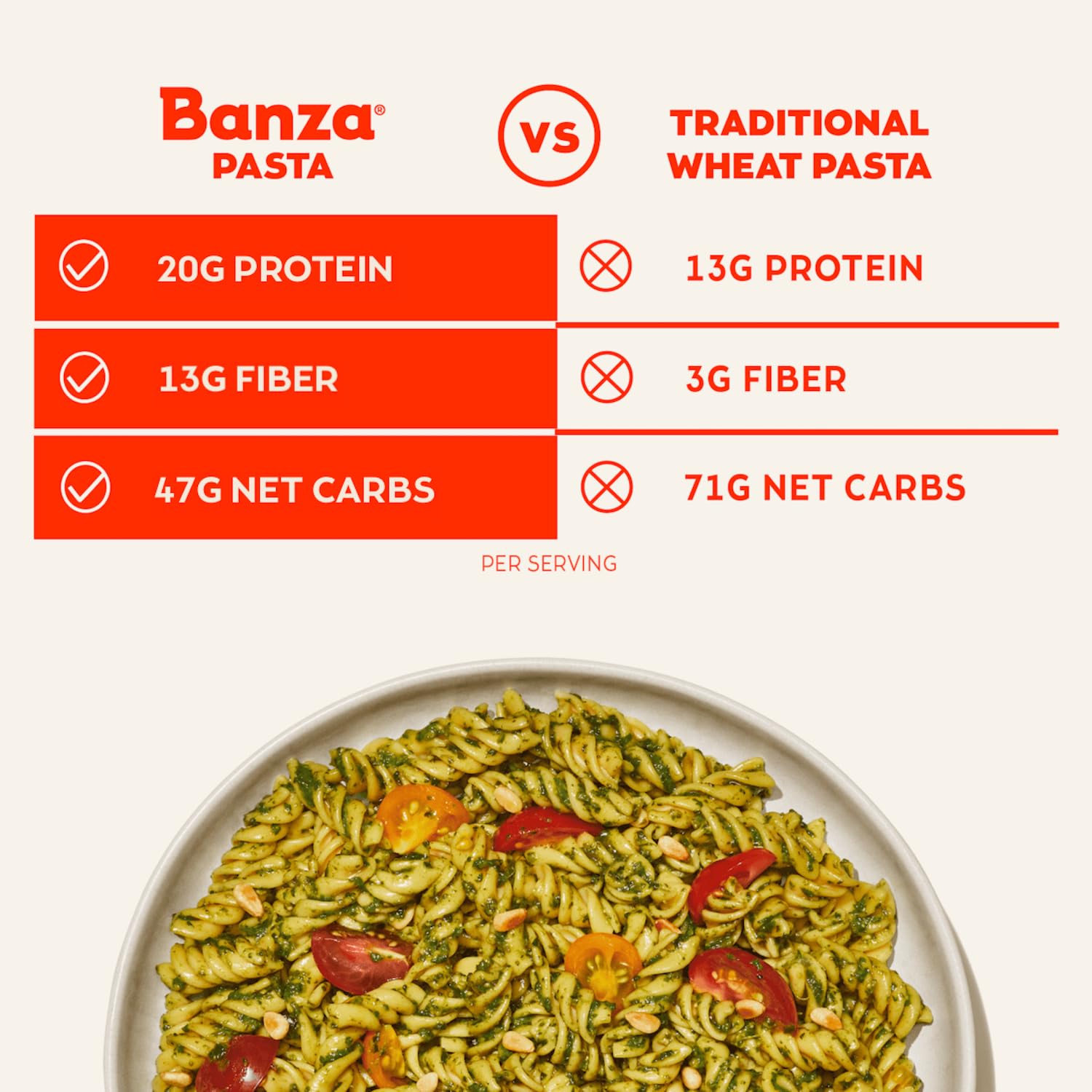
Wheat pasta holds its shape because gluten forms an elastic network that traps starch as it cooks. Take the wheat away and that network is gone, so every alternative flour has to hold together some other way, and each does it differently. This is why substituting one non wheat pasta for another without changing your method produces inconsistent results.
Chickpea flour holds together reasonably well and has a firm bite when correctly cooked, with a distinct legume flavour that some sauces mask and others do not. Red lentil is softer and more delicate, breaking sooner but reaching a pleasant texture faster. Corn and rice blends behave closest to wheat in texture and have the mildest flavour, at the cost of being the most prone to going gluey.
The practical consequence is that a household should treat these as three ingredients rather than three brands of one ingredient. Choosing by flour rather than by packaging is the single most useful habit in this category.
Chickpea Pasta Cooks Faster Than the Box Says
The most common complaint about chickpea pasta is that it turns to mush, and the most common cause is following the stated time. Chickpea flour goes from firm to collapsed over a much shorter window than wheat does, sometimes within a minute, and once past it there is no recovering the texture.
Start tasting two minutes before the stated time and drain the moment the centre is no longer chalky. It will continue softening in its own residual heat, so pulling it slightly early is correct rather than cautious.
Stirring matters more than with wheat as well. Chickpea shapes release starch quickly and settle to the bottom of a pan, where they stick and then tear when you free them. Stir in the first minute and again halfway.
Red Lentil Behaves Differently Again
Red lentil pasta cooks quickly and reaches a softer finished texture than chickpea, which suits some dishes and not others. It is more delicate in long shapes, so a red lentil spaghetti needs a gentler hand than a chickpea shell does.
It also colours the water noticeably, turning it an orange brown that looks alarming the first time. That is the lentil pigment leaching out and it is entirely normal, though it does mean the pasta itself fades slightly as it cooks.
Because it softens fast, red lentil pasta is the least forgiving choice for a dish that will sit warm before serving. If the meal has to wait, chickpea or a corn blend holds up better.
Corn and Rice Blends Are Closest to Wheat
If the goal is pasta that tastes like pasta rather than like legumes, a corn and rice blend is the one to reach for. The Barilla gluten free line here is made from two ingredients and behaves much like conventional pasta in flavour and in bite, which makes it the easiest substitution for someone who is avoiding wheat rather than seeking extra protein.
Its weakness is stickiness. Corn and rice release a lot of free starch, and without gluten to bind it, that starch coats the outside of every piece and glues them together as they cool. This is the one type where rinsing genuinely helps.
It also reheats worse than the legume pastas. A corn blend that has been refrigerated tends to firm up unpleasantly, so it suits meals eaten immediately rather than batch cooking.
The Cooking Water Is Not Sauce Water Anymore
Anyone who cooks Italian food knows to save a cup of starchy pasta water to loosen and emulsify a sauce. That technique relies on wheat starch and dissolved gluten, and it does not transfer to these products.
Legume cooking water carries a strong bean flavour and a slight bitterness, and adding it to a delicate sauce is noticeable in the wrong way. Corn and rice water is starchier but thinner in body, so it dilutes a sauce more than it thickens it.
Use plain hot water, a splash of cream, or a little of the sauce base instead. If you want an emulsified finish, a knob of butter or a spoon of the sauce’s own fat does more than the pasta water will.
Salt, Rinse, and When Each Applies
Salt the water as you would for wheat pasta. These flours are bland on their own and salting the cooking water is the only chance to season the pasta itself rather than just its coating.
Rinsing is where the rules change. Rinsing wheat pasta is discouraged because it strips the starch that helps sauce cling. For corn and rice blends, a quick rinse in warm water removes the excess starch that would otherwise glue the pieces together, and it is worth doing. For chickpea and lentil, rinse only if the pasta is going into a cold salad, since they need less help and lose their surface texture when rinsed.
Use warm water rather than cold if the pasta is being served hot, since a cold rinse takes the heat out of it and there is no reheating without further softening.
Shape Survives Differently by Flour

Short sturdy shapes are more forgiving in every non wheat flour. Elbows, rotini, shells, and penne have thick walls and short spans, so a slight overcook makes them soft rather than broken.
Long shapes are the difficult case. Spaghetti made from legume flour has no gluten holding its length together, so it snaps when stirred and again when served, and a red lentil spaghetti is more fragile still. If long shapes matter to you, handle them with tongs rather than a spoon and stir as little as possible.
Variety packs, like the Banza selection here, are genuinely useful for this reason: they let you find which shape in a given flour works for the dishes you actually make rather than committing to one box.
Which Sauces Suit Which Flour
Chickpea pasta’s legume flavour stands up to assertive sauces and disappears under them. Tomato with garlic, arrabbiata, pesto, or anything with anchovy or olive works well. It is less happy under a delicate butter and herb dressing where the bean note comes forward.
Red lentil is milder and sweeter, which suits creamy sauces and vegetable based ones. Corn and rice blends being nearly neutral will take anything, which is what makes them the straightforward swap in a family recipe.
Baked dishes are worth a separate thought. Lasagne and pasta bakes cook the pasta a second time in the oven, so start with these considerably firmer than you would for a plate of pasta, and expect legume shapes to soften more than wheat would.
Leftovers Do Not Keep the Same Way
Cooked legume pasta continues absorbing liquid in the fridge and keeps softening, so a portion that was perfect at dinner is often mushy the next day. Sauce accelerates this because the pasta drinks it.
If you are cooking ahead, store the pasta and the sauce separately and combine them when reheating. It is a small extra container and it is the difference between a usable lunch and a disappointing one.
Corn and rice blends have the opposite problem, firming up and turning slightly grainy when chilled. Reheating with a little extra liquid helps, though neither type reheats as well as wheat pasta does.
Reading the Label, and What Gluten Free Does Not Tell You

This deserves care, because a label can be technically accurate and still be read wrongly. Phrases like plant based, high protein, and made with lentils describe what has been added to a product, not necessarily what forms its base. A pasta can be made from wheat semolina with legume flour added for protein, and that product will be labelled plant based and made with lentils while still containing wheat.
The phrase that actually matters is a certified gluten free claim, which is regulated, or an ingredients list you have read yourself. If a manufacturer labels some of its lines gluten free and not others, the absence of that claim on a particular box is meaningful rather than an oversight.
This matters most for anyone with coeliac disease or a diagnosed wheat allergy, where the difference is medical rather than culinary. Every product in this shortlist is made from non wheat flour, and we excluded protein enriched wheat pastas that appear in the same search results for exactly this reason.
| Product | Base flour | Texture | Best suited to |
|---|---|---|---|
| Banza Variety Pack | Chickpea | Firm when timed right | Finding your preferred shape |
| Barilla Gluten Free Elbows | Corn and rice, two ingredients | Closest to wheat | Family recipes, mild flavour |
| Barilla Chickpea Rotini | Chickpea | Firm, holds sauce well | Assertive tomato sauces |
| Banza Rotini | Chickpea | Firm short shape | Everyday chickpea option |
| Whole Foods Chickpea Shells | Chickpea, organic | Sturdy, thick walled | Chunky sauces and bakes |
| Whole Foods Red Lentil Spaghetti | Red lentil, organic | Softer, more delicate | Creamy and vegetable sauces |
For more pantry staples and pasta ideas, browse our grocery picks.
Why You Should Trust Us
We organise this category by base flour rather than by brand, because the flour determines cooking time, texture, and which sauces work, and a list that ignores it sends people home with the wrong box. Every product here is a current listing with real customer rating history.
We also read ingredient lists rather than front of pack claims. Protein enriched wheat pastas marketed as plant based appear in the same search results as genuinely wheat free products, and we excluded them here because for anyone avoiding wheat for medical reasons that distinction is not a detail. We do not accept payment for placement.
Final Thoughts
The Banza chickpea variety pack is our best overall pick because chickpea is the most reliable of these flours for everyday cooking and a multi shape pack lets you learn which shapes suit your dishes before committing to a single box.
The Barilla Gluten Free Elbows are our best value choice and the easiest swap into an existing family recipe, since a two ingredient corn and rice blend is close to neutral in flavour and behaves much like wheat pasta. For chunky sauces and baked dishes the Whole Foods chickpea shells have the thickest walls here, and the Whole Foods red lentil spaghetti is the one to choose for creamy or vegetable sauces where a softer texture suits.
Whichever flour you choose, start tasting two minutes before the stated time, rinse corn blends and not legume shapes, and store sauce separately if you are cooking ahead. More pantry picks are in our latest guides.
Frequently Asked Questions
Why does my non wheat pasta turn to mush?
Usually because the stated cooking time was followed. Chickpea and lentil flours go from firm to collapsed over a much shorter window than wheat, sometimes within a minute, and there is no recovering the texture afterwards. Start tasting two minutes early, drain as soon as the centre is no longer chalky, and remember it keeps softening in its own heat.
Which type tastes most like regular pasta in 2026?
Corn and rice blends, by a clear margin. They are close to neutral in flavour and behave much like wheat pasta in bite, which makes them the easiest substitution in a recipe someone already knows. Chickpea has a distinct legume flavour that needs an assertive sauce, and red lentil is milder but softer.
Should I save the cooking water for my sauce?
No. That technique relies on wheat starch and dissolved gluten, neither of which is present here. Legume cooking water carries a strong bean flavour and slight bitterness, and corn and rice water is thin in body so it dilutes rather than thickens. Use plain hot water or a little of the sauce base instead.
Does plant based on the label mean wheat free?
No, and this is the most important thing to check. Phrases like plant based, high protein, and made with lentils describe what was added, not necessarily the base flour, so a wheat semolina pasta with legume protein added carries all three claims. Look for a certified gluten free claim or read the ingredients list yourself.
Can I use these in a pasta bake?
Yes, but start them considerably firmer than you would for a plate of pasta, since the oven cooks them a second time. Legume shapes soften more in a bake than wheat does, so thick walled shapes like shells and elbows survive better than long or thin ones. More pantry picks are in our category directory.
Write Your Review
No reviews yet. Be the first to share your experience!