

The most common mistake with gochujang is treating it as Korean sriracha. It is not a hot sauce at all. It is a fermented paste built from chilli powder, glutinous rice and soybeans, aged until it turns savoury and slightly sweet, and it behaves in a pan nothing like a vinegar based sauce does. Buying it expecting heat alone leads to disappointment; buying it expecting a condiment leads to using it wrong. We compared 6 gochujang options on heat level, gluten status, sweetener and packaging.
Our top pick is the CJ Haechandle Hot Pepper Paste for its balance of heat and fermented depth in the size most households will finish. For related pantry decisions, our grocery and gourmet food guides cover the rest of the shelf.
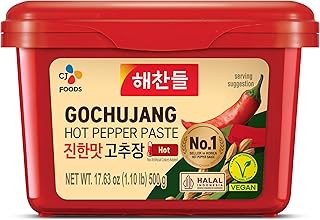
Pros
- Traditional fermented character rather than a sweetened shortcut
- Established Korean producer with consistent output
- 500g suits a household cooking Korean food regularly
- Balanced heat that works in stews and marinades
Cons
- Not gluten free, as with most traditional pastes
- Wide tub opening exposes the surface to air
This is the paste to buy if you want the ingredient as it is actually used in Korean kitchens rather than a sweetened approximation of it. The fermented depth is present, the heat sits underneath rather than dominating, and it integrates into a simmering dish the way the ingredient is supposed to.
Five hundred grams is a well judged size. Gochujang lasts a long time refrigerated, but the surface darkens and dries with repeated air exposure, so a tub that gets finished within months tastes better throughout than a larger one that lingers.
Two things to know before buying. Like most traditional pastes it is not gluten free, since barley or wheat is common in the fermentation, so it is the wrong choice for coeliac disease. And a wide tub means pressing the paste flat and refrigerating properly matters more than with a tube.
Bottom line: the default recommendation for a kitchen that will actually use it.
- Type: traditional fermented gochujang
- Size: 500 grams
- Format: tub
- Gluten free: no
- Heat: balanced, mid range
- Storage: refrigerate after opening
Thin with warm water, soy sauce or the cooking liquid before adding to a marinade, otherwise it forms pockets rather than distributing.
Add early to stews so it mellows and integrates, and brush onto grilled food only in the final minutes, since the sugars catch quickly over direct heat.
Refrigerate once opened and press the paste flat so less surface is exposed to air.
Contains soy, and traditional fermentation commonly involves wheat or barley. Read the allergen statement if that matters to you.

Pros
- Medium heat suits a first purchase
- Traditional fermented style
- Familiar tub format
- Large body of buyer feedback
Cons
- Medium is a vague description without a numbered scale
- Not stated as gluten free
A medium heat paste is the right place for most people to start, because the heat in gochujang builds and lingers rather than announcing itself, and a hot grade concentrated into a reduced sauce is stronger than it seems on a spoon.
The format is standard and so is the use: thin it, add it early to anything simmering, treat it as an ingredient rather than a condiment.
The caveat is the word medium itself. Korean packaging often carries a numbered heat scale precisely because English descriptors are inconsistent between brands, so two pastes both called medium can sit a step apart. Buy expecting approximate rather than precise.
Bottom line: a reasonable balanced tub, with the usual uncertainty that comes from a word instead of a number.
- Type: traditional fermented gochujang
- Size: 1.1 pounds
- Heat: medium, as described
- Format: tub
- Gluten free: not stated
- Storage: refrigerate after opening
First time buyers wanting a balanced heat level, and cooks who want a standard tub without a specific requirement.
Not the pick where gluten status matters, since it is not stated.
Where a numbered Korean heat scale is shown on packaging, trust it over the English word.
Start with less than a recipe suggests and taste, since concentration during cooking raises the heat further.

Pros
- Easy to find and restock
- Jar format seals better than a wide tub
- Consistent product from a large distributor
- Approachable for cooks new to the ingredient
Cons
- Less traditional depth than specialist Korean brands
- Not stated as gluten free
Availability is a real advantage with an ingredient people abandon when it runs out. This one turns up in general grocery channels rather than only Korean shops, which makes it easier to keep in a kitchen long term.
The jar helps too. A screw top with a smaller opening exposes less surface to air than a wide traditional tub, so the paste keeps its colour and texture longer in a fridge door.
Specialist Korean brands generally have more fermented depth, and a cook who has used those will notice the difference. For someone starting out, or someone who wants the ingredient available without a special trip, that gap matters less than the convenience.
Bottom line: the practical everyday jar, a step behind specialist pastes on depth.
- Type: fermented Korean chili paste
- Size: 17 ounces
- Format: screw top jar
- Gluten free: not stated
- Availability: general grocery distribution
- Storage: refrigerate after opening
Cooks who want gochujang available without a trip to a specialist shop, and anyone who prefers a jar to a wide tub.
Less satisfying for someone chasing maximum fermented depth.
Thin before use, as with any gochujang, and add early to simmering dishes rather than at the end.
Keep the rim clean when closing the jar so the lid seals properly in the fridge.

Pros
- Genuinely milder, suitable for children and low spice tolerance
- Keeps the sweet savoury fermented profile
- Established Korean producer
- Lets you control heat with separate chilli
Cons
- Too mild for anyone wanting the usual heat
- Not the gluten free version in this brand's range
Mild gochujang is a useful thing to keep in a household where spice tolerance varies, because the ingredient contributes far more than heat and there is no reason a child's portion should miss out on the savoury sweetness.
The trick it enables is control. Cooking with a mild base and adding chilli separately at the table means one pot serves everyone, which is difficult when the heat is built into the paste from the start.
For someone who wants the standard experience, this will read as underpowered, and that is the point rather than a shortcoming. It is also worth noting this is not the gluten free product in the brand's range, so check the label if that is the requirement.
Bottom line: the right tub for mixed households, the wrong one if you want heat.
- Type: mild heat gochujang
- Size: 1.1 pounds
- Heat: mild
- Format: tub
- Gluten free: check label, not the brand's GF line
- Storage: refrigerate after opening
Families with children, anyone with low spice tolerance, and cooks who prefer to add heat separately at the table.
Not for those who want gochujang at its usual strength.
Cook with the mild base and offer chilli flakes or a hot sauce alongside, which lets one dish suit several tolerances.
If gluten is the reason you are looking at this brand, choose their stated gluten free product instead.

Pros
- Stated gluten free, unusual in this category
- Keeps the fermented sweet savoury profile
- Smaller tub suits occasional use
- Established Korean producer
Cons
- Smaller size costs more per ounce
- Availability is less consistent than standard pastes
This exists because traditional gochujang frequently is not gluten free, a fact that surprises people who assume a chilli paste contains no grain. Barley and wheat are common in the fermentation, so a coeliac household cannot treat any tub as safe by default.
What matters here is that the gluten free status is stated rather than inferred, and the paste still tastes like gochujang rather than like a compromise, keeping the sweetness and savoury depth that make the ingredient worth having.
The tub is smaller, so cost per ounce is higher, and it is not stocked as widely as standard pastes. For a household that needs it, neither is much of an argument against.
Bottom line: the one to buy when gluten is a genuine medical constraint rather than a preference.
- Type: gluten free gochujang
- Size: 8.8 ounces
- Gluten free: yes, stated
- Format: tub
- Producer: established Korean brand
- Storage: refrigerate after opening
For coeliac disease, choose a product that states gluten free rather than assuming a chilli paste is safe, since barley and wheat are common in traditional fermentation.
Contains soy. Read the full allergen statement if other restrictions apply.
Coeliac households and anyone strictly avoiding gluten who still wants the real ingredient rather than a substitute.
Less economical for a household without that requirement.

Pros
- Pourable, unlike a traditional paste
- Brings gochujang character to table use
- Squeeze bottle is convenient
- Works where a thick paste would not
Cons
- Not a substitute for gochujang paste in cooking
- Thinner and sharper than traditional paste
This is deliberately a different product from the rest of the list, and it belongs here because it answers a question the pastes do not: what to put on the table.
Gochujang paste is too thick and too salty to use straight from the tub on a finished plate. A pourable hybrid keeps some of that fermented character in a format that works on eggs, fries or a sandwich without any preparation.
What it is not is a replacement for the paste in cooking. It is thinner, sharper and closer to a hot sauce in behaviour, so a recipe calling for gochujang will not work with it. Think of it as an addition to the shelf rather than an alternative.
Bottom line: a good table sauce, and not the thing to cook a stew with.
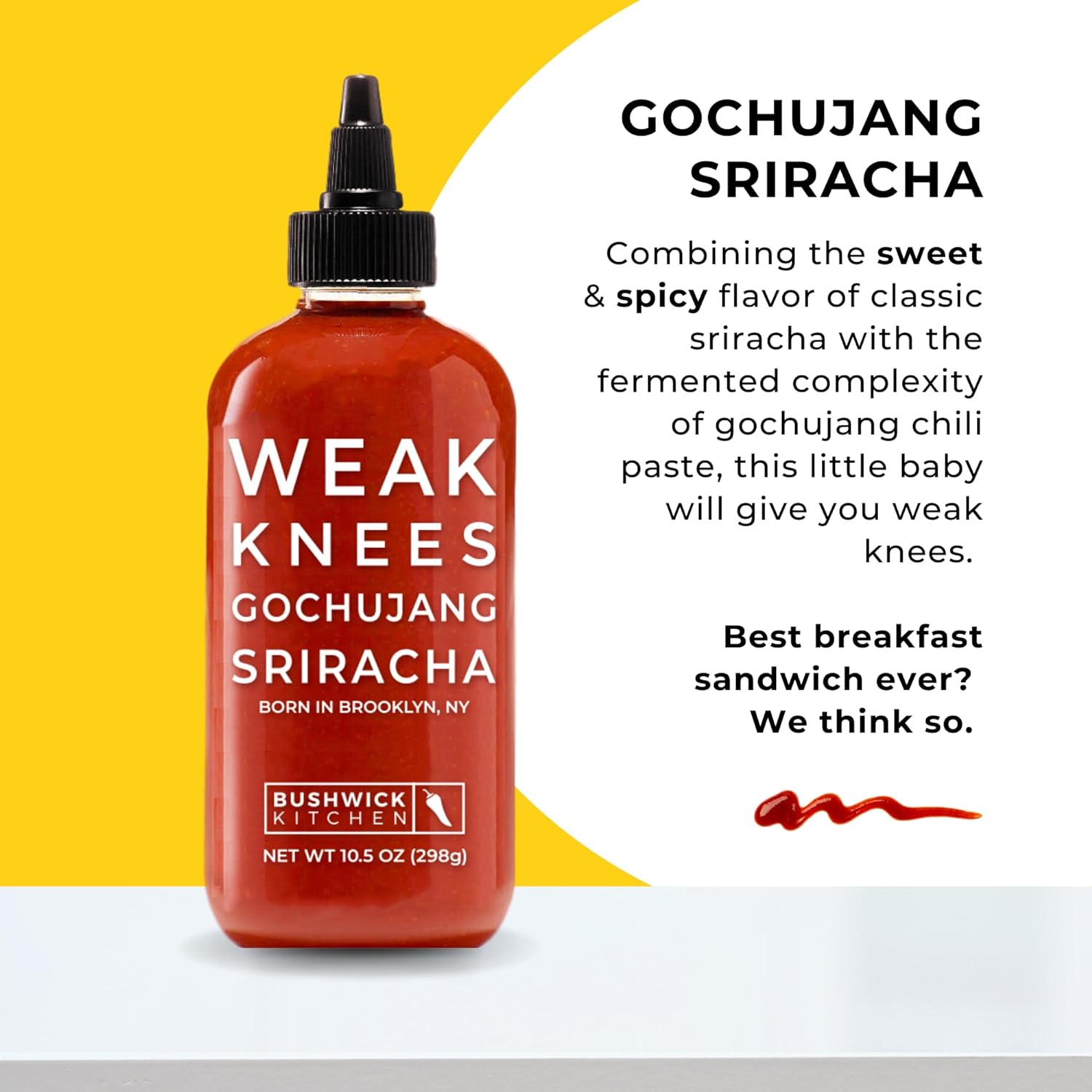
- Type: gochujang sriracha hybrid sauce
- Size: 10.5 ounces
- Format: squeeze bottle
- Consistency: pourable
- Best use: table condiment
- Substitute for paste: no
Anyone who wants gochujang flavour available at the table without preparing a sauce from paste.
Not for cooks looking to replace the paste in Korean recipes.
Buy alongside a paste rather than instead of one if you cook Korean food, since they do different jobs.
Refrigerate after opening as with any fresh chilli sauce.
How to Choose Gochujang
Fermented Paste, Not a Hot Sauce
Sriracha, chilli garlic sauce and gochujang end up next to each other on the same shelf and they are not interchangeable. The first two are chilli, vinegar and garlic, thin enough to pour and sharp enough to cut through fat. Gochujang is thick, closer to miso in consistency, and it is fermented rather than simply blended.
That fermentation is what produces its character. Glutinous rice contributes sweetness as the starches break down, soybeans contribute the savoury depth, and the chilli powder sits underneath both rather than dominating. The result reads as sweet, salty, savoury and hot at once, which is why a spoonful transforms a dish rather than only heating it.
Practically this means it is an ingredient, not a table condiment. It gets stirred into marinades, stews and sauces where it has time and liquid to work, and a spoonful dolloped raw on a finished plate is usually too intense and too thick to be pleasant.
The Heat Scale Printed on Korean Packaging

Korean producers use a published heat scale for gochujang, generally shown as a number from one to five on the tub, and it is the most reliable guide available in a category where English descriptions are vague. Mild, medium and hot mean different things between brands; a numbered scale does not.
For a first purchase, the lower half of the scale is the sensible place to start. The heat in gochujang builds and lingers rather than hitting immediately, so a paste that seems manageable on a spoon can be considerably stronger once concentrated in a reduced sauce.
Where a product is sold with only an English word for heat, treat that as approximate. Two pastes both labelled medium can sit a full step apart on the Korean scale, which is exactly the situation the numbering exists to solve.
Gluten Hides in Traditional Fermentation
This catches out more people than any other detail here. Traditional gochujang fermentation often involves barley or wheat, which means a substantial share of ordinary gochujang is not gluten free even though nothing on the front of the tub suggests grain of that kind.
For anyone avoiding gluten by preference this is a minor issue. For coeliac disease it is not, and it is the reason certified gluten free versions exist and are worth seeking out specifically rather than assuming a chilli paste is safe by default.
Read the ingredient list rather than the marketing. Where a product is made without wheat or barley it will say so plainly, because manufacturers know it is a selling point in this category.
Sweetness and What Provides It
Gochujang is meant to be sweet as well as hot, and traditionally that sweetness comes from the rice breaking down during fermentation. Many commercial pastes accelerate or supplement that with added sweeteners, commonly corn syrup, which shifts the balance toward sweet and shortens the process.
Neither approach is wrong, but they cook differently. A sweeter paste caramelises faster and burns more readily under high heat, which matters when it goes onto a grill or into a hot pan rather than into a simmering stew.
If you find a paste cloying, the ingredient order will usually explain it. Sweetener appearing high in the list is a reliable signal, and switching to a paste where rice does more of the work changes the character of everything you make with it.
Tub, Tube or Jar
The classic red tub is the traditional format and the most economical per ounce, and it suits anyone cooking Korean food regularly. Its weakness is surface area: a wide opening exposes the paste to air every time it is opened, and the top layer darkens and dries over months.
Tubes solve that neatly. The paste stays sealed from air, dispensing is clean, and there is no crust to scrape off. They cost more per ounce and hold less, which suits an occasional cook better than a frequent one.
Whichever format, refrigerate after opening. Gochujang keeps for a long time thanks to salt and fermentation, but it is not shelf stable indefinitely once opened, and the fridge slows both drying and the gradual darkening that comes with air exposure.
Texture, Rice Content and Dilution
Consistency varies noticeably between brands, from stiff enough to hold a spoon upright to soft enough to spread. That difference comes largely from the rice content and how far fermentation has gone, and it changes how you use the paste more than the flavour does.
A stiff paste needs thinning before it will distribute through a marinade or a dressing. Warm water, rice vinegar, soy sauce or the cooking liquid all work, and adding it to a pan undiluted usually produces pockets of intense paste rather than an even sauce.
For dressings and dipping sauces, thin first and taste as you go. The paste is concentrated enough that the difference between right and overwhelming is a matter of a teaspoon.
Cooking With It: Heat Changes the Paste
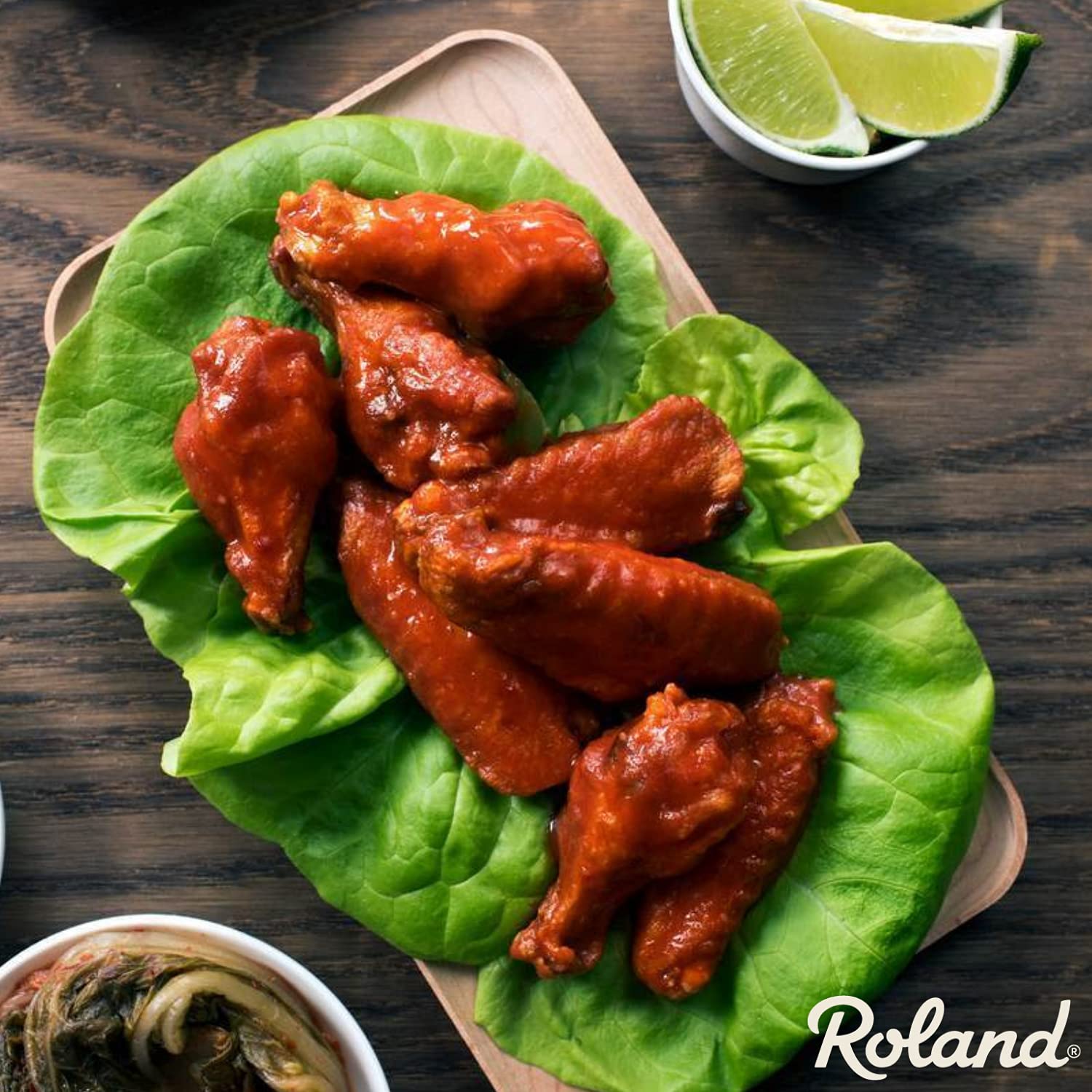
Gochujang added early to a stew mellows and integrates, losing its raw edge and thickening the liquid as it goes. That is the traditional use and the one that shows the ingredient at its best, in dishes given time to simmer.
Added late, or brushed onto something over direct heat, it behaves quite differently. The sugars catch quickly, so a glaze goes from caramelised to burnt in a short window, and it is worth applying it in the last minutes of grilling rather than at the start.
Raw, it is intensely salty and thick. Mixed with sesame oil, vinegar and a little sugar it becomes a usable sauce for cold dishes, which is the standard approach rather than a shortcut.
Gochujang Versus Gochugaru
These two names are close enough to be bought by mistake. Gochugaru is Korean chilli powder, a dry flake with a fruity heat, and it is an ingredient in gochujang rather than a substitute for it.
Recipes distinguish them for good reason. Kimchi needs gochugaru, because a paste would clump and add unwanted sweetness and salt. A gochujang based stew needs the paste, because the powder brings heat with none of the fermented depth or body.
If a recipe lists both, they are doing separate jobs and neither is optional. Ordering the wrong one is a common enough error that checking the word carefully before adding to a basket is worth the two seconds.
Substitutes, and Why Most Fail
There is no single ingredient that replaces gochujang, because it is doing four things at once. Sriracha brings heat and vinegar and no depth. Miso brings depth and salt and no heat. Chilli paste brings heat and none of the sweetness.
The closest improvised approximation combines miso, chilli powder and a little sugar, which covers the savoury, hot and sweet axes separately. It works in an emergency and it does not taste the same, because the fermentation that produces the real thing cannot be assembled at the last minute.
Given how long an opened tub lasts refrigerated, buying the real thing once is usually the better answer than working around it repeatedly.
How Much to Buy for How Often You Cook
Tub sizes in this category run from a few ounces to well over a pound, and the temptation is to buy large because the cost per ounce drops sharply. That maths only holds if the paste gets used.
Think in terms of dishes rather than weight. A stew for four takes a couple of tablespoons, a marinade for a tray of chicken takes about the same, and a dressing takes a teaspoon. A household making one Korean dish a fortnight will take the better part of a year to work through a large tub, and while gochujang keeps far longer than most condiments, the surface darkens and the top layer dries with every opening. The last portion is rarely as good as the first.
There is a second argument for starting small that has nothing to do with freshness. Heat levels and sweetness vary enough between producers that your first tub is partly an experiment, and discovering you find a paste too sweet is a cheaper lesson at eight ounces than at a pound and a half. Cooks who already know which style they like are the ones who should buy the large tub.
One practical habit extends any size: press the paste flat with the back of a spoon after each use rather than leaving it uneven, and keep a piece of parchment or the original seal against the surface. Less exposed area means less drying and less colour change over the months a tub is open.
| Product | Type | Format | Best For |
|---|---|---|---|
| CJ Haechandle Hot Pepper Paste | Traditional gochujang | 500g tub | Everyday Korean cooking |
| Premium Korean Gochujang, Medium | Traditional gochujang | Tub | A balanced first purchase |
| Roland Foods Gochujang | Traditional gochujang | Jar | Widely stocked and easy to restock |
| Sempio Gochujang Mild | Mild heat | Tub | Lower heat tolerance and children |
| Sempio Gochujang Gluten Free | Gluten free | Tub | Coeliac and gluten avoidance |
| Weak Knees Gochujang Sriracha | Hybrid sauce | Squeeze bottle | Table use rather than cooking |
For more cooking ingredient guides, browse our category pages, and the full library sits at our article index.
Why You Should Trust Us
We began by removing the products that appear in gochujang searches without being gochujang, including sriracha, chilli garlic sauce, Japanese barbecue sauce and chilli crisp. All are worth owning and none of them substitutes for a fermented paste in a Korean recipe.
From there we sorted by heat level, gluten status and format, which are the three details that actually determine whether a given tub suits a given kitchen. Real customer ratings informed the shortlist, with attention to repeated comments about heat being stronger or milder than expected, and near identical listings of the same paste were counted once.
Final Thoughts
For most kitchens the CJ Haechandle Hot Pepper Paste is the easiest recommendation. It is a traditional paste from an established Korean producer, in a size a household cooking Korean food occasionally will finish while it is still good.
If gluten is a genuine constraint, the Sempio Gluten Free Gochujang is the one to buy rather than hoping a standard paste is safe, since barley and wheat are common in traditional fermentation. For lower heat tolerance the Sempio Mild is the gentler starting point, and the Roland Foods jar is the easiest to restock in a general supermarket.
Whichever you choose, refrigerate after opening, thin the paste before adding it to a marinade, and brush it onto grilled food late rather than early so the sugars do not burn. Browse more of our grocery guides for the rest of the pantry.
Frequently Asked Questions
What is the best gochujang in 2026?
The CJ Haechandle Hot Pepper Paste is our overall pick for 2026, a traditional paste in a practical size. Anyone avoiding gluten should choose the Sempio Gluten Free version instead, since traditional fermentation frequently involves barley or wheat.
Can I substitute sriracha for gochujang?
Not really. Sriracha is chilli, vinegar and garlic, thin and sharp. Gochujang is a thick fermented paste that is sweet, salty, savoury and hot at once. The closest improvisation combines miso, chilli powder and a little sugar, and it still tastes different.
Is gochujang gluten free?
Often not. Traditional fermentation commonly involves barley or wheat, so a standard paste should not be assumed safe for coeliac disease. Certified gluten free versions exist and state it plainly, which is what to look for rather than relying on the absence of an obvious grain.
What is the difference between gochujang and gochugaru?
Gochugaru is Korean chilli powder in dry flakes; gochujang is the fermented paste made partly from it. Kimchi needs the powder, since a paste would clump and add sweetness and salt. Stews and marinades need the paste for its depth and body. Our grocery guides cover other pantry staples.
How long does gochujang last after opening?
A long time refrigerated, thanks to salt and fermentation, though the surface darkens and dries with air exposure. Keep it in the fridge after opening, press the paste flat rather than leaving it uneven, and expect a tub to outlast most other condiments in the door.





Write Your Review
No reviews yet. Be the first to share your experience!