

Two bottles can both say Balsamic Vinegar of Modena on the front and be almost unrelated products. One is thin, sharp and built to disappear into a marinade. The other is thick enough to cling to a spoon and is meant to go on the plate at the last second, uncooked. Neither is wrong, but buying the second when you wanted the first is the most expensive mistake in this aisle, and the front label will not tell you which is which. We sorted 7 balsamic vinegar bottles from Colavita, Giusti, Pompeian and more, reading the ingredient list, the density and the aging claim rather than the marketing on the neck tag.
Our top pick is the Giusti 3 Gold Medals Balsamic Vinegar of Modena IGP for pairing a genuine protected-origin label with a syrupy, barrel-matured body that works straight off the spoon. Below we split the field into everyday cooking bottles and finishing condiments so you can match one to the job in front of you. For the rest of the pantry, our grocery and gourmet food section covers the shelf around it.

Pros
- Carries the protected IGP designation on the front label
- Velvety, spoon-coating body from oak cask maturation
- Layered plum, dried fruit and vanilla character rather than flat sweetness
- Small format suits a condiment used in drops
- Long-established Modena house with a documented range
Cons
- Too dense and too characterful to waste in a marinade or a long simmer
- Small bottle empties fast if you treat it as an everyday cooking vinegar
The Giusti 3 Gold Medals sits in the part of the category where the label tier and the body finally line up. It is Balsamic Vinegar of Modena IGP, so the origin and the presence of genuine grape must are held to a published standard, and it has spent time in oak rather than relying on colour to look mature.
What you notice first is the pour. It runs slowly and leaves a coating on the inside of the glass, which is the visual shorthand for a high proportion of cooked grape must concentrated before blending. That density is why it holds its shape on a plate instead of running into a puddle, and it is the single property that separates a finishing vinegar from a cooking one.
The flavour follows the texture. There is plum and dried red fruit underneath, with a honeyed roundness and a vanilla note from the wood, and the acidity arrives at the end rather than at the front. It is balanced enough to go straight onto Parmesan, strawberries or a rested steak without anything else on the plate to soften it.
The honest limitation is that it is the wrong tool for half of what people buy balsamic for. Put it in a vinaigrette with mustard and oil and most of the nuance is buried, and cook it and the concentration you paid for is simply diluted. It also comes in the small format that condiments come in, so anyone treating it as a house vinegar will empty it quickly.
Bottom line: the bottle to buy if you want one genuinely good balsamic on the plate rather than in the pan.
- Designation: Balsamic Vinegar of Modena IGP
- Volume: 8.45 fl oz
- Maturation: oak barrels
- Body: dense, spoon-coating
- Flavour notes: plum jam, red fruit, honey, vanilla
- Suggested use: cheese, pasta, grilled meats, finishing
Buy this if you want a balsamic you can use uncooked and taste on its own, over aged cheese, roasted vegetables, strawberries or a rested cut of meat. It suits someone who already has a working everyday vinegar and wants the second bottle that goes on the table. Skip it if your balsamic mostly ends up in marinades, slow-cooked sauces or a big batch of vinaigrette, where a cheaper Modena bottle does the same job without wasting the density.
Treat it in drops rather than splashes. Add it after the heat is off, never during cooking, so the aromatics survive. A few drops over shaved Parmesan, roasted carrots, strawberries or vanilla ice cream is the intended use, and it also works stirred into a finished risotto at the table. If you want it for a salad, dress the leaves with oil and salt first and add the vinegar last so it sits on top rather than being emulsified away.

Pros
- Extra dense pour, among the thickest here
- All-natural formulation with no caramel colour declared
- Barrel aged and carries the IGP designation
- Two-bottle pack suits anyone who uses it as a table condiment
Cons
- The thickness makes it an awkward choice for dressings and marinades
- Two bottles is more than a light user will get through while it is at its best
Due Vittorie Oro Gold is the bottle in this list that leans hardest into density. It is an IGP balsamic that has been barrel aged and concentrated to the point where it behaves more like a light syrup than a vinegar, and the maker sells it on exactly that quality rather than on a long age statement.
The all-natural positioning matters here because caramel colour is so common further down the category. When a bottle this dark declares no added colour, the colour and the body are both coming from cooked grape must and time in wood, which is what you want if you are comparing two bottles that look identical through the glass.
On the plate it is sweet-led with the acidity sitting behind, which makes it forgiving over fruit, ice cream and soft cheese. It is less suited to anything savoury that needs the vinegar to cut, where a leaner bottle gives you more contrast.
The pack of two is the awkward part. This is a condiment used in small amounts, so unless you cook for a crowd or intend to give one away, the second bottle will sit open longer than a finishing vinegar really wants to.
Bottom line: the thickest pour here and the one to reach for when texture on the plate is the point.
- Designation: Balsamic Vinegar of Modena IGP
- Volume: 8.45 fl oz per bottle, pack of two
- Maturation: barrel aged
- Body: extra dense
- Formulation: all-natural, no added colour declared
- Suggested use: drizzling, fruit, cheese, finished dishes
Keep both bottles upright and closed at room temperature, and open the second only when the first is finished, because an opened dense vinegar loses aroma faster than a sealed one. Do not refrigerate it: cold makes a syrupy balsamic sluggish and hard to pour in a controlled way. Store away from the cooker and out of direct light, and wipe the neck after pouring so the cap does not glue itself shut, which is a common nuisance with vinegars this thick.
Choose this over the Giusti if outright thickness is what you are after and you want a spare bottle in the cupboard. Choose the Giusti instead if you want a more savoury, layered profile with the acidity more present. If you were considering it for salad dressings, buy an everyday Modena bottle for that job as well, because reducing the amount of a dense vinegar to make a vinaigrette work is a false economy.

Pros
- Large everyday format that suits high-frequency use
- Straightforward Modena balsamic with a predictable sweet to sharp balance
- Behaves reliably in a vinaigrette and reduces without going harsh
- Widely available house brand with consistent bottling
Cons
- Light body, so it will not hold its shape as a drizzle
- Plain bottle with no pour control, easy to over-pour
This is the bottle that keeps the expensive one from being wasted. It is a plain Balsamic Vinegar of Modena in the large everyday format, made for the jobs that make up most balsamic use: whisking into a dressing, deglazing a pan, marinating vegetables and chicken, and going into a sauce that will be cooked.
The body is light, which is exactly right for those jobs. A vinaigrette wants a vinegar that disperses into oil rather than sitting in it, and a pan sauce wants something that will thin and reduce rather than seize into a sticky glaze the moment it touches heat.
The flavour is clean rather than complex, with grape sweetness present but not dominant and the acidity clearly there. That makes it easy to dose: you can add it, taste and adjust without a strong personality taking over the dish, which is the correct behaviour for a workhorse ingredient.
What it does not do is finish a plate. Drizzled over cheese or fruit it runs off and reads as thin and sharp, and no amount of it will produce the coating a dense condiment gives. It also arrives in a plain bottle with a wide neck, so a moment of inattention pours more than you meant.
Bottom line: the sensible everyday bottle, and the one to buy first if you are only buying one.
- Type: Balsamic Vinegar of Modena
- Volume: 16.9 fl oz
- Body: light, pourable
- Balance: moderate sweetness with clear acidity
- Closure: standard cap, no supplied pour control
- Suggested use: dressings, marinades, pan sauces, reductions
For a basic vinaigrette, start with one part vinegar to three parts olive oil, add a small spoon of mustard as an emulsifier, then salt and pepper, and shake rather than stir. For a pan sauce, pour it into the hot pan after the protein comes out, scrape the base as it bubbles, then finish off the heat with butter. If you want a glaze, simmer it gently and stop while it still runs off a spoon, since it thickens considerably as it cools.
Buy this if balsamic is a working ingredient in your kitchen rather than something you bring to the table, and if you go through it fast enough that a large bottle makes sense. It is also the right first bottle for anyone who has never bought balsamic before, because it teaches you the baseline flavour before you spend on density. Skip it if what you actually want is something to drizzle over cheese or fruit.

Pros
- Aged in wood, so it carries more rounded character than a young blend
- Medium body works for both a rich dressing and a light drizzle
- Small format keeps it fresh for a condiment-rate user
- Established Italian brand with consistent supply
Cons
- Not as dense as a dedicated finishing bottle, so it will not hold a drizzle
- Small format is poor value if it becomes your everyday cooking vinegar
Colavita Aged is the middle of this list in the most useful sense. It has spent time in wood, so it is rounder and less aggressive than a young supermarket blend, but it has not been concentrated to the point where cooking with it feels wasteful.
That middle position is genuinely handy. It is the bottle you can whisk into a dressing for a salad that has to stand up to strong cheese, and the same bottle you can put a few drops of on a plate of tomatoes without it disappearing. Very few bottles in this category do both jobs acceptably.
The flavour is straightforwardly balsamic: grape sweetness, a soft caramel edge from the cask, and an acidity that is present without being sharp. There is less of the dried fruit complexity you get from the longer-aged bottles here, which is the trade for the flexibility.
The small bottle is the thing to think about. At this size it is priced and portioned as a condiment, so if it becomes the bottle you reach for every time you make a salad, it will not last. Pair it with a large everyday bottle and use this one where the vinegar is going to be noticed.
Bottom line: the sensible compromise bottle, and the right answer if you genuinely only want one that does both jobs.
- Type: aged balsamic vinegar
- Volume: 8.5 oz
- Maturation: aged in wooden casks
- Body: medium
- Balance: sweet-led with soft acidity
- Suggested use: rich dressings, light finishing, tomatoes and salads
Pick this if you want one bottle that will not embarrass itself in either role and you do not want to buy two. Pick the 365 large bottle instead if the vinegar is going into marinades and pan sauces week in week out, and pick the Giusti or Due Vittorie if you want real density on the plate. Read the front label rather than the brand: Colavita sells more than one balsamic and the aged bottle and the plain Modena bottle behave differently.
Use it as the acid in a dressing where the other ingredients are strong: blue cheese, anchovy, roasted garlic. Off the heat, a small spoonful stirred into a tomato sauce at the end lifts it without making it taste sweet. As a finish, put it on food that has some texture of its own, such as grilled courgette or bread and tomatoes, where a medium body still registers. Add it last in every case, since wood-aged character does not survive a simmer.

Pros
- Large format built for regular cooking use
- Sweet and tangy balance that suits a simple vinaigrette
- Thin enough to emulsify properly into oil
- Widely stocked and easy to replace
Cons
- Light body, so it does nothing as a drizzle
- Straightforward flavour with little cask character
Pompeian Gourmet is unambiguous about what it is for, and the label says it plainly: dressings, marinades and sauces. It is a cooking balsamic in a large bottle, and judged on that job it does what is asked without complication.
The balance leans slightly sweeter than a lean supermarket vinegar, which is a small advantage in a quick vinaigrette because it means you can get away with oil, vinegar and salt alone. In a marinade the sugar also helps with browning, which is why a sweeter balsamic works well on chicken and vegetables going onto a grill.
Body is light, and that is the correct choice for this role. It emulsifies into oil quickly with a little mustard, and it thins into a pan sauce rather than gumming up. Anyone hoping to drizzle it over cheese will be disappointed, but that is not what it was made for.
Where it shows its position is complexity. There is no meaningful cask character and the finish is short, so it is a functional ingredient rather than something to taste on its own. For most of the balsamic used in a week, that is entirely fine.
Bottom line: an honest cooking bottle that does the everyday work and does not pretend otherwise.
- Type: balsamic vinegar for cooking
- Volume: 16 fl oz
- Body: light
- Balance: sweet and tangy
- Suggested use: salad dressings, marinades, sauces
- Format: standard pantry bottle
For a marinade, combine it with olive oil, crushed garlic and herbs and give chicken or vegetables at least half an hour, but not much longer, because the acid will start to change the texture of the meat. For a fast salad, use it neat with good oil and flaky salt over ripe tomatoes. In a sauce, add it early enough to cook off the raw edge but taste before you finish, since the sweetness concentrates as the pan reduces.
Buy this if you cook with balsamic several times a week and want a bottle you do not have to think about, particularly if you like a slightly sweeter dressing. It is a good match for anyone feeding a family, where volume matters more than nuance. Skip it if you want a vinegar to finish plates with, or if you prefer your dressings on the sharp side, in which case a leaner Modena bottle gives you more room to adjust.

Pros
- Organic certification on a large everyday format
- Same practical cooking body as the standard house bottle
- Balsamic Vinegar of Modena naming on the label
- Straightforward flavour that is easy to dose
Cons
- Light body, so it is a cooking vinegar and not a finishing one
- Organic sourcing is the only real difference from the standard bottle
This is the organic sibling of the standard 365 Modena bottle, and the honest summary is that organic certification is the reason to choose it. The format, the role in the kitchen and the general behaviour are the same.
In use it is a cooking vinegar. It thins into oil for a vinaigrette, it deglazes a pan cleanly, and it takes a gentle reduction without turning harsh as long as you do not push the heat. The grape sweetness is present but restrained, so it does not fight whatever else is in the dish.
Organic certification in this category speaks to how the grapes were grown rather than to density or cask time. It is worth paying attention to if organic sourcing is already how you shop, and it is not a proxy for a better vinegar if it is not.
The limits are the same limits. Drizzled over cheese it runs off, and there is no cask complexity to taste on its own. Buy it for the same reasons you would buy the standard bottle, with the certification as the tiebreak.
Bottom line: the everyday workhorse for anyone who buys organic by default.
- Type: Organic Balsamic Vinegar of Modena
- Volume: 16.9 fl oz
- Body: light
- Certification: organic
- Balance: restrained sweetness, clear acidity
- Suggested use: dressings, marinades, pan sauces
Choose this over the standard 365 bottle only if organic certification matters to you, because in the kitchen the two behave alike. If you were choosing between this and an aged bottle for a plate of tomatoes, the aged bottle wins on flavour regardless of certification. And if you want both, the sensible pairing is this one for cooking and a small dense IGP bottle for finishing.
Store it upright and capped at room temperature, in a cupboard rather than beside the hob, since heat and light are what dull an open bottle. There is no need to refrigerate it and doing so only makes it pour slowly. A little sediment in the base is normal in an unfiltered vinegar and is not a sign of spoilage. If the cap sticks, rinse the neck with warm water rather than forcing it, which is how threads get cracked.
Pros
- Large 17 oz bottle for regular cooking use
- Balsamic Vinegar of Modena naming on the label
- Light, dependable body for dressings and sauces
- Familiar Italian pantry brand
Cons
- Easily confused with the aged Colavita bottle, which behaves differently
- Little cask character, so it has nothing to offer as a finishing vinegar
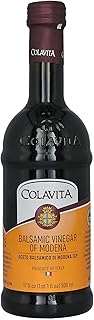
The plain Colavita Modena bottle is the brand's cooking vinegar, and it is worth separating in your head from the aged Colavita bottle further up this list, because the two look related on the shelf and are not interchangeable.
This one is light and clean. It goes into a vinaigrette without fuss, it takes heat, and its sweetness is moderate enough that it will not tip a sauce toward dessert. That neutrality is the useful part: you can add it, taste, and add more without a strong personality getting in the way.
The large format matches the role. A cooking vinegar gets used in tablespoons rather than drops, and buying it in a condiment-sized bottle is how people end up rationing something that should be freely used.
What it will not do is finish anything. There is no density to hold a drizzle and no cask depth to taste on its own, so if that is what you are shopping for, this is not the Colavita bottle you want.
Bottom line: a dependable large cooking bottle, provided you check the label and do not buy it expecting the aged one.
- Type: Balsamic Vinegar of Modena
- Volume: 17 oz
- Body: light
- Balance: moderate sweetness, clear acidity
- Format: large pantry bottle
- Suggested use: dressings, marinades, cooked sauces
Buy this if you want a large, reliable cooking balsamic from a brand you already keep in the cupboard, and you have somewhere else to turn for finishing. It suits households that make dressings from scratch and go through vinegar steadily. Skip it if you were drawn to Colavita by the aged bottle, since this is a different product, and skip it if one bottle has to do everything, in which case the aged version is the better compromise.
Keep it as the default acid for anything that meets heat. Deglaze a roasting tin with a splash while the meat rests, then loosen with stock for a quick gravy. For roast vegetables, toss them in oil and a little of this before they go in, so the sugars caramelise on the tray. For salads, three parts oil to one part vinegar with mustard and salt is the reliable starting ratio, adjusted by taste rather than by measure.
How to Choose a Balsamic Vinegar
Six things decide what is actually in the bottle, and only two of them are printed in large type. Read the first section even if you skip the rest, because the label tier explains most of the difference between bottles that look identical on the shelf.
IGP, DOP, or Neither

There are three tiers hiding behind similar wording. Aceto Balsamico Tradizionale di Modena DOP is the protected traditional product: grape must only, aged for a minimum of twelve years in a series of wooden casks, sold in a distinctive small bottle. Aceto Balsamico di Modena IGP is the much larger category, made from cooked or concentrated grape must blended with wine vinegar, produced within a defined area and checked by a consortium. Everything else is simply a vinegar seasoning that borrows the word balsamic.
The practical takeaway is that IGP is the tier worth looking for on a normal shopping trip. It guarantees where the product was made and that the grape must is genuinely part of the recipe, without carrying the price and the tiny yield of the traditional product. Bottles in this list that carry IGP say so on the front, and the ones that do not are not automatically poor, they are just not held to the same rules.
Watch for wording designed to sound like a certification without being one. Phrases such as gourmet, premium, aged in wood or product of Italy carry no legal weight on their own. A bottle of imported vinegar can be blended and packed anywhere and still describe itself as Italian in style. If the seal and the letters IGP or DOP are absent, treat the rest of the front label as marketing copy and go straight to the ingredient list.
Read the Ingredient List Before the Front Label

The ingredient list is short and it settles most arguments. A serious bottle lists cooked or concentrated grape must first, then wine vinegar. A cheaper one flips that order, so wine vinegar dominates and grape must is a minority component. The order tells you whether you are buying a fruit-driven condiment or an acidic vinegar with a little sweetness added.
Caramel colour, listed as E150d, is permitted within the IGP rules and is common in the lower and middle of the category. It is there to make a young, pale blend look like something that spent years in a cask. It is not a safety issue and it is not a scandal, but it is a strong hint that colour is doing work that time did not do. The bottles here that leave it out say all-natural or list only two ingredients, and that is a meaningful difference.
Added sugar, thickeners such as guar gum, or fruit concentrate other than grape are the signs that you have wandered out of vinegar and into glaze territory. A glaze is a legitimate product, it is just a different one: it is already reduced and sweetened and it is sold for drizzling, not for building a dressing. If you want to control the sweetness yourself, keep the ingredient list to grape must and wine vinegar.
Density, and Why Some Bottles Coat a Spoon

Density is the single most useful thing to judge, and you can often see it through the glass. Tip the bottle and watch how the liquid runs back down the inside. A thin bottle sheets off like water. A dense one leaves a coating and runs in slow legs, the way a heavy syrup does. That behaviour comes from the proportion of cooked grape must and how far it was concentrated before blending.
Density decides the job. A dense vinegar is a finishing condiment: a few drops over strawberries, aged cheese, grilled vegetables or a steak after it comes off the heat, where the texture is part of the point. A thin one is a cooking ingredient: it emulsifies into a dressing, deglazes a pan and reduces down without turning bitter. Using a dense finishing bottle in a marinade wastes the very quality you paid for, since the concentration you bought gets diluted immediately.
Some producers publish a density figure or use a leaf or medal system to rank their own range. Those systems are internal to each house rather than a shared standard, so a four-leaf bottle from one maker is not comparable to a four-leaf bottle from another. Treat them as a guide within a single brand and rely on the ingredient order and the visible pour for cross-brand comparison.
Age Statements and What Barrel Time Actually Does
Under the IGP rules a bottle can be described as aged only if it spent at least three years in wooden casks. Anything below that is simply matured, refined or not described at all. When you see a number of years on the front of a non-traditional bottle, check whether it refers to cask time or to the age of the oldest component in a blend, because those are very different claims.
What the wood does is concentrate and round. Water evaporates slowly through the staves, so the liquid thickens and the flavours pull together, while oak, cherry, chestnut or juniper each leave their own mark. That is why a genuinely aged bottle tastes of plum, fig and dried fruit rather than simply sweet, and why the acidity feels softer even though the measured acidity has not changed much.
Age is not automatically better for what you are cooking. A long-aged condiment is largely wasted in a vinaigrette where mustard, oil and salt are competing for attention, and it is completely wasted in anything that simmers. Buy the age when the vinegar is going to be tasted on its own, and buy a young, clean, sharp bottle for everything that involves heat.
Acidity and the Sweet to Sharp Balance
Balsamic vinegar of Modena sits at a minimum of six percent acidity, and most bottles land right at or just above that line. Because the number barely moves across the category, acidity on its own tells you almost nothing. What changes from bottle to bottle is how much residual sweetness from the grape must is sitting alongside that acid, and that is what your palate registers as sharp or mellow.
A sharp, lean bottle is the better tool for a dressing, because the oil is about to soften it and you want the vinegar to still be heard. A rounder, sweeter bottle is better on its own or over fruit and cheese, where there is nothing to cut through. If you keep only one, a middle bottle with a clear grape character and no added sugar will stretch further than either extreme.
Balance is also why a reduction can go wrong. Boiling a cheap, high-acid vinegar concentrates the acid as fast as the sugar, so it turns harsh and slightly metallic rather than syrupy. If you plan to reduce, start with a bottle that already has real grape must in it, keep the heat low, and stop while it still runs off the spoon, because it thickens further as it cools.
Bottle Size, Pour Control and Storage
Size should follow use, not price per ounce. A dense finishing vinegar is used in drops, so a small bottle is not stingy, it is the correct format and it will still last months. An everyday cooking bottle disappears quickly into dressings and pan sauces, so the larger format genuinely earns its shelf space. Buying a large bottle of a thick condiment usually means the last third sits around long enough to lose its edge.
Pour control matters more than it sounds for the dense bottles. A wide, unrestricted neck delivers a slug when you wanted a drizzle, which is how an expensive bottle empties in a fortnight. Look for a narrow neck, a moulded pour spout or a supplied dropper cap. Some houses sell the same vinegar with and without a pouring stopper, and the version with it is the one to have.
Storage is simple and often done wrong. Keep the bottle upright, closed, at room temperature and away from the cooker and from direct light. Refrigeration is unnecessary and makes a dense vinegar sluggish to pour. Crystals or a light sediment at the bottom of an unfiltered bottle are normal and not spoilage. Dark glass helps, and if your bottle is clear, keep it inside a cupboard rather than on a sunny windowsill. More kitchen gear that pairs with it sits in our home and kitchen section.
| Tier | What is in it | Typical body | Best used for |
|---|---|---|---|
| Tradizionale DOP | Grape must only, minimum twelve years in casks | Very thick, syrupy | Drops on cheese, meat or fruit, never cooked |
| Balsamic of Modena IGP, aged | Grape must plus wine vinegar, minimum three years in wood | Dense, coats a spoon | Finishing, drizzles, uncooked plates |
| Balsamic of Modena IGP, young | Grape must plus wine vinegar, may include caramel colour | Light to medium | Dressings, marinades, pan sauces |
| Balsamic vinegar seasoning | Wine vinegar led, sweeteners possible | Thin | Everyday cooking where sharpness is wanted |
| Balsamic glaze | Already reduced and sweetened, often thickened | Sauce-like | Drizzling only, not a vinegar substitute |
Why You Should Trust Us
We build these lists from published specification and from the pattern of what long-term buyers report, rather than from the copy on the neck tag. For every bottle here we checked the declared ingredient order, whether the label carries an IGP or DOP seal, whether caramel colour is listed, what the maker claims about cask time, the stated acidity and the bottle format including whether a pour control is supplied.
We set aside near-identical listings that differ only in bottle size or in a two-pack, so every entry is a genuinely different vinegar rather than the same one counted twice. We also left out balsamic glazes and bottled salad dressings, which keep showing up in this category and are useful products but are not vinegar, and we say plainly where a maker’s own medal or leaf rating is an internal scale rather than a shared standard.
Final Thoughts
Best overall is the Giusti 3 Gold Medals Balsamic Vinegar of Modena IGP. It is the bottle that answers the two questions this category is built on at once: it carries the protected IGP designation, and it has the barrel-matured density that lets you use it uncooked, over cheese or roasted vegetables, where a thin vinegar would simply vanish.
Best value is the 365 by Whole Foods Market Balsamic Vinegar of Modena. It is a straightforward Modena bottle in the large everyday format, it behaves predictably in a vinaigrette and a pan sauce, and it is the one to keep next to the olive oil so the expensive bottle is not being poured into a marinade.
For specific needs, the Due Vittorie Oro Gold is the pick if you want the thickest pour here and a bottle designed for finishing, the Colavita Aged Balsamic Vinegar is the sensible middle if you want some cask character without committing to a condiment, and the 365 Organic Balsamic Vinegar of Modena is the choice if organic certification is the deciding factor. Anyone who mostly makes dressings should ignore density altogether and take the Pompeian Gourmet bottle, which is built for exactly that. More pantry picks are indexed across our article archive and the category index.
Balsamic Vinegar FAQs
What is the difference between IGP and traditional DOP balsamic vinegar?
DOP is the traditional product and the rules are strict: cooked grape must and nothing else, aged a minimum of twelve years in a graduated series of wooden casks, bottled in a shape unique to Modena or Reggio Emilia. IGP is a far broader protected category in which cooked or concentrated grape must is blended with wine vinegar and produced within the designated area. Almost every bottle sold as balsamic in a supermarket is IGP or below, and that is the tier this list works in, because DOP is a special-occasion condiment rather than a cooking ingredient.
Does a balsamic vinegar go bad once opened?
It does not spoil in the way perishable food does, because its own acidity keeps it stable, but it does fade. Once opened, the aromatics soften over months and a dense bottle can thicken further as a little liquid escapes past the closure. Keep it capped, upright, at room temperature and out of the light, and plan to use an opened bottle within a year or so for a cooking vinegar and rather sooner for a finishing one, where the aroma is the whole reason you bought it.
Can I reduce a cheap bottle instead of buying a thick one?
You can, with limits. Simmering concentrates sweetness and acid together, so a bottle that is mostly wine vinegar turns sharp and slightly harsh rather than syrupy, and no amount of extra time fixes that. Start with something that lists grape must first, keep the heat gentle, and pull it off while it still runs freely because it sets much thicker as it cools. A reduction will give you texture, but it will not reproduce the layered dried-fruit character that comes from years in wood.
Why does my bottle list caramel colour?
Caramel colour, shown as E150d, is allowed inside the IGP specification and is widely used to give a young blend the deep brown that buyers associate with long aging. Its presence tells you the colour did not come only from time in a cask, which is useful information when you are comparing two bottles that look the same through the glass. It is not a defect and it does not make the vinegar unusable, but if you want colour and body to be the product of grape must and wood alone, choose a bottle whose ingredient list stops at two items.
Which balsamic vinegar should I buy first in 2026?
If you are starting from nothing, buy one large everyday IGP bottle for dressings, marinades and pan sauces, and add a small dense finishing bottle later once you know you will use it. That order costs less and teaches you more than starting with the thick one, because you will feel the difference the first time you drizzle the finishing bottle over something you would previously have dressed with the cooking one. Our grocery and gourmet food picks cover the oils and salts that sit beside it.







Write Your Review
No reviews yet. Be the first to share your experience!