

A pinhole leak in a supply line can push hundreds of gallons into a finished basement before anyone notices, and a burst washing machine hose can do it in minutes. That is the gap an automatic water shut off system is built to close: it watches the water going into your house, and when the pattern looks wrong, it closes a motorized valve instead of waiting for you to get home. Our top pick is the Moen Flo Smart Water Shutoff for its daily micro leak check and on-device automatic shutoff that keeps working even when the app is not open.
We pulled together a shortlist of 7 units from FloodStop, Moen, YoLink and more, covering whole-home valves that sit on your main line, clamp-on robots that turn the valve you already have, and small appliance kits that guard a single water heater or laundry pair. Ratings and review counts below come from real Amazon customer feedback as of September 2026. If you want to see how these fit alongside the rest of your gear, our Tools & Home Improvement section covers more of the same ground.

Pros
- Monitors flow, pressure and temperature on the whole house, not just one appliance
- Runs a daily automatic health check that can surface drips as small as a drop per minute
- Shutoff logic runs on the device, so the valve still closes when the router is down
- Mature app with usage history, away mode and Alexa or Google voice control
Cons
- Inline installation on a pressurized main line realistically calls for a licensed plumber
- Needs a power outlet within reach of the valve and has no built-in battery backup
- Some analytics and the extended warranty sit behind an optional subscription
The Moen Flo is the closest thing this category has to a complete answer. It is an inline 3/4 inch valve with a flow meter and a pressure sensor built into the same body, mounted on the main line after the meter so it sees every drop entering the house. Because it watches the water itself rather than waiting for a puddle, it catches the failures that matter most: a supply line weeping inside a wall, a toilet flapper running all night, an irrigation zone that never shut off.
What sets it apart in daily use is the automatic health check. Once a day the unit closes briefly and watches whether pressure holds, which is how it flags a leak measured in drops per minute long before anything shows on a ceiling. The app turns that into plain language alerts and a usage history you can actually read, and the away mode keeps it from overreacting when you fill a pool or run a sprinkler for an hour.
The honest drawbacks are practical rather than technical. It cuts into a pressurized main, which most homeowners should hand to a plumber, and it needs an outlet nearby with no battery to fall back on during an outage. A subscription unlocks deeper analytics and a longer warranty, though the core protection works without paying anything extra.
Bottom line: if you want one device guarding the entire house and you are willing to pay for a proper installation, this is the unit we would put on our own main line.
- Pipe size: 3/4 inch, inline on the main supply
- Coverage: whole home
- Detection: flow rate, pressure and temperature monitoring
- Power: AC outlet, no built-in battery backup
- Connectivity: 2.4 GHz Wi-Fi, no hub required
- Voice: Alexa and Google Assistant
- Override: manual lever on the valve body
- Model: 900-001
Owners of a single family home with a finished basement, a second floor bathroom, or any pipe run they cannot see. It is also the natural pick for anyone who travels often, since the usage history and away mode make an empty house easy to watch remotely.
It is a poor fit for renters, for anyone unwilling to modify the main line, and for homes where the main shutoff sits in a crawlspace with no power nearby.
The valve mounts horizontally or vertically on the main line downstream of the meter and any pressure reducing valve, with the arrow following the direction of flow. Leave clear access to the manual lever and plan for a grounded outlet within cord reach.
Shut the house off at the street before cutting, and expect the plumber to add a short section of pipe to make up the length the valve body takes. On copper, press fittings speed the job up considerably.

Pros
- Ultrasonic sensing resolves flow as small as 0.01 gallons per minute
- One product covers both 3/4 inch and 1 inch main lines
- Detailed usage reports make a hidden drip easy to spot week over week
- Temperature alarm gives early warning of a freeze risk in the line
Cons
- Newer name in this category with a shorter track record than the established brands
- Requires an outlet at the valve and cutting into the main line
- App polish and notification wording still trail the bigger ecosystems
The Frizzlife LP365 is a whole-home valve aimed squarely at people who want the data as much as the protection. Its ultrasonic sensor has no impeller in the water path, which means it can resolve very small flows, and the listing claims sensitivity down to 0.01 gallons per minute. In practical terms that is the difference between noticing a running toilet and noticing a pinhole in a copper elbow.
Day to day it behaves like a smart meter with teeth. The app shows what the house used by hour and by day, raises an alarm when flow stays continuous past your threshold, and closes the valve automatically when the pattern crosses the line you set. A temperature reading on the same body is a genuinely useful extra in a cold climate, since a main line drifting toward freezing is worth knowing about before it splits.
Where it asks for patience is maturity. Frizzlife is far better known for water filtration than for leak hardware, and the app language and notification logic are less refined than the long established competition. The physical install is the usual story for an inline valve: cut the main, make your joints, find an outlet.
Bottom line: the strongest choice on this list for a data-minded owner who wants fine grained flow visibility along with automatic shutoff, provided you are comfortable with a younger product line.
- Pipe size: 3/4 inch and 1 inch versions
- Coverage: whole home, inline on the main
- Detection: ultrasonic flow sensing from 0.01 GPM
- Extras: real time temperature monitoring
- Power: AC outlet
- Connectivity: 2.4 GHz Wi-Fi app control
- Reporting: 24/7 usage logs
Choose the size that matches your existing main rather than the one you wish you had, and confirm the fitting style before ordering. A 1 inch main paired with a 3/4 inch valve creates a restriction you will feel at every shower upstairs.
If your household routinely runs long draws such as filling a hot tub, set the continuous flow threshold generously on day one to avoid nuisance closures while you learn the pattern of your own house.
Keep the valve accessible rather than boxing it in behind drywall, and label the manual override so anyone in the house can open the water by hand. Check the app for offline warnings after a router change or a power outage.
In an unheated basement, insulate the pipe around the unit. Electronics on the line do not stop a freeze, they only report the temperature dropping.
Pros
- Battery powered, so detection and shutoff keep working through a power outage
- LoRa radio reaches across a yard and through concrete far better than Wi-Fi
- Device to device pairing closes the valve even with the internet down
- NSF certification for potable water contact
- Hub included in the box with a large compatible device ecosystem
Cons
- Still an inline install that means cutting the 3/4 inch main line
- Battery is a maintenance item you have to remember to check in the app
- Full feature set assumes you buy into the wider YoLink ecosystem
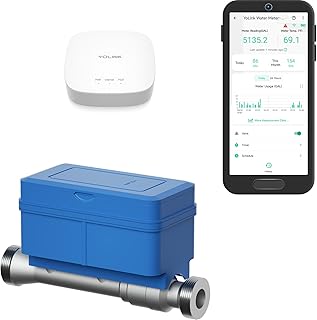
The FlowSmart YS5018 answers the biggest objection to whole-home smart valves, which is that most of them need an outlet next to the main. This one runs on a long life battery pack rated in years, so a storm that takes out the power does not take out your leak protection at the same moment burst pipes become likely.
The radio choice matters just as much. YoLink uses LoRa rather than Wi-Fi, which trades bandwidth for range, and the practical result is a valve in a concrete basement corner that still hears a leak sensor in a detached garage. Device to device pairing means a wet sensor can command the valve directly without a round trip through a server, so the shutoff happens whether or not your internet is up.
The compromises are real but narrow. It is still an inline valve, so the main line has to be opened and rejoined, and battery health becomes something you check rather than something you ignore. You are also buying into an ecosystem, which is a plus if you plan to add sensors and a minus if you wanted a standalone device.
Bottom line: the best pick for a house where running power to the main is awkward, or where outages are frequent enough that a plug-in valve feels like a gamble.
- Pipe size: 3/4 inch, inline
- Coverage: whole home
- Detection: flow metering plus paired leak sensors
- Power: replaceable long life battery, 10 year rating
- Connectivity: LoRa to included hub, app over the internet
- Certification: NSF certified
- Offline: device to device automatic shutoff
- Model: YS5018
Homes where the main shutoff sits far from any outlet, properties with outbuildings or long yard runs, and anyone in an area with regular power interruptions. It also suits owners who plan to grow the system with extra sensors over time.
If you want a single sealed device with no hub and no app account, a simpler plug-in valve will feel less involved.
Place the hub centrally and pair the valve first, then add leak sensors one room at a time so each one gets a clear name in the app. Configure device to device automation for every sensor rather than relying only on cloud rules.
Set a calendar reminder to check battery status twice a year, and open the valve manually once after installation so you know how the override feels before an emergency.

Pros
- No pipe cutting at all, the robot drives your existing shutoff handle
- High torque handles stiff round handle gate valves as well as lever ball valves
- Battery powered with LoRa range that covers a whole property
- Three leak sensors in the box cover the usual trouble spots on day one
- Leaves no permanent modification, so it moves with you
Cons
- Only works if the existing valve still turns freely, a seized valve must be replaced first
- Needs physical clearance around the valve for the robot body
- Closing takes noticeably longer than a purpose built motorized valve
The Bulldog kit exists for the very large group of people who want automatic shutoff and absolutely do not want anyone cutting their main line. Instead of replacing the valve, the robot clamps around the one already on the wall and turns the handle with a motor. Nothing is soldered, nothing is opened, and when you move out the whole thing comes off with a wrench.
Torque is the reason this model exists rather than the lighter operators. Older homes often have round handle gate valves that take several full turns and a fair amount of force, and the Bulldog is built for that job as well as for quarter turn ball valves. The included hub and three sensors mean the kit is useful straight out of the box: put a sensor under the water heater, one behind the washer, one under the kitchen sink, and any of them can command the valve directly over LoRa without touching the cloud.
Its limits follow from the approach. If your shutoff valve is corroded stiff, the robot cannot fix that and you need a plumber to replace the valve first, which somewhat defeats the point. Clearance around the pipe has to be checked with a tape measure, and mechanically turning a multi turn handle is slower than a purpose built motorized ball valve.
Bottom line: the right answer for renters and for anyone who wants whole-home protection without a permanent plumbing change, as long as your existing valve is in good working order.
- Type: clamp on valve robot, no plumbing
- Valve compatibility: ball and gate valves, larger sizes supported
- Coverage: whole home, wherever your main valve sits
- Detection: three included water leak sensors
- Power: battery
- Connectivity: LoRa to included hub
- Offline: device to device automatic shutoff
Before ordering, turn your main shutoff by hand to confirm it moves without a fight, then measure the clearance around the handle in every direction. A valve tight against a foundation wall may not accept the robot body.
Mount the unit so the handle travel is unobstructed, then run a manual open and close from the app to confirm the robot reaches both end stops.
Exercise the valve a few times a year so the handle does not stiffen up, since the robot can only move what a hand could move. Keep the sensors off carpet and directly on hard floor at the lowest point of the room.
Check batteries in both the robot and the sensors on a schedule, and confirm the hub is online after any router change.

Pros
- Sized for the 1/2 inch branch lines that feed washers, heaters and sinks
- Stainless steel ball valve body built for potable water service
- Long battery life means no outlet is needed at the appliance
- Direct sensor to valve triggering works with the internet down
- Integrates with Alexa, IFTTT and Home Assistant
Cons
- Hub is required and is not included with the valve
- Protects only the branch it is installed on, not the whole house
- Inline mounting still means opening the pipe
The X3 is the piece most whole-home shoppers overlook. Plenty of houses do not need the main line closed at all, they need the washer branch or the water heater branch closed fast, and a 1/2 inch motorized ball valve does exactly that without touching the rest of the plumbing. Water keeps running to the kitchen and the bathrooms while the failing appliance is isolated.
Build quality is a highlight. It is a stainless ball valve with a motor rather than a plastic solenoid, which is the right choice for a device that may sit untouched for years and then be asked to work on the first try. The long life battery removes the need for an outlet in a cramped laundry closet, and pairing it directly with YoLink leak sensors means a wet floor closes the valve in seconds without a server in the loop.
Two things to plan for. A hub is required and does not come in the box, so a first time buyer should budget for it or start with a kit. And this is still an inline valve, so the branch line has to be cut and rejoined, though working on a 1/2 inch appliance line is a far smaller job than working on a main.
Bottom line: the smartest way to protect one high risk appliance without the cost or disruption of a whole-home system.
- Pipe size: 1/2 inch, inline
- Body: motorized stainless steel ball valve
- Coverage: single branch line
- Power: long life battery, 10 year rating
- Connectivity: LoRa, hub required and sold separately
- Integrations: Alexa, IFTTT, Home Assistant
- Offline: device to device shutoff with paired sensors
- Model: YS5012
Anyone protecting a specific machine: a washer on an upper floor, a water heater above a finished ceiling, an ice maker line behind a refrigerator. It also suits owners who already run a YoLink hub and want to extend coverage one branch at a time.
It is not a substitute for a main line valve if your worry is a pipe inside a wall.
Install it on the cold supply feeding the appliance, downstream of the manual stop so you can still isolate the line by hand for service. Pair a sensor placed in the drain pan or at the lowest point of the floor.
Create the device to device rule during setup rather than relying on a cloud automation, and cycle the valve once a season so the motor and seat stay free.

Pros
- Costs a fraction of a whole-home system while covering a top source of water damage
- No app, no hub and no account, it simply closes the valve and sounds an alarm
- Threaded NPT connections keep the install within reach of basic hand tools
- Audible and visual alarm gets attention even if nobody is looking at a phone
- Long track record with a large base of owner reviews
Cons
- Protects one appliance only, a leak elsewhere in the house is unaffected
- Needs an outlet nearby and depends on that power for new detections
- No remote notification, so a leak while you are away is handled silently
Water heaters fail in two ways: slowly, staining the floor around the pan, and suddenly, when the tank lets go. The FloodStop kit is aimed at both. A motorized valve threads onto the 3/4 inch supply, a sensor sits in the drain pan, and when that sensor sees water the valve closes and the alarm goes off. There is no app, no hub and no account, which is precisely why many owners choose it.
The value argument is hard to beat. For a small fraction of what a whole-home smart valve plus installation costs, you cover the single appliance most likely to soak a finished basement. Because the connections are threaded NPT rather than cut and soldered, a homeowner comfortable with a pipe wrench and thread sealant can usually do the work in an afternoon.
What you give up is reach and reporting. It watches one appliance, so a pinhole in a wall upstairs is entirely outside its world, and it will never send you a message. If the power is out when a leak starts, the unit cannot act until power returns. Treat it as a focused insurance policy rather than a house wide system.
Bottom line: the best money per unit of protection on this list, and the easiest recommendation for anyone with a water heater sitting above living space.
- Connection: 3/4 inch NPT male by female
- Coverage: single appliance, typically a water heater
- Detection: pan or floor probe sensor
- Alarm: audible and visual at the control unit
- Power: AC adapter
- Connectivity: none, fully local
- Control: manual open and close at the unit
Close the manual stop above the heater, relieve the pressure at a nearby faucet, then thread the valve into the cold inlet with the flow arrow pointing toward the tank. Use thread sealant rated for potable water on the male threads.
Set the sensor at the lowest point of the drain pan, not on the pan rim, and route the cable so nothing pulls it out during service.
Cycle the valve manually once or twice a year so the motor and seat stay free, and wipe the sensor probes if they have collected mineral scale. Confirm the alarm still sounds after any long power outage.
Keep in mind that a closed valve stops new water but does not empty the tank. A failed heater can still release its full volume onto the floor, which is why the drain pan and a working drain line still matter.

Pros
- 1/2 inch NPT sizing matches laundry boxes and smaller appliance lines
- Sensor plus alarm plus valve in one affordable package
- Works without any app, hub or network connection
- Simple threaded install with common hand tools
Cons
- Ratings are solid but the review history is shorter than the established kits
- Single appliance coverage only
- Outlet powered, so a blackout pauses new detections
The E-SDS kit covers the same idea as the FloodStop unit but in the 1/2 inch size that many laundry boxes, utility sinks and smaller heaters actually use. A motorized valve threads into the supply, a probe sits on the floor at the low point, and water on that probe closes the valve and triggers an alarm. There is no app and no radio, which keeps setup down to plumbing and a power cord.
For a laundry pair, this is the leak that most often ruins a floor. A supply hose that lets go while nobody is home can push water for hours, and a valve that closes within seconds of the first puddle changes the outcome completely. Because the kit is inexpensive, it is easy to justify one on the washer and another on a second appliance.
The reservations are about maturity and scope. E-SDS has a shorter review history than the long established names here, so there is less long term feedback to lean on, and like every local kit it does nothing about a leak on another line and cannot message you while you are away. It also depends on its outlet, so a power cut pauses protection until the electricity returns.
Bottom line: a sensible, low cost way to guard a laundry connection or a small heater, especially as a second layer alongside a whole-home valve.
- Connection: 1/2 inch NPT
- Coverage: single appliance line
- Detection: floor probe sensor
- Alarm: audible at the controller
- Power: AC adapter
- Connectivity: none required
- Typical uses: laundry, water heater, utility sink
Anyone with a washer on an upper floor or a small heater in a closet who wants automatic shutoff without joining an app ecosystem. It also works well as an inexpensive second layer in a house that already has a smart valve on the main.
Skip it if you need remote alerts or coverage for pipes inside walls.
Confirm your line is genuinely 1/2 inch before ordering, since laundry boxes and heater inlets are not always the size they appear. Shut the water at the manual stop, drain the pressure, then thread the valve in with potable rated sealant.
Place the probe flat on the floor at the lowest point, and keep the controller and its cord above any likely water level.
What to Look For in an Automatic Water Shut Off System
These devices look similar in a product photo and behave very differently once they are on your pipe. The six points below are the ones that decide whether a unit actually protects the part of your home you are worried about, or just sends you a phone notification while the water keeps running.
Whole-Home Coverage or Single Appliance Protection

The first fork in the road is where the valve sits. A whole-home unit like the Moen Flo, the Frizzlife LP365, or the YoLink FlowSmart goes on the main line right after the meter or the pressure regulator, so closing it stops water to every fixture in the house. That is the broadest coverage you can buy, and it is the only setup that helps with a leak inside a wall or under a slab, where no puddle sensor would ever get wet.
An appliance kit works the opposite way. The FloodStop and the E-SDS units sit on the supply line feeding one machine, with a sensor on the floor or in the drain pan. When that sensor gets wet, only that machine loses water and the rest of the house keeps running normally. For a water heater in a finished basement or a washer on a second floor, that focused approach is often the smarter buy, because those two appliances are responsible for a large share of household water damage claims.
Plenty of people end up running both. A main line valve handles the slow hidden leaks, and a cheap appliance kit handles the two machines most likely to dump water fast. Nothing about the two approaches conflicts, since they act on different pipes.
Installation: Plumber Required or Clamp-On Retrofit

Be honest with yourself about this one before you order. Every inline valve on this list, including the Moen Flo, the Frizzlife, the YoLink FlowSmart, and the YoLink X3, means cutting your pipe and making watertight connections. If you are comfortable with a pipe cutter, sweat fittings or press fittings, and shutting the house down at the street, it is a reasonable weekend job. If you are not, budget for a licensed plumber, and expect the labor to cost as much as the device on a copper main.
The clamp-on route avoids all of that. The YoLink Bulldog Valve Robot straps onto the shutoff valve you already have and physically turns the handle, so no pipe is opened and nothing is soldered. Renters and anyone in a home with a fragile old main line usually land here. The tradeoff is that the robot needs a valve that still turns freely, and a decades-old gate valve that has seized in place has to be replaced first, which puts you back in front of a plumber anyway.
Appliance kits sit in the middle. The FloodStop and E-SDS valves thread onto standard NPT connections at the water heater or the laundry box, so the work is closer to swapping a supply hose than to plumbing a main. Basic tools and thread sealant usually cover it.
Power, Batteries, and What Happens in an Outage
This is the question most buyers skip, and it matters, because storms knock out power and burst pipes at the same time. Devices that plug into an outlet, including the Moen Flo, the Frizzlife LP365, the FloodStop and the E-SDS kit, need that outlet within reach of the valve location. During an outage, an already-closed valve stays closed and an open valve stays open, but the unit cannot act on a new leak until power returns unless the manufacturer offers a battery backup accessory.
Battery-first designs answer that differently. The YoLink FlowSmart, the X3 valve and the Bulldog robot run on long-life battery packs rated in years rather than months, so they keep listening and keep closing during a blackout. You trade the outlet for a maintenance item on your calendar, and for the need to actually check battery status in the app now and then rather than assuming it is fine.
Whatever you buy, know how to open the valve by hand. Every unit here has a manual override or a lever, and the day you need it is not the day to go looking for the manual.
Wi-Fi, Hubs, and Whether the Shutoff Needs the Internet
There is an important difference between alerts and action. Alerts always need connectivity, since a text message has to leave your house. The shutoff itself should not. The Moen Flo runs its leak logic on the device, so it can close the valve with the router down, and it simply cannot tell you about it until the connection is back. YoLink builds the same idea into its device-to-device pairing, where a leak sensor talks straight to the valve over LoRa radio without passing through the cloud, which also gives it far more range through concrete and across a yard than Wi-Fi manages.
Hub requirements follow from that. The YoLink X3 needs a hub on your network, the FlowSmart and Bulldog kits include one in the box, and the Wi-Fi units connect straight to a 2.4 GHz network with no extra hardware. The FloodStop and E-SDS kits sit outside this whole conversation. They have no app and no radio at all, they just sound an alarm and close the valve locally, which some owners consider a feature rather than a limitation.
How the Leak Is Detected

Two detection methods show up on this list and they catch different failures. Flow monitoring watches the water moving through the pipe and flags patterns that do not match normal household use, such as a fixture that has been running for forty minutes straight or a slow constant draw at three in the morning. That is how the Moen Flo, the Frizzlife LP365 and the YoLink FlowSmart find leaks inside walls, under floors, and in irrigation lines that no floor sensor could reach. The Frizzlife advertises ultrasonic sensing down to 0.01 gallons per minute, which is the resolution needed to notice a drip rather than a gush.
Puddle sensing is the other method, and it is simpler. A probe on the floor closes a circuit when water bridges its contacts, and the valve slams shut. It cannot see a leak that is not on the floor, but it is fast, cheap, and almost impossible to confuse. The Bulldog kit, the X3 paired with sensors, the FloodStop and the E-SDS all work this way.
Worth being clear about one thing: a plain water alarm that only beeps is not part of this category. Several popular sensors on Amazon detect water beautifully and have no valve at all, so they wake you up but do nothing about the leak. Everything on our list closes a valve. If you are shopping for the rest of the utility room, our Appliances category is a useful companion read.
Pipe Size, Valve Type, and Fit
Measure before you order. Most residential mains in the United States are 3/4 inch, which is what the Moen Flo and the FlowSmart are sized for, while the Frizzlife ships in a version covering both 3/4 inch and 1 inch. Appliance branch lines and many older homes run 1/2 inch, which is where the YoLink X3 and the E-SDS kit belong. Ordering a 3/4 inch valve for a 1/2 inch water heater line means a stack of reducers and more joints that can weep.
Valve type matters for the clamp-on option only. Quarter-turn ball valves with a lever handle are the easy case. Round-handle gate valves need the higher torque a robot like the Bulldog provides, and multi-turn valves take several seconds to close rather than a fraction of a second. Also check the physical clearance around your valve, because a robot that cannot fit between the pipe and the foundation wall is no help at all.
| Model | Coverage | Install | Power | Detection |
|---|---|---|---|---|
| Moen Flo 900-001 | Whole home, 3/4 in | Inline, plumber advised | Outlet | Flow and pressure |
| Frizzlife LP365 | Whole home, 3/4 and 1 in | Inline, plumber advised | Outlet | Ultrasonic flow |
| YoLink FlowSmart YS5018 | Whole home, 3/4 in | Inline | Long-life battery | Flow plus sensors |
| YoLink Bulldog kit | Whole home | Clamps on existing valve | Battery | Puddle sensors |
| YoLink X3 valve | Branch line, 1/2 in | Inline | Long-life battery | Puddle sensors |
| FloodStop water heater kit | Single appliance, 3/4 in | Threaded NPT | Outlet | Pan sensor |
| E-SDS shutoff kit | Single appliance, 1/2 in | Threaded NPT | Outlet | Floor sensor |
Why You Should Trust Us
We build these lists from the evidence a shopper can actually check. For every unit here we read through the current Amazon listing and its verified customer reviews, then cross-checked the specifications the manufacturer publishes: pipe size, valve type, power source, hub requirement, and whether the shutoff logic runs locally or in the cloud. Products with thin review histories or ratings below our threshold did not make the cut, and neither did water alarms that lack a valve, no matter how well they sell.
We also pruned hard for duplication. Several brands sell four or five near-identical bundles that differ only by which sensors are in the box, so we picked the one configuration that represents each approach and left the rest out. What survived is a set of genuinely different answers to the same problem rather than a padded list. We do not claim hands-on installation of every valve, and where a device depends on your specific plumbing we say so plainly rather than promising a universal fit.
Final Thoughts
Best overall goes to the Moen Flo Smart Water Shutoff. It is the most complete package on the list: continuous flow and pressure monitoring, a daily automatic health check that surfaces drips long before they stain a ceiling, and shutoff logic that lives on the device rather than in a server. It is also the one that most clearly rewards a professional install, so factor the plumber into the decision. If you want the same whole-home coverage without an outlet next to the main, the YoLink FlowSmart runs on a multi-year battery and closes the valve over a local radio link even with your internet down.
Best value is the FloodStop water heater kit. It costs a fraction of a whole-home system, it installs with hand tools, and it guards the single appliance most likely to soak a finished floor while you are at work. Pair it with the E-SDS unit on a laundry line and you have covered two of the most common failure points for the price of one smart valve. For a rental or a home where nobody wants a pipe cut, the YoLink Bulldog Valve Robot is the honest answer, since it drives the valve already on your wall and leaves no plumbing behind when you move.
One expectation to set: none of these devices makes a home flood-proof. They shorten the window between a failure and the water stopping, which is usually the difference between drying a floor and replacing it, but a valve that is closed still leaves whatever is already in the pipes downstream. Some insurers offer a discount for a monitored shutoff device, though that varies by carrier and by state, so ask your own agent before counting on it. Browse more picks in our articles archive or start from the full category list.
Frequently Asked Questions
Do I need a plumber to install an automatic water shut off valve?
For any inline valve that goes on your main line, most homeowners should hire one. The job involves shutting water off at the street, cutting into a pressurized supply line, and making joints that will sit behind you for years. Appliance kits that thread onto existing NPT connections are far more approachable for a confident DIYer, and clamp-on valve robots require no plumbing work at all. Local code in some jurisdictions also has opinions about who may modify a main line, which is worth a phone call before you start.
Will an automatic water shut off system work if the power or Wi-Fi goes out?
It depends on the design, and it is the single most important spec to check. Battery-powered units keep detecting and closing through a blackout. Outlet-powered units hold their current valve position but cannot respond to a new leak until power returns, unless the maker sells a battery backup. As for the internet, the better systems run shutoff logic on the device or over a local radio link, so the valve still closes with the router down and you simply get the notification late.
What is the difference between a leak detector and an automatic water shut off device?
A leak detector senses water and tells you about it with a siren or a phone alert. It has no way to stop the flow. A shutoff device includes a motorized valve, so detection is followed by action within seconds whether or not anyone is home. Many people run both, using inexpensive sensors as extra eyes in far corners of the house that then trigger the one valve on the main. Our Home & Kitchen section covers more of the sensors that pair with these systems.
Can a smart water valve lower my home insurance premium in 2026?
Sometimes, but do not treat it as a given. A number of carriers offer a credit for a monitored automatic shutoff device because water damage is one of their most frequent claims, and a few even send the hardware to policyholders. The size of the discount and the list of approved devices vary by insurer and by state, and some require professional installation paperwork. Call your agent with the exact model number before you buy if the discount is part of your math.
Will an automatic valve close by accident while I am filling a pool or watering the lawn?
Flow-monitoring systems can flag a long high-volume draw as abnormal, which is exactly what you want them to do on a burst pipe and exactly what you do not want on pool fill day. Every unit here that watches flow includes an away mode, a vacation mode, or a temporary bypass you set from the app before you start. Puddle-sensor systems do not have this issue at all, since they only react to water on the floor.
How long does an automatic water shut off valve take to close?
Motorized ball valves on the main line generally take a few seconds from trigger to fully closed, and appliance kits are similar. Clamp-on robots are the slowest of the group, because they have to physically rotate a handle that was never designed for a motor, and a multi-turn gate valve can take noticeably longer. Even the slow end of that range is dramatically faster than a leak that runs unnoticed until someone comes home.

Write Your Review
No reviews yet. Be the first to share your experience!