

Buying a television in 2026 means choosing between OLED, QLED, Mini LED, and standard LED panels, each with its own strengths for movies, sports, and everyday streaming. The good news is that a great picture no longer demands a flagship budget, and the gap between a premium set and a smart value pick keeps getting smaller. Our top pick is the LG C5 Series OLED for its reference grade contrast, low input lag, and effortless smart platform.
To build this shortlist of the 11 best TVs, we sorted through the models people actually keep in their living rooms and rated highly, spanning brands like Amazon, TCL, Samsung and more. Whether you want a cinema style OLED, a bright room Mini LED, or a wallet friendly 4K set for a spare bedroom, there is a match below. For more picks across screens and gadgets, browse our electronics buying guides before you commit.

Pros
- Reference grade contrast with true black levels
- 120Hz panel with HDMI 2.1 for smooth gaming
- Excellent wide viewing angles
- Dolby Vision and Dolby Atmos support
- Responsive webOS smart platform
Cons
- Higher starting price than LED sets
- Peak brightness trails the best Mini LED models
The LG C5 Series is the television to beat if picture quality tops your list. Its OLED evo panel lights each pixel on its own, so shadows stay inky and bright highlights pop without the blooming you can see on backlit sets. Color looks natural straight out of the box, and the wide viewing angles mean everyone on the couch gets the same rich image.
For gamers, the C5 is a dream. A native 120Hz panel, HDMI 2.1 inputs, and low input lag make fast console and PC titles feel fluid, and the automatic game mode kicks in without fuss. Movie fans get full Dolby Vision and Dolby Atmos support, which brings both a wider contrast range and room filling sound cues.
The webOS smart platform is quick and well stocked with apps, and the magic remote pointer makes navigation painless. The main tradeoff is cost, since OLED still commands a premium, and very bright rooms may favor a Mini LED alternative.
Bottom line: for the best overall blend of contrast, motion, and smart features, the LG C5 is our top recommendation and a set you can happily keep for years.
- Screen size: 65 inches
- Panel type: OLED evo
- Resolution: 4K UHD
- Refresh rate: 120Hz native
- HDR: Dolby Vision and HDR10
- Audio: Dolby Atmos
- Smart platform: webOS
- Ports: Four HDMI including HDMI 2.1
Self lit OLED pixels deliver perfect blacks and infinite contrast, so night scenes and starfields look dramatic rather than gray. The AI processor upscales lower resolution content cleanly and keeps motion sharp during sports and action.
A 120Hz panel with HDMI 2.1 supports high frame rate modes on modern consoles and PCs, while variable refresh and an auto low latency mode reduce tearing and lag. The dedicated game dashboard lets you tweak settings without leaving your session.

Pros
- Sharp 4K resolution at a low price
- Full Fire TV platform with Alexa
- Slim design fits most rooms
- Voice remote included
Cons
- Baseline HDR only
- Standard 60Hz motion
The Insignia F50 Series proves you do not need to spend big for a clean 4K picture. It is our best value pick because it pairs a sharp UHD panel with the full Fire TV experience, so your favorite streaming apps and Alexa voice search are ready the moment you power on.
The image is bright and detailed for the money, with accurate enough color for everyday viewing. You give up premium HDR formats and a high refresh panel, so it is not aimed at serious gamers or home theater purists, but for regular shows, sports, and movies it looks great.
Setup is quick, the included voice remote handles both the TV and connected services, and the 43 inch size slots easily into bedrooms, apartments, and smaller living rooms.
Bottom line: if you want the most 4K television for the least money, the Insignia F50 is the easy value winner.
- Screen size: 43 inches
- Panel type: LED
- Resolution: 4K UHD
- Refresh rate: 60Hz
- HDR: HDR10
- Smart platform: Fire TV
- Voice: Alexa voice remote
- Ports: Three HDMI
This set is ideal for budget shoppers, first apartments, and anyone furnishing a spare room. If you mainly stream shows and want a no fuss 4K upgrade without a big outlay, the F50 hits the mark.
Fire TV puts thousands of apps and hands free Alexa at your fingertips, with a familiar row based home screen. Voice search spans multiple services, and the interface stays responsive for casual daily use.

Pros
- Very high brightness for sunlit rooms
- Mini LED backlight with precise contrast
- Vivid quantum dot color
- Slim, modern design
Cons
- Reflections still visible in direct sun
- Off angle color shifts more than OLED
The Samsung Neo QLED QN70F is built for bright rooms, and it shows. Its Mini LED backlight splits into many dimming zones to deliver deep contrast while cranking out the kind of brightness that keeps a picture vivid even with the curtains open.
Quantum dot color is rich and punchy, so sports and animated content look lively. Vision AI, Samsung's Tizen based platform, is fast and full featured, with strong voice search and a tidy interface. Gamers get a responsive panel and a helpful game bar for quick adjustments.
Because it uses a backlight rather than self lit pixels, extreme off angle seats see a little color shift, and glare can appear under direct sunlight, though far less than on a standard LED.
Bottom line: for a family room drenched in daylight, the QN70F is the brightness champion on this list.
- Screen size: 65 inches
- Panel type: Neo QLED Mini LED
- Resolution: 4K UHD
- Refresh rate: Up to 120Hz
- HDR: HDR10+
- Smart platform: Tizen with Vision AI
- Color: Quantum dot
- Ports: Four HDMI
High peak brightness and an anti glare panel let the QN70F stay vibrant in sunlit spaces where OLED can look washed out. It is the set to choose for open plan rooms and homes with large windows.
Thousands of Mini LED zones tighten contrast and reduce blooming, while quantum dots widen the color range. The result is a bright, saturated image that handles both daytime sports and evening films with ease.

Pros
- Large 65 inch QLED at a modest price
- Dolby Vision and HDR10+ support
- Bright, colorful picture
- Built in Fire TV
Cons
- 60Hz panel limits high frame rate gaming
- Local dimming is basic
The Hisense E6 Series is a lot of screen for the money. Its Hi-QLED panel uses quantum dots to produce bright, saturated color, and support for Dolby Vision and HDR10+ means movies benefit from a wider contrast range than budget LED sets can manage.
At 65 inches it anchors a living room nicely, and the built in Fire TV platform keeps streaming simple with Alexa voice search. Color and brightness punch above the price, which makes it a favorite for movie nights and weekend sports.
The main compromises are a 60Hz panel, so it is not built for high frame rate gaming, and fairly basic local dimming that cannot match a full Mini LED set. For everyday viewing, though, most people will not notice.
Bottom line: for a large, colorful QLED that respects your budget, the Hisense E6 is a standout big screen value.
- Screen size: 65 inches
- Panel type: Hi-QLED
- Resolution: 4K UHD
- Refresh rate: 60Hz
- HDR: Dolby Vision and HDR10+
- Smart platform: Fire TV
- Color: Quantum dot
- Ports: Three HDMI
The large panel and premium HDR support make the E6 a natural centerpiece for a darkened movie room. Pair it with a soundbar over the eARC HDMI port for a cinema style upgrade on a reasonable budget.
Fire TV delivers a huge app catalog and hands free Alexa, with a familiar interface that is easy for the whole household. Voice search spans popular streaming services for quick access.

Pros
- Far more screen than anything else on this list
- Enormous review base behind the score
- Fire TV interface is familiar and quick to set up
- Alexa remote handles search and smart home in one place
- Strong value per inch
Cons
- LED panel, so black levels trail the OLED pick here
- Not a gaming-first set, unlike the Mini LED options
- A screen this size needs real wall or stand space
Every other set in this guide tops out at 65 inches, which leaves out the buyer who simply wants the biggest picture their room and budget allow. The Insignia F50 at 70 inches fills that gap, and it does so with the largest review base of any television here by a wide margin.
The panel is 4K with HDR10, and Fire TV is built in rather than bolted on, so the remote, voice search and app library work the way they do on a Fire TV Stick. It also acts as a smart home hub, showing compatible camera feeds on screen. Sound gets DTS Virtual-X processing, which widens the stage without a soundbar, though a soundbar still helps at this size.
Bottom line: choose this when screen size is the priority and you can live with LED contrast rather than OLED. Pick the LG OLED above if black levels and film watching matter more than inches.
Key Specs:
- Screen: 70-inch class, 4K UHD 2160p
- HDR: HDR10
- Platform: Fire TV built in
- Remote: Alexa Voice Remote
- Audio: DTS Virtual-X
- Amazon rank: #2 in LED and LCD TVs
A 70-inch set wants a viewing distance of roughly seven to nine feet to feel comfortable, and it needs a stand wide enough for the feet or a mount rated for the weight. Measure the space before ordering, because the jump from 55 or 65 inches is larger in person than it looks on a spec sheet.

Pros
- Mini LED contrast at a friendly price
- High refresh rate for smooth gaming
- Dolby Vision IQ HDR
- Google TV with voice search
Cons
- Menus can feel busy at first
- Peak brightness below flagship Mini LED
The TCL QM6K Series brings Mini LED technology into reach for mainstream budgets. Its backlight is divided into many dimming zones, so contrast is far deeper than a basic LED, and quantum dot color keeps the picture vivid across movies, sports, and games.
Gamers get the standout feature here: a high refresh panel that supports up to 144Hz along with Dolby Vision IQ for adaptive HDR. That combination of smooth motion and rich contrast is rare at this price. Google TV rounds it out with strong recommendations and built in voice search.
The interface can feel busy until you learn it, and peak brightness does not reach flagship Mini LED levels, but the overall value is hard to beat.
Bottom line: for gaming and HDR value in one set, the TCL QM6K punches well above its weight.
- Screen size: 55 inches
- Panel type: Mini LED QLED
- Resolution: 4K UHD
- Refresh rate: Up to 144Hz
- HDR: Dolby Vision IQ and HDR10+
- Smart platform: Google TV
- Color: Quantum dot
- Ports: HDMI with high frame rate support
Mini LED zones deliver deep blacks and bright highlights, while quantum dots expand the color range. Dolby Vision IQ adjusts HDR to your room lighting for a balanced image day or night.
This set suits gamers and value seekers who want Mini LED contrast and high refresh motion without paying flagship prices. It is a smart pick for a mixed use living room that hosts both films and console sessions.

Pros
- Hands free Alexa built in
- QLED color with Dolby Vision IQ
- Deep Fire TV integration
- Ambient art mode when idle
Cons
- Home screen leans heavily on ads
- 60Hz panel for gaming
The Amazon Fire TV Omni QLED is the natural choice for a home already built around Alexa. Far field microphones let you search, launch apps, and control smart devices with your voice from across the room, no remote required, which makes it feel effortless day to day.
Picture quality is a step above basic Fire TV sets thanks to a QLED panel and Dolby Vision IQ, which adapts HDR to your room lighting. Color is lively, and the ambient experience can display artwork or information when the set is idle.
The home screen leans hard on promoted content, and the 60Hz panel is not aimed at high frame rate gaming, but for streaming and smart home duty it is a slick, well connected option.
Bottom line: if Alexa runs your household, the Fire TV Omni QLED is the most integrated pick on this list.
- Screen size: 50 inches
- Panel type: QLED
- Resolution: 4K UHD
- Refresh rate: 60Hz
- HDR: Dolby Vision IQ and HDR10+
- Smart platform: Fire TV
- Voice: Hands free Alexa
- Ports: Four HDMI
Built in far field microphones let you control the set and connected smart home devices hands free. Ask Alexa to open an app, dim the lights, or check the weather without reaching for the remote.
Fire TV offers a vast app library and tight Amazon integration, plus an ambient mode that shows art or widgets when idle. Frequent shoppers will appreciate how neatly it ties into the wider Amazon ecosystem.

Pros
- Very simple, beginner friendly interface
- 4K QLED color
- Neutral, unbiased app selection
- Voice remote included
Cons
- 60Hz panel for gaming
- Basic sound needs a soundbar
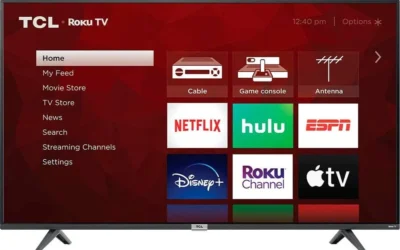
The Roku Select Series wins on simplicity. Roku TV is arguably the most approachable smart platform available, with a clean grid of apps and no clutter, which makes it a fantastic pick for anyone who wants to sit down and stream without a learning curve.
This model steps up to a 4K QLED panel, so color is more vivid than the entry level Roku sets while keeping that same friendly software. The included voice remote handles search and volume, and the platform stays neutral, treating every streaming service evenly.
It is a 60Hz set, so it is not a gaming showcase, and the built in speakers are ordinary, so a soundbar is a worthwhile add on. For fuss free everyday viewing, though, it is hard to beat.
Bottom line: if you value the simplest possible smart experience, the Roku Select is the easiest television here to live with.
- Screen size: 55 inches
- Panel type: 4K QLED
- Resolution: 4K UHD
- Refresh rate: 60Hz
- HDR: HDR10+
- Smart platform: Roku TV
- Voice: Roku voice remote
- Ports: Three HDMI
Roku TV keeps everything on one tidy home screen with large app tiles and quick voice search. It is neutral across services and consistently ranks among the easiest platforms for newcomers and casual viewers.
Guided on screen setup gets you streaming in minutes, and the mobile app doubles as a remote with private listening. Add a soundbar over the HDMI ARC port to lift the audio to match the picture.

Pros
- Affordable 4K with Dolby Vision
- Full Fire TV platform
- Compact, easy to place size
- Voice remote included
Cons
- Modest brightness
- 60Hz motion only
The Toshiba C350 Series is a reliable budget alternative that quietly over delivers. Unlike many value sets, it supports Dolby Vision, so compatible movies gain a noticeable lift in contrast and color depth for very little extra spend.
The 4K panel is sharp for the price, and the built in Fire TV platform brings the same broad app library and Alexa voice search found on pricier sets. At 43 inches it is easy to place on a dresser, a small stand, or a bedroom wall.
Brightness is modest and the panel is 60Hz, so it is best suited to casual viewing rather than bright rooms or fast gaming. For the money, it remains a smart, well rounded choice.
Bottom line: as a budget 4K set with a premium HDR trick up its sleeve, the Toshiba C350 is an easy recommendation for secondary rooms.
- Screen size: 43 inches
- Panel type: LED
- Resolution: 4K UHD
- Refresh rate: 60Hz
- HDR: Dolby Vision and HDR10
- Smart platform: Fire TV
- Voice: Alexa voice remote
- Ports: Three HDMI
The C350 fits budget shoppers who still want Dolby Vision, plus anyone outfitting a bedroom, guest room, or first apartment. It covers everyday streaming comfortably without straining the wallet.
Three HDMI inputs handle a streaming device, a console, and a soundbar, with USB and Wi-Fi for extras. One HDMI port supports audio return so you can add external speakers with a single cable.

Pros
- Vivid quantum dot color
- Compact QLED for smaller spaces
- Polished Tizen Vision AI platform
- Slim, clean design
Cons
- 60Hz panel for gaming
- Limited local dimming
The Samsung Q7F Series shows that a smaller room does not have to mean a dull picture. Its QLED panel uses quantum dots to deliver bright, saturated color that clearly outshines basic LED sets of the same size, making it a lively centerpiece for a bedroom, office, or compact living room.
Samsung's Tizen based Vision AI platform is quick and refined, with responsive voice search and a clean layout. Everyday content looks crisp and colorful, and the slim design blends into modern spaces without dominating them.
It is a 60Hz set with limited local dimming, so it is not chasing home theater purists or high frame rate gamers, but for its size and purpose it is a very appealing package.
Bottom line: for a smaller room that still deserves vivid QLED color, the Samsung Q7F is a stylish, capable choice.
- Screen size: 43 inches
- Panel type: QLED
- Resolution: 4K UHD
- Refresh rate: 60Hz
- HDR: HDR10+
- Smart platform: Tizen with Vision AI
- Color: Quantum dot
- Ports: Three HDMI
The compact 43 inch size and slim profile make the Q7F ideal for bedrooms, offices, and apartments where a 65 inch set would overwhelm. It brings big television color to a footprint that fits tight spaces.
Quantum dot color produces bright, punchy images with strong saturation, and HDR10+ adds dynamic contrast to compatible content. The result is a lively picture that feels a class above ordinary LED sets.

Pros
- Very affordable price
- Compact 32 inch size
- Full Fire TV with Alexa
- Voice remote included
Cons
- HD rather than 4K resolution
- Basic sound and brightness
The Insignia F20 Series is the little television that fits where nothing else will. At 32 inches it slots onto a kitchen counter, a bedroom dresser, or a dorm shelf, and up close its HD panel still looks perfectly clear for news, shows, and casual viewing.
Despite the low price, it runs the full Fire TV platform, so you get the same wide app library and Alexa voice search as much larger sets. The included voice remote keeps control simple, and setup takes only a few minutes.
This is an HD set rather than 4K, with modest brightness and sound, so it is meant for secondary rooms rather than a main home theater. Within that role, it is an excellent, affordable fit.
Bottom line: as a compact, budget secondary television, the Insignia F20 is a smart little pick that keeps things simple.
- Screen size: 32 inches
- Panel type: LED
- Resolution: HD
- Refresh rate: 60Hz
- Smart platform: Fire TV
- Voice: Alexa voice remote
- Connectivity: Dual band Wi-Fi
- Ports: Three HDMI
The F20 is built for bedrooms, kitchens, dorm rooms, and offices where space and budget are tight. It is also a handy first television for a student or a simple set for a guest room.
The small footprint fits shelves and counters that cannot hold a larger set, and it wall mounts easily in cramped spaces. Sit closer and the HD picture stays crisp for everyday viewing.
What to Look for in the Best TVs
Shopping for a TVs is easier once you know which specs move the needle and which are marketing gloss. The criteria below are the ones we weighed most heavily when ranking every model on this list, and they map neatly to how a set will feel in your own room.
Panel Technology: OLED, QLED, and LED

Panel type is the single biggest driver of picture quality. OLED screens light up each pixel individually, so blacks look truly black and contrast is stunning, which is why the LG C5 sits at the top of this guide. The tradeoff is that OLED sets carry a higher starting cost and top out at a lower peak brightness than the brightest LED based panels. LG has since launched the C6 as the follow-up, but it is early in its life with a thin review base, so the C5 is still the safer buy today.
QLED and Mini LED sets take a different route. They use a backlight paired with a quantum dot layer to push vivid color and serious brightness, which makes them excellent in rooms with lots of windows. Mini LED models such as the Samsung Neo QLED QN70F and the TCL QM6K split the backlight into thousands of tiny zones for deeper contrast without the OLED price.
Standard LED panels, like the ones inside the Insignia and Toshiba Fire TV models here, keep costs low while still delivering a clean 4K image for casual viewing. If your budget is tight or the set is for a secondary room, a well reviewed LED is a smart choice that leaves money in your pocket.
Which panel is right for you comes down to your room and priorities. Choose OLED when contrast and movie nights matter most and your space is on the darker side. Reach for QLED or Mini LED when the room is bright or you want the biggest screen for the money, and stick with a quality LED when budget is the deciding factor.
Screen Size and Viewing Distance

Bigger is usually better with TVs, but only up to the point that suits your seating distance. As a rough rule, sit about one and a half times the screen width away from the panel. A 55 inch or 65 inch set fits most living rooms, while a 70 inch model like the Insignia F50 in this guide shines in larger, open spaces built for movie nights.
For a bedroom, kitchen, or dorm, a 32 inch or 43 inch set is easier to place and gentler on the budget, which is where the Insignia F20 and the Toshiba C350 earn their spot. Measure your stand or wall mount area first, and remember to leave room for the feet, since many sets use wide pedestal legs rather than a center stand.
It also pays to think ahead. Many shoppers upgrade to a larger set within a few years, so if your budget and seating allow it, sizing up now can save a second purchase later. Just confirm the panel will clear any media console shelf and that the mount you own is rated for the weight of the model you choose.
Resolution and HDR Support
Almost every worthwhile set today is 4K, which packs four times the detail of a 1080p panel and keeps text and sports crisp on larger screens. On smaller sizes meant for a spare room, a sharp HD panel can still look fine up close, so do not feel pressured to chase 4K on a compact bedroom set.
High dynamic range matters more than raw resolution for how vivid content looks. Formats like Dolby Vision and HDR10+ widen the range between the darkest and brightest parts of a scene, giving fireworks and sunsets real punch. The LG C5, Hisense E6, and TCL QM6K all handle premium HDR formats, while budget sets typically stick with baseline HDR10.
When you compare two similar sets, favor the one with the better HDR support rather than a slightly higher number on the spec sheet. A television that handles Dolby Vision or HDR10+ will show a more lifelike image on the growing library of streaming titles and discs mastered for those formats, and that advantage only grows over time.
Smart Platform and Apps

The built in software decides how the TVs feels day to day. Fire TV, found on the Insignia, Hisense, and Toshiba models, puts Alexa and a huge app library front and center. Roku TV keeps things refreshingly simple with a tile based home screen that almost anyone can navigate, which is why the Roku Select earns a place here.
Samsung uses its Tizen powered Vision AI system, LG runs webOS, and Google TV shows up on many TCL sets, each with a polished interface and voice search. If you already own a streaming stick you love, the platform matters less, but a responsive built in system saves clutter and a spare HDMI port. Pair any of these with a strong home network for smooth playback.
Think about the accounts and devices you already use, too. If your home runs on Alexa, a Fire TV set feels seamless, while a household deep in Google services will click with Google TV. Any of these platforms can be extended later with an inexpensive streaming stick if a new app or a different interface eventually wins you over.
Gaming and Refresh Rate
Gamers should look past the panel and check the refresh rate and ports. A 120Hz or higher panel with HDMI 2.1, like the LG C5 and the TCL QM6K, delivers smoother motion and supports the high frame rate modes on modern consoles and PCs. Low input lag and an automatic game mode make a real difference in fast paced titles.
If you play on a computer, pair your set with a capable rig from our graphics cards guide, or consider a dedicated display from our gaming monitors roundup for a desk setup. For living room consoles, a 60Hz value set still plays beautifully, so match the refresh rate to how seriously you game rather than paying for headroom you will not use.
Console owners should also check for variable refresh rate and an automatic low latency mode, which switch the set into its most responsive state the moment a game launches. These touches keep motion clean and inputs snappy without any menu diving in the middle of a match, and they are increasingly common even on mid range models.
Sound and Connectivity
Slim panels leave little room for speakers, so even a strong TVs can sound thin at higher volumes. Most sets on this list support Dolby Atmos passthrough and an eARC HDMI port, which lets you add a soundbar later without a tangle of cables. If dialogue clarity matters, look for a model with a dedicated clear voice mode.
Count your ports before buying. Three HDMI inputs cover a console, a streaming device, and a soundbar for most homes, while four gives breathing room for a growing setup. USB ports, an optical output, and reliable Wi-Fi round out a future proof set that will not leave you juggling adapters down the road.
Placement affects sound as much as the speakers do. A set pushed deep into a cabinet can muffle audio, so leave a little breathing room around it, and consider wall mounting if your stand traps the down firing drivers that many slim panels use. A few inches of clearance can make dialogue noticeably clearer.
| Model | Panel | Best For |
|---|---|---|
| LG C5 OLED | OLED evo | Overall picture quality |
| Insignia F50 43-inch | 4K LED | Value on a budget |
| Insignia F50 70-inch | 4K LED | Biggest screen for the money |
| Samsung Neo QLED QN70F | Mini LED | Bright, sunlit rooms |
| Hisense E6 | Hi-QLED | Big screen on a budget |
| TCL QM6K | Mini LED QLED | Gaming and HDR value |
| Roku Select | 4K QLED | Simplest smart platform |
Why You Should Trust Us
We build every roundup by starting with the sets that real shoppers rate highly, then filtering out anything with weak feedback or a thin ownership history. For this guide we compared current models across OLED, QLED, Mini LED, and LED panels, weighing verified customer ratings alongside published specifications for picture, smart features, and gaming.
Our goal is a shortlist that reflects how these TVs perform in ordinary homes, not a spec sheet contest. We prioritize value, reliability, and a picture that holds up in the rooms most people actually use, and we update our picks as new models earn their reputation. You can explore how we organize picks across every category on the site.
Final Thoughts
If you want the best picture without second guessing, the LG C5 Series OLED is our overall winner, pairing perfect blacks with a fast, gamer friendly panel and a polished smart platform. It is the set to buy when image quality is the priority and you plan to keep the television for years.
For shoppers watching the bottom line, the Insignia F50 Series is our best value pick, delivering a clean 4K image and the full Fire TV experience at a fraction of a flagship cost. If your living room gets a lot of daylight, the Samsung Neo QLED QN70F is the brightness champion, while the TCL QM6K offers Mini LED contrast and high refresh gaming for far less.
Want the simplest setup in the house? The Roku Select keeps navigation effortless, and the compact Insignia F20 is a tidy choice for a bedroom or kitchen. Whichever you choose, cross check the size against your room, then browse more electronics deals to round out your setup.
Frequently Asked Questions
What are the best TVs to buy in 2026?
The LG C5 Series OLED leads our list for overall picture quality, while the Insignia F50 Series is the standout value pick. Between them sit strong options like the Samsung Neo QLED QN70F for bright rooms and the TCL QM6K for gaming, so the best choice depends on your room, budget, and how you watch.
Is OLED or QLED better for a living room?
OLED wins for contrast and off angle viewing, making it ideal for dim, movie focused rooms. QLED and Mini LED sets get brighter and resist glare better, so they are the safer pick for a sunlit space. If your room has lots of windows, a Mini LED model will usually look punchier during the day.
How big a screen should I get?
Match the size to your seating distance. A 55 inch or 65 inch set suits most living rooms, a 75 inch panel rewards larger spaces, and a 32 inch or 43 inch model fits bedrooms and kitchens. When in doubt, most people wish they had sized up rather than down. You can compare more picks in our latest buying guides.
Do I need a soundbar with a new TVs?
A soundbar is optional but recommended, since slim panels leave little space for speakers. Most sets on this list support Dolby Atmos passthrough and an eARC HDMI port, so you can add one later with a single cable when you are ready to upgrade the audio.
Which TVs are best for gaming in 2026?
For gaming, look for a high refresh panel with HDMI 2.1, which is where the LG C5 and the TCL QM6K stand out thanks to support for smooth high frame rate play, variable refresh, and an automatic game mode. If you game casually on a living room console, a 60Hz value set still performs well, so match the panel to how competitively you play.
Are budget TVs worth buying?
Yes. Budget 4K sets like the Insignia F50 and Toshiba C350 deliver a sharp picture and a full smart platform that covers everyday streaming with ease. You give up peak brightness and premium HDR, but for a spare room or a first apartment they are more than enough.


Write Your Review
No reviews yet. Be the first to share your experience!