

Choosing the right generator has never mattered more, whether you are bracing for storm season, powering a long weekend at the campsite, or keeping tools running at a busy job site. Modern inverter generators deliver clean, stable electricity that is safe for laptops, phones, and other sensitive electronics, and they do it while sipping fuel and staying far quieter than the loud open frame machines of the past. To help you cut through the marketing noise, we pulled together this shortlist of 10 top rated inverter generators for September 2026, leaning on real customer ratings and the features that matter most for home backup and outdoor power. If you are stocking up on seasonal gear at the same time, you can also browse our wider patio, lawn, and garden guides for more picks.
Our lineup spans every budget and power need, from featherweight units you can carry with one hand to dual fuel workhorses that can run essential circuits when the grid goes dark. The picks feature trusted names such as Westinghouse, WEN, PowerSmart and more, so you can match the right machine to your RV, your tailgate, or your breaker panel without overpaying for watts you will never use. Below you will find each model at a glance, followed by a full buying guide, a look at how we chose, and answers to the questions shoppers ask most before they buy.

Pros
- Strong 5000 peak watt output for home and RV
- Remote electric start with auto choke
- Very quiet for its power class
- RV ready outlet and parallel capable
- Wheel and handle kit for easy moving
Cons
- Heavier than compact camping units
- Gasoline only, no propane option
The Westinghouse 5000 Peak Watt is a fully enclosed inverter generator aimed at buyers who want one machine for the house, the RV, and the campsite. With 5000 peak watts it sits in the mid to upper power range, enough to run a refrigerator, lights, and several other essentials at once while staying safe for electronics.
Its standout features are the remote electric start with auto choke and the RV ready outlet, which make it easy to power a camper or start the unit from a distance in bad weather. The sealed cabinet keeps it noticeably quieter than an open frame generator of similar output.
The tradeoffs are weight and fuel. It is heavier than a small camping unit, and it runs on gasoline only, so there is no propane fallback for long storage. The included wheel and handle kit offsets the weight for most users.
Bottom line: this is our best overall pick, a versatile and quiet inverter generator with the deepest track record of happy owners in this roundup.
- Peak power: 5000 watts
- Fuel: gasoline
- Start: remote electric with auto choke
- Outlets: RV ready 30 amp
- Parallel capable: yes
- Portability: wheel and handle kit
Ideal for homeowners who want reliable backup for essentials and campers who need RV ready power in one machine. A great fit if you want quiet operation and remote start without stepping up to a heavy dual fuel unit.
With clean, low distortion output and parallel capability, it comfortably powers a refrigerator, lights, and electronics during an outage, and you can link a second unit later if your needs grow.

Pros
- Useful 3600 watt power for the price
- Quiet and lightweight cabinet
- Fuel shutoff keeps the carburetor clean
- RV ready outlet included
- Simple, reliable design
Cons
- Recoil start only, no remote
- Gasoline only
The WEN 56360i delivers 3600 watts in a quiet, lightweight package that punches above its price. It is a natural fit for campers, small trailers, and homeowners who want backup for the essentials without spending on power they will rarely use.
The fuel shutoff is a genuinely useful touch, running the carburetor dry before the engine stops so it stays clean between trips. An RV ready outlet and clean inverter power round out a very practical feature set.
You give up remote start and propane flexibility at this price, and starting is by recoil pull. For most casual users that is a fair trade for the low cost and light weight.
Bottom line: our best value pick, a dependable inverter generator that covers the basics well without overspending.
- Peak power: 3600 watts
- Fuel: gasoline
- Start: recoil pull
- Outlets: RV ready 30 amp
- Fuel shutoff: yes
- Portability: lightweight, carry handle
For shoppers watching the budget, this model hits the balance of useful power, quiet operation, and a low entry price better than almost anything in its class. It is the one to beat if cost matters most.
Light enough to lift into a truck bed solo and quiet enough for campgrounds with quiet hours, it keeps phones, lights, and a small cooler running through a weekend outdoors.

Pros
- Very light and easy to carry by hand
- Runs on gas or propane
- Built in carbon monoxide sensor
- Long run time at light loads
- Quiet for camping
Cons
- Lower output limits heavy appliances
- Recoil start only
The Westinghouse 2550 Peak Watt is the featherweight of this list, built for backpackers, van lifers, and anyone who values portability above raw power. Despite the small size it adds dual fuel capability, so you can run it on gasoline or propane.
A built in carbon monoxide sensor shuts the engine down if it detects a dangerous buildup, a reassuring feature on a unit small enough to run close to a tent or camper. Clean inverter power keeps phones and small electronics safe.
The obvious limit is output. At 2550 peak watts it will not run large appliances or a house, and it uses a recoil pull start. For its intended job of light, portable power it is hard to fault.
Bottom line: the best ultralight pick, ideal when weight and quiet matter more than maximum wattage.
- Peak power: 2550 watts
- Fuel: gas or propane (dual fuel)
- Start: recoil pull
- Safety: carbon monoxide sensor
- Parallel capable: yes
- Portability: ultralight, one hand carry
If you hike, camp light, or travel by van, this is the unit you will actually want to carry. It is small and light enough to move without a wheel kit while still delivering clean power.
Because it runs on propane as well as gas, you can store it between trips with a spare tank and avoid stale fuel problems. Keep it dry and run it periodically to keep the engine healthy.

Pros
- Huge 12000 peak watt output
- Dual fuel gas or propane
- Transfer switch ready for whole home
- Remote electric start
- Low distortion power safe for electronics
Cons
- Very heavy, needs the wheel kit
- High price for its class
The Westinghouse 12000 Peak Watt Dual Fuel is the big gun of this roundup, built for homeowners who want to ride out long outages without rationing power. With 12000 peak watts it can carry many circuits at once, from the refrigerator to the furnace fan and beyond.
It is transfer switch ready, so it can tie into a home panel for a clean wired connection rather than a tangle of extension cords. Dual fuel operation, remote start, and a carbon monoxide sensor make it as convenient as a portable this size can be.
The tradeoffs are size, weight, and cost. This is a large machine that needs its wheel kit to move and commands a higher price than the mid size units here. For serious backup that is the point.
Bottom line: the best pick for whole home backup and extended outages when you need maximum power on tap.
- Peak power: 12000 watts
- Fuel: gas or propane (dual fuel)
- Start: remote electric
- Home use: transfer switch ready
- Safety: carbon monoxide sensor
- Parallel capable: yes
Paired with a transfer switch, this generator can power a large share of a home during an outage, making it the choice for families who cannot afford to lose refrigeration, heat, or water for long.
Run gasoline for peak output or switch to propane for cleaner, longer storage between emergencies. Keeping a few propane tanks in reserve means you are ready even when gas stations are down.

Pros
- Solid 4400 watt output
- Eco mode for better fuel economy
- RV ready outlet
- Lighter than an enclosed unit of similar power
- Emergency home backup ready
Cons
- Open frame is louder than enclosed models
- Gasoline only
The Oxseryn 4400 Watt is an open frame inverter generator that trades some quiet for a better power to weight ratio. With 4400 watts and an RV ready outlet, it targets buyers who need real backup capacity without paying for a fully enclosed cabinet.
Eco mode helps it sip fuel at light loads, and the open frame keeps it lighter and easier to service than a comparable sealed unit. It is pitched squarely at emergency home backup and RV use.
The main compromise is noise. Open frame inverter generators run louder than enclosed ones, so this is a better fit for a driveway or a work site than a quiet campground. It runs on gasoline only.
Bottom line: the best open frame pick, a practical, well priced way to get mid range inverter power.
- Running class: 4400 watts
- Fuel: gasoline
- Design: open frame
- Modes: eco mode
- Outlets: RV ready
- Parallel ready: yes
A smart choice for homeowners and RV owners who want dependable mid range power and are willing to accept a little more noise in exchange for lighter weight and a lower price.
Because open frame units are louder, place it as far from living areas as your cords allow and use eco mode whenever the load is light to keep both noise and fuel use down.

Pros
- Strong 6800 watt dual fuel output
- Electric start for easy use
- CO Watchdog carbon monoxide shutoff
- RV ready outlet
- Fuel shutoff to protect the carburetor
Cons
- Heavier than mid size units
- Higher price than gas only models
The WEN DF680iX brings 6800 watts of dual fuel power in a package that is lighter and less costly than the largest home backup machines. It is aimed at homeowners who want serious capacity with the flexibility of gas or propane.
Electric start makes it easy to fire up, and the CO Watchdog sensor adds an automatic shutoff if carbon monoxide climbs to a dangerous level. A fuel shutoff keeps the carburetor clean between uses, and the RV ready outlet handles campers with ease.
It is heavier than the mid size units here and costs more than a gas only generator, which is the price of dual fuel capability and higher output. For a capable, flexible backup unit that is reasonable.
Bottom line: the best dual fuel pick, a strong balance of power, flexibility, and safety features.
- Peak power: 6800 watts
- Fuel: gas or propane (dual fuel)
- Start: electric
- Safety: CO Watchdog sensor
- Outlets: RV ready 30 amp
- Fuel shutoff: yes
Choose gasoline when you need the highest output or switch to propane for cleaner burning and long term storage. The flexibility makes it a strong emergency unit that will not let stale fuel strand you.
With 6800 watts and clean power, it comfortably runs a refrigerator, lights, a furnace fan, and electronics at once, making it a capable core for a storm ready home.
Pros
- Quiet 3600 watt operation
- 30 amp outlet for RV and campers
- Compact and easy to move
- Clean power for electronics
- Approachable price
Cons
- Gasoline only
- Recoil start only
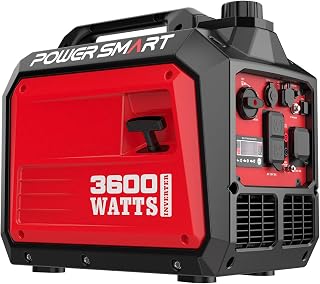
The PowerSmart 3600 Watt is a quiet, compact inverter generator that leans into camping and light home backup. Its 3600 watts and 30 amp outlet make it comfortable powering a camper, a few lights, and a cooler on a weekend away.
Quiet operation is its calling card, and the compact size makes it easy to store and move. Clean inverter power means you can charge phones and run small electronics without worry.
It runs on gasoline only and uses a recoil pull start, so it is best suited to lighter duty rather than powering an entire home. Within that role it offers strong value.
Bottom line: the best pick for camping, a quiet and affordable way to bring reliable power outdoors.
- Peak power: 3600 watts
- Fuel: gasoline
- Start: recoil pull
- Outlets: 30 amp
- Design: compact inverter
- Best use: camping and light backup
Quiet, compact, and easy to load, it is right at home at a campsite or tailgate, keeping the essentials running without disturbing the neighbors.
Run it in eco mode for light loads to keep noise and fuel use low, and give it a stable, level spot with plenty of airflow well away from tents and windows.

Pros
- 4500 peak and 3800 running watts
- 30 amp RV outlet
- CO alert safety shutoff
- Eco mode and parallel ready
- Good power for the price
Cons
- Open frame runs louder
- Gasoline only
The AMERISUN 4500W is an open frame inverter generator built with RV owners in mind. It pairs 4500 peak watts and 3800 running watts with a 30 amp RV outlet, so it can handle a camper hookup plus a handful of home essentials.
Safety and economy are covered by a CO alert that shuts the engine down on dangerous carbon monoxide levels and an eco mode that trims fuel use at light loads. It is parallel ready if you want to add a second unit later.
As an open frame design it runs louder than an enclosed model and uses gasoline only, so it favors work sites, driveways, and RV pads over quiet campgrounds. The power for the price is its main draw.
Bottom line: the best pick for RV owners who want strong, affordable power with a proper 30 amp outlet.
- Peak power: 4500 watts
- Running power: 3800 watts
- Fuel: gasoline
- Outlets: 30 amp RV
- Safety: carbon monoxide alert
- Parallel ready: yes
The 30 amp RV outlet and 3800 running watts make it a natural match for campers and travel trailers, with enough headroom for an air conditioner plus a few extras.
The built in carbon monoxide alert shuts the engine off if levels climb too high, a valuable backstop when a generator runs near an RV or a house during bad weather.

Pros
- Ample 4800 watt output
- Quiet and relatively light
- Fuel shutoff protects the carburetor
- RV ready outlet
- Clean power for electronics
Cons
- Recoil start only
- Gasoline only
The WEN 56477i steps up to 4800 watts while keeping the quiet, lightweight character WEN is known for. It sits in the mid size sweet spot, capable of running a short list of home essentials or a well equipped RV.
A fuel shutoff runs the carburetor dry before shutdown to keep it clean between trips, and the RV ready outlet handles campers directly. Clean inverter power keeps electronics safe throughout.
It uses a recoil pull start and runs on gasoline only, so it lacks the convenience of electric start and the flexibility of propane. For a quiet mid size unit at a fair price those are easy tradeoffs.
Bottom line: the best mid size pick, a quiet and capable generator that bridges camping and light home backup.
- Peak power: 4800 watts
- Fuel: gasoline
- Start: recoil pull
- Outlets: RV ready 30 amp
- Fuel shutoff: yes
- Design: quiet enclosed inverter
A good match for buyers who want more headroom than a 3600 watt unit but do not need a heavy dual fuel machine. It suits campers, RV owners, and homes that need to cover the essentials.
Use the fuel shutoff at the end of each trip to keep the carburetor clean, and consider a second parallel capable unit if your power needs grow over time.

Pros
- Dual fuel gas or propane
- 4500 watt output
- 30 amp RV ready outlet
- CO sensor for safety
- Compact, affordable design
Cons
- Lower owner feedback than top brands
- Louder than premium enclosed units
The ERAYAK 4500W is a budget friendly way into dual fuel inverter power. It runs on gasoline or propane, delivers 4500 watts, and includes a 30 amp RV ready outlet, so it can cover a camper and a handful of home essentials.
An automatic switching feature and a carbon monoxide sensor add convenience and safety, while the compact design keeps it easy to store. Clean inverter power protects electronics you plug into it.
It has a shorter track record than the top brands here and runs louder than a premium enclosed unit, so it is a value play rather than a premium one. For the flexibility of dual fuel at a low price it makes sense.
Bottom line: the best budget dual fuel pick for shoppers who want gas or propane flexibility without a premium price.
- Peak power: 4500 watts
- Fuel: gas or propane (dual fuel)
- Outlets: 30 amp RV ready
- Safety: carbon monoxide sensor
- Switching: automatic
- Parallel ready: yes
Start on gasoline for maximum output or run propane for cleaner burning and worry free storage. The automatic switching makes moving between fuels simple during a long outage.
If you want dual fuel flexibility without paying premium prices, this unit delivers the core features that matter while keeping the cost down. Expect a little more noise as the tradeoff.
How to Choose the Best Inverter Generators
Inverter generators are not all built the same. Two machines with similar wattage on the box can differ sharply in noise, runtime, fuel flexibility, and how safe they are to run near your family. Use the criteria below to narrow the field to the model that actually fits how and where you plan to use it.
Power Output and Running Wattage

The number printed largest on the carton is usually the peak or starting wattage, which the generator can supply for only a few seconds while a motor spins up. The figure that matters day to day is the running wattage, the load the unit can hold continuously. A refrigerator, a few lights, and a phone charger may only need around a thousand running watts, while a well pump, a window air conditioner, or power tools can push you well past three thousand.
Add up the running watts of everything you expect to power at once, then leave yourself a cushion of twenty to thirty percent. A compact model in the two thousand watt class is plenty for a campsite or a home office, a mid size unit around three thousand six hundred to four thousand eight hundred watts covers most RV hookups and a short list of home essentials, and a large dual fuel machine in the eight thousand to twelve thousand watt range can carry many circuits of a house through an extended outage.
Fuel Type: Gas, Propane, and Dual Fuel
Most inverter generators run on regular gasoline, which is easy to find and delivers the highest wattage for a given engine. The tradeoff is that gas goes stale in storage and can gum up a carburetor if the tank sits full for months. Dual fuel and tri fuel models add a propane connection, and sometimes a natural gas line, which is a real advantage for a backup unit that may sit idle between emergencies.
Propane stores almost indefinitely, burns cleaner, and lets you keep a few spare tanks on hand for a long outage without worrying about fuel going bad. Gasoline still wins on peak output and cold weather starting, so many buyers who want flexibility choose a dual fuel machine and run gas for demanding jobs while keeping propane in reserve. If your generator will spend most of the year in a garage waiting for a storm, the propane option is worth prioritizing.
Noise Levels and Quiet Operation

The whole appeal of inverter technology is quiet, and the enclosed models on this list are dramatically calmer than a traditional open frame generator. Manufacturers rate noise in decibels at a set distance, and the difference between a machine in the low fifties and one in the low sixties is larger than the numbers suggest, since the decibel scale is not linear. For camping, tailgating, and neighborhoods with quiet hours, a lower rating keeps the peace.
An economy or eco mode helps here too, throttling the engine down to match the load rather than running flat out. That not only cuts noise when you are drawing only a small amount of power, it stretches every gallon of fuel much further. Open frame inverter models tend to be louder than fully enclosed ones, so if silence is your priority, favor a sealed cabinet design and look for eco mode in the feature list.
Portability, Weight, and Wheel Kits

Wattage and weight climb together. The smallest units on our list weigh little more than a loaded suitcase and travel easily by hand, which makes them ideal for backpackers, van lifers, and anyone who has to lift the generator into a truck bed alone. Step up into the mid size and large classes and you are dealing with machines that need a built in wheel and handle kit to move at all.
If you plan to roll your generator across a gravel campsite or a wet driveway, look for never flat wheels and a telescoping handle rather than small hard casters. Buyers who need serious backup power but still want to move the unit solo should weigh the convenience of remote electric start, which spares you from yanking a pull cord on a heavy engine in the cold and dark.
Runtime, Efficiency, and Parallel Capability
Runtime depends on tank size, engine efficiency, and how heavily you load the machine. Manufacturers usually quote hours at a light quarter load, so expect shorter numbers when you are running closer to capacity. A larger tank and an efficient inverter engine can carry you through an overnight outage on a single fill, which matters more than raw wattage when the power is out for a day or two.
Parallel capability is a smart hedge as well. Two smaller parallel capable inverter generators linked with a kit can combine their output, giving you the flexibility to run one quiet unit for everyday jobs and pair them only when you need more. If you are torn between a portable pair and one big machine, our roundup of portable power stations is worth a look for a battery based alternative that runs silently indoors.
Safety, CO Sensors, and Clean Power
Every generator that burns fuel produces carbon monoxide, so never run one indoors or in a closed garage. Many of the newer models on this list add an automatic shutoff that cuts the engine when it detects a dangerous buildup of the gas, a feature that is well worth having for anyone who runs a generator close to the house during a storm. Treat that sensor as a backstop, not a substitute for keeping the machine well away from windows and doors.
Clean power is the other half of the safety story. Inverter generators produce electricity with very low total harmonic distortion, which is why they are trusted with laptops, medical devices, and modern appliances that a cheap conventional generator could damage. If you plan to power anything with a circuit board, low distortion output is not a luxury, it is the reason to buy an inverter model in the first place. For a quieter, fuel free option that also delivers clean power, compare these picks against our best solar generators.
Quick Comparison by Use Case
| Use case | Wattage class to target | Features to prioritize |
|---|---|---|
| Camping and tailgating | Around 2,000 to 3,600 watts | Low weight, quiet rating, eco mode |
| RV hookups | 3,600 to 4,800 watts | 30 amp RV outlet, parallel ready |
| Home essentials backup | 4,000 to 6,800 watts | Dual fuel, wheel kit, CO sensor |
| Whole panel and long outages | 8,000 to 12,000 watts | Transfer switch ready, remote start |
Why You Should Trust Us
We built this shortlist by gathering current models that shoppers can actually buy today, then filtering hard for reputation. Every generator here holds a strong average customer rating backed by a meaningful number of verified buyers, so the picks reflect how these machines perform in real garages, campsites, and driveways rather than in a lab. We deliberately favored units with a proven track record over brand new listings that have yet to earn feedback.
From there we compared the specifications that separate a good inverter generator from a mediocre one: running wattage, fuel flexibility, noise, runtime, weight, and safety hardware such as carbon monoxide shutoff. We spread our picks across power classes and price points on purpose, because the right generator for a solo camper is the wrong one for a family riding out a multi day outage. Our goal is a list where you can find your best match, not just the single most expensive machine on the shelf.
Final Thoughts
If you want one machine that does nearly everything well, the Westinghouse 5000 Peak Watt Super Quiet Inverter Generator is our best overall pick. It lands in the sweet spot of power, offers remote electric start, arrives RV ready, and carries the deepest bench of positive owner feedback in this group, which makes it an easy recommendation for most homes and campsites alike.
Shoppers watching their budget should look hard at the WEN 56360i 3600-Watt inverter generator, our best value pick, which pairs a genuinely useful power level with a quiet cabinet and a fuel shutoff that keeps the carburetor clean between trips. If you are outfitting a camper or a small trailer, the PowerSmart 3600-Watt and the AMERISUN 4500W open frame model both punch above their weight for the money. For the ultralight crowd, the Westinghouse 2550 Peak Watt is the one you can carry with a single hand.
When the goal is riding out a long outage, step up to the Westinghouse 12000 Peak Watt Dual Fuel machine, which is transfer switch ready and can carry many household circuits at once, or the WEN DF680iX 6800-Watt dual fuel unit for a lighter, still powerful alternative. Whichever you choose, pair it with the rest of your outdoor kit: our best lawn mowers and best chain saws guides round out a yard and storm ready garage.
Frequently Asked Questions
What size inverter generator do I need for home backup in 2026?
Add up the running watts of the essentials you cannot go without, typically a refrigerator, a few lights, a modem, and phone chargers, then add a cushion for the surge when a motor starts. Many households stay comfortable on a mid size unit in the three thousand six hundred to four thousand eight hundred watt range, while running a well pump, central appliances, or many circuits at once calls for a large dual fuel machine closer to eight thousand watts or more.
Are inverter generators quiet enough for camping?
Yes, and that is exactly what they are built for. Enclosed inverter models run far quieter than traditional open frame generators, and most add an eco mode that drops the engine speed to match a light load, which makes them a good fit for campgrounds with quiet hours. If low noise is your top priority, favor a sealed cabinet design over an open frame unit.
Can inverter generators safely power laptops and phones?
They can, and this is their signature strength. Inverter generators produce clean electricity with very low total harmonic distortion, so they are safe for laptops, phones, televisions, and other devices with sensitive circuit boards. That clean output is the main reason to choose an inverter model over a cheaper conventional generator when electronics are involved.
Is a dual fuel inverter generator worth it?
For a unit that will spend most of the year waiting for an emergency, dual fuel is often worth the small premium. Propane stores almost indefinitely without going stale, burns cleaner, and lets you keep spare tanks ready for a long outage, while gasoline is there when you need maximum output or easier cold starts. The flexibility to switch between the two is a genuine advantage for backup power.
How do the best inverter generators of 2026 stay so fuel efficient?
The efficiency comes from the inverter design itself. Rather than forcing the engine to spin at a fixed speed, an inverter generator with eco mode adjusts engine speed to the load, so it burns far less fuel when you are drawing only a small amount of power. That is why these machines can run overnight on a single tank at a light load. To keep exploring smart outdoor buys, browse our full library of buying guides and reviews.


Write Your Review
No reviews yet. Be the first to share your experience!