

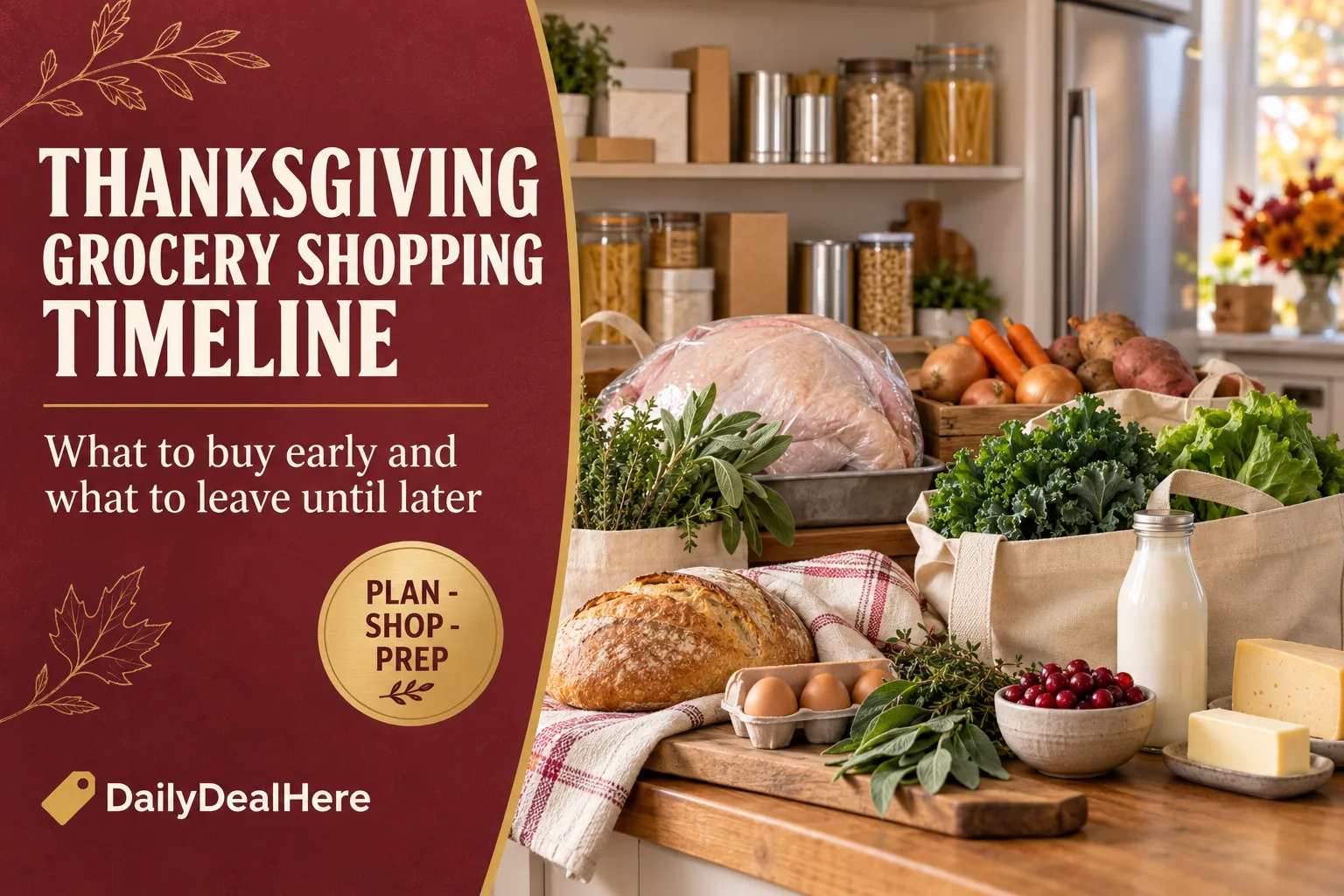
Thanksgiving shopping works when it is three or four trips spread across a month rather than one enormous one in the last week. Shelf stable goods and the frozen bird come four weeks out while stock is deep and pricing is at its best. Speciality and ordered items go in two weeks out. The main shop lands the weekend before. Only bread, delicate produce and anything you want at peak freshness belongs in the final two days.
Splitting it that way solves the two problems that make the week difficult: the store is emptiest of the things you need on exactly the days most people go, and your refrigerator cannot hold everything at once anyway. Below is the full sequence with what belongs in each trip, what must not be bought early, how to plan around refrigerator space, and what to do when something is out of stock.
The sequence at a glance
| When | What to buy | Why then |
|---|---|---|
| Four weeks out | Frozen bird, canned and boxed goods, baking supplies, drinks | Deepest stock and the best pricing of the season |
| Two weeks out | Speciality orders, fresh bird reservation, anything shipped | Order deadlines fall here, not later |
| The weekend before | Main shop: produce that keeps, dairy, cheese, frozen sides | Full shelves, before the crowds arrive |
| Two to three days out | Fresh bird collection, delicate produce, bread, herbs | Peak freshness without the final day queue |
| The day before | Only what was forgotten, and ice | The busiest shopping day of the year |
The single most useful line in that table is the last one. Treating the day before as a correction trip rather than a shopping trip is what separates a calm week from a difficult one.
Four weeks out: the boring half of the list
Everything with a long shelf life should be bought now, and it is a longer list than people expect. Canned pumpkin and broth, evaporated and condensed milk, flour, sugar, spices, stuffing mix, cranberry sauce, foil, parchment, storage containers, drinks and paper goods all keep indefinitely and all disappear in the final week.
This is also the right moment for a frozen bird, if you have freezer space. Frozen turkey is available earliest, priced most keenly, and removes the largest single risk in the whole plan, which is not finding the size you need. The sizing arithmetic is worked through in the guide on how much turkey per person.
Check the dates on spices while you are at it. Ground spices lose their strength within a year or so, and the jar of nutmeg bought for last Thanksgiving is usually the reason a pie tastes flat.
Two weeks out: anything that has to be ordered
Ordered items are the ones that fail silently, because there is no shelf to notice being empty. Fresh and heritage birds, particular cuts from a butcher, speciality cheese, bakery pies and anything shipped all have deadlines that pass without announcement.
Place them now, get a collection date in writing, and put that date in the calendar rather than trusting memory. If it is being shipped, note the delivery window and be honest about whether anyone will be home, since a perishable box left on a step is a wasted order.
This is also when the shelf stable speciality items are worth buying, because late November is when they are discounted, which the roundup on gourmet food deals covers. Anything that keeps and is going on the table anyway is cheaper now than in December.
The weekend before: the main shop
This is the big trip, and doing it on the Saturday or Sunday before rather than midweek is worth a great deal. Shelves are still full, staff are still able to help, and the parking situation is survivable.
Buy produce that keeps: potatoes, sweet potatoes, onions, carrots, celery, squash, apples, cranberries. Buy dairy, since butter, cream and cheese all hold comfortably for a week and butter is one of the items that genuinely runs out. Buy frozen vegetables and pastry. Buy the wine and the drinks, which are heavy and do not want to be carried on the busiest day.
Take a written list organised by aisle rather than by dish. A list by dish sends you back and forth across the shop three times, which is the difference between a forty minute trip and an hour and a half.
Two to three days out: the fresh half
Collect a fresh bird here rather than earlier, since it needs to be cooked within a few days and refrigerator space is about to become scarce. Buy delicate produce now: salad, herbs, mushrooms, green beans, Brussels sprouts.
Bread belongs here too, with one exception. Bread for stuffing is better slightly stale, so buying it earlier and letting it dry out is deliberate rather than careless. Bread for the table wants to be as fresh as possible, which usually means the day before.
This is also the moment to start the thaw if you bought frozen, working backwards from dinner at a full day for every four to five pounds. A bird that goes into the refrigerator too late cannot be rescued on the morning.
The day before: a correction trip only
The Wednesday before Thanksgiving is among the busiest grocery days of the year. Shelves are picked over, queues are long, and the items still available are the ones nobody wanted.
Go with a short list of genuine gaps, go early, and accept substitutions rather than driving to a second store. Buy ice, which everyone forgets and which cannot be bought early without filling a freezer that is already full. Buy fresh bread for the table.
What you should not be doing on that day is buying the bird, the butter, the potatoes or the cream. If any of those are still outstanding, the plan slipped somewhere earlier and the day before is where the cost of that shows up.
What not to buy early
- Fresh herbs. Three days at most, and they take up refrigerator space out of proportion to their size.
- Salad and leafy greens. They will not survive a week in a crowded refrigerator.
- Mushrooms. Two or three days before they go slippery.
- Bread for the table. The day before, unless you are freezing it.
- A fresh bird. Only a few days of usable life, and it occupies the shelf you need for everything else.
- Anything you are buying because it looked good. Unplanned purchases in the main shop are what fill the refrigerator that the plan depends on.
Refrigerator space decides the whole plan
The constraint people forget is not money or time, it is cubic feet. A large bird occupies a shelf for several days while it thaws, and everything else has to fit around it.
Clear it out a week ahead. Throw away what has expired, consolidate half used jars, and eat down the freezer to make room for the bird and for the make ahead dishes. If the numbers still do not work, a cooler with ice on a cold porch handles drinks perfectly well and buys back an entire shelf.
Plan where the leftovers will go before the meal rather than after it. Having shallow containers ready and clean is what makes the two hour refrigeration rule easy to meet, and the roundup of airtight food containers covers the sizes that stack usefully in a full refrigerator.
Cook ahead to buy back the day
Shopping early only helps if the cooking is spread out too, and a surprising amount of a Thanksgiving table holds well for a day or two.
Cranberry sauce is better made ahead. Stock, gravy base, casseroles, most pies, dinner rolls and any vegetable preparation that gets reheated are all comfortable being made on the Tuesday or Wednesday. What does not hold is anything meant to be crisp, anything dressed with vinaigrette, and the bird itself.
Working out which dishes come off the day is worth doing at the same time as the shopping list, because the two plans interact. A dish made on Tuesday needs its ingredients bought on the weekend and needs refrigerator space on Wednesday, and discovering that on Tuesday afternoon is too late.
When something is out of stock
Every year something is missing, and the households that handle it well are the ones who decided the substitution in advance rather than standing in an aisle.
Evaporated and condensed milk are not interchangeable, and that is the substitution most commonly got wrong. Heavy cream can replace half and half in most cooking. Fresh herbs and dried herbs swap at roughly a third of the quantity for dried. Frozen vegetables are entirely acceptable in anything that gets cooked, and often better than tired fresh ones. Puff pastry can replace shortcrust in savoury dishes, and stock can be stretched with water more successfully than most people fear.
The one thing worth driving for is the bird, if you have somehow reached the final days without one. Everything else has an answer that is already in the shop you are standing in.
Delivery and pickup slots
If you shop online, the timeline shifts earlier rather than later, because slots are the scarce thing rather than the groceries.
Book the slot for the weekend before as soon as the window opens, which for most services is a week or two ahead. Expect substitutions and set your preferences deliberately rather than leaving them at the default, since the automatic substitution for a specific item is frequently unhelpful in a recipe.
Keep the fresh and delicate items out of the delivery order if you can, and pick those up yourself in the final days. Produce chosen by someone else in a hurry is the part of an online shop that most often disappoints, and it is the part where quality matters most on the day.
Where the money goes
| Category | Share of the shop | Where to save |
|---|---|---|
| The bird | Often the largest single line | Frozen, bought early, largest size that fits the oven |
| Dairy and baking | Substantial and predictable | Buy at the four week trip, before the seasonal rise |
| Produce | Moderate | Buy what keeps early, delicate items late |
| Drinks | Easily the most variable | Buy on the weekend before, not on the day |
| Speciality and prepared items | Small quantity, high cost | Decide which are worth it, make the rest |
| Paper goods and foil | Small but always forgotten | Four weeks out, with the shelf stable list |
The reliable saving is in the timing rather than in any individual choice. The same list bought four weeks out and bought on the Wednesday costs noticeably different amounts, and the difference is entirely in what is on promotion when.
Dietary needs belong in the first trip
Anything a guest needs rather than prefers should be bought early, because speciality products have thin stock and no restock in the final week.
Gluten free flour, bread and stuffing base, dairy alternatives, and nut free products all sell out in the final days in a way that ordinary versions do not. Buying them four weeks out costs nothing extra and removes the risk entirely. The dishes that most often need adapting are covered in the notes on gluten free stuffing and desserts and the alternatives in the piece on low carbohydrate holiday desserts.
Ask about needs when you invite rather than the week before, which gives you the whole timeline to work with instead of two days.
The timeline mistakes that cost the most
Four errors account for most of the difficulty, and all of them are scheduling rather than cooking.
Starting the thaw too late is the first and the least recoverable. Doing the main shop on the Wednesday is the second, which turns a manageable list into an expedition. Buying delicate produce a week early is the third, which quietly wastes a portion of the shop. And failing to clear the refrigerator is the fourth, which makes every other step harder than it needs to be.
None of them are about skill. They are all about doing things in an order that has to be decided before the week begins.
Hosting for the first time
If this is the first year you are cooking it, reduce the number of dishes rather than the ambition of each. Six things done properly reads as a generous table, and ten things done under pressure reads as a stressful afternoon.
Write the cooking schedule backwards from when you want to eat, including the rest period for the bird and the oven time each side needs. Doing that on paper reveals the collisions before they happen, and it is the single most useful hour of preparation available.
Accept offers of help with specific dishes rather than in general, since a guest bringing a named dish removes both cooking and shopping from your list. If you are the one attending rather than hosting, the guide to hostess gifts covers what is genuinely welcome to receive on a busy afternoon.
Store hours and the days that matter
The week has its own rhythm and knowing it is worth more than any coupon. Monday and Tuesday are the calmest days with full shelves, which makes Tuesday the best midweek option if the weekend did not work. Wednesday is the peak. Thursday itself sees most large chains closed or on short hours, which is the detail that catches out anyone planning to pick up a forgotten item on the morning.
Check the hours for your specific stores in the week before rather than assuming, since holiday schedules differ between chains and between locations of the same chain. Pharmacies and convenience stores usually stay open and are the fallback for a genuine emergency, at convenience prices.
The Friday after has its own pattern worth knowing. Grocery stores are quiet, because everyone is either eating leftovers or shopping for other things entirely, which makes it a good day to restock what the week consumed.
Freezer strategy for the month
The freezer is doing two jobs in November: holding the bird before the thaw and holding make ahead dishes and leftovers afterwards. Those two demands peak at different times, which is fortunate, but only if you plan for it.
Eat down the freezer through early November so the bird fits. Once the bird moves to the refrigerator to thaw, that space becomes available for anything cooked ahead. After the meal, it takes the leftovers you will not finish inside three or four days, which is usually more than people expect.
Freeze in portions rather than in one block, and label everything with what it is and the date, because unlabelled containers in a full freezer become a mystery by January. For anything you want to be good months later rather than weeks, a vacuum sealer makes a real difference to how the meat comes back.
Write the list by aisle, not by dish
This sounds trivial and it changes the trip more than anything else on this page. A list organised by recipe sends you across the store repeatedly, and in a crowded shop that is where the time goes.
Build the list from the menu, then sort it into produce, dairy, meat, frozen, baking, canned goods and household. Keep the dish names next to the ingredients so you can tell what a substitution would break, since knowing that the cream is for the potatoes rather than the pie changes what you would accept instead.
Keep one running list on a phone that everyone in the household can add to, from the four week trip onwards. Most forgotten items are things someone noticed and nobody wrote down.
One habit makes next year easier for almost no effort. Keep this year’s list once the week is over, with notes on what ran out, what was left untouched and what nobody ate. A used list with a few corrections on it is a far better starting point than a fresh one, and it is the only reliable way to stop repeating the same two or three misjudgements every November.
Frequently asked questions
When should I start Thanksgiving grocery shopping?
About four weeks out for shelf stable goods and a frozen bird, two weeks out for anything ordered, the weekend before for the main shop, and the final two or three days for delicate produce and bread. The day before should be a correction trip only.
What should I buy first?
Canned and boxed goods, baking supplies, spices, drinks, foil and paper goods, plus a frozen bird if you have freezer space. All of it keeps, all of it is cheaper early, and all of it disappears from shelves in the final week.
What should I not buy early?
Fresh herbs, salad and leafy greens, mushrooms, bread for the table, and a fresh bird. All of them either spoil within a few days or occupy refrigerator space you will need for the thaw.
When do I need to start thawing the turkey?
Allow a full day in the refrigerator for every four to five pounds, so roughly three days for a twelve pound bird and four to five for a twenty pound one. Work backwards from dinner and start a day earlier than the calculation suggests.
Is the day before Thanksgiving a bad day to shop?
It is among the busiest grocery days of the year, with picked over shelves and long queues. Go early, take a short list of genuine gaps, buy ice and fresh bread, and accept substitutions rather than driving to a second store.
What can I cook ahead?
Cranberry sauce, stock and gravy base, casseroles, most pies, dinner rolls and any vegetable dish that gets reheated all hold for a day or two. Anything meant to be crisp, anything dressed, and the bird itself do not.
How do I handle something being out of stock?
Decide substitutions in advance. Heavy cream replaces half and half in cooking, dried herbs replace fresh at about a third of the quantity, and frozen vegetables work in anything cooked. Evaporated and condensed milk are not interchangeable, which is the swap most often got wrong.
Should I book a delivery slot?
Yes, and early, because slots are scarcer than the groceries. Book for the weekend before as soon as the window opens, set substitution preferences deliberately, and pick up delicate produce yourself in the final days.
Buy the boring half a month early, order what has to be ordered two weeks out, do the main shop on the weekend before, and leave the day before for bread, ice and whatever you forgot.









Write Your Review
No reviews yet. Be the first to share your experience!