

Search for a sledge hammer to split wood and you will get three different tools back, which is confusing until you realise that splitting firewood is genuinely done three different ways. A maul splits by wedge action in one swing. A sledge hammer drives a separate steel wedge into rounds too big or too knotted for a maul. A splitting axe handles smaller, straighter pieces faster than either. Our shortlist covers 8 tools from ESTWING Special, Estwing, ESTWING Sure and more, sorted by the job each actually does.
Our top pick is the Fiskars Pro IsoCore 8 lb splitting maul, because a maul is what most people searching for this actually need and this one absorbs the shock that makes a long splitting session painful. If you also need the wood cut to length first, our tools and home improvement section covers the rest of the yard. This list is current for September 2026.

Pros
- 8 lb head suits full-size rounds
- IsoCore shock control, rated at 2x less shock
- Riveted head cannot slide or snap off
- Very high rating average across a large sample
Cons
- Genuinely tiring over a long session
- Too much tool for kindling work
A maul is the tool most people searching for a wood splitting hammer actually need, and this is the best-judged one here. Eight pounds on a 36 inch handle is the classic combination for full-size rounds: enough mass to force fibres apart in a single blow, and enough handle to develop real head speed.
The IsoCore shock control is what separates it from a traditional maul. Splitting is repetitive, and the vibration that travels up a one-piece steel tool over an afternoon is what ends most sessions early. Reducing that changes how much wood you get through rather than how any single swing feels.
Be realistic about the weight. Eight pounds is genuinely tiring, and once you tire, accuracy falls and an off-line swing accomplishes nothing. If most of your wood is under a foot across, a splitting axe will be faster.
Bottom line: the right tool for full-size rounds, and the one that leaves you able to use your hands the next morning.
- Type: splitting maul
- Head weight: 8 lb
- Total weight: 10.62 lb
- Length: 36.97 inches
- Blade width: 7.84 inches
- Shock control: IsoCore, rated 2x less shock
- Head: forged steel, riveted, rust-resistant coating
Aim for the outer third of a large round rather than the centre, and work around the outside; the middle is where fibres are strongest.
Set your chopping block so the top of the round sits at roughly knee height, so the swing finishes into the block rather than toward your legs.
Wear eye protection. Splitting throws chips and, on any struck steel, potentially fragments.
Do not use a maul as a hammer on a wedge unless it has a designed striking face; use a drilling or club hammer instead.
Pros
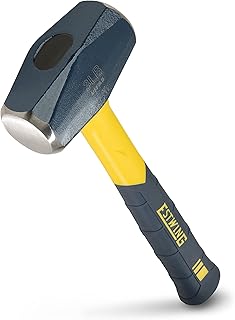
- Purpose-made dual-faced striking head
- Polished and bevelled faces slow mushrooming
- Fiberglass handle absorbs shock and survives overstrike
- Highest rating average on this list
Cons
- Useless on its own without a wedge
- Short handle limits reach
This is the piece that unlocks the wood a maul cannot touch. Knotted rounds, elm, anything with interlocked grain: none of it splits by wedge action alone, and all of it yields to a steel wedge driven home.
Three pounds is the right weight for that job. It is controllable one-handed, which matters because your other hand is often steadying the wedge on the first tap, and it delivers plenty of force for driving once the wedge has bitten.
The faces are polished and bevelled, and that chamfer is functional rather than cosmetic: it slows the mushrooming that eventually turns a struck face into flying fragments.
The fiberglass handle earns its place through overstrike. Missing the wedge and hitting the handle on the round is inevitable, and fiberglass survives what splinters a wooden handle. Estwing's rating average here is the highest on this list.
Bottom line: the value pick, and the tool that makes the difficult third of a woodpile splittable.
- Type: drilling and crack hammer
- Head weight: 3 lb, dual-faced
- Length: 11 inches
- Faces: polished and bevelled
- Steel: forged, hardened and tempered
- Handle: fiberglass
- Origin: made in the USA
Start the wedge with light taps until it bites, then step back and drive it with full swings; holding a wedge while swinging hard is how fingers get hurt.
Place the wedge on an existing crack in the end grain wherever one exists.
Inspect the striking face regularly and grind off any mushrooming before it detaches; that is the fragment that injures people.
Never use a hammer with a chipped or cracked face, and always wear eye protection.

Pros
- Splits knotted and oversized rounds nothing else will
- Forged steel construction
- 5 lb mass helps it stay seated once started
- Inexpensive relative to what it enables
Cons
- Requires a separate striking tool
- Struck faces mushroom and need dressing
Every woodpile contains rounds that simply will not split with a maul: crotch pieces where two limbs met, knotted sections, and species like elm with interlocked grain. A wedge is the answer to all of them, and at 5 pounds this one has enough mass to stay put once started rather than jumping out on the first strike.
Forged steel is the right construction for a tool whose entire life is being hit. The profile is designed to keep advancing rather than binding, which is the failure that leaves a wedge stuck in a round and a second wedge required to free it.
Two things to know. It does nothing without a striking tool, so budget for a drilling hammer alongside it. And the struck face will mushroom over time, which must be ground off before pieces detach.
Bottom line: the tool that makes the hard third of a woodpile usable, for very little money.
- Type: splitting wedge
- Weight: 5 lb
- Material: forged steel
- Origin: made in the USA
- Requires: drilling hammer or sledge
Seat the wedge in an existing end-grain crack with light taps, then drive it with full swings from a safe stance.
Own two wedges if you split difficult wood; the second frees the first when a round closes on it.
Dress mushroomed edges off the struck head with a grinder before they break away.
Eye protection is mandatory. Steel on steel is the one genuinely dangerous part of this job.

Pros
- One-piece forged steel cannot fail at the handle joint
- Right size for kindling and small rounds
- Classic stacked leather grip
- Very high rating average
Cons
- One-piece steel transmits more shock than fiberglass
- Far too small for full-size rounds
Making kindling is a different job from splitting rounds, and this is the tool for it. Fourteen inches, worked one-handed on a low block, turns split pieces into fire-starting sticks quickly and with far more control than a full-size maul allows.
Estwing's one-piece forging is the durability argument: there is no head-to-handle joint, so the failure mode that eventually claims every wooden-handled tool simply does not exist here. The stacked leather grip is the traditional finish and remains comfortable in cold weather in a way steel alone is not.
The trade-off is vibration. Solid steel transmits more shock than fiberglass or a composite handle, which is fine over the short bursts kindling requires and would be punishing over an afternoon of full-size rounds. Do not mistake this for a small maul; it is a different tool.
Bottom line: the kindling specialist, and probably a lifetime purchase.
- Type: hand splitting maul
- Length: 14 inches
- Construction: one-piece forged steel
- Grip: stacked leather
- Origin: made in the USA
- Use: kindling and small splits
Anyone with a wood stove or fireplace who makes kindling regularly, and campers who want one compact tool.
Not a substitute for a full-size maul on rounds.
Keep the leather grip conditioned; dried-out stacked leather shrinks and loosens over years.
Work on a low block with your supporting hand well clear, and wear eye protection.

Pros
- Graphite handle damps shock well
- 3 lb head is controllable one-handed
- Very high rating average
- Jacketed handle survives overstrike
Cons
- Only useful alongside a wedge
- Short handle limits force compared with a full sledge
This occupies the same slot as the Estwing drilling hammer and differentiates on handle material. Jacketed graphite damps vibration well and, more importantly for this job, survives the overstrike that happens every time you miss the wedge and catch the round instead.
Three pounds is again the practical weight for wedge work: enough to drive, light enough to place accurately, and manageable one-handed while you steady a wedge on the first tap.
As with any hammer, it does nothing on its own. Wood does not split from a flat face, it splits from a wedge profile, so this is half of a two-tool system rather than a splitting tool in itself.
Bottom line: a strong alternative wedge driver, chosen on handle feel rather than performance.
- Type: drilling and club hammer
- Head weight: 3 lb
- Handle: jacketed graphite
- Use: driving splitting wedges, general striking
Choose between this and the Estwing on handle preference; both do the same job at the same weight.
Budget for a wedge at the same time, since neither hammer splits anything alone.
Check the handle jacket for cuts after overstrikes; damage there admits water and weakens the bond to the head.
Dress the striking face and wear eye protection.

Pros
- Faster and less tiring than a maul on medium rounds
- 28 inch length suits one or two handed use
- Sharp profile bites rather than bouncing
- Excellent rating average
Cons
- Sticks in knotted or stringy wood
- Not enough mass for large rounds
A splitting axe is what a maul is not: light, fast, and dependent on blade geometry rather than mass. On straight-grained rounds up to about a foot across, the X25 splits faster than an 8 pound maul and leaves you far less tired, because you are swinging a fraction of the weight.
The 28 inch length is the useful middle ground, long enough for a proper two-handed swing and short enough to control one-handed on smaller pieces.
Its limits appear the moment the wood gets awkward. A thin profile bites deep and then stops in knotted or stringy rounds, where a maul would at least crack them open and a wedge would finish the job. Anyone with mixed wood ends up owning both this and something heavier.
Bottom line: the fast tool for good wood, and the one to reach for first when the pile is cooperative.
- Model: X25
- Type: splitting axe
- Length: 28 inches
- Handle: composite
- Use: medium to large straight-grained logs
Working steadily through a pile of straight-grained rounds, where speed and low fatigue beat raw force.
Switch to a maul or wedge the moment a round refuses twice.
Keep the edge sharp; a blunt splitting axe glances rather than biting, which is both slower and more dangerous.
Never use the poll of an axe to strike a wedge.

Pros
- Axe edge and striking face in one head
- 17 inches suits one-handed work
- Forged construction
- Compact enough to carry
Cons
- 3 lb is too light for full-size rounds
- Combination tools compromise on both jobs
Combination tools always involve compromise, and the honest way to judge this one is by the situation it suits: camping, a small stove, or a garage where one tool has to cover several jobs and none of them are large.
Having an axe edge on one side and a striking face on the other means you can split kindling and tap a wedge with the same tool, which for occasional use is genuinely convenient.
At 3 pounds and 17 inches it has neither the mass nor the leverage for full-size rounds, and buyers expecting a small maul to behave like a large one will be disappointed. Judged as a compact camp and kindling tool it is well made and sensibly proportioned.
Bottom line: the portable compromise, right for camp and kindling and wrong for a woodpile.
- Type: splitting maul, axe and sledge combined
- Head weight: 3 lb
- Length: 17 inches
- Construction: forged
- Use: small rounds, kindling, camp
Campers, van dwellers and anyone who needs one compact tool rather than three.
Not for a household that burns wood as its main heat source.
Inspect the striking face for mushrooming if you use it on wedges, and dress it before pieces detach.
Keep the axe edge covered in transit.

Pros
- 4 lb delivers more force than 3 lb hammers
- Fiberglass handle survives overstrike
- 12 inch handle stays controllable one-handed
- Forged steel head
Cons
- Heavier one-handed swing tires sooner
- Still needs a wedge to split anything
Four pounds on a short handle sits between a 3 pound club hammer and a full-size two-handed sledge, and that extra pound tells when driving a wedge into a stubborn round.
The 12 inch fiberglass handle keeps it usable one-handed while absorbing more shock than solid steel would, and fiberglass tolerates the overstrikes that come with aiming at a small wedge head.
The trade is stamina: an extra pound swung one-handed is noticeable over a session, and if most of your splitting is wedge work you may prefer the lighter hammers here. It also, like every hammer, splits nothing on its own.
Bottom line: the harder-hitting wedge driver, for people who found 3 pounds not quite enough.
- Type: sledge hammer
- Head weight: 4 lb
- Handle: 12 inch fiberglass
- Head: forged steel
- Use: driving wedges and stakes
Choose this over a 3 lb hammer if your wood is consistently difficult and wedges need real driving.
Choose lighter if you split for long stretches at a time.
Dress mushroomed striking faces before fragments can break away, and replace any hammer with a cracked face.
Wear eye protection on every strike against steel.
How to Choose Wood Splitting Tools
Start with the wood rather than the tool. Straight-grained rounds under about a foot across split with a maul or a splitting axe in one blow. Big, knotted, or stringy rounds resist a maul entirely and need a wedge driven by a sledge. Most people who burn wood end up owning both.
Maul, Axe, or Sledge and Wedge
A splitting maul has a heavy head with a thick, blunt wedge profile. It is not meant to cut fibres, it is meant to force them apart, and the weight does most of the work. The Fiskars IsoCore at 8 pounds and the Estwing Fireside Friend at a much smaller size are both mauls, at opposite ends of the size range.
A splitting axe, such as the Fiskars X25, has a thinner, sharper profile and less mass. It bites in and splits in one motion, which is faster and less tiring on medium rounds, and it will bury itself and stick in anything genuinely tough.
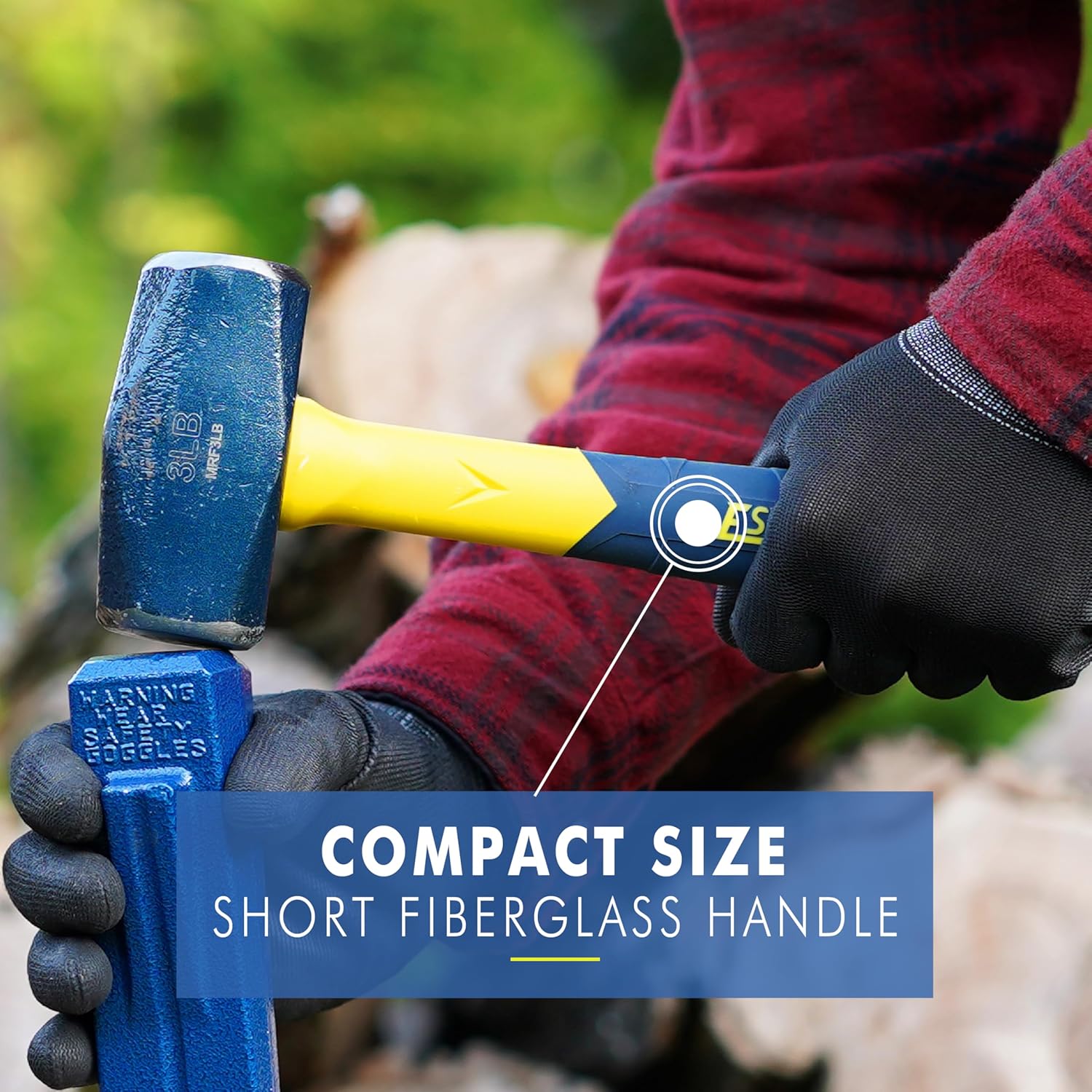
The sledge and wedge combination is the answer for what defeats both. You start the wedge by hand, then drive it with a drilling hammer or sledge such as the Estwing Sure Strike, the Real Steel club hammer or the MAXPOWER. This is slower and it will split rounds nothing else will touch, including elm, and anything with a major knot.
Weight: More Is Not Better

Head weight is the specification everyone fixates on and the one most often chosen wrongly. An 8 pound maul like the IsoCore delivers enormous force per blow and is the right tool for large rounds, but it is genuinely tiring, and the figure to watch is total weight rather than head weight: the IsoCore’s 8 pound head sits on a 36.97 inch handle for a total of 10.62 pounds in your hands, and a tired swing that lands off-line does nothing except jar your arms.
Accuracy beats mass. A 6 pound maul landing exactly where you aimed splits more wood per hour than an 8 pound maul landing an inch off, and for most people a 6 to 8 pound head is the practical range. Below that you are into hand maul territory, which is a different job.
Smaller tools such as the Estwing Fireside Friend at 14 inches and the Edward Tools 17 inch maul are made for kindling and small pieces, worked one-handed on a low block. They are not scaled-down versions of a full maul; they are a separate tool for a separate task, and using one on a 16 inch round is how people hurt their wrists.
Handles: Steel, Fiberglass, and Shock
Three handle types appear here and each fails differently. Estwing’s tools are forged in one piece from steel with a bonded grip, so there is no head-to-handle joint to fail at all, which is the classic argument for them. The trade is vibration: one-piece steel transmits more shock into your hands than any other construction.
Fiberglass handles, used by the MAXPOWER and the Real Steel hammer, absorb more shock than steel, resist weather better than wood, and survive the overstrike that destroys wooden handles. Fiskars takes this furthest with its IsoCore design, which uses a shock control system specifically to reduce what reaches your hands over a long session.
Wooden handles remain the traditionalist’s choice, are the most comfortable when they fit you, and are the only type you can replace at home when they eventually break. On a tool that will be overstruck regularly, they are also the type that breaks first.
The Safety Rule About Striking Steel With Steel

This matters more than anything else in this guide. Splitting wedges and striking tools are hardened, and hardened steel struck against hardened steel can send fragments off at high speed. Over time a struck face deforms outward into a mushroom, and those mushroomed edges are what break away. Good striking tools are built to delay this: the Estwing Sure Strike has a polished and bevelled face, and that chamfer around the edge is there specifically to slow the spread of a mushroom rather than for appearance.
Three rules cover it. Use a hammer intended for striking, meaning a drilling or club hammer or sledge, not the back of an axe, since axe polls are not designed as striking faces and can crack. Inspect both the wedge head and the hammer face regularly and dress off any mushrooming with a grinder before it detaches. And wear eye protection every single time, without exception, because this is the failure mode that costs people an eye rather than a finger.
Never strike a hardened wedge with a hammer of similar or greater hardness if you can avoid it, and never use a hammer with a chipped or cracked face.
Technique That Saves Your Back
Splitting on a low block bent double is the fastest route to a bad back and a miss that goes into your shin. Use a chopping block that puts the top of the round at roughly knee height or a little above, so the swing finishes with the tool travelling downward into the block rather than toward your legs.
The tyre trick is worth knowing: stand an old tyre on the block, stack rounds inside it, and they stay upright and together after splitting instead of scattering. It roughly doubles how much you split per hour, because you stop bending to reset every piece.
Aim for the edge of a round rather than the centre on anything large, working around the outside. The centre of a big round is where the fibres are strongest and where knots meet; the outer third splits away far more easily and the round gets smaller with every piece you take off.
Seasoning, Frozen Wood and Grain
When you split matters as much as what you split with. Green wood splits more easily than part-seasoned wood in most species, which is why the traditional advice is to split soon after felling rather than letting rounds sit for a year.
Cold helps too. Frozen wood is more brittle and splits more readily, so a hard winter morning is a better time to work through a difficult pile than a warm afternoon. Elm, sycamore and anything with interlocked grain remain difficult in any conditions and are the classic case for a wedge.
Read the end grain before swinging. Existing cracks radiating from the centre are lines of weakness, and placing your blow on one of those does much of the work for you. Avoid aiming through a knot, which is the one place the wood will not yield.
Hydraulic Splitters, and When Hand Tools Stop Making Sense
There is a volume above which none of these tools is the right answer, and it is worth naming rather than pretending otherwise. If you are processing several cords a year, a hydraulic splitter does the work without the fatigue, without the technique, and without the rounds that defeat a wedge. Hand tools remain better for anything under roughly a cord, for kindling, and for people who value the exercise.
The honest middle ground is that most households with a stove burn one to three cords a season, and at that volume hand splitting is entirely realistic if the tools match the wood. A maul plus a wedge and hammer covers nearly everything, and the pieces that still refuse can be set aside for a neighbour with a splitter or cut shorter with a saw, since a shorter round splits far more easily than a long one.
That last point is underused. Splitting resistance rises sharply with length, so a 20 inch round that will not yield often splits without complaint once cut to 14. If a piece has beaten you twice, reach for the saw rather than a heavier hammer.
| Pick | Type | Weight or size | Handle | Best for |
|---|---|---|---|---|
| Fiskars Pro IsoCore | Splitting maul | 8 lb head, 10.62 lb total, 36.97 in | IsoCore, 2x less shock | Large rounds, long sessions |
| Estwing Sure Strike | Drilling and crack hammer | 3 lb, dual-faced, 11 in | Fiberglass | Driving wedges |
| Estwing Sure Split Wedge | Splitting wedge | 5 lb | Not applicable | Knotted and oversized rounds |
| Estwing Fireside Friend | Hand splitting maul | 14 in | One-piece steel, leather grip | Kindling and small pieces |
| Real Steel Club Hammer | Drilling and club hammer | 3 lb | Jacketed graphite | Driving wedges |
| Fiskars X25 | Splitting axe | 28 in | Composite | Medium rounds, faster work |
| Edward Tools Maul | Axe and sledge combined | 3 lb, 17 in | Forged | Small rounds and camp use |
| MAXPOWER Sledge | Sledge hammer | 4 lb, 12 in | Fiberglass | Driving wedges one-handed |
If the wood is coming from your own land, our guide to deer stands covers another fixture of the same acreage.
Why You Should Trust Us
Every tool here was checked against its live listing for type, head weight, overall length and handle construction. Type is the specification that matters most and the one the search term obscures, since a sledge hammer, a splitting maul, a wedge and a splitting axe all appear under the same query and are not substitutes for one another. We have labelled each plainly rather than presenting them as alternatives.
We have not split a cord of wood with each of these, and we do not claim to have. What we can do is explain which tool suits which round, why head weight above a certain point stops helping, and set out the striking-face safety issue that is the one genuinely dangerous part of this job. More outdoor guides live in our articles section.
Final Thoughts
The Fiskars Pro IsoCore 8 lb splitting maul is our best overall pick. A maul is the tool most people searching for a wood splitting hammer actually want, 8 pounds on a 36 inch handle is the right combination for full-size rounds, and the IsoCore shock control genuinely reduces what your hands absorb across an afternoon rather than a single swing.
For best value, the Estwing Sure Strike 3 lb drilling hammer is the piece that unlocks everything a maul cannot do. Paired with the Estwing Sure Split wedge, it splits the knotted and oversized rounds that would otherwise go back on the pile, and both together cost less than most mauls.
After that, buy to the pile. The Fiskars X25 axe for medium straight-grained rounds where speed matters more than mass, the Estwing Fireside Friend or Edward Tools maul for kindling and camp work, the Real Steel club hammer or MAXPOWER sledge as alternative wedge drivers, and the Sure Split wedge for anything with a knot in it. Whatever you use, wear eye protection and dress any mushroomed striking faces before they let go.
Frequently Asked Questions
Can I use a sledge hammer to split wood on its own?
Not effectively. A sledge has a flat face and no wedge profile, so it compresses the wood rather than parting it. Its role is to drive a separate splitting wedge into a round, which is the combination that handles knotted and oversized pieces. For ordinary rounds a maul does the same job in one swing.
What weight maul should I buy?
Six to eight pounds suits most people for full-size rounds. Heavier heads deliver more force per blow and tire you faster, and a tired swing that lands off-line splits nothing. Accuracy is worth more than mass, so choose the heaviest head you can still place precisely at the end of a session.
Is it safe to hit a splitting wedge with an axe?
No. An axe poll is not designed as a striking face and can crack, and hardened steel struck against hardened steel throws fragments. Use a drilling hammer, club hammer or sledge, inspect both faces for mushrooming, dress any that appears, and wear eye protection every time without exception.
Should I split wood green or seasoned?
Green, in most species. Wood splits more easily soon after felling than after it has begun to dry, which is why the traditional order is to split first and stack to season afterwards. Frozen wood is also more brittle and splits readily, so a cold morning beats a warm afternoon for a difficult pile.
How do I stop rounds falling over after every swing in 2026?
Stand an old tyre on your chopping block and stack the rounds inside it. Split pieces stay upright and contained instead of scattering, which removes most of the bending that makes splitting tiring. Set the block so the top of the round sits around knee height or a little above. More outdoor guides are in our category index.


Write Your Review
No reviews yet. Be the first to share your experience!