

Choosing a deer stand is really a decision about how you hunt, not just about what you sit on. A hunter who moves with the wind every weekend needs something very different from a family that hangs one stand over a food plot in August and leaves it there until spring. This roundup covers 11 deer stands from Guide Gear, Summit Treestands, Muddy and more, ranked by the ratings real buyers left behind rather than by marketing copy. Our top pick is the Summit Treestands Viper SD Climbing Treestand, because it holds the strongest customer rating in this group and lets a solo hunter pick a height on the tree instead of accepting whatever a fixed ladder gives.
Below you will find ladder stands, hang-on stands, a climbing stand and open tripod towers, so the list still works whether you hunt mature hardwoods, planted pines, or a bare field edge with no climbable tree in sight. Where a manufacturer publishes a weight rating we quote it, and where the listing stays silent we say so plainly, because that one number matters more than any comfort feature on this page. If you want more gear picked the same way, browse our sports and outdoors reviews. Model options and stock move around through September 2026, so confirm the exact configuration on the listing before you order hardware for a build.

Pros
- Carries the highest customer rating of any stand in this roundup
- Packs and climbs as one unit, so a solo hunter can set up alone
- Closed-front frame gives a solid rest for a rifle and something to lean into
- You pick the height on the tree rather than accepting a fixed ladder height
- Aluminum frame keeps carry weight reasonable on a long walk in
Cons
- Needs a fairly straight trunk with no limbs in the climbing zone
- The listing does not publish a weight capacity figure
- Climbing technique takes practice, and the learning curve is worst in the dark
The Viper SD is the classic two-piece climbing treestand: an aluminum platform for your feet and a separate seat section, joined by a cable around the trunk. You stand on the platform, lift the seat, sit, lift the platform with your feet, and inch up the tree in a caterpillar motion. It is built for the hunter who reads sign in the morning and wants to be hunting that funnel by the afternoon, not the hunter who sets one stand in August and leaves it.
Its real strength shows up in the customer record. It holds the strongest rating of anything in this roundup and it has been reviewed by far more owners than any other dedicated stand here, which for a category this safety-sensitive counts for a great deal. The closed-front frame is the other reason it keeps selling: the bar in front of you is a shooting rest, a handhold on the climb, and a psychological anchor when the wind picks up.
The limits are inherent to the type rather than to this particular model. A climber only works on a straight trunk with the limbs cleared out of the climbing zone, which rules out gnarled hardwoods and thick pine. Summit does not publish a weight capacity anywhere in this listing, so if you are a larger hunter or you haul heavy gear, get the printed manual before you climb rather than guessing. And climbing is a learned skill; the first few ascents in the dark are humbling.
Bottom line: if your ground has climbable trees and you value being able to move, this is the most capable stand on this page and the one with the best owner record behind it. If your timber is crooked or you want to be seated the moment you arrive, buy a ladder stand instead.
- Type: two-piece climbing treestand
- Frame material: aluminum
- Configuration: separate platform section and seat section
- Front: closed-front design usable as a shooting rest
- Carry: single-unit backpack style carry
- Finish: multiple camo options offered on the listing
- Published weight capacity: not stated in this listing
- Safety harness included: not stated in this listing
This is a solo hunter's stand. It suits people who hunt public ground, who chase the wind week to week, or who simply do not have a partner available to raise a ladder stand. It also suits hunters who scout aggressively during the season and want the freedom to hang wherever the sign is freshest.
It is a poor fit for anyone hunting with a child or a partner, anyone with mobility limits that make a repetitive climbing motion hard, and anyone whose property is all crooked or heavily limbed timber. Those hunters should look at the ladder stands and tower blinds in this roundup instead.
Practice the climbing motion on a low tree in daylight before you ever use it in the dark. Wear a full body harness from the ground up and keep a tether on the tree at every stage of the climb, because the transition points are where climbers get hurt.
Check the trunk cable and every pin before each climb, and inspect the aluminum for cracks at the weld points at the start of every season. Store the stand dry and out of direct sun; straps and webbing are the first components to degrade. Do not carry your weapon or pack up the tree, use a haul line for both.

Pros
- Strong customer rating among the ladder stands in this roundup
- Two-person bench makes it workable for hunting with a partner or a young hunter
- Ladder doubles as the climbing method, so there are no separate sticks to buy
- 16.5 feet is a practical height for both bow and rifle setups
- Sits on the more affordable end of the two-person ladder class
Cons
- The listing does not publish a weight capacity for the stand or the seat
- Raising it is a genuine two person job and should not be attempted alone
- Once strapped to a tree it is effectively there for the season
This is the archetype most people picture when they hear the phrase deer stand: a stacked steel ladder, a bench at the top, and a set of ratchet straps holding the whole thing against a hardwood. At 16.5 feet it lands right in the sweet spot most whitetail hunters use, high enough to sit above a deer's usual line of sight without pushing the shot angle steep enough to hurt penetration.
The two-person bench is the reason to pick this over a single. Sharing a stand with a partner or with a kid on their first season is a different experience from sitting alone, and it is one of the few ways to introduce someone to hunting from elevation safely. Among the ladder stands in this roundup it holds one of the better ratings, which for a category where owners complain loudly about wobble and hardware quality is a meaningful signal.
What Guide Gear does not do is publish a weight capacity, and on a two person stand that omission matters more than usual. Two adults in full winter layers with packs and weapons adds up quickly, so read the manual before you load it. The other honest limitation is logistics: this is roughly 16 feet of steel that has to be walked in, assembled, and levered upright against a tree. Two people, a clear approach, and an hour of daylight are the minimum.
Bottom line: a sensible, well-rated choice for a fixed two-hunter setup on ground you control. Do not buy it as your mobile stand, and do not try to hang it by yourself.
- Type: ladder tree stand
- Published height: 16.5 feet
- Occupancy: 2 hunters
- Construction: steel ladder sections with integrated seat
- Climbing method: built-in ladder, no sticks required
- Published weight capacity: not stated in this listing
- Safety harness included: not stated in this listing
Plan on two people, a level patch of ground to lay the sections out, and a full set of tools before you start. Assemble the ladder flat on the ground, walk it up against the trunk, and only then send someone up to run the straps. Pick a tree with a straight section at working height and no dead limbs above you.
Ratchet straps stretch through the first few days of temperature swings, so climb up and re-tension them a week after installation and again before opening day. A pull-up rope tied off at the platform saves you from ever carrying gear up the ladder.
The strongest case for this stand is a parent and a young hunter over a food plot. The bench keeps both of you in the same field of view, and the fixed ladder means no one has to learn a climbing technique first.
It also works for a filming setup or for any hunt where one person is glassing while the other is on the weapon. If you always hunt alone, the extra width is dead weight and a single ladder stand or hang-on will serve you better.

Pros
- Publishes a 300 pound weight capacity rather than leaving it unstated
- Lumbar support seat is built for long, cold sits rather than short morning hunts
- Flip-back adjustable shooting rail works as a rifle rest and swings clear for a bow
- 17 feet puts you comfortably above a deer's normal line of sight
- Muddy applies a noise-reducing treatment at the steel contact points
Cons
- Single occupancy only, so it will not work for taking a child along
- At a published 61 pounds it takes two people to walk in and raise safely
- Fixed placement, so it cannot follow the deer once the pattern shifts
The Huntsman Deluxe is the most complete single-hunter ladder stand in this roundup, and the reason is that Muddy answers the questions the other listings leave open. It states a 300 pound capacity, it states the height at 17 feet, and it describes the seat and rail rather than hiding behind generic copy. On a product that holds a person seventeen feet in the air, that transparency is worth paying attention to.
Comfort is the design focus. The lumbar support seat and the padded rail are aimed squarely at the hunter who sits from dark to mid-morning during the rut, not the one who slips in for the last hour of light. The rail flips back and adjusts, which is the detail that keeps it usable for bowhunters, since a fixed rail is an obstacle the moment you need to draw.
The other feature worth calling out is the silencer treatment Muddy applies where metal meets metal. Deer forgive an odd shape in a tree far longer than they forgive a clank at first light, and that treatment saves you the usual chore of taping felt onto every contact point before you hang a new stand.
Muddy also lists a full body fall arrest system with a climbing belt in the box, which is a claim only one other stand in this roundup makes. The limits are the usual ones for the type: it seats one, the listed 61 pound steel build is a real carry, and raising 17 feet of ladder needs a second person.
Bottom line: if you want one comfortable stand to leave over a food plot for the whole season and you hunt alone, this is the pick.
- Type: ladder tree stand
- Published height: 17 feet
- Published weight capacity: 300 pounds
- Occupancy: 1 hunter
- Stand weight: 61 pounds
- Seat: lumbar support, 22 in wide by 17 in deep by 19 in high
- Foot platform: 19 in wide by 25 in deep
- Shooting rail: flip-back and adjustable
- Fall arrest harness: full body system with climbing belt, stated as included
- Noise control: silencer treatment on contact points
The published 300 pound rating covers you plus everything you bring up: layers, pack, weapon and any gear on the haul line. A 220 pound hunter in November kit is closer to that ceiling than the number suggests, so count the whole load rather than just body weight.
Wear a full body harness from the ground and run a lifeline down the ladder so you are tethered on every step. Re-tension the ratchet straps a week after install, then again each season, and inspect the welds and the rail pivot before the first climb of the year.
Choose this over a two-person ladder stand if you genuinely hunt alone. The single seat is narrower, lighter to raise, and easier to tuck against a trunk without creating a silhouette.
Choose a two-person stand instead if there is any chance of bringing a child or a partner along. And if you need to move stands during the season, skip ladders entirely and look at a climbing stand or a hang-on with sticks.

Pros
- Light enough to carry on a pack frame along with climbing sticks
- Folding mesh seat packs flat and breathes on warm early-season sits
- Well rated for a hang-on, a category where owners are quick to complain
- Lets you own several and hang one on each likely funnel
- Summit build quality carries over from its climbing stand line
Cons
- No climbing method included, so sticks or steps are a separate purchase
- The listing does not publish a weight capacity
- Hanging it means working at height, which is the least forgiving install of any type
The Ledge XT is Summit's answer for hunters who want mobility but cannot use a climber, either because the timber is limbed out or because they want to be settled the instant they arrive. It is a straightforward hang-on: a platform, a folding mesh seat, and a bracket that cams against the trunk. You bring the climbing sticks.
Weight is the whole argument. A hang-on this light can ride on a pack frame with a set of sticks and still leave you able to walk a mile before daylight. The folding seat is what makes that possible; it collapses flat against the platform so nothing snags on brush during the walk in, and the mesh dries fast when the weather turns.
Where you have to be clear-eyed is installation. Hanging a stand means climbing with sticks and attaching hardware while you are already at height, which is the most demanding install in this entire roundup. It is entirely manageable with a lifeline and a harness and genuinely dangerous without. Summit also does not publish a capacity figure here, so confirm it in the manual.
Bottom line: an excellent mobile platform for a hunter who already owns sticks and knows how to hang a stand safely. A poor first stand for someone new to hunting from elevation.
- Type: hang-on tree stand
- Model: SU82117
- Seat: folding Comfort-Mesh
- Color: black
- Weight class: lightweight, described for pack carry
- Climbing sticks: not included
- Published weight capacity: not stated in this listing
- Safety harness included: not stated in this listing
A hang-on is only half a system. Budget in the same order for a set of climbing sticks or screw-in steps, a full body harness, and a lifeline that runs from the ground to above the platform.
A short pull-up rope belongs in the same purchase. Carrying a bow or a rifle while climbing sticks is how most hang-on accidents start, and a length of paracord removes the problem entirely.
The Ledge XT shines when you are hunting fresh sign rather than a stand you hung in August. Pair it with three or four sticks, keep the whole kit staged in the truck, and you can be set up on a new scrape line the same morning you find it.
It also solves the problem climbers cannot: trees with limbs. Where a climbing stand is blocked, a hang-on and sticks will get you up almost anything with a usable trunk.

Pros
- Works where there is no usable tree at all, which no tree stand can do
- Enclosed box hides movement and blocks wind on long cold sits
- Two-hunter footprint makes it practical for hunting with a child
- Best rated of the tower products in this roundup
- Six feet of elevation is enough to break your outline over crop stubble
Cons
- The listing does not publish a weight capacity
- Assembly is the longest and most involved of anything on this page
- Once built it is effectively permanent and not something you relocate mid-season
Tower blinds solve a problem tree stands cannot. On a picked bean field, a cutover pine stand, or a power line right of way, there is often no tree worth climbing within two hundred yards of where the deer actually move. A freestanding tripod puts you six feet up and gives you a shooting position that would otherwise not exist.
The enclosed box is the second half of the value. Inside a blind, movement stops mattering. You can shift, glass, drink coffee and, most importantly, sit with a restless ten year old without blowing the hunt. It also blocks wind, which is the difference between an hour and four hours on a December afternoon. Among the tower products here it holds the best owner rating, which suggests the build survives real weather.
The cost is effort and permanence. This is the longest build on this page, it is a two person job with hardware and a couple of hours, and once it is anchored on a field edge it stays there. Guide Gear does not publish a weight capacity for the platform, so confirm the rating in the manual before two adults climb in. Anchoring matters too, since a tall box on three legs catches wind like a sail.
Bottom line: the right answer for open ground and for hunting with kids, and the wrong answer for anyone who needs to follow the deer.
- Type: enclosed tripod tower blind
- Published height to platform: 6 feet
- Blind footprint: approximately 4 by 4 feet
- Occupancy: 2 hunters
- Frame: tripod legs, freestanding, no tree required
- Published weight capacity: not stated in this listing
- Safety harness included: not stated in this listing
Put it where there is no tree: crop field edges, food plot corners, clearcuts, pipeline and power line cuts, and pasture fence lines. Six feet is enough to break your outline over stubble and short cover without exposing the whole box on a skyline.
Place it well before the season so deer accept it as part of the landscape, and brush the legs in with local cover. Anchor the feet properly, because a tall enclosed box on three legs takes a lot of wind.
This is the family stand. If you are taking a child or a new hunter out, an enclosed blind removes the two things that ruin those hunts: cold and the need to hold perfectly still.
It also suits older hunters and anyone who does not want to climb a ladder in the dark. If you hunt public ground or need to move with the wind, it is completely impractical and you want a climber instead.

Pros
- Simplest product in this roundup, with very little to go wrong
- Strong customer rating built on a large body of owner ratings
- Light enough to walk in on a pack with a set of sticks
- Affordable enough to hang several across different wind directions
- Foot platform gives you somewhere to stand rather than just a seat
Cons
- No climbing sticks or steps included
- The listing does not publish a weight capacity
- Basic seat and small platform are not built for all-day comfort
This is the plainest product in the roundup and that is exactly the point. A platform, a seat, a bracket and a strap. There is no shooting rail to snag a bowstring, no folding mechanism to seize up, and nothing that will not still work in five years. It also carries one of the healthier owner ratings here, built on a larger pool of ratings than most of the ladder stands.
The strategic value is that you can own several. A single ladder stand commits you to one tree and one wind direction for the whole season. Four hang-ons scattered across a property let you hunt the wind properly, which does more for your success rate than any comfort feature ever will. Each one weighs little enough to strap to a pack and walk in.
Be realistic about what it is not. The seat is basic, the platform is small, and neither is designed for a hunter who sits from dark to dark during the rut. It ships without any way to climb the tree, so a set of sticks is a required extra rather than an optional one. Guide Gear does not publish a capacity for it either.
Bottom line: the best value on this page for a hunter building a mobile, multi-stand setup. Buy two or three plus sticks and a harness rather than one of anything fancier.
- Type: hang-on tree stand
- Includes: seat and foot platform
- Finish: camo
- Climbing sticks: not included
- Published weight capacity: not stated in this listing
- Safety harness included: not stated in this listing
Climbing sticks or screw-in steps, a full body harness, and a lifeline. None of the three are optional on a hang-on, because you are attaching the stand while already off the ground.
Add a haul line and a few ratchet straps as spares. Strap webbing is the first thing to fail on any stand left out through a season of sun and rain, and having replacements in the pack is cheaper than a bad surprise in October.
Hang it with a slight forward tilt into the trunk so the platform sits level once your weight is on it, and cam the bracket tight before you trust it. Test the bite with your hands from the top stick before stepping across.
Because it is light, most hunters run several and leave the sticks on the productive trees, moving only the stand. That keeps the walk in short and the setup quiet.

Pros
- 18 feet of published height, taller than most two-person ladder stands
- Wide mesh seats with backrests are built for sitting from dark to mid-morning
- Flip-back shooting rail rests a rifle and swings clear for a bow
- Integrated weapon holder keeps hands free without a separate screw-in hook
- SafeTread steps and stacking ladder sections make assembly more manageable
Cons
- The listing does not publish a weight capacity for the platform or per seat
- 18 feet of steel is a heavy walk in and a firm two person raise
- Two-hunter width creates a bigger silhouette than a single ladder stand
The Big Denali is Hawk's tall two-hunter ladder stand, and comfort is clearly the design brief. Both seats are wide mesh with real backrests rather than the sling most ladder stands ship with, and at a published 18 feet it sits higher than the majority of two-person stands in this category.
The integrated weapon holder is the detail experienced hunters notice. Hanging a rifle or a bow on a screw-in hook works right up until the moment you need it quietly, and a purpose-built holder on the frame keeps the weapon secure and reachable. The flip-back shooting rail is the other genuinely useful piece: it gives a rifle hunter a stable rest and swings out of the way when a bowhunter needs to draw.
What is missing from the listing is the number that matters most. Hawk does not publish a weight capacity here, which on a stand designed to hold two adults in winter layers is exactly where you want a stated figure. Confirm it from the manual before you load it. The SafeTread steps and stacking ladder sections make the build less awkward than it could be, but they do not change the physics: 18 feet of steel needs two capable people to walk upright against a tree.
Bottom line: one of the more comfortable two-hunter ladder stands here and the tallest Hawk option in this roundup, provided you verify the capacity rating before anyone climbs.
- Type: two-hunter ladder tree stand
- Published height: 18 feet
- Occupancy: 2 hunters
- Seats: wide MeshComfort seats with backrests
- Shooting rail: flip-back design
- Weapon holder: integrated into the frame
- Ladder: portable stacking sections with SafeTread steps
- Finish: multicolor camo
- Published weight capacity: not stated in this listing
Pairs who hunt together and sit long. If your pattern is climbing in before daylight during the rut and staying until mid-afternoon with a partner, the wide mesh seats and backrests earn their keep in a way a bench sling never will.
It is not a mobile option and it is more stand than a solo hunter needs. If you always hunt alone, a single ladder stand is lighter to raise, and if you need to move with the wind, look at the hang-ons and the climbing stand in this roundup instead.
The stacking sections let you carry the ladder in over more than one trip, which is a real advantage on a long walk. Assemble on flat ground, walk the stand up with a second person anchoring the base, and strap the top before anyone climbs.
Add a stabiliser strap around the trunk below the platform if the tree has any taper, and re-tension everything after the first cold snap. Never haul a weapon up by hand, even with a holder waiting at the top.

Pros
- Publishes a 500 pound capacity, the highest stated rating in this roundup
- 20 feet is the tallest published height here, useful in open hardwoods
- Flex-Tek seat and footrest are built for hunters who sit for hours
- Padded shooting rail gives both hunters a stable rest
- Safety hooks and cup holders are small touches that matter on long sits
Cons
- 20 feet of steel is the heaviest and most awkward raise on this page
- Absolutely requires two people and should never be attempted solo
- Extra height steepens the shot angle, which bowhunters need to plan for
The Nexus XTL is the heavy-duty end of the ladder stand category. Muddy publishes a 500 pound capacity and a 20 foot height, and both numbers are the highest stated anywhere in this roundup. For two adults in full winter gear, that published headroom is the single most reassuring thing on the spec sheet.
The comfort features are aimed at partnered hunts that last. A Flex-Tek seat spans the width, a padded rail runs across the front for both hunters to rest on, and a footrest keeps legs from going numb by mid-morning. Cup holders sound trivial until you have juggled a thermos twenty feet up in the dark.
The trade-offs are physical. Twenty feet of steel ladder in sections is the heaviest thing here to walk in and the most awkward to lever upright, and it is genuinely dangerous with fewer than two capable people. The extra height also steepens your shot angle noticeably, which matters more for bowhunters than for rifle hunters and is worth thinking through before you pick this over a 16 or 17 foot stand.
Bottom line: the strongest published safety numbers in this roundup and the best choice for two adults hunting together, as long as you have the crew to put it up.
- Type: ladder tree stand
- Published height: 20 feet
- Published weight capacity: 500 pounds
- Occupancy: 2 hunters
- Seat: Flex-Tek
- Shooting rail: padded
- Extras: footrest, cup holders, safety hooks
- Construction: steel
- Safety harness included: not stated in this listing
The 500 pound figure is a total platform rating, so read it as two hunters plus all their gear rather than 500 pounds per seat. Even with that headroom, keep the haul line in use and never carry weapons up the ladder.
At 20 feet the consequences of a strap failure are severe. Re-tension after the first week and before every season, inspect welds and the rail pivot annually, and replace any strap showing sun damage rather than trusting it one more year.
This is the stand for two adults who hunt together regularly and want the extra published capacity behind them. The width, the shared rail and the footrest make an eight hour rut sit realistic rather than an endurance test.
It is over-built for a solo hunter, who would be better served by the single ladder stands here, and the height plus weight make it a poor pick for anyone hunting ground they do not control.
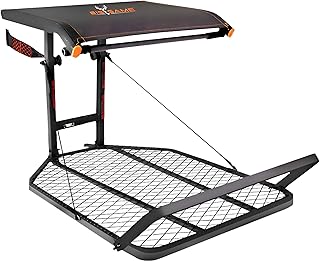
Pros
- Publishes a 300 pound capacity, unusual for a hang-on stand
- The only stand in this roundup whose listing states a harness is included
- Oversized platform gives a bowhunter room to stand, turn and draw
- Flex-Tek seat is more comfortable than the basic mesh slings in this class
- Adjustable bracket copes with a range of trunk shapes
Cons
- Climbing sticks are still a separate purchase
- Rating is mid-pack compared with the best-reviewed stands here
- Hanging it means working at height, which is the hardest install of any type
The Captain XC is the hang-on that answers the safety questions the rest of the category leaves open. Big Game states a 300 pound capacity, and the listing says a safety harness ships with the stand. It is one of only two products in this roundup that make that second claim, and the only hang-on among them, which on equipment that holds a person off the ground is a point worth rewarding.
The platform is the other selling point. Hang-on platforms are usually narrow enough that a bowhunter has to plan every foot placement, and this one is deliberately oversized. If you shoot a bow from elevation, floor space is the upgrade you notice on the very first sit, more than any seat padding.
Its owner rating sits mid-pack rather than at the top of this group, which is honest to report. Hang-ons attract criticism about bracket fit on irregular trunks and about noise from bare metal contact points, and the adjustable mount here is aimed at the first of those. It also, like every hang-on, arrives without a way to climb the tree.
Bottom line: the best-documented hang-on here on safety, and the one to pick if you shoot a bow and want a real platform under your feet.
- Type: hang-on tree stand
- Published weight capacity: up to 300 pounds
- Occupancy: 1 hunter
- Seat: Flex-Tek
- Platform: oversized
- Mounting: adjustable for different trunks
- Safety harness: stated as included
- Climbing sticks: not included
A harness in the box removes the most common excuse for hunting untethered, but it only helps if you wear it from the ground rather than after you reach the platform. Fit it at home, adjust the leg straps properly, and read the suspension relief instructions before opening day.
The included harness does not replace a lifeline. Add a rope that runs from the base of the tree to above the platform so you stay connected on every stick, which is where hang-on falls actually happen.
Pick this over the lighter hang-ons here if you shoot a bow, if you want the published capacity figure, or if you do not already own a harness. The larger platform and the included safety gear are what you are paying for.
Pick a lighter model instead if the walk in is long and every ounce counts, or if you plan to own several stands rather than one good one.

Pros
- Kick-back footrest is rare on a hang-on and changes how long your legs last
- XL comfort mesh seat is far more forgiving than a basic sling
- Oversized platform gives a bowhunter room to stand and turn
- Ships with the hooks and washers needed for the install
- Black finish avoids the shine that printed camo sometimes carries
Cons
- The listing does not publish a weight capacity
- Comfort features add weight compared with a stripped-down hang-on
- Climbing sticks are still a separate purchase
Most hang-on stands ask you to trade comfort for mobility. The Kickback LVL refuses that trade. It puts a kick-back footrest and an XL mesh seat on a hang-on frame, which means you can stretch out at eighteen feet on a stand that still weighs a fraction of a ladder stand.
The oversized platform is the feature bowhunters should focus on. Standing, turning and drawing from a narrow hang-on platform is the most common complaint in this category, and extra floor space fixes it more effectively than any accessory. The included hooks and washers are a small but genuine convenience, since hardware bags are the thing that always goes missing.
Two honest caveats. Hawk does not publish a weight capacity in this listing, which on a comfort-focused stand that invites you to bring more gear is exactly where you want a number. And the comfort features do add weight, so this is a stand you hang and leave for a week rather than one you carry every morning.
Bottom line: the most comfortable hang-on in this roundup and a strong pick for bowhunters, with the caveat that you need to confirm the capacity yourself.
- Type: hang-on tree stand
- Footrest: kick-back style, integrated
- Seat: XL comfort mesh
- Platform: oversized
- Finish: black
- Included hardware: mounting hooks and washers
- Published weight capacity: not stated in this listing
- Climbing sticks: not included
There is no shooting rail in the way, the platform is wide enough to set your feet properly before you draw, and the seat lets you sit long enough for a mature buck to make a mistake. That combination is what bowhunters actually want from elevation.
Hang it with clear shooting lanes at both quartering angles and practise a full draw from the platform before opening day, because a stand that feels roomy standing still can feel small at full draw.
Climbing sticks, a full body harness and a lifeline, none of which are in the box. The included hooks and washers cover the stand mount only.
Because this one is heavier than a stripped-down hang-on, plan to leave it hung for stretches rather than moving it daily, and take a pack frame rather than shoulder straps for the walk in.

Pros
- Twelve feet is the tallest freestanding option here, useful over tall cover
- Open design gives a full 360 degrees of shooting lanes
- Needs no tree at all, so it works on crop edges and clearcuts
- Swivel-style hunt seat suits rifle hunters covering wide ground
- Taller platform helps carry scent over open fields
Cons
- The listing does not publish a weight capacity
- Open frame gives no wind protection and hides no movement
- A tall tripod needs careful anchoring and a level base to be safe
Where the 6 foot tower blind hides you, the 12 foot open tripod exposes you and gives you everything back in shooting arc. There is no box and no walls, just a seat, a rail and three legs, which means you can swing on a deer anywhere in a full circle around the stand. For a rifle hunter working a big field or a cutover, that is worth more than concealment.
Height is the other argument. Twelve feet is double the tower blind here and enough to see over standing corn stubble, briars and young pine, and it lifts your scent stream further off the ground on flat open country where thermals do very little for you.
The exposure is real and needs planning. Every movement you make is visible against the sky, so brush the legs in, wear something that breaks up your outline, and accept that this is a stand for people who can sit still. Guide Gear does not publish a capacity figure, and on a 12 foot freestanding tripod the anchoring and the ground you set it on matter as much as the steel does. Level the base properly and stake all three legs.
Bottom line: the pick for open country rifle hunting where shooting arc beats concealment. Buy the enclosed tower blind instead if you are hunting with a child or hunting late season wind.
- Type: open tripod deer stand tower
- Published height: 12 feet
- Occupancy: 1 hunter
- Seat: hunt seat with shooting rail
- Frame: three-leg freestanding, no tree required
- Published weight capacity: not stated in this listing
- Safety harness included: not stated in this listing
Set it on field corners, food plot edges, clearcuts and pasture lines where a full circle of shooting lanes pays off. It is at its best for rifle hunters who need to swing on a moving animal rather than shoot one lane.
Put it out well ahead of the season and brush the legs in with local cover so the shape becomes normal to the deer using that field. Avoid skylining the platform on a ridge where every silhouette shows.
Level the ground under all three feet and stake or anchor each leg before you climb. A tall tripod on soft or sloped ground is the main failure mode for this type of stand, not the steel itself.
Wear a harness and stay tethered on the ladder as you would on a tree. Check leg bolts and the platform pins at the start of every season, and re-check anchoring after heavy rain or a wind event.
What to Look For in Deer Stands
Deer stands look interchangeable in a product grid and behave nothing alike in the woods. The six criteria below are the ones that decide whether a stand gets hunted hard for a decade or gets dragged back out of the timber after one miserable morning.
Stand Type: Ladder, Hang-On, Climbing, or Tripod
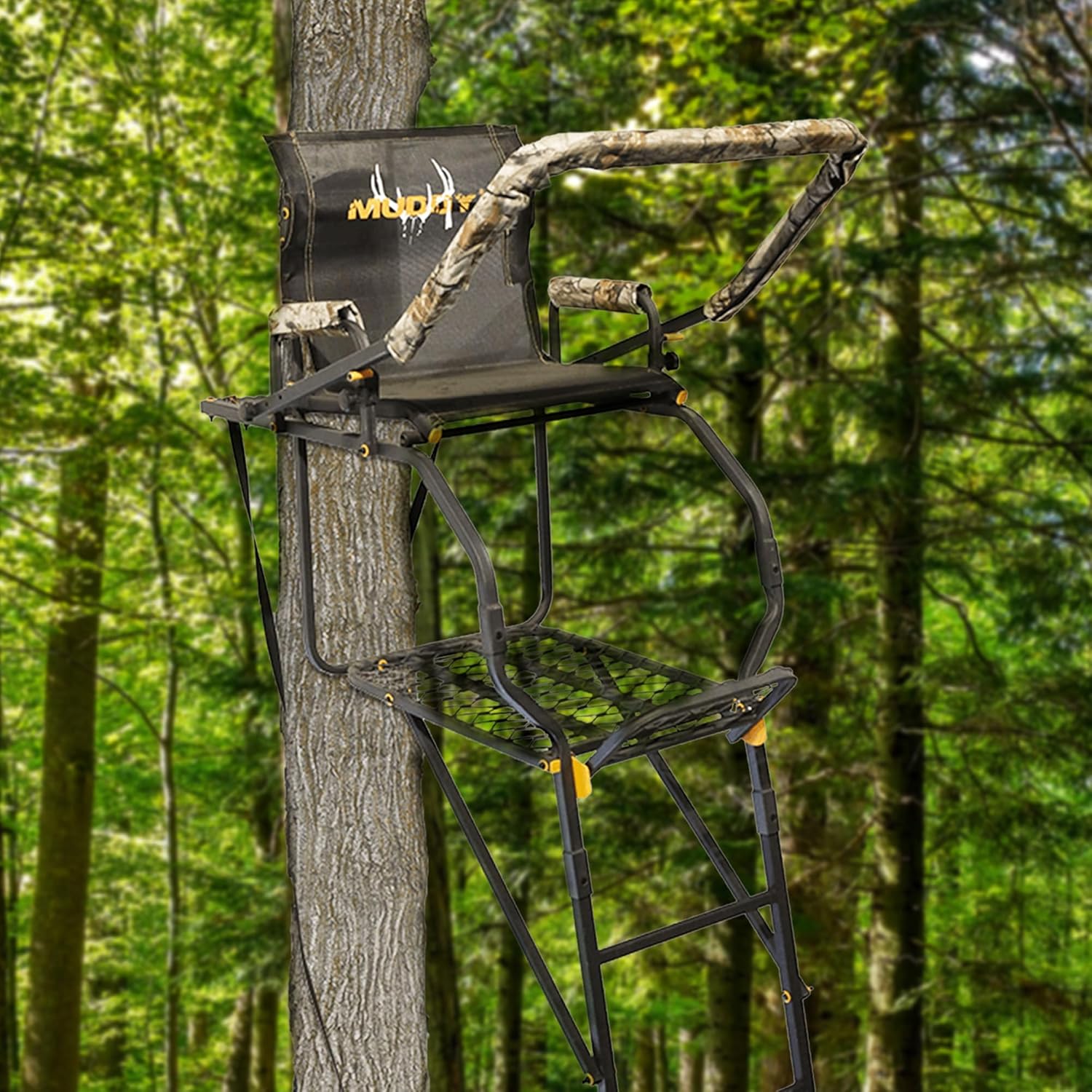
Ladder stands are the default for most whitetail hunters and for good reason. The ladder is the climbing method and the support structure at the same time, so there is no separate set of sticks to carry, and the stand feels planted once the ratchet straps are tight. The trade off is weight and permanence. A sixteen or twenty foot steel ladder stand is a two person assembly job, and once it is strapped to a tree it is going to live there for the season.
Hang-on stands flip that math. They are small, light, and cheap enough that a hunter can own five of them and hang one on every likely funnel on the property. What they do not include is a way to get up the tree, so budget for climbing sticks or steps on top of the stand itself. Hang-ons are also the most demanding type to install safely, since you are working at height while attaching the platform.
Climbing stands like the Summit Viper SD split into a platform and a seat and inch up the trunk with the hunter. That makes them the most mobile option and the only one that lets you change setups the same morning you read fresh sign. They also carry the tightest tree requirement on this page: a reasonably straight trunk with no limbs in the climbing zone. Tripods and quad pods solve the opposite problem. When there is no usable tree at all, which is the situation on most agricultural field edges and cutover pine ground, a freestanding tower is the only way to get elevation.
Weight Capacity and Published Safety Ratings
This is the number to read first, and it is also the number manufacturers are least consistent about publishing. Three of the stands here state a capacity outright: the Muddy Huntsman Deluxe is listed at 300 pounds, the Muddy Nexus XTL at 500 pounds for two hunters, and the Big Game Captain XC at up to 300 pounds. Every other listing in this roundup, including the top pick, does not publish a capacity figure in its product description, so treat the rating as unknown until you have the printed manual in hand.
Capacity is not just body weight. It is you, your clothing layers, your pack, your weapon, and anything you haul up on a rope. A hunter who weighs 220 pounds in July can easily be pushing 260 pounds of total load on a cold November sit. On a two person stand, read carefully whether the published number is per seat or for the whole platform, because those two readings are very far apart.
Weight rating also interacts with the tree. A stand rated for 500 pounds is only as good as the trunk it is strapped to, and a leaning or hollow tree will fail long before the steel does. Walk the tree before you commit to it, and re-check straps at the start of every season rather than assuming last year’s tension held through the freeze and thaw cycle.
Height, Platform Size, and Shooting Comfort

Published heights on this page run from a 6 foot tripod tower blind up to a 20 foot ladder stand, and higher is not automatically better. Height buys you a wider scent cone and a bit more forgiveness on movement, but it steepens the shot angle, shrinks the vital area you are aiming at, and makes recovery harder if the shot is marginal. Most bowhunters land somewhere in the 15 to 20 foot range for that reason, while rifle hunters on open ground often do fine much lower.
Platform size decides whether you can actually take the shot when it comes. A narrow hang-on platform is fine for a rifle rested on a rail, but a bowhunter who needs to stand, turn, and draw wants real floor space. Stands like the Hawk Kickback LVL and the Big Game Captain XC lead with oversized platforms for exactly this reason, and it is the single upgrade most hunters notice on the first sit.
Shooting rails are the other half of the equation and they cut both ways. A padded flip-back rail like the one on the Muddy Huntsman Deluxe gives a rifle hunter a rock steady rest and doubles as a safety bar during long sits. For a bowhunter the same rail is an obstacle, which is why several ladder stands in this group let you fold it back out of the way or remove it entirely.
Harness, TMA Standards, and Safe Setup
Falls, not gunshots, are the leading cause of serious injury among tree stand hunters, and almost all of them happen during the climb or the transition on and off the platform rather than while seated. A full body harness worn from the ground up, plus a lifeline running the length of the tree, removes most of that risk. Two products here state that fall arrest gear comes in the box: the Big Game Captain XC lists a safety harness, and the Muddy Huntsman Deluxe lists a full body fall arrest system with a climbing belt. Every other listing on this page stays silent on the subject, so assume you are buying the harness separately.
You will also see the Treestand Manufacturers Association, or TMA, referenced across this category. TMA maintains voluntary industry standards for stand construction and testing, and certified products normally carry a TMA label plus an included harness. None of the listings we pulled for this roundup publish a TMA certification in their product text, so if that certification is a requirement for you, verify it on the manufacturer’s own documentation rather than assuming it from the Amazon description.
Two habits matter more than any accessory. Never carry a weapon or a pack up the ladder, and use a haul line for everything instead. And do a full inspection every single season: straps degrade in sunlight, welds crack, and cables on hang-on stands stretch. A stand that was safe two Octobers ago is not automatically safe today.
Portability and How Many People It Takes to Set Up

Be honest about the crew you actually have. Twenty foot two person ladder stands like the Muddy Nexus XTL and the taller Guide Gear ladders are genuinely difficult and genuinely dangerous to raise alone, and manufacturers say as much. If you hunt public ground by yourself on a Tuesday morning, a heavy ladder stand is the wrong tool no matter how comfortable the seat is.
Solo hunters are better served by a climbing stand or a light hang-on. The Summit Ledge XT and the basic Guide Gear hang-on both fold flat enough to strap to a pack frame, and a climbing stand carries as one unit on your back. If you are walking gear a mile off the road you will also want a pack built for load rather than day trips, and our roundup of outdoor backpacks covers frames that handle awkward steel weight.
Tower stands sit at the far end of this scale. A tripod or quad pod is the heaviest thing on this page to assemble, usually takes two people and a couple of hours, and then never moves again. That is fine on your own land where you are building a season-long setup, and completely impractical anywhere else.
Concealment, Noise, and Seat Comfort
Steel on steel is what gets you busted. Deer will tolerate a strange silhouette in a tree far longer than they will tolerate a metallic clank at first light. Muddy markets a silencer treatment on its ladder stands for this reason, and hunters routinely add adhesive felt or foam to any bare contact point on a new stand before hanging it. It is a fifteen minute job that pays off every morning after.
Concealment is where enclosed towers pull ahead. A 6 foot tripod tower blind hides movement completely and blocks wind, which turns a marginal December sit into a workable one and makes it far easier to hunt with a child. An open tripod gives you 360 degree shooting lanes instead, at the cost of showing every shift you make. Screening a tree stand with a few limbs at your back does much the same job for free, and the same tarps hunters use for bushcraft shelters work as a cheap backdrop on an exposed setup.
Seat comfort sounds like a soft criterion until you have sat through a four hour rut vigil. Mesh seats breathe and fold flat for transport, padded seats with lumbar support hold up better on all-day sits, and a footrest changes how long your legs last more than any other single feature. If you plan to sit dawn to dark in November, weight the seat heavily.
| Stand type | Typical working height | Setup crew | Best suited to | Main trade off |
|---|---|---|---|---|
| Ladder stand | 15 to 20 ft | Two people | Season-long setups on land you control | Heavy, effectively permanent once hung |
| Hang-on stand | Hunter’s choice | One person, plus sticks | Owning several and hunting the wind | Climbing method sold separately |
| Climbing stand | Hunter’s choice | One person | Mobile hunters and public ground | Needs a straight, limb-free trunk |
| Tripod or tower blind | 6 to 12 ft | Two people, longer build | Field edges with no usable tree | Heaviest build, never moves again |
Why You Should Trust Us
We build these roundups from the record real buyers leave behind. Every stand on this page cleared a minimum rating and a minimum volume of customer ratings before it was eligible, which filters out the brand new listings and the one-off imports that have not been through a season in the woods yet. From that pool we sort by rating strength and then curate by hand so the list covers genuinely different stand types instead of eleven near-identical ladder stands.
We do not claim to have hung every one of these stands ourselves. What we do is read the manufacturer specifications closely, compare them against what owners report over time, and refuse to fill in numbers that are not published. That is why this article repeatedly tells you a weight capacity is unstated rather than quoting a figure we found on a forum. On equipment that holds a person twenty feet in the air, a confident guess is worse than an honest gap. Our editorial approach across every category is the same, and you can see the full library on our articles page.
Final Thoughts
Best overall goes to the Summit Treestands Viper SD Climbing Treestand. It carries the highest customer rating in this group by a clear margin, it goes where the deer are instead of where you guessed they would be in August, and it packs out as one unit on your back. The caveat is real and worth repeating: you need a straight trunk without limbs in the climbing zone, and if your ground is all crooked oaks or planted pine, this is the wrong stand no matter how good the rating is.
Best value is the plain Guide Gear Hang On Tree Stand with Seat and Foot Platform. It is the least complicated product on this page, it holds a strong rating, and it is light and simple enough that hanging several across a property is a realistic plan rather than a one-stand commitment. Pair it with a set of climbing sticks and a harness and you have a mobile system you can move by yourself whenever the wind changes.
For a specific use, three picks stand out. If you hunt with a partner or a kid, the Muddy Nexus XTL publishes a 500 pound capacity across 20 feet and gives both hunters a padded rail and a footrest. If you rifle hunt a field edge where there is simply no tree, the Guide Gear 6 Foot Tripod Hunting Tower Blind gets you off the ground and out of the wind. And if you want one comfortable ladder stand to leave over a food plot all season, the Muddy Huntsman Deluxe is the most complete single-hunter package here, with a published 300 pound rating, lumbar support and a flip-back shooting rail. Whichever way you go, budget for the harness and the lifeline in the same order, and keep an eye on our outdoor gear coverage for the rest of the kit.
Frequently Asked Questions
How high should deer stands be hung for whitetail deer?
Most hunters settle between 15 and 20 feet, which is where the ladder stands in this roundup are built to sit. That range keeps you above a deer’s normal line of sight without making the shot angle so steep that arrow or bullet penetration suffers. On open agricultural ground, hunters often go lower, and a 6 to 12 foot tower is plenty when the cover is thin and the shot distances are long.
Are ladder stands safer than climbing stands?
Once you are seated, a properly strapped ladder stand is the more stable platform of the two, because the ladder itself carries load down to the ground. The risk profile shifts to the installation: raising a 17 or 20 foot ladder stand is where people get hurt, and it should never be attempted alone. A climbing stand puts the risk in the climb instead, spread across every trip up and down. Neither type is safe without a full body harness and a lifeline, and that is the variable that actually moves the numbers.
Do I still need a safety harness with modern deer stands in 2026?
Yes, and it should be on before your boots leave the ground. Falls remain the most common serious injury in tree stand hunting, and the majority happen during ascent, descent, or the moment of stepping onto the platform, which is exactly when an unworn harness is useless. Only two listings in this roundup state that a harness ships in the box, so for most of these stands plan on buying one. You can compare more of the gear that goes with an elevated setup in our sports and outdoors category.
Can one person set up a two-man ladder stand?
You should not try. Two person ladder stands in the 17 to 20 foot class weigh enough that raising the assembly against a tree becomes uncontrollable for a single hunter, and the manufacturers say to use two people for a reason. If solo setup is your reality, choose a climbing stand or a light hang-on with sticks. Both are designed around one hunter working alone and neither requires you to lever a long steel section upright.
How long can deer stands stay in the woods?
Most manufacturers advise taking stands down at the end of the season, and the reason is not theft. Straps and cables degrade under sun and moisture, steel rusts at the weld points, and a growing tree will slowly swallow a strap that is left in place for years. If a stand must stay out, inspect and replace the straps annually and check every weld before the first climb. Many hunters also pull stands to keep them from being claimed or damaged on shared and public ground.
What is the difference between a tripod stand and a tower blind?
An open tripod is a seat on three legs with a rail, giving you a full 360 degrees of shooting lanes and nothing to hide behind. A tower blind puts an enclosed box on top of a similar frame, so you trade some of that shooting arc for wind protection and near total concealment of your movement. Open tripods suit rifle hunters who need to swing on a moving animal. Enclosed towers suit long cold sits and hunting with children, where staying still is the hard part.

Write Your Review
No reviews yet. Be the first to share your experience!