

Reaching the far end of a garden bed, the top of a fence line, or the back corner of a lawn without dragging a hose behind you takes the right tool, and not every sprayer on the shelf is built for it. A cheap trigger bottle sputters out after a few feet, while a well-built pump sprayer with the right pressure system, hose length, and nozzle can send a steady stream well past arm’s reach. We rounded up 7 pump sprayer for distance picks that stand out for real-world spraying distance, from backpack rigs with piston pumps to compact battery-powered units. Our top pick is the Chapin 4-Gallon ProSeries Backpack Sprayer for its steady piston pressure and large 4-gallon capacity that covers real distance without constant refilling. If you’re comparing lawn care tools more broadly, our guide to the best lawn mowers is a useful next stop.

Pros
- 4-gallon tank covers large areas between refills
- Piston pump builds strong, steady pressure for long-range spraying
- 3-stage filtration keeps the nozzle from clogging
- Adjustable brass, poly, and fan nozzles included
- Padded backpack straps reduce arm fatigue on long jobs
Cons
- Full tank is heavy, over 30 pounds
- Bulkier than a handheld sprayer for small spaces
The Chapin 4-Gallon ProSeries is a backpack-style pump sprayer built for anyone who needs to cover a big yard, a row of garden beds, or a small orchard without stopping to refill every few minutes. The chemical-resistant poly tank holds enough herbicide, fertilizer, or plain water to treat a large property in one pass, and the padded shoulder straps shift the weight off your arm and onto your back and hips.
The piston pump is the main reason this sprayer earns a spot at the top of this list. It builds and holds pressure well after each stroke, which translates into a longer, steadier stream that reaches farther than most handheld or single-gallon pump sprayers can manage. The 3-stage filtration system, made up of a tank strainer, filler basket, and nozzle filter, does a genuinely good job keeping debris out of the wand, so the spray pattern stays consistent instead of sputtering.
Chapin includes adjustable brass, poly, and fan nozzles in the box, so switching from a fine mist for foliar feeding to a hard stream for spot-treating weeds along a fence line takes seconds, not a trip back to the shed.
The tradeoff for that extra capacity is weight. A full 4-gallon tank pushes past 30 pounds, and shorter or smaller users may find the pump handle awkward to work through a long spraying session. It is also more sprayer than most people need for container plants or a small patio garden.
Bottom line: if the goal is covering real distance and real square footage without refilling every five minutes, this backpack sprayer earns its price tag; buyers with a small yard or patio will get more practical value from a lighter, handheld pump sprayer further down this list.
- Tank capacity: 4 gallons
- Pump type: piston pump, backpack-mounted
- Tank material: chemical-resistant poly
- Filtration: 3-stage (strainer, filler basket, nozzle filter)
- Nozzles included: adjustable brass, poly, and fan nozzles
- Carry system: padded, adjustable shoulder straps
This sprayer is built for homeowners with a half-acre or larger lot, anyone managing a vegetable garden with multiple rows, or side-hustle lawn care operators who need to treat several properties in a day. If the job list includes spraying a fence line, tree rows, or a large lawn for weeds, this is the size and pump style that gets it done without constant refilling.
Chemical-resistant poly resists degrading from most lawn and garden chemicals, but the tank should still be rinsed with clean water after every use, especially when switching between herbicide and fertilizer, to avoid cross-contamination that can damage plants. Store the sprayer with the pressure released and the tank empty so the seals do not take a set over the winter.

Pros
- 52-inch hose extends reach well beyond the tank
- 5 interchangeable nozzles for different spray patterns
- Budget-friendly price for the features included
- Built-in filters help prevent nozzle clogs
- Lightweight and easy to carry by hand or strap
Cons
- Small 1-gallon tank needs frequent refills on larger jobs
- Plastic fittings feel less durable than metal-pump sprayers
The PetraTools HD101 is a compact 1-gallon pump sprayer built around one idea: give buyers reach and versatility without the price tag of a backpack rig. The 52-inch hose is the standout feature here, it lets the tank sit on the ground or hang from the included handle while the wand does the work, so users can spray around raised beds, along fence lines, or into hard-to-reach corners without dragging the whole tank behind them.
Five interchangeable nozzles come in the kit, covering everything from a fine mist for seedlings to a focused jet stream for reaching tall shrubs or the top of a trellis. Built-in filters at the tank opening and the wand tip cut down on clogging, which matters more on a budget sprayer where a cheap nozzle is often the first thing to fail.
The pump itself is a simple piston design that builds usable pressure in a handful of strokes, and the carry handle keeps the tank steady when it is not strapped to a back or shoulder.
A 1-gallon tank means more refills on a larger property, and the plastic hardware is not going to survive being dropped on concrete the way a commercial-grade sprayer might.
Bottom line: for anyone who wants extended reach and multiple nozzle options without paying backpack-sprayer money, the HD101 kit delivers real value; buyers with more than a quarter acre to treat should size up to a larger tank.
- Tank capacity: 1 gallon
- Hose length: 52 inches
- Nozzles included: 5 interchangeable nozzles
- Pump type: piston pump, handheld
- Filtration: built-in tank and wand filters
- Carry: shoulder strap and carry handle
Shoppers comparing 1-gallon sprayers should look past tank size and focus on hose length and nozzle count, since those two specs decide how much ground a small tank can actually cover. A longer hose lets the tank stay put while the wand reaches further, which is exactly the tradeoff this kit is built around.
Fill the tank no more than three-quarters full to leave room for air pressure, pump the handle until resistance builds, then squeeze the wand trigger and pick the nozzle that matches the job: a wide fan for broad lawn coverage, a narrow stream for spot treatments at distance. Re-pump every few minutes as pressure drops to keep the spray pattern consistent.

Pros
- 50-inch hose adds meaningful reach beyond the wand
- Pressure relief valve reduces spray-back when opening the tank
- 3 nozzles included for different spray needs
- Translucent tank shows fill level at a glance
- Comfortable shoulder strap for a mid-size tank
Cons
- Pressure fades faster than a backpack piston pump on long runs
- Still needs refilling on larger properties
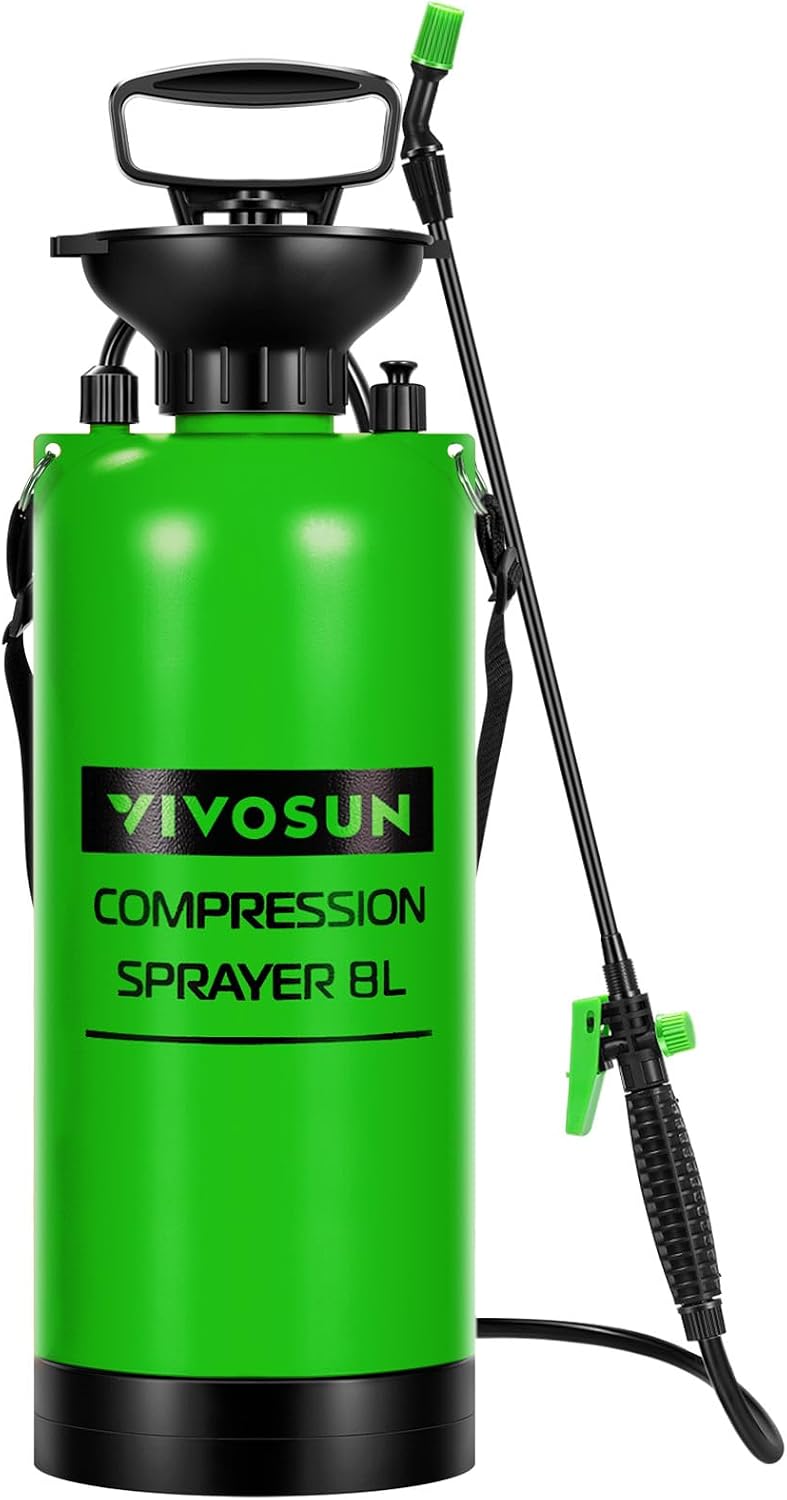
The VIVOSUN 2.1-gallon pump sprayer splits the difference between a small handheld bottle and a full backpack rig, giving buyers a mid-size tank paired with a 50-inch hose that adds real reach beyond the nozzle itself.
Three nozzle heads ship with the sprayer, so switching between a fine mist for seedlings and a firm stream for reaching the far side of a garden bed does not require buying separate accessories. A pressure relief valve is a small but useful detail, it lets users bleed off built-up pressure before opening the tank, which cuts down on the sudden spray-back that ruins a lot of pump sprayers over time.
The shoulder strap makes the 2.1-gallon size comfortable to carry around a mid-size yard, and the translucent tank makes it easy to see the fill level without opening the lid.
At just over 2 gallons, this tank still needs refilling on anything larger than a standard suburban lot, and the pump pressure fades faster than a backpack piston pump on long spray runs.
Bottom line: for gardeners who want more hose-driven reach than a basic 1-gallon sprayer but do not need a full 4-gallon backpack rig, this is a sensible middle-ground pick.
- Tank capacity: 2.1 gallons / 8 liters
- Hose length: 50 inches
- Nozzles included: 3 nozzles
- Safety feature: pressure relief valve
- Tank material: translucent, chemical-resistant plastic
- Carry: adjustable shoulder strap
Because the hose is longer than the wand on most compact sprayers, it works best to set the tank down on a stable, level spot and walk the hose out to the work area rather than carrying the full tank while spraying. Pump a few extra strokes before starting a long pass so pressure does not drop off halfway across a bed.
Always use the pressure relief valve to vent the tank before unscrewing the cap, especially after spraying anything under high pressure; skipping this step is a common way users get sprayed with whatever chemical was in the tank. Rinse the hose and nozzles with clean water after each use to keep the pressure relief valve from gumming up.

Pros
- Motorized pump delivers constant pressure with no manual pumping
- Less arm fatigue over long spraying sessions
- Removable, rechargeable battery
- Even, consistent spray pattern from full tank to empty
- 2-gallon capacity suits most suburban yards
Cons
- Higher price than a comparable manual pump sprayer
- Sprayer is unusable if the battery dies mid-job without a spare
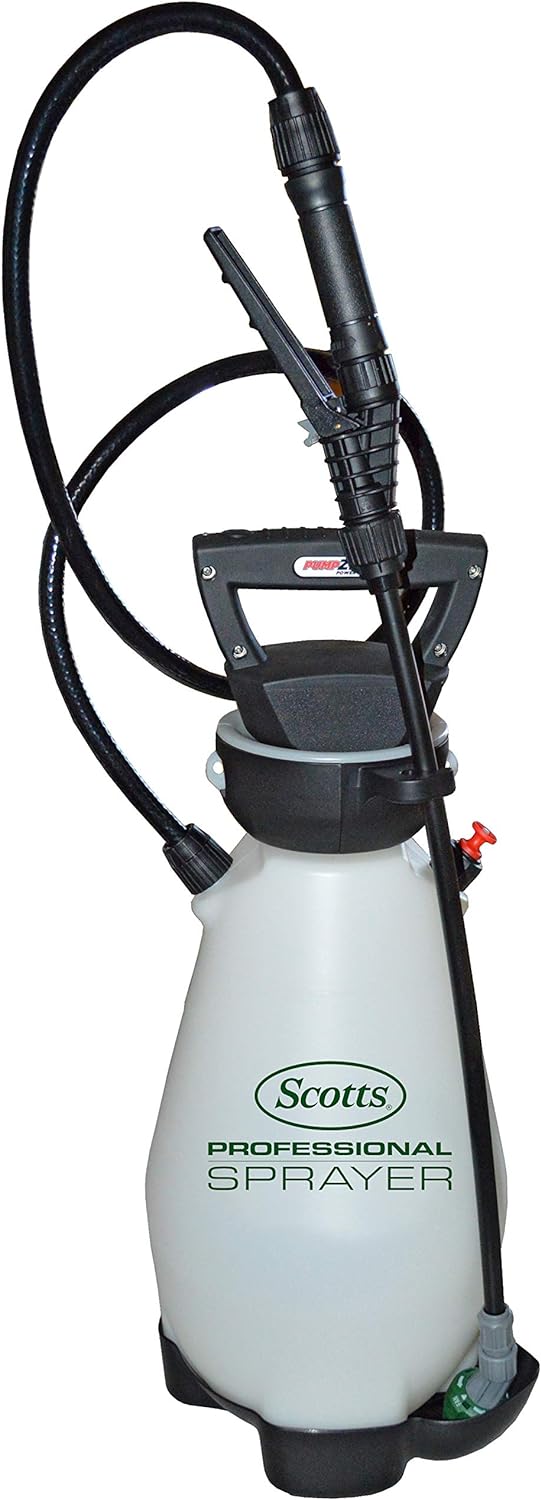
The Scotts 2-gallon battery-powered sprayer swaps the manual pump handle for a rechargeable lithium-ion motor, which changes the whole spraying experience: instead of stopping every few minutes to re-pump, the motor keeps pressure constant from the first squeeze to the last.
That constant pressure is the real selling point for anyone focused on distance, since a hand pump naturally loses force as the tank empties between strokes, while the battery-driven system holds a steady spray pattern the entire time. Scotts calls this Pump Zero Technology, and in practice it means less arm fatigue and a more even application across a lawn or garden bed.
The 2-gallon tank is a reasonable size for a suburban yard, and the rechargeable battery is removable, so a spare battery keeps the sprayer working through a bigger job without waiting for it to recharge.
Battery-powered sprayers cost more up front than a comparable manual pump model, and the sprayer becomes dead weight once the battery runs out mid-job unless a backup battery is on hand.
Bottom line: for anyone who finds manual pumping tiring or inconsistent, this battery-powered option delivers steadier pressure and less physical effort, at a price premium over a standard pump sprayer.
- Tank capacity: 2 gallons
- Power source: rechargeable lithium-ion battery
- Technology: Pump Zero constant-pressure system
- Pump type: motorized, no manual pumping required
- Carry: shoulder strap
Charge the battery fully before a big job and consider a spare battery for properties larger than a standard lot, since the motor draws down charge continuously rather than only when pumped. Because pressure stays constant, it is easy to overspray a small area out of habit, so keep the trigger squeezes short and controlled the way you would with a garden hose.
Keep the battery and charging contacts dry, and store the sprayer with the battery removed if it will sit unused for more than a few weeks to protect the lithium-ion cell. As with any pump sprayer, rinse the tank with clean water after switching between different chemicals.
Pros
- Straightforward 2-gallon manual pump sprayer at a fair price
- Adjustable nozzle covers mist to stream
- Comfortable shoulder strap for extended carrying
- Builds pressure quickly for a manual pump
- Versatile enough for gardening and household cleaning
Cons
- No hose, so the tank has to be carried close to the work
- Pressure fades between pump strokes like any manual sprayer
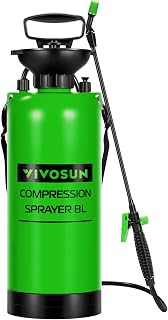
The VIVOSUN 2-gallon pump sprayer is the kind of straightforward, no-frills sprayer most households actually need: a manual piston pump, a 2-gallon tank, and an adjustable shoulder strap, without extra features that push up the price.
The pump builds pressure quickly and holds it well for a manual unit, which is enough to send a steady stream several feet for spot-treating weeds or reaching the middle of a garden bed. The nozzle adjusts from a fine mist to a focused stream with a simple twist, covering most home gardening and household cleaning tasks without swapping parts.
At 2 gallons, the tank is light enough to carry full without a backpack harness, and the shoulder strap makes hauling it around the yard comfortable for an hour or more.
It lacks the hose or extended reach of the pricier sprayers on this list, so users have to carry the tank closer to the work rather than setting it down and walking a hose out. Pressure also fades between pump strokes, same as any manual sprayer.
Bottom line: for general-purpose yard work, watering, and light household cleaning, this is a solid, affordable pump sprayer without the extra reach features that push other models up in price.
- Tank capacity: 2 gallons
- Pump type: manual piston pump
- Nozzle: adjustable, mist to stream
- Carry: adjustable shoulder strap
- Uses: garden watering, spot spraying, household cleaning
This sprayer suits anyone who wants one reliable tool for watering container plants, spot-treating weeds, and the occasional household cleaning job, without needing the extended hose or battery power that add cost to other models on this list.
A 2-gallon manual sprayer like this one is the middle ground in tank size: big enough to avoid constant refills for small to mid-size yards, but light enough to carry without a backpack harness. It is a sensible default pick for anyone not sure how much sprayer they actually need.

Pros
- Seals rated for bleach and harsh cleaning chemicals
- 34-inch hose reaches fences, decks, and tall walls
- Built-in filtration keeps the nozzle from clogging
- Lightweight 1-gallon tank is easy to handle one-handed
- Purpose-built for mold and sanitizing jobs other sprayers cannot handle
Cons
- Small tank needs frequent refills
- Shorter hose than mid-size and backpack models
The Chapin 1-gallon sprayer is purpose-built around chemical resistance rather than raw distance, using seals and a tank material designed to hold up against bleach, sanitizers, and other harsh cleaning solutions that would degrade a standard sprayer's gaskets over time.
The 34-inch hose gives it enough reach to spray down a fence, a deck, or a mold-prone wall section without carrying the tank along the whole surface, and the built-in filtration keeps the nozzle clear even when spraying gritty fungicide mixes. Because the seals are rated for bleach, this is one of the few sprayers on this list safe to use for disinfecting or mold treatment jobs, not just lawn and garden chemicals.
The 1-gallon size keeps the sprayer light and easy to maneuver one-handed while the other hand steadies a ladder or reaches into a tight space.
The small tank means frequent refills for anything beyond spot treatments, and the hose is noticeably shorter than the mid-size and backpack sprayers on this list.
Bottom line: this is the pick for bleach, sanitizing, and mold-treatment jobs specifically, where a standard sprayer's seals would fail; for general lawn and garden spraying, a larger tank elsewhere on this list will cover more ground per fill.
- Tank capacity: 1 gallon
- Hose length: 34 inches
- Seal material: chemical-resistant, rated for bleach
- Filtration: built-in filter
- Recommended uses: mold treatment, sanitizing, fungicides, cleaners
Even with bleach-rated seals, this sprayer should be rinsed thoroughly with clean water after each use, and it is worth keeping one sprayer dedicated to bleach and cleaning solutions rather than rotating it with herbicides or fertilizers to avoid any cross-contamination.
This sprayer is aimed at anyone dealing with mold, mildew, or algae on siding, decks, or fences, or who wants a dedicated sanitizing sprayer for outdoor surfaces, rather than someone looking for an all-purpose lawn and garden tool.

Pros
- True one-hand operation, pump and trigger together
- Ergonomic grip reduces hand fatigue on repeated spot jobs
- Durable build quality for its size
- Ideal for houseplants and small spot treatments
- Compact enough to keep on hand for quick jobs
Cons
- 1-liter tank is too small for yard-wide coverage
- No hose, limited spray distance compared to larger sprayers
The Solo 418 is a compact 1-liter pressure sprayer designed to be operated entirely with one hand, pump and trigger included, which makes it a different tool from the tank-and-hose sprayers elsewhere on this list.
Its small size is the point: this is built for precision spot work like treating a few weeds in a flower bed, misting houseplants, or applying a small batch of fertilizer concentrate, not covering a full yard. The ergonomic grip keeps the pump and trigger within reach of one hand, leaving the other hand free to hold back branches or steady a plant.
Build quality on the Solo 418 tends to hold up over repeated use, with simple, durable parts rather than an overload of features.
A 1-liter tank is not built for distance or coverage. There is no hose, and the spray radius is naturally shorter than any of the tank-and-wand sprayers on this list.
Bottom line: this is the pick for close-range precision work, not for reaching across a yard; pair it with a larger sprayer from this list for bigger jobs and keep the Solo 418 on hand for quick spot treatments.
- Tank capacity: 1 liter
- Operation: one-hand pump and trigger
- Grip: ergonomic design
- Best suited for: spot treatments, small-batch spraying, houseplants
This sprayer fits gardeners who need a small, always-ready sprayer for spot-treating a handful of weeds, misting houseplants, or applying a small batch of fertilizer, rather than someone trying to cover an entire lawn.
Because the tank is small, mix concentrate to the correct ratio for a 1-liter batch rather than eyeballing it from a larger recipe, and expect to refill more often than with a 1-gallon or larger sprayer if working across more than a small bed.
Pump Sprayer For Distance Buying Guide
Every sprayer in this roundup can put out water or a mixed solution, but capacity, pump type, and hose length are what actually decide how far and how evenly it sprays. Two sprayers with nearly identical tank sizes can perform very differently in the yard once you factor in how the pump builds pressure and whether a hose lets the wand travel beyond the tank itself. Here’s what to weigh before picking one for your yard.
Tank Size vs. Portability
Tank size is the first tradeoff most buyers run into. A 1-liter or 1-gallon sprayer is light enough to carry one-handed and is ideal for spot treatments, but it means refilling often on anything bigger than a small bed. A 2 to 2.1-gallon tank is the sweet spot for most suburban yards, big enough to cover a typical lot without turning into a workout. Backpack sprayers in the 4-gallon range trade some weight for far fewer refill trips, which matters most on larger properties or when treating a full row of garden beds in one pass.
There’s no single right answer here. Someone treating a handful of container plants gets more practical value from a light 1-gallon unit than a heavy backpack rig they’ll rarely fill all the way. It also helps to think about how often you’ll actually use the sprayer. A weekend gardener spot-treating weeds a few times a season may prefer the smaller, easier-to-store option, while anyone managing a large lawn on a regular schedule will get more value from the bigger tank over a full season of use, even accounting for the extra weight. Storage space is worth a thought too: a bulky 4-gallon backpack unit needs more shelf or hook room in a shed or garage than a 1-gallon or 1-liter sprayer that can hang on a wall peg or sit in a small bin.
Pump Type and Pressure Consistency
Distance comes down to pressure, and pressure comes down to the pump. Manual piston pumps, especially on backpack sprayers, build strong pressure with each stroke and hold it well, which is why backpack units tend to throw a stream farther than small handheld sprayers. Battery-powered sprayers take a different approach entirely: a motor keeps pressure constant from a full tank to an empty one, so there’s no fade-and-repump cycle to manage.
Basic handheld pump sprayers still work fine for shorter jobs, but expect pressure to drop noticeably between pump strokes, which shortens effective spray distance as you work. If distance is the priority and you’re not set on saving weight, a backpack piston pump or a battery-powered motor will consistently outperform a small handheld unit, simply because both are built to sustain pressure over a longer run rather than a quick burst.
Hose Length and Nozzle Options
A longer hose changes how a sprayer performs almost as much as the pump does. Models with a 50-inch or longer hose let the tank sit still on the ground while the wand does the reaching, which is often more effective for covering distance than relying on the nozzle’s spray radius alone. Sprayers without a hose require carrying the whole tank closer to the target, which limits how far you can comfortably work from one spot. This matters most around raised beds, dense shrubs, or fence lines where walking the whole tank alongside you isn’t practical.
Nozzle choice matters just as much. A focused stream setting is what actually sends liquid the farthest, while a fan or mist setting trades distance for even coverage across a wider area. Sprayers that ship with multiple nozzle heads, rather than one fixed nozzle, give you the flexibility to switch between the two without buying separate parts. Brass nozzles also tend to hold a tighter, more consistent stream than plastic ones over repeated use, which is worth checking if long-range spot treatment is the main job.
Tank Material and Chemical Compatibility
Not every sprayer is rated for every liquid. Standard poly tanks handle water, fertilizer, and most herbicides fine, but bleach and strong sanitizing solutions can degrade generic seals over time. If mold treatment or disinfecting is part of the plan, look for a sprayer specifically rated for chemical resistance rather than assuming any pump sprayer will hold up. For weed control specifically, pairing the right sprayer with the right formula matters too, and our non-selective herbicide guide covers that side of the job.
It’s worth keeping a dedicated sprayer for harsh chemicals rather than rotating one tank between bleach, herbicide, and fertilizer duty. Even with a thorough rinse, trace residue can carry over and damage sensitive plants, so a second inexpensive sprayer set aside for cleaning jobs is cheap insurance against a ruined flower bed.
Comfort and Carry System

How a sprayer feels after twenty minutes of use matters as much as its specs on paper. Backpack models with padded, adjustable straps distribute weight across the shoulders and hips instead of one arm, which makes a real difference on a full tank over a long session. Handheld sprayers with a simple shoulder strap are lighter overall but concentrate more of that weight on one side of the body.
Compact one-hand sprayers skip straps entirely and rely on an ergonomic grip instead, which works well for short spot jobs but isn’t meant for carrying a full tank across a large yard. Matching the carry system to how long a typical session runs will save more strain than any single spec on the list. It’s also worth matching the sprayer’s scale to the actual job: overbuying a heavy-duty backpack rig for a small patio garden means hauling around capacity that will rarely get used, while a sprayer sized for a small yard will mean frequent refill trips on a bigger property.
| Sprayer | Tank Size | Hose Length | Pump Type | Best For |
|---|---|---|---|---|
| Chapin 4-Gallon ProSeries Backpack | 4 gallons | Wand, no separate hose | Manual piston (backpack) | Large yards and long spray runs |
| PetraTools HD101 Pro Kit | 1 gallon | 52 inches | Manual piston (handheld) | Budget reach and versatility |
| VIVOSUN 2.1-Gallon with Hose | 2.1 gallons | 50 inches | Manual piston (handheld) | Mid-size yards needing extra reach |
| Scotts 2-Gallon Battery Powered | 2 gallons | Wand, no separate hose | Motorized, constant pressure | Consistent pressure with less effort |
| VIVOSUN 2-Gallon Pump Sprayer | 2 gallons | Wand, no separate hose | Manual piston (handheld) | General all-purpose yard use |
| Chapin 1-Gallon Chemical-Resistant | 1 gallon | 34 inches | Manual piston (handheld) | Bleach, mold, and sanitizing jobs |
| Solo 418 One-Hand Sprayer | 1 liter | Wand, no separate hose | Manual piston (one-hand) | Close-range spot treatments |
Why You Should Trust Us
We built this list by comparing real product listings, verified customer ratings, and manufacturer specifications for tank capacity, pump type, hose length, and included nozzles, since those specs are what actually decide how far and how evenly a sprayer performs. We prioritized sprayers with strong, consistent review histories over unproven models, and we grouped picks by use case rather than assuming one sprayer fits every yard. Our focus stayed on the features that affect spray distance and coverage specifically, not marketing claims.
We also cross-checked brand names against manufacturer listings rather than relying on generic marketplace titles, since sprayer listings are often light on details beyond the headline spec. Where a listing didn’t clearly state a feature like hose length or nozzle count, we left it out of our comparisons rather than guessing, so every spec in this guide reflects what the product actually includes.
Final Thoughts
For most people covering a real yard, the Chapin 4-Gallon ProSeries Backpack Sprayer is the strongest overall pick on this list. Its piston pump holds pressure well after each stroke, the 4-gallon tank means fewer refills, and the padded straps make longer spraying sessions manageable. Anyone who wants strong reach without paying backpack-sprayer prices should look at the PetraTools HD101 Pro Kit, which pairs a 52-inch hose and five nozzles with a far more affordable 1-gallon tank.
If manual pumping isn’t appealing, the Scotts 2-Gallon Battery Powered Sprayer keeps pressure constant without any repumping, and the VIVOSUN 2.1-Gallon model with its 50-inch hose is a solid middle ground for yards that don’t need a full backpack rig. The standard VIVOSUN 2-Gallon Pump Sprayer covers most everyday watering and spot-spraying tasks without the added cost of a hose or battery, making it a dependable default for buyers who aren’t sure how much sprayer they actually need.
For jobs outside general lawn and garden work, like disinfecting a deck or treating mold, the Chapin 1-Gallon Chemical-Resistant sprayer is purpose-built for it, while the compact Solo 418 is worth keeping on hand for close-range spot treatments where a larger sprayer would be overkill. None of these are one-size-fits-all tools, so matching the pick to the actual size of the job will do more for spray distance than any single spec. Once your sprayer is dialed in, it pairs well with tools from our patio, lawn, and garden picks for a fuller yard care setup, and you can browse more buying guides on our articles page.
FAQs
What makes a pump sprayer spray farther?
Distance mostly comes down to pump pressure and nozzle setting. A piston pump that holds pressure well after each stroke, or a battery-powered motor that keeps pressure constant, will throw a stream noticeably farther than a basic trigger bottle. Switching the nozzle to a focused stream setting instead of a wide mist also extends reach.
Do I need a hose attachment for better reach?
A hose isn’t required, but it helps. Sprayers with a 50-inch or longer hose let you set the tank down and walk the wand out to the work area, which often covers more ground than relying on the nozzle’s spray radius alone from a tank you’re carrying.
Are backpack sprayers worth it over handheld models in 2026?
For larger properties, yes. A backpack sprayer’s bigger tank and dedicated piston pump mean fewer refills and steadier pressure over a long spraying session. For a small yard or container garden, a handheld or hose-equipped sprayer is usually lighter and easier to manage without the extra bulk.
Can I use the same sprayer for herbicide, fertilizer, and bleach?
It’s better not to. Herbicides and fertilizers are fine in most standard poly tanks, but bleach and strong sanitizers can wear down generic seals faster. If you need to treat mold or disinfect a surface, use a sprayer specifically rated for chemical resistance, and rinse thoroughly between uses regardless of which sprayer you own.
How do I keep a pump sprayer for distance from losing pressure mid-job?
On a manual pump sprayer, re-pump every few minutes before pressure drops off noticeably rather than waiting until the stream weakens. On a battery-powered model, keep the battery charged and consider a spare for larger jobs, since pressure stays constant only as long as the battery has charge. For more yard maintenance comparisons, see our pressure washer wand guide.
Is a battery-powered sprayer better than a manual one?
It depends on priorities. A battery-powered sprayer delivers steadier pressure with far less physical effort, which is a real advantage for longer jobs or anyone who finds manual pumping tiring. A manual pump sprayer costs less, has no battery to charge or replace, and is generally simpler to maintain over the long run, which still makes it the practical choice for smaller or occasional spraying needs.
Write Your Review
No reviews yet. Be the first to share your experience!