

If you are fighting weeds that push through gravel driveways, crack open sidewalks, or take over a fence line, a good non selective herbicide clears the whole area instead of picking and choosing. These products kill almost any green plant they touch, which makes them the fastest way to reclaim paths, patios, and beds you plan to replant. Unlike a selective weed killer that spares your grass, a non-selective formula is built for total clearing, so it shines exactly where you want nothing to grow at all. We compared 6 of the most trusted options for September 2026 so you can match the right formula to your yard. Our top pick is the Compare-N-Save 41% Glyphosate Concentrate for its proven kill on tough weeds at a very low cost per gallon once mixed.
Every product below is a real, widely sold option backed by thousands of genuine customer ratings. We leaned on high-review concentrates and ready-to-use sprays from Compare-N-Save, RM43, Hi-Yield, Spectracide, and BioAdvanced, then sorted them by how well they fit common jobs around the home lawn and garden. Because these kill everything, the guide also explains where to use them and how to keep drift away from plants you want to keep. Whether you are clearing a single stubborn patch or maintaining a long gravel drive, there is a formula and a format here that fits the task without wasting product or money.

Pros
- High 41 percent glyphosate strength
- Very low cost per treated area once mixed
- Kills tough perennial weeds to the root
- No lasting soil residual, so you can replant
Cons
- Requires a separate pump sprayer
- Takes one to two weeks for full results
The Compare-N-Save Concentrate is the workhorse of the non-selective category, built around 41 percent glyphosate, the same active strength found in professional formulas. It is aimed at homeowners who need to clear large areas of driveways, gravel, garden beds, and fence lines rather than spot-treat a single weed.
Its biggest strength is value. Because it is a true concentrate, a few ounces mixed into a gallon of water covers a wide area, driving the cost per treated square foot far below any ready-to-use spray. As a systemic glyphosate product, it travels down into the root so perennial weeds do not simply regrow.
The tradeoffs are patience and equipment. You need your own pump sprayer, and full kill takes one to two weeks rather than hours. It also has no soil residual, which is a plus if you plan to replant but means new weeds can sprout later.
Bottom line: for most homeowners clearing a meaningful area, this is the best non-selective herbicide overall, combining proven strength with the lowest running cost in the group.
- Active ingredient: 41 percent glyphosate
- Type: mix-your-own concentrate
- Size: 1 gallon
- Soil residual: none
- Full results: 1 to 2 weeks
- Best for: large-area clearing and replanting
Mix the labeled rate into a clean pump sprayer, adding a non-ionic surfactant for waxy weeds. Spray to lightly coat the leaves on a calm, warm day when weeds are actively growing. Avoid drift onto desirable plants and let the product become rainproof before any expected rain.
Best for homeowners and property managers clearing driveways, gravel, beds, and fence lines who want the lowest cost per area and can wait a couple of weeks for a complete, root-deep kill.

Pros
- Kills and prevents regrowth for months
- Large 2.5 gallon size for big jobs
- Combines glyphosate with imazapyr residual
- Ideal for fence lines and gravel
Cons
- Long soil residual is unsafe near plantings
- Overkill for small patios
RM43 steps beyond a simple burndown by combining 43 percent glyphosate with imazapyr, a residual ingredient that keeps treated ground bare for months. It is designed for total vegetation control on non-crop areas like gravel drives, fence lines, and around barns.
The advantage is longevity. Where straight glyphosate clears what is there now, RM43 also blocks new weeds from sprouting, so a single seasonal treatment can keep a problem area clear far longer. The 2.5 gallon jug is sized for large properties and repeated big jobs.
That same residual is its limitation. This is not a product for garden beds or anywhere you intend to plant, because the soil activity can keep that ground bare well beyond a season. Careful placement is essential.
Bottom line: the best pick when you want long-term bare ground on driveways and fence lines and can keep it well away from anything you want to grow.
- Active ingredients: 43 percent glyphosate plus imazapyr
- Type: concentrate
- Size: 2.5 gallon
- Soil residual: several months
- Best for: total vegetation control on non-crop areas
Keep RM43 far from tree roots, gardens, and lawns you value, since the residual can travel and persist. Wear gloves and eye protection, spray on a calm day, and store the sealed jug out of reach of children and pets. Never apply where you plan to replant.
Choose RM43 for gravel driveways, long fence lines, around outbuildings, and any non-crop zone where you want nothing to grow for months. Skip it for beds, borders, or spots slated for future planting.

Pros
- Same 41 percent glyphosate strength as gallon jugs
- Compact bottle treats a large area
- Excellent cost per treated foot
- Replant-safe with no residual
Cons
- Needs accurate measuring and a sprayer
- Not for immediate results
Hi-Yield Killzall packs the same 41 percent glyphosate strength as full-size jugs into a compact 32 ounce super concentrate. It is aimed at budget-minded homeowners who want professional-grade strength without paying for a gallon at a time.
The appeal is efficiency. A small amount mixes into a full sprayer, so one modest bottle still treats a large yard while keeping the cost per treated area among the lowest here. Like other glyphosate products, it works systemically to kill weeds down to the root.
Because it is so concentrated, accurate measuring matters, and you will need your own sprayer. It has no soil residual, which makes it replant-friendly but means it will not stop future weeds from germinating.
Bottom line: the best value pick, delivering top-tier glyphosate strength in a compact, wallet-friendly bottle for mid-size yards.
- Active ingredient: 41 percent glyphosate
- Type: super concentrate
- Size: 32 ounces
- Soil residual: none
- Best for: budget large-area clearing
Measure the labeled rate carefully into a gallon of water, add a surfactant if needed, and spray to coat actively growing weeds. Treat on a warm, calm day and allow the product to dry and become rainproof before rainfall.
Ideal for cost-conscious homeowners with mid-size yards who want maximum glyphosate strength in a compact bottle and do not mind mixing their own solution.

Pros
- No mixing or measuring needed
- Fast visible results on top growth
- Built-in sprayer wand
- Convenient for spot jobs
Cons
- Higher cost per area than concentrates
- Contact action may need repeat on perennials
The Spectracide Weed and Grass Killer ready-to-use gallon trades the lower cost of a concentrate for pure convenience. It arrives premixed with a built-in wand, so there is nothing to measure and no sprayer to buy.
Its strength is speed and simplicity. This fast-acting formula browns top growth quickly, which makes it satisfying for driveways, walkways, and around trees and flower beds where you want fast, visible results without any setup.
The tradeoffs are cost and depth. Ready-to-use bottles cost more per treated area than mixing your own, and a fast contact killer may need a repeat application to fully finish established perennials with deep roots.
Bottom line: the best ready-to-use choice for homeowners who value grab-and-go convenience and fast results on small to medium jobs.
- Type: ready-to-use spray
- Size: 1 gallon
- Action: fast contact burndown
- Soil residual: none
- Best for: spot jobs and quick touch-ups
Shake, then spray directly onto weeds until the leaves are lightly coated, keeping the stream low to avoid drift. Apply on a calm, dry day and expect visible browning within hours. Reapply to any survivors after several days.
Best for homeowners who want a no-mixing, ready-to-spray option for patios, walkways, driveways, and quick spot treatments where convenience beats cost per area.

Pros
- Fast-acting burndown formula
- Mixes to cover larger areas
- Lower cost per area than ready-to-use
- Good for hardscape edges
Cons
- Requires a pump sprayer
- Contact action less root-deep than glyphosate
The Spectracide Weed and Grass Killer Concentrate brings the brand's fast-acting formula in a mix-your-own gallon, aimed at homeowners who want quick results but also want to cover more ground than a premixed bottle allows.
Its advantage is a balance of speed and coverage. You get the same rapid burndown that makes Spectracide popular, but by mixing your own solution you treat a larger area at a lower cost than the ready-to-use version. It suits patios, walkways, and driveway edges well.
As a fast contact product, it excels at knocking down annual weeds and grasses quickly, though it may not reach deep perennial roots as thoroughly as a systemic glyphosate concentrate, so a second pass is sometimes needed.
Bottom line: a strong pick when you want Spectracide speed with the coverage and savings of a concentrate.
- Type: concentrate
- Size: 1 gallon
- Action: fast contact burndown
- Soil residual: none
- Best for: hardscape and fast results over larger areas
Mix the labeled rate into a pump sprayer and coat actively growing weeds on a calm, dry day. Expect fast browning of top growth, and reapply to any deep-rooted survivors after several days for a complete finish.
Choose this concentrate for patios, walkways, driveways, and hardscape edges where you want fast, visible results across a larger area at a lower cost than a premixed bottle.
Pros
- Kills poison ivy, kudzu, and woody brush
- Reaches roots that glyphosate can miss
- Rainproof in a few hours
- Concentrate covers large brushy areas
Cons
- Short soil activity limits some replanting
- Not needed for simple grassy weeds
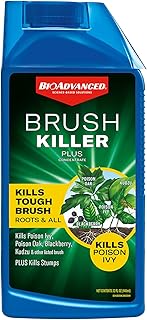
The BioAdvanced Brush Killer Plus is the specialist of the group, built around triclopyr to tackle the tough, woody plants that plain glyphosate can struggle with. It targets poison ivy, kudzu, saplings, and other brush that resists ordinary weed killers.
Its strength is reach. Triclopyr moves into the roots of woody and vining plants, so treated brush does not simply resprout from the base. As a concentrate, it mixes to cover large brushy areas along fences, wood lines, and neglected corners of a property.
It is not the tool for everyday grassy weeds on a driveway, where a glyphosate or fast contact product is a better fit. It also carries some short-term soil activity, so mind where you apply it if replanting is planned.
Bottom line: the best choice specifically for poison ivy, kudzu, and stubborn woody brush that other non-selective products leave behind.
- Active ingredient: triclopyr
- Type: concentrate
- Size: 32 ounces
- Target: brush, poison ivy, woody weeds
- Rainproof: a few hours
Wear gloves, long sleeves, and eye protection when treating poison ivy, since contact with the plant itself causes a rash. Spray on a calm day to avoid drift onto trees you want to keep, and store the concentrate sealed and away from children and pets.
Best for property owners fighting poison ivy, kudzu, saplings, and dense woody brush along fences and wood lines, where a standard glyphosate spray leaves the roots alive.
How to Choose the Best Non-Selective Herbicide
A non-selective herbicide does not tell the difference between a weed and a prized shrub, so choosing well is really about matching the active ingredient, the strength, and the format to your specific job. The criteria below are the ones that separate a clean, one-and-done treatment from a patchy result that needs a second pass.
Active Ingredient

Most non-selective products rely on glyphosate, which moves through the leaf and down into the root so the plant cannot regrow. Compare-N-Save, Hi-Yield Killzall, and RM43 all use glyphosate, and RM43 adds imazapyr for longer soil residual. Other options, like the Spectracide Weed and Grass Killer line, use fast contact ingredients that burn down the top growth quickly but may not reach deep roots the way glyphosate does.
The practical takeaway is simple. Choose glyphosate when you want to kill perennial weeds to the root and are willing to wait one to two weeks for full results. Choose a fast contact killer when you want visible browning within hours on annual weeds and grasses.
It also helps to know what a given active ingredient will not do. Glyphosate is weak on some woody plants and deep-rooted vines, which is why a dedicated brush killer like the BioAdvanced formula uses triclopyr to reach the roots of poison ivy, kudzu, and saplings. Matching the chemistry to the plant you are fighting is the single biggest factor in whether one treatment finishes the job.
Concentrate or Ready-to-Use
Concentrates like Compare-N-Save and Hi-Yield Killzall cost far less per treated area because you mix them with water yourself, usually a few ounces per gallon. They are the right call for large driveways, fence rows, and vacant beds. Ready-to-use sprays such as the Spectracide 1-gallon bottle skip the mixing and the measuring, which suits small patios, cracks, and quick spot jobs where convenience matters more than cost.
If you are treating more than a few hundred square feet, a concentrate paired with a pump sprayer will save real money over a season. For occasional touch-ups, keep a ready-to-use bottle on the shelf. Many households do both: a large concentrate for the big seasonal clearing and a small ready-to-use jug for the odd weed that appears between projects. You can browse more outdoor buying guides to plan a full weed-control kit.
Soil Residual and Regrowth

Straight glyphosate has no lasting soil activity, so you can replant a bed within a few days. That is ideal when you plan to reseed or lay new plants. When you want bare ground for months, as on a gravel driveway or along a fence, a product with a residual such as RM43 keeps new weeds from sprouting. Never use a long-residual product where you intend to grow something later, because it can keep that ground bare far longer than you expect.
Coverage Area and Bottle Size
Match the container to the size of the job. A 32-ounce super concentrate like Hi-Yield Killzall can treat thousands of square feet once diluted, while a 2.5-gallon jug of RM43 is built for acreage, long fence lines, and total vegetation control. Buying too small means repeat trips to the store, and buying a huge residual jug for a tiny patio is overkill.
Think about how often you will reach for the product, too. A gardener who spot-treats a driveway a few times each season is well served by a single concentrate that stores for a long time between uses. Someone managing a large rural lot or a commercial fence line will save both money and effort with the largest jug they can practically store, since mixing a stronger batch and covering more ground in one session beats topping off from small bottles.
| Product | Type | Best Use | Soil Residual |
|---|---|---|---|
| Compare-N-Save Glyphosate Concentrate | Concentrate | Large areas, replant later | No |
| RM43 Total Vegetation Control | Concentrate | Driveways, fence lines | Yes |
| Hi-Yield Killzall Super Concentrate | Concentrate | Budget, mid-size yards | No |
| Spectracide Ready-to-Use | Ready-to-use | Small spot jobs | No |
| Spectracide Concentrate | Concentrate | Fast burn-down | No |
| BioAdvanced Brush Killer Plus | Concentrate | Poison ivy, woody brush | Short |
Application and Drift Control

Because these products kill any plant they land on, application technique is part of the buying decision. A quality pump sprayer with an adjustable nozzle lets you lay down a low, targeted stream instead of a wide mist that drifts onto lawn or flowers. Spray on a calm day, keep the nozzle close to the weed, and shield nearby plants with a piece of cardboard. Many gardeners add a non-ionic surfactant so the spray sticks to waxy leaves for a more complete kill.
Consider how the bottle connects to your gear as well. Ready-to-use jugs come with a built-in wand or trigger, so there is nothing else to buy. Concentrates need a separate sprayer, and a two or three gallon pump model gives you the reach and control that a trigger bottle cannot. Dedicating one sprayer to weed killers, and never using it for anything else, is the surest way to avoid accidentally dosing your vegetables or flowers later.
Weather and Timing
Timing changes how well any non-selective herbicide performs. These products work best when weeds are actively growing, which usually means warm days above sixty degrees and soil that is not drought stressed. A plant that is growing fast pulls the chemical down to the root more effectively, so late spring through early fall is the prime window in most regions.
Rain is the other factor to watch. Many concentrates become rainproof within a few hours, but a downpour before that window can wash the spray off and waste the treatment. Check the label for the rainfast time, then pick a dry stretch. Avoid spraying in blazing midday heat on very sensitive surfaces, and never apply when strong wind can carry the mist toward plants you want to protect.
Why You Should Trust Us
We build these guides by studying the products people actually buy and rely on, then organizing them around real yard jobs rather than marketing claims. For this roundup we focused on non-selective herbicides with large bases of verified customer ratings, strong average scores, and clear labeling about active ingredients and coverage. We read how owners describe results on driveways, gravel, fence lines, and beds, and we weighed value by cost per treated area once a concentrate is mixed.
Our goal is to help you pick the right tool the first time and use it safely. We do not claim to have sprayed every bottle ourselves. Instead, we combine ingredient facts, label guidance, and the weight of thousands of buyer experiences into a shortlist you can act on. You can compare more home and outdoor picks across our categories.
We also try to be honest about the tradeoffs. A non-selective herbicide is a powerful tool, and the same strength that clears a driveway can damage a garden bed in seconds if it drifts. Throughout this guide we flag where residual products are the wrong choice, where a surfactant helps, and where a ready-to-use bottle beats a concentrate. The right pick is the one that matches your job, your yard, and how carefully you can apply it.
Final Thoughts
For most homeowners, the Compare-N-Save 41% Glyphosate Concentrate is the best non-selective herbicide overall. It carries one of the largest bases of positive ratings in the category, mixes down to a very low cost per gallon, and kills tough perennial weeds to the root while leaving the soil clear for replanting within days. It is the safe default for driveways, beds, and general cleanup.
If you are watching the budget, the Hi-Yield Killzall Super Concentrate delivers the same 41% glyphosate strength in a smaller super-concentrated bottle that still treats a large area, making it the best value pick. When you need bare ground that stays clear for months, the RM43 Total Vegetation Control adds a residual for driveways and fence lines, and for poison ivy or woody brush the BioAdvanced Brush Killer Plus is the specialist. For fast, ready-to-go touch-ups on a small patio, keep a Spectracide bottle on hand. Whichever you choose, apply it on a calm, warm day, keep it off the plants you love, and let it work before deciding whether a second pass is needed. Explore more patio, lawn and garden picks to round out your setup.
Frequently Asked Questions
What is a non selective herbicide?
A non selective herbicide is a weed killer that damages or kills almost any plant it contacts, rather than targeting only certain weed types. That makes it ideal for clearing driveways, gravel, patios, and fence lines where you want nothing to grow, but it means you must keep it off lawns, flowers, and shrubs you want to keep.
How long does a non selective herbicide take to work in 2026?
Glyphosate-based products usually show yellowing in three to seven days and full kill in one to two weeks, since the chemical travels down to the root. Fast contact formulas can brown the top growth within hours, though they may not reach deep roots on established perennials. Warm, sunny weather speeds up results.
Can I plant after using a non selective herbicide?
With straight glyphosate you can usually replant within a few days because it leaves no lasting soil activity. Products with a residual, such as RM43, keep the ground bare for months and are not meant for areas you plan to replant. Always read the label for the specific wait time before seeding or setting new plants. If you are unsure, treat a small strip first, wait the labeled interval, and confirm your new seedlings take hold before committing the whole bed.
Do I need a surfactant with my non selective herbicide?
A non-ionic surfactant helps the spray stick to and spread across waxy or hairy leaves, which improves the kill on stubborn weeds. Some concentrates already include a surfactant, so check the label first. For clean, easy-to-wet weeds it is optional, but for tough brush and glossy leaves it can make a real difference. A small bottle of surfactant is inexpensive and lasts a long time, so many gardeners keep one on the shelf next to their concentrate for those harder jobs.
Is a non selective herbicide safe to use around pets?
Keep pets and children off treated areas until the spray has fully dried, and follow the label directions closely. Store concentrates sealed and out of reach, rinse sprayers after use, and avoid spraying on windy days so the product does not drift onto areas where pets rest or graze. For more outdoor safety tips, see our other buying guides.
Write Your Review
No reviews yet. Be the first to share your experience!