

Linemen ask more from a cleat than anyone else on the field. Every snap starts with a violent forward drive, ends with somebody leaning on your ankle, and then repeats forty times before the fourth quarter. That is why football cleats for linemen are built on a different blueprint than the low-cut speed shoes skill players wear: taller collars, wider outsole plates, and studs positioned to hold ground when three hundred pounds of body weight rolls onto the forefoot. We pulled together 6 pairs from the brands linemen actually wear: Under Armour, adidas, Nike. Every pair carries strong real customer ratings, and we judged them on the things that matter in the trenches rather than on how fast they look.
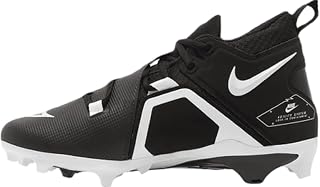
Our top pick is the Nike Alpha Menace Pro 3 for its mid-cut ankle lockdown and wide molded plate that stays planted through repeated contact. Below is the full shortlist for October 2026, followed by a buying guide that walks through cut height, molded studs versus detachable studs, surface rules, and how to size a cleat when your foot is wider than the last it was drawn on. If you are building out the rest of your kit for the season, our sports and outdoors picks cover training gear beyond footwear.
Pros
- Mid-cut collar wraps the ankle without blocking a low stance
- Wide molded plate stays planted under forward drive
- Reinforced toe and medial panels survive pile-ups and stance drag
- Structured heel counter keeps the foot locked during contact
- Built specifically for trench play rather than adapted from a speed cleat
Cons
- Runs narrow, so wide feet usually need a half size up
- Collar needs a few sessions of break-in before it stops rubbing
- Sits at the higher end of the price ladder for a high school cleat
The Alpha Menace Pro 3 is Nike's answer for players who live in the trenches. Where the Vapor Edge family is drawn around a sprinter's foot, this one is drawn around a lineman's: a mid-cut collar that comes up over the ankle bone, a broad molded plate, and a synthetic upper stiffened exactly where linemen destroy shoes.
The support story is the reason to buy it. The collar height sits in the sweet spot for the position, giving the ankle real lateral containment during the initial punch and inside a pile without preventing you from dropping into a three point stance. The heel counter is firm, so the foot does not slide when you change direction under load, and the plate carries studs across the full width of the forefoot instead of tapering toward a narrow racing platform.
The main complaint from owners is width. Nike's last is on the narrow side, and a lot of linemen have feet that are anything but narrow, so a half size up is a common fix and one worth planning for if you are ordering online. The collar is also stiff out of the box and wants a few walk-throughs before full contact. Neither is a design flaw so much as a sizing and break-in reality.
Bottom line: for a standard to slightly wide foot, this is the most complete lineman cleat on the list. It supports the ankle, holds ground, and is built where the position wears shoes out. Order carefully on width and give it a week to soften.
- Cut height: mid, above the ankle bone
- Stud type: molded, non-removable
- Upper: reinforced synthetic with overlays
- Closure: full lace with reinforced eyestay
- Primary surface: natural grass, usable on infill turf
- Position focus: offensive and defensive line
- Width: standard last, runs narrow
Interior offensive linemen, defensive tackles, and tight ends who block more than they run routes. It suits a player who wants genuine ankle support but still has to pull, kick slide, and get low every snap.
It is less suited to a player with a very broad forefoot who cannot size up, and it is more shoe than a skill player needs.
Measure at the end of the day and compare against the listing chart rather than assuming your sneaker size carries over. If your measurement lands between sizes, or if your forefoot is wide, take the half size up.
Lace through the top eyelet and drop into your stance before committing. The heel should stay locked with no lift, and your longest toe should sit about a thumb width from the front.

Pros
- Mid collar delivers the ankle support linemen need
- Molded rubber studs are durable and legal in youth leagues
- Wide, flat forefoot platform for driving off the line
- Costs a fraction of flagship trench cleats
- Cushioned footbed holds up through long practices
Cons
- Heavier than premium models with the same collar height
- Upper is simpler, with fewer abrasion panels than top-tier cleats
- Limited colorways compared with the flagship lines
The Spotlight Hammer RM is the cleat we point budget-conscious linemen toward first. The RM in the name refers to the rubber molded outsole, and that outsole is the point: broad, flat through the forefoot, and studded across the full width rather than shaped for a sprinter's foot strike.
What makes it a value pick rather than a cheap shoe is that Under Armour did not cut the parts that matter for the position. The collar still comes up over the ankle bone, the heel is still structured, and the platform is still wide. What you give up is refinement: a simpler upper with fewer reinforcement panels, a bit more weight on the foot, and a plainer look.
For a high school player who will outgrow a pair before wearing it out, that trade is easy to accept. Owners consistently report that it holds up through a season of practice and games, and that the footbed stays comfortable through long sessions, which is not always true at this price.
Bottom line: the smart money pick. If you want the essential lineman package, mid collar plus wide molded plate, without paying flagship prices, this is the one to buy.
- Cut height: mid
- Stud type: rubber molded, non-removable
- Upper: synthetic
- Closure: full lace
- Primary surface: natural grass and infill turf
- Position focus: power positions and line play
- Width: standard last
This is a strong practice cleat as well as a game cleat. The molded rubber outsole tolerates the daily grind of sled work and blocking drills better than a lighter plate, and the price makes it easier to keep a dedicated practice pair.
Pair it with a cushioned insole if you are on turf most of the week, since turf gives back less than grass and heel fatigue shows up faster.
Rinse mud out from between the studs after every session and let the pair dry at room temperature, away from radiators and hot cars. Packed mud holds moisture against the bond line and is the usual reason a plate starts separating.
Check the eyestay and the medial forefoot for wear during the season. Those are the first areas to fray on a lineman cleat, and catching a seam early can buy you several more weeks.

Pros
- Lighter than most mid-cut trench cleats
- Molded outsole tuned for straight-ahead drive
- Mid collar supports the ankle while staying flexible
- Roomier forefoot than several rivals in the same class
- Purpose-built for American football rather than adapted from soccer
Cons
- Lighter build means less armor plating than heavier models
- Average rating sits slightly below the leaders on this list
- Collar support is milder than a true high-top
Adizero is the adidas badge for lightweight speed, and the Impact model is what happens when that philosophy is aimed at linemen instead of receivers. The result is a mid-cut, molded cleat that weighs noticeably less than most trench shoes while keeping the geometry the position needs.
On the field that translates to a cleat you stop noticing. The collar is mid height with a softer top edge, so it supports the ankle through contact without the stiff, boot-like feel of a heavy high-top. The molded plate is shaped for forward drive, and the forefoot is a little more generous than the narrowest options here, which matters for a group of athletes who tend to have wide feet.
The trade-off is armor. Where premium trench cleats stack reinforcement across the toe and medial panels, this one keeps the upper leaner to hit its weight target. Owner ratings are solid but land slightly below the top of this list, and the pattern in feedback points to that lighter construction rather than to any single defect.
Bottom line: the pick for a lineman who feels slowed down by traditional trench cleats. You give up a little durability margin and get back a shoe that moves with you.
- Cut height: mid
- Stud type: molded, non-removable
- Upper: lightweight synthetic
- Closure: full lace
- Primary surface: natural grass, usable on turf
- Position focus: offensive and defensive line
- Width: standard last with a roomier forefoot
Linemen who move a lot: pulling guards, athletic tackles, and penetrating three techniques who want ankle support without carrying extra weight through four quarters.
Less ideal for a pure road-grader who values maximum reinforcement over grams, or for a player who wants a high collar.
The molded plate performs best on natural grass, where the studs can sink slightly and bite. On modern infill turf it still grips well, but traction comes more from stud edges, so expect a slightly different release when you rotate.
Avoid using it as an everyday shoe off the field. Walking on concrete rounds off molded studs quickly and shortens the useful life of the outsole.

Pros
- Tall collar gives the most ankle coverage in this group
- Molded rubber studs work across grass and turf
- Backed by the largest volume of customer ratings on this list
- Locked-in midfoot from the extended lace rows
- Value pricing for a high-top build
Cons
- Heaviest silhouette here and the slowest to break in
- Tall collar can rub the Achilles until it softens
- Extra height limits how low some players can sink in a stance
The Highlight silhouette is the shape most people picture when they think of a football high-top: a tall padded collar rising well above the ankle, lace rows continuing up the shaft, and a snug shape through the midfoot. The Franchise RM 2.0 is the accessible version of that idea, keeping the collar and swapping in a molded rubber outsole.
If ankle coverage is your priority, nothing else on this list matches it. The collar and upper lace rows work together to restrict roll, which is why the silhouette stays popular with players returning from a sprain and with interior linemen who get hit from the side. The outsole is broad and molded across the full footprint, so it holds ground on grass and behaves predictably on turf.
The costs are the ones every high-top carries. It is the heaviest option here, it takes the longest to break in, and until it softens the collar can rub the Achilles. Some players also find the height limits how low they can sink into a stance. None of that disqualifies it, but a mid-cut is the better default for most linemen.
Bottom line: buy it when ankle security is the deciding factor. It is the high-top answer at a reasonable price, and the large body of customer ratings behind it makes it a low-risk pick.
- Cut height: high, above the ankle
- Stud type: rubber molded, non-removable
- Upper: synthetic with padded collar
- Closure: extended lace rows up the shaft
- Primary surface: natural grass and infill turf
- Position focus: line play and linebacker
- Width: standard last
A high collar limits the range through which an ankle can roll and slows the speed of that roll, which is why players who have rolled an ankle before often prefer it. What it does not do is stabilize a joint that is already loose.
If you have diagnosed instability, use a lace-up brace or tape underneath and buy with enough interior volume to fit over it. The collar and the brace do different jobs, and the combination beats either one alone.
Nose tackles, guards, and centers who take side contact every snap, plus any player coming back from an ankle injury who wants extra coverage in a game cleat.
Skip it if you rely on quickness in space or if a stiff, tall collar bothers you during a long practice.

Pros
- Balanced mid-cut build that works for two-way players
- Molded studs grip well on grass and turf
- Supportive without feeling like a boot
- Established line with consistent sizing across releases
- Comfortable straight out of the box compared with high-tops
Cons
- Less trench-specific reinforcement than dedicated lineman models
- Standard width may pinch very broad forefeet
- Collar support sits below what a high-top provides
The Freak line sits between adidas' pure speed cleats and its trench models, and the 23 Inline is the version sold to the public rather than issued to teams. That middle position is exactly the appeal for players who are not purely interior linemen.
It is a mid-cut with a molded outsole, so the fundamentals a lineman needs are present: ankle coverage, a supportive heel, and studs across the width of the forefoot. What separates it from the dedicated trench shoes is how it feels when you move laterally or run in space, where it is noticeably freer than a heavily reinforced cleat.
The compromise is armor. If you spend every snap in a phone booth with someone standing on your foot, the more reinforced models will last longer. Fit is standard width, so very broad feet may need to size up, and the collar does not deliver what a genuine high-top does.
Bottom line: the best choice on this list for two-way players, hybrid edge defenders, and anyone who plays some snaps standing up. For a pure interior lineman, the more trench-focused options serve better.
- Cut height: mid
- Stud type: molded, non-removable
- Upper: synthetic with support overlays
- Closure: full lace
- Primary surface: natural grass and infill turf
- Position focus: all positions, favors hybrids
- Width: standard last
Because it moves more freely than a trench-specific cleat, it works well for agility work, position drills, and conditioning days when you are on the field but not in full contact.
Keep sled and blocking work to a heavier pair if you have one. Spreading the wear across two cleats is the cheapest way to make both last the season.
Sizing runs true to the adidas football range, so if another adidas cleat fits you, this one likely will too. Broad forefeet should still consider a half size up.
Lace it fully and check for heel lift in a stance. Any slip at the heel means the midfoot is not locked, and that is worth fixing before it turns into a blister.

Pros
- Softer, more forgiving upper suits broader feet
- Plush interior lining reduces hot spots on long days
- Mid collar with a comfortable padded top edge
- Molded outsole with full-width stud coverage
- Short break-in compared with stiffer trench cleats
Cons
- Lowest average rating in this group
- Softer upper offers less lateral lockdown under heavy load
- Premium pricing for a mid-tier level of reinforcement
The Lux tag in Under Armour's Spotlight family points to interior comfort, and that is the honest way to describe this cleat. It is a mid-cut molded shoe with a plusher lining and a softer upper than the more aggressive trench models, and it is the one on this list that most often gets described as comfortable rather than locked in.
For a lineman with wide feet, that softness is a genuine advantage. A forgiving upper accommodates a broad forefoot instead of pressing against it, and the padded collar means fewer complaints after a long practice. The molded outsole is still wide and studded across the footprint, so the traction fundamentals are in place.
The flip side is that the same softness gives up lateral lockdown when you are driving into someone with everything you have. It also carries the lowest average customer rating in this group, and it sits at a higher price than its level of reinforcement suggests. Those are real reasons to look at the mid-cut leaders first.
Bottom line: choose it if forefoot room and comfort are your limiting factors and you are willing to trade some lockdown. Otherwise a firmer mid-cut is the better value.
- Cut height: mid
- Stud type: molded, non-removable
- Upper: soft synthetic with padded lining
- Closure: full lace
- Primary surface: natural grass and infill turf
- Position focus: line play with a comfort priority
- Width: standard last, forgiving fit
Linemen whose main complaint about cleats is pressure across the ball of the foot, and players logging long practice hours who want a softer interior than a stiff trench cleat provides.
Not the pick for a player who wants the most rigid lockdown available or who is shopping strictly on value.
Soft uppers absorb more water and mud than coated synthetics, so clean the pair after wet sessions and dry them slowly at room temperature. Direct heat stiffens the lining and defeats the reason you bought it.
Replace the insole once the padding flattens. On a comfort-first cleat, a worn insole undoes most of the advantage over a firmer model.
How to Choose the Best Football Cleats For Linemen
Cleat marketing is written for wide receivers. Almost every campaign talks about acceleration, top speed, and cutting, none of which describes what an offensive guard does on a power run. Shopping for a lineman means filtering all of that out and looking at five or six structural details that decide whether a shoe lasts a season or splits at the seam by week four. The criteria below are the ones we weighted most heavily when ranking the shortlist above.
Cut Height: Mid-Top Versus High-Top Ankle Support

Cut height is the single biggest divider in this category. Low-cut cleats sit below the ankle bone and free the joint to move, which is exactly what a running back wants and exactly what a lineman does not need. Mid-top cleats rise to the ankle bone and wrap it, adding lateral containment without locking the joint. High-top cleats climb above the ankle and use a padded collar plus extra lace rows to restrict roll.
For most offensive and defensive linemen, mid-top is the sweet spot. It gives real support during the initial punch and during pile-ups, but it still lets you drop into a stance and pull across the formation. High-top makes sense if you have a history of ankle sprains, if you play nose tackle and get chopped from the side often, or if you simply feel more confident with the extra collar. The trade-off is weight and a longer break-in, since a tall collar needs time before it stops rubbing the Achilles.
One caution: a tall collar is not a brace. It reduces the range that a rolling ankle can travel, but nothing in a cleat replaces taping or a proper ankle brace if you have a real instability problem. Plenty of linemen wear a mid-top cleat over a lace-up brace and get better results than a high-top alone. If you already know your ankles need help, plan for the brace first and buy the cleat with enough interior volume to fit over it.
Molded Studs Versus Detachable Studs

Molded cleats have rubber or hard plastic studs formed permanently into the outsole. Detachable cleats have threaded receptacles so you can screw in studs of different lengths, usually swapping to longer metal or hard plastic studs for soft, wet grass. Nearly every pair sold through mainstream retail today is molded, including all 6 on this list, and for good reason.
Molded studs spread load across more contact points, which suits a heavy player pushing forward. They need no maintenance, they cannot back out mid-drive, and most youth and high school leagues either restrict metal studs or ban them outright. Detachable setups still have a place at the college and pro level, where field conditions swing wildly and equipment staff can manage stud changes, but for the vast majority of linemen buying their own shoes, a good molded plate is the right call.
If you play on a field that turns into soup every October, the practical answer is not detachable studs but a second pair. Keep a molded pair with deeper, more aggressive studs for wet grass and a flatter pair for dry fields and turf. Check your league rule book before buying anything with metal, because officials do inspect cleats during pregame in many conferences.
Outsole Plates Built for Heavy Bodies

The plate is the stiff layer between the studs and your foot, and it is where lineman cleats separate themselves. Speed cleats use thin, flexible plates that let the foot bend deeply through a sprint. A lineman needs the opposite in the forefoot: a broad platform that resists twisting when you drive off the line with your weight over the toes. Look for a plate that extends the full width of the shoe rather than tapering in at the midfoot.
Stud shape matters as much as stud count. Bladed or chevron studs bite hard in one direction and are excellent for straight-ahead drive. Conical studs release more easily when the foot rotates, which lowers the twisting load on the knee during a pile-up. Most lineman-oriented plates mix the two, using firmer bladed shapes around the forefoot perimeter and rounder shapes under the arch and heel.
Heel cushioning is the detail most buyers skip. Defensive linemen spend a lot of time backpedaling in pass rush drills and landing hard on the heel, so a cleat with a thin heel unit feels punishing after a two hour practice. If you finish sessions with sore heels, prioritize a model with a visible foam heel wedge and add a cushioned insole rather than trying to fix it with thicker socks.
Fit, Width, and Sizing for Wide Feet
Here is the uncomfortable truth about this category: very few football cleats are offered in a true wide width. Manufacturers build most models on a standard last, so linemen with broad forefeet end up managing the problem instead of solving it. The two workarounds that actually help are going up a half size to gain forefoot volume, and choosing models with a softer, more forgiving upper that stretches slightly instead of a rigid molded shell that never gives.
Measure your foot at the end of the day, when it is at its largest, and measure width across the ball of the foot rather than guessing from your sneaker size. Try the cleat with the same socks you play in, lace it fully including the top eyelet, and drop into a three point stance. Your heel should not lift, and your longest toe should sit roughly a thumb width from the front. If the sides of your foot bulge over the platform, the cleat is too narrow no matter how the length feels.
Ordering online makes this harder, so buy from a listing with a straightforward return window and be prepared to send back the first pair. Sizing across brands is genuinely inconsistent, and the same nominal size can differ noticeably in forefoot volume between two models from the same maker. Our guides on hiking boots cover the same fitting logic for heavy-duty footwear if you want a second reference point on measuring.
Natural Grass, Artificial Turf, and Surface Rules
Molded football cleats are designed primarily for natural grass, and that is where they perform best. On modern infill turf they still work, but the studs sink less, so traction comes more from the stud edges than from penetration. Many programs now practice on turf and play on grass, or the reverse, which means one pair has to do both jobs for most players.
If your season is almost entirely on artificial turf, shorter and more numerous studs distribute pressure better and reduce the hot spots that show up under the ball of the foot after long sessions. Dedicated turf trainers, the flat rubber-nubbed shoes, are a separate category and are not legal as game cleats in most leagues, so treat them as a practice or warm-up shoe rather than a substitute.
Whatever surface you play on, rinse mud off the plate after every session and let the shoes dry away from direct heat. Dried mud packed between studs adds weight, holds moisture against the outsole bond, and is one of the most common reasons a plate starts separating from the upper before the season ends.
Upper Materials, Durability, and Break-In Time
Lineman cleats take abuse that no other position shoe sees. Other players step on your toes, your own knees scrape the medial side of the shoe on every pull, and the lace area gets crushed under pile-ups. Synthetic leather uppers with welded or stitched overlays across the toe box hold up far better than thin knit panels, which look fast in product photos and shred quickly when a face mask catches them.
Check where the upper meets the plate. A wide, evenly bonded seam that wraps up the sidewall lasts longer than a narrow glue line, and it is the first thing to inspect if you are looking at a pair in person. Reinforcement at the medial forefoot, the area that drags on the ground when you fire out of a stance, is another sign that the model was designed with trench players in mind.
Expect a break-in period of a few practices for anything with a stiff collar or a heavily structured upper. Wear the cleats around the house and through walk-throughs before you use them in full contact, and never debut a new pair on game day. The table below sums up how our shortlist compares on the details that decide these choices.
| Model | Cut | Stud type | Best for |
|---|---|---|---|
| Nike Alpha Menace Pro 3 | Mid | Molded | Interior linemen who want balanced support |
| Under Armour Spotlight Hammer RM | Mid | Molded rubber | Budget-minded trench players |
| adidas Adizero Impact.2 | Mid | Molded | Linemen who want a lighter feel |
| Under Armour Highlight Franchise RM 2.0 | High | Molded rubber | Maximum ankle coverage |
| adidas Freak 23 Inline | Mid | Molded | Two-way and hybrid players |
| Under Armour Spotlight Lux MC 2.0 | Mid | Molded | Wider forefeet and long practices |
Why You Should Trust Us
We build these shortlists from public product data rather than sponsorships. For this guide we pulled current listings for football cleats, filtered out anything that was actually a soccer, baseball, or turf shoe wearing a football keyword, and kept only models with a strong average rating backed by a meaningful volume of real customer ratings. We then read through what buyers report about fit, collar height, and how the plate holds up, because durability complaints show up in owner feedback long before they show up in a spec sheet.
Ranking is editorial. We weight cut height, plate width, forefoot volume, and reported durability more heavily for this position than we would for a skill-position guide, and we say plainly when a model suits a hybrid defender better than an interior lineman. We do not claim to have worn every pair on a field, and we do not quote performance numbers that a manufacturer cannot back up. When a shoe has a real weakness, such as a narrow last or a collar that needs breaking in, it goes in the cons list rather than being buried. You can browse the rest of our work on the articles page.
Final Thoughts
The Nike Alpha Menace Pro 3 is our best overall pick for linemen. It is the most complete package here: a mid-cut collar that supports the ankle without fighting your stance, a broad molded plate that stays planted when you drive forward, and an upper reinforced exactly where trench play wears shoes out. It runs on the narrow side, so order carefully if your foot is wide, but for a standard to slightly wide foot it is the cleat we would put on first.
For best value, the Under Armour Spotlight Hammer RM delivers the essentials of a lineman cleat, a supportive mid collar and a wide molded rubber outsole, at a fraction of what flagship models command. It is the smart choice for a growing high school player who will outgrow the shoe before wearing it out. If ankle coverage is your priority above everything else, the Under Armour Highlight Franchise RM 2.0 is the high-top answer, and if you want the lightest trench-ready option, the adidas Adizero Impact.2 gives up very little support to save weight.
Two more situations are worth naming. Two-way players and hybrid linebackers who play some snaps in space are usually happiest in the adidas Freak 23 Inline, which balances support against agility better than the pure trench models. Linemen whose real complaint about cleats is pressure across the ball of the foot should look hard at the Under Armour Spotlight Lux MC 2.0, which trades some lockdown for a softer upper and a roomier forefoot. Whichever you choose, buy from a listing with an easy return path, and keep a cushioned insole on hand. For off-season conditioning footwear, our running shoe picks are a better starting point than anything with studs.
Frequently Asked Questions
What makes football cleats for linemen different from regular football cleats?
Cleats aimed at linemen are built around containment and load rather than acceleration. They typically use a mid or high collar for ankle support, a wider outsole plate so the studs sit under the full footprint instead of a narrow racing platform, more reinforcement across the toe box and medial forefoot, and a firmer heel unit. Skill-position cleats do the opposite, shaving weight and cutting the collar low so the ankle can move freely.
Should linemen wear mid-top or high-top cleats?
Mid-top suits most linemen. It supports the ankle through the initial punch and in pile-ups while still letting you get low in a stance and pull across the formation. Go high-top if you have a history of ankle sprains, if you play an interior position where you get hit from the side often, or if the added collar simply gives you confidence. Remember that a high collar restricts roll but is not a substitute for taping or a proper brace.
Can linemen wear soccer or baseball cleats instead?
It is a bad idea, and in many leagues it is not permitted. Soccer cleats are low-cut, narrow, and have no toe stud, which is the stud football players push off. Baseball cleats often carry metal spikes that are banned in football and are built for a completely different movement pattern. Both leave a heavy player without the ankle support and forefoot platform the position demands. Browse the footwear section of our category directory if you need a different shoe for a different sport.
How should football cleats for linemen fit a wide foot?
True wide widths are rare in this category, so most wide-footed linemen go up a half size to gain forefoot volume and pick a model with a softer upper that gives slightly. The shoe should be snug through the heel and midfoot with about a thumb width in front of the longest toe. If your foot spills over the edge of the platform when you stand in a stance, the fit is wrong regardless of length, and no lacing trick will fix it.
Are molded cleats still the right choice in 2026?
Yes for almost every player buying their own shoes. Molded studs spread load across more contact points, require no maintenance, cannot loosen during a drive, and satisfy youth and high school rules that restrict or ban metal. Detachable systems remain useful at higher levels where equipment staff manage stud changes for shifting field conditions. If your fields get very soft, a second molded pair with deeper studs is a simpler answer than a detachable setup.


Write Your Review
No reviews yet. Be the first to share your experience!