

A good fitness tracker turns vague intentions into numbers you can act on, counting steps, watching your heart rate, and scoring your sleep so you know when to push and when to rest. The best fitness trackers in 2026 pack that intelligence into a band light enough to forget you are wearing it. For this guide we compared 8 of the most trusted models from brands like Garmin, Fitbit, Samsung and more, weighing sensor accuracy, battery life, comfort, and how genuinely useful each companion app is across a full week of wear.
Our top pick is the Fitbit Charge 6 for its built-in GPS, dependable on-wrist heart rate, and the deepest app ecosystem of any dedicated tracker. If you want something slimmer, screenless, or simply cheaper, the shortlist below has a match for every wrist and budget. Whether you are chasing a new step record, rebuilding a running habit, or trying to finally sleep through the night, one of these picks will fit the way you move. You can find more wellness gear in our health and household guides, refreshed every October 2026.

Pros
- Built-in GPS maps outdoor runs and rides without a phone
- Accurate on-wrist heart rate with a handy side button
- Google apps like Maps and Wallet on your wrist
- Bright color AMOLED touchscreen
- Broad sleep, stress, and ECG tracking
Cons
- Richest insights sit behind a Premium membership
- Battery runs shorter than simpler bands when GPS is on
The Fitbit Charge 6 is the most complete tracker Fitbit makes, aimed at people who want serious health data without stepping up to a full smartwatch. It packs built-in GPS, continuous heart rate, and a bright color touchscreen into a band slim enough for all day and overnight wear.
Its standout is breadth. You get route mapping for outdoor workouts, heart rate that can broadcast to compatible gym machines, ECG and skin response sensors, and Google staples like Maps and Wallet on your wrist. A physical side button makes the touchscreen easier to control mid workout.
The trade-offs are familiar. The deepest analytics, including daily readiness and advanced sleep tools, live behind a Fitbit Premium subscription, and turning on GPS noticeably shortens the time between charges. Notifications are useful but more limited than a true smartwatch.
Bottom line, the Charge 6 is the best all-around fitness tracker for most people, balancing accuracy, features, and comfort better than anything else on this list. If you want one band that does nearly everything well, start here.
- Built-in GPS
- Color AMOLED touchscreen
- 24/7 heart rate with ECG and EDA
- Up to 7 days battery, less with GPS
- Water resistant to 50 meters
- Small and large bands included
- Android and iOS compatible
Choose the Charge 6 if you want one device that covers running, gym sessions, sleep, and stress without carrying your phone. It suits data lovers who like a screen on their wrist but do not want the bulk or price of a smartwatch. Beginners will appreciate the friendly app, while advanced users get GPS and ECG depth.
For workouts, enable built-in GPS before outdoor runs and rides to capture pace, distance, and route without your phone. Use the heart rate broadcast feature to send your pulse to compatible treadmills and bikes, and lean on the active zone minutes metric to keep your effort in the right intensity range for your goals.

Pros
- Very light and comfortable for all-day and sleep wear
- Excellent sleep tracking and stress management
- Long battery life for a color-screen band
- Simple, approachable Fitbit app
- Water resistant for swims and showers
Cons
- No built-in GPS, relies on your phone
- Some insights need a Premium membership
The Fitbit Inspire 3 is the friendliest entry point into serious fitness tracking, built for people who want reliable health data in the lightest possible package. It focuses on the essentials, steps, heart rate, sleep, and stress, and does them well without overwhelming a first time wearer.
Its strengths are comfort and battery. The band is so light it disappears on the wrist, which makes it easy to wear overnight for its standout sleep tracking. A color touchscreen keeps things modern, and multi-day battery life means fewer trips to the charger than most color-screen bands.
The limits are clear. There is no onboard GPS, so accurate outdoor distance needs your phone in a pocket, and some deeper wellness metrics ask for a Premium membership. It also skips the ECG and equipment features of the pricier Charge 6.
Bottom line, the Inspire 3 is the best pick for beginners and anyone who values comfort and sleep insights over advanced sport features. It is an easy, affordable way to build a lasting tracking habit.
- Color AMOLED touchscreen
- 24/7 heart rate and SpO2
- Detailed sleep stages and score
- Stress management tools
- Up to 10 days battery
- Water resistant to 50 meters
- Weighs under 20 grams
Pick the Inspire 3 if you are new to trackers or want the lightest band for round the clock and overnight wear. It fits busy people who care most about steps, sleep, and stress rather than mapped outdoor workouts, and it is a great choice for gifting thanks to its simple setup.
Wear it snugly a finger width above your wrist bone for the most accurate heart rate, and keep it on overnight to unlock its sleep score and stress trends. Set daily step and active zone goals in the app, enable reminders to move, and top up the battery during a shower or short charging window every several days.

Pros
- Outstanding value for the features on offer
- Large 1.72 inch AMOLED display
- Battery life stretches up to three weeks
- Over 100 sport modes
- Lightweight and comfortable
Cons
- Global app is less polished than Fitbit
- No built-in GPS, uses your phone
The Xiaomi Mi Smart Band 10 is the value champion of fitness tracking, delivering a big, bright AMOLED screen and a deep feature list at a price that undercuts nearly every rival. It is built for people who want the essentials plus a few extras without spending much.
Two things stand out: the display and the battery. The 1.72 inch AMOLED screen is large and colorful for a band this size, making stats and notifications easy to read, while battery life measured in weeks rather than days means you can almost forget about charging. More than a hundred sport modes cover most ways you like to move.
The compromises reflect the price. The global version of the companion app is functional but less refined than Fitbit or Samsung, and there is no built-in GPS, so precise outdoor distance needs your phone nearby. Advanced recovery coaching is not part of the package.
Bottom line, the Mi Smart Band 10 is the best value fitness tracker you can buy and the easiest first band to recommend. For the money, nothing else offers this mix of screen, battery, and features.
- 1.72 inch AMOLED touchscreen
- Up to 21 days battery life
- 150+ sport modes
- 24/7 heart rate and SpO2
- Sleep and stress tracking
- 5 ATM water resistance
- Bluetooth 5.4
Choose the Mi Smart Band 10 if you want maximum features for minimum spend, or if long battery life and a big screen top your wish list. It is ideal for first time trackers, students, and anyone who would rather not babysit a charger, though outdoor athletes who need onboard GPS should look higher up the list.
With normal use the band can run close to three weeks between charges, and even heavy use with the always-on display still clears many days. Dim the screen, use lift to wake instead of always-on, and trim continuous SpO2 monitoring to push runtime further. A quick top up gives you days of tracking, making it a superb travel companion.
Pros
- Built-in GPS for accurate outdoor tracking
- Bright, sharp AMOLED display
- Deep Garmin sport and health analytics
- Up to 11 days battery in smartwatch mode
- Body Battery energy monitoring
Cons
- Larger and pricier than a simple band
- Garmin app has a learning curve for newcomers
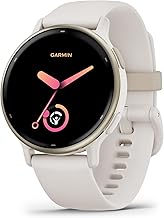
The Garmin vivoactive 5 blurs the line between fitness band and smartwatch, and it is our pick for anyone who trains outdoors. It brings Garmin's respected sport analytics and built-in GPS to a bright AMOLED watch that still tracks health around the clock.
Where it shines is depth. Built-in GPS records precise pace, distance, and routes for running, cycling, and hiking, while more than thirty sport apps and Garmin's Body Battery energy score help you plan effort and recovery. Battery life of over a week in smartwatch mode is generous for a device with a color screen.
The trade-offs come from ambition. It is larger and costs more than a slim band, so it is less discreet under a cuff, and Garmin's feature rich app can feel dense to newcomers. It sits at the smartwatch end of the tracker spectrum rather than the minimalist end.
Bottom line, the vivoactive 5 is the best choice for outdoor athletes and data driven trainers who want onboard GPS and serious analytics without a bulky multisport watch. Casual users may prefer something simpler and lighter.
- Built-in GPS
- AMOLED touchscreen display
- 30+ sport apps
- Body Battery energy monitor
- Up to 11 days smartwatch battery
- 5 ATM water resistance
- Garmin Pay
Start a GPS activity before outdoor runs or rides to capture accurate distance and pace, and review Body Battery each morning to decide whether to train hard or recover. Use the training tools to set structured workouts, and let the wrist based heart rate guide your intensity zones across running, cycling, strength, and more.
The vivoactive 5 suits runners, cyclists, and hikers who want onboard GPS and Garmin's detailed analytics in an everyday size. It fits people happy to wear a watch style device rather than a slim band, and who value sport depth and battery life over a minimalist look.

Pros
- Large 1.6 inch AMOLED display
- Up to 13 days of battery life
- Over 100 exercise modes
- Seamless pairing with Samsung and Android phones
- Slim aluminum build with quick-release straps
Cons
- Best experience is tied to the Samsung ecosystem
- No built-in GPS, relies on your phone
The Samsung Galaxy Fit 3 is the natural fitness tracker for Android and Galaxy phone owners, pairing a large AMOLED display with tight Samsung Health integration. It looks more like a mini smartwatch than a plain band, with a slim aluminum body and easy swap straps.
Its strengths are the screen, battery, and ecosystem fit. The big 1.6 inch display is easy to read at a glance, battery life reaches nearly two weeks, and setup is effortless on a Samsung phone. More than a hundred exercise modes plus fall detection and an SOS feature add real everyday value.
The catch is the ecosystem. You get the most from it inside Samsung Health, and while it works with other Android phones, iPhone support is absent. Like most bands at this size, it leans on your phone for GPS rather than mapping routes on its own.
Bottom line, the Galaxy Fit 3 is the best fitness tracker for Android and especially Samsung users, offering a premium screen and long battery at a friendly price. iPhone owners should look to Fitbit or Garmin instead.
- 1.6 inch AMOLED display
- Up to 13 days battery
- 100+ exercise modes
- 24/7 heart rate and sleep tracking
- Fall detection and SOS
- 5 ATM and IP68 rating
- Android compatible
Choose the Galaxy Fit 3 if you carry an Android or Samsung phone and want a big, bright screen with long battery life. It fits people who live inside Samsung Health and want smartwatch style looks in a lighter, cheaper band. iPhone users will be happier with a Fitbit or Garmin.
Pair it through the Samsung Health and Galaxy Wearable apps for full features, and enable auto workout detection so common exercises log themselves. Customize the watch face and tiles for the stats you check most, turn on fall detection for peace of mind, and keep your phone nearby during outdoor workouts for accurate distance.

Pros
- Deep recovery, strain, and sleep coaching
- Screenless design is light and distraction free
- Very long battery with on-the-go charging
- Personalized daily readiness guidance
- Comfortable enough for round the clock wear
Cons
- Requires an ongoing paid membership
- No screen or step display on the wrist
WHOOP 5.0 takes a different path from every other band here. It has no screen at all, sending every metric to your phone, and it focuses less on step counts than on how ready your body is to perform. It is built for people serious about training and recovery.
Its strength is coaching. WHOOP continuously measures strain, recovery, and sleep, then folds heart rate variability and resting heart rate into a daily readiness score that tells you when to push and when to back off. The screenless band is light and comfortable, and its battery lasts two weeks with a clever pack that charges it without taking it off.
The obvious catch is the model. WHOOP is a membership, so the hardware only works while you pay, and there is no wrist display for quick glances or notifications. Casual users who just want steps and a clock will find it overkill.
Bottom line, WHOOP 5.0 is the best tracker for recovery focused athletes who want data driven coaching and do not mind a subscription. If sleep and readiness matter more to you than a screen, nothing here does it better.
- Screenless wearable band
- Recovery, strain, and sleep scores
- Heart rate variability monitoring
- 14+ days battery life
- On-the-go battery pack
- Water resistant for showers and swims
- Membership required
WHOOP suits dedicated athletes, lifters, and anyone laser focused on recovery and sleep rather than steps or notifications. It fits people willing to pay a membership for coaching level insights and who prefer a discreet, screenless band. Casual walkers and budget shoppers should choose a traditional tracker instead.
Wear it around the clock, including sleep, and check your recovery score each morning to plan your day's effort. Log activities or let it auto detect them, review your strain target to avoid overtraining, and slide on the battery pack when it runs low so you never have to remove the band or interrupt your data.

Pros
- Very slim and light for all-day comfort
- Simple, uncluttered interface
- Up to 7 days of battery life
- Body Battery and stress tracking
- Larger display than the previous model
Cons
- No built-in GPS, uses your phone
- Monochrome display looks plain next to AMOLED rivals
The Garmin vivosmart 5 is for people who want Garmin's health tracking in the slimmest, simplest form. It is a narrow, understated band that slips under a shirt cuff and stays comfortable through the day and night, with just enough screen to show your essentials.
Its appeal is comfort and focus. Despite the small size it includes Garmin staples like Body Battery energy monitoring, stress tracking, Pulse Ox, and women's health features, and the display is larger and easier to use than the model it replaced. Battery life of up to a week keeps charging occasional.
The trade-offs are the plain screen and missing GPS. The monochrome OLED looks basic beside colorful AMOLED bands, and outdoor distance depends on a connected phone. It is deliberately minimal, so anyone wanting a vivid display or maps should look elsewhere.
Bottom line, the vivosmart 5 is the best choice when comfort and simplicity outrank flash. It quietly covers the health basics in a band you will genuinely forget you are wearing.
- Slim OLED touch display
- Body Battery energy monitor
- Pulse Ox and stress tracking
- Women's health tracking
- Up to 7 days battery
- 5 ATM water resistance
- Android and iOS compatible
Pick the vivosmart 5 if you want a slim, low key band with Garmin health tracking and do not care about a flashy screen or onboard GPS. It suits people with smaller wrists, anyone who dislikes bulk, and wearers who value all day and overnight comfort above extra features.
The narrow band and light weight make the vivosmart 5 one of the most comfortable trackers to wear nonstop, including to bed. Choose the size that fits your wrist, keep it a finger width above the wrist bone for accurate readings, and clean the band and your skin regularly to avoid irritation during long stretches of wear.

Pros
- Very affordable entry price
- Covers heart rate, SpO2, and sleep basics
- 5 ATM water resistance for swims
- Long battery life between charges
- Lightweight and simple to use
Cons
- Sensor accuracy trails premium brands
- Basic app and no built-in GPS
The Zeacool Fitness Tracker proves you do not need to spend much to start moving more. It is a wallet friendly band that covers the fundamentals, steps, heart rate, blood oxygen, and sleep, for people who want a simple nudge toward better habits without a big investment.
Its strength is the price to feature ratio. For very little money you get 24/7 heart rate, SpO2 spot checks, sleep tracking, several sport modes, and 5 ATM water resistance so it survives swims and showers. Battery life is generous, and the band is light enough to wear all day.
The compromises are expected at this price. Sensor accuracy does not match a Fitbit or Garmin, the companion app is basic, and there is no onboard GPS. Think of it as a reliable step and heart rate reminder rather than a precise training instrument.
Bottom line, the Zeacool is the best budget fitness tracker for first timers, kids, or anyone who wants the basics cheaply. It is an easy, low risk way to see whether tracking motivates you before spending more.
- Color LCD display
- 24/7 heart rate and SpO2
- Sleep and step tracking
- Multiple sport modes
- 5 ATM water resistance
- Long battery life
- Android and iOS compatible
Choose the Zeacool if you want a cheap, no fuss band to build a habit, or a low cost tracker for a child or older relative. It fits people who care about steps, heart rate, and sleep trends rather than pinpoint accuracy or mapped runs, and who would rather not spend much on a first device.
Set your expectations to match the price, and this band delivers. Treat its numbers as consistent trends rather than lab grade figures, wear it snugly for the best heart rate readings, and use the app reminders to keep you moving. If you later want sharper accuracy or GPS, step up to one of the premium picks in this guide.
How to Choose the Best Fitness Trackers
Every band on this list can count your steps, but the gap between a tracker you check twice and one you rely on for months comes down to a handful of details. Use the criteria below to match a device to your goals before you commit.
Sensor Accuracy and Health Metrics
Accuracy is the whole point of wearing a tracker, so it deserves the closest look. Optical heart rate sensors have improved sharply in recent years, and the pricier models here read your pulse reliably during steady cardio and rest alike. Where cheaper bands tend to drift is during rapid intervals or weight training, when wrist motion confuses the sensor. If precise heart rate zones matter to your training, lean toward the Fitbit and Garmin models, which hold a steadier reading when your effort spikes.
Beyond pulse, look at the extra metrics you will actually use. Blood oxygen, skin temperature, and heart rate variability paint a fuller picture of recovery, while stress scores and menstrual tracking help you plan rest days. The WHOOP 5.0 leans hardest into these recovery signals, whereas a simpler band like the Xiaomi covers the daily basics without overwhelming you. More sensors are only better if the readings are trustworthy and the app explains what they mean.
Consistency matters as much as raw precision. A tracker that reads slightly high but does so every day still shows you reliable trends, which is what drives real change. Pay attention to how a band performs across different skin tones and tattoos, since optical sensors can struggle in those cases, and look for models that let you calibrate stride length or add personal details so the estimates line up more closely with your own body.
Battery Life and Charging
Nothing kills a tracking habit faster than a dead band, so battery life is more than a spec sheet number. Bright color screens and always-on displays draw the most power, which is why a feature-packed smartwatch style device needs a top up every few days while a lightweight band can coast for a week or two. The Xiaomi Mi Smart Band 10 and Samsung Galaxy Fit 3 are standouts for endurance, stretching well past a week on a single charge.
Charging convenience counts too. Magnetic clip chargers are quick but easy to misplace, so a proprietary cradle you can leave on your nightstand keeps the routine simple. If you travel often or track sleep every night, favor a longer runtime so you are not choosing between overnight data and a charged battery. A band that only needs power once a week is one you are far more likely to keep wearing.
Built-in GPS and Workout Modes

If you run, cycle, or hike outdoors, built-in GPS is the feature worth paying for. It maps your route and measures pace and distance without dragging your phone along, which is freeing on a long run. The Fitbit Charge 6 and Garmin vivoactive 5 both carry onboard GPS, while lighter bands rely on a connected GPS that borrows your phone signal. Connected GPS still works, it just means carrying your phone to get accurate distance.
Sport modes shape the rest of the experience. A deep library of activity profiles gives you tailored stats for everything from swimming to strength circuits, and automatic exercise detection catches the workouts you forget to start. If you are training for a race, lace up a pair from our guide to the best running shoes, and on rainy days you can log indoor miles on one of the best treadmills while your tracker records every interval.
Water resistance rounds out the workout picture. Most bands here carry at least a 5 ATM rating, which means you can swim, shower, and sweat without worry, and a dedicated swim mode counts laps and estimates stroke distance in the pool. If open water or lap swimming is part of your week, confirm the rating and check that the band logs swims rather than simply surviving them. A sweatproof, washable strap also stays more hygienic through months of daily workouts.
Sleep and Recovery Insights

Sleep tracking has quietly become the reason many people wear a band at all. The better trackers break your night into light, deep, and REM stages, then translate it into a single score you can read at a glance. That daily number is most useful as a trend, showing how late caffeine, a hard workout, or a stressful week nudge your rest in one direction or another.
Recovery guidance is the next step up. Devices that fold sleep, resting heart rate, and heart rate variability into a readiness score tell you whether today is a day to train hard or take it easy. WHOOP built its entire identity around this coaching, but Fitbit and Garmin now offer their own daily readiness signals. If you tend to overtrain or struggle to rest, this guidance is worth more than any step count.
Comfort, Fit, and Display

You will wear this device around the clock, so comfort is not a luxury. Slim, light bands like the Garmin vivosmart 5 all but disappear on the wrist and slide easily under a shirt cuff, which makes them easy to wear to sleep. Bulkier models trade a little comfort for a bigger, brighter screen that is simpler to read mid workout. Swappable straps let you dress a tracker up or down, and a skin friendly band matters if you have sensitive skin.
Display type shapes daily use as well. Crisp AMOLED screens are vivid and easy to read in sunlight, while screenless designs like WHOOP push every stat to your phone for a distraction free look. Think about whether you want notifications and stats on your wrist or prefer a band that stays out of your way. The right answer is simply the one you will keep wearing every day.
App Ecosystem and Ongoing Costs
The band is only half of the product. A clear, well organized app turns raw data into habits you can stick to, with trends, reminders, and coaching that actually make sense. Fitbit and Samsung offer polished apps with large communities, Garmin leans toward detailed sport analytics, and each handles notifications and phone integration a little differently depending on whether you carry an Android phone or an iPhone.
Watch for subscriptions before you buy. Some platforms lock their richest insights behind a monthly membership, and WHOOP bundles the hardware into the subscription itself, so the tracker is only useful while you pay. Others give you every core feature for free and reserve premium analytics for optional plans. Factor any recurring fee into the real cost, because a cheaper band with no subscription can outvalue a pricier one over a couple of years.
Data ownership deserves a thought as well. Check whether a platform lets you export your history or sync with third party apps like Strava and Apple Health, since that flexibility keeps your progress portable if you ever switch brands. Reliable phone notifications, quick pairing, and steady syncing also separate a band you enjoy from one you fight with every morning, so read owner feedback on app stability before you decide.
| Model | Best For | Built-in GPS | Display |
|---|---|---|---|
| Fitbit Charge 6 | All-around tracking | Yes | Color AMOLED |
| Fitbit Inspire 3 | Everyday beginners | No, connected | Color AMOLED |
| Xiaomi Mi Smart Band 10 | Value and battery | No, connected | AMOLED |
| Garmin vivoactive 5 | Outdoor workouts | Yes | AMOLED |
| Samsung Galaxy Fit 3 | Android users | No, connected | AMOLED |
| WHOOP 5.0 | Recovery and sleep | No | Screenless |
| Garmin vivosmart 5 | Slim, simple wear | No, connected | OLED |
| Zeacool Fitness Tracker | Tight budgets | No, connected | Color LCD |
Why You Should Trust Us
We build every roundup by starting with what real owners report. Our team gathers verified customer ratings and long term feedback across thousands of wearers, then filters for models that hold up over months of daily use rather than a single impressive week. We weigh sensor reliability, battery endurance, comfort, and app quality against each device’s price so that the picks reflect genuine value, not marketing claims.
We update this guide as brands ship new bands and retire old ones, and we cross check specifications against manufacturer documentation so the numbers here stay honest. Our recommendations are organized by use case, because the ideal tracker for a marathon hopeful is rarely the same one a busy parent needs. When a model no longer earns its spot, we replace it. You can browse our full library of buying guides in the articles hub.
Final Thoughts
The Fitbit Charge 6 is our best overall fitness tracker because it blends built-in GPS, accurate heart rate, and the friendliest app into one comfortable band that suits almost everyone. For the best value, the Xiaomi Mi Smart Band 10 delivers a bright AMOLED screen and marathon battery life at a price that is hard to argue with, making it the easiest first tracker to recommend.
From there, match the device to your life. Choose the Garmin vivoactive 5 if you train outdoors and want serious sport analytics, the WHOOP 5.0 if recovery and sleep coaching drive your goals, or the featherweight Garmin vivosmart 5 if you want a tracker you barely notice. Android loyalists will feel at home with the Samsung Galaxy Fit 3, while the Zeacool proves you do not need to spend much to start moving more.
Whichever you pick, the best tracker is the one that keeps you consistent. Pair it with a healthier daily routine, from one of the best electric toothbrushes to a posture friendly upgrade from our best standing desks guide, and the small habits add up faster than you expect.
Frequently Asked Questions
Are fitness trackers accurate for heart rate and calories
Modern optical sensors read heart rate well during rest and steady cardio, and the better bands in this guide stay close to a chest strap for most workouts. Calorie estimates are less precise everywhere, since they depend on personal data the device cannot measure directly, so treat calorie numbers as a consistent trend rather than an exact figure.
Do I need built-in GPS in a fitness tracker
Only if you exercise outdoors and want route maps plus accurate pace and distance without your phone. Runners, cyclists, and hikers benefit most from onboard GPS. If you mostly walk, work out indoors, or are happy carrying your phone, a band with connected GPS covers your needs and usually lasts longer on a charge.
What is the best fitness tracker for sleep tracking in 2026
For sleep and recovery, the WHOOP 5.0 leads with its readiness coaching, while the Fitbit Charge 6 and Fitbit Inspire 3 offer detailed sleep stages and a clear nightly score in a friendlier app. A lightweight, comfortable band matters here, because the best sleep tracker is one you will happily wear to bed every night.
How long do fitness tracker batteries last between charges
It depends on the display and features. Slim bands with modest screens can run a week or two, while brighter smartwatch style trackers with always-on displays and GPS need a charge every few days. If you track sleep nightly, favor a longer lasting model and keep a charger handy, such as one of the best portable chargers, so you never miss a night of data.
Do fitness trackers require a monthly subscription
Most do not require one for core tracking. Fitbit, Garmin, Samsung, and budget bands give you steps, heart rate, and sleep for free, then reserve advanced analytics for optional premium plans. WHOOP is the exception, since its membership includes the hardware and unlocks all of its coaching, so the device only works while your plan is active.







Write Your Review
No reviews yet. Be the first to share your experience!