

Fireproof is not a property, it is a rating with two numbers behind it: a temperature and a length of time. A safe certified to protect paper for thirty minutes at a stated temperature is doing something specific and limited, and a fire that burns longer or hotter than that is outside what the box was built for. The second thing worth knowing before buying is that fire resistance and theft resistance are unrelated. We compared 8 fireproof safe for cash options from SentrySafe, KYODOLED, Voncabay and more on ratings, lock type, capacity and what each one is genuinely for.
Our top pick is the SentrySafe Fireproof Safe Box with Key Lock, because it covers the documents and cash most households need protected at a size that fits a wardrobe. For related home organisation, our category guides cover storage.

Pros
- Covers the documents most households need protected
- Key lock has no batteries to fail
- Fits a wardrobe or closet shelf
- Very large body of buyer feedback
Cons
- Portable design means it can be carried away
- Interior is smaller than the exterior suggests
This is the format that suits most homes: a chest large enough for passports, certificates, deeds and some cash, small enough to live in a wardrobe, and locked with a key that cannot go flat.
The key lock is an underrated advantage. Electronic keypads are faster but depend on batteries, and the failure mode is being locked out of your own documents. A key removes that entirely, provided the key does not live next to the safe.
Two honest limitations. Portability cuts both ways, and a chest with a handle can be carried out by someone else, so bolt it down if the base allows or accept it as fire protection rather than security. And fire insulation is thick, so check internal dimensions against your documents rather than judging by the outside.
Bottom line: the sensible default for household document protection.
- Type: portable fire rated chest
- Lock: key
- Protects: paper documents and cash
- Power: none required
- Placement: wardrobe or closet shelf
- Security: fire focused rather than theft focused
Keep the key away from the safe and tell one other person in the household where it is.
Do not store hard drives or memory sticks in a paper rated safe; interior temperatures can exceed what electronics survive even when documents are fine.
Households protecting passports, certificates, deeds and modest amounts of cash from fire.
Not a substitute for a security safe where theft is the main concern.

Pros
- Takes standard documents without folding
- Carries both fire and water ratings
- File organisation keeps contents usable
- Room for growth as paperwork accumulates
Cons
- Larger footprint needs planned placement
- Heavier to move once loaded
The practical advantage here is that documents go in flat and stay organised. Folded papers in a small chest become a jumble within a year, and a safe you dread opening is one that stops getting used properly.
The water rating matters more than people expect. Putting out a house fire involves a great deal of water, and a burst pipe or a flooded basement is a likelier event than a fire in most homes.
The costs are size and weight. It needs a planned location rather than a spare corner, and once loaded it is not something to reposition casually. Both are reasonable trades for a household with real paperwork.
Bottom line: the choice when a small chest has already overflowed.
- Type: fire and water rated file chest
- Lock: key
- Interior: file folder storage
- Document size: takes standard papers flat
- Ratings: fire and water, separately tested
- Placement: needs a planned location
Households and home offices with substantial paperwork that needs to stay organised as well as protected.
More safe than someone protecting a passport and a few certificates needs.
Check the water rating describes submersion depth and duration rather than being described loosely as water resistant.
Keep an inventory of contents stored separately, which matters for insurance claims.

Pros
- Keypad access is faster than a key or dial
- Carries both fire and water ratings
- Alloy steel construction
- Suits items accessed regularly
Cons
- Depends on batteries, with lockout as the failure mode
- Keypad wear can reveal frequently used digits over time
A keypad earns its place when a safe is opened often. Fumbling for a key every time is what leads to safes being left unlocked, and a code entered in two seconds keeps the habit intact.
The fire and water ratings cover the two events most likely to damage documents, and alloy steel construction gives it more substance than a light document box.
Battery dependence is the tradeoff, and the failure mode is being locked out. Check where the override key lives before you need it, change batteries on a schedule rather than waiting for a warning, and be aware that heavily used keypads can eventually show which digits are worn.
Bottom line: the right pick when the safe gets opened regularly rather than once a year.
- Type: fire and water rated safe
- Lock: digital keypad with override key
- Body: alloy steel
- Power: batteries
- Best use: regularly accessed contents
- Ratings: fire and water, separately tested
Store the override key somewhere secure and away from the safe, and make sure a second person knows where it is.
Replace batteries annually rather than waiting for a low battery warning.
People who open the safe frequently and want speed, and households comfortable maintaining batteries.
Less suitable if the safe will sit untouched for years.
Pros
- Multi layer construction focused on fire protection
- Lighter and cheaper than a steel safe
- Sized for documents specifically
- Lockable for basic privacy
Cons
- Offers little theft resistance
- Lighter construction is easier to remove
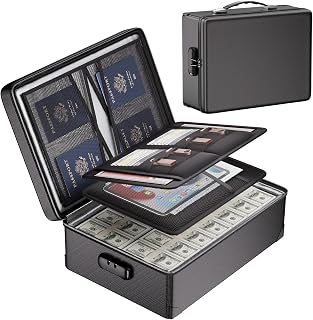
Document boxes sit between a fabric pouch and a steel safe, using layered insulating materials to protect paper without the weight or cost of a hardened box.
For someone whose concern is genuinely fire rather than burglary, that is a rational place to spend. Most household paperwork is irreplaceable rather than valuable, and protecting it from fire is a different problem from securing it against theft.
The lock provides privacy rather than security, and the lighter build means it can be picked up and carried. Read the stated fire rating carefully, since layered boxes vary widely and the number of layers is not a rating in itself.
Bottom line: sensible fire protection for paperwork, not a security product.
- Type: fire resistant document box
- Construction: multi layer insulation
- Lock: basic lock for privacy
- Weight: lighter than steel safes
- Best use: household paperwork
- Security: minimal
Households whose concern is fire damage to irreplaceable paperwork rather than theft.
Not for cash or valuables where security matters.
Read the stated fire rating rather than the layer count, since layers are a construction detail and not a certification.
Consider keeping it inside a cupboard or drawer rather than in plain sight.

Pros
- Compact enough to store discreetly
- Key lock needs no power
- Focused on essential paperwork
- Affordable entry to fire protection
Cons
- Small interior fills quickly
- Limited theft resistance
Not every household needs a large safe. For a passport, a birth certificate, a spare key and a few hundred in cash, a compact box does the job and fits somewhere unremarkable.
The key lock means nothing to maintain, which suits a box that will be opened twice a year.
Small interiors fill faster than people expect, particularly once fire insulation eats into the dimensions, so check the internal measurements against what you actually intend to store. As with all light boxes, this is fire protection rather than security.
Bottom line: a fine compact option for a short list of essential papers.
- Type: compact fire resistant box
- Lock: key
- Interior: small, essential documents
- Power: none required
- Security: limited
- Placement: discreet storage
Individuals and small households protecting a short list of essential documents.
Not for growing collections of paperwork.
Measure your documents before ordering, since insulation reduces the usable interior considerably.
Keep it out of obvious places, since a small box is easy to carry away.

Pros
- Shape suits a closet shelf rather than a floor
- Keypad gives fast access
- Steel construction
- Fits into existing storage
Cons
- Battery dependent keypad
- Shelf placement can make bolting down harder
Where a safe goes is often the real constraint, and a unit shaped to sit on a closet shelf solves a problem that a cube shaped box does not.
A keypad suits this placement, since reaching up to a shelf and turning a key is more awkward than entering a code.
Two practical issues follow. Batteries need managing as with any electronic lock, and a shelf position often makes bolting down impractical, which leaves weight as the only thing discouraging removal. Consider what is stored accordingly.
Bottom line: a good fit for closet storage, with the usual keypad and portability caveats.
- Type: shelf safe
- Lock: digital keypad
- Body: steel
- Placement: closet shelf
- Power: batteries
- Bolting: often impractical on a shelf
Households wanting a safe that fits existing closet storage rather than occupying floor space.
Less suitable where bolting down is a priority.
Change batteries annually and confirm the override key is accessible but not stored nearby.
Check the shelf can carry the loaded weight before installing.

Pros
- Compact and easy to place
- Keypad access for frequent use
- Suits cash and small valuables
- Affordable
Cons
- Small interior is not for documents
- Light construction limits theft resistance
This is a cash box rather than a document safe, and judged on that basis it is straightforward: small, quick to open, and easy to tuck away.
For household cash, spare keys, small jewellery or anything you want out of casual reach, it does the job without occupying much space.
Do not expect it to hold documents, since the interior is not shaped for paper, and do not expect serious security from a light box. Placement matters more than the lock here: somewhere not obvious, ideally secured, rather than on a bedside table.
Bottom line: a practical small cash box, with modest expectations on both fire and theft.
- Type: compact money safe
- Lock: digital keypad
- Interior: cash and small valuables
- Documents: not suited to standard paper
- Power: batteries
- Security: modest
Households wanting cash and small valuables out of casual reach with quick access.
Not for document storage or serious security needs.
Place it somewhere non obvious and secure it if the base allows, since a small box is trivially portable.
Keep the override key elsewhere in the house rather than nearby.

Pros
- Very light and easy to store anywhere
- Holds documents flat without folding
- Works as a layer inside a rigid safe
- Suits renters and frequent movers
Cons
- No security whatsoever
- Shorter fire protection than a rigid safe
A pouch is a different tool from a safe and useful in situations a safe is not. It weighs almost nothing, fits in a filing cabinet or a drawer, and can be grabbed quickly if a household needs to leave.
Used inside a rigid safe it adds a second layer of protection and keeps documents grouped, which is a small organisational benefit alongside the fire one.
What it does not do is provide any security at all: it is fabric with a zip. Fire ratings for pouches are also generally shorter than for rigid safes. For renters, people who move often, or anyone protecting a small set of papers, those are acceptable limits.
Bottom line: an inexpensive layer, best used alongside a safe rather than instead of one.
- Type: fire resistant document pouch
- Size: 10 by 13 inches
- Security: none
- Fire rating: shorter than rigid safes
- Use: standalone or inside a safe
- Weight: very light
Renters, frequent movers, and anyone adding a layer of protection inside an existing safe.
Not for cash or valuables needing security.
Use it inside a rigid safe where possible, which combines the fire layers and keeps documents grouped.
Check the stated rating rather than assuming a pouch matches a safe for duration.
How to Choose a Fireproof Safe For Cash
Fireproof Comes With a Temperature and a Clock

Fire ratings describe how long the interior stays below a threshold while the outside is held at a test temperature. Half an hour and one hour are the common consumer ratings, and the threshold is set by what is being protected.
Duration is the part people underestimate. A house fire can burn for longer than thirty minutes before it is brought under control, and where a fire burns hottest depends on what is in the room. A rating is a tested guarantee under specific conditions, not a promise about every fire.
Independent certification marks matter here more than marketing language. A safe described as fire resistant with no rating stated is telling you considerably less than one carrying a tested duration and temperature.
A Paper Rating Is Not a Digital Media Rating
This is the distinction that ruins backups. Paper chars at a far higher temperature than the point at which plastic deforms and magnetic or flash storage fails. A safe rated to keep documents intact can easily let its interior reach a temperature that destroys a hard drive or a memory stick.
Safes rated for digital media hold their interior much cooler and are built differently to do it. They are less common and cost more, and buying a paper rated box for backup drives is a mistake that only reveals itself after the event.
The other hazard for electronics is moisture. Many fire safes work partly by releasing water vapour trapped in the insulation, which is what keeps the interior cool, and that steam is not kind to storage devices. Sealing anything electronic in a waterproof bag inside the safe is sensible regardless of rating.
Fire Resistance Is Not Theft Resistance
These are separate categories of product that look similar. A fire safe is an insulated box designed to survive heat; a security safe is a hardened box designed to resist attack. Some products do both, and most inexpensive ones do neither particularly well.
The realistic threat to a small fire safe is not someone attacking the lock. It is someone picking it up and carrying it out, then opening it at leisure somewhere else. A twenty pound box with a handle is designed to be portable, and that works for whoever is holding it.
If theft is a real concern rather than a secondary one, look for a safe with a bolt down provision and hardened construction, and expect to pay considerably more. Treat a light document chest as fire protection with a lock, not as a security measure.
Bolt It Down or Accept It Can Walk
Many safes include pre drilled holes in the base for exactly this reason, and the fixings are usually supplied. Bolting the safe to a floor joist or a concrete slab converts it from portable to fixed, which removes the easiest way to defeat it entirely.
Placement affects both risks at once. A safe in a wardrobe on a ground floor is easy to reach in a fire and easy to carry out; one bolted in a basement or a fixed closet is harder for both. Corners of rooms on lower floors also tend to see less extreme temperatures in a fire than open central spaces.
Where bolting is not possible, weight is the fallback. A heavier safe is meaningfully harder to remove quickly, which is one of the few arguments for buying a larger unit than your contents strictly need.
Water Rating, and What Firefighting Does
Water damage after a fire is common and frequently forgotten. Putting a fire out involves a great deal of water, and a safe that survived the heat can end up sitting in it.
Waterproof ratings are separate from fire ratings and usually describe a depth and a duration of submersion. They also cover the more ordinary scenario of a burst pipe or a flooded basement, which is a likelier event than a fire in most homes.
If a safe carries both ratings, they are two independent tests rather than one. A product that is fire rated and merely described as water resistant is not making the same claim as one carrying a stated submersion rating.
Key, Dial or Keypad
Each lock type fails differently. A key lock is simple and needs no power, and the weakness is obvious: a key that is lost, or stored somewhere a burglar would look, defeats it. Keys should not live near the safe.
Combination dials also need no power and cannot be lost, though they are slower to open and a forgotten combination is a serious problem. They suit a safe that is opened rarely and holds documents rather than daily items.
Electronic keypads are fastest to open and depend on batteries. Better ones warn before the cells die and provide a key override; the worst leave you locked out. If you choose a keypad, check where the override key goes and replace batteries on a schedule rather than waiting.
Interior Space Is Smaller Than You Expect
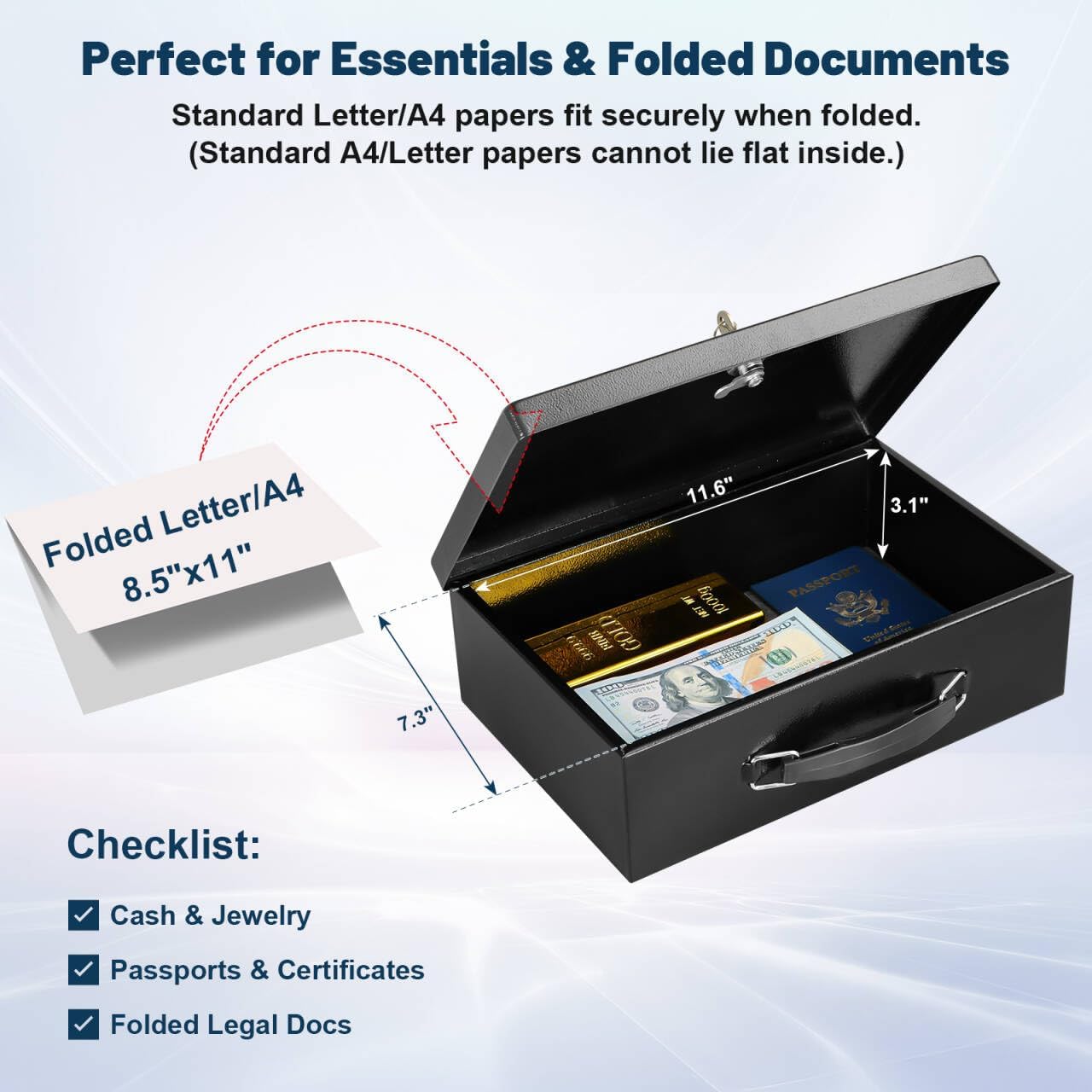
Fire insulation is thick, so the usable interior of a fire safe is dramatically smaller than its external dimensions suggest. A box that looks generous outside can struggle with a stack of documents inside.
Check the internal measurements rather than the external ones, and check them against actual paper sizes. A safe that will not take a standard document without folding is an ongoing irritation, and folded papers in a safe tend to become disorganised papers in a safe.
Think about what will accumulate too. Households add documents over years, and a safe filled at purchase will be overflowing within a few. Buying one size up is usually the better decision.
What Actually Belongs Inside
The sensible contents are documents that are painful to replace and small valuables. Passports, birth and marriage certificates, property deeds, insurance policies, vehicle titles and a modest amount of cash cover most cases.
What is worth leaving out is anything you need frequently, since a safe that is opened daily tends to end up unlocked. Backup drives belong in a media rated safe or, better, somewhere else entirely, since off site backup solves the problem a safe only mitigates.
A photograph or a written inventory of the contents, stored separately, is worth the ten minutes. It matters for insurance claims and for knowing what needs replacing if the worst happens.
Pouches and Bags as an Alternative
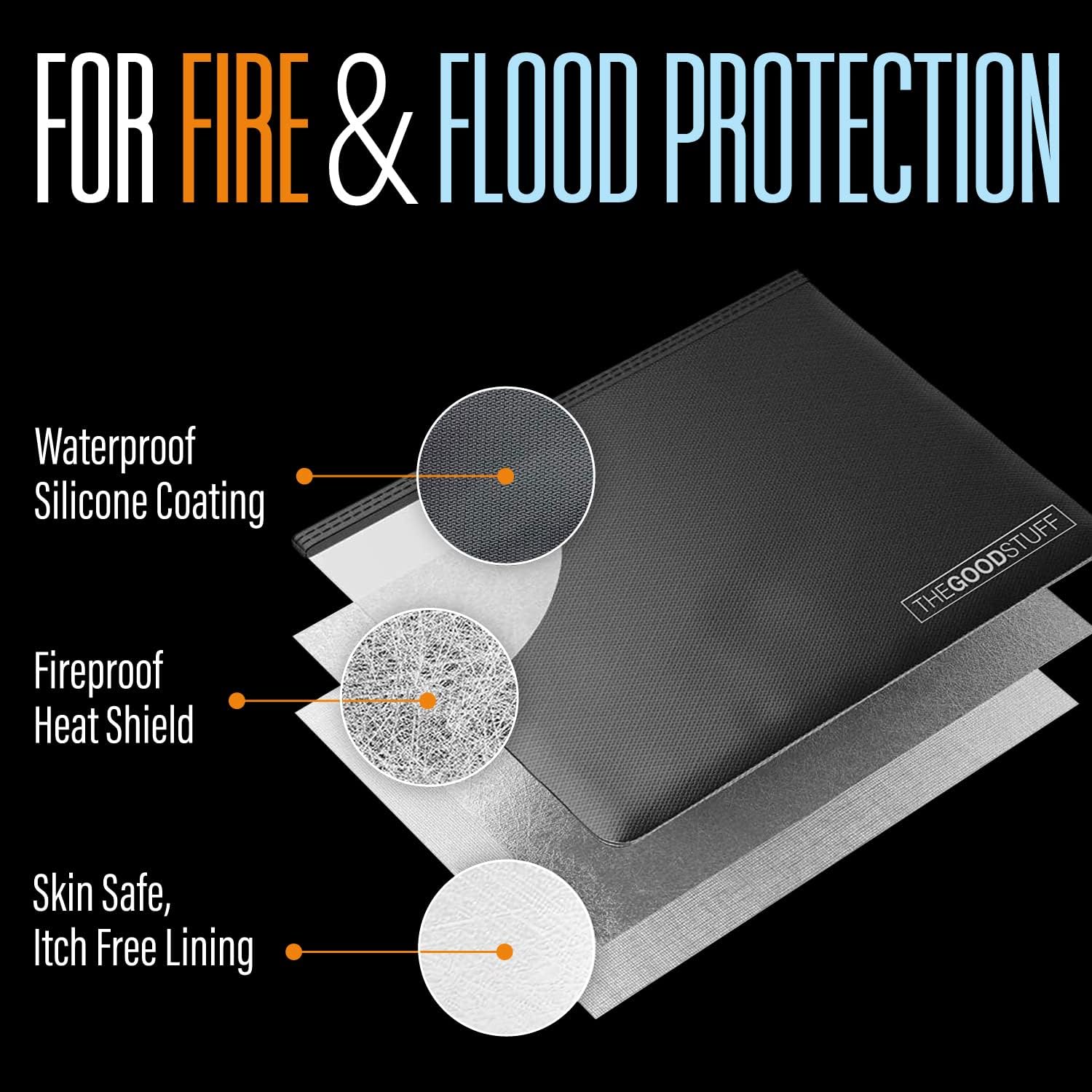
Fire resistant document pouches occupy a different niche and are worth understanding rather than dismissing. They are light, cheap, hold a surprising amount of paper flat, and can be put inside a safe as a second layer or inside a filing cabinet where a safe would not fit.
They offer no security whatsoever, being fabric with a zip, and their fire ratings are generally shorter than a rigid safe’s. For someone renting, moving frequently, or protecting a small set of papers, they are a reasonable compromise.
Used together, a pouch inside a safe gives layered protection and keeps documents organised, which is a small practical benefit on top of the fire one.
What a Safe Does Not Solve
It is worth being clear about the limits of the whole approach, because a safe encourages a feeling of completeness that the situation does not justify.
Everything inside is in one place, which is the point and also the weakness. A fire that exceeds the rating, a flood deeper than the water rating, or a burglary that removes the whole box takes all of it at once. Concentrating irreplaceable items in a single container raises the stakes on that container performing.
The cheap correction is duplication rather than a better safe. Scanned copies of documents stored in an account you can reach from anywhere cover the case where the originals are lost, and for most purposes a copy is enough to start a replacement process. Photographs of the contents serve the same function for an insurance claim. Neither costs anything beyond an afternoon.
For the few documents where only an original will do, some households use a bank deposit box for those and a home safe for everything else. That splits the risk across two locations, which is the one thing a single container can never do regardless of how well it is rated.
| Product | Type | Lock | Best For |
|---|---|---|---|
| SentrySafe Fireproof Chest | Portable chest | Key | Documents and cash at home |
| SentrySafe Fire and Waterproof File | File chest | Key | Larger document collections |
| SentrySafe Digital Alloy Steel Safe | Box safe | Digital keypad | Faster access with a keypad |
| DocSafe Fireproof Document Box | Document box | Lock | Multi layer document protection |
| KYODOLED Fireproof Document Box | Document box | Key | Compact paper storage |
| SentrySafe Shelf Safe | Shelf safe | Digital keypad | Fitting inside a closet shelf |
| Voncabay Money Safe Box | Box safe | Digital keypad | Cash and small valuables |
| Fireproof Document Pouch | Pouch | None | Renters and layered protection |
For related home and office organisation, browse our category guides, and the full library sits at our article index.
Why You Should Trust Us
We led with ratings rather than with features, because fireproof used as an adjective tells a buyer nothing and the two numbers behind it tell them almost everything. A guide that ranks these boxes without explaining the difference between a paper rating and a media rating is leaving out the detail most likely to cost someone their backups.
We also separated fire protection from theft protection deliberately, since the two are routinely conflated in listings. Real customer ratings informed the shortlist, with attention to repeated reports about keypad failures and interior capacity being smaller than expected, and near identical listings of the same safe were counted once.
Final Thoughts
For most households the SentrySafe Fireproof Safe Box with Key Lock is the sensible purchase. It protects the documents and cash that are painful to replace, the key lock has nothing to run out of power, and the size suits a wardrobe or a closet shelf.
Where there are more papers than a chest will hold, the SentrySafe fire and waterproof file chest takes standard documents without folding. If you want faster access, the digital keypad models are quicker to open, provided you keep the override key somewhere sensible and change the batteries on a schedule. Renters and anyone protecting a small set of papers should consider a fire resistant pouch, alone or inside a safe.
Whatever you choose, bolt it down if the base allows it, keep backup drives in a media rated container or off site, and check the internal dimensions rather than the external ones. Browse more of our category guides for the rest of the house.
Frequently Asked Questions
What is the best fireproof safe for cash in 2026?
The SentrySafe Fireproof Safe Box with Key Lock is our overall pick for 2026 for documents and cash at home. For larger document collections, the fire and waterproof file chest takes standard papers without folding.
Can I keep a hard drive or USB stick in a fireproof safe?
Only in one rated for digital media. Paper survives far higher temperatures than plastic and magnetic or flash storage, so a paper rated safe can protect documents while its interior gets hot enough to destroy a drive. Steam released by the insulation is a second hazard, so seal electronics in a waterproof bag.
Will a fireproof safe stop a burglar?
Not on its own. Fire resistance and theft resistance are different designs, and the realistic risk with a light portable chest is that it is carried away and opened elsewhere. Bolt it down through the base if the safe allows it, and treat a light document chest as fire protection with a lock.
How long does fire protection last?
As long as the rating states, commonly thirty minutes or one hour at a tested temperature. A fire that burns longer or hotter than the test conditions is outside what the safe was certified for, which is why the stated duration matters more than the word fireproof on the box.
Why is the inside so much smaller than the outside?
Because fire insulation is thick, and it is what does the work. Always check internal dimensions against the documents you intend to store, and consider buying one size larger than your current contents, since households accumulate paperwork over the years. Our home guides cover other storage decisions.

Write Your Review
No reviews yet. Be the first to share your experience!