

Undercoat is the soft dense layer beneath the outer guard hairs on a double coated dog, and it is what covers your floor twice a year. Getting it out is a specific job, and the tools sold for it are not interchangeable: a rake reaches down through the coat, a slicker works the surface, and a bladed deshedder pulls loose hair away in quantity. We compared 10 dog brushes for undercoat from MIU COLOR, GoPets, SleekEZ and more on tooth length, mechanism, skin safety and which coat each one actually suits, updated for August 2026.
Our top pick is the Maxpower Planet Grooming Rake for reaching the undercoat itself without cutting the guard hairs above it, which is the balance that matters on a double coated dog. Below that the list splits by tool type, and the guide explains which one your dog needs. More pet kit sits in our pet supplies section.

Pros
- Reaches the undercoat layer rather than skimming the surface
- Rounded teeth pull dead hair without cutting healthy guard hair
- Double row clears more per pass on a heavy shedding coat
- Comfortable handle for the twenty minutes a big dog takes
Cons
- Too long in the tooth for short coated dogs, where it drags on skin
- Needs clearing frequently during a heavy shed
- Does not finish a coat, so a comb or slicker is still wanted
This is the tool the search term actually describes. A rake with long rounded teeth passes between the outer guard hairs and lifts dead undercoat from underneath, which is the layer that compacts against the skin and turns into mats if it is left.
The rounded teeth are the safety feature that matters. Unlike a bladed deshedder, there is no cutting edge, so working the same area twice does not thin the topcoat. On a double coated dog, that difference protects the coat structure.
A double row clears more per pass, which is what you want in a seasonal coat blow when there is a genuinely large amount of hair to move.
Two honest limits. It is the wrong tool on a short coated dog, where long teeth reach past the coat and drag on skin, and it is not a finishing tool: after raking, a comb or slicker is what tidies the surface.
Bottom line: the tool that does the most good on a double coat, and the one to buy first.
- Type: undercoat rake
- Teeth: long, rounded, double row
- Action: pulls without cutting
- Suits: double coated dogs and cats
- Handle: cushioned grip
- Use: seasonal and routine deshedding
For owners of double coated breeds with real undercoat depth, especially during a seasonal shed. Skip it for single coated dogs, which have no undercoat to rake, and for short coats where the teeth reach skin.
Let the weight of the tool do the work and keep the angle shallow so teeth travel through coat rather than toward skin. Clear the head as you go, since a packed rake drags instead of gliding. Check the skin as you work and treat a dog turning to look at you as a signal to lighten up.

Pros
- Rotating teeth reduce pulling as they pass through coat
- From a brand with wide groomer familiarity
- Handles tangles as well as loose undercoat
- Built for thick coated breeds specifically
Cons
- Rotating teeth are a moving part that can stiffen with hair and grime
- Costs more than plain rakes that do the same core job
FURminator is best known for bladed deshedders, and this is the other half of their range: a rake that pulls rather than cuts, which is the safer tool for regular use on a double coat.
The rotating teeth are the distinguishing feature. As the rake meets resistance the teeth turn slightly, which reduces the tug a dog feels when the tool hits a dense patch, and that matters for dogs who have learned to dislike grooming.
It handles tangles better than a plain rake for the same reason, easing through rather than dragging.
The trade is mechanical. Rotating teeth are moving parts, and hair and grime can stiffen them over time, where a fixed tooth rake has nothing to seize. It also costs more than simpler rakes that do the fundamental job.
Bottom line: a gentler rake for sensitive or reluctant dogs, at a premium over plain designs.
- Type: undercoat rake
- Teeth: rotating, rounded
- Action: pulls loose hair and tangles
- Suits: thick coated dogs and cats
- Handle: ergonomic grip
- Use: routine and seasonal grooming
For thick coated dogs, and particularly for dogs that flinch at grooming, where the rotating teeth reduce pulling. Less necessary if your dog tolerates a plain rake happily.
Work in lines, lifting a section of coat and clearing the strip from skin outward before dropping the next section over it. Keep the teeth clear during a heavy shed, and rinse and dry the head occasionally so the rotating teeth do not stiffen with grease and hair.

Pros
- Toothed blade clears loose hair fast with a simple action
- Works on short, medium and long coats
- No moving parts to seize or clog badly
- Also lifts hair from furniture and car seats
Cons
- Surface tool, so it does not reach deep undercoat on a plush coat
- Rigid blade needs a light hand on bony areas
This is a different mechanism from both rakes and slickers: a wavy toothed blade that catches loose hair and lifts it as you draw it across the coat. It is simple, there is nothing to break, and it clears a startling amount of surface shedding quickly.
The tooth pattern is the reason it is gentler than an aggressive deshedder. It grips and pulls rather than presenting a fine cutting edge, so used sensibly it is less likely to thin the topcoat.
It also works on upholstery, which sounds like a gimmick and is genuinely useful when a double coated dog has been on the sofa.
The limitation is depth. This is a surface tool, and on a plush double coat it will not reach the compacted undercoat that a long toothed rake gets to. Use it after a rake rather than instead of one.
Bottom line: an effective, simple surface deshedder, and a good partner to a rake rather than a replacement.
- Type: toothed deshedding blade
- Blade: patented wavy tooth pattern
- Handle: wood
- Suits: short, medium and long coats
- Extra use: hair removal from fabric
- Moving parts: none
For heavy surface shedders and short double coats, and for anyone who wants a simple tool with nothing to break. Not sufficient on its own for a deep plush undercoat, which needs a rake.
Match the tool to where the hair is. If loose fur comes off on your hand when you stroke the dog, a surface tool like this handles it. If you part the coat and find a dense packed layer near the skin, you need a long toothed rake first and this afterwards.

Pros
- Gentle pulling action suited to sensitive dogs
- Five inch width covers a body quickly without being unwieldy
- Simple design with no mechanism to fail
- Works on cats as well as dogs
Cons
- Surface and mid layer tool rather than a deep rake
- Narrow blade means more passes on a very large dog
The EquiGroomer comes from the horse grooming world, and the design philosophy shows: a toothed blade that lifts dead hair with very little force, aimed at animals that will not tolerate anything aggressive.
For a dog that has had a bad experience with a bladed deshedder, that gentleness is the entire selling point. It clears loose coat steadily rather than dramatically, and dogs generally accept it well.
Five inches is a sensible width for a medium dog. On a very large breed you will be making a lot of passes, and on a small one it is more tool than the job needs.
Like the other blade style tools here, it works the surface and the layer just beneath rather than reaching deep into a plush undercoat, so a rake still has a place alongside it.
Bottom line: the gentle option for sensitive dogs, best paired with a rake on a heavy coat.
- Type: toothed deshedding blade
- Width: 5 in
- Action: gentle lifting
- Suits: dogs and cats
- Best for: dogs up to medium size
- Moving parts: none
For sensitive dogs, nervous groomers and cats that will not sit for anything rough. Less suitable as the only tool on a very large double coated dog, where coverage and depth both matter.
Draw it in the direction of hair growth with almost no downward pressure and let the teeth do the lifting. Short sessions work better than long ones with an anxious animal, and stopping while the dog is still comfortable is what makes the next session easier.

Pros
- Two blade densities cover dematting and deshedding
- Rounded blade ends reduce the risk of scratching skin
- Cushioned handle for longer sessions
- One tool instead of two for occasional grooming
Cons
- Dematting blades cut through mats, so they must be used carefully
- Neither side is as specialised as a dedicated tool
- Not a substitute for a long toothed rake on plush coats
The two sided design is a sensible answer for owners who do not want a drawer of grooming tools. The sparse side cuts through mats, the dense side clears loose undercoat, and flipping the tool covers both jobs.
Rounded blade tips are the detail worth noting. Dematting blades are sharp by necessity, and rounded ends are what keeps them from catching skin when you reach the bottom of a mat unexpectedly.
The compromise is that neither side is as good as the specialised tool it replaces. A dedicated rake reaches deeper, and a dedicated dematter is easier to control on a bad mat.
Take real care with the dematting side. It works by cutting the mat apart, which means it can cut skin if you drive it into a mat sitting tight against the body.
Bottom line: a practical two in one for moderate coats, and not a replacement for a proper rake on a heavy double coat.
- Type: double sided comb
- Sides: dematting and deshedding
- Blade tips: rounded
- Handle: cushioned grip
- Suits: dogs and cats
- Use: tangles and loose undercoat
For owners of moderately coated dogs who want one tool for tangles and shedding. Not the pick for deep plush undercoat, and not for someone nervous about using a cutting tool near skin.
Work the outer edge of a mat rather than driving the blades into the base of it, and lift the mat away from the body with your fingers so you always know where skin is. If a mat sits tight against the skin, stop and let a groomer deal with it rather than cutting blind.
Pros
- Professional grade pins that flex rather than scratch
- Noticeably gentler in use than budget slickers
- Suits all coat types for surface and finishing work
- Well balanced handle for extended grooming
Cons
- Slickers do not reach deep undercoat, whatever the coat type
- Costs considerably more than mass market slickers
- Fixed pad means clearing hair by hand
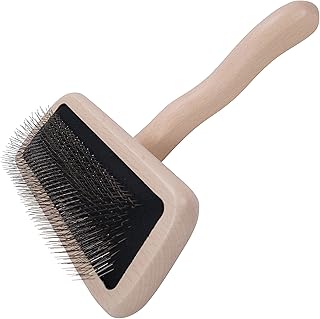
Slicker brushes are all superficially similar and they are not equal in use. The difference is the pins: quality ones flex as they meet the coat, cheap ones stay rigid and scratch. This is the version groomers reach for, and the gentleness is immediately obvious.
What it does is surface work: lifting hair that has come loose, breaking up small tangles, and finishing a coat so it lies properly after the deeper work is done.
What it does not do, and no slicker does, is reach compacted undercoat on a plush coat. Treating a slicker as an undercoat tool is the most common mistake in this category.
The pad is fixed, so hair comes out with fingers or a comb rather than a button. On a tool this good that is a fair trade for having nothing that can seize.
Bottom line: the best slicker here for gentleness, and a finishing tool rather than an undercoat one.
- Type: slicker brush
- Pins: fine, flexible
- Pad: fixed, no self cleaning
- Suits: all coat types
- Use: surface work, tangles, finishing
- Grade: professional
For anyone who grooms often and wants a slicker that does not irritate skin, and for finishing after a rake has done the deep work. Not the tool to buy if you only want one thing for a shedding double coat.
Use light pressure and keep the pad flat to the coat rather than digging a corner in, since brush burn comes from pins pushed into skin in one spot. Check pins occasionally and straighten or retire the brush if any are bent, because a bent pin scratches.
Pros
- Two tools that are genuinely used together
- Metal comb is the check that tells you a section is finished
- Sensible starting kit for a first time owner
- Covers deshedding and detangling in one purchase
Cons
- Deshedding brush is a general tool rather than a deep rake
- Combo tools are individually less refined than specialist versions
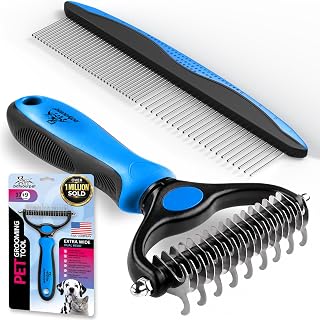
The value pick, and what makes it sensible is the comb. Every groomer finishes a section by running a metal comb from skin to tip, because if the comb passes cleanly the section is done and more brushing achieves nothing. Most owners never buy one, and then they over brush.
Pairing that comb with a deshedding brush covers the two halves of a session: clear the loose hair, then check the work.
The brush itself is a general purpose deshedder rather than a long toothed rake, so on a very deep plush coat it will not reach the bottom layer the way a dedicated rake does.
Neither piece is as refined as a specialist tool bought alone, which is the ordinary trade in any combination set.
Bottom line: the best starting purchase for someone new to grooming a shedding dog.
- Contents: deshedding brush and metal comb
- Comb: detangling and finishing use
- Suits: dogs and cats
- Use: clearing loose hair, checking sections
- Format: two piece kit
- Handles: cushioned
For first time owners of a shedding dog who want a workable kit rather than a single tool. Less suitable for a deep plush undercoat that really needs a long toothed rake as the primary tool.
Use the brush in lines, section by section, then run the comb through that section from skin to tip. When the comb passes without catching, move on rather than brushing more. That single habit prevents most over grooming and skin irritation.

Pros
- Simple deshedding action with no learning curve
- Works on both dogs and cats
- Compact enough for smaller animals
- Effective at reducing loose hair around the home
Cons
- General purpose tool rather than a specialist undercoat rake
- Needs a light hand to avoid over working the coat
This is the plain deshedding tool in the group, aimed at owners who want to reduce the amount of hair on the sofa without learning a grooming routine.
Used regularly it does that job. Loose hair comes away, the coat looks tidier, and there is nothing complicated about the technique.
Being a general tool rather than a specialist one, it works the surface rather than reaching a deep compacted undercoat. On a plush double coat it is a supplement to a rake, not an alternative.
As with anything that pulls hair effectively, restraint is the rule. Stop when hair stops coming away easily instead of chasing a bigger pile.
Bottom line: a simple, effective everyday deshedder for moderate coats.
- Type: deshedding tool
- Suits: dogs and cats
- Head: compact
- Use: routine loose hair removal
- Design: single piece
- Handle: cushioned grip
For everyday hair control on moderately shedding dogs and cats. Not the primary tool for a deep double coat in seasonal shed, where a long toothed rake does far more.
For a simple tool like this, judge it by how much coat you actually have. Part the fur and look: if there is a dense soft layer near the skin, buy a rake as the main tool and treat a general deshedder as the tidy up. If the coat is one texture through, this class of tool is all you need.

Pros
- Button retracts the pins so hair lifts off in one piece
- Skin friendly rounded pin tips
- Comfortable for longer sessions
- Good for tangles and loose surface hair
Cons
- Slickers do not reach compacted undercoat
- Retraction mechanism is a part that can stiffen over time
The self cleaning button is the reason to choose a slicker like this. Picking matted fur out of fine bent pins is tedious, and being able to retract the pins and lift the pad of hair away in one motion makes people groom more often, which is the outcome that matters.
Rounded pin tips are the safety feature. Slickers cause brush burn when pins are pressed into skin, and rounded ends reduce that risk without stopping the brush working.
What it is not is an undercoat tool. Fine pins work the surface, lifting hair that has already come loose and breaking small tangles, and on a plush double coat the compacted layer stays where it is.
The mechanism is a moving part, and hair and grease can stiffen it over time. That is the ordinary trade for the convenience.
Bottom line: a convenient surface brush for regular tidying, best used after a rake on a double coat.
- Type: self cleaning slicker
- Pins: fine, rounded tips, retractable
- Suits: dogs and cats
- Use: surface grooming, tangles
- Handle: cushioned
- Cleaning: button retraction
For owners who groom often and want quick clearing between passes, and for coats that tangle at the surface. Not for deep undercoat work on a plush coat.
Keep the pad flat against the coat and use light pressure, since brush burn comes from pins pushed into skin rather than from the number of strokes. Clear the pins often, and keep the retraction mechanism free of hair and grease so it does not stiffen.

Pros
- One button clearing keeps sessions moving
- Skin friendly rounded pin tips
- Very widely used, so behaviour is well documented by owners
- Suits both dogs and cats
Cons
- Surface tool only, with no reach into deep undercoat
- Mechanism can stiffen with hair and grease
- Pins can bend with heavy use
This is one of the most widely bought self cleaning slickers, and its popularity is a reasonable signal in a category full of near identical products, since the pattern of what owners report over time is more informative than any specification.
In use it does the standard slicker job well: lifting loose surface hair, working out small tangles, and leaving the coat lying properly.
The button mechanism keeps sessions moving. Clearing a pad of hair in one motion rather than picking at pins is the difference between grooming for ten minutes and giving up after three.
Two ordinary limitations apply. It cannot reach compacted undercoat, so on a plush double coat it follows a rake rather than replacing one, and fine pins bend with heavy handed use.
Bottom line: a solid everyday slicker, and one to pair with a rake rather than use alone on a double coat.
- Type: self cleaning slicker
- Pins: fine, rounded, retractable
- Suits: dogs and cats
- Use: everyday surface grooming
- Cleaning: single button
- Handle: cushioned grip
For everyday brushing on most coat types, and for owners who want the cheapest reliable slicker. Not for deep undercoat clearing, which needs a long toothed rake.
Brush in the direction of hair growth with the pad flat, and clear the pins whenever they fill rather than pushing harder. On a double coated dog, rake first and use this to lift what the rake has loosened, then check the section with a metal comb.
How to Choose a Dog Brush for Undercoat
Rake, Slicker or Bladed Deshedder
These three tools get sold under the same search term and do different jobs. An undercoat rake has long rounded teeth in one or two rows, and it is designed to pass between the guard hairs and pull dead undercoat out from underneath. That is the actual undercoat job.
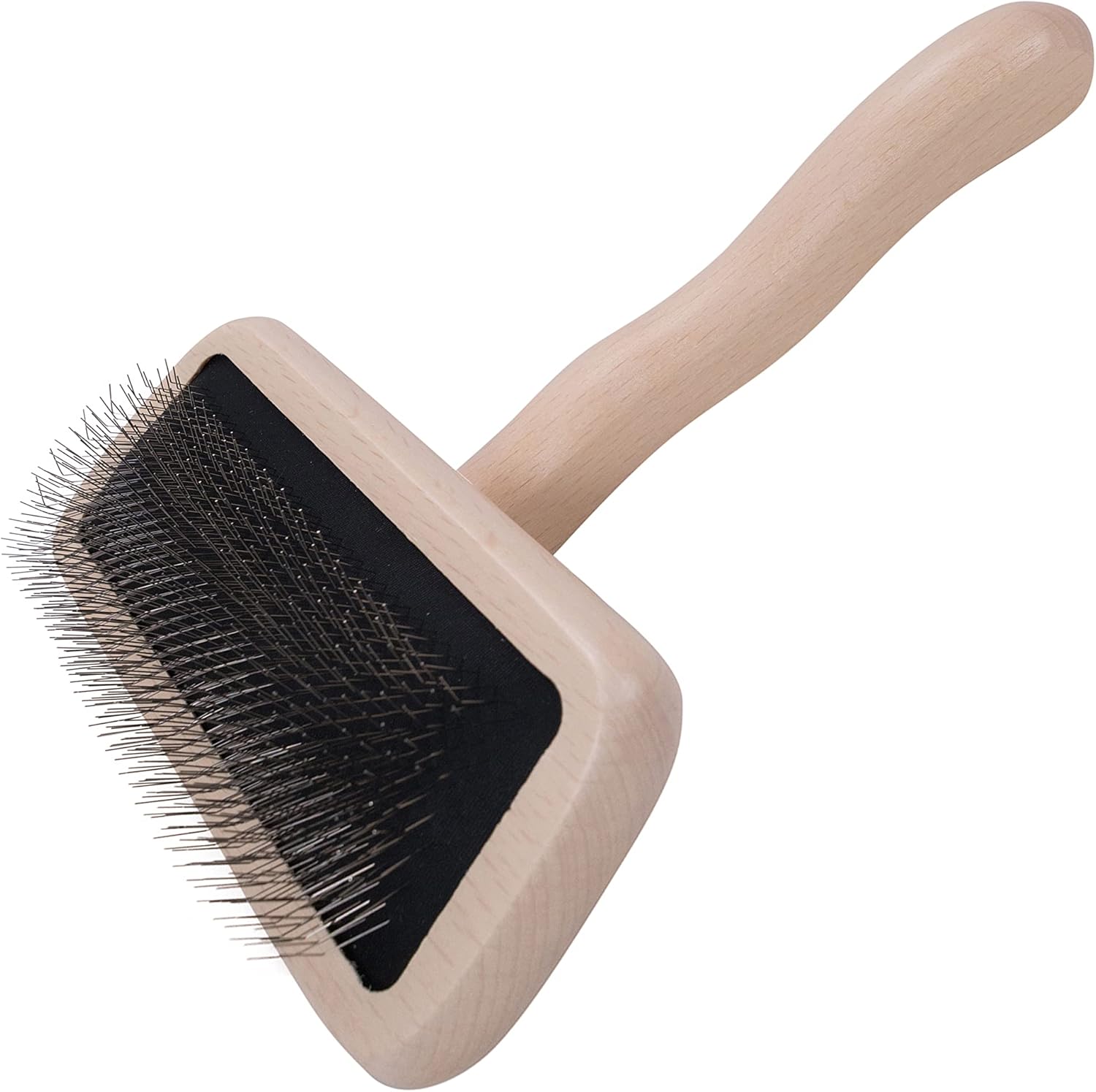
A slicker brush has fine bent wire pins across a flat pad. It excels at surface work: lifting hair that has already come loose, breaking up small tangles and finishing a coat so it lies properly. It does not reach deep undercoat on a thick double coat, whatever the listing says.
A bladed deshedding tool has a toothed metal edge that grips and pulls loose hair away in impressive quantities. It is the fastest of the three at clearing volume, and it is also the one that can damage a coat if used heavily, because that edge does not distinguish between dead undercoat and healthy guard hair.
Tooth Length Has to Match Coat Depth

A rake only works if the teeth reach the layer you are trying to clear. On a thick coated breed with a deep plush undercoat, short teeth skim the top and leave the compacted layer underneath, which is precisely the layer that mats against the skin.
Too long is also a problem. On a shorter double coat, over long teeth reach past the coat entirely and drag on skin, which is uncomfortable and teaches the dog to dislike being groomed. Matching tooth length to coat depth is the single most useful thing you can get right.
Tooth spacing matters alongside length. Wider spacing moves through dense coat without jamming, while narrow spacing catches more per pass and clogs faster on a heavy shedder. For a big coat, wider and longer; for a moderate one, closer and shorter.
Tools With a Cutting Edge, and Why Restraint Matters

The most effective deshedding tools work because they have a blade like edge that catches hair and pulls it free. The pile of fur they produce is genuinely impressive, and that is exactly the trap: it is easy to keep going long past the point where you are removing dead hair.
Past that point the edge starts thinning and cutting healthy guard hair. On a double coated dog that damages the coat structure, and the result is a rough looking topcoat that takes months to grow back properly. Groomers see this often after an enthusiastic owner buys their first bladed tool.
The sensible approach is short sessions a couple of times a week during a shed, light pressure, and stopping when the tool stops producing easily. If hair is not coming away freely, the dead coat is already out.
Self-Cleaning Mechanisms and Handling
Slicker brushes clog fast, and pulling matted fur out of fine bent pins with your fingers is tedious enough that it shortens grooming sessions. A self cleaning mechanism retracts the pins into the head at the press of a button so the hair lifts off in one piece.
It is a convenience feature rather than a grooming improvement, and it is a genuine one. The trade is a moving part that can stiffen or fail, where a fixed pad has nothing to go wrong.
Handle design deserves more attention than it gets. Grooming a big dog takes twenty minutes of repetitive movement, and a thin hard handle makes that unpleasant. A grip with some cushioning and a shape that suits your hand position is worth more than an extra feature on the head.
Skin Safety, Pressure and Sensitive Areas
Every tool here can hurt a dog if pressed. Slicker pins in particular can cause brush burn, a red irritated patch left by working the same spot with the pins pushed into the skin. It is easy to do without noticing, because the dog often tolerates it until the skin is already sore.
The technique is to let the tool’s weight do the work and keep the angle shallow so teeth pass through coat rather than digging toward skin. Check the skin as you go, and treat a dog moving away or turning to look at you as information rather than misbehaviour.
Some areas need lighter hands than others: the belly, the armpits, behind the ears and the back of the thighs all have thinner skin and finer coat. Those are also the places mats form first, which is an unhelpful combination and a reason to work them often and gently rather than rarely and hard.
Coat Type Decides the Tool, Not the Breed Name
Double coated does not mean one thing. A plush coated dog with a dense woolly underlayer needs a long toothed rake. A shorter double coat that sheds heavily but has little depth is better served by a bladed deshedder or a toothed blade that works the surface.
Single coated dogs, which have no true undercoat at all, do not need any of this. For them a slicker and a comb handle everything, and a rake or deshedder is at best pointless and at worst damaging.
Part the coat with your fingers and look before you buy. If you can see a soft dense layer sitting under the longer outer hairs, you have undercoat to remove; if the hair goes down to skin as one texture, you do not. More care guidance is in our pet supplies section.
Line Brushing and the Order You Use the Tools
Most owners brush the outside of the coat and wonder why hair keeps appearing. Groomers work in lines instead: lift a section of coat with one hand, work the exposed strip from the skin outward, then drop the next section down over it. It is slower to describe than to do, and it is the difference between clearing a coat and tidying it.
Order matters as well. Rake first to bring the dead undercoat up through the guard hairs, then use a deshedder or slicker to clear what the rake loosened, then finish with a metal comb. If the comb passes through cleanly from skin to tip, the section is done and more brushing achieves nothing.
Work a dry coat, and do it somewhere the mess is manageable. A shedding double coat produces a startling amount of fur, and doing it outdoors or over a sheet saves as much time as the grooming itself takes.
Keeping the Tool Working and Knowing When to Replace It
Clear a rake as you go rather than at the end, since a head packed with fur stops reaching the coat and starts dragging on it. For slickers without a self cleaning button, a comb run across the pins lifts the pad of hair in one piece.
Check the working parts every few sessions. Bent slicker pins scratch skin and should be straightened or the brush retired, and a rake with a loose or wobbling tooth will pull hair rather than glide. Bladed deshedders dull with use, and a dull edge tugs instead of releasing hair, which the dog feels immediately.
Dry metal parts after any contact with water so they do not corrode, and store the tool somewhere the teeth are not being knocked against other things. These are cheap items, and replacing one that has gone blunt or bent costs less than the vet visit for an irritated patch of skin.
| Your dog’s coat | What to use | Why |
|---|---|---|
| Deep plush double coat | Long toothed undercoat rake | Only long teeth reach the compacted layer |
| Short heavy shedding coat | Toothed deshedding blade | Surface clearing is where the loose hair is |
| Tangles and surface hair | Slicker brush | Fine pins lift loose hair and break small knots |
| Seasonal coat blow | Rake first, then deshedder | Clear depth before working the surface |
| Single coated dog | Slicker and a metal comb | There is no undercoat to rake out |
| Sensitive skin | Rounded teeth, light pressure | Pins and blades cause irritation when pressed |
Why You Should Trust Us
We build these lists from published product information and from the pattern of what long term owners and groomers report. For each tool here we identified which of the three mechanisms it actually uses, then looked at tooth length and spacing, whether the working edge cuts or only pulls, handle construction, whether a self cleaning mechanism is included, and the coat types the maker states it suits.
We kept tools of all three types deliberately, because the right answer depends on the coat in front of you, and we have said plainly which is which rather than treating them as one category.
Final Thoughts
Best overall is the Maxpower Planet Grooming Rake. It does the job the search term describes, reaching under the guard hairs to pull dead undercoat out, with rounded teeth that are far less likely to damage the coat than a bladed tool. For a double coated dog in shedding season, it is the tool that does the most good per session.
Best value is the Pat Your Pet deshedding brush and metal comb combination, which pairs a deshedding tool with the finishing comb that tells you whether you have actually cleared the coat. Buying both together is how most people end up working anyway. For a premium slicker, the Chris Christensen is the groomer’s choice and is noticeably gentler in use than budget pins.
For specific needs: the FURminator rake is the alternative long toothed option from a well known brand, the SleekEZ and the EquiGroomer are toothed blades that clear surface shedding with less cutting than aggressive deshedders, the GoPets two in one combines deshedding and dematting sides, the MIU COLOR is a straightforward deshedding tool, and the Swihauk and Aumuca self cleaning slickers cover the surface and tangle work with a button that clears the pins. Browse the rest of our comparisons in the category index or the article archive.
Undercoat Brush FAQs
What is the difference between an undercoat rake and a slicker brush?
Reach. A rake has long rounded teeth that pass between the outer guard hairs and pull dead undercoat from underneath, which is the layer that mats against skin. A slicker has fine bent pins on a flat pad and works the surface, lifting hair that has already come loose and breaking small tangles. On a thick double coat you need both, and the rake does the part the search term is really asking about.
How often should I brush a double coated dog?
Once or twice a week keeps a coat in order most of the year, and during a seasonal shed most owners need short sessions several times a week. Short and frequent beats long and occasional, because a compacted undercoat is far harder to clear than one you have stayed on top of. Ten to twenty minutes is plenty for a big dog if you are working systematically rather than randomly.
Will a deshedding tool damage my dog’s coat?
It can, and this is the most common mistake with these tools. Bladed deshedders work by catching and pulling hair with a toothed edge, and once the dead coat is out that edge starts thinning and cutting healthy guard hair, which leaves a rough topcoat that takes months to recover. Use light pressure, keep sessions short, and stop when hair stops coming away easily rather than working for a bigger pile.
Should I shave a double coated dog in summer?
Generally no. The undercoat insulates in both directions and the guard hairs shield skin from sun, so shaving removes protection rather than adding comfort, and regrowth on a shaved double coat often comes back patchy or with a changed texture. Clearing dead undercoat with a rake is what actually cools a dog, since air can then reach the skin. If a coat is severely matted, that is a conversation for a groomer or a vet rather than a decision to make with clippers at home.
Can I use a dog brush for undercoat on a matted coat?
Not directly. Dragging a rake or slicker through a solid mat pulls on skin and hurts, and most dogs remember it. Work the edges of a mat with your fingers or a dematting tool first, or split it with a comb, then use the rake on the loosened area. Never brush a wet or damp coat with mats in it, because water tightens them. For widespread matting, a groomer will do it faster and with far less distress for the dog. More care advice is in our pet supplies section.




Write Your Review
No reviews yet. Be the first to share your experience!