

Everything sold as a clear coat for acrylic paint looks interchangeable on a shelf and is not. Some of these products are artist varnishes designed to be removable decades later. Some are craft sealers. One is a floor and furniture polyurethane. One is solvent based and can lift acrylic paint that has not fully cured. Picking by finish alone, gloss or satin, is how people ruin a piece they spent weeks on.
For October 2026 we compared 7 clear coat for acrylic paint products from Krylon, Minwax, Mod Podge and more, grouped by what the coating is rather than how shiny it dries. Our top pick is the Liquitex Professional High Gloss Varnish, because it is the only product here formulated as a removable artist varnish, which is what a painting you care about actually needs. If your project is furniture rather than canvas, our guide to the tools and home improvement section covers hard-wearing finishes.

Pros
- Formulated as a removable artist varnish, unlike everything else here
- Water based, so no solvent risk to the acrylic film underneath
- Highest average rating in this comparison
- Brush application lets varnish work into surface texture
- Made for archival use rather than craft sealing
Cons
- Costs considerably more per volume than craft sealers
- Needs an isolation coat underneath to be genuinely removable
This is the only product in the group that belongs on a painting you intend to keep, and the reason is a single design decision: it is meant to come off.
An artist varnish is a sacrificial layer. It takes the dust, smoke and grime that would otherwise settle into the paint, and years later a conservator or a careful owner can remove it and apply a fresh one. Every other coating in this comparison is permanent, which means whatever lands on it stays.
Being water based, it carries no risk of softening the acrylic film underneath. That removes the single most common way people damage a painting while trying to protect it.
Two honest caveats. It costs far more per millilitre than a craft sealer, which is only worth it if the object justifies it. And removability depends on applying an isolation coat first, so the varnish never bonds directly to the paint. Skipping that step makes the removability claim theoretical.
Bottom line: the correct product for fine art, and unnecessary expense for a painted plant pot.
- Type: artist acrylic polymer varnish
- Base: water
- Finish: high gloss
- Volume: 237ml
- Application: brush on
- Removable: yes, over an isolation coat
Apply an isolation coat of clear acrylic medium first and let it dry. That is the layer that makes removal safe later.
Varnish in thin even coats in one direction, then a second coat at right angles once dry. Working it into texture rather than bridging over it is the advantage of brushing rather than spraying.
Let the painting cure for days rather than hours before varnishing. Thick passages take longest.
Work in a dust-free space. Anything airborne while the varnish is wet becomes part of the surface.
Close the bottle promptly. A partly used varnish thickens once air gets to it repeatedly.

Pros
- Purpose made for craft surfaces rather than adapted from another use
- Spray application avoids brush marks on decoupage
- Very large body of owner feedback
- Easy for beginners to get an even result
Cons
- Permanent, so it cannot be removed or refreshed later
- Not appropriate for fine art that needs to last decades
This is the craft answer, and within its category it is the obvious one. It is formulated to seal decorated objects: decoupaged trays, painted wood, paper surfaces, the kind of work where an even film without brush marks is the goal.
Spray suits that work because decoupage in particular does not tolerate a brush dragging over it. Getting an even seal without disturbing what is underneath is exactly what the format is for.
It carries a very large body of owner feedback, which for a craft product tells you the results are predictable across a lot of different projects.
What it is not is an artist varnish. It is permanent. Once it is on, it stays, and anything that settles into it stays with it. For a project with a limited life that is entirely reasonable, and for a canvas painting it is the wrong choice.
Bottom line: the right sealer for craft objects, chosen for ease and predictability rather than reversibility.
- Type: acrylic craft sealer
- Application: aerosol spray
- Surfaces: painted wood, paper, decoupage, craft items
- Removable: no
Crafters sealing decorated objects who want an even film with no brush contact and no learning curve.
Not for paintings intended to last, where a removable artist varnish is the correct product.
Build in several light passes rather than one heavy coat. Heavy coats run on vertical surfaces and pool in recesses on textured work.
Spray outdoors or with real ventilation, and mask everything nearby. Aerosol overspray travels further than people expect.

Pros
- Very large body of owner feedback for a craft sealer
- Small can suits occasional projects
- Gloss finish lifts colour on painted craft work
- Simple to apply evenly
Cons
- Permanent coating with no removability
- Small can size means limited coverage per purchase
Aleene's sits in the same craft sealer category as the Mod Podge spray and competes on the same terms: even coverage, easy application, predictable results on decorated objects.
The gloss finish is the point of difference most people notice. Gloss deepens colour on painted craft work in a way satin does not, and on a small decorative object that is often the effect you want.
The 6 ounce can is honest about what this product is for. It covers a handful of small projects rather than a large piece of furniture, and for occasional crafters that is the right size to buy rather than a large can that dries out.
Like every craft sealer here it is permanent. That is the trade for how easy it is to use, and it is only a problem if the object deserved an artist varnish instead.
Bottom line: a well established craft sealer in a sensible size, chosen for gloss and simplicity.
- Type: acrylic craft sealer
- Application: aerosol spray
- Finish: gloss
- Size: 6 ounces
- Removable: no
Occasional crafters sealing small painted objects who want gloss and do not need a large can sitting in a cupboard.
For larger projects, a bigger can or a brush-on product covers more ground for the money.
Shake thoroughly and test on scrap first. Aerosol sealers vary in spray pattern between cans and a test avoids a blotchy first pass on the real piece.
Keep the can moving and hold it further back than feels natural. Most craft sealing faults are from spraying too close.

Pros
- Very widely used general purpose clear coat
- Large can gives good coverage
- Dries quickly between coats
- Works across many surface types
Cons
- Solvent based, so it can lift acrylic paint that has not fully cured
- Permanent and not intended as an art varnish
This is the general purpose clear coat that has been in workshops and craft cupboards for decades, and it earns that position by being cheap, fast drying and effective on almost anything.
It is also solvent based, and that is the specification to pay attention to when the surface underneath is acrylic paint. A heavy wet coat over paint that has not fully cured can soften and craze the film, and the damage shows within minutes.
Used correctly the risk is manageable. Let the acrylic cure for days rather than hours, and build the coating in light passes rather than flooding the surface. Both rules come from the same principle: it is the volume of solvent sitting on the paint that does the harm.
An 11 ounce can gives real coverage, which makes it the sensible choice when you are sealing several objects rather than one small piece.
Bottom line: the workhorse of the category, provided you respect the solvent base and the cure time.
- Type: clear acrylic spray
- Base: solvent
- Size: 11 ounce aerosol
- Finish: clear
- Removable: no
Ventilate properly. Solvent aerosols need real airflow, not an open window in a small room.
Test on an inconspicuous area or on scrap painted the same way before committing to a finished piece.
Store away from heat. Aerosol cans are pressurised and should not be left in a hot car or shed in summer.
Apply in several light passes with a few minutes between them, rather than one wet coat. This is the single habit that prevents solvent damage.
Keep the can perpendicular to the surface and moving. Pausing over one spot is what causes runs and lifting.

Pros
- Builds a deep glossy layer in fewer coats
- Good choice for small decorative objects
- Strong average rating and large feedback base
- Saves time compared with building thickness in thin coats
Cons
- Heavy build is easy to over-apply and cause runs
- Solvent based with the same cure-time caution as other Krylon sprays
The distinguishing feature is film build. A standard clear spray leaves a thin layer and you get thickness by repeating coats. This one is formulated to lay down a much heavier film in a single pass, so a deep glassy look arrives in two or three coats rather than eight.
On small decorative objects, resin-look craft pieces and anything where a wet-look gloss is the goal, that saves real time and gives a more even result than building up thin layers.
The flip side is that a heavy film is easier to get wrong. Runs and sags happen quickly on vertical surfaces, and the thicker the coat, the longer the solvent takes to leave, which extends the window in which the paint underneath is at risk.
Being solvent based, it carries the same caution as the Crystal Clear: cure the acrylic properly first and do not flood the surface.
Bottom line: the right tool when you specifically want a thick glossy build, and more product than most jobs need.
- Type: thick build clear glaze
- Base: solvent
- Size: 12 ounce aerosol
- Finish: high gloss
- Coats: fewer required than standard clear spray
Crafters after a deep, wet-look gloss on small objects, where thickness is part of the intended effect.
Not the choice for a large flat surface or for a canvas painting, where a thin even film is what you want.
Work flat where possible. A heavy film on a vertical surface runs before it sets.
Allow longer between coats than a thin spray needs. The film is still releasing solvent long after it feels touch dry.

Pros
- Toughest coating in this comparison for surfaces that get handled
- Water based, so it stays clearer over pale paint than oil-based polyurethane
- Quart size covers furniture projects
- Established product with strong ratings
Cons
- Permanent and completely unsuitable for canvas paintings
- Can crack on a flexible substrate
This is the outlier in the group and it is here because people genuinely buy it to go over acrylic paint, usually on furniture. In that role it is the right product and the best in this comparison.
Polycrylic is a water-based polyurethane. It is significantly harder wearing than any craft sealer here, which is what a painted table, a chair or a set of cabinet doors actually needs. Being water based, it also stays clearer over white and pale paint than an oil-based polyurethane, which ambers with age.
The quart size matches the job. Furniture takes real volume, and buying craft sized cans for a dresser is a false economy.
What it must not be used on is a painting. It is permanent, it is harder than the paint film beneath it, and on a flexing canvas it can crack. The very hardness that makes it right for furniture makes it wrong for art.
Bottom line: the correct answer when the painted surface is furniture, and the wrong answer for everything on a wall.
- Type: water-based polyurethane
- Finish: satin clear
- Size: 1 quart
- Surfaces: wood and painted furniture
- Removable: no
Anyone finishing painted furniture, trim or cabinetry that will be handled, cleaned and knocked in normal use.
Not for canvas, board or any flexible support, where a hard permanent film is a liability rather than protection.
Apply thin coats with a synthetic brush and resist overworking. Water-based finishes start to set quickly and brushing back into a partly set coat leaves marks.
Sand lightly between coats with fine abrasive and remove dust. Adhesion between coats depends on that key.
Pros
- By far the largest body of owner feedback here
- Brush-on format puts more coating down per coat than a spray
- Rated by the maker for interior and exterior use
- Water cleanup while wet
Cons
- Permanent, with no removability
- Brush application shows marks on smooth surfaces if overworked
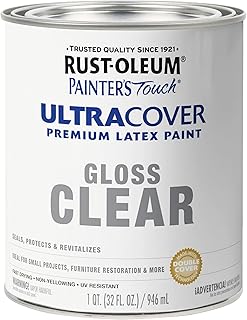
This is the value option and it earns that on two grounds: it has the largest body of owner feedback of anything in this comparison, and a brush-on can puts far more coating on a surface per pound spent than an aerosol.
Being latex based, it cleans up with water while wet and does not carry the solvent risk that the Krylon sprays do over uncured acrylic. For a general purpose clear coat over painted work, that makes it a safer default than a solvent spray.
The maker rates it for interior and exterior use, which widens what you can sensibly put it on. Outdoor items still need renewing eventually, because ultraviolet light degrades every clear coating in time.
The limitation is the one every brush-on coating has: on a smooth flat surface, brush marks show if you overwork it, and it is permanent once on.
Bottom line: the sensible general purpose choice for painted objects that need protecting rather than preserving.
- Type: latex clear coat
- Application: brush on
- Finish: gloss
- Rated use: interior and exterior
- Cleanup: water while wet
Anyone sealing painted objects, garden items or general projects where durability matters more than reversibility and coverage matters more than a flawless mirror finish.
Not for canvas paintings, where removability and film flexibility are the requirements.
Load the brush moderately and lay off in one direction without going back over setting areas. Overworking latex is what leaves brush marks.
Two thin coats beat one thick one. A heavy coat stays soft underneath and marks easily for days.
How to Choose a Clear Coat For Acrylic Paint
Four Coatings, One Search Result

The first group is artist varnish, and Liquitex Professional is the example here. It is an acrylic polymer varnish made to sit on top of a painting as a sacrificial layer: it protects the paint, and it can be removed and replaced later without disturbing what is underneath. Conservators care about this. Anyone painting on canvas should too.
The second group is craft sealer, which covers the Mod Podge spray and the Aleene’s finish. These are formulated to seal decorated craft objects, decoupage, painted wood and paper. They are easy to use, they are not designed to be removable, and they are not intended for fine art that needs to last a century.
The third group is general purpose clear spray and brush paint, which is what the Krylon Crystal Clear, the Krylon Triple Thick glaze and the Rust-Oleum Painter’s Touch clear are. These are paint products without pigment. They are durable and cheap and they are permanent.
The fourth is protective wood finish, and Minwax Polycrylic is the one here. It is a water-based polyurethane made for furniture and trim. It is the toughest coating in this comparison and the least appropriate for a canvas.
Removable Versus Permanent, and Why It Matters
An artist varnish is designed to come off. That sounds like a weakness and is the whole point. Varnish collects dust, smoke and grime over years, and a removable layer means the surface can be cleaned by taking the varnish off and putting a new one on, leaving the paint untouched.
A permanent coating cannot do that. Once a craft sealer or a clear spray paint is on a painting, anything that lands on it is there for good, and any attempt to clean it aggressively takes the paint with it. For a decorated plant pot that is a perfectly reasonable trade. For a painting you intend to keep, it is not.
The related concept is the isolation coat, which artists apply between paint and varnish. It is a clear acrylic layer that seals the painting so that varnish removal never reaches the paint. If you are using a proper artist varnish, an isolation coat is the step that makes removability real rather than theoretical.
Solvent Based or Water Based Over Acrylic
This is the technical trap that catches people. Acrylic paint is a plastic film. Some solvents soften that film. A solvent-based clear spray applied heavily over acrylic that has not fully cured can lift, wrinkle or craze the paint underneath, and the damage appears within minutes.
Water-based coatings, including the Liquitex varnish and the Minwax Polycrylic, do not carry that risk. They are the safer choice over acrylic paint in every case where you are unsure.
If you are using a solvent-based spray such as the Krylon products, two rules keep you out of trouble. Let the acrylic cure properly first, which means days rather than the hour it takes to feel dry. And build in light passes rather than one wet coat, because it is the volume of solvent sitting on the surface that does the damage.
Yellowing, and What Survives a Decade
Clear coatings age differently. Some yellow noticeably over years, which is invisible on a dark or warm-toned piece and disastrous on a white background. Artist grade varnishes are formulated specifically to resist yellowing, and that is a large part of what separates them from cheaper clear coats.
Water-based polyurethane, such as Polycrylic, is chosen for wood partly for the same reason: it stays clearer over white and pale finishes than an oil-based polyurethane, which ambers as it ages.
For a craft piece with a limited life, none of this matters. For anything pale that will hang on a wall for years, it is the specification to weigh above finish sheen and above price.
Spray or Brush, and the Job Each Suits

Spray gives an even film with no brush marks and no contact with the surface, which is why it dominates the craft end of this market. It is also the format that wastes the most product, needs ventilation, and demands masking of everything nearby.
Brush-on coatings, such as the Liquitex varnish, the Minwax Polycrylic and the Rust-Oleum Painter’s Touch, put more material on the surface per coat and give you control over thickness. On a textured acrylic painting, brushing also lets you work varnish into the texture rather than bridging over it.
The Krylon Triple Thick glaze occupies a middle position: an aerosol formulated to build a thick, glassy layer in fewer passes, which suits small decorative objects where a deep gloss is the goal.
Matching the Product to the Object

A canvas painting wants an artist varnish over an isolation coat. A decorated wooden box, a painted rock or a decoupage tray wants a craft sealer. A painted table or a set of kitchen cabinets wants a protective wood finish, because those surfaces get scrubbed and knocked in a way art never does.
Outdoor items are their own category. Anything that will live outside needs a coating the maker describes as exterior rated, and it will still need renewing, because ultraviolet light degrades every clear coat eventually.
Surface flexibility is the other question worth asking. A canvas moves with humidity and handling, so it wants a coating that flexes with it. Wood and board are stable, so they tolerate a hard film. Fabric and anything that bends in use rules out the rigid finishes entirely, and even a craft sealer will crack on a surface that flexes repeatedly. Match the hardness of the coating to how much the thing underneath moves, and you avoid the most common way a clear coat fails.
When in doubt, ask how long the object needs to survive and whether anyone will ever want to clean it. Those two questions sort this entire category faster than reading labels. More of our craft coverage is in the arts, crafts and sewing section.
Sheen Is Not Just a Look
Gloss, satin and matte are usually presented as taste, and they do more than that. Gloss deepens colour. A dark passage under gloss varnish reads richer and more saturated than the same paint under matte, because a smooth surface reflects light in one direction instead of scattering it. That is why most artist varnishes are sold in gloss first.
Matte does the opposite. It scatters light, which lifts the apparent lightness of dark colours and can make a deep black look grey. It also hides surface imperfection and kills reflections, which is why it suits work that will hang opposite a window.
Satin, which is what the Minwax Polycrylic here is, sits between the two and is the safe default on furniture, where a full gloss shows every fingerprint and every flaw in the surface underneath.
One practical note that catches people: matte and satin coatings contain a matting agent suspended in the liquid, and it settles. A can that has not been stirred properly will lay down a sheen quite different from the one on the label, and stirring rather than shaking avoids introducing bubbles at the same time.
Quick Comparison
| Type | Removable | Base | Right job |
|---|---|---|---|
| Artist acrylic varnish | Yes, by design | Water | Paintings on canvas or board |
| Craft sealer | No | Water or solvent | Decorated objects, decoupage |
| Clear spray or brush paint | No | Usually solvent | General sealing, hard use |
| Water-based polyurethane | No | Water | Furniture, trim, painted wood |
Why You Should Trust Us
We build these guides by starting with the products people actually buy and keep, then reading them against what each maker publishes. For this category we gathered current clear coats, sealers and varnishes, filtered them by verified customer ratings and the volume of that feedback, then grouped the shortlist by coating type rather than by score, because an artist varnish and a floor polyurethane are not competing for the same job.
Where a maker describes a product as removable, exterior rated or non-yellowing, we use their wording and attribute it. Where a property follows from the chemistry, such as solvent risk over uncured acrylic, we say so plainly. More of our guides are in the articles library.
Final Thoughts
For an acrylic painting you intend to keep, the best overall choice is Liquitex Professional High Gloss Varnish. It is the only product here designed as a removable artist varnish, it is water based so it will not attack the paint film, and it carries the highest average rating in this comparison.
The best value pick is the Rust-Oleum Painter’s Touch brush-on clear, which has by far the largest body of owner feedback here and suits painted objects that need durability rather than reversibility. For craft work, the Mod Podge spray sealer and the Aleene’s finish are the two purpose-built options, the Krylon Crystal Clear is the general purpose classic, and the Krylon Triple Thick glaze is the one to reach for when you want a deep glassy build on a small object. If the surface is furniture, Minwax Polycrylic is the tougher and more sensible answer.
Choose by what the object is and how long it needs to last. You can browse the rest of the department on our categories page.
FAQs
Will a clear coat for acrylic paint damage the paint underneath?
It can, if the coating is solvent based and the acrylic has not fully cured. Acrylic paint is a plastic film and strong solvents soften it, so a heavy wet coat of a solvent spray can lift or craze the surface within minutes. Water-based products avoid the risk entirely. If you use a solvent spray, let the paint cure for days rather than hours and build in light passes.
How long should acrylic paint dry before sealing in 2026?
Dry to the touch is not the same as cured. Acrylic feels dry in under an hour but the film continues to harden for days, and thick or heavily textured passages take longer still. Most makers of artist varnish recommend waiting rather than rushing, and the risk of sealing too early is trapping soft paint under a hard layer.
What is an isolation coat and do I need one?
It is a clear acrylic layer applied between the painting and the varnish. It matters because it is what makes removable varnish genuinely removable: when the varnish is taken off years later, the isolation coat protects the paint. If you are using a proper artist varnish on a piece you care about, it is the step that turns removability from a claim into a fact. For craft objects it is unnecessary.
Can I use polyurethane over acrylic paint?
Over painted furniture, yes, and a water-based polyurethane such as Polycrylic is a common and durable choice. Over a painting on canvas, no. Polyurethane is permanent, harder than the paint film under it, and can crack as the canvas flexes. Use it where the surface will be scrubbed and knocked, not where it will hang on a wall.
Does clear coat yellow over time?
Many do. Artist grade varnishes are formulated to resist it and say so on the label, which is a large part of what you are paying for. Water-based polyurethane stays clearer than oil-based over pale finishes, which is why it is preferred on white painted wood. On a dark or warm-toned piece yellowing is effectively invisible, so it only becomes a deciding factor on pale work that will be kept for years. Our crafts section has more guides.
Write Your Review
No reviews yet. Be the first to share your experience!