

Film photography came back for one simple reason: the pictures look like memories instead of screenshots. If you want in without a steep learning curve, the answer is a cheap point and shoot film camera, a plastic body with a fixed lens, automatic exposure and a flash you can flick on. There is nothing to set up, nothing to charge and no menu to read. You load a roll, wind, point and press. Our shortlist of 10 picks spans Kodak, Fujifilm, Ilford and covers both reusable bodies you keep for years and single use cameras you hand out at a party, and every one of them is rated by real buyers rather than chosen from a press release.
Our top pick is the Kodak Ektar H35 Half Frame Film Camera for its half frame format that doubles the shots on every roll while keeping the whole camera light enough to live in a jacket pocket. Below you will find the full ranking for October 2026, then a buying guide that explains the parts nobody warns beginners about, especially the running cost of buying film and paying for developing. If you want a camera where you set aperture and shutter speed yourself, that is a different group of cameras with a very different learning curve, and it is not what this list is about. For more gear in this space, browse our electronics guides.

Pros
- Half frame format roughly doubles the pictures you get from every roll
- Focus free operation means there is nothing to set before you shoot
- Built in flash handles indoor and evening pictures
- Light enough to carry in a jacket pocket all day
- Reusable body, so you only keep buying film
Cons
- Half frame negatives are smaller, so grain shows more in big prints
- Fixed aperture and single shutter speed leave no creative control
- Some labs charge extra to scan half frame rolls correctly
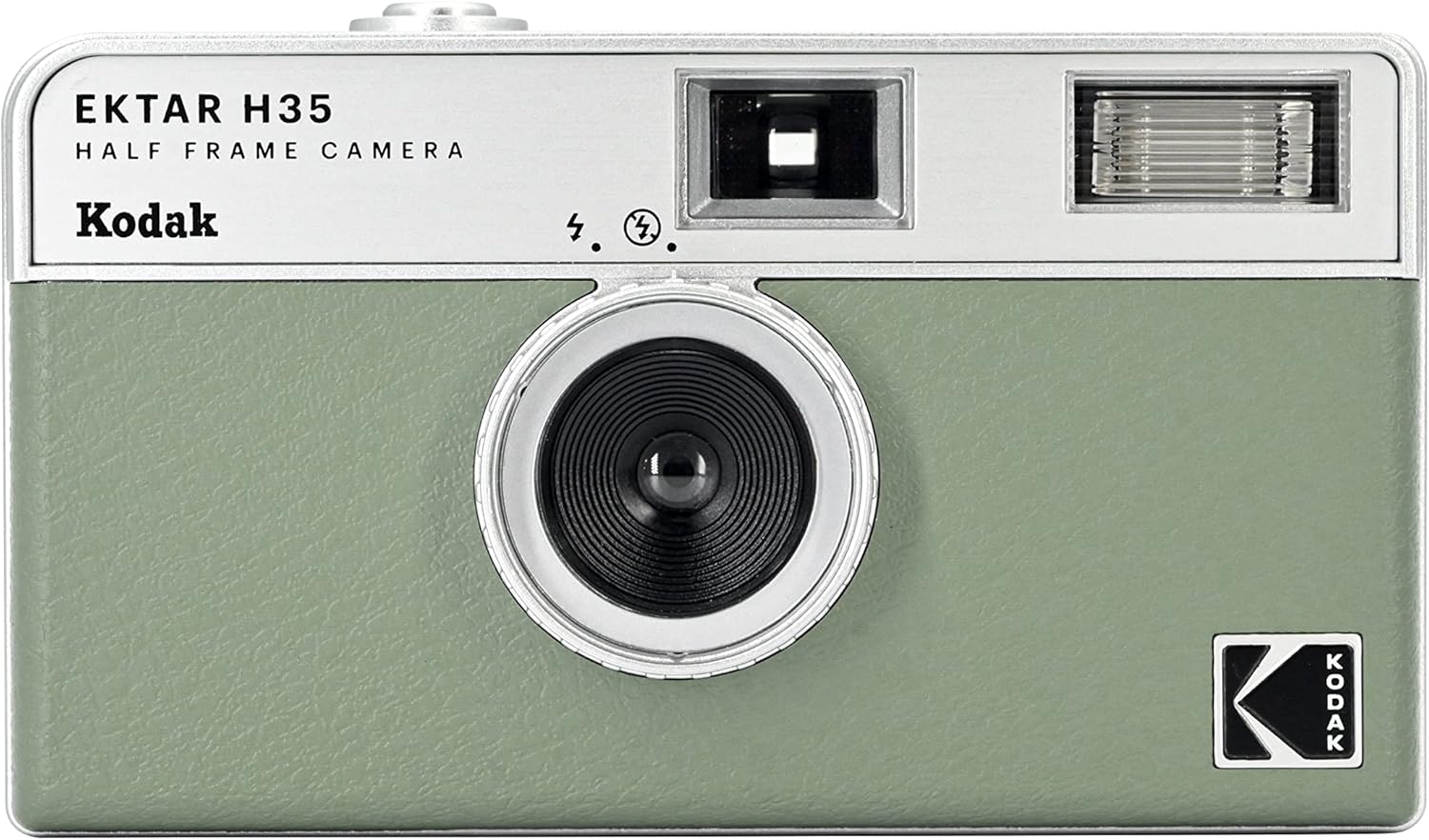
The Kodak Ektar H35 is the camera that made half frame shooting popular again, and it is the easiest recommendation on this list for anyone starting out. It is a small plastic reusable body with a fixed focus lens, a single shutter speed and a flash you switch on with a ring around the lens. You load a roll of 35mm film, wind the thumb wheel and press the shutter, and that is the whole operation.
What makes it special is the half frame format. Each press exposes half of a normal frame, so a 36 exposure roll returns roughly 72 pictures instead of 36. Because labs charge per roll, that single design decision cuts your cost per picture almost in half, which matters far more over a year than the price of the body. The frames come out vertical, which happens to be the right shape for phones and social feeds.
The limitations are honest ones. Half frame negatives are physically smaller, so scans show more grain and large prints look softer than full frame work. The lens has one aperture and one shutter speed, so the flash is not optional once you step indoors or shoot after sunset. A few smaller labs still handle half frame scanning awkwardly, so it is worth asking before you send your first roll.
Bottom line: if you want to shoot a lot of film without the developing bill spiralling, the Ektar H35 is the best value proposition in cheap film photography right now, and it is genuinely fun to carry.
- Type: reusable 35mm film camera
- Format: half frame, roughly 72 shots per 36 exposure roll
- Lens: fixed focus, focus free operation
- Flash: built in, powered by one AAA battery
- Film and battery: not included
- Body: lightweight plastic, pocket sized
Best suited to a first time film shooter who wants volume, and to anyone who found that a full frame camera made them ration their shots. It is also a strong travel companion because it weighs so little and nobody treats it as valuable.
It is less suited to someone who wants to make large prints or who needs the cleanest possible scan quality from every frame.
Load a roll of ISO 400 film in the shade, wind until the frame counter starts moving, and switch the flash on any time you are indoors or in shade. Stay within about three metres of your subject when the flash fires.
Remember that every press only uses half a frame, so the counter climbs quickly. Rewind fully before opening the back, then hand the roll to a lab and ask specifically for half frame scanning.
Pros
- Full frame 35mm negatives scan cleanly
- Genuinely one button simple, nothing to set
- Built in flash with a straightforward switch
- Reusable for years with only film to buy
- Available in a wide range of colours
Cons
- Only 36 pictures per roll, so developing costs add up faster
- Plastic build feels toy like in the hand
- No control over aperture or shutter speed
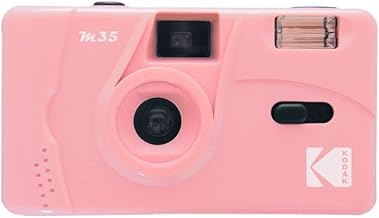
The Kodak M35 is the camera most people picture when they think of a cheap reusable film camera. It is a simple plastic body with a fixed focus lens, a thumb wheel to advance the film and a small slider that turns the flash on. There is no light meter, no autofocus and no exposure display, which is exactly why it works for beginners.
Because it shoots full frame 35mm, the negatives are the standard size every lab handles, and scans come back cleaner and less grainy than half frame work. That makes it the better choice if you plan to print anything, or if you simply want the most familiar looking results. The trade is quantity: a 36 exposure roll gives you 36 pictures, not 72, so your developing bill is spread across fewer images.
The main complaints from buyers are consistent and fair. The body feels light and plasticky, the viewfinder is basic, and indoor pictures without the flash come out dark. None of that is a defect, it is what the format is. Treat it as a daylight camera with a flash for emergencies and it delivers exactly what people love about film.
Bottom line: this is the camera to hand someone who has never shot film and wants results that look right without a single decision to make.
- Type: reusable 35mm film camera
- Format: full frame 35mm, 36 pictures from a 36 exposure roll
- Lens: fixed focus, focus free
- Flash: built in, one AAA battery
- Film and battery: not included
- Colours: multiple finishes of the same body
Choose the M35 over a half frame body when scan quality and printing matter more than the number of pictures per roll. Choose it over a single use camera when you expect to shoot more than a few rolls, because the running cost drops immediately.
Buy a spare AAA battery with it. The flash is the difference between a usable indoor picture and a dark one, and the battery is the only part that can leave you stranded.
Load film with the back facing away from direct sun, make sure the sprockets catch before closing the door, and wind on until the counter reads one. Keep the flash on for anything indoors, in shade or after sunset.
When the wind wheel stops turning freely, the roll is finished. Press the rewind release, wind the film back into the canister, then open the back and take the roll to a lab.

Pros
- Coated glass lens is noticeably sharper than the standard H35
- Built in star filter adds a real optical effect to night lights
- Bulb mode allows long exposures on a steady surface
- Comes bundled with a roll of colour film to start
- Still delivers roughly 72 pictures per 36 exposure roll
Cons
- Costs more than the standard H35 for a modest image gain
- Bulb mode needs a flat surface or tripod to be usable
- Half frame scanning is still an extra step at some labs
The Ektar H35N is the upgraded version of the half frame camera that tops this list, and the differences are worth understanding before you pay extra for it. The headline change is the lens: the H35N uses a coated glass element instead of the simpler plastic optic, and the result is visibly crisper detail across the frame, particularly toward the corners.
Two extras come along with it. A built in star filter can be flicked into the light path, turning street lamps and fairy lights into pointed stars, which is a genuinely optical effect rather than something added afterward. There is also a bulb mode that holds the shutter open for as long as you press, so light trails and long night exposures become possible if you can rest the camera on something solid.
What has not changed is the format. This is still half frame, so you still get roughly 72 vertical pictures from a 36 exposure roll and you still get smaller negatives with visible grain. The bundle version arrives with a roll of colour film, which removes one errand before your first outing. Buyers who upgraded from the standard H35 generally say the sharpness is real but modest, so the star filter and bulb mode are what justify the difference.
Bottom line: worth the step up if you shoot at night or want the sharpest half frame results, and unnecessary if you just want the format economy.
- Type: reusable 35mm film camera
- Format: half frame, roughly 72 shots per 36 exposure roll
- Lens: coated glass, focus free
- Extras: built in star filter, bulb mode for long exposures
- Flash: built in, one AAA battery
- Bundle: includes one roll of Ultramax 400 colour film
The star filter and bulb mode make this the only camera on the list built with night photography in mind. City lights, fairground rides and Christmas displays all respond well to the filter, and bulb mode turns passing traffic into light trails.
Rest the camera on a wall, a table or a small tripod before using bulb mode. Handheld long exposures will always come out as blur rather than trails.
The glass lens is the reason to buy this model, so keep the front element clean with a microfibre cloth and avoid touching it with fingers. Store the camera in a small pouch rather than loose in a bag with keys.
Remove the AAA battery if you are putting the camera away for a few months, which prevents leakage damage inside the flash compartment.

Pros
- Two zone focus sharpens close portraits noticeably
- Full frame 35mm negatives for clean scans
- Compact body that slips into a pocket
- Built in flash for indoor and evening use
- Reusable, so only film and developing are ongoing costs
Cons
- Newer model with fewer customer reviews than established rivals
- Forgetting to move the focus switch produces soft pictures
- Film and AAA battery are not included
The Kodak Snapic A1 sits one small step above the purely focus free cameras on this list. Instead of a single fixed focus distance, it gives you a two position switch: one setting for close subjects such as a person across a table, another for scenery and street scenes. That one control fixes the most common complaint about ultra cheap film cameras, which is that portraits come back slightly soft.
Everything else stays deliberately simple. It shoots full frame 35mm, so negatives are the standard size and any lab will scan them without questions. The flash is built in and runs off a AAA battery, the film advance is a thumb wheel, and there is no metering or exposure control to think about.
The catch is that the switch only helps if you remember to move it. Buyers who leave it on the landscape setting and then shoot close portraits get exactly the softness they were trying to avoid. It is also a recent release, so it has a smaller pool of customer feedback behind its rating than the long established Kodak and Ilford bodies here, which is worth weighing if you prefer a proven design.
Bottom line: the sharpest option among the simple full frame reusable cameras, provided you can build the habit of flicking one switch.
- Type: reusable 35mm film camera
- Format: full frame 35mm
- Focus: two zone switch, close subjects and distance
- Flash: built in, one AAA battery
- Film and battery: not included
- Body: compact and lightweight
A good fit for someone who mostly photographs people and was disappointed by soft results from a focus free camera. Also suits anyone who wants a fresh design rather than the models everyone already owns.
Less suitable for handing to children or party guests, because the focus switch is one more thing they will not think about.
Set the focus switch to the close position for anything within a couple of metres, and to the distance position for streets, buildings and landscapes. Make it a habit to check the switch before each shot.
Load ISO 400 film for general use, switch the flash on indoors, and rewind fully before opening the back to protect the exposed roll.

Pros
- Slightly wider 31mm lens takes in more of the scene
- Built in flash on a simple switch
- Full frame 35mm negatives that any lab handles
- Comes from a film maker with deep black and white expertise
- Simple enough for a complete beginner
Cons
- Fixed f/9 aperture struggles in anything but good light
- Single 1/120 second shutter speed offers no flexibility
- Viewfinder is basic and shows only an approximation of the frame
The Ilford Sprite 35 II is the alternative to the Kodak branded bodies that dominate this category, and it comes from a company whose reputation was built on black and white film rather than cameras. The specification is refreshingly plain: a 31mm fixed focus lens at f/9, a shutter fixed at one one hundred and twentieth of a second, and a flash you turn on with a switch.
That 31mm focal length is a little wider than most cameras here, which suits group pictures, interiors and street scenes where you want more of the scene in the frame. Everything from roughly a metre away to the horizon falls within acceptable focus, so there is nothing to adjust. It shoots full frame 35mm, so scans are standard and clean.
The f/9 aperture is the honest limitation. It is a daylight lens, and without the flash your indoor pictures will be underexposed. Buyers also note that the viewfinder is a simple window that only approximates the final frame, so tight compositions need a margin for error. Load it with a fast black and white film and shoot outdoors and it produces exactly the grainy, contrasty look people buy film for.
Bottom line: the pick for black and white shooters and for anyone who wants a slightly wider view than the standard cheap point and shoot.
- Type: reusable 35mm film camera
- Format: full frame 35mm
- Lens: 31mm fixed focus, f/9
- Shutter: fixed at 1/120 second
- Flash: built in, battery powered
- Film and battery: not included
Pair it with a fast black and white film and the fixed exposure works in your favour, because black and white stock tolerates a wide range of light and the grain is part of the look.
Shoot on bright days with strong shadows for the most striking results, and use the flash indoors to lift faces out of the gloom.
Pick the Sprite over the Kodak M35 if you want the wider 31mm view or plan to shoot black and white regularly. Pick the M35 instead if colour snapshots of people are your main use.
Frame slightly loose through the viewfinder, since what you see is not exactly what the film records.

Pros
- Retro styling that stands out from plain plastic rivals
- Full frame 35mm for standard, clean scans
- Built in flash for indoor and evening pictures
- Focus free, so there is nothing to set
- Reusable with any 35mm film
Cons
- f/9 lens needs good light or the flash
- Rating sits a little lower than the best sellers here
- Film and battery are not included
The Kodak Ultra F9 leans harder into looks than anything else on this list. The two tone body borrows from compact cameras of the eighties, and it is the model people pick when the camera is going to be worn as much as used. Underneath, the recipe is familiar: a fixed f/9 lens, focus free operation, a thumb wheel to advance the film and a built in flash.
It shoots full frame 35mm, which keeps your options open at the lab and gives cleaner scans than half frame. There is no metering, so exposure is fixed and the flash becomes essential indoors. Used the way it is designed to be used, in daylight or with the flash on, it turns out the soft, warm, slightly imperfect pictures that make film worth shooting.
Its customer rating sits a fraction below the strongest sellers here, and the recurring theme in feedback is the same one that applies to the whole category: pictures taken indoors without the flash come out dark. That is physics rather than a fault, but it catches out buyers who expect phone camera behaviour in low light.
Bottom line: choose it if the styling appeals, accept that it is a daylight and flash camera, and it will not disappoint.
- Type: reusable 35mm film camera
- Format: full frame 35mm
- Lens: fixed focus, f/9
- Flash: built in, one AAA battery
- Film and battery: not included
- Styling: retro two tone body
Made for the shooter who wants the camera to look like part of an outfit, and who takes most pictures outdoors, at festivals, on trips or around town in daylight.
Not the pick if most of your photography happens indoors after dark, where a faster film and constant flash use become mandatory.
The plastic body scratches easily, so a small pouch keeps the finish looking new. Wipe the lens with a soft cloth rather than a shirt sleeve.
Take the AAA battery out during long storage periods so a leaking cell cannot damage the flash contacts.

Pros
- Film is already loaded, nothing to set up at all
- Built in flash covers indoor and evening pictures
- One of the most widely trusted single use cameras available
- Cheap enough to hand out at events without worry
- Nothing to break, charge or configure
Cons
- Cannot be reloaded, so the shell is discarded after one roll
- Only 27 exposures before it is finished
- Fixed exposure means low light without flash fails
The Kodak FunSaver is the single use camera most people have held at some point, and it remains the default choice for events. It arrives sealed with a roll of film already inside and a flash built into the front. You wind the wheel until it clicks, press the flash charge button if you need it, and shoot. When the counter runs out, the whole camera goes to a lab, which opens it in the dark and develops the film.
Its appeal is the total absence of decisions. There is no battery to buy, no film to load, no focus and no settings, so it can be handed to a child, a guest or a wedding table without instructions. That is also why people buy them in quantity: twenty guests with FunSavers produce a set of pictures nobody would have taken with their phones.
The limitations are structural. You get 27 exposures and then it is finished, and the shell cannot practically be reloaded. Exposure is fixed, so the flash is mandatory anywhere that is not bright daylight, and it only reaches a few metres. Developing is still a separate cost after the fact, which surprises first time buyers who assume the purchase covers everything.
Bottom line: the safest choice when the camera needs to work in someone else's hands with zero explanation.
- Type: single use 35mm camera
- Format: full frame 35mm
- Exposures: 27 per camera
- Flash: built in, charged by a button
- Film: preloaded, not removable by the user
- Developing: hand the whole camera to a lab
Put one on each table at a wedding or party and you collect a set of candid pictures from angles no hired photographer reaches. The same logic works for school trips, hen parties and family reunions.
Write a short note next to each camera reminding guests to press the flash button indoors, which is the single most common reason event pictures come back dark.
Wind the thumb wheel until it stops, hold the flash button until the ready light glows, then press the shutter. Stay within roughly three metres of your subject when using the flash.
Do not open the camera yourself under any circumstances, since daylight will destroy the exposed film. Take the whole camera to a lab and ask for scans if you want digital files.

Pros
- Ten cameras in one purchase, ideal for events
- ISO 400 film copes with shade and indoor flash work
- Built in flash on every camera
- Fujifilm colour rendering is warm and forgiving
- Nothing to assemble, load or charge
Cons
- Ten cameras means ten separate developing charges
- 27 exposures each, so heavy shooters finish one quickly
- Shells cannot be reloaded after use
The Fujifilm QuickSnap Flash 400 is the main alternative to the Kodak FunSaver, and buying it as a ten pack is what makes it interesting. For anyone planning an event, having ten identical cameras arrive in one box removes the logistics problem entirely, and the per camera cost drops compared with buying them one at a time.
Each camera is loaded with ISO 400 colour film, which is the right speed for mixed conditions. It handles bright outdoor light, copes with overcast afternoons and gives the flash enough sensitivity to work at a normal indoor distance. Fujifilm colour tends toward warm, slightly green leaning tones that many people prefer for skin and daylight scenes.
Everything else is standard single use behaviour. Twenty seven exposures, a wind wheel, a flash charge button and a fixed exposure with no controls. The real cost consideration with a multi pack is developing, because ten finished cameras means ten separate lab charges, and that is where the total adds up. Plan for it, or ask your lab about a bulk arrangement before you hand them a box.
Bottom line: the most sensible way to buy single use cameras in quantity, provided you budget for developing all of them.
- Type: single use 35mm cameras, ten pack
- Format: full frame 35mm
- Film: ISO 400 colour, preloaded
- Exposures: 27 per camera
- Flash: built in on every camera
- Developing: each camera goes to the lab whole
Ten cameras covers a medium wedding, a milestone birthday or a weekend away with friends. Spread them across tables or hand one to each group rather than leaving them in a pile.
Collect them at the end of the night in a single box so none get taken home, and label each one if you want to know whose pictures are whose.
Choose the ten pack when you need volume and choose a single camera when you just want one roll of film fun. The film inside is the same either way.
Compare developing options before the event. Mail in labs are usually the cheaper route for a batch, at the cost of waiting for results.

Pros
- 39 exposures, more than most single use cameras
- Fast ISO 800 film copes well with shade and cloud
- No flash means no button to forget and nothing to charge
- Simple enough for anyone to use straight away
- Bright two tone body is easy to spot in a bag
Cons
- No flash at all, so indoor and night pictures are not possible
- Cannot be reloaded once the roll is finished
- Fast film shows more grain than slower stocks
The Kodak SUC Daylight is the outlier in this group because it deliberately leaves out the flash. In exchange it is loaded with fast ISO 800 film and gives you 39 exposures, which is a dozen more than a standard single use camera. The logic is sound: fast film gathers enough light that outdoor pictures work in cloud, shade and late afternoon without any flash at all.
Used as intended, it is very good. Hiking, sightseeing, beach days and outdoor festivals are exactly its territory, and the extra frames mean it lasts longer than a 27 exposure camera before you have to swap. Because there is no flash there is no charge button and no waiting, so you can shoot as fast as you can wind.
The restriction is absolute though, and buyers who miss it are disappointed. Indoors, in a restaurant or after dark, this camera cannot produce a usable picture. There is no workaround, so it should be treated as a daytime companion and paired with a flash equipped camera if your day runs into the evening. The ISO 800 film also carries visible grain, which reads as character in daylight scenes but does soften fine detail.
Bottom line: excellent value for an outdoor trip, and the wrong choice for any indoor occasion.
- Type: single use 35mm camera
- Format: full frame 35mm
- Film: ISO 800 colour, preloaded
- Exposures: 39 per camera
- Flash: none
- Developing: hand the whole camera to a lab
Right for daytime travellers, hikers, festival goers and anyone documenting an outdoor weekend where the extra frames matter more than indoor capability.
Wrong for weddings, parties, restaurants or any event that moves indoors after sunset.
Keep the sun behind you or to one side, and shoot freely in open shade since ISO 800 film handles it well. Avoid pointing directly into strong backlight, which will silhouette your subject.
Wind on immediately after each shot so the camera is always ready, and never open the back yourself. The lab opens it in a darkroom.

Pros
- Sealed housing works at the pool, the beach and on boats
- ISO 800 film suits bright water scenes and shade alike
- Ten cameras in a pack for groups and holidays
- Survives sand, spray and rain that would ruin other cameras
- Nothing to load, charge or set
Cons
- No flash, so it is a daylight camera only
- Housing makes the viewfinder awkward to use in the water
- Cannot be reloaded and each camera means a separate lab charge
The waterproof QuickSnap solves a problem no other camera on this list can touch. Sealed inside a moulded housing, it goes into a swimming pool, onto a boat and into the surf without any preparation, and it shrugs off sand and spray that would end a normal camera in minutes. Loaded with ISO 800 film, it has the sensitivity for underwater light, which drops off faster than people expect.
Buying the ten pack turns it into a holiday or group purchase. Hand one to each person on a beach week or a boat trip and you get a set of pictures no phone owner would risk taking. The shell is chunky enough to hold with wet hands, which is more useful than it sounds.
Two limitations matter. There is no flash, so this is strictly a daylight camera, and pictures taken at depth or in murky water will be dim regardless of the film speed. The housing also pushes the viewfinder away from your eye, so framing while swimming is approximate at best. Shoot in bright conditions near the surface, get closer than feels natural, and the results are genuinely fun.
Bottom line: the only sensible camera choice for water, and a poor one for anything indoors.
- Type: single use waterproof 35mm cameras, ten pack
- Format: full frame 35mm
- Film: ISO 800 colour, preloaded
- Flash: none
- Housing: sealed waterproof shell
- Developing: each camera goes to the lab whole
Use it near the surface where daylight still reaches, and shoot with the sun behind you. Water absorbs light and colour quickly, so anything deep will come back dark and blue.
Get closer to your subject than you would on land, because water reduces contrast and distant subjects lose definition fast.
Rinse the housing in fresh water after use in salt water or a chlorinated pool, then dry it before putting it away. Do not try to open the shell for any reason.
Keep the wrist strap on in open water. A dropped camera in the sea is not coming back, and a lost roll of holiday pictures goes with it.
How to Choose a Cheap Point and Shoot Film Camera
Every camera on this list does the same core job, so the differences that matter are practical ones: how many frames you get per roll, whether there is a flash, whether you can reload it, and how forgiving the lens is when the light drops. Work through the five points below and the right pick becomes obvious in about two minutes.
Reusable Body or Single Use Camera

This is the first fork in the road and it changes everything else. A reusable camera arrives empty. You buy a roll of 35mm film, load it yourself, shoot it, rewind it and load another one. The body lasts for years and the only ongoing purchase is film and developing. Kodak Ektar H35, Kodak M35, Kodak Ultra F9, Kodak Snapic A1 and Ilford Sprite 35 II all work this way.
A single use camera arrives sealed with the film already inside. You shoot the whole roll, then hand the entire camera to a lab, which opens it and develops the film. Kodak FunSaver, Kodak SUC Daylight and both Fujifilm QuickSnap options are single use. Nothing to load, nothing to break, and no decisions at all, which is exactly why people put them on wedding tables and hand them to kids.
If you plan to shoot more than three or four rolls, a reusable body pays for itself quickly. If you want a one weekend novelty or a batch of identical cameras for guests, single use wins on convenience alone.
Half Frame Versus Full Frame 35mm
A standard 35mm camera exposes one full frame per press, so a 36 exposure roll gives you 36 pictures. A half frame camera splits each frame in two and gives you roughly 72 pictures from the same roll. On this list the Kodak Ektar H35 and the Ektar H35N are half frame, while the M35, Ultra F9, Snapic A1, Sprite 35 II and every single use camera shoot full frame.
Half frame is the cheapest way to shoot a lot of film, because your developing bill is charged per roll and you are getting twice the pictures out of each one. The trade is resolution. Each half frame negative is smaller, so grain is more visible and big prints look softer. Half frame images are also vertical by default, which happens to suit phone screens and social feeds perfectly.
Full frame is the safer choice if you want the cleanest possible scan or plan to print anything larger than a postcard. It is also the format every lab handles without questions, while a few smaller labs still charge extra to cut and scan half frame properly.
Flash, Lens Speed and Light

Cheap film cameras have a fixed aperture, usually somewhere around f/8 to f/10, and a single shutter speed near 1/120 of a second. That combination is built for daylight. Outdoors on a bright day the results are lovely. Indoors, in shade or after sunset, the sensor of the system is the film itself and there simply is not enough light reaching it.
The flash is what rescues those situations, and it is the single most important spec on a cheap body. The Ektar H35, H35N, M35, Ultra F9, Snapic A1, Sprite 35 II, Kodak FunSaver and Fujifilm QuickSnap Flash 400 all have a built in flash. The Kodak SUC Daylight has none at all, which is why it is a daylight and outdoor camera only. On reusable bodies the flash runs off a single AAA battery, so keep a spare in your bag.
Pair the flash with a fast film. Most people load ISO 400 for general use, because it copes with cloud, shade and indoor flash work far better than ISO 200. If you know you will be shooting at night or indoors most of the time, ISO 800 is worth the extra.
The Running Cost Nobody Mentions
Here is the part that surprises new film shooters. The camera is the cheapest thing you will buy. Every roll of film is a separate purchase, and every roll has to be developed and scanned by a lab before you see a single image. Over a year of casual shooting, film and lab work will cost you several times what the body did, and that is true of every camera on this page.
You can steer that cost. Half frame doubles your pictures per roll, which is the biggest single saving available. Shooting a 36 exposure roll instead of a 24 exposure roll lowers your cost per picture. Choosing scans only, without paper prints, is cheaper than a full print package at most labs. And mail in labs are usually gentler on the wallet than same day counters, at the price of waiting a week or two.
Single use cameras bundle the film into the purchase, so the sticker looks friendly, but you still pay for developing afterwards and you cannot reuse the shell. Buying them in a multi pack is how most people keep that cost sensible for events. If you want to compare running costs against a digital body that has no consumables at all, our roundup of budget friendly cameras is a useful reality check.
Build, Size and Who You Are Handing It To
All of these cameras are plastic and light, which is the point. They survive being tossed in a tote bag, they do not attract attention, and nobody panics if one gets scratched. That makes them ideal for travel, festivals, school trips and anywhere a real camera would feel like a liability.
Think about the hands the camera will be in. Focus free models like the M35, Ultra F9 and Ektar H35 have exactly one control that matters, the shutter, so a child or a guest cannot get it wrong. The Snapic A1 adds a two zone focus switch, which sharpens close portraits noticeably but is one more thing to remember. Waterproof single use cameras are the only sensible option around a pool, a beach or a boat.
Colour choice matters more than you would think for reusable bodies, because these cameras end up as accessories. Most of them ship in several finishes, and the model is identical inside whichever one you pick. For a broader look at compact bodies of every kind, see our camera buying guide.
| Camera | Type | Format | Built in Flash | Best For |
|---|---|---|---|---|
| Kodak Ektar H35 | Reusable | Half frame | Yes | Most pictures per roll |
| Kodak M35 | Reusable | Full frame 35mm | Yes | Simplest everyday pick |
| Kodak Ektar H35N | Reusable | Half frame | Yes | Sharper lens and star filter |
| Kodak Snapic A1 | Reusable | Full frame 35mm | Yes | Close up portraits |
| Ilford Sprite 35 II | Reusable | Full frame 35mm | Yes | Black and white shooters |
| Kodak Ultra F9 | Reusable | Full frame 35mm | Yes | Retro styling |
| Kodak FunSaver | Single use | Full frame 35mm | Yes | Grab and go events |
| Fujifilm QuickSnap Flash 400 | Single use | Full frame 35mm | Yes | Party and wedding tables |
| Kodak SUC Daylight 39 | Single use | Full frame 35mm | No | Bright outdoor days |
| Fujifilm QuickSnap Waterproof | Single use | Full frame 35mm | No | Pool, beach and boats |
Why You Should Trust Us
We build these lists the way a careful shopper would if they had the time. We start from what is actually available right now, then filter hard on verified customer ratings, keeping only products with a strong average score and enough reviews behind it that the score means something. Listings with thin feedback, or with a rating propped up by a handful of buyers, do not make the cut.
From there we curate by hand. Colour variants of the same camera are collapsed into one entry, accessories and film bundles that are not cameras are removed, and anything outside the point and shoot brief is dropped rather than padded in to reach a round number. We cross check published specifications, film format, flash presence and reload behaviour against manufacturer information, and we read through what buyers consistently complain about so the drawbacks listed here are real ones rather than filler. When a camera has a genuine weakness, we say so on its card.
Final Thoughts
Best overall goes to the Kodak Ektar H35 Half Frame Film Camera. It is the pick that changes the maths of shooting film, because roughly 72 frames from a 36 exposure roll means you stop rationing your shots and start actually using the camera. It is focus free, it has a flash, it weighs almost nothing, and the vertical half frame look is a genuine style rather than a compromise.
Best value is the Kodak M35. It is the most straightforward camera here, full frame 35mm, focus free, built in flash, one AAA battery, and it will happily eat roll after roll for years. If a friend asks which camera to start with and you only get one sentence, this is the answer. For an outdoor trip where sand, spray or a dropped bag are likely, the Fujifilm QuickSnap Waterproof is the one to throw in the bag, and for a party where you want twenty people shooting at once, a multi pack of Kodak FunSaver or Fujifilm QuickSnap Flash 400 costs less worry than lending anyone a real camera.
Whichever you choose, buy two rolls of ISO 400 film with it, keep a spare AAA battery in the case, and find your lab before you finish the first roll. Then let the camera do what it is built to do, which is get out of the way. You can browse more picks like this in our latest articles or dig through every department on our category index.
Frequently Asked Questions
Does a cheap point and shoot film camera come with film inside?
It depends on the type. Single use cameras such as the Kodak FunSaver and the Fujifilm QuickSnap arrive with the roll already sealed inside and are ready to shoot out of the box. Reusable bodies like the Kodak M35, Ektar H35 and Ilford Sprite 35 II ship empty, so you need to buy 35mm film separately, along with a AAA battery for the flash. A few reusable models are sold as a bundle with one roll included, which is a convenient way to start.
What film should I load in 2026?
ISO 400 colour negative film is the default answer and it is the right one for most people. It handles bright sun, overcast afternoons and indoor flash pictures without you thinking about it. Move up to ISO 800 if you shoot mostly indoors or at night, and drop to ISO 200 only if you are shooting in strong daylight and want finer grain. Black and white film works in any of these cameras too, and the Ilford Sprite 35 II is a natural companion for it.
Where do I get the film developed?
Some pharmacy and supermarket photo counters still send film out for processing, and most cities have at least one dedicated lab. Mail in labs are the most common option now, and many of them return high resolution scans by download so you get digital files as well as negatives. Ask for scans rather than prints if you want to keep the cost down, and if you shoot half frame, confirm the lab scans half frame images correctly before you send a roll.
Can I reuse a single use camera?
Not practically. Single use cameras are sealed at the factory and opening one in daylight ruins the film inside, which is why the lab opens it in a darkroom. Some people do reload the shells as a hobby project, but it is fiddly and the results are unpredictable. If reloading is what you want, buy a reusable body instead. That is the whole point of models like the Kodak Ultra F9 and the Kodak Snapic A1.
Why are my pictures blurry or dark?
Almost always it is light. A cheap point and shoot film camera has a small fixed aperture and one shutter speed, so indoor and evening shots without flash come out dark, and camera shake shows up as softness. Switch the flash on for anything that is not bright daylight, stay within roughly three metres of your subject when the flash fires, hold the camera steady with both hands, and load faster film. If you want more control than that, look at our guide to the best wide angle cameras for a different class of gear.



Write Your Review
No reviews yet. Be the first to share your experience!