

Shooting indoors with a Canon camera brings a specific set of problems: dim household lighting, tight rooms that limit how far back you can stand, and moving subjects that blur without a fast lens. The right piece of glass is the difference between grainy, muddy snapshots and sharp, well-lit photos you actually want to keep. Our top pick is the Canon EF 50mm f/1.8 STM for its wide f/1.8 aperture, consistently sharp results, and low price that make it the easiest first upgrade for anyone shooting indoors on a budget. Below we break down 8 Canon lenses built for indoor use, from compact primes to premium L-series zooms, so you can match the right one to your camera body and the rooms you shoot in most. If you are also weighing camera bodies alongside your next lens, our guide to mirrorless cameras is a good place to start.
The kit lens that ships with most Canon cameras is a reasonable starting point outdoors, but it usually struggles the moment you move to a dim living room, a dinner table lit by a single overhead fixture, or a home studio without natural light. Swapping to a lens built with indoor conditions in mind, whether that means a wider aperture, a wider angle, or steadier stabilization, is one of the cheapest ways to noticeably improve your photos without buying a new camera body.

Pros
- Wide f/1.8 aperture for dim indoor rooms
- Sharp, consistently well-reviewed image quality
- Quiet STM autofocus motor good for video
- Compact and lightweight on any EF body
- Low price makes it an easy first upgrade
Cons
- Fixed 50mm focal length, no zoom
- Plastic lens mount
- No built-in image stabilization
The Canon EF 50mm f/1.8 STM is a compact prime lens built for Canon's EF-mount DSLRs, and it is one of the most recommended first lenses for anyone shooting indoors. The wide f/1.8 aperture lets in far more light than a typical kit zoom, which means faster shutter speeds and cleaner images in dim rooms without bumping ISO to noisy levels.
It handles portraits particularly well, producing a soft, blurred background that separates a subject from a cluttered indoor space like a living room or home office. The STM autofocus motor is smooth and nearly silent, which makes it a solid choice for casual video as well as stills.
The main tradeoffs are a fixed 50mm focal length, so you cannot zoom, and a plastic mount that feels less rugged than pricier lenses. There is also no image stabilization, though the wide aperture largely compensates for that indoors.
Bottom line: for the price, this is one of the easiest ways to noticeably improve indoor photos on a Canon DSLR, and it remains a go-to recommendation for beginners and enthusiasts alike.
- Mount: Canon EF
- Focal length: 50mm
- Maximum aperture: f/1.8
- Autofocus motor: STM (stepping motor)
- Filter thread: 49mm
- Image stabilization: None
Best suited to anyone shooting portraits, everyday indoor scenes, or casual video on a Canon EF-mount DSLR who wants a noticeable upgrade from a kit zoom without spending much.
Indoors, shoot with the aperture close to wide open (f/1.8 to f/2.2) to maximize light and keep ISO manageable. Step back a few extra feet compared to a kit lens, since 50mm on a crop body has a narrower field of view than it does on full frame.

Pros
- Ultra-thin pancake design adds almost no bulk
- Slightly wider angle fits cramped rooms
- Fast f/2.8 aperture for indoor light
- Quiet STM autofocus
- Budget-friendly price
Cons
- EF-S mount only fits crop-sensor bodies
- No image stabilization
- Narrower aperture than the 50mm f/1.8 primes on this list
The Canon EF-S 24mm f/2.8 STM is a pancake-style prime, meaning it is unusually flat and light compared to most lenses, while still holding a fast f/2.8 aperture. On a crop-sensor Canon DSLR, the 24mm focal length gives a slightly wider field of view than a standard 50mm, which is useful in small apartments, home offices, or any room where you cannot back up far.
Image quality is sharp for the price, and the STM autofocus is smooth and quiet, matching the newer primes on this list. Because it barely adds any length or weight to a camera body, it is an easy lens to leave mounted for everyday indoor shooting.
The tradeoffs are an EF-S-only mount, meaning it will not fit full-frame Canon bodies, and no image stabilization. The f/2.8 aperture is also a stop and a third narrower than the f/1.8 primes on this list, so it needs slightly brighter rooms to match their low-light performance.
Bottom line: for the price and size, this is the easiest wide-angle upgrade for crop-sensor Canon shooters working in small indoor spaces.
- Mount: Canon EF-S (crop-sensor only)
- Focal length: 24mm
- Maximum aperture: f/2.8
- Autofocus motor: STM (stepping motor)
- Filter thread: 52mm
- Image stabilization: None
A strong fit for budget-conscious Canon DSLR owners with a crop-sensor body who need a wider, more compact lens for tight indoor rooms without spending on L-series glass.
Confirm your camera is a crop-sensor EF-S body before buying, since this lens will not mount on full-frame EF bodies. Pair it with a faster prime like the EF 50mm f/1.8 if you also shoot portraits, since the two focal lengths complement each other well indoors.

Pros
- Fast f/1.8 aperture for dim rooms
- Lightweight, compact design on EOS R bodies
- Smooth, quiet STM autofocus
- Close focus distance for detail shots
- Affordable entry point into RF glass
Cons
- RF mount only fits EOS R mirrorless cameras
- No image stabilization
- Plastic build feels less premium than L-series lenses
The Canon RF50mm F1.8 STM brings the classic fast-and-affordable nifty-fifty concept to Canon's mirrorless RF mount. It shares the same core appeal as the EF version: a wide f/1.8 aperture that performs well in dim indoor rooms, paired with a small, light body that barely adds bulk to an EOS R camera.
Autofocus is handled by a smooth STM motor, and the closer 0.30m minimum focus distance compared to older EF primes makes it slightly more flexible for detail shots of small objects or food indoors.
As with most entry-level primes, there is no image stabilization and the build is mostly plastic, so it will not feel as solid as Canon's L-series RF lenses. The RF mount also means it only works on EOS R bodies, not older EF-mount DSLRs.
Bottom line: this is the simplest, most affordable way to get a fast portrait prime on a Canon mirrorless body for indoor shooting.
- Mount: Canon RF (EOS R mirrorless)
- Focal length: 50mm
- Maximum aperture: F1.8
- Autofocus motor: STM (stepping motor)
- Filter thread: 43mm
- Image stabilization: None
A natural pick for EOS R mirrorless owners who want a fast, affordable prime for indoor portraits, everyday scenes, and casual video without the cost of an L-series lens.
Use an aperture around f/1.8 to f/2.2 for portraits in dim rooms, and take advantage of the close focus distance for tabletop or product shots where you cannot add extra lighting.
Pros
- Ultra-wide zoom fits entire rooms in frame
- Built-in Image Stabilizer for handheld low light
- Quiet STM autofocus
- Lightweight for all-day shooting
- Budget-friendly wide-angle option
Cons
- Variable aperture narrows at longer focal lengths
- EF-S mount, crop-sensor bodies only
- Some barrel distortion at the widest setting
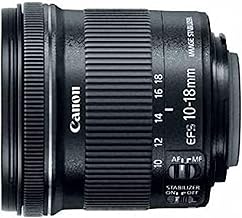
The Canon EF-S 10-18mm f/4.5-5.6 IS STM is a wide-angle zoom built for Canon's crop-sensor DSLRs, and it is one of the few lenses on this list designed specifically to solve the not-enough-space problem of shooting indoors. At its widest setting, it can fit an entire small room, a full dinner table, or a large group into a single frame.
Built-in Image Stabilizer helps offset the narrower variable aperture, letting you shoot handheld at slower shutter speeds in dim rooms without as much blur. The STM autofocus motor keeps things quiet, which matters for video in a quiet indoor setting.
The aperture narrows from f/4.5 to f/5.6 across the zoom range, so in very dim rooms you may need to raise ISO more than with the faster primes on this list. Some barrel distortion is also visible at the widest 10mm setting, though it is easy to correct in editing.
Bottom line: this is the pick for anyone who regularly runs out of room to back up indoors, from real estate shooters to anyone documenting a full room or group.
- Mount: Canon EF-S (crop-sensor only)
- Focal length: 10-18mm
- Maximum aperture: f/4.5-5.6
- Autofocus motor: STM (stepping motor)
- Image stabilization: Yes
- Filter thread: 67mm
Choose this lens if you regularly shoot full rooms, small apartments, or group photos indoors and find a standard 50mm or kit zoom too tight. Pair it with a faster prime for portraits, since the variable aperture here is better suited to wide scenes than shallow depth of field.
The protruding front element on wide-angle zooms like this one is more exposed to fingerprints and bumps, so a clip-on lens cap and a basic UV filter are worth using when shooting in busy indoor venues or around kids and pets.

Pros
- Versatile zoom range for everyday indoor use
- Image Stabilizer steadies handheld shots
- Lightweight and affordable
- Simple, beginner-friendly handling
- Decent close-focus for detail shots
Cons
- Variable aperture struggles in dim rooms
- EF-S mount, crop-sensor bodies only
- Plastic mount and build
The Canon EF-S 18-55mm f/3.5-5.6 IS II is the standard kit zoom bundled with many entry-level Canon DSLRs, and it remains a reasonable all-purpose option for everyday indoor shooting. The 18-55mm range covers everything from moderate wide shots to basic portraits without switching lenses.
Built-in Image Stabilizer helps steady handheld shots in the dimmer light typical of indoor rooms, which is one of the more useful features on a lens at this price point. It is also light and easy to handle, making it a comfortable everyday carry option.
The variable f/3.5-5.6 aperture is the main limitation indoors, since it lets in noticeably less light than the primes on this list, which means higher ISO or a tripod in dim rooms. The plastic mount and build also feel basic compared to the rest of the lineup.
Bottom line: a fine everyday option if you already own it, but most people shooting indoors regularly will notice a real improvement moving to one of the faster primes on this list.
- Mount: Canon EF-S (crop-sensor only)
- Focal length: 18-55mm
- Maximum aperture: f/3.5-5.6
- Autofocus motor: DC motor with STM-style focusing
- Image stabilization: Yes
- Filter thread: 58mm
A solid fit for beginners who want one versatile lens for everyday indoor and outdoor use before deciding whether to invest in a dedicated fast prime or wide zoom.
If most of your shooting happens in brighter rooms or near windows, this kit lens is usually enough. If you regularly shoot in dim rooms or at night, pair it with or upgrade to a wider-aperture prime like the EF 50mm f/1.8 for noticeably better indoor results.

Pros
- Fast f/1.8 aperture ideal for indoor low light
- Built-in Image Stabilizer for handheld shots
- Close 0.17m macro focus for detail shots
- Versatile wide-normal focal length
- Weather-sealed mount for durability
Cons
- RF mount only fits EOS R mirrorless cameras
- Pricier than the EF primes on this list
- No dedicated AF/MF switch on the barrel
The Canon RF35mm F1.8 IS Macro STM is one of the more versatile primes in Canon's mirrorless lineup, combining a fast f/1.8 aperture with built-in Image Stabilizer and a genuine close-focus macro mode down to about 0.17m. That combination makes it useful for indoor portraits, everyday scenes, and detail shots of small objects without switching lenses.
The 35mm focal length sits between a standard 50mm and a wide-angle zoom, giving a slightly wider view that works well in moderately sized indoor rooms while still flattering for portraits. Image stabilization is a genuine advantage over the 50mm primes on this list for handheld shooting in dim light.
It costs more than the EF and RF 50mm primes here, and the RF mount limits it to EOS R mirrorless bodies. There is no physical AF/MF switch on the barrel, so switching focus modes is handled through the camera body instead.
Bottom line: for EOS R owners who want one lens that covers portraits, everyday indoor scenes, and close-up detail shots, this is one of the strongest all-around options on this list.
- Mount: Canon RF (EOS R mirrorless)
- Focal length: 35mm
- Maximum aperture: F1.8
- Autofocus motor: STM (stepping motor)
- Image stabilization: Yes, up to 5 stops
- Filter thread: 52mm
Best for EOS R mirrorless owners who want a single versatile lens for indoor portraits, everyday scenes, and close-up detail shots without carrying multiple primes.
Use the close-focus macro mode for tabletop or hobby detail shots where you cannot add extra lighting, and rely on the built-in stabilization to shoot handheld at slower shutter speeds in dim rooms.

Pros
- Constant f/2.8 aperture across the zoom range
- Weather-sealed L-series build quality
- Up to 5-stop Image Stabilizer for handheld shots
- Wide 15-35mm range fits tight interiors
- Fast Nano USM autofocus
Cons
- Premium price tag
- Large 82mm filter thread adds bulk
- RF mount only fits EOS R mirrorless cameras
The Canon RF15-35mm F2.8 L IS USM is the premium option on this list, built for photographers who need pro-level performance rather than a budget upgrade. Unlike the kit zoom and wide-angle option elsewhere on this list, it holds a constant f/2.8 aperture across its entire 15-35mm range, so it does not lose light as you zoom in.
That wide aperture, combined with up to 5 stops of Image Stabilizer, makes it genuinely capable in dim indoor venues like event halls, churches, or conference rooms where flash is not an option. The L-series build adds weather sealing and a metal mount, which matters for anyone who moves gear between indoor and outdoor conditions regularly.
All of this comes at a real cost, both in price and in size. The 82mm filter thread is large and adds weight and bulk compared to the primes on this list, and it is a significant investment for casual indoor shooting.
Bottom line: this is the lens for photographers who shoot indoor events, venues, or professional work regularly and need a wide, fast, durable zoom that can handle demanding conditions.
- Mount: Canon RF (EOS R mirrorless)
- Focal length: 15-35mm
- Maximum aperture: Constant F2.8
- Autofocus motor: Nano USM
- Image stabilization: Yes, up to 5 stops
- Filter thread: 82mm
- Build: L-series, weather-sealed
Consider this lens if you regularly shoot indoor events, venues, or professional assignments and need a durable, fast wide zoom rather than a single-purpose prime. Casual indoor shooters will likely get similar day-to-day results from one of the more affordable primes on this list.
The weather-sealed mount adds protection against dust and moisture, but the large front element still benefits from a quality UV filter and a hard case when traveling between indoor venues.

Pros
- Compact wide-angle prime for full-frame RF bodies
- Budget-friendly price point
- Quiet STM autofocus
- Lightweight for everyday carry
- Good depth-of-field control at f/2.8
Cons
- No image stabilization
- RF mount only fits EOS R mirrorless cameras
- Narrower aperture than the f/1.8 primes on this list
The Canon RF28mm F2.8 STM is a compact, budget-friendly wide prime for full-frame EOS R bodies, sitting between the ultra-compact RF pancake-style primes and the wider RF zooms on this list. The 28mm focal length is slightly wider than standard 50mm, making it a comfortable everyday lens for indoor scenes, small rooms, and travel.
At f/2.8, it is not as fast as the f/1.8 primes elsewhere on this list, but it still performs reasonably well in moderately lit indoor rooms and offers enough depth-of-field control for environmental portraits. The STM autofocus motor keeps operation quiet, and the lens itself is light enough to carry as a lightweight second lens.
There is no image stabilization, so in dimmer rooms you will want a steadier hand or a slightly higher ISO than with the stabilized primes on this list. It is also RF-mount only, limiting it to EOS R mirrorless bodies.
Bottom line: a solid budget-friendly option for full-frame RF shooters who want a compact wide prime for everyday indoor and travel photography.
- Mount: Canon RF (full-frame EOS R)
- Focal length: 28mm
- Maximum aperture: F2.8
- Autofocus motor: STM (stepping motor)
- Image stabilization: None
- Filter thread: 55mm
A good fit for full-frame EOS R owners who want a compact, affordable wide-normal prime for everyday indoor shooting and travel without the cost of an L-series lens.
Choose this over the RF35mm F1.8 IS Macro STM if budget and size matter more than aperture speed or stabilization; choose the RF35mm instead if you shoot in consistently dim rooms or want close-focus macro capability.
Buying Guide: How to Pick the Right Canon Lens For Indoor Photography
Not every Canon lens behaves the same once you step away from bright outdoor light. Indoor rooms are smaller, darker, and full of mixed light sources, so the specs that matter most shift compared to shooting outside. Here are the six things worth checking before you buy.
Lens Mount: EF, EF-S, RF, and RF-S
Canon lenses are not universal across every camera body. Older EF lenses fit full-frame and crop-sensor DSLRs, while EF-S lenses are built only for crop-sensor DSLRs like the Rebel and 90D series. If you shoot on a mirrorless EOS R body, you need RF or RF-S glass instead, since the mount and flange distance are physically different from EF and EF-S.
Adapters exist to run EF and EF-S lenses on RF bodies, but that adds bulk and cost. Before buying anything on this list, confirm your camera body and pick the matching mount family so the lens actually attaches and autofocuses correctly.
It is also worth checking the sensor size behind the mount. EF-S and RF-S lenses are designed for a smaller image circle that matches crop-sensor bodies, and mounting one on a full-frame body either will not work or forces the camera into a cropped shooting mode. EF and RF lenses cover the larger full-frame sensor and will also work fine on crop bodies, just with a narrower effective field of view.
Maximum Aperture for Low Indoor Light

Indoor light is almost always dimmer than daylight, so aperture matters more here than almost anywhere else. A lens that opens to f/1.8 lets in roughly four times more light than one stuck at f/4, which means faster shutter speeds, less motion blur from kids or pets, and cleaner images at lower ISO.
Prime lenses in this guide, like the 50mm and 35mm options, hold a wide aperture across their whole range. Zoom lenses with variable apertures, such as an 18-55mm kit lens, are more flexible for framing but need brighter rooms or a boost in ISO to keep images sharp indoors.
The one exception on this list is the RF15-35mm F2.8 L, a zoom that holds a constant f/2.8 aperture across its entire range instead of narrowing as you zoom in. That constant aperture is a big part of why L-series zooms cost more than kit lenses; you get zoom flexibility without giving up the light-gathering ability of a prime.
Focal Length and Working Space

Rooms are cramped compared to open outdoor spaces, so focal length changes how usable a lens feels indoors. A 50mm prime is a natural fit for portraits and tabletop shots where you can stand a few feet back, but it can feel tight in a small living room or hallway.
Wider lenses in the 10-18mm or 15-35mm range let you fit an entire room, a full holiday table, or a group of people into frame without backing into a wall. If you shoot mostly portraits and product shots, prioritize a normal or slightly wide prime; if you document real estate, events, or family gatherings in tight rooms, lean wider.
Macro capability is a smaller bonus worth mentioning here too. The RF35mm F1.8 IS Macro STM focuses down to about 0.17m, which is close enough for detail shots of small objects, food, or hobby items indoors, essentially giving you a second lens built into one.
Image Stabilization
Built-in Image Stabilizer (marked “IS” in Canon lens names) counters small hand shake, which matters more indoors where shutter speeds naturally drop in dim rooms. A lens with several stops of stabilization lets you shoot handheld at slower shutter speeds without a visibly shaky result.
Stabilization will not freeze a moving subject on its own; that still comes down to aperture and shutter speed. But for still subjects, low-light interiors, and video, IS is one of the most useful indoor-specific features on this list.
Four of the eight lenses here skip stabilization entirely: the two 50mm primes, the 24mm pancake, and the RF28mm. That is a normal tradeoff on fast primes, since the wide aperture already does most of the work of letting in light, and the lens stays smaller and lighter without the extra stabilization hardware.
Autofocus Motor: STM vs USM
Canon uses a few different autofocus motor designs, and the two you will see most on this list are STM and USM. STM motors are quiet and smooth, which makes them a strong match for video and for candid indoor shooting where a noisy lens would be distracting.
USM motors, found on the L-series zoom in this guide, tend to focus faster and hold up better under heavier professional use. For casual indoor photography and home video, STM is usually plenty; for paid work or fast-moving subjects, USM earns its higher price.
Neither motor type is silent, but the difference is noticeable in a quiet indoor setting like a living room or a small studio. If you record video or shoot around sleeping kids or pets, an STM lens is the safer choice simply because you are less likely to hear it hunting for focus in the background of a clip.
Build Quality and Filter Size

Entry-level Canon primes and kit zooms use mostly plastic construction with a plastic mount, which keeps weight and price down but is less durable over years of use. L-series lenses add weather sealing and a metal mount, which matters more if you travel with your gear or shoot in humid, dusty, or high-traffic indoor venues like event halls.
Filter thread size also affects your budget beyond the lens itself, since a UV filter or lens hood needs to match. Compact primes usually take small, cheap filters, while wide L-series zooms often need larger, pricier ones. For a wider look at gear built for tighter budgets, our roundup of affordable film cameras covers a similar lower-cost angle for photography beginners.
| Lens | Mount | Max Aperture | Focal Length | Image Stabilization |
|---|---|---|---|---|
| Canon EF 50mm f/1.8 STM | EF | f/1.8 | 50mm | No |
| Canon EF-S 24mm f/2.8 STM | EF-S | f/2.8 | 24mm | No |
| Canon RF50mm F1.8 STM | RF | f/1.8 | 50mm | No |
| Canon EF-S 10-18mm f/4.5-5.6 IS STM | EF-S | f/4.5-5.6 | 10-18mm | Yes |
| Canon EF-S 18-55mm f/3.5-5.6 IS II | EF-S | f/3.5-5.6 | 18-55mm | Yes |
| Canon RF35mm F1.8 IS Macro STM | RF | f/1.8 | 35mm | Yes |
| Canon RF15-35mm F2.8 L IS USM | RF | f/2.8 | 15-35mm | Yes |
| Canon RF28mm F2.8 STM | RF | f/2.8 | 28mm | No |
Why You Should Trust Us
Our picks start with real customer ratings and review volume, not marketing copy, and we cross-check every listed spec, from aperture and mount to stabilization, against Canon’s own published lens data. We also cut anything that only looks good on paper: a lens with a glowing spec sheet but a mount that does not fit common Canon bodies, or a listing padded with third-party glass wearing a Canon-adjacent name, does not make the cut.
This guide is limited on purpose to lenses made by Canon itself, across both the older EF and EF-S DSLR mounts and the newer RF mirrorless mount, so every recommendation here is genuine Canon glass rather than a third-party lookalike. We also lean on customer feedback about real-world indoor use, like autofocus noise during video or how a lens performs in a dim living room, rather than lab charts alone, since that lines up better with how most people actually shoot indoors.
Our picks are updated as new Canon lenses launch and as customer ratings shift, so a lens that drops in stock or in reviews can be swapped out for a better-rated alternative in the same mount and price range.
Final Thoughts
For most people shooting indoors on a Canon DSLR, the Canon EF 50mm f/1.8 STM is the easiest recommendation on this list. It combines a wide f/1.8 aperture, sharp results, and a low price that makes it an obvious first lens upgrade for portraits, product shots, and everyday indoor scenes.
If budget is the main concern, the Canon EF-S 24mm f/2.8 STM pancake lens delivers a similarly fast aperture in an even smaller, lighter body, and its slightly wider angle is a natural fit for cramped apartments and home offices. Anyone who needs to fit a whole room or a large group into frame should look at the EF-S 10-18mm wide zoom, while photographers who have already moved to an EOS R mirrorless body and want pro-level results in mixed indoor lighting should consider the RF15-35mm F2.8 L.
Shooters who want a close-focus option for detail shots alongside general indoor use should look at the RF35mm F1.8 IS Macro STM, which pairs a fast aperture with stabilization and a genuine macro focus distance in one lens. And if you already own an EF-S kit lens like the 18-55mm and want a clear upgrade path, moving to a wider-aperture prime is usually the single biggest improvement you can make for indoor results without switching camera bodies entirely.
Whichever direction you go, matching mount, aperture, and focal length to the rooms you actually shoot in matters more than chasing the single “best” lens on paper. For more gear comparisons like this one, browse our full articles hub.
FAQs
What is the best canon lens for indoor photography for beginners in 2026?
The Canon EF 50mm f/1.8 STM (or its RF50mm F1.8 STM mirrorless equivalent) is the easiest starting point. It is affordable, simple to use, and its wide aperture handles dim indoor rooms far better than a typical kit zoom.
Do I need image stabilization for indoor photography?
It helps but is not required. Stabilization steadies handheld shots at slower shutter speeds, which is useful in dim rooms, but a wide-aperture prime without stabilization can still perform well indoors since it lets in more light in the first place.
Can I use an EF lens on a Canon mirrorless camera?
Yes, with a Canon EF-to-RF mount adapter, EF and EF-S lenses attach to EOS R bodies and keep full autofocus. It adds some length and weight, so if you are buying new and already own an RF body, native RF glass is usually the simpler choice.
What focal length works best for shooting in small rooms?
A wide zoom in the 10-18mm (crop-sensor) or 15-35mm (full-frame) range is the most forgiving choice for small rooms, since it lets you fit more of the space into frame without backing into a wall. A 24mm or 28mm wide prime is a good middle ground if you want a fixed focal length with a wider view than a standard 50mm.
Is a prime or zoom lens better for canon lens for indoor photography?
Primes generally win for indoor use because they open to a wider maximum aperture, which matters more in dim rooms than the convenience of zooming. A zoom is worth the tradeoff if you need flexibility to switch between wide room shots and tighter portraits without changing lenses; check our electronics category for more camera gear comparisons.





Write Your Review
No reviews yet. Be the first to share your experience!