

Olive oil labels are unusually good at implying an origin they never actually claim. A bottle can carry an Italian sounding name, a Mediterranean hillside on the front, and a back label that quietly says the oil inside was packed in one country from olives grown in three or four others. California oil is the exception, because growers here have every commercial reason to state exactly where the olives came from and when they were picked. The best california olive oil bottles put the growing region, the mill, and often the harvest year right on the label, and that transparency is most of the reason to buy them.
We built this shortlist around one hard rule: every bottle below is pressed from olives grown in California and milled in California, so nothing here is a domestic sounding label wrapped around imported oil. Our shortlist of 9 picks for October 2026 covers growers and millers like Bariani, Olio Santo, Calivirgin and more. Our top pick is the California Olive Ranch 100% California Extra Virgin Olive Oil for its fully domestic sourcing, medium everyday intensity, and the widest grocery shelf presence of any California oil on this list. If origin is not your deciding factor and you simply want a good bottle from anywhere, our broader guide to the best extra virgin olive oil covers imported and blended options in detail. This guide stays strictly with oil that never left the state before it was bottled.
Pros
- Explicit 100% California origin on the label
- Medium intensity that suits almost any everyday use
- Widely stocked, so restocking is easy
- Liter size keeps cost per ounce reasonable
Cons
- Easy to confuse with the brand's imported Global Blend line
- Clear glass offers less light protection than opaque bottles
- Less distinctive than small batch grower miller oils
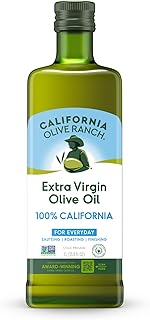
California Olive Ranch is the company that made domestic olive oil a supermarket category, and this is the bottle that carries the claim the rest of its range does not. The label states 100% California, meaning the fruit was grown in the state and milled here rather than blended with imported oil.
The flavor sits deliberately in the middle. It is fruity and clean with a mild peppery finish, assertive enough to notice on bread but restrained enough that it will not fight a delicate sauce or a cake batter. That makes it the rare bottle that can be the only olive oil in a kitchen without compromising much.
The main thing to watch is the shelf next to it. The same brand sells a Global Blend and an everyday line that draw on imported oil, and the packaging across those lines is similar enough that a distracted shopper grabs the wrong one. The clear glass is also a compromise, so this belongs in a closed cabinet rather than on a sunny counter.
Bottom line: if you want one dependable California bottle that covers everything from a hot pan to a salad bowl and is easy to find again, this is the pick to reach for, as long as you confirm the 100% California wording before you pay.
- Origin: olives grown and milled in California
- Grade: extra virgin
- Volume: 1 liter (33.8 fl oz)
- Intensity: medium
- Extraction: first cold pressed
- Packaging: glass bottle
- Best use: everyday cooking, roasting, dressings
This is the bottle for a household that cooks with olive oil several times a week and wants one jar of it rather than a mild bottle and a bold bottle. It is also the easiest entry point for someone who has decided to buy domestic but does not want to hunt down a specialty producer.
Shoppers chasing a strong peppery finishing oil, or one with a named single estate behind it, will find the small batch picks further down this list more interesting.
Look for the words 100% California on the front panel. If the bottle says Global Blend, or the back panel lists Argentina, Chile, Portugal, or Spain, you are holding a different product from the same brand.
Many bottles in this line also carry a harvest year. Between two otherwise identical bottles on the shelf, take the more recent one.

Pros
- Napa Valley origin stated plainly on the label
- Gentle, buttery profile that suits finishing
- 500 mL size stays fresh through the bottle
- Long standing reputation among California oils
Cons
- Too mild for anyone who wants a peppery bite
- Smaller bottle means a higher cost per ounce
- Not as widely stocked as supermarket brands
Olio Santo has been a fixture of the California olive oil shelf long enough that it predates the current wave of domestic brands, and it still does one thing very well: a soft, mild, low bitterness oil that flatters food rather than competing with it.
The profile is buttery and gently fruity with almost no throat catch at the finish. If your reference point for good olive oil is a sharp Tuscan style oil, this will read as understated. If you have ever found a bold oil overwhelming on a delicate fish or a fresh tomato, this is the correction.
The 500 mL format is the right call for how this bottle gets used. Mild finishing oils lose their appeal soonest as they age, and a smaller bottle means you are still tasting it at its best when you reach the bottom. The trade off is a higher cost per ounce than the liter bottles above it.
Bottom line: a Napa Valley classic for anyone who wants California origin in a gentle, table friendly oil, and a poor fit for anyone shopping for pepper and bite.
- Origin: Napa Valley, California
- Grade: extra virgin
- Volume: 500 mL (16.9 fl oz)
- Intensity: mild
- Extraction: cold pressed
- Packaging: glass bottle
- Best use: finishing, salads, bread
Mild oils show their character when they are not heated. Pour this over a caprese salad, a bowl of white beans, or grilled fish once it is off the heat, and the softness reads as richness rather than absence.
Used in a hot pan it will do the job, but you will be paying a finishing oil price for a task that a liter of everyday California oil handles just as well.
Keep the bottle capped in a closed cabinet away from the stove. Mild oils have less natural bitterness to mask the flat taste that comes with age, so storage matters more here than it does with a robust bottle.
Aim to finish it within two to three months of opening for the flavor you paid for.

Pros
- Grown and milled in California by the same company
- Balanced fruity profile that works hot or cold
- 750 mL is a practical everyday size
- Harvest information typically printed on the bottle
Cons
- Brand name reads Australian and confuses some shoppers
- Costs more per ounce than store brand California oil
- Bottle is glass rather than opaque
Cobram Estate is an Australian name attached to a genuinely Californian operation. The company owns groves in California's Central Valley and mills the fruit itself, which is why its bottles can state California origin without the hedging you see elsewhere.
The California Select line is the middle of the range and the easiest one to live with. It is fruity and green with a balanced finish, more character than a supermarket blend but not so assertive that it dominates. The 750 mL bottle lands between the small finishing bottles and the liter jugs, which suits a household that cooks often but not constantly.
Owning both the grove and the mill is the real story here. Olives start degrading the moment they are picked, and a producer who mills its own fruit within hours has removed the longest delay in the chain. The brand states that timing itself, so treat it as a company claim rather than a certified figure, but the structure behind it is real.
Bottom line: the strongest all round California bottle after our top pick, and the better choice if you want a little more flavor than a mainstream everyday oil delivers.
- Origin: grown and milled in California
- Grade: extra virgin
- Volume: 750 mL (25.4 fl oz)
- Profile: fruity and balanced
- Extraction: first cold pressed
- Other: non-GMO
- Best use: everyday cooking and dressings
Expect green fruit and a clean bitterness with a moderate peppery finish. It is noticeably livelier than a mild supermarket blend without crossing into the sharp, throat catching intensity of an early harvest finishing oil.
That middle position is what makes it flexible. It holds up in a hot pan and still tastes like something when spooned over soup or roasted vegetables.
Good for cooks who have decided a supermarket blend tastes flat but do not want to keep two bottles on the counter. It is also a sensible upgrade if you already buy California oil and want more flavor for a modest step up.
If you need the lowest cost per ounce, the store brand California bottle on this list will serve you better.

Pros
- California origin stated on a store brand bottle
- Unfiltered style gives it more character than most value oils
- Large 33.8 fl oz size lowers cost per ounce
- Simple, readable label with no origin ambiguity
Cons
- Availability depends on having a Whole Foods nearby
- Unfiltered sediment settles and can look cloudy
- Large bottle only pays off if you cook often
Store brand olive oil is usually where origin claims go vague, so a store brand bottle that says California on the front is worth noticing. This one does, and it goes a step further by being unfiltered, a style choice that leaves more of the fine olive solids in the bottle.
Unfiltered oil tastes fuller and slightly greener than a polished bottle, and it looks a little cloudy with a small amount of sediment at the bottom. That is normal and not a defect. It does mean the oil is at its best earlier in its life, since those solids shorten how long it stays lively.
At 33.8 fl oz this is a cooking bottle rather than a finishing one, and that is the right way to use it. Pour it into pans, whisk it into dressings, roast with it. Saving it for special occasions works against the unfiltered style.
Bottom line: the best value on this list by a clear margin, and the easiest way to cook with California oil every day without paying specialty prices, provided you shop somewhere that stocks it.
- Origin: California grown olives
- Grade: extra virgin, unfiltered
- Volume: 33.8 fl oz (1 liter)
- Intensity: mild to medium
- Packaging: glass bottle
- Retail: Whole Foods Market store brand
- Best use: everyday cooking, dressings
Filtering removes the microscopic fruit particles left after pressing. Those particles carry flavor, which is why unfiltered oil tastes fuller, but they also give the oil more to react with over time.
Practically, that means buy unfiltered when you will use it steadily and store it in a dark cabinet. The faint cloudiness and the sediment ring at the bottom are signs of the style, not signs of a problem.
Ideal for a household that cooks with olive oil most days and wants California origin without a specialty price. It is also a good first unfiltered bottle for anyone curious about the style.
Skip it if you only use olive oil occasionally, since a liter of unfiltered oil is more than a light user will finish while it is at its best.

Pros
- Unambiguous 100% California claim
- Made by a grower that operates its own mill
- Cold extracted with a fresh, green profile
- Practical 17 ounce size for regular use
Cons
- Narrower retail availability than mainstream brands
- Less name recognition than the big California labels
- Profile may read too green for mild oil fans
Corto is a California grower and miller rather than a marketing label that buys oil, and the TRULY line is its consumer facing bottle. The 100% California claim is stated plainly, which is the first thing to check in this category.
The oil leans fresh and green with a clean bitterness and a moderate peppery finish, the profile you expect from fruit pressed soon after picking. It sits closer to the lively end of the range than the mild California oils, though it stops well short of an aggressive early harvest finishing oil.
The 17 ounce size is a sensible middle ground. It is enough for regular cooking without being so large that the last third of the bottle tastes tired, and it is small enough to keep somewhere dark and cool without hunting for shelf space.
Bottom line: a solid grower miller pick for anyone who wants verified California origin and a fresher, greener flavor than the mainstream everyday bottles offer.
- Origin: 100% California
- Grade: extra virgin
- Volume: 17 oz
- Extraction: cold extracted
- Profile: fresh and green with moderate pepper
- Producer: California grower and miller
- Best use: cooking and finishing
Olive oil degrades quickest when it meets light, heat, and air. A modest bottle size helps with the air problem, because less headspace builds up as you pour.
Keep it in a closed cabinet rather than beside the stove, and treat the harvest information on the packaging as the number that matters rather than the best by date.
The green, peppery side of this oil comes through best when it is not cooked hard. Finish soups, beans, grain bowls, and roasted vegetables with it after they leave the heat.
It still works fine for sauteing, but if you cook at high heat every night, a larger everyday bottle is the cheaper way to do it.

Pros
- Single family ranch in Yolo County, California
- Mission and Manzanillo fruit gives a distinctive profile
- Unfiltered and cold extracted
- Long running independent producer
Cons
- Limited production means patchy availability
- Sediment and cloudiness put off some buyers
- Softer, rounder style will not satisfy pepper seekers
Bariani is about as close to a single farm bottle as this category gets. The family emigrated from Lombardy, planted olives in Yolo County, and has pressed its own fruit there ever since, which means the grove, the mill, and the label all belong to the same people.
The varieties are the reason this bottle tastes different from the Arbequina heavy oils around it. Mission and Manzanillo give a rounder, softer, slightly nutty oil with less of the green sharpness that dominates modern California plantings. Unfiltered extraction adds body on top of that.
The trade offs are the ones that come with small production. Supply is limited, the bottle is not on every shelf, and the cloudiness of an unfiltered oil looks unfamiliar next to a polished supermarket bottle. None of that is a quality problem, but it does make this a bottle you seek out rather than one you grab.
Bottom line: the pick for anyone who wants a genuine California family ranch oil with a historic variety profile, and who is willing to work a little to find it.
- Origin: Zamora, Yolo County, California
- Grade: extra virgin, unfiltered
- Volume: 16.9 oz
- Varieties: Mission and Manzanillo
- Extraction: cold extracted
- Producer: family owned grove and mill
- Best use: bread, salads, finishing
Mission is the historic California variety, planted around the state's mission orchards long before the modern industry existed. It gives a soft, rounded oil with nutty notes rather than the green cut of Spanish varieties.
Manzanillo, better known as a table olive, adds a little fruit and body. Together they explain why this bottle reads as gentle and old fashioned next to the Arbequina and Koroneiki blends that dominate the shelf.
This is for the shopper who wants to know the name of the ranch, and who prefers a softer, nuttier oil to a sharp green one. It rewards use on bread, tomatoes, and simple salads where the oil is the point.
If you want a large bottle to cook with every night, the value picks on this list are the better fit.

Pros
- Estate grown Arbequina from a named Lodi ranch
- Carries California Olive Oil Council seal certification
- Unfiltered and cold extracted
- White glass bottle blocks more light than clear glass
Cons
- Smaller production and narrower availability
- 500 mL size means a higher cost per ounce
- Mild Arbequina profile lacks a strong peppery finish
Calivirgin comes from Coldani Olive Ranch in Lodi, a family operation that grows the fruit and mills it on site. The bottle carries the California Olive Oil Council seal, which is the most concrete quality signal available in the domestic market.
The oil is unfiltered Arbequina, which means mild fruit, a soft mouthfeel, and aromatics that lean toward green apple and fresh grass rather than pepper. It is a gentle oil by design. People who equate quality with a burning finish will read it as quiet, while people who cook delicate food will find it easy to use.
Two practical details work in its favor. The white glass bottle blocks considerably more light than the clear glass most producers use, and the 500 mL size means the unfiltered oil gets finished while it is still fresh. Both matter more for unfiltered oil than for a filtered supermarket bottle.
Bottom line: the pick if the COOC seal is the reassurance you are shopping for, and a good fit for anyone who prefers a soft, aromatic oil over an assertive one.
- Origin: Coldani Olive Ranch, Lodi, California
- Grade: extra virgin, unfiltered
- Volume: 500 mL
- Variety: estate grown Arbequina
- Certification: California Olive Oil Council seal
- Packaging: opaque white glass bottle
- Best use: bread, salads, light cooking
The California Olive Oil Council seal requires three things at once: the olives must be grown in California, the oil must fall under a strict free fatty acid limit, and it must pass a blind sensory panel that confirms positive flavor attributes and no defects.
Chemistry alone can pass a dull oil and a tasting panel alone can be fooled by a bold one, so requiring both is what gives the seal its weight. It is voluntary, so its absence on another bottle is not a warning sign.
Treat this as a table oil first. Its aromatics are the selling point, and they are strongest when the oil has not been through a hot pan. Bread, burrata, salads, and finished vegetables all suit it.
For frying and high heat roasting, use a larger everyday California bottle and save this one for the plate.

Pros
- Olives grown on California family farms
- Opaque bottle gives strong light protection
- Three variety blend with a lively finish
- Milled quickly after harvest per the brand
Cons
- Smallest bottle here at 12.7 fl oz
- Highest cost per ounce on this list
- Design led packaging is not to everyone's taste
Brightland built its reputation on California sourcing and packaging, and both hold up. The Alive bottle blends Arbequina, Arbosana, and Koroneiki olives grown on California family farms, and the company states the fruit is cold pressed shortly after harvest.
The three variety blend is the interesting part. Arbequina supplies softness, Arbosana adds structure, and Koroneiki brings the peppery finish, so the result has more lift than a single variety Arbequina bottle without turning harsh. It reads as bright and aromatic rather than heavy.
The opaque bottle is a real functional advantage and not just a design decision. Light is one of the three things that ruin olive oil, and an opaque container removes it entirely. The counterweight is size: at 12.7 fl oz this is the smallest bottle here and the most expensive per ounce, which makes it a finishing oil rather than a cooking one.
Bottom line: buy it for the table, not the stove, and appreciate that the packaging is protecting the oil rather than just looking good on a counter.
- Origin: California family farms
- Grade: extra virgin
- Volume: 12.7 fl oz
- Varieties: Arbequina, Arbosana, Koroneiki
- Extraction: cold pressed
- Packaging: opaque glass bottle
- Best use: salads, dips, finishing
Clear glass lets in the full spectrum of light, tinted glass blocks part of it, and opaque glass blocks essentially all of it. That is the ranking that matters if the bottle is going to live anywhere near a window or on an open shelf.
Because this bottle protects the oil so well, it is one of the few here that can sit out on a counter without a meaningful freshness penalty, though a cool cabinet is still better.
Suited to someone who already has a workhorse cooking oil and wants a second, livelier bottle for the table. It is also the natural gift bottle in this group.
If this would be your only olive oil, the size and cost per ounce make it an impractical choice, and one of the liter bottles above will serve you better.

Pros
- USDA Organic certified and 100% California grown
- Three variety blend with bright fruit
- First cold pressed extraction
- 500 mL size stays fresh through the bottle
Cons
- Smallest rating base among the picks here
- Not stocked as widely as mainstream brands
- Higher cost per ounce than large format bottles
This is the certified organic slot on the list, and it fills it without giving up the origin claim. The label states both USDA Organic certification and 100% California grown fruit, which is a combination that is harder to find than it sounds.
The blend uses Arbosana, Koroneiki, and Arbequina, the three varieties that dominate modern California groves. The result is bright and fruity with a moderate finish, sitting between the very mild Arbequina bottles and the peppery early harvest oils. It is versatile enough for dressings and light cooking both.
The main caveat is scale. This bottle has a much smaller base of customer ratings than the supermarket names on this list, so there is less collective feedback behind it. That is typical for a smaller California producer and not a mark against the oil, but it is worth knowing if you like buying with a large consensus behind you.
Bottom line: the pick if organic certification and California origin both matter to you, and a pleasant, balanced everyday oil regardless of the certification.
- Origin: 100% California grown
- Grade: extra virgin
- Volume: 500 mL (16.9 fl oz)
- Varieties: Arbosana, Koroneiki, Arbequina
- Certification: USDA Organic
- Extraction: first cold pressed
- Best use: dressings and light cooking
Arbosana contributes structure and a green note, Koroneiki supplies the peppery finish, and Arbequina rounds the whole thing out with softness and a faint almond character.
Blending is a deliberate choice rather than a compromise. Each variety covers a gap in the others, which is why three variety California blends tend to taste more complete than a single variety bottle at the same level.
USDA Organic governs how the olives were farmed, not how the oil tastes or how fresh it is. It tells you about pesticide and fertilizer practice and nothing about harvest timing.
So read the organic seal and the origin claim as two separate pieces of information, and still check for a harvest year before you buy.
How to Shop for California Olive Oil Without Ending Up With a Blend
California produces a small fraction of the olive oil Americans consume, so the shelf next to it is crowded with imported bottles competing on price. That pressure has produced some genuinely confusing labeling, including from brands whose names sound entirely Californian. The criteria below are the ones that separate an oil actually grown in the state from one that only markets that way, plus the practical details that decide how the bottle performs once it is in your kitchen.
Look for 100 Percent California, Not a Global Blend

The single most useful phrase on a California olive oil label is a flat statement of origin: 100% California, California Estate Grown, or a named county or valley. Anything vaguer is worth a second look. The clearest example on the shelf is California Olive Ranch, a company that genuinely mills California fruit but also sells a Global Blend line and an everyday line built partly or entirely from imported oil. Same brand, same shelf, very different contents.
That is not deception, the back label discloses it, but it does mean brand recognition alone will not get you a California oil. Read the front panel for an origin claim and then flip the bottle to see whether the back agrees. If the back label lists a country of origin that is not the United States, or lists several countries, you are holding a blend regardless of what the brand name suggests.
The picks on this list all clear that bar. Cobram Estate grows and mills its California Select and Classic lines in the state’s Central Valley. Corto, Calivirgin, and Bariani are grower millers who press fruit from their own or neighboring ranches. Brightland and O California source from California family farms and say so on the label. When a producer owns the grove and the mill, origin stops being a marketing question and becomes a supply chain fact.
The COOC Seal and What It Actually Certifies
The California Olive Oil Council runs a voluntary seal certification program, and its small round seal is the closest thing the domestic market has to a quality shorthand. To carry it, an oil must be made from olives grown in California, must fall under a strict free fatty acid limit, and must pass a blind sensory panel that checks for positive flavor attributes and the absence of defects like fustiness or rancidity.
That combination is what makes the seal meaningful. Chemistry alone can be passed by an oil that is technically sound but flat and lifeless, and a tasting panel alone can be swayed by a bold oil that is already oxidizing. Requiring both, on top of a California origin requirement, filters out most of what goes wrong between the grove and the bottle. Calivirgin is one of the picks here that markets its seal certification prominently.
The seal is not the only signal worth trusting, and plenty of excellent California oil skips certification because the producer sees no commercial need for it. Treat it as a strong positive when present rather than a requirement. If you want to browse more pantry staples where sourcing claims are worth reading closely, our grocery and gourmet food deals are a good place to start.
Harvest Date, Mill Date, and Why Distance Matters

Olive oil is fruit juice, and like fruit juice it is best young. The clock starts at harvest, not at bottling, which is why a harvest date on the label is more informative than a best by date sitting two years out. California harvest runs roughly from October into December, so a bottle stamped with the most recent autumn is a young oil and one stamped two autumns back is not.
Geography is the quiet advantage here. Imported oil is typically pressed abroad, held, shipped across an ocean in bulk or in bottle, cleared, warehoused, and then distributed, and each of those steps adds weeks and exposure to heat. California oil made for the domestic market skips the ocean entirely. Cobram Estate mills fruit within hours of picking, and Brightland presses within roughly ninety minutes of harvest according to the brand. Those numbers are the producer’s own claims rather than independently audited figures, but the short distance from grove to mill is a structural feature of growing in the state, not a marketing choice.
The practical takeaway is simple. Between two California bottles at similar quality, the one with the more recent stated harvest is the better buy, and a bottle with no harvest information at all is asking you to take freshness on faith.
Olive Varieties Grown in California

California’s modern oil industry is built largely on high density plantings of Arbequina and Arbosana, two Spanish varieties that adapt well to mechanical harvesting in the Central Valley. Arbequina tends toward soft, buttery, faintly almond flavors with mild bitterness, which is why so many California everyday oils taste approachable rather than aggressive. Arbosana adds a bit more structure and a green note.
Koroneiki, a Greek variety, is the third pillar and brings the peppery finish that many shoppers associate with a lively oil. Blends of the three, like the one O California bottles, are common because each variety covers a weakness in the others. Mission is the historic California variety, planted originally around the state’s mission orchards, and it gives a rounder, softer, sometimes slightly nutty oil. Bariani presses Mission and Manzanillo fruit from its Yolo County ranch, which is a large part of why that bottle tastes different from the Arbequina heavy oils around it.
Variety is the best predictor of flavor once origin is settled. If you want a mild oil for baking and everyday sauteing, lean Arbequina or Mission. If you want something with a peppery bite for finishing bread, soup, or a sharp salad, look for Koroneiki in the blend. Our picks for the best Greek salad dressings pair naturally with the more assertive bottles on this list.
Bottle Size, Glass Color, and Storage
Light, heat, and oxygen are what turn a good oil dull, and packaging is the producer’s main defense. Dark green or amber glass blocks a meaningful share of light, opaque white glass and painted bottles block more, and tins and bag in box formats block essentially all of it. Brightland ships in an opaque bottle for exactly this reason, and California Olive Ranch offers a bag in box format for households that go through oil in volume.
Size should follow your actual usage rather than the price per ounce. A large bottle is only a bargain if you finish it within a few months of opening, because every pour replaces oil with air. If you cook with olive oil a few times a week, a 500 mL or 16.9 ounce bottle will stay lively to the last spoonful. If it goes into everything you cook, the liter and larger formats make sense.
Wherever the bottle came from, store it in a closed cabinet away from the stove and off a sunlit counter. The cabinet next to the oven is the single worst spot in most kitchens, and it is where a lot of people keep their oil.
Here is a quick way to match a kitchen goal to the kind of California bottle that tends to fit it.
| If you want | Look for | Good example |
|---|---|---|
| An everyday California oil sold nearly everywhere | A 100% California label from a large grower miller | California Olive Ranch, Cobram Estate |
| The lowest cost per ounce without leaving the state | A large format store brand California bottle | 365 by Whole Foods Market Unfiltered |
| A small batch grower miller bottle | Estate grown fruit and a named ranch or county | Bariani, Calivirgin, Olio Santo |
| Maximum protection from light | Opaque glass, a tin, or a bag in box format | Brightland Alive, Corto TRULY |
| A certified organic California bottle | USDA Organic plus a 100% California origin claim | O California Organic |
Why You Should Trust Us
This list started as a much longer one. We pulled the highest rated olive oils that surface for California related searches, then removed every bottle we could not confirm was made from California grown olives, including several from brands with California in the name. The Global Blend and everyday lines from California Olive Ranch came out for that reason, as did a number of well reviewed imported oils that simply appear alongside California searches. What remained is 9 bottles from 9 separate producers.
From there we ranked on real customer ratings and the volume of ratings behind each score, then weighed how each bottle fits a distinct job: everyday cooking, value buying, small batch finishing, organic sourcing. We have not poured every one of these over a home cooked meal ourselves and we are not going to pretend otherwise. What we can do is verify origin claims carefully, describe what each producer actually states about its own fruit and milling, and flag where a claim is the brand’s own rather than independently certified.
Final Thoughts
For most kitchens, California Olive Ranch 100% California Extra Virgin Olive Oil is the best overall pick on this list. It is unambiguously California fruit, the medium intensity suits nearly every everyday use from roasting vegetables to whisking a vinaigrette, and it is stocked widely enough that you can restock without hunting. Just make sure you are reaching for the 100% California bottle rather than the Global Blend sitting beside it.
If you want California origin at the lowest cost per ounce, 365 by Whole Foods Market Unfiltered Extra Virgin California Olive Oil is the best value here, and the unfiltered style gives it more character than the price suggests. For a small batch grower miller bottle, Bariani and Calivirgin are the two to look at, the first for its Mission and Manzanillo fruit from Yolo County and the second for its estate grown Arbequina and its seal certification. Olio Santo remains the Napa Valley classic for anyone who wants a soft, mild finishing oil, while Brightland Alive and Corto TRULY are the picks if light protection and a recent harvest matter most to you. O California Organic covers the certified organic slot.
Buy the smallest bottle that fits how fast you cook, check the harvest year before you pay, and keep it away from the stove. Those three habits will do more for the flavor in your pan than trading up to a more expensive label. When you are ready to fill in the rest of the kitchen, the rest of our buying guides are worth a browse.
Frequently Asked Questions
What makes california olive oil different from imported olive oil?
The two biggest differences are traceability and travel time. California producers generally state the growing region and often the harvest year on the label, while a lot of imported supermarket oil is blended from multiple countries and discloses that only in small print on the back. California oil for the domestic market also skips an ocean crossing and the warehousing that goes with it, so less time passes between milling and your kitchen. Flavor is a separate question, since excellent and mediocre oil is made in both places.
Is every bottle from a brand with California in the name actually California oil?
No, and this is the most common mistake shoppers make in this category. California Olive Ranch is the clearest case: the company mills genuine California fruit for its 100% California line, and separately sells a Global Blend and an everyday line built on imported oil. Both sit on the same shelf under the same brand. Look for an explicit origin statement on the front and confirm it on the back panel rather than relying on the brand name.
What is the COOC seal on some california olive oil bottles?
It is the California Olive Oil Council’s voluntary certification seal. An oil carrying it has to be made from olives grown in California, meet a strict free fatty acid limit, and pass a blind sensory panel that confirms positive flavor attributes and no defects. It is a useful shorthand for a well made domestic oil, though plenty of good California producers choose not to enroll, so its absence is not a red flag by itself.
Which olive varieties are grown in California in 2026?
Arbequina and Arbosana dominate the state’s high density groves because they suit mechanical harvesting, and Koroneiki is widely planted for the peppery finish it contributes to blends. Mission is the historic California variety and still shows up in grower miller bottles, often alongside Manzanillo. Arbequina and Mission lean mild and buttery, while Koroneiki adds bite, so the variety listed on the label is a reliable preview of how the oil will taste.
How long does a bottle of california olive oil stay good after opening?
Plan on finishing an opened bottle within about two to three months for the best flavor, and sooner if it lives on a warm or sunny counter. Unopened and stored in a cool dark cabinet, most bottles hold up well for a year or more from harvest, which is why the harvest date is worth checking at purchase. Freshness rewards the same buying habit in a lot of pantry categories, and our organic coffee picks cover another staple where a recent date on the bag makes a real difference.


Write Your Review
No reviews yet. Be the first to share your experience!