

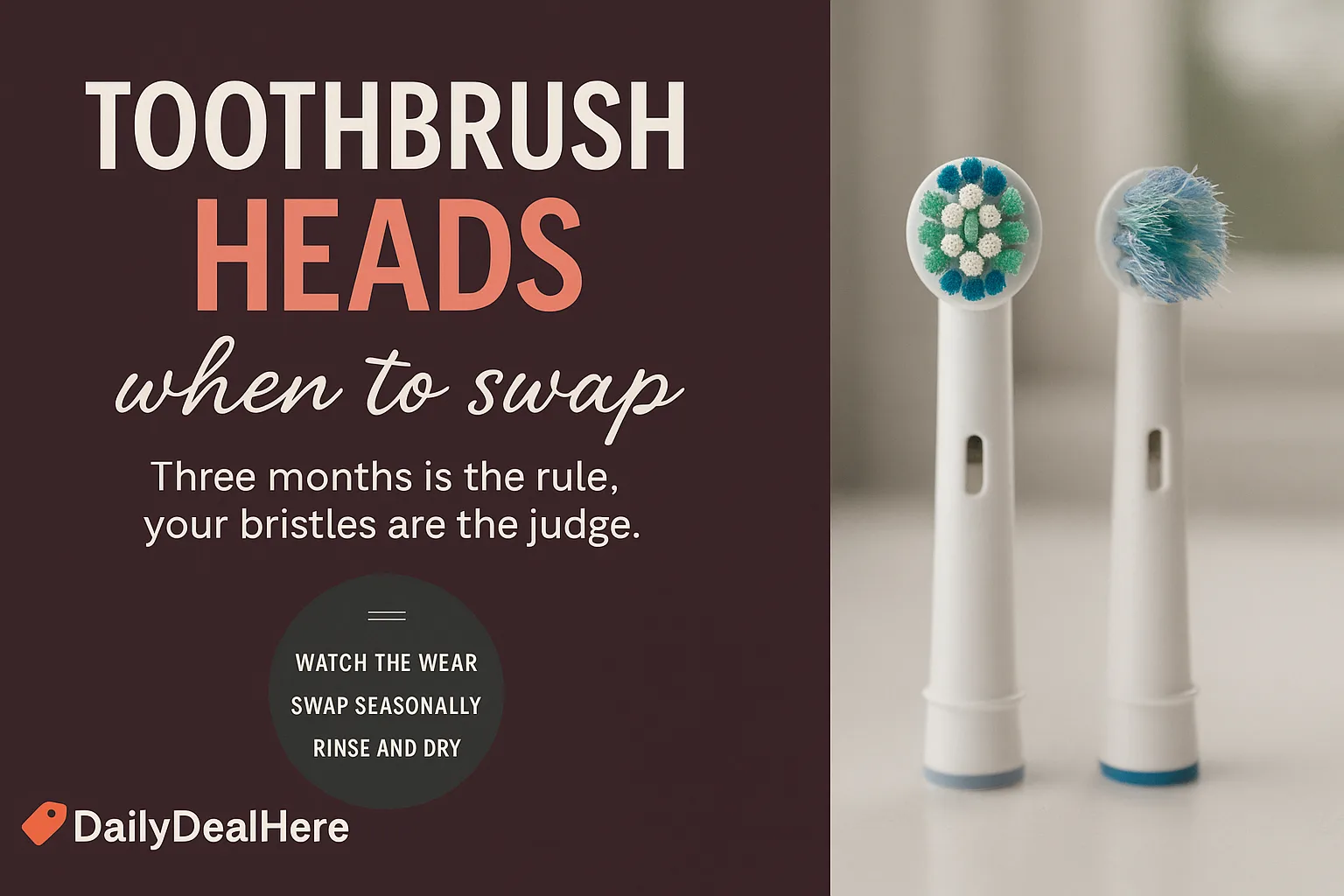
Electric toothbrush heads last about three months, the interval the American Dental Association recommends for brushes generally and the one every major manufacturer prints on the box. The honest signal to change sooner is visible wear: splayed, faded or flattened bristles clean noticeably worse no matter what the calendar says. Heavy pressure brushers routinely wear a head out in six to eight weeks, while a light touch can genuinely reach the full three months and occasionally a little beyond.
This guide covers why worn bristles matter, how to read the wear indicators built into most heads, the cases that shorten the interval, what a year of heads actually costs, whether third party replacements are worth it, and the storage habits that protect both the head and your gums.
Why three months, and where that number comes from
The bristles are the tool. Everything else in an electric toothbrush, the motor, the timer, the pressure sensor, exists to move those bristles along the gumline and between teeth. Once the filaments splay outward or flatten, they stop reaching into the places that matter and start sliding over them instead.
Research behind the standard guidance found meaningful drop-off in plaque removal from worn heads compared with fresh ones, which is why the interval is the same whether your handle was inexpensive or premium. A worn head on an expensive brush cleans worse than a fresh head on a cheap one.
There is a second, less discussed reason. Bristles that have bent repeatedly develop stiffer, sometimes sharper edges at the fold. That means a worn head can be simultaneously less effective at cleaning and harder on gum tissue, which is the worst of both outcomes.
How to read a brush head
Take the head off and look at it in good light, from the side rather than from above. From above everything looks fine; from the side you can see the splay.
| Sign | What it means | Action |
|---|---|---|
| Indicator bristles faded to pale | The built-in wear timer says the head is spent | Replace now |
| Bristles splayed outward past the head edge | Cleaning power already reduced | Replace now |
| Flattened or matted tips | Gumline reach is gone | Replace now |
| Discoloration at the bristle base | Buildup, a hygiene issue rather than wear | Replace and rinse better after use |
| Head rattles or wobbles on the handle | Worn coupling, energy is lost as noise | Replace, check the handle shaft too |
| After any illness | Cheap insurance | Swap the head |
The fading indicator bristles deserve a note because people often misread them. They are dyed filaments that lose color gradually with use and with exposure to toothpaste, so they track roughly with time and pressure rather than measuring anything. When most of the color is gone the head is due, but a head can also be finished while the color is still partly there if you brush hard.
Pressure: the variable that decides everything
If your heads look destroyed at six weeks, that is feedback about technique rather than about the head. Electric brushes are designed to be guided, not pushed. The oscillation or vibration does the work; your job is to hold the bristles against the tooth surface with light contact and move slowly along the arch.
Pressing hard produces three problems at once: bristles splay within weeks, the motor is damped so it cleans less effectively, and gum tissue takes abuse it does not need. Modern brushes include pressure sensors precisely because this is the most common user error, and if your handle has one, treating its warning as a hard stop rather than a suggestion will extend head life noticeably.
A practical exercise: brush one session deliberately using half the pressure you normally would, and notice how much of the sensation you associate with cleaning was actually just force. Most people find the brush still feels effective, and their next head lasts much longer.
Cases that shorten the interval
Braces and orthodontic hardware
Brackets and wires grind against bristles from angles a normal mouth never produces. Orthodontic patients should expect to replace heads noticeably sooner, inspect monthly rather than quarterly, and consider the orthodontic head shapes designed with a V-shaped bristle profile that clears brackets.
Children
Children chew brush heads, and a chewed head is finished regardless of age. They also press unpredictably. Kids’ heads are smaller and softer to begin with, so they wear faster in normal use as well. Checking a child’s head monthly is realistic; waiting three months usually means several weeks of brushing with a ruined head.
Soft and sensitive heads
Softer filaments splay a little sooner than standard ones by design, since they are thinner. The trap is compensating with pressure, which defeats the purpose of choosing soft in the first place. If a soft head keeps dying early, the answer is almost always a lighter touch rather than a firmer head.
Two people, one handle
Sharing a handle with separate heads is fine and common. Just remember each head is on its own clock based on its own use, so do not replace both on the same day out of habit if one person brushes twice as often.
What a year of brush heads actually costs
Four heads per person per year is the honest baseline, which means a family of four goes through sixteen. That running cost belongs in the buying decision alongside the handle, and it is the reason a cheap handle with expensive proprietary heads can end up costing more over three years than a pricier handle with widely available ones.
Three ways to keep it sane. Buy in multipacks, since per-head cost falls sharply with pack size and heads do not expire in any meaningful way. Buy during the big sale events, because oral care is a reliable participant in seasonal promotions, and stocking a year of heads at once is easy storage. And check whether your brand runs a subscription, which typically trades a modest discount for never having to think about it.
If you are shopping for a handle rather than heads, head availability and pack pricing are exactly the sort of ongoing cost we weigh alongside cleaning performance in our electric toothbrush guide.
Third party heads: when they make sense
Compatible heads from third party makers cost substantially less than brand originals, and the good ones are genuinely fine. The variation is real though, and it shows up in three places: filament quality, how well the head seats on the shaft, and whether the bristle pattern matches what the handle’s motion expects.
A poorly made head can rattle, transfer less of the handle’s motion to the bristles, or shed filaments early. None of that is dangerous, but it quietly cancels the saving. Favor sellers with long review histories for your specific handle model, buy a small pack first rather than a year’s supply, and compare the fit and feel directly against an original before committing.
One thing to be aware of: brand heads for some models contain a chip that the handle reads to track head life and adjust modes. Third party heads generally do not, so those features stop working. Whether that matters is a personal call; the brushing itself is unaffected.
Storage and hygiene between uses
Storage does not extend bristle life, but it protects hygiene and prevents the discoloration people mistake for wear. After brushing, rinse the head under running water with the brush switched on for a second to fling out toothpaste, shake it dry, and store it upright and uncovered so air circulates.
Travel caps are for travel. Using one every day traps moisture around the bristles and creates exactly the damp, dark conditions that lead to buildup at the base. Similarly, a closed drawer or a sealed cup is worse than an open holder on the counter.
Every few weeks, pull the head off the handle and rinse the metal shaft and the inside of the head socket. Toothpaste slurry collects there, dries, and is the usual source of a head that has started to rattle or a handle that feels gritty when you push the head on.
Things that do not shorten head life
For the record, since these come up often: leaving the brush on its charging base does not wear the head, travel does not wear the head, and using whitening toothpaste does not measurably wear the head either. Bristles age from contact with teeth and from pressure, not from electricity or abrasive paste at consumer concentrations.
Hot water is the one exception worth naming. Rinsing under very hot water repeatedly can soften and deform nylon filaments, so warm or cool water is the better habit. Boiling a head to sanitize it will ruin it outright.
A simple replacement system that survives real life
Everyone agrees with the three month rule and almost nobody follows it, because nothing prompts you. Three systems work in practice.
- Tie it to the seasons. Change heads when the clocks change, at the start of each quarter, or on the first of every third month. A date you already notice beats a date you have to remember.
- Keep the spares visible. A pack in the bathroom cupboard gets used; a pack in a drawer in another room does not.
- Use color coding in shared bathrooms. Most brands sell colored rings for exactly this, and it removes both the mix-up problem and the argument about whose head is older.
Then let the visual check override the system whenever it disagrees. The calendar is a default, the bristles are the truth.
Head shapes, and why the choice affects wear
Most handles accept several head shapes, and the one you use changes both how well you clean and how quickly the head ages. It is worth knowing what each is actually for rather than buying whatever the multipack contains.
Small round heads
The classic oscillating shape, sized to work one tooth at a time. The compact footprint reaches the back molars and the inner surfaces of crowded lower teeth better than anything else, and because the bristle field is small, the filaments share load evenly and wear predictably. This is the default for a reason.
Rectangular brush heads
Used on sonic handles, these cover more surface per pass and feel closer to a manual brush. Coverage per stroke is higher, which suits people who brush quickly, but the outer rows take more of the load on curved surfaces and tend to splay first. Inspect the edges rather than the middle when judging wear on this shape.
Sensitive and gum care heads
Softer, thinner filaments, often with a rubber polishing rim. Genuinely kinder to receding gums and to anyone whose dentist has flagged abrasion. The trade is faster splay and a softer feel that tempts people into pressing, which is exactly the wrong response.
Orthodontic heads
A V-shaped bristle profile that straddles brackets and lets the outer rows reach the tooth surface above and below the wire. Anyone in braces should be using these rather than fighting standard heads, and should still expect a shorter service life.
Whitening and polishing heads
A central polishing cup holds toothpaste against the tooth face. They remove surface stains from coffee and tea reasonably well, and they do nothing for intrinsic tooth color, which is a common misunderstanding. The rubber cup wears out around the same time the bristles do.
Interdental and single tuft heads
Narrow tips for implants, bridges and tight contacts, usually used alongside a normal head rather than instead of one. Their filament count is low, so wear is easy to see and replacement is obvious.
Does head life differ between sonic and oscillating brushes?
Not by much, and not in the direction people assume. Oscillating heads rotate back and forth at high speed against one tooth at a time, while sonic heads vibrate laterally at higher frequency across a wider field. Both wear filaments through the same mechanism: repeated bending against enamel under whatever pressure you apply.
What differs is the wear pattern. Round oscillating heads tend to splay outward evenly, like a flower opening, which makes wear obvious at a glance. Rectangular sonic heads wear unevenly, with the outer rows and the leading edge going first while the center still looks respectable. That difference matters practically: sonic users judging by the middle of the head consistently keep them too long.
Either way, the three month baseline holds, and either way pressure is the variable that decides whether you land at six weeks or twelve.
Signs the problem is the handle, not the head
A fresh head that still feels weak points at the handle, and it is worth knowing the difference before buying more heads to fix something heads cannot fix.
Watch for a motor that sounds slower or rougher than it used to, a battery that no longer holds two weeks of twice-daily brushing, a timer that has stopped signalling at thirty second intervals, or visible corrosion on the metal shaft. Any of those means the handle is aging. On models where the shaft has developed play, a brand new head will rattle exactly like a worn one, which is a confusing symptom until you know to check.
Handles typically outlast several years of heads, so this is not a frequent problem. But once the handle is genuinely failing, no head restores performance, and that is the point to compare current models rather than buying another pack.
What to do with old brush heads
Used heads are mixed plastic and nylon, which most curbside recycling programs will not take. Some manufacturers run mail-back programs for oral care waste, and a few specialty recycling services accept them, so it is worth a quick check of your brand’s site before defaulting to the bin.
The frugal alternative is repurposing. A retired brush head, thoroughly washed and clearly marked so it never returns to a mouth, is an excellent cleaning tool for grout lines, faucet bases, jewelry, keyboard crevices, sneaker soles and the corners of small appliances. Keeping two or three retired heads in a cleaning caddy is genuinely useful, and it turns a consumable into a second life rather than immediate waste.
One rule if you do this: separate them physically from the bathroom. A retired head that lives next to fresh ones will eventually get used by mistake, and that is worse than throwing it away.
Stocking up without overbuying
Heads have no meaningful expiry, so buying ahead is safe as long as the packaging stays sealed and dry. A year’s supply per person is the sensible ceiling: it captures multipack pricing and sale events without tying up money or cupboard space in something you might stop using if you change handles.
Two cautions. First, do not stock heavily for a handle that is already several years old, because a handle failure leaves you with heads that fit nothing. Second, if you are trying a third party brand for the first time, buy the smallest pack and use one for a full cycle before committing, since fit and filament quality are the two things you cannot judge from a listing photo.
Brushing habits that make each head last its full life
Head longevity is mostly technique, and three habits do almost all the work. Angle the bristles at roughly forty five degrees toward the gumline rather than flat against the tooth face, because flat contact concentrates force on the bristle tips and splays them fastest. Move slowly and let the brush sit on each tooth for a couple of seconds rather than scrubbing back and forth, since scrubbing is a manual-brush motion that an electric handle does not need and it doubles the bending each filament endures.
Wet the head before applying toothpaste, and use a pea-sized amount. A dry head loaded with a thick stripe of paste starts every session with maximum abrasive contact and no lubrication, which is the harshest combination for both filaments and enamel.
Finally, let the timer end the session. Brushing well past two minutes does not clean better after the plaque is disrupted, but it does add wear, and people who brush by feel rather than by timer routinely go far longer than they think.
When a dentist says to change sooner
Some clinical situations override the general guidance, and they are worth naming because people tend to treat three months as a maximum rather than a default. After periodontal treatment, during recovery from oral surgery, or while managing an active gum infection, dental teams commonly ask patients to replace heads more frequently and to switch to a softer profile temporarily.
The same applies to anyone with a compromised immune system, where a fresh head is a small and cheap precaution. If your dentist gives you an interval, that instruction beats both the box and this article, because it accounts for your mouth rather than an average one.
It also works in the other direction. If your hygienist tells you at a checkup that your brushing is leaving plaque in specific places, the fix is usually technique or head shape rather than replacement frequency, and asking which one saves you from solving the wrong problem for the next year.
Frequently asked questions
How often should electric toothbrush heads be replaced?
About every three months, matching the American Dental Association’s general brushing guidance and every major manufacturer’s instruction. Replace sooner whenever bristles are splayed, faded or flattened, since worn bristles clean measurably worse.
What do the fading indicator bristles mean?
They are dyed filaments that lose color with use and toothpaste exposure, acting as a rough wear timer. When most of the color is gone the head is due. A head can still be finished before the color fades if you brush with heavy pressure.
Why do my brush heads wear out so fast?
Almost always pressure. Pushing hard splays bristles within weeks, damps the motor so cleaning suffers, and irritates gums. Let the brush do the work and use the pressure sensor if your handle has one.
Are third party replacement heads safe to use?
Generally yes from reputable makers with long review histories, though filament quality and fit vary. Poorly made heads rattle or shed filaments, which cancels the saving. Note that heads with brand chips enable handle features that third party heads do not.
Should I replace my toothbrush head after being sick?
It is inexpensive insurance and commonly recommended, especially after infections like strep. At minimum, rinse thoroughly and let the head dry fully uncovered between uses.
How often should children replace brush heads?
Check monthly rather than quarterly. Children chew heads and press unpredictably, and kids’ heads use softer, thinner filaments that wear faster. A chewed head is finished regardless of its age.
Does leaving the brush on the charger wear out the head?
No. Bristles wear from contact with teeth and from pressure, not from electricity. Charging habits affect battery longevity on some models but have nothing to do with head life.
How should I store an electric toothbrush head?
Rinse it after brushing, shake it dry and store it upright and uncovered so air circulates. Daily use of a travel cap traps moisture around the bristles. Every few weeks, remove the head and rinse the shaft and socket where toothpaste collects.







Write Your Review
No reviews yet. Be the first to share your experience!