

A dishcloth touches every meal you cook and every plate you put away, and it is still the thing most people grab without thinking. The wrong one smears grease around a plate instead of lifting it, stays damp long enough to turn sour overnight, or leaves a fine haze across glassware that no amount of rinsing removes. We compared 7 dishcloths from Utopia Kitchen, T-Fal, Swedish Wholesale and more, sorted by material, because material is what decides how a cloth behaves at the sink.
Our top pick is the MR.SIGA Microfiber Cleaning Cloths 12 Pack for its dense pile that lifts grease off a plate without scratching nonstick coatings. Below we split the field into three materials, microfiber, woven cotton and Swedish cellulose, so you can match the cloth to the job you actually dislike doing. This roundup is current for September 2026, and more picks for the sink and the stove sit in our home and kitchen section.

Pros
- Dense pile grabs grease instead of pushing it around the plate
- Safe on nonstick coatings and leaves glassware streak free
- Twelve cloths is enough to run a proper daily rotation
- Wrings out quickly and dries fast on a rail
Cons
- Fabric softener ruins absorbency permanently, so it has to be washed separately
- Holds cooking oils in the pile and needs washing more often than cotton
- Slick when soapy, so it grips less securely than a waffle weave cloth
The MR.SIGA twelve pack is the default answer in this category for a simple reason: it is dense microfiber in a square dishcloth format, which is the combination that handles the widest range of kitchen jobs. Split synthetic fiber carries a huge amount of surface area, so grease is lifted into the cloth rather than smeared across the plate.
Density is what separates a dish cloth from a glass polishing cloth, and this one sits firmly on the dishcloth side. It has enough body to work on a plate with dried sauce on it, and enough fineness that it will not haze a nonstick pan or a glass cooktop. That combination is why one cloth can do the pan, the plates and the counter in a single pass.
The pack size matters more than it looks. Twelve cloths means a fresh one every day or two and a full machine load when you wash them, which is the habit that actually prevents the sour smell people blame on the cloth itself.
The honest limitations are the ones microfiber always carries. Fabric softener coats the fibers and kills absorbency for good, hot dryer cycles mat them, and the pile holds cooking oil, so these need washing more often than a cotton bar mop. Wash them with each other, skip the softener, and tumble low.
Bottom line: the most versatile cloth here and the one to buy if you are only buying one kind.
- Material: microfiber, polyester and polyamide blend
- Format: square dishcloth, hand sized
- Pack: 12 cloths
- Claims: high density, ultra absorbent, streak free
- Surface safety: non scratch on nonstick and glass
- Care: machine wash, no fabric softener, tumble low or air dry
Buy this if you wash by hand most nights, own coated pans, and want one cloth that handles plates, the stovetop and the counter without swapping tools. Skip it if the sour smell is your main complaint, in which case a cellulose sponge cloth that wrings bone dry suits you better, or if you want cotton only in the kitchen for allergy reasons.
Wash microfiber with microfiber and nothing else, because cotton lint clogs the pile. Fabric softener is the one thing that ends a cloth for good: it fills the spaces that do the cleaning and the cloth starts pushing water around instead of absorbing it. High dryer heat mats the fibers permanently, so tumble low or hang to dry. Wring hard and hang flat after use rather than folding it over the tap.
Pros
- Wrings out nearly dry, which is what stops the sour smell
- Holds a lot of water for its size, so it clears a spill in one pass
- Can go through the washing machine or the dishwasher top rack
- Stiffens as it dries so it never sits damp and folded
Cons
- Small footprint makes reaching the bottom of a tall glass awkward
- Wears out in months of daily use rather than years
- Stiff and board like until it is wet, which some people dislike
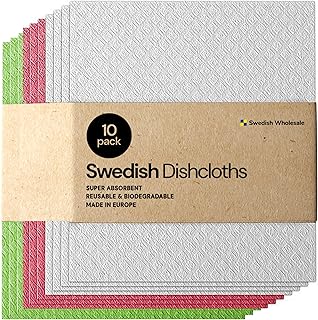
The Swedish dishcloth is a different tool from everything else in this list, and it solves a different complaint. It is a flat pressed sheet of cellulose and cotton that arrives stiff, softens the second it meets water, and then stiffens again as it dries.
That drying behavior is the whole point. A cloth that dries hard cannot sit damp and folded in the sink, which is where the smell comes from, so this is the pick for anyone whose main objection to dishcloths is that they turn sour by morning.
It also holds a surprising volume of water for a piece of material this size, and wrings out closer to dry than any woven cloth will. In practice that means you can take a spill off the floor, wipe the counter and go on to a stack of plates without stopping to rinse.
The trade-offs are size and lifespan. At eight by seven inches it is made to be held flat like a sponge, so it is excellent on flat surfaces and clumsy inside a coffee mug. It also wears thin over months rather than years, which is why it is sold in a bulk pack, and most of these are compostable at the end.
Bottom line: the odor problem solver, and the cloth people quietly become loyal to.
- Material: cellulose and cotton blend
- Size: 8 x 7 inches
- Pack: 10 cloths
- Care: machine wash or dishwasher top rack
- Behavior: stiff when dry, soft when wet
- End of life: biodegradable
Run it under the tap before first use so it softens and opens up. Use it flat in the palm on counters, plates and glass, and wring it hard rather than folding it when you are done. Rinsing it clean after greasy work keeps it absorbent, and when it starts to smell, run it through the washing machine with the towels or stand it on the dishwasher top rack. It will come out stiff and behave like new once it is wet again.
Buy this pack if odor is your real problem, if you want a cloth that can be reset in the dishwasher, or if you want to cut down on paper towels. Buy microfiber instead if you need a bigger cloth for deep dishes and pans, and buy cotton terry instead if you want something that survives bleach and years of hot washes. Many kitchens end up with a cellulose cloth on the counter and a microfiber cloth at the sink.

Pros
- Twelve cloths at a size that suits both dishes and general cleaning
- Lint free on glass, so it doubles as a glass polishing cloth
- Scratch free on nonstick pans and glass cooktops
- Cheap enough to keep a set in the car and the garage as well
Cons
- Lighter in the hand than premium dish specific microfiber
- Absorbency drops sharply if it ever meets fabric softener
- Colors fade with repeated hot washes
HOMEXCEL sells the same idea as the MR.SIGA pack in a slightly lighter form, and for a lot of households that is exactly the right call. The cloths are eleven and a half inches square, which folds neatly into quarters and reaches into a mug, and there are twelve of them.
Lint free is the claim that earns its keep here. A microfiber cloth with no cut pile leaves nothing behind on a wine glass or a stainless door, which is the failure mode that makes people give up on cotton terry for glassware. Used dry, one of these is a perfectly good polishing cloth.
On coated pans it behaves the way microfiber should, cleaning through fiber structure rather than abrasion, so there is no risk of hazing a nonstick surface. That makes it a safe default cloth for a kitchen where you do not want to think about which tool touches which pan.
The trade-off against a denser cloth is body. This is a lighter fabric, so on baked on residue you will be going back for a second pass where a heavier cloth would have finished. At this pack size, most people simply grab a second cloth.
Bottom line: the value buy, and the pack to choose if you want cloths in every room rather than just at the sink.
- Material: microfiber
- Size: 11.5 x 11.5 inches
- Pack: 12 cloths
- Claims: lint free, scratch free, highly absorbent
- Use: kitchen, glass, stainless, car and bathroom
- Care: machine wash, no fabric softener, low heat
Buy this if you want one pack of cloths to cover the whole house rather than a dedicated dish cloth, or if you go through cloths quickly and want spares in the car and the garage. Choose a denser dish specific microfiber instead if you regularly scrub baked on residue, and choose cotton if you want something that can take bleach.
Keep these away from fabric softener and dryer sheets, both of which coat the fiber and end the absorbency for good. Wash them with other microfiber rather than with towels so cotton lint does not clog the pile. Hot washes will fade the colors over time without hurting performance, and a low tumble or a rail is kinder than full dryer heat.

Pros
- Waffle texture gives real grip on plates and in a soapy hand
- All cotton, so it takes hot water and bleach without complaint
- Dries quickly for a woven cotton cloth
- No synthetics for anyone who reacts to microfiber
Cons
- Less grease pickup than microfiber on oily pans
- Shrinks noticeably on the first hot wash
- Six cloths is a thin rotation for a busy kitchen
Waffle weave is the cotton answer to the grip problem. The raised grid gives the cloth a mechanical bite on a plate and gives your hand something to hold when everything is slippery, which is where flat microfiber can slide away from you.
Because the weave is open, these dry faster than a terry cloth of the same weight, and a cloth that dries is a cloth that does not smell. At twelve inches square, this is the classic dishcloth format that folds into quarters and reaches into a mug.
Being all cotton has a specific practical benefit: you can wash these hot, you can bleach them, and you can dry them at any temperature without damaging the fiber. That is not true of microfiber, and for households that sanitize cloths aggressively it is the deciding factor.
What you give up is grease pickup. Cotton moves oil around more than it lifts it, so on a roasting pan you will be reaching for detergent and hot water rather than relying on the cloth. Expect some shrinkage on the first wash as well, which is normal for cotton and stops after the first cycle.
Bottom line: the cotton pick for people who want grip and no synthetics, best paired with something denser for greasy work.
- Material: 100% cotton, waffle weave
- Size: 12 x 12 inches
- Pack: 6 cloths
- Texture: raised waffle grid for grip
- Care: machine wash hot, bleach safe, tumble dry
- Note: expect shrinkage on the first wash
Wash the pack once before first use so the cotton shrinks and reaches its finished size, and so the weave opens up and starts absorbing properly. Use the waffle face for scrubbing and the flatter reverse for wiping down. Wring hard and hang spread out between uses, and rotate a fresh cloth in every day or two rather than trying to make one last the week.
Choose waffle cotton if grip matters to you, if you want to bleach your cloths, or if microfiber irritates your hands. Choose microfiber instead if greasy pans are the bulk of your washing up. If you are outfitting a kitchen properly, a six pack of these plus a pack of larger bar mop towels covers scrubbing and spills between them.

Pros
- Softer hand feel than most waffle cotton, so it is pleasant to use dry
- Slightly oversized at twelve by thirteen inches
- Cotton construction takes hot washes and bleach
- Backed by a name most people already have in the pan cupboard
Cons
- Only four cloths, so it needs topping up for a full rotation
- Cotton lifts less grease than microfiber on oily cookware
- Light color shows staining from coffee and tomato
T-Fal is better known for pans than for textiles, and this four pack is aimed squarely at the person who wants a cloth that matches the rest of the kitchen in quality rather than the cheapest bulk pack available.
The weave is the familiar waffle grid, but the finish is noticeably softer than most, which makes it comfortable to use dry as a drying cloth as well as wet at the sink. Twelve by thirteen inches gives it a little more reach than a standard square without becoming a towel.
As cotton it plays by cotton rules, in a good way. Hot water, bleach and full dryer heat are all fine, so a cloth that has been through something unpleasant can be properly sanitized rather than retired. It also means no fabric softener anxiety, which microfiber owners live with.
The limitations are pack size and grease. Four cloths is a starter set rather than a rotation, and on an oily pan cotton will always trail a dense microfiber. The lighter colorway also shows coffee and tomato stains that a darker cloth would hide.
Bottom line: the nicest cotton cloth here to actually handle, best bought alongside a bulkier pack rather than on its own.
- Material: 100% cotton, waffle weave
- Size: 12 x 13 inches
- Pack: 4 cloths
- Finish: soft, suits washing and drying
- Care: machine wash hot, bleach safe
- Color: light sand tone
Buy this if you want a small set of genuinely nice cotton cloths for the front of the kitchen, or if you dry dishes by hand and want one cloth that does both jobs. Look elsewhere if you need volume, because four cloths will not carry a household that washes up twice a day, and look at microfiber if your washing up is mostly greasy pans.
Wash before first use to set the weave and get the shrinkage out of the way. Hot water and bleach are safe on this cotton, which is the honest advantage over synthetic cloths, though repeated bleaching will thin the fibers eventually. Hang the cloth spread out rather than folded, and keep a separate cloth for anything raw so that drying duty and cleaning duty do not share a cloth.

Pros
- Raised terry loops hold a large volume of water for spills
- Big enough to wipe down a full counter run in one pass
- Takes hot water, bleach and heavy use for years
- Twelve towels is a genuine working rotation
Cons
- Sheds a little lint, so it is the wrong cloth for wine glasses
- Too large to work comfortably inside a mug or a narrow glass
- Takes longer to dry than waffle or cellulose
Bar mop towels are what commercial kitchens reach for, and this twelve pack is the household version of the same thing. The popcorn terry weave raises loops of cotton that hold far more water than a flat cloth, which is why one of these clears a spilled glass of water rather than spreading it.
Size is the point of difference. At fifteen by twenty five inches these are towels, not dishcloths, and they wipe down a whole counter run or dry a stack of pans without being rinsed out halfway. Folded in half they still work at the sink for pots and baking trays.
Cotton durability is the other reason people keep buying these. They tolerate hot washes and bleach, they survive years of use, and when they finally look tired they get demoted to cleaning rags instead of being thrown out.
The two honest weaknesses are lint and drying time. Cut terry loops shed a small amount of fiber, which shows on wine glasses under a light, so keep a flat weave cloth for glassware. The thickness that makes them absorbent also means they need longer on a rail before they are dry.
Bottom line: the spill and heavy wiping cloth, and the one to buy if your complaint is that everything else is too small.
- Material: 100% cotton, popcorn terry weave
- Size: 15 x 25 inches
- Pack: 12 towels
- Use: spills, counters, pans, general kitchen duty
- Care: machine wash hot, bleach safe, tumble dry
- Note: sheds light lint, not ideal for glassware
Keep these folded in quarters at the sink for pans and unfold them for spills and counter runs. Wash the pack before first use to remove the finish that stops new cotton absorbing. Run them hot with the rest of the kitchen laundry, and when one has done something unpleasant, bleach it rather than binning it. Dry them fully on a rail, since thick terry left damp is the one cloth here that will smell.
Buy these as the workhorse layer of a kitchen rather than as your only cloth. Paired with a pack of square microfiber or waffle cloths for plates and glass, twelve bar mops cover everything else: spills, counters, hands, pans and the floor under the dishwasher. If you only want one cloth type in the drawer, this is not it, because it is too big for cups and it sheds on stemware.

Pros
- Leaves no lint, which makes it the right cloth for wine glasses
- Very large, so one towel dries a full rack of dishes
- Thin weave dries fast on a rail between uses
- Folds down small and doubles for straining and covering dough
Cons
- Too thin to scrub anything, so it is a drying cloth not a washing cloth
- White fabric shows every stain
- Needs a wash before first use or it barely absorbs at all
Flour sack towels are the oldest idea in this list and still the best answer to one specific job: drying glass without leaving anything behind. The weave is flat and tightly spun with no cut pile, so there is no lint to transfer onto a polished surface.
They are large, at twenty eight inches square, which sounds excessive until you dry a full rack of dishes with one towel and never have to swap to a dry section. The same size makes them useful for straining stock, covering rising dough and lining a bread basket.
Being thin is what makes them dry fast on a rail, so they get back into service quickly and rarely smell. It is also what makes them the wrong tool for scrubbing: there is no body to work with, and a baked on pan will win.
Two things surprise first time buyers. New flour sack cotton has a finish on it and barely absorbs until it has been washed once, so wash the pack before you judge it. And white cotton shows everything, which is honest rather than a flaw, since you can bleach these back.
Bottom line: the glassware and drying towel, and the cheapest way to stop drying stemware with something that sheds.
- Material: 100% cotton, flour sack weave
- Size: 28 x 28 inches
- Pack: 12 towels
- Finish: lint free, flat weave
- Care: machine wash hot, bleach safe, wash before first use
- Also used for: straining, covering dough, lining baskets
Buy these if you hand dry glassware, if you bake, or if you are tired of lint on stainless appliance doors. They are not a substitute for a scrubbing cloth and they will disappoint anyone hoping for one. Most kitchens end up using these as the drying half of a two cloth system, with microfiber or waffle cotton doing the washing.
Run the pack through a hot wash before first use to strip the mill finish, otherwise water will bead on the surface instead of soaking in. After that they take bleach happily, which is what keeps white cotton looking presentable. Hang them spread out rather than folded so the thin weave dries fully, and keep the towels used for food covering separate from the ones that dry hands.
How to Choose a Dishcloth for Washing Dishes
Read the material section even if you skip everything else. Almost every complaint people have about a dishcloth traces back to buying the wrong material for the way they wash up.
Microfiber, Woven Cotton, or Swedish Cellulose
Microfiber is split synthetic fiber with an enormous amount of surface area, which is why it grabs grease and fine particles that a cotton cloth pushes around. It also releases that grease into hot water readily, so one cloth handles a sink of dishes without going slick. The trade-off is that microfiber clings to rough skin and rough surfaces, and it will pill if you drag it across a cast iron pan.
Woven cotton covers two very different things. Waffle weave is thin, quick drying and lightly textured, which suits wiping and drying more than scrubbing. Terry, including the popcorn terry used on bar mop towels, has raised loops that hold far more water and give you something to work with on a dried-on plate. Cotton is also the material to choose if anyone in the house reacts to synthetics.
Swedish cellulose cloths are a different animal again, a pressed blend of cellulose and cotton that starts stiff and softens the moment it gets wet. They hold a lot of water for their size, wring out almost dry, and stiffen again as they dry, which is exactly why they do not develop that sour smell. They are the odd one out in a drawer of soft cloths and the one people become oddly attached to.
How Much Water It Holds and How Fast It Gives It Back

Absorbency and release are two separate properties, and a cloth needs both. A cloth that soaks up a spill but will not surrender the water when you wring it is a cloth you fight with all evening. Cellulose sponge cloths are the standout here because they wring genuinely dry, which is what lets you do a spill, a counter and a set of plates without rinsing between.
Density is the number that matters for microfiber and it is usually stated as GSM, or grams per square meter. Higher density means more fiber per square inch, more grease held, and a heavier cloth that takes longer to dry. Makers describe this as high density rather than printing a figure, so use the feel of the cloth in the pack as your guide: a limp, thin microfiber cloth is a glass polishing cloth, not a dish cloth.
Cotton behaves in the opposite direction. Flour sack towels, the large thin ones woven from lightweight cotton, hold less water per square inch than terry but expose far more surface to the air, so they dry a wet glass without leaving lint and then dry themselves quickly on a rail. That is why a kitchen usually needs both a scrubbing cloth and a drying cloth rather than one cloth doing both badly.
Whether It Is Safe on Nonstick and Glass
This is the question worth asking before anything else if your pans are coated. A nonstick surface is soft enough that an abrasive scrub pad will haze it in a few weeks, and once the coating is scored the food starts sticking exactly where the scratches are. Cloths marketed as non scratch or lint free are making a claim about the fiber, and on a coated pan a plain microfiber or a cellulose cloth is the safe answer.
Glassware has a separate failure mode: streaking. Cotton terry sheds a little lint by design because the loops are cut, and that lint shows up on wine glasses under a light. Waffle weave cotton and flat microfiber both avoid it, and a flour sack towel is the traditional answer for polishing glass because there is no pile to shed at all.
Cast iron and stainless are where you can stop worrying and where a cloth stops being the right tool. Baked on residue needs a scraper or a stiff brush, and forcing the job with a cloth is how you tear one. Keep one older cloth in the rotation for the jobs that will ruin a good one, which is a habit that costs nothing.
Smell, and the Rotation That Prevents It
A dishcloth smells because it stayed wet, not because it was dirty. Bacteria multiply in a damp folded cloth left in the sink, and a few hours is enough in a warm kitchen. The single most effective habit is to wring the cloth hard and hang it flat where air reaches both sides, rather than draping it over a tap where it stays folded against itself.
Material changes how much grace you get. Cellulose stiffens as it dries and shrugs the problem off almost entirely. Microfiber dries fast but holds oils in the pile, so it starts to smell after a week of heavy use even when it looks clean. Cotton terry is the most forgiving to wash and the least forgiving if you leave it balled up in a wet sink.
This is the real argument for buying cloths in a multipack rather than singly. A rotation of several cloths means a fresh one every day or two and a full load of them going through the machine at once, which is both more hygienic and less work than nursing one cloth along. Packs of eight to twenty four are the norm in this category for exactly that reason.
Size, Weave and Grip at the Sink
Around twelve inches square is the standard dishcloth size and it is standard for a good reason: it folds into quarters to fit a hand, and it reaches into a mug without disappearing. Smaller sponge cloths in the eight inch range are made to be held flat like a sponge, which suits counters and plates but makes reaching the bottom of a tall glass awkward.
The larger sizes are a different tool wearing the same name. Bar mop towels around fifteen by twenty five inches and flour sack towels around twenty eight inches square are towels, meant for drying hands, wiping down a counter run, or lining a bowl. They are excellent at that and clumsy inside a coffee cup, so buy them as a companion to a dishcloth rather than a replacement.
Weave affects grip more than people expect. A waffle texture gives a wet hand something to hold and gives a plate a little mechanical bite, while a flat, slick microfiber cloth can slide out of your grip in soapy water. If you wash by hand every night, texture is worth prioritizing over softness.
What Survives the Washing Machine

Every cloth here is machine washable, so the question is what condition it is in after fifty cycles. Cotton is the most durable and can take hot water and bleach, which is why bar mop towels last for years and end up as rags rather than being thrown away. Expect shrinkage on the first wash and some fraying at the hems eventually.
Microfiber has one hard rule: no fabric softener. Softener coats the fibers and fills the spaces that do the cleaning, and a softened microfiber cloth pushes water around instead of absorbing it. High dryer heat is the other enemy, since the fibers are plastic and heat mats them permanently. Wash them with each other rather than with towels, and air dry or tumble low.
Cellulose sponge cloths can go through the washing machine or the top rack of a dishwasher, and either resets them. They are the shortest lived of the three materials in absolute terms, usually measured in months of daily use rather than years, but they are sold in bulk packs and most are compostable at the end, which changes the arithmetic.
| Material | Best at | Weak at |
|---|---|---|
| Microfiber | Lifting grease, streak free glass, nonstick safe | Holds oils and needs frequent washing, no softener |
| Waffle weave cotton | Quick drying, good grip, low lint | Less scrubbing bite than terry |
| Popcorn terry bar mop | Soaking up spills, hot wash and bleach | Sheds some lint on glassware |
| Flour sack cotton | Polishing glass and drying without lint | Too thin for scrubbing |
| Swedish cellulose | Wringing dry, resisting odor, counters and plates | Small, and wears out in months not years |
If you want to see how these fit alongside the rest of the sink setup, the wider category index lists the departments we cover.
Why You Should Trust Us
We build these lists from published specification and from the pattern of what long term owners report, rather than from marketing copy. For every cloth here we looked at the stated fiber content, the finished size, the pack count, whether the maker claims the cloth is safe on nonstick and lint free, and what the care instructions actually allow in terms of bleach, softener and dryer heat.
We also read owner feedback for the failure patterns that only show up over time, which in this category are consistent: microfiber that stops absorbing after softener, cotton that frays at the hem, and cellulose that wears thin. Near identical listings that differ only in color or pack size were set aside, so every entry is a genuinely different cloth rather than the same product twice.
Final Thoughts
Best overall is the MR.SIGA Microfiber Cleaning Cloths 12 Pack. It is dense enough to lift grease rather than smear it, safe on coated pans, it leaves glass without streaks, and the pack is large enough to run a proper rotation so no cloth sits damp long enough to smell.
Best value is the HOMEXCEL 12PK Microfiber Cleaning Cloth. It does the same core job in the same square format, it is lint free and scratch free on the surfaces that matter, and it is the pack to buy if you would rather keep cloths in the garage and the car as well as the kitchen.
For specific jobs, the Swedish Wholesale Dishcloths are the pick if the smell is your real complaint, since they wring dry and stiffen instead of souring. The Homaxy Cotton Waffle Weave Dish Cloths and the T-Fal Premium Waffle Dish Cloths are the choices if you want cotton with grip and no synthetics. The Utopia Kitchen Towels bar mop set is the one for spills and heavy wiping, and the Utopia Kitchen Flour Sack Towels are what you want for drying glassware without lint. More kitchen roundups are indexed in our article archive.
Dishcloth FAQs
How often should I replace a dishcloth?
Wash it every day or two and replace it when it stops doing its job rather than on a calendar. Microfiber is finished when it feels slick and stops absorbing, which usually means softener got into it or dryer heat matted the fibers. Cotton lasts years and gets demoted to rag duty when the hems fray. Swedish cellulose cloths thin out and go soft in the middle after a few months of daily use, and that is the point to open a new one.
Are microfiber cloths safe on nonstick pans?
Yes, a plain microfiber cloth is one of the safer things you can put on a coated pan, because the cleaning comes from the fiber structure rather than from abrasion. What damages nonstick is a scouring pad, a metal scrubber, or the abrasive layer bonded onto one side of some dual sided sponges. If a cloth is described as non scratch or scratch free, that is the claim you are looking for, and it is worth reading which side of a two sided product carries the abrasive.
Why does my dishcloth smell after a day?
Because it stayed wet and folded. Bacteria in a damp cloth in a warm kitchen need only a few hours, and food residue trapped in the fibers feeds them. Wring the cloth as hard as you can and hang it spread out where air reaches both faces, not folded over a tap. Running a bigger rotation helps more than any single trick, and cellulose sponge cloths are the material least prone to the problem because they dry stiff.
Can I put dishcloths in the dishwasher?
Swedish cellulose sponge cloths are usually rated for the top rack and come out clean, which is a genuine convenience. Cotton and microfiber cloths belong in the washing machine instead: a dishwasher cycle does not agitate them, so soil stays in the weave, and the drying element is harsh on synthetic fiber. Whichever route you take, skip fabric softener entirely on microfiber, since it is what kills absorbency.
How many dishcloths do I need in 2026?
Enough that a used one never has to go back into service before it has been washed, which for most households means a working set of six to twelve plus a few larger towels for drying. That is why multipacks dominate this category. Keep the scrubbing cloths and the glass drying cloths separate, and keep one worn cloth aside for the jobs that would ruin a good one. If you are stocking a kitchen from scratch, our home and kitchen picks cover the rest of the sink.


Write Your Review
No reviews yet. Be the first to share your experience!