

Most bedroom curtain disappointment comes down to two numbers rather than to fabric. The panels arrive, they hang, and light still runs down both sides of the window because the pair is barely wider than the glass, or the hem stops six inches short of the floor because the length was measured from the frame instead of the rod. Fabric quality is the part everyone researches and the part that goes wrong least often. We sorted 9 bedroom drapes from NICETOWN, Yakamok, H.VERSAILTEX and more by light blocking, header type, and the sizing decisions that actually determine how dark a room gets.
Our top pick is the NICETOWN White 100% Blackout Curtains for the rare combination of a genuinely opaque construction with a pale color, which is what most bedrooms want and what most blackout panels cannot do. Below we work through light blocking, sizing, header types and the edge gaps that undo an otherwise good panel. For the rest of the room, our home and kitchen section covers the furnishings that go with them.

Pros
- Pale color with a genuinely opaque lined construction
- Eighty four inch drop suits a normally mounted rod
- Thermal layer helps on a window that catches afternoon sun
- Hangs in even folds without training the pleats
Cons
- Lining makes the panel stiffer and heavier than a triple weave
- Pale fabric shows marks sooner than a dark panel
- Light still escapes at the sides without a wrap-around rod
Getting a white curtain that actually darkens a bedroom is the hardest ask in this category, and it is the reason this pair sits at the top. A pale triple weave scatters light through the face fabric, so the only way to get there is a separate opaque backing behind the cloth, which is what this construction uses.
In practice that means a room that goes properly dim at midday while the window still reads light and neutral from inside. For anyone decorating around white or cream walls, that combination is the whole point, and the usual compromise of accepting a charcoal panel disappears.
The eighty four inch drop is the right default. It reaches the floor from a rod mounted a few inches above a standard frame, which is the most common arrangement in a bedroom, and it leaves enough length to raise the rod slightly for a taller look without leaving the hem stranded.
The trade-offs are the ones any lined panel carries. It is stiffer than a soft triple weave and heavier on the rod, so brackets need to be in something solid, and a pale fabric asks for more care than a dark one. Neither is a defect, but both are worth knowing before ordering.
Bottom line: the pick if you want a dark bedroom and a light colored window, which no unlined panel manages properly.
- Construction: one hundred percent blackout with opaque backing
- Color: white
- Length: eighty four inches
- Quantity: two panels
- Header: grommet top
- Extras: thermal insulating layer, noise softening
This is for bedrooms and nurseries that need real darkness but sit in a light, neutral scheme where a dark panel would dominate the room. It suits shift workers and anyone sensitive to early summer sunrises. It is also the right pick when the window catches strong afternoon sun and you want the thermal layer. Skip it if you want a soft, informal drape, since a lined panel hangs with more structure, or if the room is white on white and you would rather the curtain read as a feature.
Mount the rod several inches above the frame and wider on each side so the panels stack off the glass and overlap the wall. Hang the pair together and let the folds settle for a few days before judging the drape. For the darkest result, use a rod that returns to the wall at the ends and overlap the two panels generously in the middle. Follow the care label rather than a hot wash, since heat is what shortens the life of any backed panel.

Pros
- Strong color that darkens well without reading as black
- Grommet header slides freely for daily use
- Sixty three inch drop suits windows above furniture
- Thermal insulated construction for sun-facing rooms
Cons
- Deep color limits how it works in a dark scheme
- Sixty three inches is short for a floor length window
Navy is the useful middle ground in this category. Black panels darken best and can make a small bedroom feel like a box, while pale panels need a lining to work at all. A deep navy weave gets most of the way to black on light blocking while still reading as a color rather than an absence of one.
The grommet header is the right choice for a curtain that gets opened every morning. The rings glide with almost no friction, they hold deep even folds from the first day, and they take a thicker decorative rod than a sewn pocket ever will.
The sixty three inch drop puts this pair in a specific slot: windows sitting above a radiator, a desk, a bed head or a run of units, where a floor length panel would bunch or block the heat. Buying this length for a floor length window is the most common way people end up disappointed, and it is a measuring decision rather than a product one.
The thermal weave earns its keep on a sun-facing bedroom window, though as with every panel here, coverage does as much work as fabric. Hang it wide and full and the still air layer behind it actually forms.
Bottom line: the color pick for a window above furniture, with the easiest header to live with day to day.
- Color: navy blue
- Construction: room darkening, thermal insulated
- Length: sixty three inches
- Quantity: two panels
- Header: grommet top
- Care: machine washable per label
Buy this for a bedroom window that sits above a radiator, a desk or a headboard, in a scheme that can carry a strong color. It works well in rooms decorated in greys, whites and natural woods where navy gives the window a defined edge. It suits households that open and close curtains daily, thanks to the grommet header. Skip it if your window runs to the floor, or if the walls are already dark, where a deep panel disappears into the room instead of framing the window.
Measure from the rod rather than the frame before choosing between this and an eighty four inch drop, and remember that mounting the rod higher pushes you up a length. Check the combined width of the pair against the rod you are covering and aim for roughly double, since a navy panel stretched flat shows light down the sides just as a pale one does. Confirm your rod diameter passes through the grommets, which is where thick decorative rods often fail.

Pros
- Black triple weave is the strongest light blocker here
- Narrow panel width suits small or awkward windows
- Thermal and noise softening layer included
- Grommet header glides easily on a standard rod
Cons
- Black reads heavy in a small bedroom
- Narrow panels mean you may need more than two for a wide window
If the only priority is darkness, black triple weave is where the category ends. There is no pale face fabric scattering light into the middle layer, so the fabric itself blocks about as thoroughly as anything in a bedroom needs, without the weight and stiffness of a separately lined panel.
The narrow forty two inch panel width is a deliberate choice rather than a shortcoming. Small bedroom windows, awkward returns and narrow bay sections are badly served by wide panels that bunch into a solid column when open, and a narrower pair stacks tidily off the glass.
The flip side is arithmetic. On a wide window a pair of narrow panels gives you very little fullness, and fullness is what closes the side gaps and holds the folds. For anything wider than a standard single window, plan on two pairs rather than one, and size the rod accordingly.
The grommet header and thermal layer are the same practical package as the rest of this range: easy to slide, easy to hang, and genuinely helpful on a window that gets direct sun. It is the color and the width that define this particular pair.
Bottom line: the darkest option on the list, best suited to smaller windows where a narrow panel stacks neatly.
- Color: black
- Construction: thermal insulated triple weave blackout
- Panel width: forty two inches
- Length: sixty three inches
- Header: grommet top
- Quantity: two panels
This is the pick when darkness beats decoration: shift workers, light sleepers, a nursery with an early sunrise, or a room used for projection. It suits small and narrow windows where a wide panel would swallow the wall when open. Skip it in a small bedroom already decorated in dark colors, where black panels close the room in, and check the width carefully before using a single pair on a wide window.
Work out the total width you need before ordering: add the rod length you intend to cover, then aim for roughly double that in combined panel width, which on a wide window means four narrow panels rather than two. Mount the rod high and wide, overlap the panels in the middle, and use end brackets that return to the wall if you want to close the side gaps. Wash cool and hang to dry so the weave keeps its body.

Pros
- Hangs with proper folds straight out of the pack
- Grommet header takes a standard rod easily
- Sensible choice when several windows need covering
- Thermal insulated weave for sun-facing rooms
Cons
- Room darkening rather than a fully opaque construction
- Lighter colors in the range block less than the dark ones
This is the pair to buy when the job is several windows rather than one showpiece. It does the ordinary things well: it arrives with the folds already set, the grommets take a standard rod, and it hangs straight without a week of training or steaming.
The construction is room darkening with a thermal layer rather than a fully lined blackout build, and that distinction is worth reading honestly. The room goes dim rather than dark, which is enough for most bedrooms and plenty for a living room, but it is not the choice for someone who needs a properly blacked out space.
Color choice within the range changes the result more than people expect. The darker shades block noticeably more than the pale ones, because in an unlined weave the face fabric is part of the light path. Anyone choosing a light color here should expect a softly dim room rather than a dark one.
The sixty three inch drop is the common apron length, so measure from the rod before committing. As always, buy enough width: two panels on a wide window will look thin however good the fabric is.
Bottom line: the sensible everyday pair for covering a house, provided you accept dim rather than dark.
- Construction: room darkening, thermal insulated
- Length: sixty three inches
- Quantity: two panels
- Header: grommet top
- Colors: multiple shades available
- Care: machine washable per label
Choose the darkest shade you can live with if light blocking is the priority, since color is part of the performance in an unlined weave. Count the windows before ordering and work out total width at roughly twice the rod length for each one. If one room needs to be genuinely dark and the rest only dim, buy a lined blackout pair for that room and use this for the others rather than compromising everywhere.
Hang the panels and leave them closed for a couple of days so the creases from packing drop out, which is quicker than ironing and safer for a thermal weave. Mount the rod a few inches above the frame and wider on each side, and check the hem clears any radiator below the window so warm air is not trapped behind the fabric. Wash cool, tumble low or hang to dry, and avoid hot irons on the coated side.

Pros
- Wide panel width gives fullness on a standard window
- Eighty four inch drop reaches the floor from a normal rod
- Grey suits most schemes without dominating
- Thermal insulated triple weave for sun-facing windows
Cons
- Wide panels stack into a bulky column when fully open
- Mid grey blocks slightly less than the black version
Grey is the safest color in a bedroom because it reads as neutral against both warm and cool schemes, and this is the version of it with the sizing most standard windows actually want: a wide panel in the floor length drop.
Fifty two inches per panel is the width that gives a pair proper fullness on a normal window, which is what produces deep folds, better coverage at the edges and a curtain that looks intentional rather than stretched. It is the single biggest difference between a window that looks finished and one that does not.
The eighty four inch drop matches a rod mounted a few inches above a standard frame. Between the width and the length, this is the pair to default to if you are covering an ordinary bedroom window and have not measured anything unusual.
Two honest notes. A mid grey triple weave blocks a little less than the black version of the same fabric, since color is part of the light path in an unlined panel, and wide panels stack into a substantial column when pushed fully open, so allow rod length past the frame for them to sit on.
Bottom line: the default sizing for a standard bedroom window, in the color that argues with the least.
- Color: grey
- Construction: thermal insulated triple weave blackout
- Panel width: fifty two inches
- Length: eighty four inches
- Header: grommet top
- Quantity: two panels
This suits an ordinary bedroom window that runs close to the floor, in any scheme where a neutral is safer than a color. It is a good landlord or guest room choice for the same reason. It also works for anyone who wants fullness without buying two pairs, since the panels are wide. Skip it if your window sits above furniture, where the drop is too long, or if you need maximum darkness, where the black version of the same weave does more.
Wash cool and hang or tumble on low, since heat is what flattens the body out of a triple weave and can shrink the drop slightly. Iron on the face side at a low setting if at all. Check that the brackets are fixed into something solid, because a wide pair in a long drop is heavier than it looks once both panels are hung, and keep the tie backs and any cords out of reach of small children in a nursery.

Pros
- Linen texture rather than a flat synthetic face
- Blackout backing behind a pale natural color
- Eighty four inch drop for floor length windows
- Softens sound and holds heat better than a thin panel
Cons
- Textured face fabric shows creases from packing at first
- Heavier on the rod than an unlined weave
Most blackout panels look like what they are: a flat, slightly synthetic face over a technical core. This pair is the alternative for anyone who wants the window to look like linen and still wants the room to go dark, which is a combination that only works with a backing behind the face cloth.
The natural shade is the reason people choose it. It reads warm and neutral in daylight, it sits comfortably with wood and rattan, and it avoids the slightly cold look that grey panels can bring to a north facing bedroom.
Texture has a practical benefit too. A woven face scatters light at the edges less obviously than a smooth one, and it hides small marks better than a flat pale fabric, which matters on a panel that gets handled every day.
The costs are weight and creasing. A backed linen-look panel is heavier than a triple weave, so brackets need to be solid, and the texture holds packing creases longer than a smooth face does. Hanging it closed for a few days sorts most of that out without an iron.
Bottom line: the choice when the window has to look natural and the room still has to go dark.
- Face fabric: linen look weave
- Construction: one hundred percent blackout with backing
- Color: natural
- Length: eighty four inches
- Quantity: two panels
- Extras: thermal insulating, sound softening
This is for bedrooms decorated in natural materials, warm neutrals and wood, where a technical looking blackout panel would sit awkwardly. It suits people who want texture at the window rather than a flat color block, and who still need real darkness for sleep. Skip it if you want the lightest possible panel on the rod, or if you dislike ironing and cannot leave the curtains hanging closed for a few days to drop the packing creases out.
Leave the panels hanging closed for several days after unpacking so the creases fall out under their own weight, which works better than heat on a textured face. Wash cool and avoid hot tumble drying, since backings do not respond well to high heat. Iron on the face side only and at a low setting. Check that brackets are anchored into solid fixings, because a backed pair in a long drop puts real weight on the rod.

Pros
- Wide panels give fullness on a standard window
- Grommet header slides freely on a thick rod
- Soft drape rather than a stiff lined hang
- Neutral grey works in most bedroom schemes
Cons
- Room darkening rather than a fully opaque build
- Soft weave creases more visibly than a stiffer panel
This pair covers the same standard window as the heavier grey options but with a softer hand. It hangs in looser folds and moves more easily, which is the quality people mean when they say a curtain looks expensive rather than stiff.
The sizing is the same sensible default: a wide panel in a floor length drop, so a pair gives real fullness without buying four panels. That fullness is what closes the side gaps and gives the folds their depth.
The construction is room darkening rather than an opaque lined build, so expect a dim room rather than a dark one. For a bedroom with a street lamp outside or a bright morning aspect, that may be exactly enough, and it is genuinely more pleasant to live with than a blacked out box in a room that also gets daytime use.
The grommet header is again the practical part, taking a thick decorative rod and sliding without snagging. If the room is used as a study or a guest room as much as a bedroom, this is the balance to aim for.
Bottom line: the softer drape on a standard window, for a room that wants dim rather than blacked out.
- Color: grey
- Construction: room darkening, thermal insulated
- Panel width: fifty two inches
- Length: eighty four inches
- Header: grommet top
- Quantity: two panels
Choose this over a lined blackout pair when the room is used in the daytime and total darkness would make it gloomy, and choose the lined option when sleep is the only priority. Check the rod diameter against the grommets before ordering. If you want fuller folds than a single pair gives on a wide window, buy two pairs rather than moving up a fabric weight, since fullness affects both looks and light more than thickness does.
Hang both panels and dress the folds by hand, running your fingers down each pleat from the grommets to the hem so the fabric learns the shape. Leave them closed for a couple of days to settle. Mount the rod higher and wider than the frame so the panels stack clear of the glass and overlap the wall at each side, which is what stops the daylight halo down the edges.

Pros
- Blackout construction in the shorter apron length
- Grommet header for daily opening and closing
- Thermal insulating layer for sun-facing rooms
- Hangs with body rather than looking thin
Cons
- Sixty three inches is short for floor length windows
- Darker shades in the range block noticeably better than pale ones
Short drops are underserved in the blackout category, which is why this pair matters. Plenty of bedroom windows sit above a radiator, a desk or a headboard, and a floor length panel in those positions either bunches on the sill or traps heat behind the fabric.
The construction is a proper blackout build rather than a light thermal weave, so it darkens more than the average sixty three inch panel, and the thermal layer does useful work on a window that catches direct sun for part of the day.
The grommet header keeps it practical. These are curtains that get pulled every morning in a bedroom, and grommets are the header that tolerates that best, sliding freely and holding their folds without any dressing.
Two things to check before ordering. Confirm the drop against a measurement taken from the rod rather than the frame, since a high mounted rod turns a sixty three inch panel into an awkward mid length. And pick the color with light blocking in mind, because pale shades in any range let more through than dark ones.
Bottom line: the blackout answer for a window above furniture, with the header that suits daily use.
- Construction: blackout with thermal insulating layer
- Length: sixty three inches
- Quantity: two panels
- Header: grommet top
- Colors: multiple shades available
- Care: machine washable per label
Buy this for bedroom windows that stop above a radiator, a desk, a bed head or a run of storage, where a floor length curtain is the wrong shape. It suits rooms that need genuine darkness at the shorter length, which is a narrower market than the eighty four inch options and therefore harder to shop for. Skip it if your window runs to the floor, since a short panel over a tall window is the one look that reads as an error from across the room.
Check the hem clears any radiator underneath by a sensible margin, both so warm air can rise into the room and so the fabric is not sitting against a hot surface. Wash cool and dry on low, since heat is what damages a blackout backing. Iron on the face side at a low setting only. Keep any tie back cords secured and out of reach in a child's room.

Pros
- Graduated color gives a plain wall something to look at
- Blackout construction despite the pale upper section
- Eighty four inch drop for floor length windows
- Reads as a design feature rather than a plain panel
Cons
- A strong look that will not suit a busy or patterned room
- Graduated dye means the pair must be hung the right way up
Every other pair on this list is a plain panel, and sometimes a plain panel is exactly the problem. In a bedroom with quiet walls and little pattern, a graduated curtain gives the eye somewhere to go without committing the room to a print that dates.
The gradient runs from navy at one end to a soft greyish white at the other, which is a more forgiving scheme than a hard two tone panel: the transition does the work, so it sits with both cool and warm neutrals in the rest of the room.
The surprise is that it still blocks. Pale sections normally give away light, so a graduated panel that keeps a blackout rating has to be doing it with construction rather than color, which is what makes this more than a decorative curtain.
Two practical notes. Panels with a gradient have a right way up, so check the orientation before you thread the rod, and a strong looking curtain wants a calm room around it. Against patterned wallpaper or a busy headboard it becomes one element too many.
Bottom line: the pick when a plain panel would leave the room flat, and the only one here that works as a feature.
- Color: navy blue to greyish white ombre
- Construction: blackout, room darkening
- Length: eighty four inches
- Quantity: two panels
- Header: grommet top
- Orientation: gradient runs in a fixed direction
This is for a bedroom with plain walls, simple bedding and nothing much on the window wall, where a solid curtain would read as a blank block. It suits people who want the window to be the feature rather than the artwork. It also works in a teenager's room where a plain neutral feels dull. Skip it if the room already has pattern in the wallpaper, bedding or rug, and skip it if you want the curtain to disappear rather than be noticed.
Check the gradient orientation before hanging and thread both panels the same way up, since a mirrored pair breaks the effect. Mount the rod high and wide so the full gradient is visible rather than half hidden behind the frame, and overlap the panels in the middle so the transition reads as continuous across the window. Let them hang closed for a few days to drop the packing creases, and wash cool to protect the graduated dye.
How to Choose Bedroom Drapes
Six decisions, in the order they actually matter. The first three cost nothing to get right and are the ones people wish they had read before ordering.
Blackout, Room Darkening, or Light Filtering
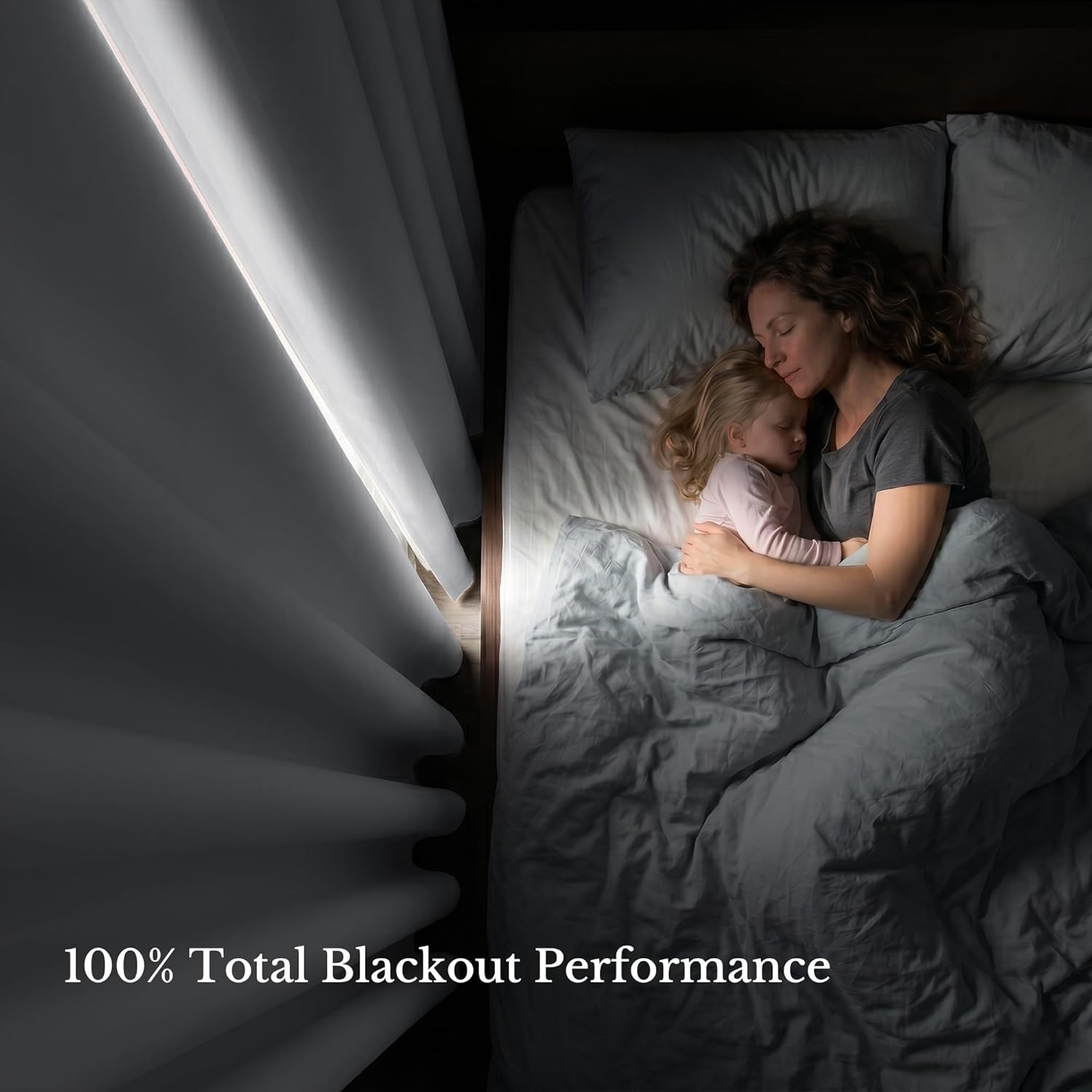
These three terms describe different levels of the same job and they are not interchangeable. Light filtering panels soften daylight and give privacy while the room stays bright. Room darkening panels cut a large share of the light and leave a dim room where you can still make out shapes at midday. Panels described as one hundred percent blackout are built to stop light passing through the fabric itself, which is a different construction rather than a thicker version of the same cloth.
Two constructions dominate this category. A triple weave is a single fabric with a dense black yarn layer woven into the middle, which darkens well and drapes softly. A lined blackout panel puts a separate opaque backing behind a face fabric, which blocks more light and is what makes a pale color possible, at the cost of a stiffer hang and more weight on the rod.
Color matters more than the marketing suggests on triple weave panels. A dark triple weave and a white triple weave from the same maker rarely darken a room to the same degree, because pale face fabric scatters more of the light that reaches the middle layer. If you want white or cream and you also want a genuinely dark room, look specifically for a lined construction rather than assuming the color is decorative only.
Panel Width and the Fullness Rule

This is the single most common mistake in the category. Curtains are sold as panels, and the width printed on the pack is the width of one flat panel, not the coverage of the pair. To hang with any fullness, the combined width of your panels should be roughly twice the width of the area the rod covers, which for a standard window usually means two panels rather than one.
Fullness is not only about looks. A panel stretched flat across the window has no folds to trap light at the sides and it sits tight against the rod, which pulls the fabric away from the wall. Panels with proper fullness fall in soft columns that overlap the frame and each other, and that overlap is doing real work at the centre where the two panels meet.
Measure the rod, not the glass. The rod should extend several inches past the frame on each side so the panels stack off the window when open, and that extra rod length has to be included before you double the figure. Doing it the other way round is how people end up with a pair that only just meets in the middle.
Length and Where the Hem Should Land
Panels in this category come in a small set of standard lengths, most often sixty three, eighty four and ninety five inches, and choosing between them is a decision about the rod rather than the window. Length is measured from the rod, so mounting the rod high above the frame, which makes a window look taller, immediately pushes you up a size.
Sixty three inches is the sill or apron length, and it suits windows above a radiator, a desk or a piece of furniture where a full drop would bunch. Eighty four inches is the standard floor length for a rod mounted a few inches above a typical frame, and ninety five is for high ceilings or for mounting close to the ceiling line.
Decide deliberately whether you want the hem to float, kiss the floor or break. A small gap above the floor is the most forgiving choice because it stays clean and moves freely. Panels that pool on the floor look luxurious in photographs and collect dust in a bedroom, and a hem that lands halfway between the sill and the floor is the one look that reads as a mistake in every room.
Grommet, Rod Pocket, or Back Tab

The header decides how the panel hangs, how easily it slides, and how much light escapes at the top. Grommet tops have metal rings punched into the fabric and they glide along a rod with almost no friction, which makes them the practical choice for curtains you open and close every day. They also hold deep, even folds without any training.
Rod pocket panels have a sewn channel that the rod threads through, which gathers the fabric tightly against the rod. That tight gather is the best of the three at stopping light spilling over the top, and it is the reason rod pocket panels are still popular in bedrooms despite being the most awkward to slide open. Treat them as panels you tie back rather than draw.
Back tab panels hide loops behind the face fabric so the rod disappears, giving the cleanest tailored look, and most can also be hung on hooks. They slide better than a rod pocket and worse than a grommet. Whichever you choose, remember the rod has to suit it: a thick decorative rod will not pass through a narrow pocket or a small grommet, and that compatibility check is worth a minute before ordering.
Thermal Performance and Noise
Thermal insulation is the second reason people buy heavy panels and it works by a simple mechanism: the fabric traps a layer of still air against the glass and slows the movement of heat in either direction. That helps most on a bedroom window that bakes in afternoon sun or on single glazing in winter, and it helps least on a well insulated modern window.
Coverage decides how much of that benefit you actually get. A panel that hangs flat against the wall around the frame traps air properly, while one that stands away at the sides lets a convection current run behind it. This is the same fullness and rod width point from earlier, arriving in a different form: sizing improves thermal performance as much as fabric weight does.
Noise reduction claims deserve a calmer reading. Dense fabric absorbs some higher frequency sound and softens echo in a room, which is a genuine and noticeable effect. It does not block traffic rumble or a neighbour’s bass, because low frequencies pass through the wall and glass rather than around the curtain. Expect a softer sounding room rather than a quiet one.
Stopping the Light That Escapes Around the Edges
A one hundred percent blackout panel stops light passing through the cloth, and then the room is still bright because light comes around it. The three routes are the gap at each side between the panel and the wall, the gap at the top between the fabric and the ceiling, and the vertical seam where the two panels meet in the middle. No fabric upgrade fixes any of them.
The fixes are hardware and hanging. A wrap-around or bay-style rod returns to the wall at each end so the panel edge sits against the plaster rather than floating. Mounting the rod higher and wider than the frame gives you fabric to spare on all sides, and overlapping the two panels generously in the middle closes the centre seam. A pelmet or a valance closes the gap at the top.
Set expectations before you order. Any room with a bright streetlight outside will show a soft halo around the fabric even with excellent panels, and the aim is a room dark enough to sleep in rather than a photographic darkroom. If you are also fitting rods, brackets or a pelmet, our tools and home improvement section covers that side of the job.
| Header type | Best at | Weak at |
|---|---|---|
| Grommet | Sliding daily, even deep folds, thick rods | Small light gaps between the rings at the top |
| Rod pocket | Tight gather that blocks light over the rod | Awkward to open and close, needs a slim rod |
| Back tab | Clean tailored look with the rod hidden | Slides less freely than a grommet header |
Why You Should Trust Us
We build these lists from published specification and from the pattern of what long-term owners report, rather than from marketing copy. For every pair here we looked at the stated construction, whether the maker describes the panel as blackout or room darkening, the header type, the flat width of a single panel as opposed to the coverage of the pair, the available lengths, and the care instructions that decide how the fabric looks after a year.
We set aside near-identical listings that differ only in color or size, so each entry is a genuinely different panel rather than the same cloth in another shade. Where a brand appears more than once, the entries differ in construction, color family or drop length rather than being repeats. We also read light blocking and noise claims as the maker words them, and we say plainly where a claim describes softening rather than blocking.
Final Thoughts
Best overall is the NICETOWN White 100% Blackout Curtain pair. Getting a pale panel that genuinely darkens a room takes a lined construction rather than a heavier weave, and this is the version of that trick with the most consistent reports behind it, in the eighty four inch drop that suits a normally mounted rod.
Best value is the ChrisDowa Blackout Curtain pair. It is a straightforward grommet-top room darkening panel in the sixty three inch length that fits most windows above furniture, it hangs with proper folds out of the pack, and it is the pair to buy when you need several windows covered rather than one.
For specific situations, the NICETOWN Black Blackout Curtains are the pick for the darkest possible bedroom, the BGment Navy Blackout Curtains suit a room where you want color rather than neutral, the H.VERSAILTEX 100% Blackout Linen Curtains are the choice if you want a natural linen look without giving up light blocking, the Yakamok Grey Room Darkening Curtains work well on a wide window in the longer drop, and the Estelar Textiler Ombre panels are the one to choose if a plain panel would look flat against a dark wall. More picks for the rest of the house are indexed in our article archive and the category index.
Bedroom Drapes FAQs
What is the difference between blackout and room darkening bedroom drapes?
Blackout describes fabric built to stop light passing through it, usually by weaving a dense black layer into the middle or by adding an opaque lining behind the face cloth. Room darkening describes a panel that cuts a large share of the light without claiming to stop all of it, so the room reads dim rather than dark. Both are useful, and for many bedrooms room darkening is enough. Bear in mind that neither term describes the gaps at the sides and top, which is where most of the remaining light in a bedroom actually comes from.
How wide should bedroom drapes be for a standard window?
Aim for a combined panel width of about twice the length of rod you are covering. Measure the rod rather than the glass, since the rod should extend several inches past the frame on each side so the panels stack off the window when open. For most standard windows that means a pair of panels rather than one, and a single panel hung alone almost always looks thin and lets light down the free side. Fullness is what gives you soft folds, better coverage at the edges and better thermal performance.
Should I buy the sixty three inch or the eighty four inch length?
Measure from the rod down to where you want the hem to finish, then round up to the nearest standard length. Sixty three inches is the sill or apron length for windows sitting above a radiator, a desk or a bed head. Eighty four inches is the usual floor length when the rod is mounted a few inches above a standard frame. If you plan to mount the rod high to make the window look taller, jump to the longer size, because the extra height comes out of the drop.
Do blackout drapes really reduce noise?
They soften a room rather than soundproof it. Dense fabric absorbs some higher frequency sound and cuts the echo that makes a bare room feel loud, which is a real and noticeable change. What it will not do is stop low frequency noise such as traffic rumble or bass from a neighbouring room, since those travel through the wall and glass rather than around the curtain. Fuller panels that cover more wall absorb more, so sizing helps here in the same way it helps with light.
How do I stop light leaking around the edges in 2026?
Treat it as a hardware problem rather than a fabric one. Mount the rod higher and wider than the frame so there is fabric to spare on every side, use a wrap-around or bay-style rod that returns to the wall at each end, and overlap the two panels generously where they meet in the middle. A pelmet or valance closes the gap above the rod, which is the leak people notice least and complain about most. If you are fitting new brackets or a pelmet, the tools and home improvement picks cover the hardware.








Write Your Review
No reviews yet. Be the first to share your experience!